
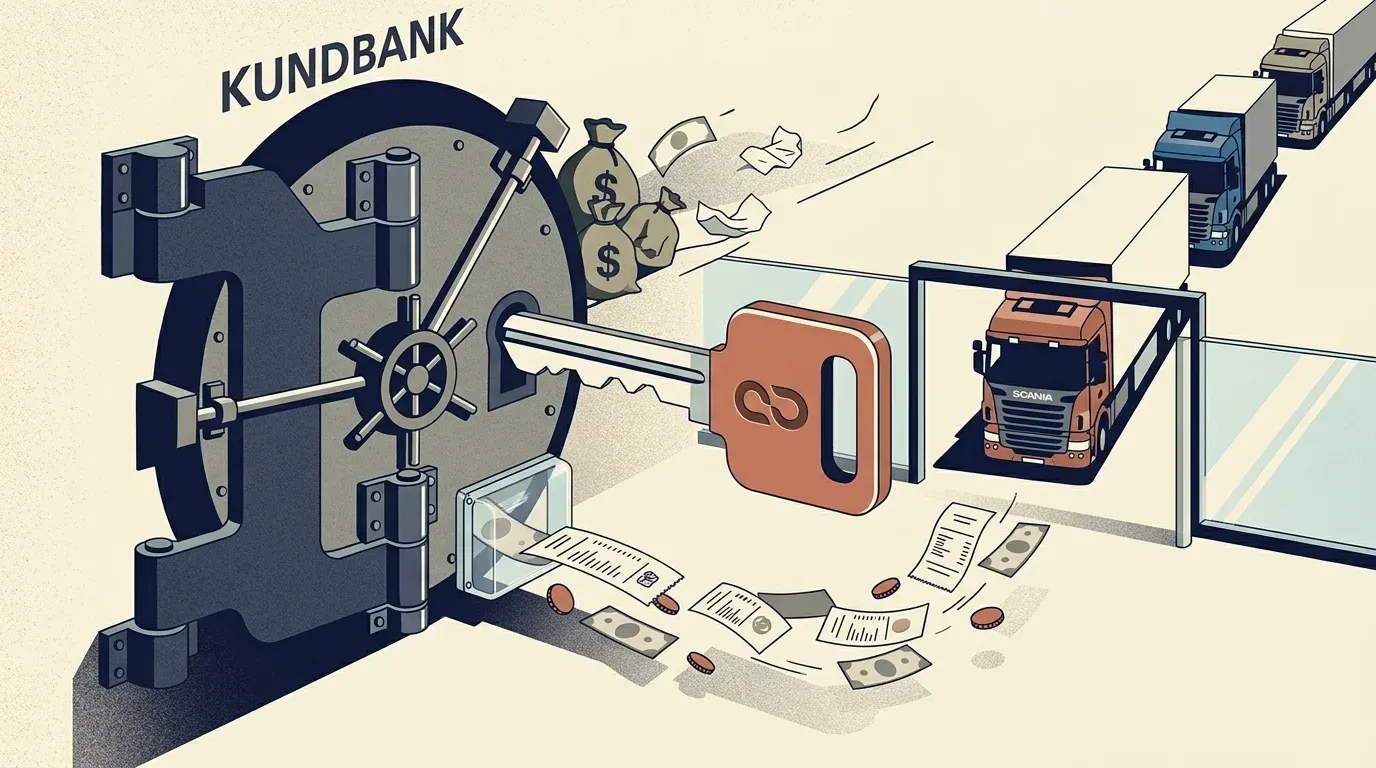
Stop Financing Your Customers (How to Halve Time-to-Payment)
Last week, we launched the navichain SaaS Forever Free tier equipped with advanced Sovereign AI, designed to radically accelerate invoicing cycles in logistics. By deploying Open Source LLMs on navichain's self-hosted infrastructure, we seamlessly digitize complex paper consignment bills while preserving 100% data sovereignty. Most transport companies hemorrhage critical liquidity in the gap between a completed service and an issued invoice simply due to inefficient administrative rotines. However, with navichain's ecosystem for automated invoicing and direct e-CMR processing from the field, you can stop serving as an interest-free bank for your customers and literally cut your time to payment in half—with strictly zero hidden fees.
Key Takeaways / Executive Summary: - Eliminate dead time: Automate your invoicing workflow so the moment a signature is collected via the navichain Mobile App, the system instantly matches the booking against the correct tariff. - Manage limitless routes dynamically: Regardless of the number of terminal cross-docking points, the platform unifies the order throughout the entire transport chain, including complex subcontractor hierarchies. - Guarantee compliance and data sovereignty: Utilizing navichain's proprietary RAG-architecture hosted entirely on local servers guarantees operational autonomy, entirely protected from foreign data retrieval directives (such as the US CLOUD Act). - Instant operational proof: Gain real-time access to e-CMR documentation, logged anomalies, and photographic evidence straight from the ramp.
Why do transport companies often act as a bank for their customers?

Digitizing a piece of paper is merely the first, essential step. The real strategic hurdle for corporate liquidity revolves around what happens immediately afterward. One of the largest hidden financial drains for European transport companies is the temporal gap between the executed logistics service and the actual date the invoice is transmitted to the client.
The European Union's Late Payment Directive (2011/7/EU) aims to protect European businesses—particularly SMEs—against late payment, stressing that rapid capital circulation is vital for growth. In reality, smaller subcontractors are routinely forced to finance the balance sheets of massive enterprises because invoicing cycles are artificially prolonged by inadequate administration.
Part of this delay is mechanical: the back-office is perpetually waiting for physical paper. Drivers misplace documents, or subcontractors stall on delivering necessary evidence after executing complicated multi-leg journeys. Consequently, the dispatch team wastes hours hunting down paper documents before they can even initiate the billing cycle.
What is POD (Proof of Delivery)? A legally binding receipt verifying that a specific commercial freight delivery was successfully executed, serving as the absolute prerequisite for an invoice to be generated.
While your team spends critical time chasing down these physical signatures, you are effectively acting as an interest-free lending institution to your clients. Sizable portions of your capital remain locked for weeks, seriously damaging resilience in modern logistics.
What are the true costs of manual paper processing?

Beyond straightforward liquidity crunches, manual handling of paper-based consignment notes sets off an administrative nightmare. Several industry reports assessing the digital transition within European haulage suggest that manual data entry errors account for up to 10% of total administrative overhead.
What is e-CMR? The electronic version of the Consignment Note, which standardizes digital shipping documents in international road transport, carrying the exact same legal weight as traditional paper equivalents.
Relying exclusively on physical copies of the CMR also means deviations are recognized far too late. If a pallet incurs damage during offloading and the driver merely jots it down on a carbon-copy paper, the dispatch management team might not receive that intelligence until days later. This information lag breeds complicated claim disputes and lost client trust. A modern, data-sovereign transport management framework proactively neutralizes this.
How does navichain automate the entire flow from booking to payment?

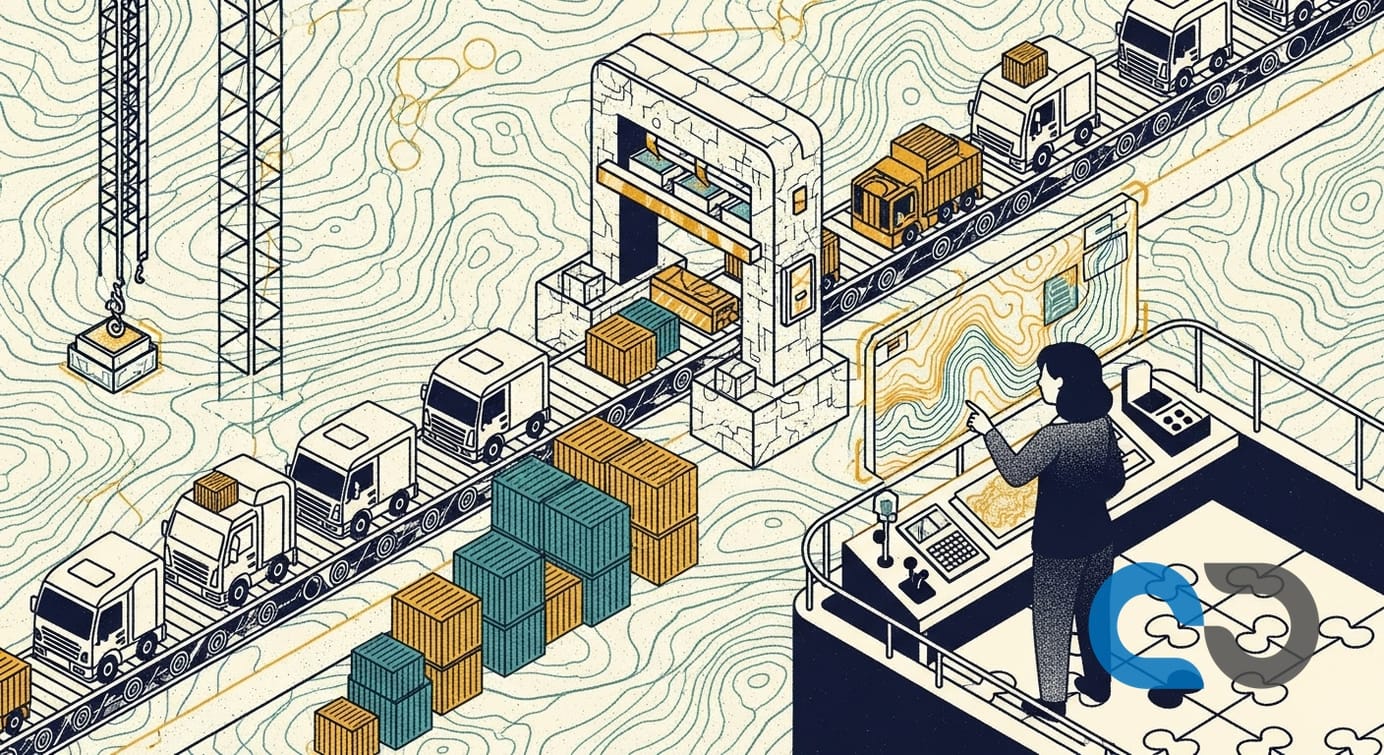
Here is precisely how navichain closes the gap automatically: Our ecosystem is fully interlinked from the initial keystroke during a booking until the final euro enters your bank account. Built for limitless scalability, the system empowers you to manage an infinite number of drop points and subcontractors. No matter how many legs a shipment navigates, the central order data remains structurally intact.
Armed with live updates streaming directly from the field through our integrated Mobile App (iOS/Android), the driver accesses the active assignment and digitizes the entire process utilizing navichain's Sovereign AI. We integrate open-weight AI models hosted 100% locally—eliminating any need to export your structural pricing or client data to data centers located in foreign jurisdictions.
What is Sovereign AI? An artificial intelligence infrastructure framework where an organization retains absolute control over its operational data and hardware ecosystem, preventing exposure to extraterritorial data acts.
During offloading, the driver can instantly photograph and log any cargo irregularities directly at the ramp.
What is Sign-on-Glass? A digital interface method where the driver captures the recipient's legally binding signature directly on the touchscreen of a mobile device for instantaneous verification and blockchain-secure traceability.
The ultimate objective of this interconnected system converges at automated invoicing. The very second the driver secures the recipient's signature, the platform updates immediately. Navichain cross-references the validated booking against the client-specific tariff matrix and generates an invoice draft ready for immediate export or execution. Zero waiting time. Zero manual copying from fractured spreadsheets.
How can you test this workflow using your own fleet?

The beauty of modern Sovereign cloud architecture is that you no longer need to commit to multi-year, bloated legacy contracts to launch your digital transformation. With navichain's "Forever Free" tier, hauliers gain unfettered access for up to 2 users and 10 bookings per month. This is your immediate sandbox to verify the platform's financial yield under real-world conditions.
Equip one of your most communicative drivers with the app, run a demo-transport, collect a signature on-screen, and watch in real-time as the interconnected Sovereign AI and billing matrix handle the administrative heavy lifting.
And when you are ready to scale to hundreds of vehicles and thousands of bookings? The premium subscription caps at a hyper-competitive 199 SEK/month per user. For most logistics firms, this nominal fee pays for itself entirely through the administrative hours saved on your very first billing cycle. Stop financing other businesses. Start invoicing straight from your pocket.
🔗 Click here to create your free account and launch your first entirely automated logistics order.
About the author: Manusha Integration & Automation Specialist at navichain. Manusha focuses on building smart, secure logistics software ecosystems utilizing Sovereign AI, minimizing administration, preserving data privacy, and maximizing operational yield for European haulage providers.

)