The Unified Advantage: Converting Logistics Data into Profit
Table of Contents
*** Are data silos eating into your logistics SME's profit margin? Over 60% of logistics managers cite data fragmentation as a major obstacle to profitability. This white paper exposes the financial risks of treating data as an afterthought and presents a three-step plan for building a unified data foundation to protect and grow your bottom line. **
*

The core dilemma: Data Rich, Profit Poor
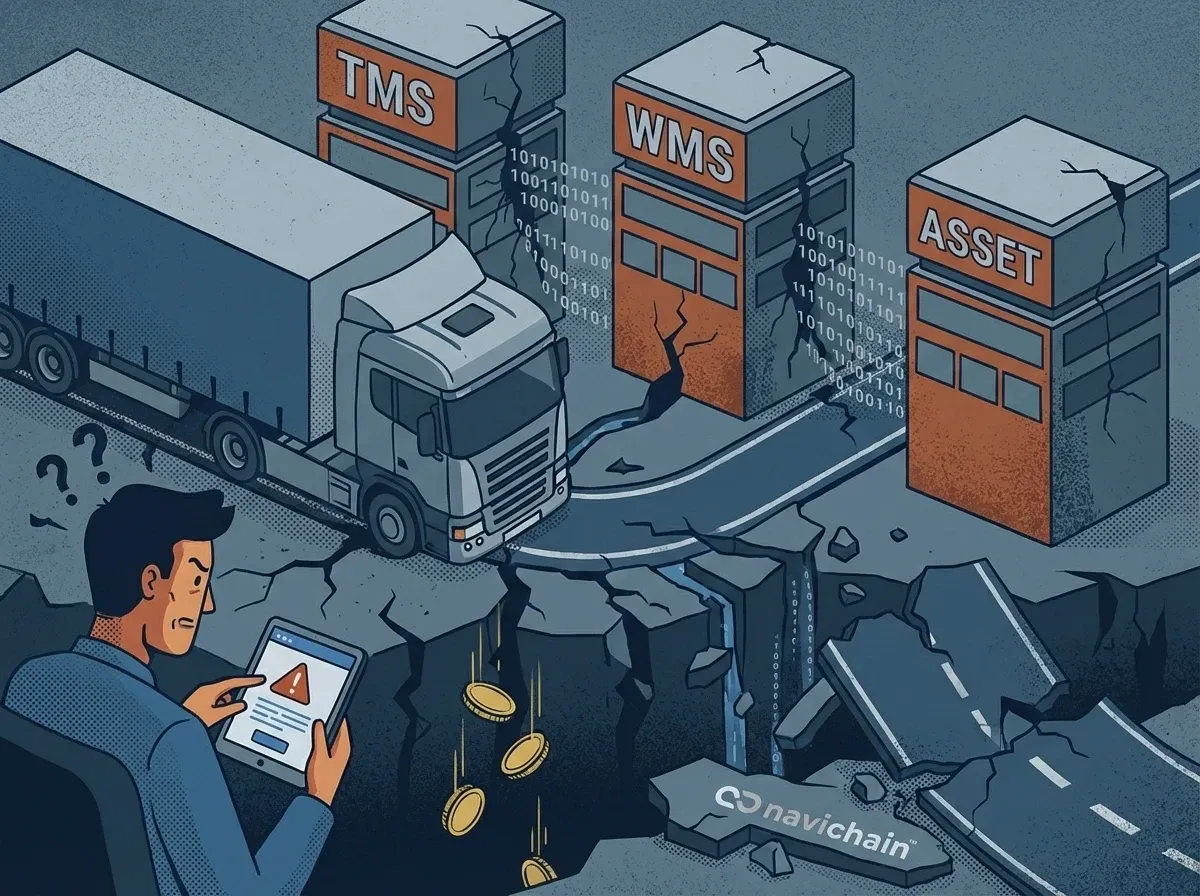
Data silos prevent a holistic view, hindering the ability to identify and act on profit-boosting opportunities.
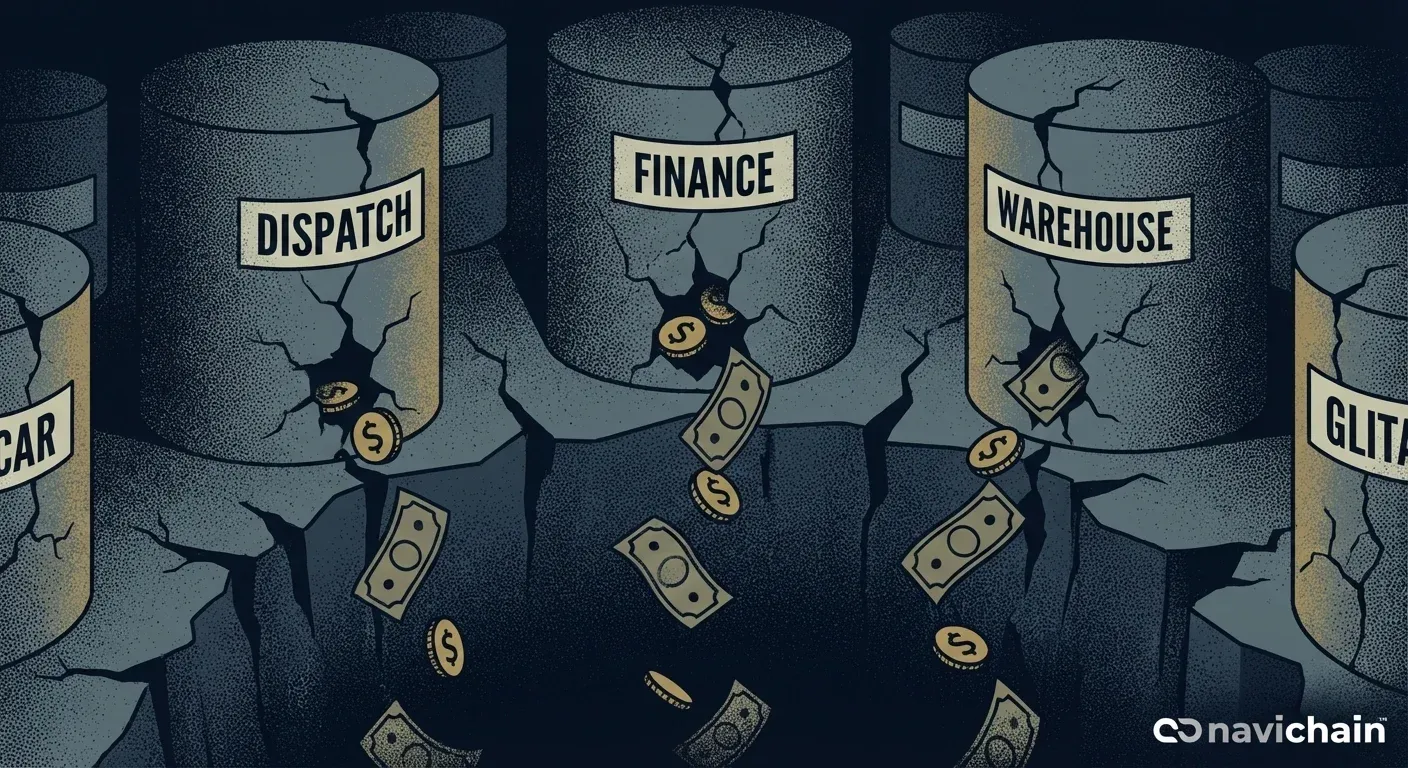
"We're drowning in operational data, but our profits aren't reflecting it. How can we turn this data into cash flow?"
This sentiment, voiced by a Scandinavian logistics operator, echoes across the European SME haulage industry. In a sector known for tight margins and constant cost pressures, data should be a key to higher profits – optimising routes, reducing downtime, and preventing revenue leakage. Instead, for many, it's a source of frustration and lost earnings.
Logistics SMEs are inundated with data from telematics, transport management systems (TMS), warehouse management systems (WMS), driver apps, and accounting software. Yet, too often, they struggle to translate this into tangible profit improvements. The quest for efficiency becomes a paradox: the more data collected, the harder it is to protect and grow margins.
This paper argues that the industry's reliance on disconnected, "best-in-class" systems has led to a critical breakdown in profitability. Before any SME can expect to see real financial gains, it must address a fundamental problem: its data unification strategy.
Dismantling the problem: The Profit-Draining Cost of Data Silos
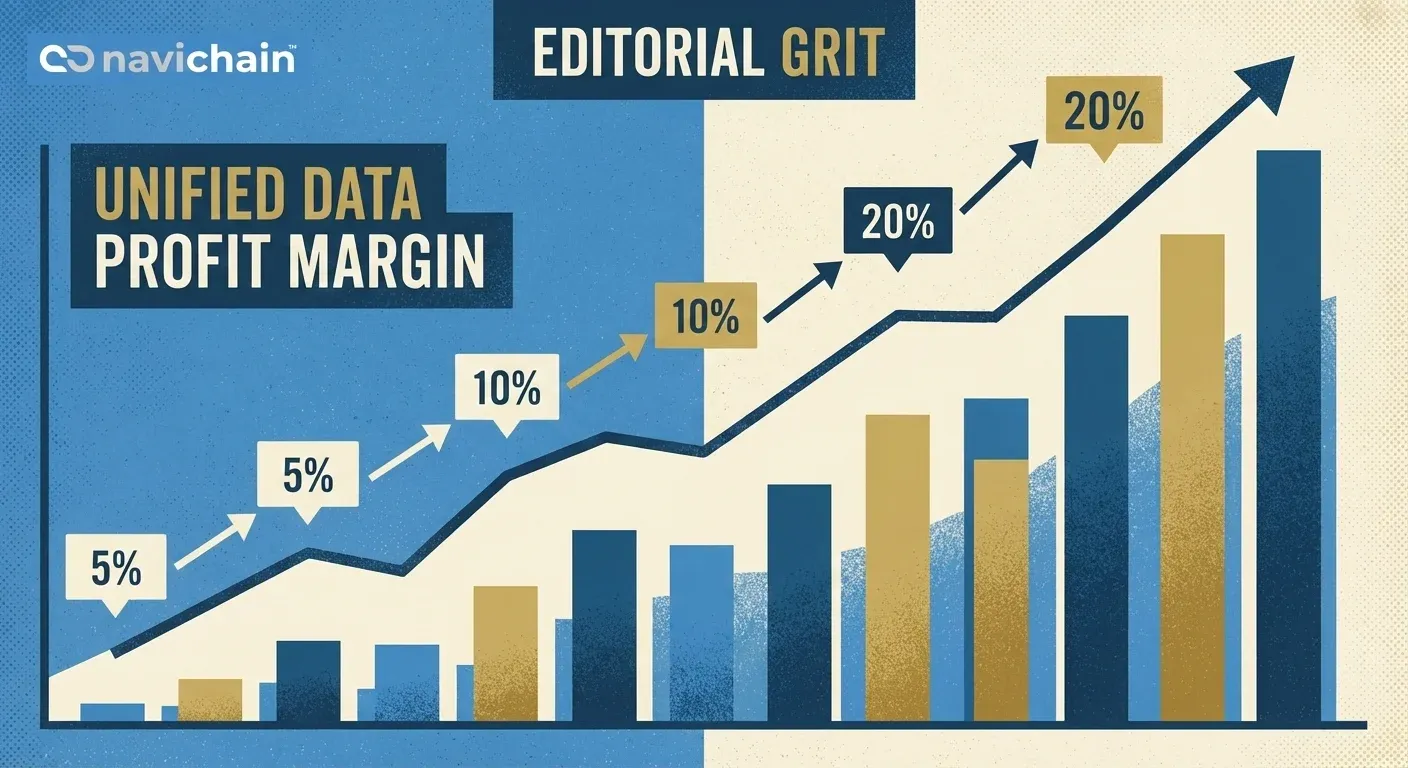
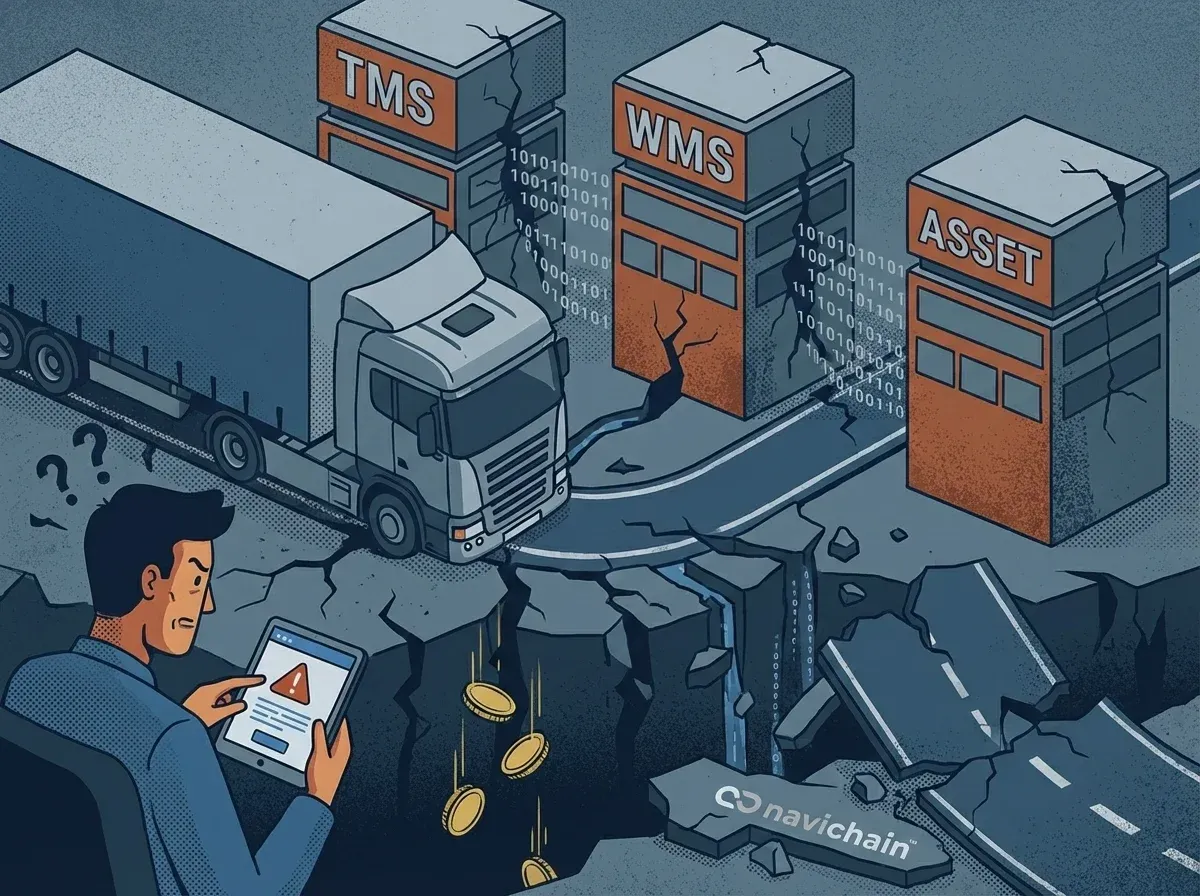
The issue isn't a lack of data; it's that the data is trapped in isolated, competing silos, actively working against your profitability.
- Your TMS tracks route efficiency and planned costs, but misses real-world delays.
- Your WMS monitors inventory levels and picking times, failing to sync with transport schedules.
- Your Asset Management System manages lorry maintenance, but lacks real-time operational data.
- Your Invoicing System generates invoices, often missing billable extras due to data gaps.
When these systems don't communicate, a chain reaction of financial setbacks occurs. You can't "see the patterns" because there's no cohesive view of your operations. Instead, you have a jumble of disconnected facts eroding your profit potential.
Consider a typical scenario: a delivery driver encounters unexpected road closures. The TMS, operating in isolation, continues to project an on-time arrival. Meanwhile, the customer, unaware of the delay, prepares for the scheduled delivery. Because the TMS isn't integrated with real-time traffic data and driver communication, the delay isn't proactively communicated. This leads to customer dissatisfaction, potential penalties for late delivery, and wasted resources as the driver navigates an inefficient route. The cost of this single, isolated event ripples through the organisation, impacting profitability and customer relationships.
The consequences extend beyond immediate operational inefficiencies. Data silos hinder accurate forecasting, making it difficult to predict demand fluctuations or identify emerging trends. This can lead to overstocking or understocking, both of which negatively impact cash flow. Overstocking ties up capital in inventory that isn't moving, while understocking results in lost sales and dissatisfied customers. Without a unified view of the supply chain, logistics SMEs are essentially flying blind, unable to make informed decisions that optimise profitability.
Furthermore, the lack of data integration makes it difficult to identify and address systemic issues. For instance, if several drivers consistently experience delays on the same route, it may indicate a problem with the route itself, the condition of the road, or the driver's training. However, without a unified data platform that aggregates and analyses this information, the problem may go unnoticed, leading to continued inefficiencies and lost revenue. Addressing this requires a unified view that identifies the trend and then allows for targeted investigation and corrective action, highlighting the strategic value of breaking down data silos.
The Direct Profit Losses of Fragmentation
- Invoice Errors: Your team spends valuable time manually reconciling data from WMS and TMS just to create invoices, increasing the risk of errors that lead to underbilling or customer disputes. This hits your cash flow directly.
- Operational Inefficiencies: A transport manager schedules a route in the TMS without knowing the WMS is reporting picking delays. The result: wasted fuel, driver hours, and missed delivery windows - all impacting your bottom line.
- Uncaptured Revenue: A driver performs extra services (e.g., waiting time, special handling) and records it in their app. Because this data isn't integrated with invoicing, the charge isn't passed on. This is lost revenue that directly reduces your profit.
The cumulative effect of these seemingly small errors can be substantial. A UK-based haulage firm, for example, discovered they were losing an average of £50 per invoice due to discrepancies between delivery notes and invoiced amounts. With thousands of invoices processed each month, this amounted to a significant revenue leakage that directly impacted their profit margin. Addressing this issue through data unification and automated invoice reconciliation freed up considerable cash flow and improved overall profitability.
Moreover, manual invoice reconciliation is a time-consuming and labour-intensive process. It requires skilled personnel to sift through disparate data sources, identify discrepancies, and resolve them. This diverts resources away from more strategic activities, such as business development and customer relationship management. By automating the invoice reconciliation process, logistics SMEs can free up their staff to focus on higher-value tasks, improving overall productivity and profitability. The cost savings from reduced labour hours and improved accuracy can be significant, especially for businesses with a high volume of invoices.
Beyond the immediate financial impact, invoice errors and operational inefficiencies can also damage customer relationships. Customers who are consistently overcharged or experience delays are likely to become dissatisfied and may switch to a competitor. Maintaining a positive customer experience is crucial for long-term profitability, and data unification can play a key role in achieving this by ensuring accurate billing and efficient delivery. By providing customers with a seamless and reliable service, logistics SMEs can build trust and loyalty, leading to increased customer retention and referrals.
The Strategic Barrier to Automated Workflows
The promise of automated workflows is alluring: streamlined operations, optimised resource allocation, and increased profitability.
However, there's a dangerous assumption: that simply adding automation to existing fragmented systems will solve the problem. In reality, automation acts as a multiplier. If you apply automation to fragmented, inconsistent, and unreliable data, it will only amplify the chaos, leading to misallocated resources and ultimately, profit erosion.
Asking "Can we automate our logistics?" is the wrong question. The right question is: "Is our data ready to be automated to protect our profit margin?"
Consider the implementation of an automated route optimisation system that relies on inaccurate or incomplete data. If the system doesn't have access to real-time traffic information, updated delivery schedules, or accurate driver availability, it will generate suboptimal routes that lead to delays, wasted fuel, and increased operational costs. Instead of improving efficiency, the automation system actually exacerbates the problem by automating bad decisions. The investment in automation becomes a liability rather than an asset.
Furthermore, fragmented data can create compliance risks. In the logistics industry, regulatory compliance is essential, and failing to meet these requirements can result in hefty fines and reputational damage. For example, if a logistics SME is unable to accurately track driver hours due to data silos, it may inadvertently violate regulations related to driver fatigue. Similarly, if the company is unable to properly manage hazardous materials due to a lack of data integration, it could face significant penalties for non-compliance. Automation that relies on incomplete or inaccurate data can increase the risk of compliance violations, putting the company's financial stability at risk.
Beyond compliance, consider the strategic impact on business agility. In today’s dynamic market environment, logistics SMEs need to be able to adapt quickly to changing customer demands and market conditions. However, with fragmented data, it becomes difficult to make informed decisions and respond effectively to new opportunities or threats. For instance, if a competitor introduces a new service offering, a logistics SME with data silos may be unable to quickly assess the potential impact and develop a competitive response. This lack of agility can put the company at a significant disadvantage and limit its long-term growth potential.
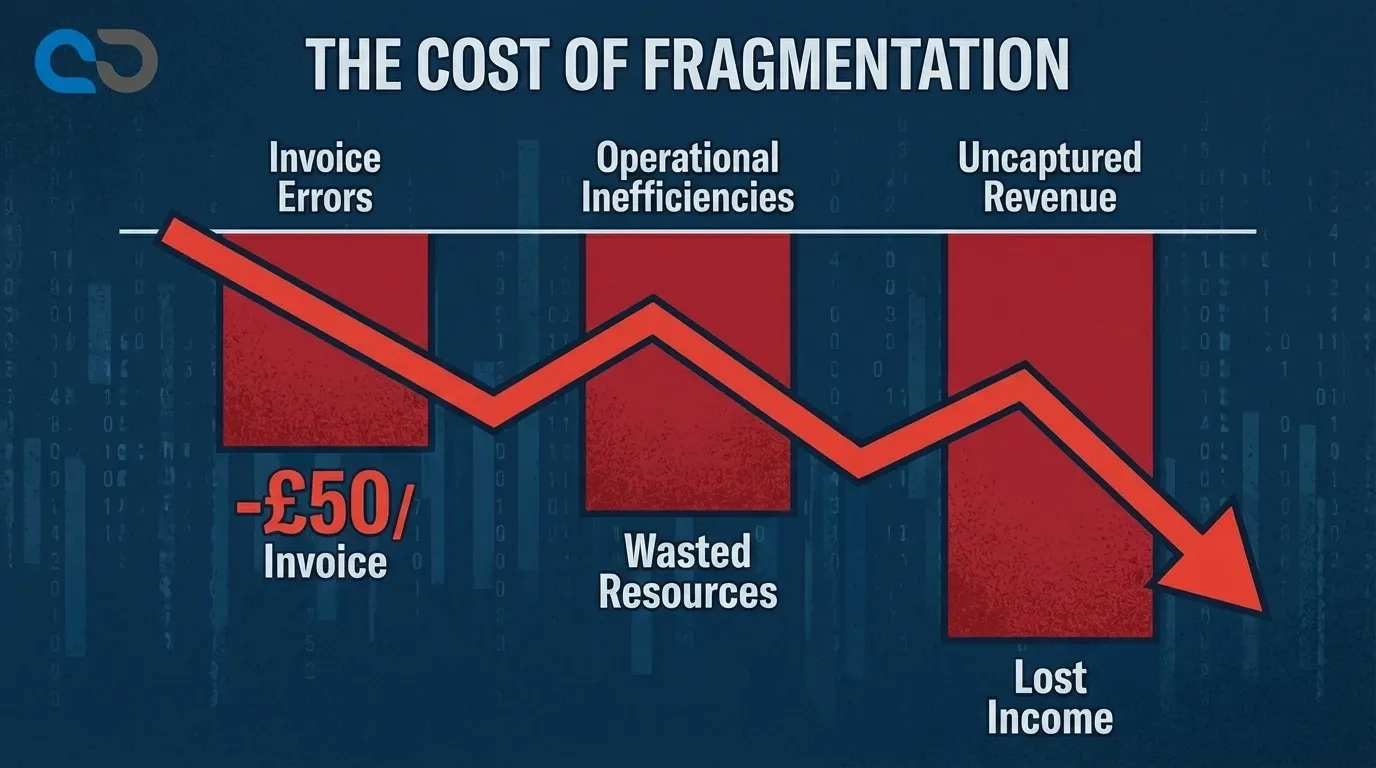
Illustrating how flawed data inputs into automated systems can lead to amplified inefficiencies and financial risks in logistics operations.
The way forward: A 3-step Framework for Profit-Driven Logistics
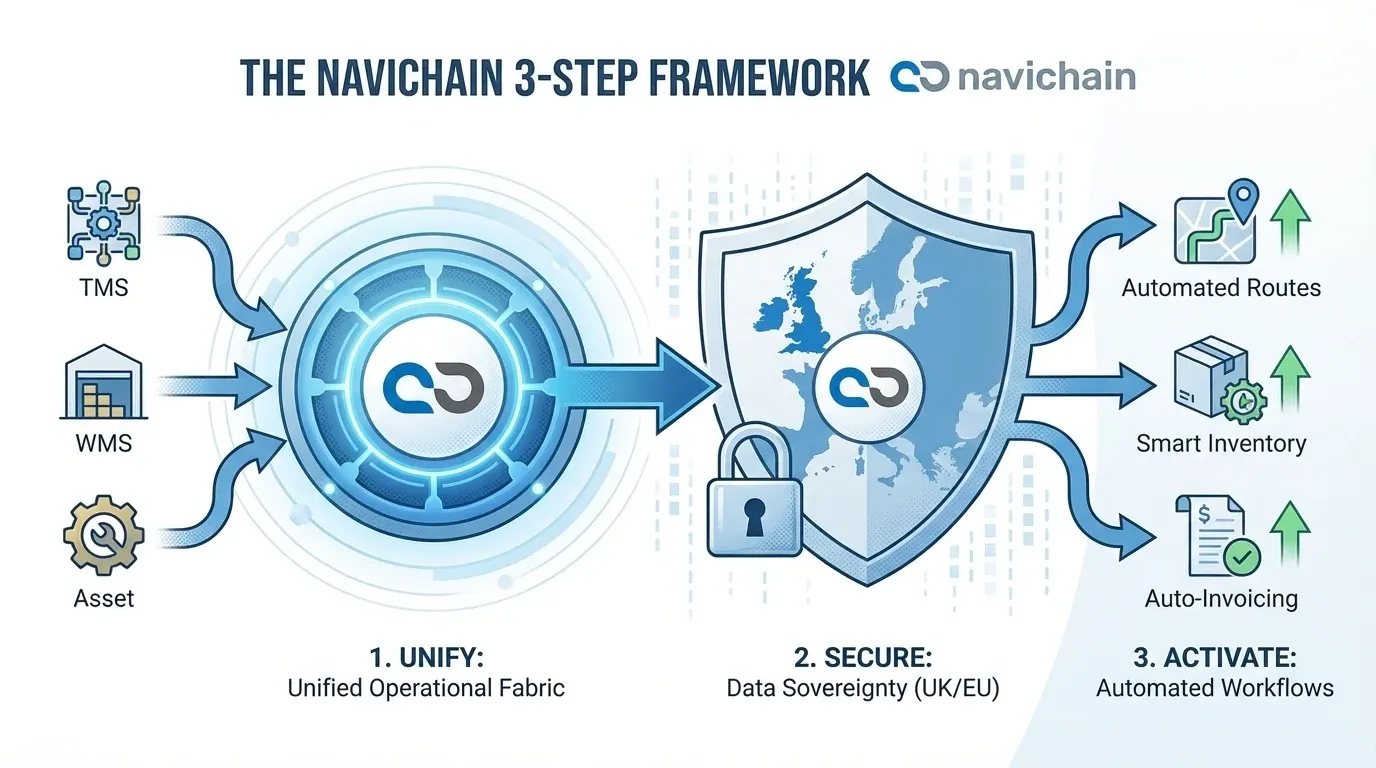
Real operational efficiency for a European SME logistics company – the kind that translates directly into profit – isn't about buying a standalone automation tool. It's about establishing a secure, unified data foundation on which smart, profitable workflows can be built. We propose a three-phase framework: Unify, Secure, and Activate.
Phase 1: Unify (Establishing a Single Source of Truth for Profit)
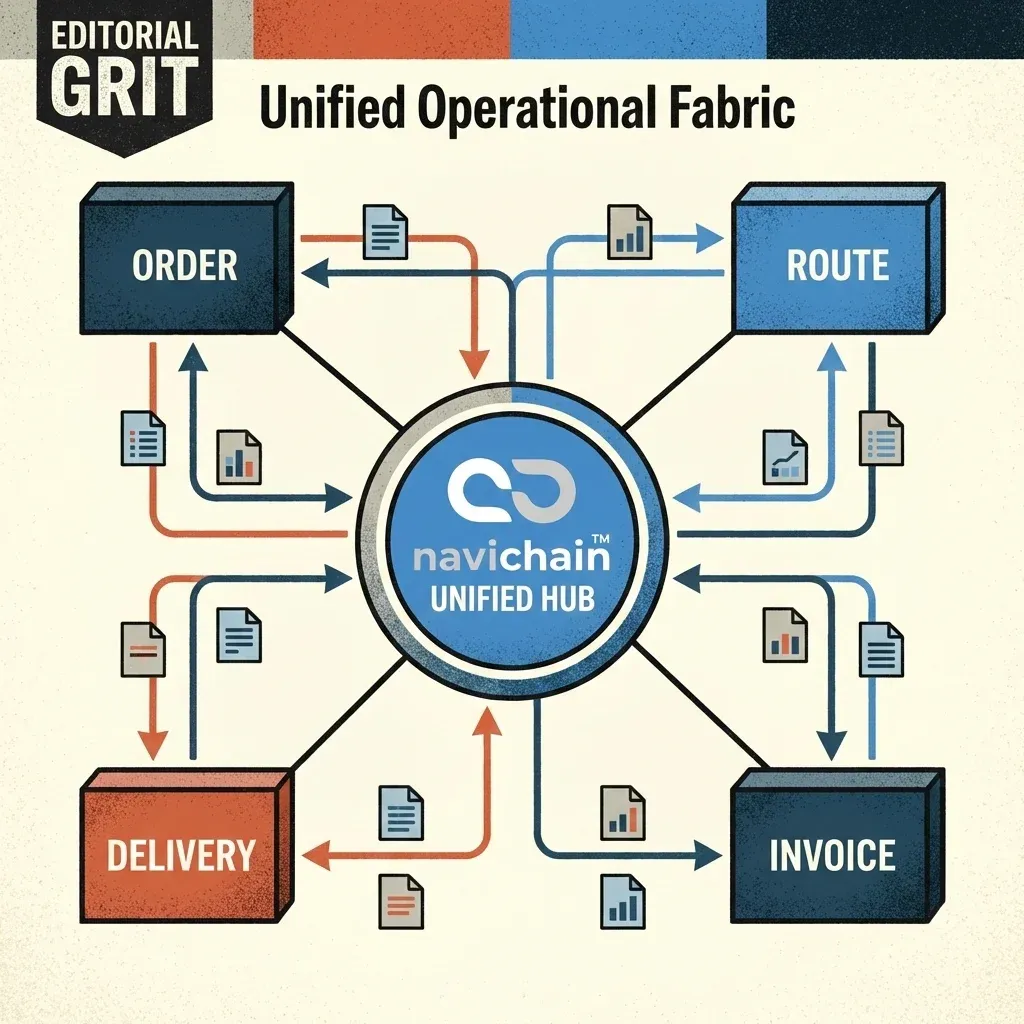
The first step is to eliminate the data silos. The objective is to move from disparate applications to a single, unified operating system for logistics. In this model, TMS, WMS, Asset Management, Order Management, and Invoicing aren't separate programs requiring complex integrations. Instead, they are integrated components of a single platform, all accessing the same central database.
When a warehouse worker scans a pallet (WMS), that information is instantly available to the transport manager (TMS) and the invoicing department. There's no "data lag." There's no "reconciliation." There's simply one version of the truth, visible to all functions in real-time, driving better decision-making and protecting your profit.
This Unified Operational Fabric is the essential foundation for any further optimisation. It eliminates manual data entry, prevents revenue leakage, and provides a clean, holistic dataset across the business, driving efficiencies and boosting the bottom line.
The concept of a Unified Operational Fabric goes beyond simply integrating existing systems. It involves rethinking the entire data architecture and building a platform from the ground up with data unification as a core principle. This means designing the system to ensure that all data is captured, stored, and processed in a consistent and standardised manner. This requires a deep understanding of the logistics business processes and the data that drives them. It also requires a commitment to data governance and data quality to ensure that the data is accurate, complete, and reliable.
The benefits of a Unified Operational Fabric are not limited to improved efficiency and reduced costs. It also enables better decision-making, improved customer service, and increased business agility. With a unified view of the supply chain, logistics SMEs can make more informed decisions about pricing, routing, and resource allocation. They can also respond more quickly to changing customer demands and market conditions. This can lead to increased revenue, improved customer satisfaction, and a stronger competitive position. The key is to design and implement a system that is truly unified, rather than simply patching together disparate applications.
To further clarify the benefit, imagine the possibilities: Automatic exception alerting that flags potential delays or disruptions, providing real-time visibility into the status of every shipment. Automated invoicing that generates accurate invoices based on real-time data, reducing billing errors and improving cash flow. Predictive analytics that forecast demand fluctuations and optimise inventory levels, minimising waste and maximising profitability. All of these are achievable only with a unified, secure, and reliable data foundation.
Phase 2: Secure (Guaranteeing Data Sovereignty for Margin Protection)
Once your data is unified, the next key question is: Where is it stored and processed?
For European SMEs, this isn't just a technical consideration – it's a fundamental strategic and legal concern that directly impacts your profitability. Relying on large, non-EU-based cloud providers for your core operational data (routes, manifests, customer lists, driver information) is fraught with risk. Regulations like GDPR and the Schrems II ruling have made international data transfers a complex legal minefield. Data breaches, audits, and vulnerability to foreign data access laws present significant business risks.
True data control, or Data Sovereignty, means your unified data resides in a secure environment, under your own region's legal jurisdiction. For a UK haulage company, this means data hosted and processed within the UK or the EU.
This approach, often utilising secure or self-hosted infrastructure, transforms regulatory compliance from a complex burden to a simple, inherent aspect of your business. Your data is safe, its location is known, and it’s GDPR compliant by default, minimising risk and safeguarding your financial stability.
Data sovereignty is particularly critical in the logistics industry due to the sensitive nature of the data involved. Logistics SMEs handle a wide range of confidential information, including customer data, pricing data, and operational data. If this data falls into the wrong hands, it could be used to gain a competitive advantage, steal customers, or even disrupt operations. By ensuring that data is stored and processed within the EU, logistics SMEs can protect themselves from these risks and maintain their competitive edge. This focus on data sovereignty strengthens customer trust and provides a competitive advantage in attracting security-conscious clients.
Furthermore, data sovereignty can help logistics SMEs avoid costly legal battles and regulatory fines. GDPR and other data privacy regulations impose strict requirements on the processing of personal data. Failing to comply with these requirements can result in significant penalties. By ensuring that data is stored and processed within the EU, logistics SMEs can simplify their compliance efforts and reduce the risk of legal challenges. This proactive approach to data governance can save the company significant time and resources in the long run, while simultaneously mitigating potential risks.
The financial implications of non-compliance are significant. Under GDPR, organisations can face fines of up to 4% of their annual global turnover or €20 million, whichever is higher. These fines can be devastating for logistics SMEs, potentially wiping out years of profits. By prioritising data sovereignty, logistics SMEs can protect themselves from these financial risks and ensure their long-term viability. This strategic decision ensures not only compliance but also the resilience of the business against unforeseen legal and financial challenges.
Phase 3: Activate (Driving Automated Workflows for Profit Optimisation)
Only now, with a clean, unified dataset (from Phase 1) residing in a secure, compliant environment (from Phase 2), can you effectively leverage automated workflows to improve profitability.
And you don't need a third-party platform that requires you to export your sensitive data.
Instead, you can leverage Automated Workflows that run inside your own secure infrastructure. This layer of automated intelligence has access to the complete operational picture. It can finally "see the patterns" you've been missing because it's analysing all the data at once.
- It can correlate fuel consumption data (Asset) with route planning (TMS) and driver hours (Invoicing) to identify the most profitable routes and drivers.
- It can analyse warehouse picking times (WMS) against order inflow (Order) to proactively address staffing needs and prevent delays that impact profitability.
- It can audit all completed jobs (TMS) against all invoices (Invoicing) to automatically identify and recover 100% of unbilled services, instantly boosting revenue and profit.
This is the real benefit of data in logistics: not as a separate, complex tool, but as a natural, secure, and powerful driver of profit within a unified operational core.
With automated workflows, logistics SMEs can streamline their operations, reduce costs, and improve customer service. For example, an automated route optimisation workflow can dynamically adjust routes based on real-time traffic conditions, weather patterns, and delivery schedules. This can help to reduce fuel consumption, minimise delivery times, and improve on-time delivery performance. Similarly, an automated inventory management workflow can proactively identify potential stockouts and automatically reorder inventory, preventing lost sales and improving customer satisfaction. These targeted automations drive tangible improvements in key operational metrics.
Beyond operational efficiency, automated workflows can also help logistics SMEs to improve their decision-making. By analysing large volumes of data, automated workflows can identify trends and patterns that would otherwise go unnoticed. This can help logistics SMEs to make more informed decisions about pricing, routing, and resource allocation. For example, an automated pricing workflow can dynamically adjust prices based on market demand, competitor pricing, and customer preferences. This can help logistics SMEs to maximise revenue and improve profitability.
Furthermore, automated workflows can free up valuable time and resources for logistics SMEs. By automating routine tasks, employees can focus on more strategic activities, such as business development and customer relationship management. This can lead to increased productivity, improved employee satisfaction, and a stronger competitive position. The key is to identify the right workflows to automate and to ensure that the automation is implemented effectively. This requires a deep understanding of the logistics business processes and the data that drives them. Only then can logistics SMEs truly unlock the power of automated workflows and transform their operations.
From Diagnosis to Design: The Blueprint for a Resilient, Profit-Driven Logistics Operating System
A simplified schematic illustrating the flow of data and actions within a typical automated logistics workflow, highlighting key decision points and integrations.
To turn this framework into a technical reality, any modern logistics platform for European SMEs must be built on three core principles:
Principle 1 - Unified Operational Fabric
The platform cannot be a collection of acquired tools. It must be a single, integrated system built from the ground up, where TMS, WMS, Invoicing, and Asset Management share a single database and a single user interface. This acts as the ‘central nervous system’ for the entire operation, providing a single source of truth and eliminating the friction of data silos. Every event, from a new order to a final delivery scan, should be visible across all functions in real-time, driving informed decision-making and boosting the bottom line.
This single, integrated system provides a holistic view of the entire logistics operation, enabling better decision-making and improved efficiency. Imagine a scenario where a customer places an order. The order information is immediately available to the warehouse, the transport manager, and the invoicing department. The warehouse can begin picking and packing the order, while the transport manager can plan the optimal route for delivery. The invoicing department can prepare the invoice in advance, ensuring that it is ready to be sent as soon as the delivery is confirmed. This seamless flow of information eliminates delays and errors, improving customer service and reducing operational costs.
Furthermore, a unified operational fabric enables better collaboration and communication between different departments. With all data accessible in a single system, employees can easily share information and coordinate their activities. This can help to resolve issues more quickly and prevent problems from escalating. For example, if a driver encounters a delay on the road, they can immediately notify the transport manager and the customer. The transport manager can then adjust the route or reschedule the delivery, while the customer can be kept informed of the situation. This level of transparency and communication improves customer satisfaction and builds trust.
The financial benefits of a unified operational fabric are significant. By eliminating data silos and streamlining workflows, logistics SMEs can reduce operational costs, improve efficiency, and increase revenue. This can lead to a significant improvement in profitability and a stronger competitive position.
Principle 2 - Secure Data Architecture and Control
For European SMEs, operational resilience is synonymous with data control and profit protection. The platform’s architecture must prioritise data sovereignty. This means that the infrastructure is secure and that data is stored and processed exclusively within the EU, or even better, within a specific country like the UK. A self-hosted or dedicated secure infrastructure model ensures easy and complete GDPR compliance, protecting the SME from the legal and financial risks of international data complexity. Control over your data is control over your business – and its profitability.
A secure data architecture is essential for protecting sensitive information from unauthorized access and cyber threats. Logistics SMEs handle a wide range of confidential data, including customer data, pricing data, and operational data. If this data falls into the wrong hands, it could be used to gain a competitive advantage, steal customers, or disrupt operations. A secure data architecture can help to prevent these risks by implementing robust security measures, such as encryption, access controls, and intrusion detection systems. This secure-by-design approach provides peace of mind and protects the business from potential financial losses.
Furthermore, data control is essential for ensuring compliance with data privacy regulations, such as GDPR. These regulations impose strict requirements on the processing of personal data, including requirements related to data security, data localization, and data subject rights. By maintaining control over their data, logistics SMEs can ensure that they are meeting these requirements and avoiding costly fines. The ability to demonstrate compliance is also a valuable asset when bidding for new business or partnering with larger organizations.
Beyond compliance and security, consider the importance of business continuity. A robust and controlled data architecture ensures that the business can continue to operate even in the event of a disaster or cyberattack. By implementing data backup and recovery procedures, logistics SMEs can minimise downtime and prevent data loss. This is essential for maintaining customer service and protecting the company's reputation.
Principle 3 - Embedded Analytical Intelligence
Intelligence shouldn't be an add-on; it must be embedded. A proprietary automated workflow layer, running securely within the platform's own infrastructure (Principle 2), is essential. This automated workflow layer must have access to the full, unified dataset (Principle 1) to perform deep, secure analysis. This allows it to unlock efficiencies and identify patterns that are unique to that specific business, without the data ever leaving the secure environment. This is how SMEs can harness the power of data without compromising security, control, or profitability.
Embedded analytical intelligence enables logistics SMEs to make data-driven decisions and optimise their operations in real-time. By analysing the full, unified dataset, the platform can identify trends and patterns that would otherwise go unnoticed. This can help logistics SMEs to improve their pricing, routing, and resource allocation. For example, the platform can identify the most profitable routes based on real-time traffic conditions, weather patterns, and delivery schedules. It can also optimise inventory levels based on market demand and customer preferences.
The power of embedded analytical intelligence lies in its ability to automate routine tasks and free up employees to focus on more strategic activities. For example, the platform can automatically generate invoices, track shipments, and manage inventory. This can help to reduce operational costs, improve efficiency, and increase productivity.
Moreover, embedded analytical intelligence provides a significant competitive advantage. By leveraging data to make better decisions and optimise operations, logistics SMEs can offer superior service at a lower cost. This can help them to attract and retain customers, and to grow their business in a competitive market. The key is to ensure that the analytical intelligence is embedded within the platform, rather than being an add-on. This ensures that the data is always available and that the analysis is always relevant.
References/sources
- Ti Insight (2024). European Road Freight Transport 2024. (Analyses margin pressure and operating costs in the European haulage sector). https://ti-insight.com/report/european-road-freight-transport-2024
- International Road Transport Union (IRU). 2024 European Road Freight Rate Report. (Provides context on the intense competition and thin margins faced by SMEs). https://www.iru.org/resources/news-and-reports
- European Commission. Data, GDPR and rules for artificial intelligence. (Outlines the legal framework for data management and AI within the EU). https://digital-strategy.ec.europa.eu/en/policies/data-gdpr-and-ai-rules
- Logistics Management. The Persistent Problem of Data Silos in the Supply Chain. (Industry analysis on the operational impact of fragmented data). https://www.logisticsmgmt.com/ (representative article)
- Information Commissioner's Office (ICO). Guide to the UK GDPR. (Details the specific compliance challenges for UK businesses under GDPR). https://ico.org.uk/
Enabling the blueprint: Navichain SaaS unified logistics platform
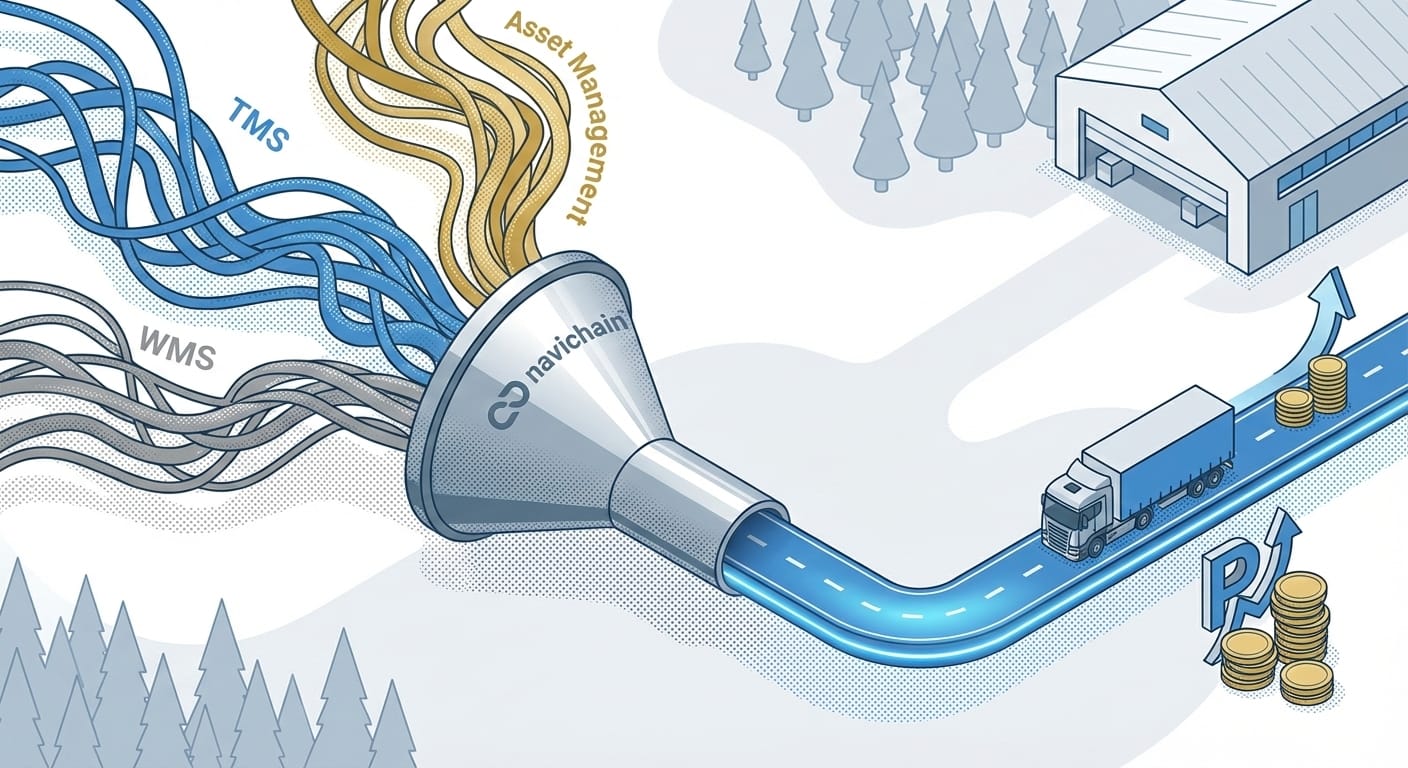
Visual representation of the improved logistics outcomes achievable through a unified platform, highlighting efficiency gains and reduced complexity.
This white paper has outlined a strategic framework for moving from data chaos to operational clarity and improved profitability. The navichain SaaS platform was designed to be the practical embodiment of this blueprint.
We're not a collection of separate tools. navichain SaaS is a single, unified logistics operating system where Transport Management (TMS), Warehouse Management (WMS), Asset Management, Invoicing, and Order Management work as one. This architecture provides the single source of truth (Principle 1) that SMEs need to tear down data silos and automate cross-functional workflows.
We believe that for European SMEs, data control is non-negotiable – it is key to protecting your bottom line. This is our key differentiator. Our entire platform is hosted on our own secure, self-hosted infrastructure in the UK (Principle 2). This ensures maximum data security, resilience, and easy GDPR compliance. By keeping your operational data strictly within UK/EU jurisdiction, you retain full control and are free from the complexities of international data transfers.
3. Enables Automated Workflows for Maximum Profit:
Because your data is unified (Principle 1) and secure in our UK-hosted environment (Principle 2), we can put our automated workflow system to work for you. This embedded intelligence layer (Principle 3) runs securely on our own infrastructure, analysing your unique, unified data to find patterns, automate tasks, and unlock efficiencies that would otherwise remain hidden, driving significant improvements to your profit margin.
Our mission is to democratise logistics technology. The navichain SaaS platform is the seamless solution designed to help SMEs in the logistics sector thrive by finally making their data work for them – and their bottom line.
The navichain platform unifies logistics data, enabling automated workflows and maximizing profitability for SMEs while ensuring data security within UK jurisdiction.
The navichain platform: Unifying logistics data for automated workflows and maximized profitability while ensuring data security within UK jurisdiction.
Ready to optimise your supply chain?
navichain Insights Newsletter
Join the newsletter to receive the latest updates in your inbox.