SWOT Analysis: The Foundation of Strategic Planning
Table of Contents
1. Executive Summary
Definition and core value. SWOT Analysis is the fundamental framework for strategic situational awareness. It forces organizations to confront internal realities (Strengths, Weaknesses) against external conditions (Opportunities, Threats). For logistics leaders, it is the difference between reactive firefighting and proactive maneuvering.
2. The Friction (The Problem)
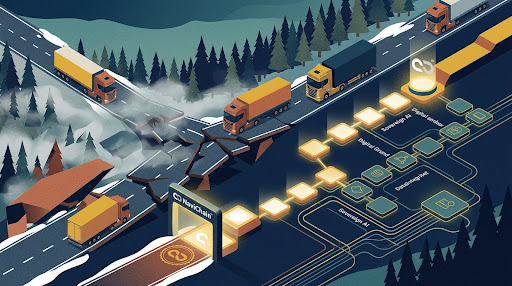
Why this is hard. Strategic blindness. Without a structured assessment, companies drift. They double down on legacy strengths that are no longer relevant, or they are blindsided by predictable external threats (regulatory changes, new competitors). The friction is the gap between perceived capability and actual market reality.

Figure 2: Visualizing the strategic problem.
3. Theoretical Background
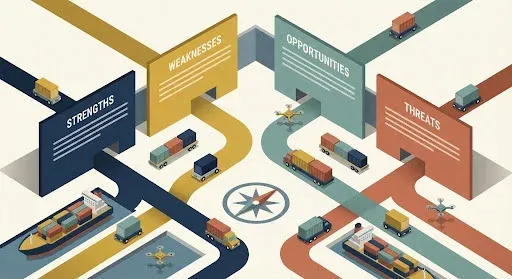
The Mechanics. Originated by Albert Humphrey in the 1960s, SWOT separates factors into Internal (controlable) and External (uncontrollable), and Helpful vs. Harmful. 1. Strengths: Internal attributes that give an advantage. 2. Weaknesses: Internal attributes that are a disadvantage. 3. Opportunities: External factors that the project could exploit. 4. Threats: External factors that could cause trouble.
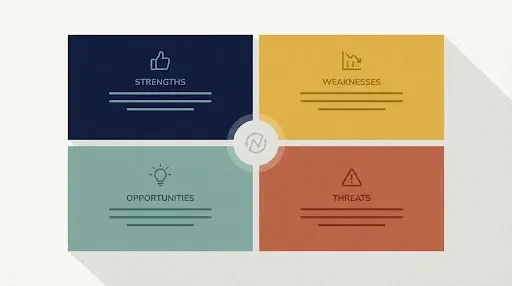
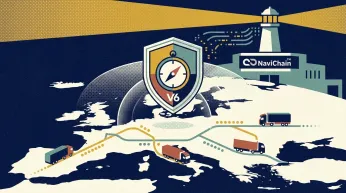
Figure 3: The core framework visualized.
4. The Data Evidence
Why this matters physically. Strategic alignment correlates with performance. Studies show that companies with formalized strategic planning processes, grounded in SWOT-like diagnostics, outperform ad-hoc competitors by 12-15% in ROI. Failure to identify 'Weaknesses' in supply chain resilience (e.g., single-sourcing) caused 42% of global CFOs to report revenue hits during recent disruptions.
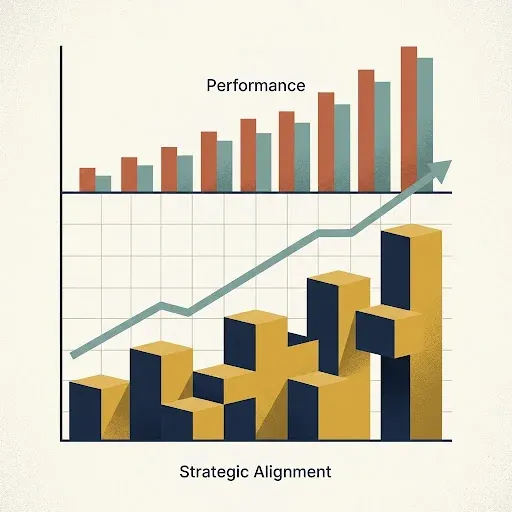
Figure 4: The measurable impact of the strategy.
5. Strategic Application
How to implement. Turning analysis into action: * Match: Connect Strengths to Opportunities (Aggressive Strategy). * Convert: Transform Weaknesses into Strengths (Turnaround). * Minimize: Reduce exposure to Threats (Defensive). * Logistics Example: Use a strong fleet (Strength) to service a competitor's bankrupt territory (Opportunity).
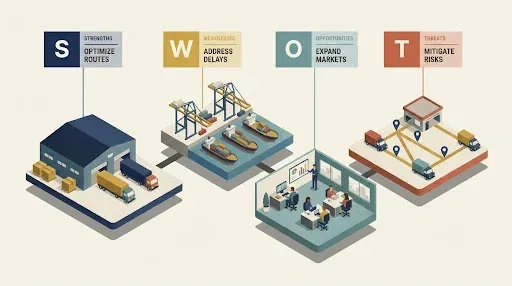
Figure 5: Practical application in a logistics context.
6. The Navichain Perspective: The Digital Enabler
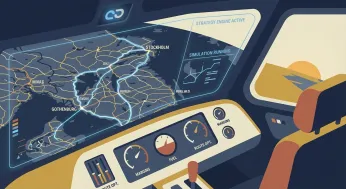
Automated precision. SWOT is static; logistics is dynamic. Navichain turns the 'O' and 'T' of SWOT into real-time data streams. By continuously monitoring supply chain performance and market conditions, Navichain moves SWOT from an annual boardroom exercise to a daily operational dashboard.
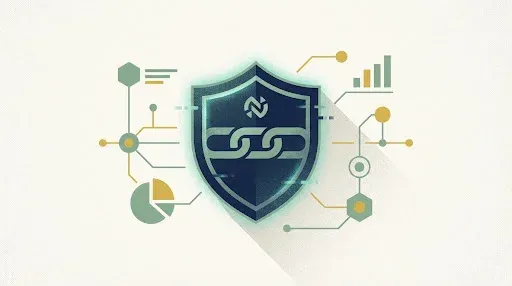
Figure 6: How Navichain's digital platform operationalizes this strategy.
7. Real-World Success Stories
Case Studies. * Amazon: Leveraged its strength in logistics (FBA) to seize the opportunity of third-party selling, turning a cost center into a primary revenue driver. * Starbucks: Identified the weakness of longer wait times and the opportunity of mobile tech to create their 'Mobile Order & Pay' system, now a massive competitive moat. * Toyota: Turned the threat of the 1970s oil crisis into an opportunity by leveraging their strength in fuel-efficient manufacturing.
8. Strategic Takeaway

Conclusion. SWOT is not a checklist; it is a compass. In a volatile logistics landscape, knowing where you stand (Internal) and which way the wind is blowing (External) is the only way to navigate.
9. References
Verified links. * Harvard Business Review. (n.d.). Strategy & Innovation. View Resource * Investopedia. (n.d.). Business Essentials. View Resource * Ellen MacArthur Foundation. (n.d.). Circular Economy. View Resource
navichain Insights Newsletter
Join the newsletter to receive the latest updates in your inbox.