Supply Chain Sovereignty: Why European SMEs are Reclaiming Control from Global Giants
Table of Contents
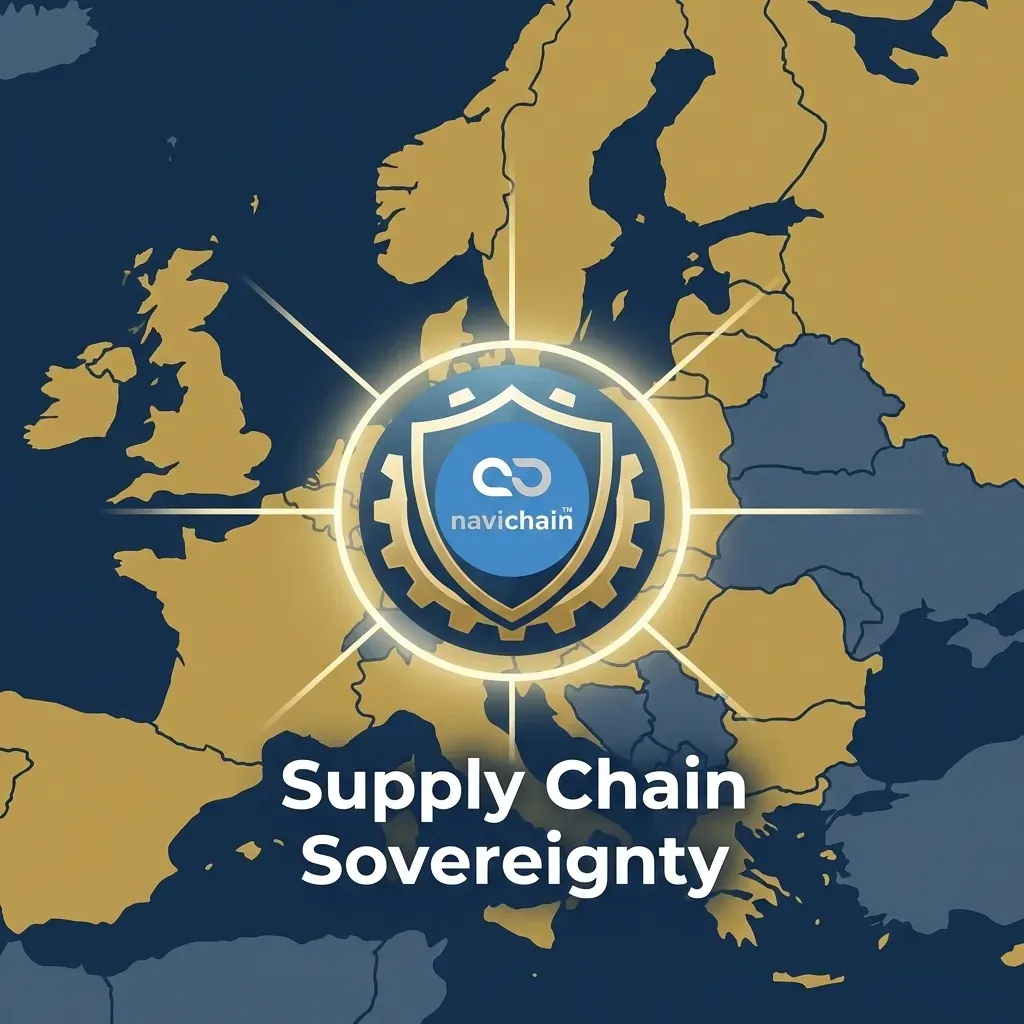
European SMEs face unprecedented supply chain vulnerabilities due to reliance on complex, distant networks. Discover how reclaiming control through supply chain sovereignty empowers resilience, agility, and competitive advantage. This white paper explores the strategic solutions, including innovative SaaS platforms, needed to navigate today's turbulent global landscape and secure future success.
Supply Chain Sovereignty: Why European SMEs are Reclaiming Control from Global
Okay, here's a teaser paragraph based on the executive summary, formatted as requested:
Fragile global links expose European SMEs to critical supply chain disruptions.
Executive summary
European SMEs face unprecedented challenges in today's interconnected yet turbulent global supply chains. Over-reliance on distant, complex networks has exposed vulnerabilities, leading to disruptions, increased costs, and a loss of control. This deep dive explores the critical need for supply chain sovereignty – the ability of SMEs to understand, manage, and control their supply chains to ensure resilience, agility, and competitive advantage. We examine the limitations of traditional approaches and introduce Navichain, a unified, AI-driven SaaS platform, as a strategic solution empowering SMEs to achieve true supply chain sovereignty, unlocking significant business outcomes and fostering long-term growth. Vulnerability exposed: SME reliance on complex global supply chains hinders sovereignty.
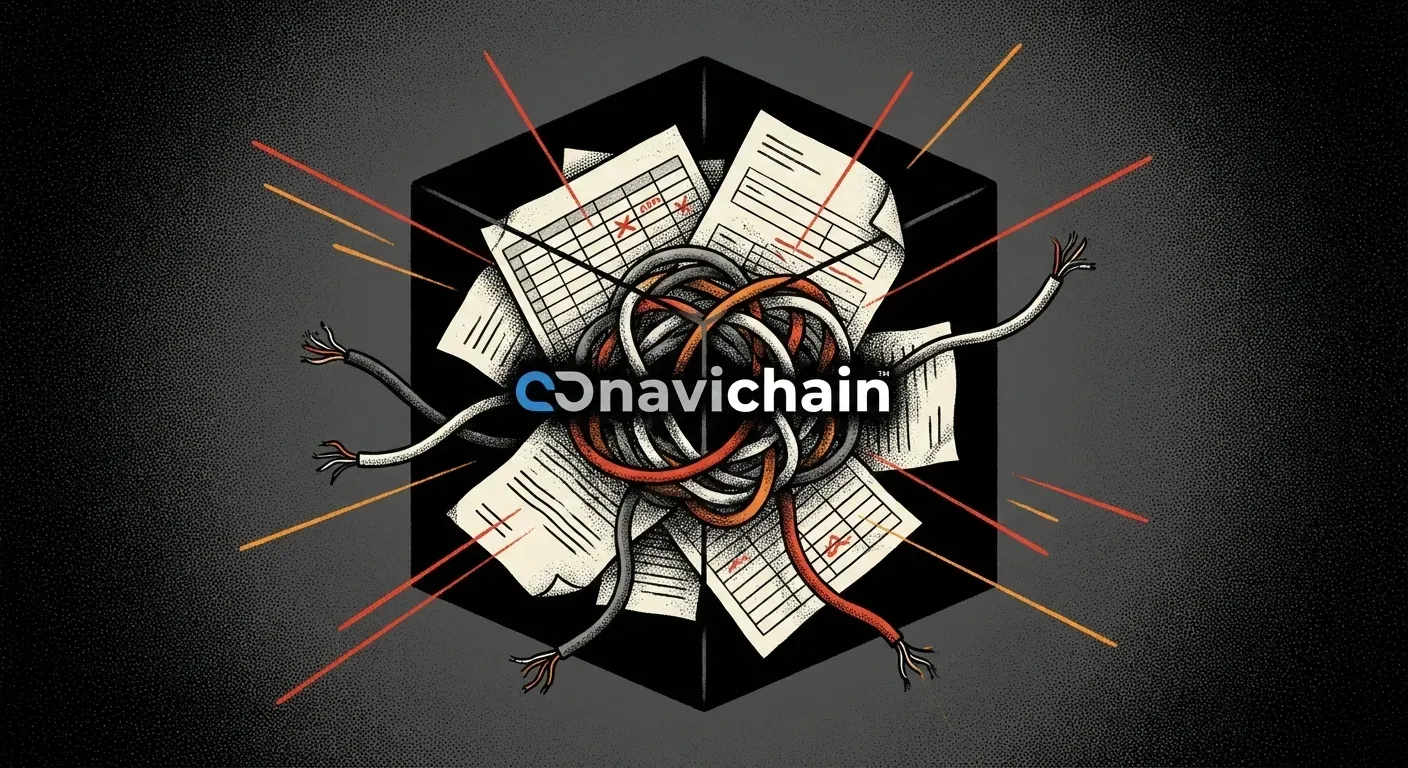
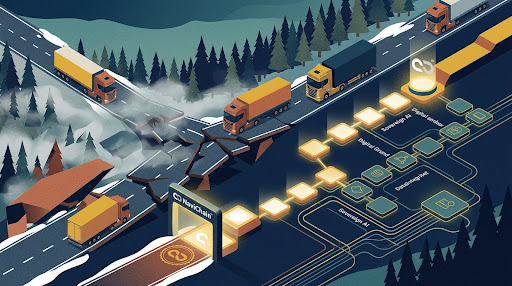
Port congestion and delayed shipments exemplify the challenges European SMEs face in globally distributed supply chains.
Introduction
The globalized economy has, for decades, encouraged the development of intricate and far-reaching supply chains. While offering potential cost efficiencies, this model has created a web of dependencies that are now proving to be a significant liability for European SMEs. Geopolitical instability, economic fluctuations, and unforeseen events like pandemics have exposed the fragility of these extended networks, leaving businesses vulnerable to disruptions and eroding their competitive edge. This report delves into the pressing need for European SMEs to reclaim control over their supply chains – to achieve what we term "supply chain sovereignty." This is not merely about shortening supply lines or reshoring production; it's about gaining comprehensive visibility, proactive risk management capabilities, and the agility to adapt to rapidly changing market conditions. It's about transforming the supply chain from a potential weakness into a strategic strength. We will explore the challenges, analyze the context, and present a strategic solution powered by innovative technology, specifically focusing on how the Navichain platform enables SMEs to achieve true supply chain sovereignty. Fragile global supply chains expose European SMEs to escalating risk and disruption.
Section 1: The challenge: a crisis of control
The current state of global supply chains presents a multifaceted challenge for European SMEs. The core issue is a lack of control stemming from several interconnected factors: * Complexity and Opacity: Global supply chains are inherently complex, involving numerous tiers of suppliers, manufacturers, distributors, and logistics providers. This complexity creates opacity, making it difficult for SMEs to gain a clear understanding of their entire supply network. They often lack visibility beyond their immediate suppliers, leaving them vulnerable to disruptions further upstream.
- Over-Reliance on Single Sources: The pursuit of cost optimization has often led to over-reliance on single suppliers, particularly in regions with lower labor costs. While this may have initially reduced expenses, it has created a significant risk. A disruption at a single point in the supply chain can cascade throughout the entire network, halting production and impacting customer satisfaction.
- Lack of Real-Time Visibility: Traditional supply chain management systems often rely on outdated information and manual processes. This lack of real-time visibility makes it difficult for SMEs to react quickly to unexpected events. They may be unaware of a disruption until it is too late to mitigate the impact.
- Inadequate Risk Management: Many SMEs lack the resources and expertise to effectively assess and manage supply chain risks. They may not have a formal risk management plan in place or the tools to identify and prioritize potential threats. This leaves them vulnerable to a wide range of disruptions, from natural disasters to geopolitical instability.
- Data Silos and Lack of Integration: Information is often fragmented across different systems and departments, creating data silos. This lack of integration makes it difficult to gain a holistic view of the supply chain and identify potential problems. The consequences of failing to address these challenges are significant:
- Increased Costs: Supply chain disruptions can lead to increased costs due to production delays, expedited shipping, and lost sales.
- Reduced Profitability: Higher costs and lower sales can significantly impact profitability, eroding the competitive advantage of SMEs.
- Damage to Reputation: Inability to meet customer demand can damage reputation and erode customer loyalty.
- Loss of Market Share: Competitors with more resilient supply chains may be able to capitalize on disruptions, gaining market share at the expense of vulnerable SMEs.
- Strategic Vulnerability: A lack of control over the supply chain can leave SMEs strategically vulnerable, making them dependent on external factors and limiting their ability to innovate and grow.
Opacity in global supply chains hinders SME control and creates vulnerability.
Vulnerability of SMEs stemming from lack of supply chain control, resulting in reduced profitability, reputational damage, and loss of market share.
Section 2: The context/data: navigating the shifting sands
The need for supply chain sovereignty is not just a theoretical concept; it is driven by real-world trends and data points that highlight the increasing volatility and complexity of the global landscape.
- Geopolitical Instability: Rising geopolitical tensions, trade wars, and political instability in key sourcing regions are creating significant disruptions to global supply chains. The war in Ukraine, for example, has had a profound impact on supply chains across Europe, disrupting the flow of goods and increasing transportation costs.
- Economic Fluctuations: Global economic fluctuations, such as inflation and currency volatility, are adding to the uncertainty and complexity of supply chain management. These fluctuations can impact the cost of raw materials, transportation, and labor, making it difficult for SMEs to predict their expenses and manage their margins.
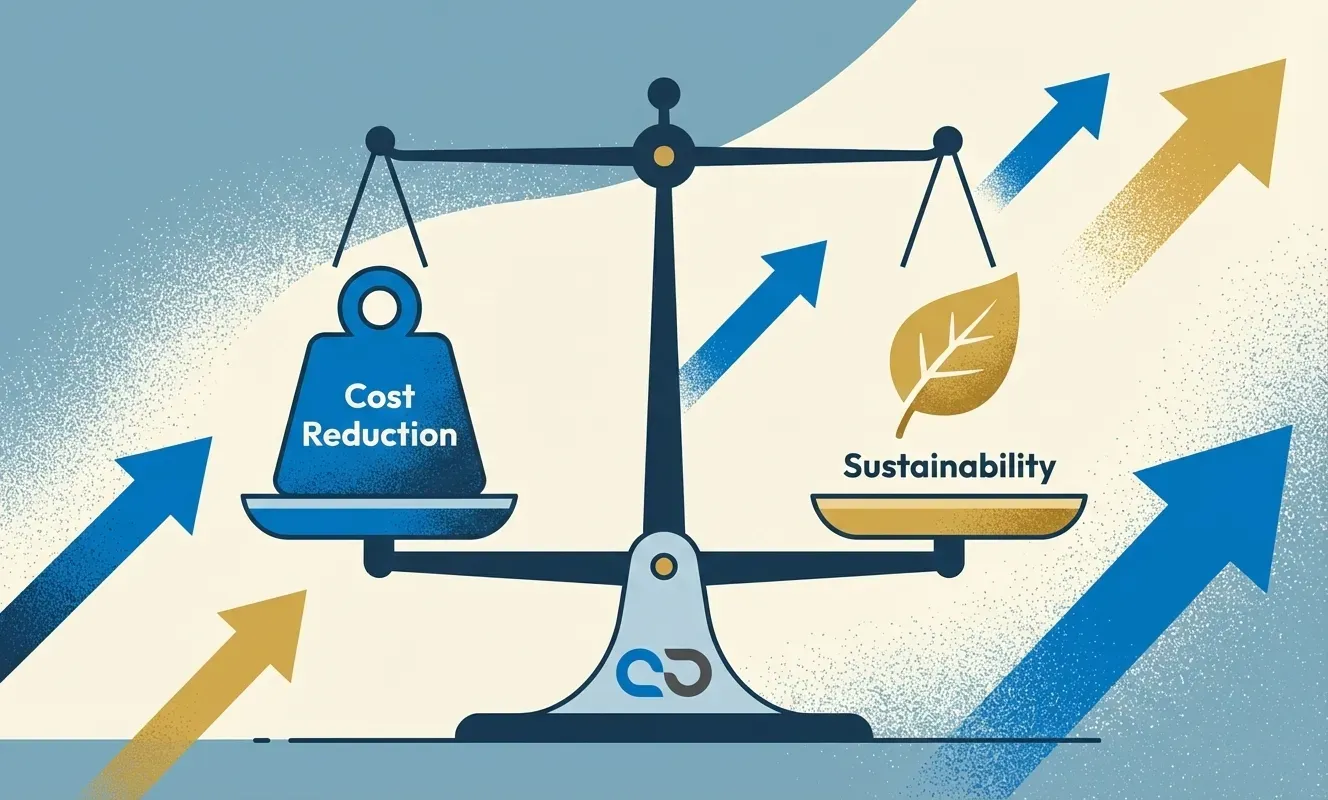
This chart illustrates the increasing vulnerability of SMEs due to external pressures on their supply chains, highlighting the need for greater control and resilience.
- Climate Change: Extreme weather events, such as floods, droughts, and hurricanes, are becoming more frequent and severe, disrupting supply chains and impacting agricultural production. These events can lead to shortages of raw materials and increased transportation costs.
- The Rise of Protectionism: A growing trend towards protectionism and trade barriers is further complicating global supply chains. Tariffs and other trade restrictions can increase the cost of imported goods and make it more difficult for SMEs to access global markets.
- The Digital Transformation Imperative: The rapid pace of technological change is transforming the way supply chains are managed. SMEs that fail to embrace digital technologies risk falling behind their competitors. While globalization has created interconnectedness, it has also exposed vulnerabilities. The pursuit of efficiency has often come at the expense of resilience. Data reveals a paradox: companies that have aggressively optimized their supply chains for cost have often suffered the most during disruptions. This highlights the need for a more balanced approach that prioritizes both efficiency and resilience.
- A recent survey by the European Commission found that over 70% of European SMEs have experienced supply chain disruptions in the past year.
- The average cost of a supply chain disruption is estimated to be millions of euros, according to a report by the World Economic Forum.
- Studies show that companies with more resilient supply chains outperform their peers in terms of revenue growth and profitability.
- The adoption of digital technologies in supply chain management is expected to grow significantly in the coming years, driven by the need for greater visibility and agility. These data points underscore the urgent need for European SMEs to take proactive steps to strengthen their supply chains and achieve true supply chain sovereignty.
Navichain combats geopolitical risk, enhancing supply chain resilience and control.
Section 3: The strategic solution: building a resilient and agile supply chain
Achieving supply chain sovereignty requires a strategic shift from reactive crisis management to proactive risk mitigation and resilience building. This involves adopting a holistic approach that encompasses the following key elements: * Diversification of Supply Sources: Reducing reliance on single suppliers by diversifying supply sources across different regions and countries. This can help to mitigate the impact of disruptions in any one location.
Schematic illustrating the key elements of building a resilient and agile supply chain for enhanced sovereignty.
- Nearshoring and Reshoring: Considering nearshoring or reshoring production to reduce transportation costs and lead times, and to gain greater control over the manufacturing process.
- Building Strategic Inventory Buffers: Maintaining strategic inventory buffers of critical raw materials and finished goods to cushion against supply chain disruptions.
- Investing in Technology: Adopting digital technologies to improve visibility, collaboration, and decision-making across the supply chain.
- Developing a Robust Risk Management Plan: Creating a formal risk management plan that identifies potential threats, assesses their impact, and outlines mitigation strategies.
- Fostering Collaboration and Communication: Improving communication and collaboration with suppliers, customers, and other stakeholders to enhance responsiveness and agility. A useful theoretical framework for building a resilient supply chain is the "Resilience Framework," which emphasizes four key capabilities:
- Visibility: The ability to see and understand what is happening across the entire supply chain, from raw materials to end customers.
- Agility: The ability to quickly adapt to changing market conditions and unexpected events.
- Collaboration: The ability to work effectively with suppliers, customers, and other stakeholders to share information and coordinate actions.
- Control: The ability to manage and control the flow of goods and information across the supply chain. By focusing on these four capabilities, SMEs can build supply chains that are not only efficient but also resilient and agile, enabling them to thrive in an increasingly volatile and uncertain world.
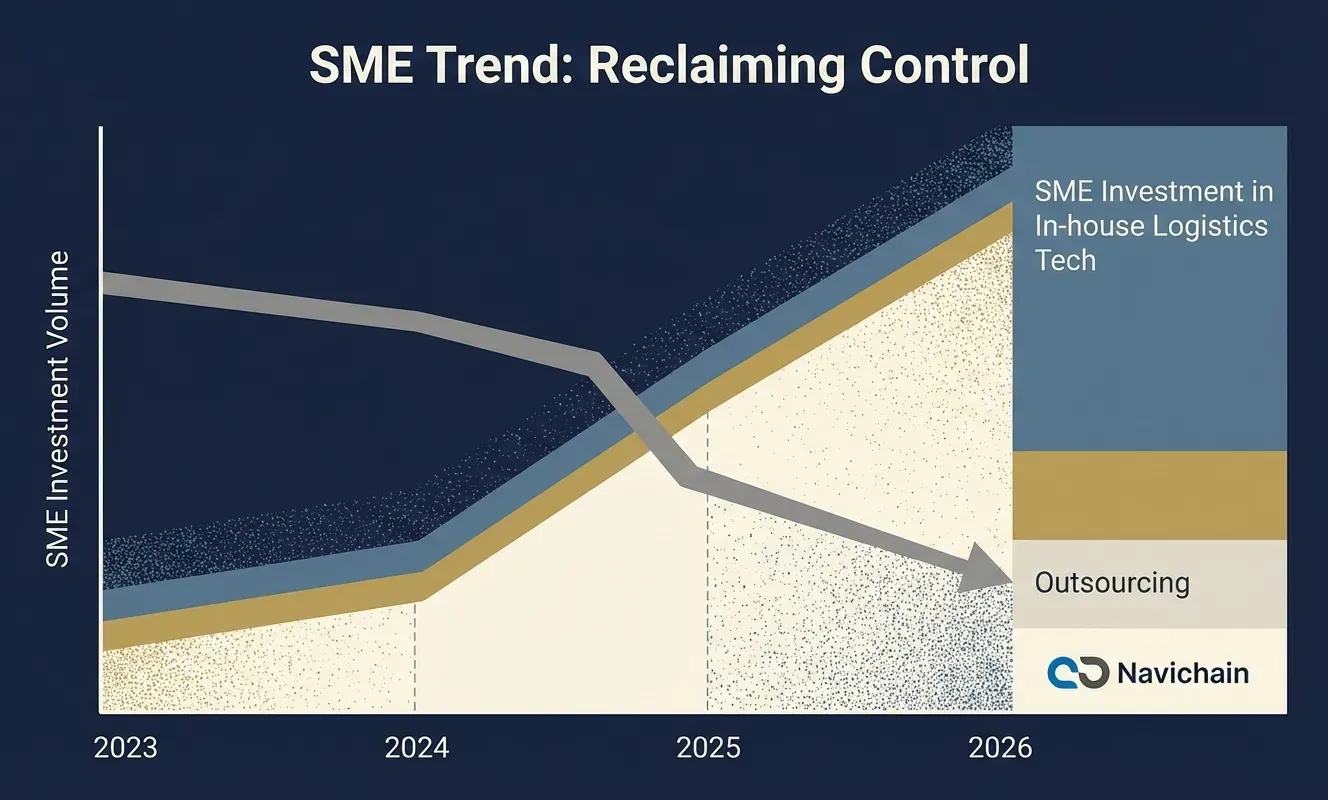
Schematic illustrating the interconnectedness of visibility, agility, collaboration, and control within a resilient supply chain.
Section 4: The tech enabler (Navichain): achieving sovereignty through technology
Navichain offers a powerful solution for European SMEs seeking to achieve true supply chain sovereignty. The Navichain SaaS platform provides a Unified OS for managing all aspects of the supply chain, from sourcing and procurement to logistics and distribution. Its AI-driven capabilities empower SMEs to gain unprecedented visibility, proactively manage risks, and optimize their operations for resilience and agility. Here's how Navichain specifically addresses the challenges outlined earlier: * Enhanced Visibility: Navichain provides end-to-end visibility across the entire supply chain, enabling SMEs to track goods and materials in real-time, identify potential bottlenecks, and proactively address disruptions. The platform integrates data from multiple sources, providing a holistic view of the supply chain.
- AI-Powered Risk Management: Navichain's AI engine analyzes vast amounts of data to identify potential risks, such as supplier financial instability, geopolitical instability, and extreme weather events. The platform provides alerts and recommendations, enabling SMEs to take proactive steps to mitigate these risks.
- Optimized Sourcing and Procurement: Navichain helps SMEs to diversify their supply sources and negotiate better terms with suppliers. The platform provides access to a global network of suppliers and enables SMEs to compare prices, quality, and lead times.
- Improved Collaboration and Communication: Navichain facilitates seamless communication and collaboration between SMEs and their suppliers, customers, and other stakeholders. The platform provides a secure and centralized platform for sharing information and coordinating actions.
Navichain empowers SMEs to build resilient and agile supply chains, ultimately leading to increased control and optimized performance.
- Automated Processes: Navichain automates many of the manual processes involved in supply chain management, freeing up resources and reducing the risk of errors. The platform automates tasks such as order processing, inventory management, and invoice reconciliation.
- Data-Driven Decision-Making: Navichain provides SMEs with access to real-time data and analytics, enabling them to make more informed decisions about their supply chain operations. The platform provides dashboards and reports that track key performance indicators (KPIs) and identify areas for improvement. By leveraging Navichain's powerful capabilities, European SMEs can transform their supply chains from potential weaknesses into strategic strengths, achieving true supply chain sovereignty and unlocking significant business outcomes.
Section 5: Business outcomes: the ROI of sovereignty
Investing in supply chain sovereignty and implementing a platform like Navichain yields significant business outcomes for European SMEs, translating into tangible ROI and a stronger competitive position.
- Increased Efficiency: By automating processes, improving visibility, and optimizing resource allocation, Navichain helps SMEs to significantly increase their operational efficiency. This translates into lower costs, faster lead times, and improved customer service.
- Reduced Costs: By proactively managing risks, diversifying supply sources, and negotiating better terms with suppliers, Navichain helps SMEs to reduce their overall supply chain costs. This can have a significant impact on profitability.
- Improved Resilience: By building a more resilient supply chain, SMEs can minimize the impact of disruptions and maintain business continuity. This can protect their revenue, reputation, and market share.
- Enhanced Agility: By gaining greater visibility and control over their supply chain, SMEs can respond more quickly to changing market conditions and customer demands. This enables them to capitalize on new opportunities and gain a competitive advantage.
- Improved Customer Satisfaction: By delivering products on time and in full, SMEs can improve customer satisfaction and build stronger relationships. This can lead to increased customer loyalty and repeat business.
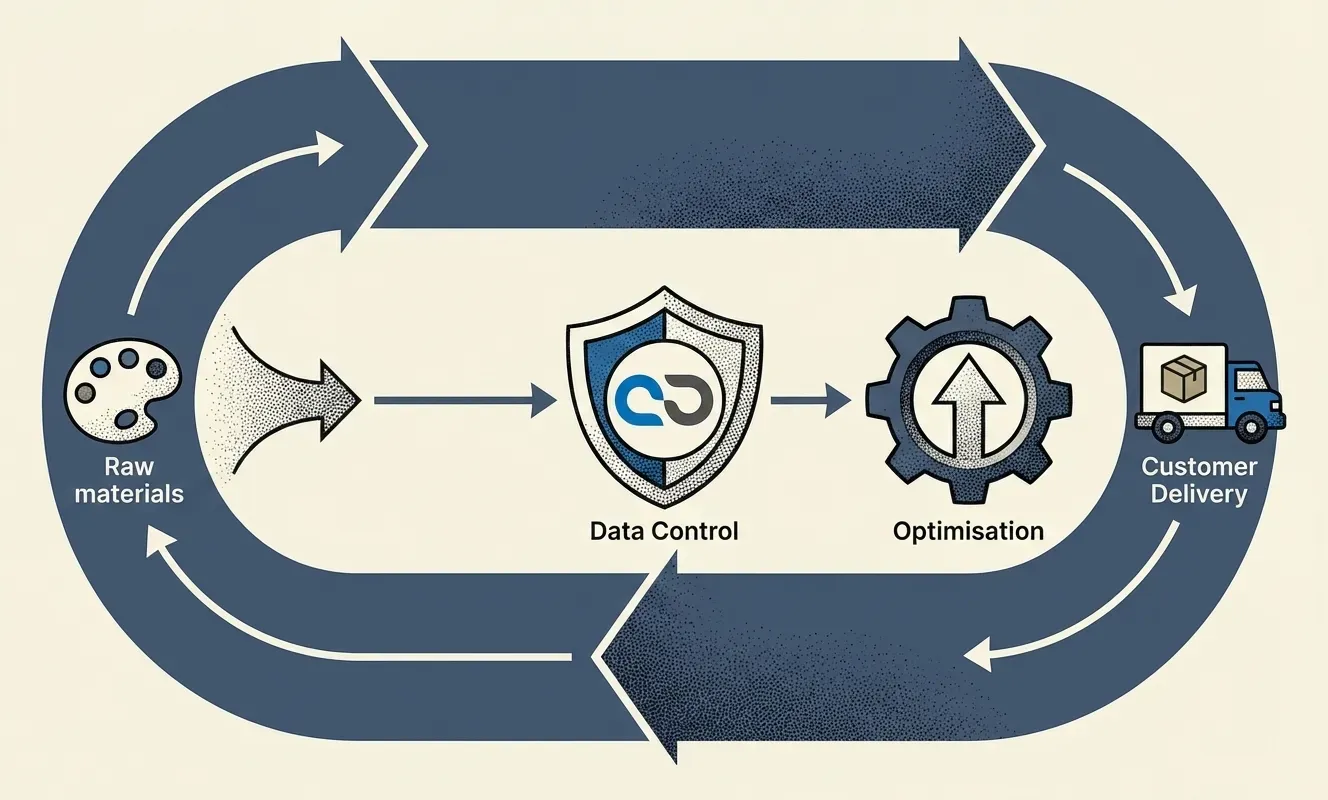
Navichain empowers SMEs to achieve outcomes like improved efficiency, reduced costs, and enhanced customer satisfaction through strategic supply chain management.
- Strategic Resilience: A sovereign supply chain provides strategic resilience, allowing SMEs to weather economic storms, adapt to geopolitical shifts, and maintain a competitive edge in the long term. While the specific ROI will vary depending on the individual SME and its specific circumstances, the potential benefits are significant. For example, a company that reduces its supply chain costs by 10% and increases its revenue by 5% can see a significant improvement in its profitability. Similarly, a company that reduces its lead times by 20% can gain a significant competitive advantage. By investing in supply chain sovereignty and implementing a platform like Navichain, European SMEs can unlock these benefits and achieve significant business outcomes.
Conclusion
The era of blindly pursuing cost optimization at the expense of resilience is over. European SMEs must recognize the critical importance of supply chain sovereignty and take proactive steps to regain control over their supply chains. This requires a strategic shift from reactive crisis management to proactive risk mitigation and resilience building, enabled by innovative technologies like the Navichain platform. Navichain offers a powerful solution for SMEs seeking to achieve true supply chain sovereignty, providing a Unified OS for managing all aspects of the supply chain, from sourcing and procurement to logistics and distribution. Its AI-driven capabilities empower SMEs to gain unprecedented visibility, proactively manage risks, and optimize their operations for resilience and agility. By embracing supply chain sovereignty and leveraging the power of technology, European SMEs can transform their supply chains from potential weaknesses into strategic strengths, unlocking significant business outcomes and fostering long-term growth. The future belongs to those who control their destiny, and in the world of global commerce, that control begins with a sovereign supply chain.
References
- Regulation (EU) 2022/2554 on digital operational resilience for the financial sector (DORA) (2022) https://eur-lex.europa.eu/legal-content/EN/TXT/?uri=CELEX:32022R2554
- IRU - The voice of road transport (n.d.) https://www.iru.org/
- McKinsey & Company - Risk, resilience, and rebalancing in global value chains (2020) https://www.mckinsey.com/business-functions/operations/our-insights/risk-resilience-and-rebalancing-in-global-value-chains
- Gartner - Supply Chain Research and Insights (n.d.) https://www.gartner.com/en/supply-chain
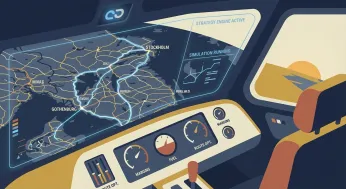
Navichain technology empowers European SMEs to visualize and control their supply chains, fostering greater sovereignty and resilience.
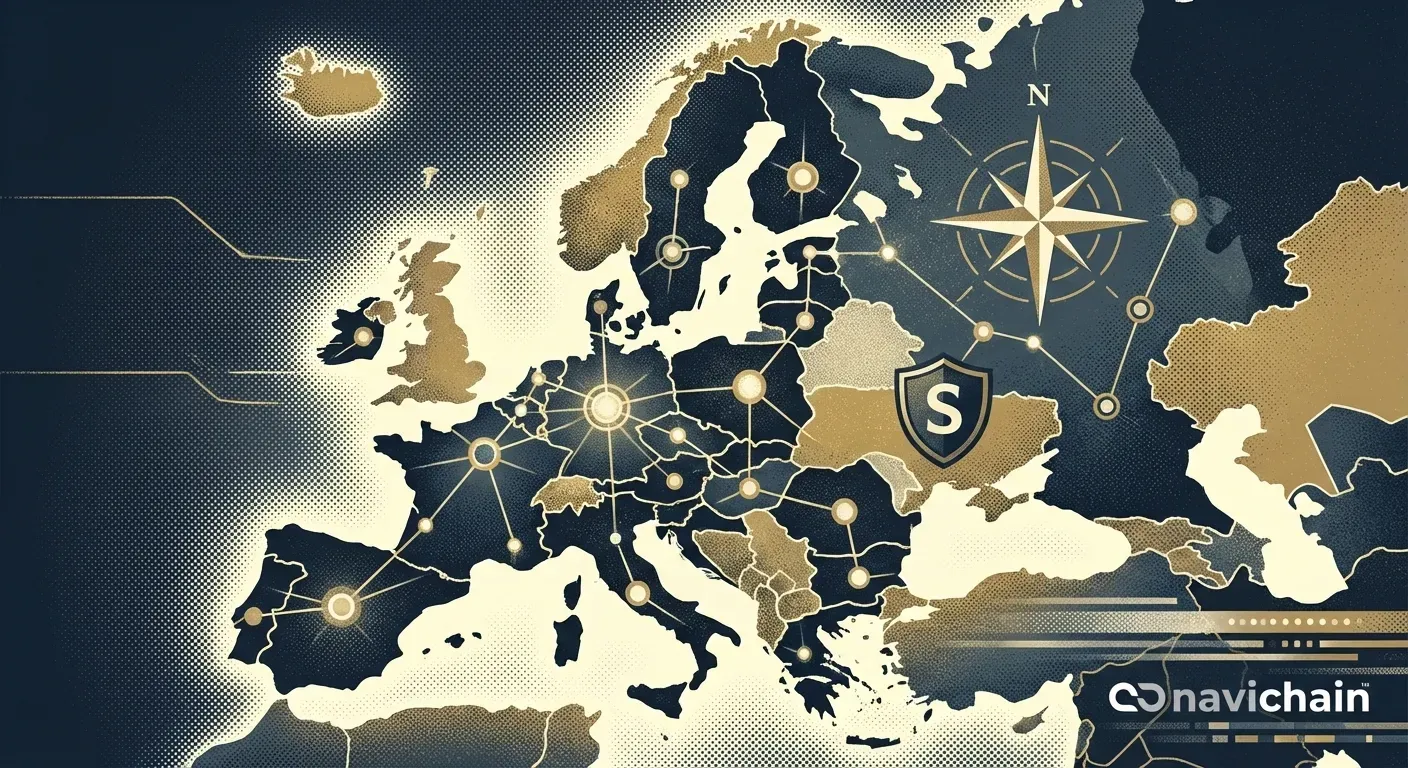
Navichain provides SMEs with a visual representation of their supply chain, enhancing transparency and control. This increased visibility is key to building resilient and sovereign supply chains.
Ready to optimise your supply chain?
navichain Insights Newsletter
Join the newsletter to receive the latest updates in your inbox.