Supply Chain Management: The Global Trade Engine
Table of Contents
1. Executive Summary
Definition and core value. Supply Chain Management (SCM) is the centralized management of the flow of goods and services. It dictates the movement and storage of raw materials, work-in-process inventory, and finished goods from point of origin to point of consumption.
2. The Friction (The Problem)
Why this is hard. The Bullwhip Effect and Siloed Data. The friction in SCM is information asymmetry. When the retailer, distributor, and manufacturer don't share real-time data, the chain becomes jerky and inefficient, leading to stockouts or massive overstock (waste).
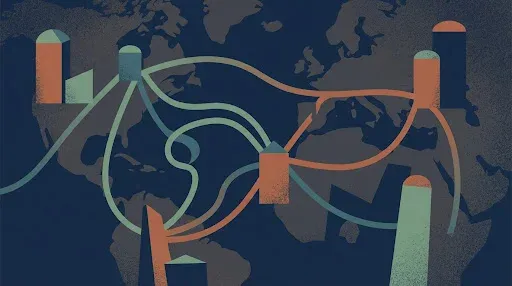
Figure 2: Visualizing the strategic problem.
3. Theoretical Background
The Mechanics. SCM integrates five key elements: 1. Planning: Strategy and metrics. 2. Sourcing: Choosing suppliers. 3. Making: Manufacturing. 4. Delivering: Logistics (Navichain's sweet spot). 5. Returning: Reverse logistics. Goal: Maximize customer value and gain a competitive advantage in the marketplace.
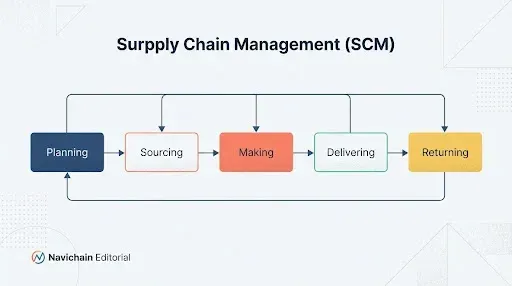
Figure 3: The core framework visualized.
4. The Data Evidence
Why this matters physically. Companies with optimized supply chains have 15% lower supply chain costs, less than 50% of the inventory holdings, and cash-to-cash cycles at least 3x faster than those not focused on SCM. Amazon's dominance is widely attributed not to its website, but to its SCM excellence.
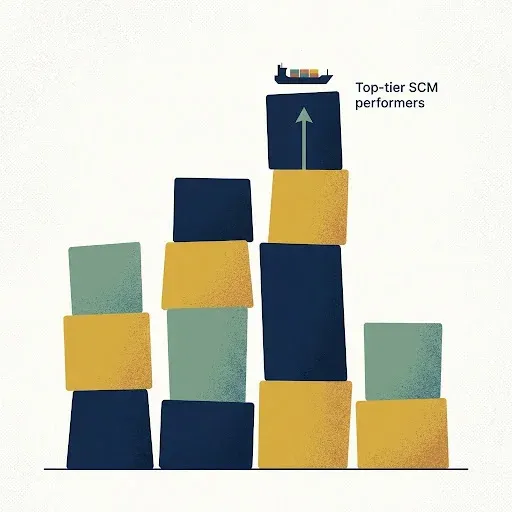
Figure 4: The measurable impact of the strategy.
5. Strategic Application
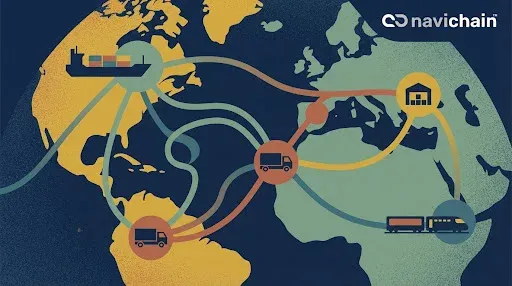
How to implement. Modern SCM Tactics: * Just-in-Time (JIT): Reducing inventory to near-zero. * Vertical Integration: Owning the ships (Amazon) to control the flow. * Nearshoring: Moving production closer to the customer to reduce lead times. * Digitization: Replacing Excel with API-driven platforms.
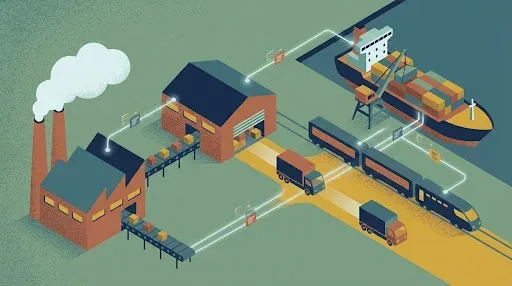
Figure 5: Practical application in a logistics context.
6. The Navichain Perspective: The Digital Enabler
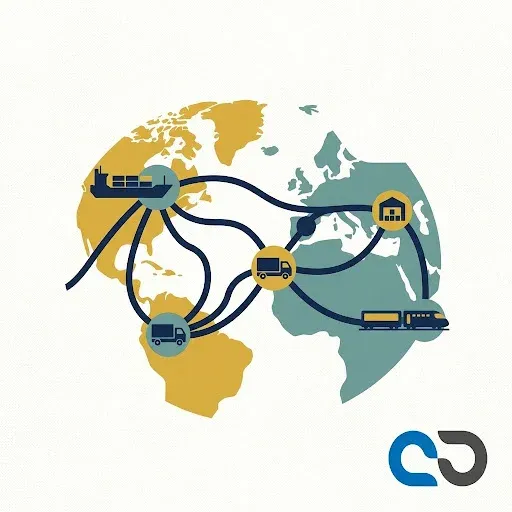
Automated precision. Navichain is the operating system for the 'Delivering' and 'Returning' pillars of SCM. We fracture the silos by providing a single source of truth for shipment data. We turn a 'Chain' (rigid, linear) into a 'Network' (fluid, connected), allowing for real-time resilience.

Figure 6: How Navichain's digital platform operationalizes this strategy.
7. Real-World Success Stories
Case Studies. * Walmart: Pioneered SCM by sharing POS data directly with suppliers (P&G), effectively removing the retailer as a bottleneck. * Dell: Revolutionized PC sales by building a 'Make-to-Order' supply chain, eliminating the cost of holding obsolete inventory. * Zara: Redefined fashion SCM by shortening the design-to-shelf cycle to weeks, allowing them to respond to trends instantly.
8. Strategic Takeaway
Conclusion. In the 21st century, companies don't compete; supply chains compete. The winner is the one with the fastest, most transparent flow.
9. References
Verified links. * Harvard Business Review. (n.d.). Supply Chain Management. View Resource * McKinsey & Company. (n.d.). Operations. View Resource * Council of Supply Chain Management Professionals (CSCMP). (n.d.). View Resource
navichain Insights Newsletter
Join the newsletter to receive the latest updates in your inbox.