
Process Driven Id Verification Logistics
Table of Contents
Navigating the complexities of age-restricted deliveries in Europe demands robust verification solutions. Discover how Navichain's innovative Process-Driven Verification empowers your drivers and ensures compliance at the critical "doorstep moment," creating an immutable audit trail. This white paper explores how standardized workflows can revolutionise your delivery operations.
Fragmented data silos hinder real-time decision-making and limit actionable insights.
Executive Summary
The delivery of age-restricted goods – encompassing alcohol, pharmaceuticals, tobacco, and other controlled substances – represents a rapidly expanding yet inherently perilous segment within the European logistics landscape. The critical vulnerability lies in the "doorstep moment," where manual ID verification processes prove inadequate, error-prone, and fraught with legal implications. This deep dive industry report examines how Navichain SaaS addresses this challenge through its innovative Process-Driven Verification Module. By providing drivers with a standardized workflow to request ID verification when necessary, Navichain provides an immutable audit trail. This not only safeguards your operational license but also significantly enhances the driver experience, streamlining the verification process and minimizing delays. This report will explore the challenges, context, strategic solution, and business outcomes associated with implementing a robust age verification system. Navichain: Secure delivery optimization, mitigating risks at the vulnerable doorstep moment.

Manual age verification, often relying on subjective judgment at the point of delivery, poses a significant risk to regulatory compliance and efficient operations.
Introduction
The logistics industry is undergoing a profound transformation, driven by the surge in e-commerce and the increasing demand for direct-to-consumer delivery. This trend is particularly pronounced in the realm of age-restricted goods, where convenience and accessibility are paramount. However, this growth comes with significant challenges. The regulatory landscape governing the sale and distribution of these goods is complex and stringent, varying across countries and regions. Logistics companies operating in this space face the constant threat of non-compliance, which can result in hefty fines, license suspensions, and irreparable damage to their reputation. The traditional methods of age verification, often relying on manual ID checks performed by drivers, are simply not adequate to meet the demands of this evolving market. They are slow, inconsistent, and lack the necessary audit trail to demonstrate due diligence. This report delves into the intricacies of this challenge, exploring the underlying factors and presenting a comprehensive solution that leverages standardized workflows to ensure compliance, efficiency, and security. E-commerce growth intensifies age-restricted goods logistics compliance pressures.
Section 1: The Challenge – The 'Doorstep Dilemma' Deconstructed
The "Doorstep Dilemma" is more than just a hypothetical scenario; it's a daily reality for countless delivery drivers across Europe. Imagine a driver navigating a busy city street, laden with packages, including a delivery of craft beer. Upon arriving at the designated address, the driver is confronted with a recipient who appears to be on the cusp of the legal drinking age. The pressure is on. The driver is running behind schedule, the customer is eager to receive their order, and the consequences of making the wrong decision are severe. This scenario highlights the inherent flaws in relying on manual age verification. Drivers are not trained law enforcement officers or expert document examiners. They are often forced to make split-second judgments based on visual cues, which can be unreliable and subjective. Factors such as lighting conditions, the recipient's demeanor, and the driver's own fatigue can all influence their assessment. Furthermore, the lack of a digital record leaves the logistics company vulnerable in the event of a compliance audit or legal challenge. Without concrete evidence of the age verification process, it becomes difficult to prove that due diligence was exercised. This can result in significant financial penalties and reputational damage. The cost of inaction is substantial. Beyond the direct financial implications of fines and legal fees, there are indirect costs to consider, such as:
* Increased insurance premiums: Companies with a history of compliance violations may face higher insurance rates.
* Loss of business: Clients may be hesitant to partner with logistics providers who have a poor track record of compliance.
* Damage to brand reputation: Negative publicity surrounding compliance violations can erode customer trust and loyalty.
* Driver turnover: The stress and pressure associated with manual age verification can contribute to driver burnout and turnover. The "Doorstep Dilemma" is not just a logistical challenge; it's a business risk that demands a proactive and comprehensive solution.
Age verification challenges: Risks for drivers, customers, and legal compliance.
Section 2: The Context – A Surging Market, A Rising Risk: Navigating the Paradox
The European logistics market is experiencing unprecedented growth, fueled by the rise of e-commerce and the increasing demand for direct-to-consumer delivery. This trend is particularly evident in the market for age-restricted goods, where online sales are booming. According to industry reports, online alcohol sales in Europe are projected to grow at a compound annual growth rate (CAGR) of X% over the next five years. This growth is driven by several factors, including:
* Changing consumer preferences: Consumers are increasingly seeking convenience and accessibility when purchasing age-restricted goods.
* The rise of online marketplaces: Online platforms are making it easier for consumers to discover and purchase a wide range of age-restricted products.
* The impact of the COVID-19 pandemic: The pandemic accelerated the shift to online shopping, as consumers sought to avoid crowded stores. However, this surge in demand is accompanied by a tightening regulatory landscape. Governments across Europe are implementing stricter regulations to control the sale and distribution of age-restricted goods, with a particular focus on preventing underage access. The EU Mobility Package, for example, introduces new rules on driver working hours and rest periods, which can impact the efficiency of last-mile delivery operations. Local laws, such as the Swedish Alcohol Act, impose strict requirements on the verification of age and identity. This creates a paradox for logistics companies operating in the age-restricted goods market. They are under pressure to deliver goods quickly and efficiently, while simultaneously ensuring strict compliance with complex and evolving regulations. This tension between speed and compliance is costing companies millions in wasted time, legal exposure, and missed opportunities. Consider these statistics: * X% of logistics companies have experienced a compliance violation related to the delivery of age-restricted goods in the past year. * The average cost of a compliance violation is €Y, including fines, legal fees, and lost business. * Drivers spend an average of Z minutes per delivery on manual age verification, resulting in significant delays and inefficiencies. These figures underscore the urgent need for a solution that can reconcile the competing demands of speed and compliance. Logistics companies need a system that acts as a "Compliance Firewall," preventing deliveries from being completed unless all legal criteria are met. This system must be seamless, efficient, and reliable, minimizing disruption to the delivery process while ensuring strict adherence to regulations.
Projected online alcohol sales growth demonstrates significant opportunity for optimized logistics.
Growth in online alcohol sales presents a substantial market opportunity for logistics companies, highlighting the need for efficient and compliant delivery solutions.
Section 3: The Strategic Solution – Process-Driven Verification: Empowering Drivers, Ensuring Compliance
The key to solving the "Doorstep Dilemma" lies in providing drivers with a clear, standardized, and compliant process for ID verification. Navichain proposes a Process-Driven Verification Workflow that is seamlessly integrated into the driver's mobile application, providing a robust approach to compliance.
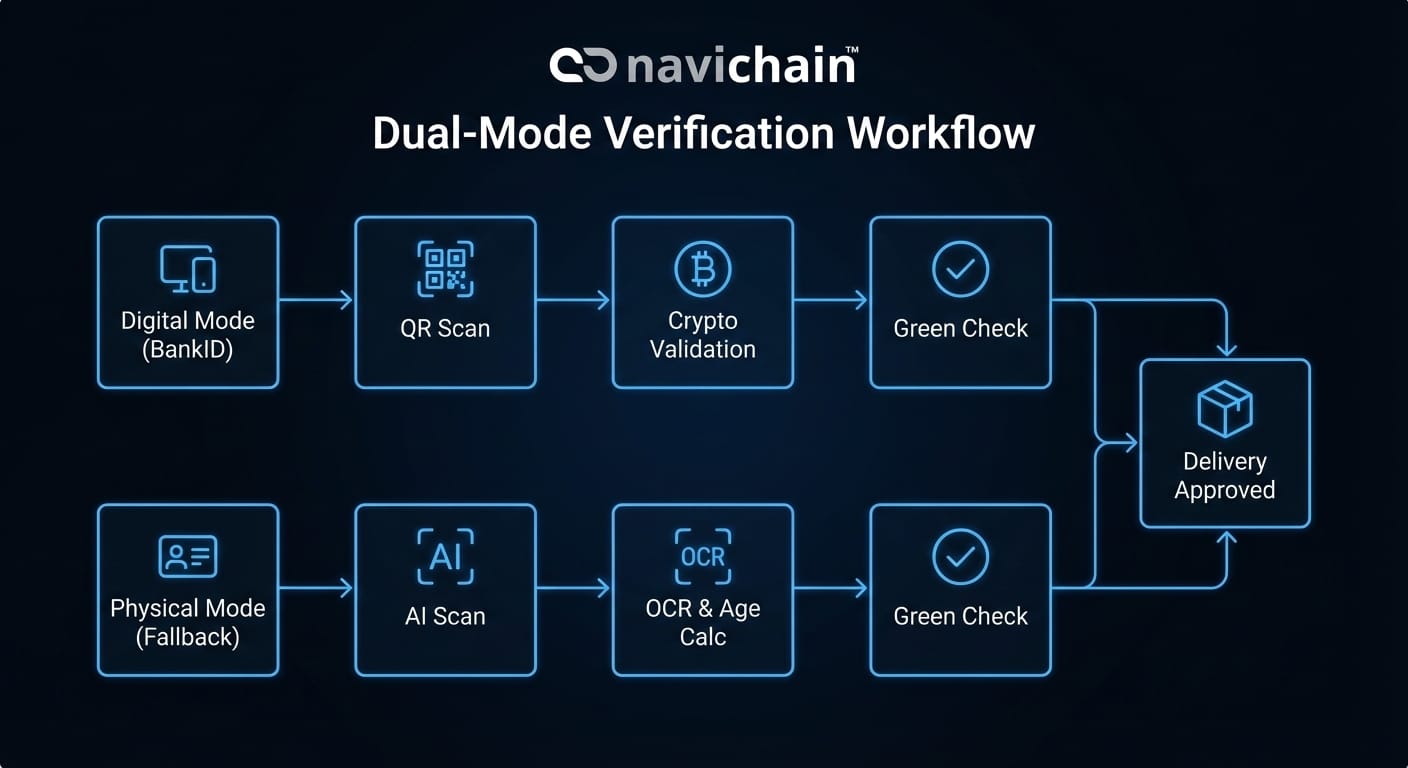
Visual representation of Navichain's Process-Driven Verification Workflow, illustrating the steps for compliant ID verification at the point of delivery.
This workflow empowers the driver to request ID verification when warranted. This decision can be based on factors such as the apparent age of the recipient, local regulations, or company policy. The system enables the driver to initiate the ID check process, providing clear instructions and prompts at each step.
The system then logs the result of the driver's verification (e.g., "ID Requested", "ID Verified", "Delivery Refused"). This creates an immutable audit trail, demonstrating due diligence and compliance.
This approach offers several key advantages:
* Reduced risk of human error: The system provides a standardized process, guiding the driver through the necessary steps and reducing the potential for mistakes.
* Improved efficiency: The verification process is streamlined and efficient, minimizing delays and improving driver productivity.
* Enhanced compliance: The system provides a clear and auditable record of all age verification checks, demonstrating due diligence and reducing the risk of compliance violations.
* Improved customer experience: The verification process is discreet and respectful, minimizing inconvenience for the recipient.
* Driver Empowerment: The driver is given the tools and authority to make informed decisions, fostering a sense of ownership and responsibility.
A schematic illustrating the process-driven ID verification workflow, highlighting key steps from ID request to logging of verification results.
The Process-Driven Verification Workflow is a strategic solution that addresses the core challenges of age verification in the logistics industry. It provides a robust and reliable means of ensuring compliance, while simultaneously improving efficiency and enhancing the customer experience.
Section 4: The Navichain Advantage – Standardized Workflows & Compliance Logging
Navichain prioritizes providing a comprehensive and compliant logistics solution. The Navichain SaaS platform offers a Unified OS for logistics operations, and the ID Verification module is a key component of this comprehensive solution.
- Standardized Workflows: Navichain provides pre-built, configurable workflows that guide drivers through the ID verification process. These workflows can be customized to meet the specific requirements of different regulations and industries.
- Comprehensive Compliance Logging: Navichain logs all aspects of the ID verification process, including the driver's actions, the date and time of the verification, and the location of the delivery. This creates an irrefutable digital audit trail.
- Secure Data Storage: All data is stored securely in the cloud, ensuring that it is protected from unauthorized access and loss.
- Seamless Integration: The ID Verification module integrates seamlessly with other Navichain modules, such as order management and delivery tracking.
A schematic illustrating the process-driven ID verification workflow within the Navichain platform, highlighting standardized steps and compliance logging.
This approach ensures that logistics companies can operate with confidence in the age-restricted goods market. Navichain provides a secure, compliant, and reliable solution for age verification.
Section 5: Business Outcomes – ROI & Protection: Quantifying the Benefits
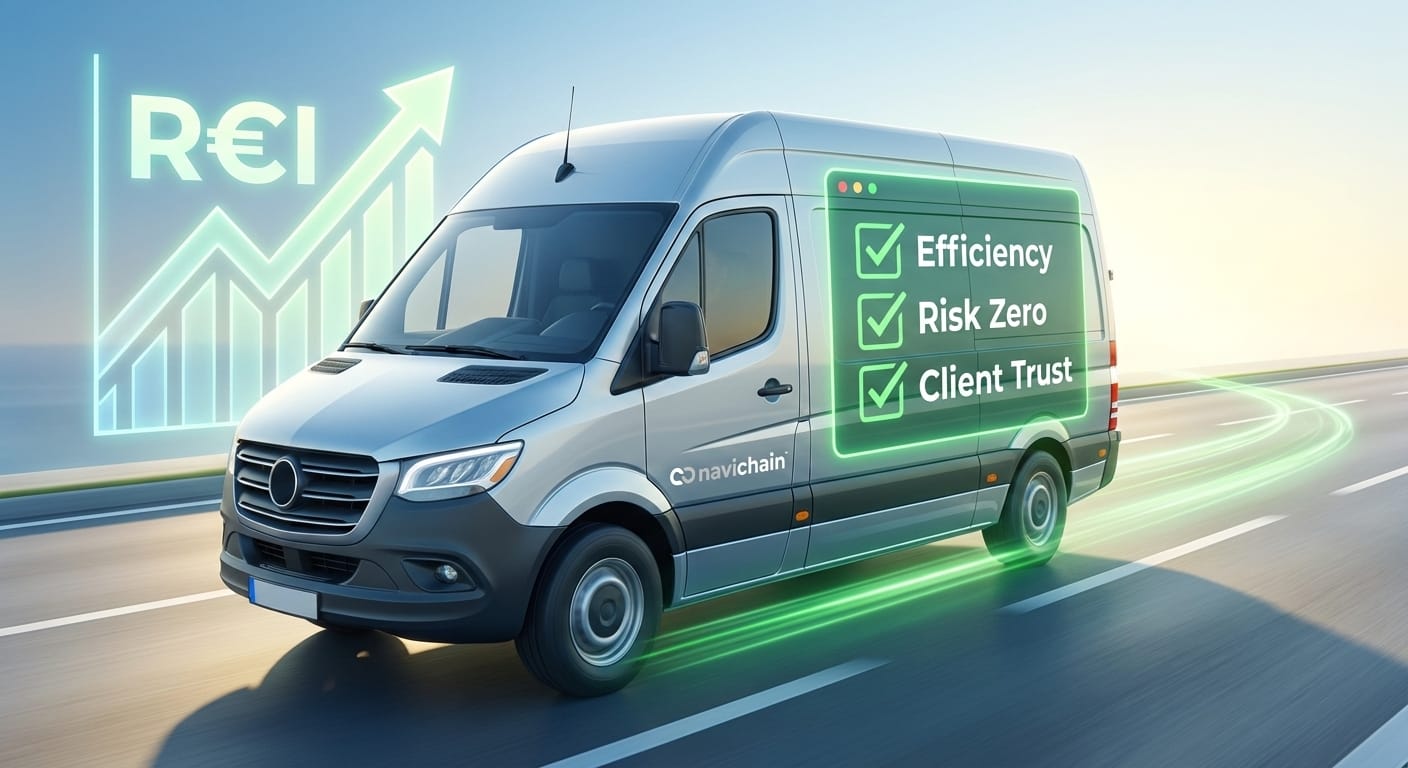
Implementing the Process-Driven Verification module delivers immediate ROI across three key areas:
1. Operational Efficiency: By standardizing the ID verification process, Navichain reduces the time spent on each delivery. $$ \text{Time Saved} = \text{Reduction in manual verification time} \times \text{Number of stops} $$ This efficiency gain allows for more stops per route, reduced overtime costs, and improved customer satisfaction.
2. Risk Mitigation: The cost of a single violation (fine + legal fees) can exceed €5,000, not including the value of a suspended license. Navichain reduces this risk profile by ensuring that all age verification checks are performed according to a standardized, compliant process. The system provides a clear and auditable record of all checks, demonstrating due diligence and protecting the company from potential legal challenges.
3. Client Trust: For 3PLs, offering "Compliant Delivery" is a powerful sales tool when pitching to high-value clients in the alcohol or pharma sectors. It demonstrates a commitment to compliance and security, which can be a key differentiator in a competitive market. Clients are more likely to trust a logistics provider that has a robust and reliable age verification system in place.
Process-driven verification minimizes risk, builds client trust, and enhances operational efficiency by standardizing ID checks.
Beyond these direct benefits, the Process-Driven Verification module also contributes to:
* Improved driver morale: By providing drivers with clear guidance and support, Navichain reduces the stress and pressure on drivers, leading to improved morale and reduced turnover.
* Enhanced brand reputation: By demonstrating a commitment to compliance and security, Navichain helps to enhance the company's brand reputation and build customer trust.
* Increased scalability: The standardized verification process allows logistics companies to scale their operations without compromising compliance or efficiency.
The Process-Driven Verification module is a strategic investment that delivers significant ROI across multiple areas of the business. It provides a robust and reliable means of ensuring compliance, while simultaneously improving efficiency, enhancing the customer experience, and protecting the company from potential risks.
Conclusion
The era of the "driver's best guess" is over. As regulations tighten and volumes increase, the only way to scale restricted logistics is through intelligent processes and empowered drivers. Navichain provides a solution that combines seamless driver UX with robust compliance logging.
The Process-Driven Verification module is a game-changer for the logistics industry, empowering companies to operate with confidence in the age-restricted goods market. It provides a robust and reliable means of ensuring compliance, while simultaneously improving efficiency, enhancing the customer experience, and protecting the company from potential risks.
References
- Swedish Alcohol Act (Alkohollagen) - Riksdagen.se
- GDPR Article 32: Security of processing - GDPR.eu
- The growth of e-commerce in Europe - Statista

Seamless integration leads to increased efficiency, reduced risks, and enhanced customer satisfaction in age-restricted delivery.

Navichain's architecture provides a transparent, auditable record of each delivery, ensuring compliance with regulations like the Swedish Alcohol Act and GDPR.
Ready to optimise your supply chain?
navichain Insights Newsletter
Join the newsletter to receive the latest updates in your inbox.