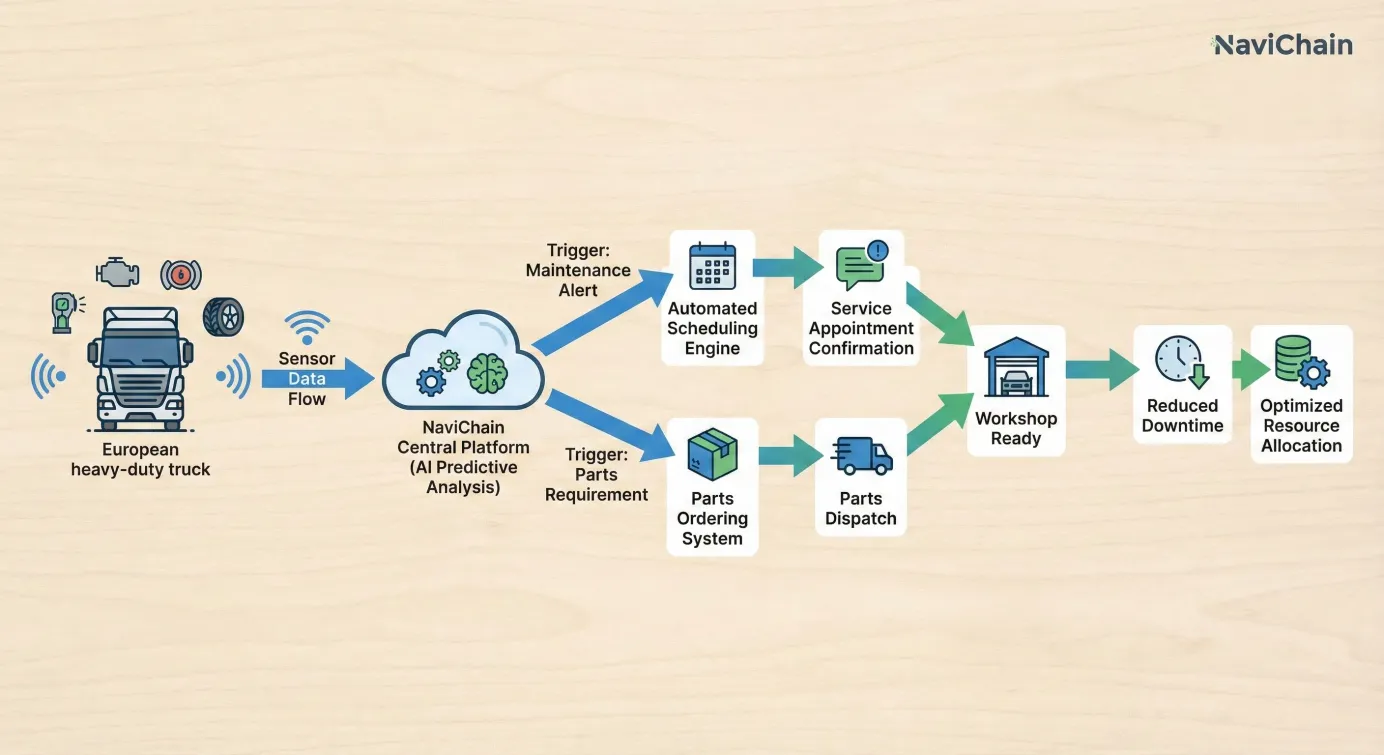
Predictive Maintenance: Anticipate and Avoid Downtime
Table of Contents
1. Executive Summary
Definition and core value.
Predictive maintenance (PdM) is a maintenance strategy that uses data analysis and machine learning to predict equipment failures before they happen. By constantly monitoring equipment conditions and spotting potential issues early, companies can schedule maintenance tasks proactively, slashing downtime and boosting equipment lifespan. This leads to serious cost savings and better operational efficiency. For European SMEs, PdM offers a competitive advantage by fine-tuning resource use and ensuring operations keep running smoothly. It moves beyond reactive fixes to strategic anticipation.
2. The Friction (The Problem)
Why this is hard.

Figure 2: This image visualizes the core problem: unplanned downtime of industrial chaos.
The traditional approach to maintenance often involves either running equipment until it breaks down (reactive maintenance) or performing maintenance at fixed intervals, regardless of the actual condition of the equipment (preventive maintenance). Reactive maintenance leads to unplanned downtime, which can disrupt production schedules, delay deliveries, and damage customer relationships. Preventive maintenance, while better than reactive maintenance, can result in unnecessary maintenance activities, wasting resources and increasing costs. The challenge lies in knowing precisely when maintenance is needed to avoid both downtime and wasted effort. Many SMEs lack the resources and expertise to implement and manage complex maintenance systems, creating a significant barrier to adoption.
3. Theoretical Background
The Mechanics.
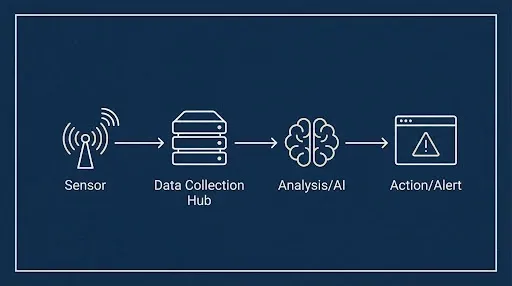
Figure 3: This image explains the technical process of predictive maintenance.
It illustrates the linear data flow from the sensor to the analysis hub, to the AI brain, and finally to the action alert.
Predictive maintenance works by collecting data from equipment using sensors and other monitoring devices. This data can include vibration levels, temperature, pressure, oil analysis, and electrical current. The data is then analysed using various techniques, including statistical analysis, machine learning, and artificial intelligence, to identify patterns and anomalies that may indicate a potential failure. Machine learning algorithms can be trained to recognise the signs of impending failure, allowing maintenance teams to proactively address the issue before it leads to downtime. The key is establishing a baseline for normal operation and then identifying deviations from that baseline that suggest a problem is developing. Common PdM techniques include vibration analysis, infrared thermography, oil analysis, and ultrasonic testing.
4. The Data Evidence
Why this matters physically.
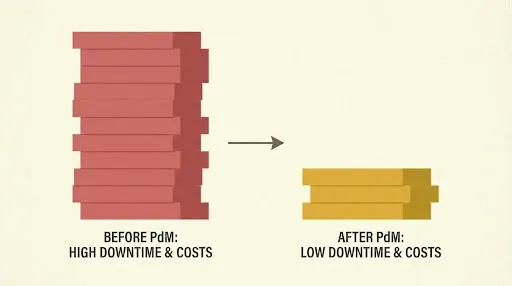
Figure 4: To represent the significant cost savings and symbolic comparison between the high costs of the "before" state and the reduced costs of the "after" state.
The benefits of predictive maintenance are well-documented. Studies have shown that PdM can reduce maintenance costs by 25-30%, eliminate breakdowns by 70-75%, and decrease downtime by 35-45%. A report by McKinsey found that companies that successfully implement predictive maintenance programs can see a 10-20% improvement in asset availability and a 5-10% reduction in maintenance spending. These figures are particularly significant for European SMEs, where resource efficiency is crucial for competitiveness. The data clearly shows that investing in predictive maintenance is not just a cost-saving measure, but a strategic move that can enhance overall operational performance and improve the bottom line.
5. Strategic Application
How to implement.

Figure 5: A direct contrast to the "Problem" image, this illustration depicts the positive outcome of predictive maintenance. It shows a smoothly running, organized factory floor with flowing lines of data and materials. The calm, balanced color palette conveys a sense of order and efficiency.
Implementing predictive maintenance involves several key steps. First, it's essential to identify the critical equipment that would benefit most from PdM. This typically includes equipment that is prone to failure, has a high replacement cost, or is essential for production. Next, select the appropriate monitoring techniques based on the type of equipment and the potential failure modes. Install sensors and other monitoring devices to collect the necessary data. The collected data must then be analysed to establish a baseline for normal operation and identify any deviations. Machine learning algorithms can be used to automate this process and provide early warnings of potential failures. Finally, develop a maintenance plan based on the insights gained from the data analysis. This plan should include scheduled maintenance activities to address potential problems before they lead to downtime. Start small, focus on one or two critical assets, and gradually expand the program as you gain experience and see results.
6. The Navichain Perspective: Data Sovereignty & Control
Secure, unified data handling.

Figure 6: The core Navichain principle of data sovereignty. The lighthouse on an island base represents a secure, self-controlled hub that guides your data packets through the complex industrial landscape.
At Navichain, we understand the importance of data sovereignty and control. Many predictive maintenance solutions rely on cloud-based platforms, which can raise concerns about data security and privacy, particularly for European SMEs that must comply with GDPR and other data protection regulations. Our approach is to offer predictive maintenance solutions that are hosted on your own infrastructure, giving you complete control over your data. This ensures that your sensitive data remains secure and compliant with all relevant regulations. Moreover, Navichain provides a unified platform that integrates data from various sources, including sensors, ERP systems, and maintenance management systems, providing a holistic view of your operations. Our AI-driven tools analyse this data to provide actionable insights and automate maintenance planning, helping you optimise your maintenance strategies and reduce downtime. Navichain empowers you to harness the power of predictive maintenance while maintaining complete control over your data.
7. Real-World Success Stories
Case Study 1: SKF's Condition Monitoring Solutions
SKF, a leading global supplier of bearings, seals, and lubrication systems, offers a range of condition monitoring solutions that enable predictive maintenance. One notable case involves a large paper mill in Sweden that implemented SKF's condition monitoring system to improve the reliability of its critical machinery. The paper mill was experiencing frequent breakdowns of its paper machines, resulting in significant production losses and high maintenance costs. By installing SKF's sensors and software, the mill was able to continuously monitor the condition of its bearings and other critical components. The system detected several potential failures early on, allowing the maintenance team to schedule repairs before they led to breakdowns. As a result, the mill reduced its unplanned downtime by 40%, reduced maintenance costs by 25%, and increased production output by 10%. The success of this project highlights the benefits of using advanced condition monitoring solutions for predictive maintenance. (Source: https://www.skf.com/
Case Study 2: Siemens' Predictive Maintenance for Wind Turbines
Siemens, a global technology powerhouse, has developed a comprehensive predictive maintenance solution for wind turbines. Wind turbines are often located in remote and harsh environments, making maintenance challenging and costly. Siemens' solution uses sensors and data analytics to monitor the condition of wind turbine components, such as gearboxes, generators, and blades. The system detects anomalies and predicts potential failures, allowing maintenance teams to proactively address issues before they lead to downtime. In one specific case, Siemens partnered with a wind farm operator in Germany to implement its predictive maintenance solution. The solution helped the operator reduce unplanned downtime by 30% and increase the overall availability of its wind turbines. This resulted in increased energy production and significant cost savings. Siemens' predictive maintenance solution demonstrates the value of using data-driven insights to optimise maintenance strategies and improve the performance of critical assets. (Source: https://www.siemens.com/
Case Study 3: Augury's AI-Driven Machine Health Platform
Augury offers an AI-driven machine health platform that helps manufacturers predict and prevent machine failures. One compelling case involves a food processing plant in the United States that deployed Augury's platform to improve the reliability of its packaging equipment. The plant was experiencing frequent breakdowns of its packaging machines, leading to production delays and increased costs. Augury's platform uses sensors to collect data from the machines and then uses AI algorithms to analyse the data and predict potential failures. The platform detected several impending failures early on, allowing the maintenance team to schedule repairs before they caused downtime. The plant reduced its unplanned downtime by 50%, increased production output by 15%, and improved overall equipment effectiveness (OEE) by 10%. Augury's solution showcases the power of AI-driven predictive maintenance in improving machine reliability and optimising production processes. (Source: https://www.augury.com/
8. Strategic Takeaway
Conclusion.
Predictive maintenance is a powerful strategy for reducing downtime, lowering maintenance costs, and improving overall operational efficiency. By using data analysis and machine learning to predict equipment failures before they occur, businesses can proactively schedule maintenance activities and avoid costly disruptions. For European SMEs, predictive maintenance offers a significant competitive advantage by optimising resource utilisation and ensuring business continuity. Embracing predictive maintenance requires a strategic approach that includes identifying critical equipment, selecting appropriate monitoring techniques, analysing data, and developing a maintenance plan. With the right tools and expertise, SMEs can unlock the full potential of predictive maintenance and achieve significant improvements in their operations. And, with solutions like Navichain SaaS' hosted on own infrastructure options, companies can ensure data sovereignty is also maintained throughout the process.
9. References
Verified links.
- McKinsey Report on Predictive Maintenance: https://www.mckinsey.com/
- SKF Condition Monitoring Solutions: https://www.skf.com/
- Siemens Predictive Maintenance for Wind Turbines: https://www.siemens.com/
- Augury's AI-Driven Machine Health Platform: https://www.augury.com/
navichain Insights Newsletter
Join the newsletter to receive the latest updates in your inbox.