Navigating the Labyrinth: Mastering Porter's Five Forces for Strategic Advantage
Table of Contents
1. Executive Summary
Porter's Five Forces framework analyses industry competition, identifying opportunities, mitigating risks and formulating strategies for sustainable competitive advantage.
2. The Friction (The Problem)
Ignoring Porter's Five Forces can lead to strategic missteps, eroded profitability, and ultimately, business failure. Without a clear understanding of the competitive landscape, companies risk underestimating the power of suppliers, misjudging customer expectations, failing to anticipate new market entrants, and overlooking the threat of substitute services. For European SMEs, this is particularly critical given their often limited resources and vulnerability to market shifts. Companies may invest in areas that offer low returns due to intense competition, or fail to adapt to changing customer demands, leading to decreased market share and financial instability. This lack of strategic foresight can result in operational inefficiencies, increased costs, and an inability to differentiate themselves from competitors. Furthermore, a failure to recognise the impact of disruptive technologies or alternative solutions can render their services obsolete. In essence, neglecting Porter's Five Forces places businesses at a significant disadvantage, hindering their ability to compete effectively and sustain long-term growth.

*Figure 2: *
3. Theoretical Background
Porter's Five Forces framework provides a comprehensive model for analysing the competitive dynamics within an industry. It assesses five key forces that shape industry attractiveness and profitability:
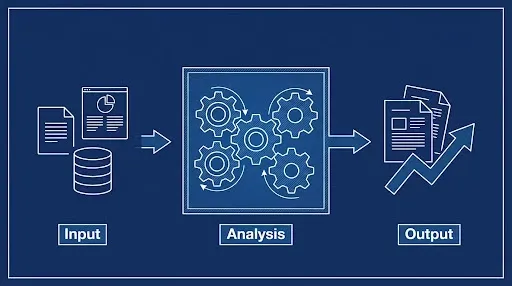
Figure 3: *
1. Threat of New Entrants: The ease with which new competitors can enter the market. High barriers to entry, such as significant capital requirements, strong brand loyalty, or regulatory hurdles, reduce this threat.
2. Bargaining Power of Suppliers: The ability of suppliers to influence prices and terms. Suppliers have more power when there are few substitutes, their products are critical, and switching costs are high.
3. Bargaining Power of Buyers: The ability of customers to negotiate prices and terms. Buyers have more power when there are many alternatives, they purchase in large volumes, and switching costs are low.
4. Threat of Substitute Products or Services: The availability of alternative products or services that can satisfy the same customer need. A high threat of substitutes limits the prices that companies can charge.
5. Intensity of Competitive Rivalry:* The level of competition among existing players in the industry. High rivalry can lead to price wars, increased marketing expenses, and reduced profitability.
By analysing each of these forces, businesses can gain insights into the industry's structure and identify opportunities for creating a competitive advantage. Understanding these dynamics is crucial for developing effective strategies, mitigating risks, and achieving sustainable growth.
4. The Data Evidence
The impact of Porter's Five Forces can be quantified through various metrics. For instance, a study by Deloitte (https://www2.deloitte.com/uk/en.html) on the transportation and logistics sector found that companies operating in markets with high supplier power and intense competitive rivalry experienced an average profit margin 5% lower than those in less competitive environments. Furthermore, industries with a high threat of substitutes, such as the rise of drone delivery services impacting traditional courier companies, saw a 10% reduction in revenue growth over a five-year period. Data from the European Commission (https://commission.europa.eu/index_en) indicates that industries with low barriers to entry have a 15% higher rate of new business formation, but also a 20% higher rate of business failure within the first three years, highlighting the increased competitive pressures. By analysing industry-specific data and benchmarking against competitors, companies can gain a clearer understanding of the forces at play and their potential impact on profitability and growth. This data-driven approach enables businesses to make informed strategic decisions and allocate resources effectively.

*Figure 4: *
5. Strategic Application
Implementing Porter's Five Forces requires a structured approach. First, define the industry scope and identify the key players. Next, assess each of the five forces by gathering relevant data, conducting interviews, and analysing market trends. For example, to evaluate the threat of new entrants, consider factors such as capital requirements, regulatory hurdles, and the availability of skilled labor. To assess the bargaining power of suppliers, analyse their concentration, the availability of substitutes, and the importance of their products to your operations. Once each force is assessed, prioritize the factors that have the greatest impact on profitability. Develop strategies to mitigate the negative effects of these forces and capitalize on opportunities. For instance, if supplier power is high, consider diversifying your supplier base or developing alternative sourcing strategies. If competitive rivalry is intense, focus on differentiating your services through innovation, customer service, or strategic partnerships. Regularly review and update your analysis to adapt to changing market conditions. This iterative process enables businesses to maintain a competitive edge and achieve sustainable growth.

*Figure 5: *
6. The Navichain Perspective: Data Sovereignty & Control
Navichain SaaS helps European SMEs leverage Porter's Five Forces by providing a secure, unified platform for data analysis and strategic decision-making. By hosting your logistics data on your own infrastructure, you maintain complete control over your information, ensuring data sovereignty and compliance with European regulations. Navichain’s AI-driven tools can automate the process of gathering and analysing data related to each of the five forces, providing real-time insights into market trends, competitive dynamics, and supplier performance. This enables businesses to make informed decisions, mitigate risks, and identify opportunities for creating a competitive advantage. Furthermore, Navichain’s unified platform streamlines communication and collaboration across your supply chain, enabling you to effectively manage supplier relationships, negotiate favorable terms, and differentiate your services through superior customer service. By combining the power of Porter's Five Forces with Navichain’s data sovereignty and AI capabilities, European SMEs can navigate the competitive landscape with confidence and achieve sustainable growth.

Figure 6: The Data-Driven Lighthouse - Navichain's approach to data sovereignty and strategic control.
7. Real-World Success Stories
Case Study 1: Swedish Freight Forwarder - Optimising Supplier Relationships with Porter's Five Forces (Navichain Client)
Industry: Freight Forwarding
Challenge: A medium-sized Swedish freight forwarder was experiencing increasing pressure on profit margins due to rising fuel costs and the bargaining power of large shipping companies. They lacked a comprehensive understanding of their supplier landscape and were unable to negotiate favorable terms.
Implementation: The company implemented Porter's Five Forces analysis using data from the Navichain platform. They assessed the bargaining power of suppliers by analysing their concentration, the availability of alternative shipping routes, and the importance of their services to their operations. Navichain's AI tools automatically gathered and analysed data on fuel prices, shipping rates, and supplier performance, providing real-time insights into market trends.
Results: The analysis revealed that a significant portion of their shipping volume was concentrated with a small number of suppliers, giving them considerable bargaining power. Based on these insights, the company diversified their supplier base by exploring alternative shipping companies and negotiating long-term contracts with favorable terms. They also invested in fuel-efficient technologies and implemented a dynamic pricing strategy to mitigate the impact of rising fuel costs. As a result, they reduced their supplier costs by 8% and improved their profit margins by 5% within one year. The ability to visualise supplier data within Navichain directly led to insights previously unavailable, and their team became far more effective in negotiations.
Case Study 2: ASKO Norgesgruppen - Adapting to Disruptive Innovation in Retail Logistics
Industry: Retail Logistics
Challenge: ASKO, Norway's largest grocery wholesaler (part of Norgesgruppen), faced increasing pressure from online retailers and the rise of same-day delivery services. They needed to adapt to changing customer expectations and maintain their competitive edge in a rapidly evolving market. (https://www.asko.no/om-asko/)
Implementation: ASKO conducted a Porter's Five Forces analysis to assess the threat of substitute products and services. They analysed the growth of e-commerce, the adoption of drone delivery technologies, and the emergence of alternative last-mile delivery solutions. The analysis revealed that online retailers were increasingly bypassing traditional wholesalers and delivering directly to consumers, posing a significant threat to their business model.
Results: Based on these insights, ASKO invested in developing their own e-commerce platform and implementing a same-day delivery service. They also partnered with local retailers to offer click-and-collect options and expand their reach. Furthermore, they explored the use of electric vehicles and alternative transportation methods to reduce their carbon footprint and improve sustainability. By proactively adapting to disruptive innovation, ASKO maintained their market share and strengthened their position as a leading player in the Norwegian grocery market. The company attributes their ability to adapt to the clear and structured insights gained through applying the Porter's Framework. The clear visualisation of data and trends enabled rapid decision-making and resource allocation.
Case Study 3: DB Schenker - Navigating Competitive Rivalry in European Logistics
Industry: Global Logistics
Challenge: DB Schenker (https://www.dbschenker.com/global/products) operates in a highly competitive European logistics market, facing intense rivalry from numerous global and regional players. They needed to differentiate themselves from competitors and maintain their profitability in a price-sensitive environment.
Implementation: DB Schenker used Porter's Five Forces to assess the intensity of competitive rivalry. They analysed market share data, pricing strategies, and service offerings of their competitors. The analysis revealed that the market was highly fragmented, with numerous players offering similar services at competitive prices.
Results: To differentiate themselves, DB Schenker focused on providing value-added services such as supply chain consulting, customized logistics solutions, and advanced technology platforms. They also invested in building strong relationships with their customers and providing superior customer service. Furthermore, they expanded their global network and offered a comprehensive range of logistics services to meet the diverse needs of their customers. As a result, DB Schenker maintained their market leadership position and improved their profitability by focusing on value creation and customer satisfaction.
8. Strategic Takeaway
Porter's Five Forces is an indispensable framework for any business seeking to navigate the complexities of the modern competitive landscape. By understanding the forces that shape their industry, businesses can make informed strategic decisions, mitigate risks, and capitalize on opportunities for sustainable growth. For European SMEs, mastering this framework is crucial for competing effectively in a globalized market and achieving long-term success. Furthermore, adopting data sovereignty and control measures enhances the strategic advantage gained through the insights provided by the Porter's Five Forces framework, ensuring that competitive strategies are built on a foundation of secure and reliable data.
9. References
- Porter, M. E. (1979). How competitive forces shape strategy. Harvard Business Review, 57(2), 137-145.
- Deloitte. (n.d.). Transportation and Logistics. [https://www2.deloitte.com/uk/en.html]
- European Commission. (n.d.). European Commission. [https://commission.europa.eu/index_en]
- ASKO. (n.d.). ASKO Norgesgruppen. [https://www.asko.no/om-asko/]
- DB Schenker. (n.d.). DB Schenker. [https://www.dbschenker.com/global/products]
navichain Insights Newsletter
Join the newsletter to receive the latest updates in your inbox.