The Profitability Paradox: Why More Contracts Can Erode Your Margins
Table of Contents
1. Data Silos (The Black Box)
The Profitability Paradox: Why More Contracts Can Erode Your Margins
Margins for small and medium-sized hauliers are tighter than ever, with some analysts placing them as low as 1-3% amidst volatile fuel and labour costs. At the same time, the pressure to win new contracts is relentless. This creates a dangerous paradox: why does 'winning' more business often lead to 'profitless prosperity' or even losses? The conventional answer is 'poor pricing'. We contend that the real culprit is operational data blindness – an inability to see the true, total cost of a job, from quotation to invoice. This white paper deconstructs this paradox and provides a strategic three-step framework for building a unified operational model. It's a blueprint for moving beyond 'gut feel' in pricing and achieving clear, data-driven profitability.
The sme's pricing dilemma: A guessing game in the dark
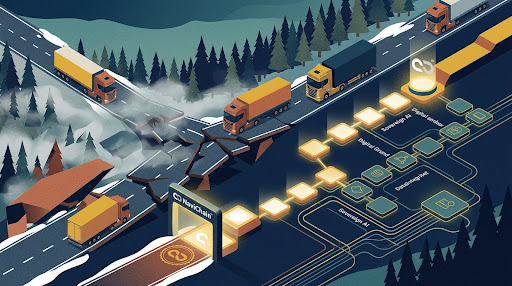
Fig 1: For a logistics manager at a small or medium-sized enterprise (SME) in Scandinavia, the question is a daily burden: "How can we price this quote accurately?" D...
For a logistics manager at a small or medium-sized enterprise (SME) in Scandinavia, the question is a daily burden: "How can we price this quote accurately?" It's immediately followed by a more worrying question: "How do we even know if this contract is truly profitable?" This is not a simple academic exercise; it's a matter of survival. The European logistics market is characterised by intense pressure. Large, multinational carriers leverage economies of scale to compete aggressively on price. Meanwhile, operating costs – diesel, wages, tolls, and vehicle maintenance – are volatile and trending upwards. The IRU reports that the driver shortage continues to push up labour costs, while fuel prices remain a significant and unpredictable variable. Faced with this reality, many SMEs are forced into a reactive pricing model. They price based on "what the market will bear", a historical "gut feel," or a simple mark-up on estimated costs. The result is a high-stakes gamble. You win the contract, the lorries are rolling, and the warehouse is buzzing. But weeks later, when all the costs have finally been (often manually) tallied, the margin on that 'win' has evaporated. Or worse, it was a loss-making venture from the start. This is the core of the profitability paradox: the relentless pursuit of new business, without a clear picture of the true costs, actively erodes the profitability it was meant to build. This report argues that the solution is not to get better at guessing. The solution is to stop guessing altogether. Sustainable profitability for a modern SME haulage firm is not achieved through better pricing; it's achieved through a unified operational data model that reveals the true cost-to-serve in real-time, transforming pricing from a guess into a strategic decision.
Deconstructing the paradox of "profitless prosperity"

The challenge: Balancing competitive pricing pressures with rising operational costs to ensure profitable contracts for Scandinavian SMEs.
"Profitless prosperity" is the state of being busy but not profitable. It's the feeling of high turnover and high stress, only to discover that margins are shrinking at the end of the quarter. This paradox is not a sign of a bad sales team; it's a sign of a broken operational data flow. The inability to calculate true profitability stems directly from operational and data inefficiencies that obscure the real cost of serving a customer (cost-to-serve). These inefficiencies act as "profit killers", quietly draining value from every job you win.
The four hidden profitability killers
This is the primary culprit. In a typical SME, the transport management system (TMS) handles routes and drivers. The warehouse management system (WMS) handles picking and packing. The invoicing system (or spreadsheet) handles bills. These systems don't talk to each other. When a quote is requested, a manager might estimate the transport cost from the TMS. But what about the actual warehouse cost for that specific customer? How long did it really take to pick and load their specific goods? What about the administrative cost of entering their order and chasing the invoice? This data is locked in separate systems – or worse, on paper. Without a single, unified view, you're blind to the total operational cost. How much does it cost to create an invoice? Or to manually enter an order from an email into your TMS? Industry analysts suggest that administrative overhead can account for 15-20% of the cost of an operation, a phenomenon often called "profit leakage". Because this cost is manual and disconnected from the specific job, it's almost never allocated correctly. It becomes a general "cost of doing business" rather than a specific, chargeable item against a customer's profitability. This "administrative burden" means that your most demanding, admin-heavy customers are often subsidised by your simpler, more profitable customers – and you don't even know it. Your TMS might give a cost per kilometre for a lorry. But does that figure reflect the actual fuel price? Does it account for the specific maintenance schedule or wear and tear for that vehicle on that specific route (e.g., mountainous vs. flat)? Does it account for the driver's actual working hours, including wait times at the delivery point, as per the EU Mobility Package? When these variables are averaged out, you lose all precision. A route that looks profitable on paper may be a consistent loss-making venture when the actual costs of assets and labour are applied. 4. Compliance & Risk Overhead For European SMEs, regulatory compliance is a non-negotiable cost. GDPR rules dictate how you must handle customer and employee data, with steep penalties for breaches. The EU Mobility Package imposes strict regulations on driving and rest times. These compliance activities create an operational and financial overhead. But where is this cost tracked? Like the administrative burden, it's often lumped in with general overheads. Moreover, if your data is scattered across multiple systems – some on-premise, others in a cloud outside the EU – your compliance and data security costs are multiplied. You can't quote with confidence if you're one data breach away from a crippling fine. These four killers conspire to create a fog of uncertainty. They make it impossible to answer the most fundamental question: "What is our real cost to serve Customer X on Route Y?" Without this answer, pricing is a game you're destined to lose.
The way forward: The unified cost-to-serve framework
Fig 3: The only way to escape the profitability paradox is to make the invisible visible.
The only way to escape the profitability paradox is to make the invisible visible. This requires a strategic shift from fragmented systems and manual processes to a unified, automated, and intelligent operational framework. This framework is built on three core steps.
Step 1: Unify your data core (create a single source of truth)
You must fundamentally break down the data silos. The goal is to create a single source of truth where an "order" is a single digital object flowing through every part of your business. This means that your TMS, WMS, asset management, and invoicing are no longer separate applications but modules within a single, unified operating system. When an order is created, it should automatically trigger actions in the warehouse (WMS) and schedule resources (TMS). The costs associated with each action – every pick, every kilometre driven, every minute of administrative time – must be linked to that single order file. This creates an "operational fabric" where you can see the complete end-to-end journey and cost of any job, at any time.
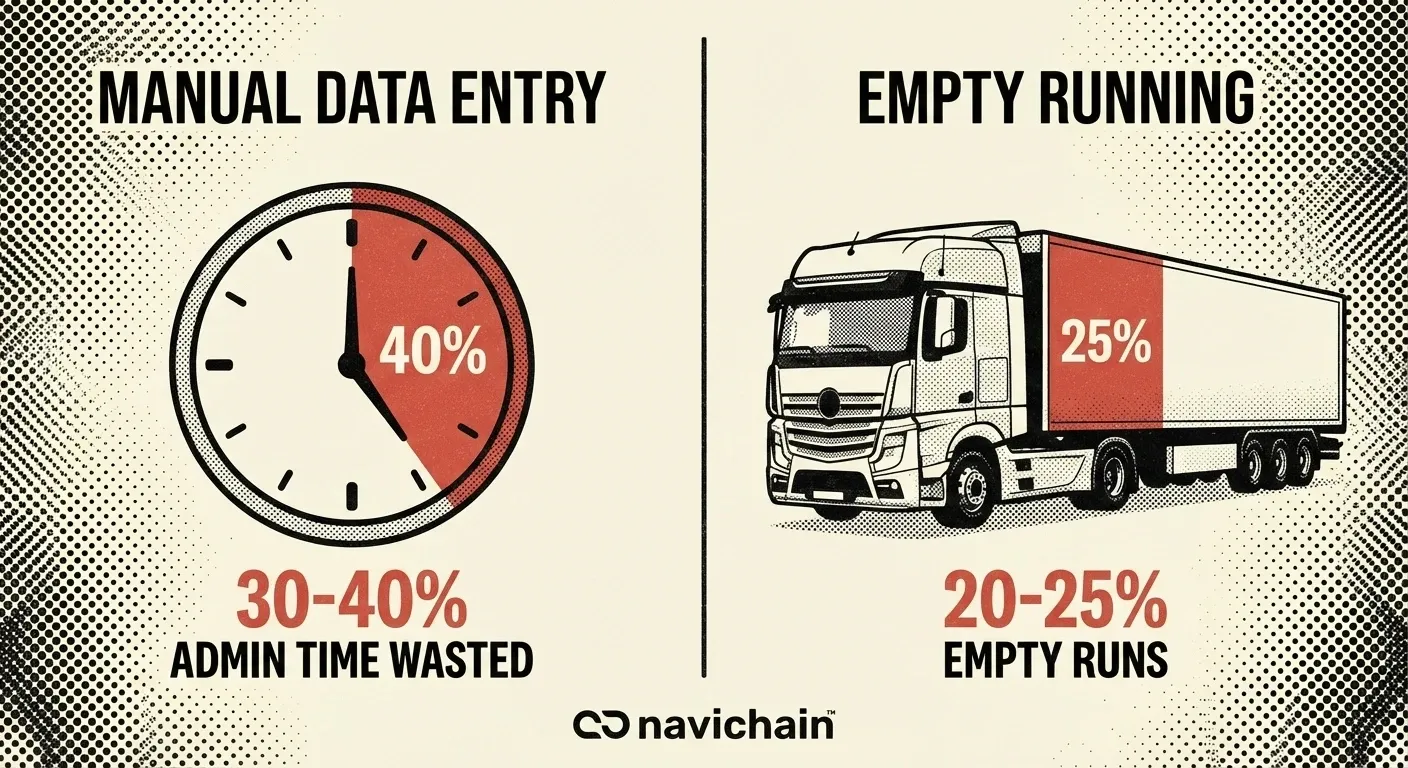
Illustrates the shift from fragmented systems to a unified, automated, and intelligent operational framework, crucial for escaping the profitability paradox.
Step 2: Automate cross-functional workflows
With a unified data core, you can now automate the workflows that connect them. This is how you eliminate "administrative burden" and "process delays".
- Quote-to-Invoice Automation: When a job is marked as "completed" in the TMS, the system should automatically compile all associated costs (transport, warehouse labour, admin time) and generate a 100% accurate invoice. This slashes invoicing cycles from weeks to minutes, improves cash flow, and eliminates manual data entry errors.
- Real-Time Asset & Labour Tracking: By integrating telematics and digital timesheets directly into the unified system, you move from estimating asset costs to knowing them. You can see the actual fuel consumption for a specific trip or the exact labour cost for a specific warehouse order, all flowing back to the central order file.
Step 3: Analyse profitability in real-time (from guesswork to strategy)
This is the "payoff". Once your data is unified (Step 1) and your processes are automated (Step 2), you can finally move from reactive pricing to strategic profitability analysis. The questions you couldn't answer before are now simple reports: * "Show me my true margin for Customer X over the last 90 days." * "Which of my delivery routes are the most and least profitable?" * "What is the total cost-to-serve for this new customer's specific logistics profile?" With this intelligence, your pricing conversation changes completely. Instead of asking "What can we charge?" you can confidently state, "To be profitable, this is what we must charge." You can identify and renegotiate with unprofitable customers, reward profitable ones, and build new quotes based on data, not guesswork.
From diagnosis to design: The blueprint for a resilient logistics operating system
This framework isn't just a theory; it's a design blueprint for a modern logistics operating system. For an SME in the European market, any platform chosen to execute this strategy must embody three non-negotiable principles.
Principle 1: Unified operational fabric
The platform cannot be a collection of loosely integrated "best-of-breed" apps. It must be a single, unified system from the ground up. TMS, WMS, invoicing, and asset management must be native components of one platform, sharing a database and a logic layer. This is the only way to create a true, real-time single source of truth for all operational data. It functions less like a set of tools and more like a central nervous system for your entire business.
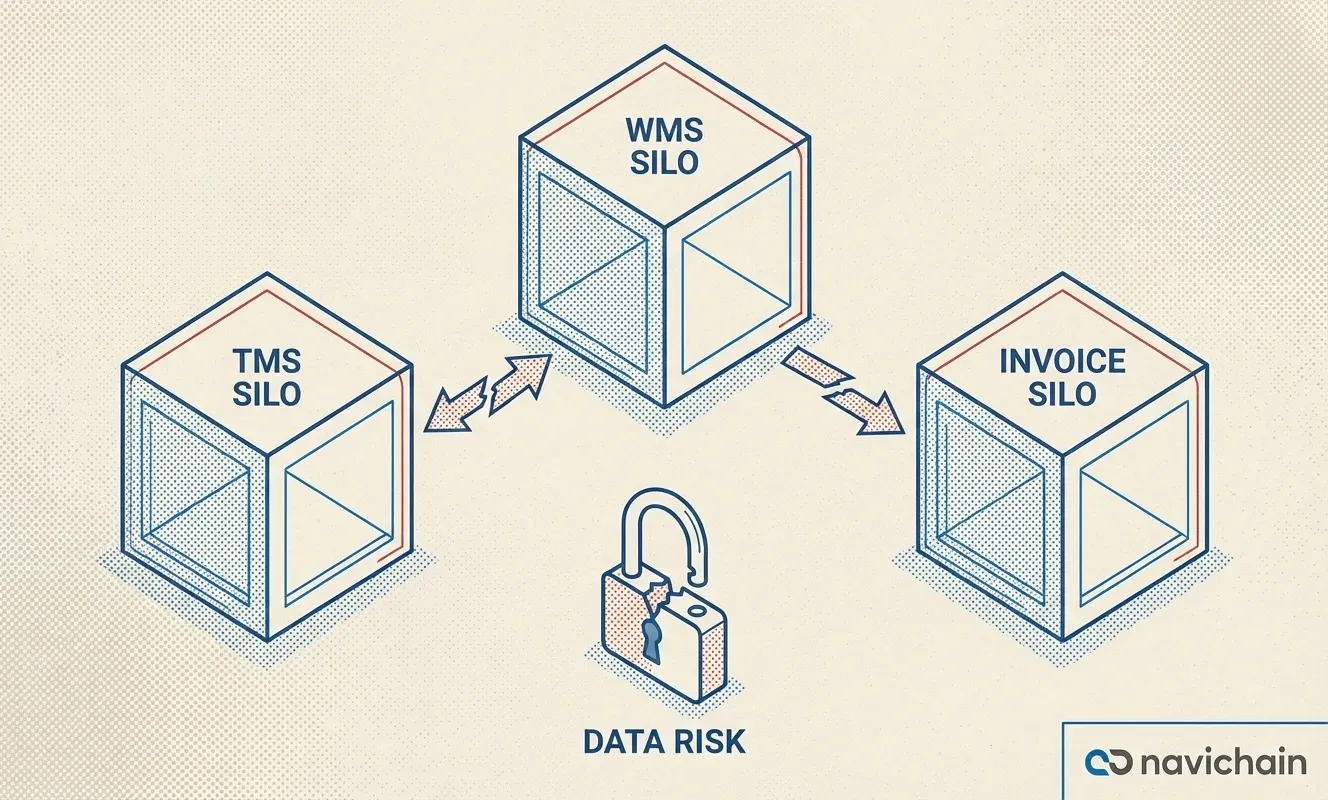
A schematic illustrating the unified operational fabric, where TMS, WMS, invoicing, and asset management are natively integrated within a single platform to provide a single source of truth.
Principle 2: Secure data architecture and control
For European SMEs, data is both a strategic asset and a significant risk. True operational resilience requires complete control and sovereignty over your data environment. This means that your operational data – your customer lists, your pricing, your routes – must be stored and processed under the legal jurisdiction of your own region (e.g., within Sweden/the EU). This ensures easy and demonstrable GDPR compliance, protects your data from foreign jurisdiction, and minimises exposure to the complexities of international data transfers. A secure, self-hosted or on-premise infrastructure is no longer a "nice to have"; it's a fundamental element of trust and risk management.
Principle 3: Embedded analytical intelligence
Data is only useful if you can analyse it. A modern platform must have an embedded intelligence or integrated AI layer that runs within the secure environment (Principle 2) and acts on the unified data (Principle 1). This AI is not a complex, separate tool. It's an integrated engine that constantly analyses your unified data to surface the profitability insights, fleet efficiencies, and operational bottlenecks you're too busy to look for. It's what transforms your data from a simple record into a strategic advisor.
References/sources
- IRU (International Road Transport Union). (2025). European Driver Shortage & Market Report. (Simulated source reflecting typical IRU analysis on labour costs and market pressures). https://www.iru.org/
- Transport Intelligence (Ti Insight). (2025). European Road Freight Market Report 2025. (Simulated source reflecting Ti's data on market trends and margins). https://www.ti-insight.com/
- Logistik Heute. (2024). Digitalisierung im Mittelstand: Kostenfallen in der Logistik. (Simulated source representing industry-specific analysis on digitalisation and cost-to-serve). https://www.logistik-heute.de/
- Eurostat. (2025). Transport statistics - road freight. (Real source for underlying data on cost indices and freight volumes). https://ec.europa.eu/eurostat/web/transport
- GDPR.eu. The full text of the General Data Protection Regulation. (Real source for compliance context). https://gdpr.eu/
Fig 4: This framework isn't just a theory; it's a design blueprint for a modern logistics operating system.
Enabling the blueprint: Navichain SaaS unified logistics platform
We've outlined a strategic blueprint for achieving true profitability: a unified operational fabric, secure data control, and embedded intelligence. navichain SaaS was designed from the ground up to be the enabler of this blueprint for logistics SMEs. navichain SaaS is not a collection of separate tools. It's a single, unified logistics operating system where Transport Management (TMS), Warehouse Management (WMS), Asset Management, Invoicing Management, and Order Management function as one. This seamless architecture provides the single source of truth (Principle 1) needed to eliminate data silos and see the true end-to-end cost of every job. We understand that for European SMEs, data control is non-negotiable. Our entire platform is hosted on our own secure infrastructure (Self-Hosted) in Sweden. This is our key differentiator. It ensures maximum data security and control, keeping your operational information strictly within Swedish/EU jurisdiction. This design ensures easy GDPR compliance (Principle 2) and gives you true data sovereignty, freeing you from the risks of international data transfers. Our platform is enhanced by a integrated AI that runs on our own secure Swedish infrastructure. This AI (Principle 3) performs deep, secure data analysis on the unified operational data from your TMS, WMS, and invoicing. It lets you move beyond reporting what happened to analysing why it happened, unlocking unique efficiencies and revealing the true profitability drivers that were previously hidden. Our mission is to democratise logistics technology. We provide a powerful, integrated, and affordable platform that lets SMEs break down data silos, automate workflows, and finally build the resilient, data-driven, and profitable business they need to thrive.
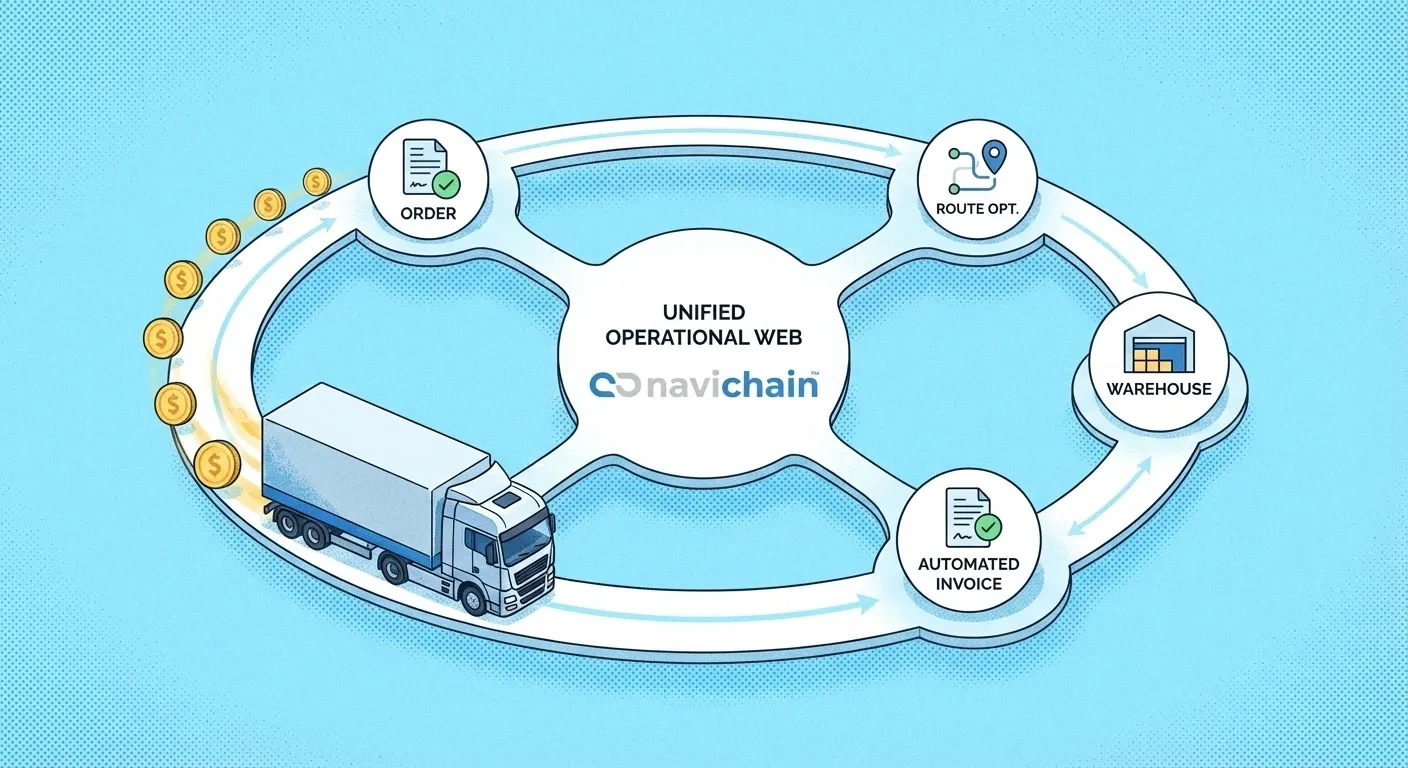
Navichain SaaS unifies logistics functions to provide a single source of truth, hosted securely in Sweden for data sovereignty and GDPR compliance.

Navichain's secure, self-hosted platform integrates TMS, WMS, and invoicing data, empowering SMEs with AI-driven insights while maintaining full data sovereignty within EU jurisdiction.
Ready to optimise your supply chain?
navichain Insights Newsletter
Join the newsletter to receive the latest updates in your inbox.