
Economic Order Quantity (EOQ): The Mathematics of Inventory
Table of Contents
1. Executive Summary
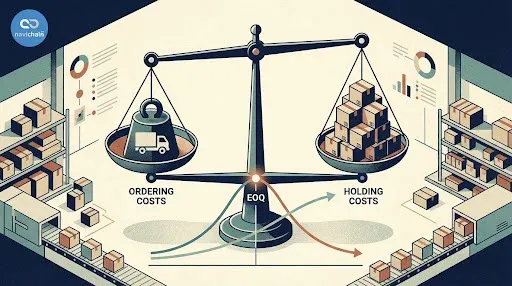
Definition and core value. Economic Order Quantity (EOQ) is the ideal order quantity a company should purchase to minimize inventory costs such as holding costs, shortage costs, and order costs. It provides the mathematical sweet spot between ordering too much (high storage cost) and too little (high ordering cost).
2. The Friction (The Problem)
Why this is hard. The Inventory Paradox. Ordering in bulk saves on shipping and purchase price per unit, but ties up massive capital in warehousing and risks obsolescence. Ordering small batches keeps cash free but skyrockets administrative and shipping costs per unit. Without EOQ, you are guessing.
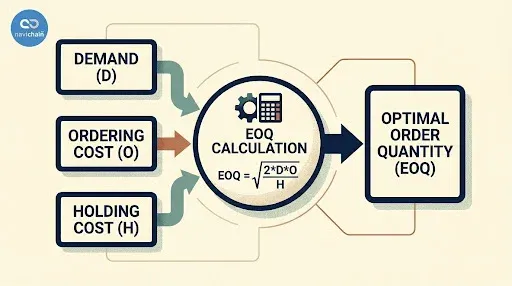
Figure 2: Visualizing the strategic problem.
3. Theoretical Background
The Mechanics. The Ford W. Harris Formula (1913): EOQ = √ (2DS / H) * D: Demand in units (annual). * S: Order cost (per purchase order). * H: Holding cost (per unit, per year). The goal is to find the lowest point on the Total Cost curve.

Figure 3: The core framework visualized.
4. The Data Evidence
Why this matters physically. Companies that strictly apply EOQ models reduce total inventory costs by 10-20%. However, 43% of small businesses track inventory manually or not at all, leading to an average of $1.1 trillion in capital tied up in excess inventory globally.

Figure 4: The measurable impact of the strategy.
5. Strategic Application
How to implement. Applying EOQ in Modern Logistics: * Dynamic EOQ: Adjusting 'D' (Demand) based on real-time seasonality. * Quantity Discounts: Modifying the formula when suppliers offer bulk breaks. * Safety Stock: Adding a buffer to EOQ to account for lead time variability. * Reorder Point: EOQ tells you how much to order; Reorder Point tells you when.

Figure 5: Practical application in a logistics context.
6. The Navichain Perspective: The Digital Enabler
Automated precision. Navichain automates the variables. We pull 'S' (Order Cost) from your procurement data and 'H' (Holding Cost) from your warehouse management system. We then calculate EOQ dynamically for every SKU, ensuring you are always ordering the mathematically optimal amount.

Figure 6: How Navichain's digital platform operationalizes this strategy.
7. Real-World Success Stories
Case Studies. * McDonald's: Uses EOQ principles to ensure every burger patty is ordered to minimize freezer costs while never stocking out during lunch rush. * Toyota: Modified EOQ into JIT (Just-in-Time), effectively setting 'H' (Holding Cost) as near-infinite to force batch sizes down. * Local Distributor: Reduced warehouse space requirements by 15% simply by switching from 'gut feeling' ordering to a calculated EOQ model.
8. Strategic Takeaway
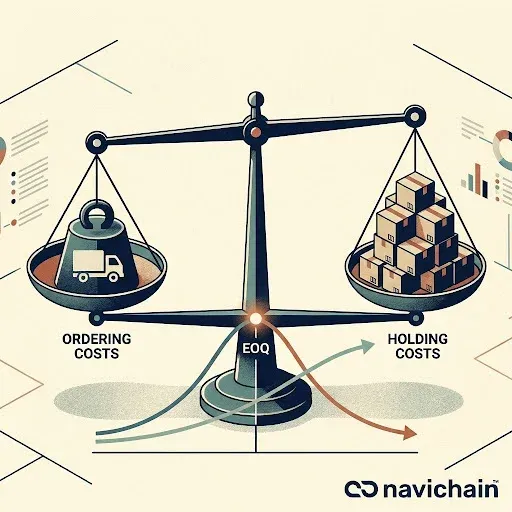
Conclusion. Inventory is money sitting on a shelf. EOQ is the formula that tells you exactly how much money should be there.
9. References
Verified links. * Harvard Business Review. (n.d.). Operations Management. View Resource * Investopedia. (n.d.). Economic Order Quantity. View Resource * Council of Supply Chain Management Professionals. (n.d.). View Resource
navichain Insights Newsletter
Join the newsletter to receive the latest updates in your inbox.





%3A%20The%20Mathematics%20of%20Inventory)