Deviation Dilemma: Are Your Quality Reports an Untapped Strategic Asset?
Table of Contents
European SME hauliers face immense pressure, with the cost of poor quality (COPQ) estimated to consume up to 15-20% of revenue. Yet, quality assurance initiatives often fail due to operational friction; we treat deviation reports as an administrative burden. But what if this 'burden' is actually your most valuable, untapped strategic asset for efficiency?
This white paper breaks down the operational friction that slows down continuous improvement. It provides a strategic framework in three parts to transform your quality assurance from a costly, manual process into an automated, data-driven engine for profitability and resilience.
The stagnation of continuous improvement: Why 'quality' feels like a cost
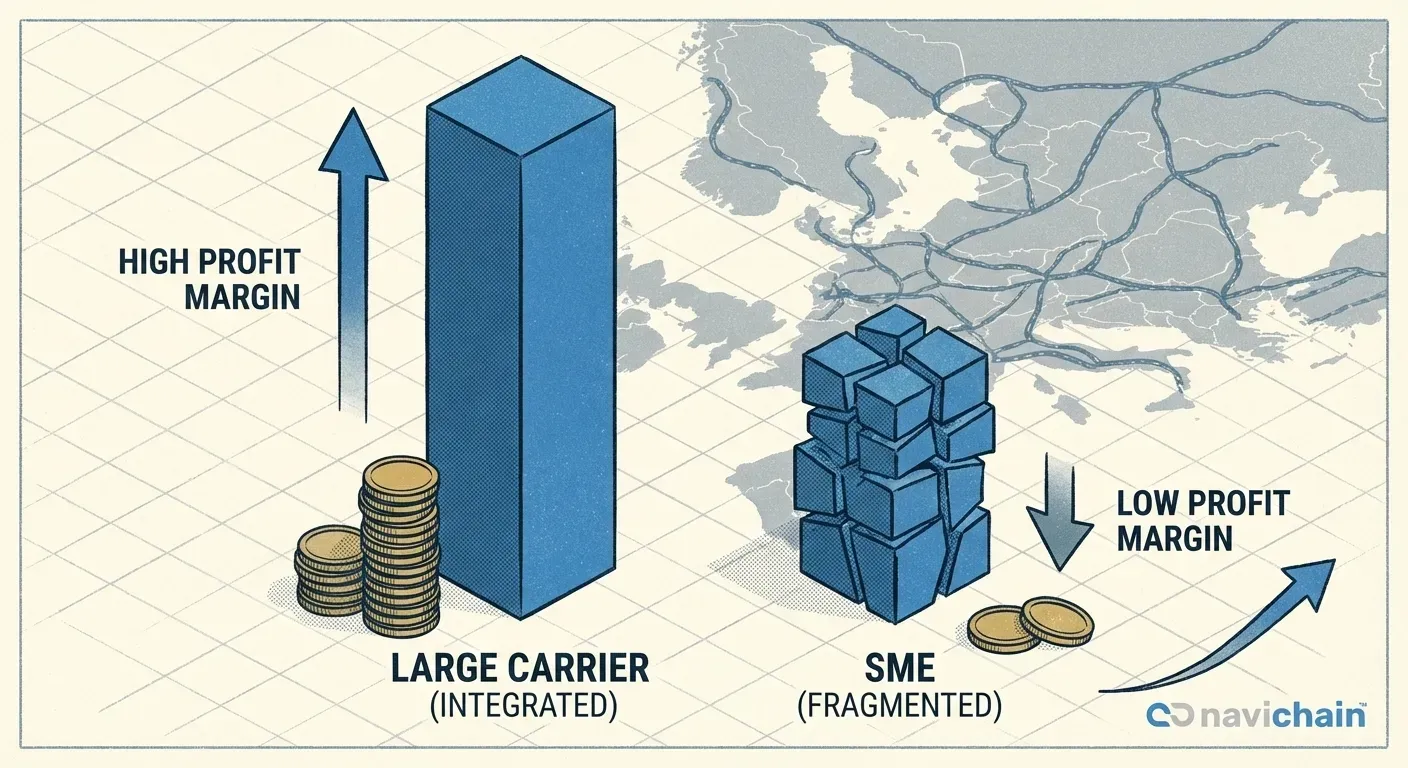
For decades, the competitive advantage for small and medium-sized enterprises (SMEs) in haulage was simple: agility. While large carriers were weighed down by bureaucracy, the local SME could offer flexible, personalised service and adapt to customer needs on the fly. But for the pragmatic operations manager at a Scandinavian SME haulage company, this promise often rings hollow. The reality is a daily struggle with operational friction, and nowhere is this friction more evident than in quality assurance (QA).
The scenario is universal: a problem arises in the field – a late delivery, a damaged pallet, a documentation error. The process should be simple: report the deviation, analyse the root cause, and implement a change. But in practice, it's a bottleneck. Getting drivers or warehouse staff, who are already under immense time pressure, to stop and fill in a detailed report is the first hurdle. The second is the 'data wrangling' back in the office. Managers must manually collect these reports – which arrive via email, SMS, app notifications, or scribbled notes – and attempt to compile them into a spreadsheet.
Once this data is 'structured', it's several weeks old. The chance for real-time action is gone, and 'continuous improvement' becomes a quarterly review of stale data. We fail to capture deviations in a structured manner, so we cannot work effectively on improvements.
This isn't just an administrative headache; it's a profound strategic failure. Industry analysts estimate that the cost of poor quality (COPQ) – the cost of rework, customer credits, lost business, and handling complaints – can devour 15-20% of a logistics company's revenue. We pay a premium for our mistakes and fail to build a system that prevents them. The core problem is this: the perceived operational cost of capturing quality data is higher than the perceived strategic value of analysing it. This white paper is about turning that equation around.
Deconstructing the friction: From silos to standstill
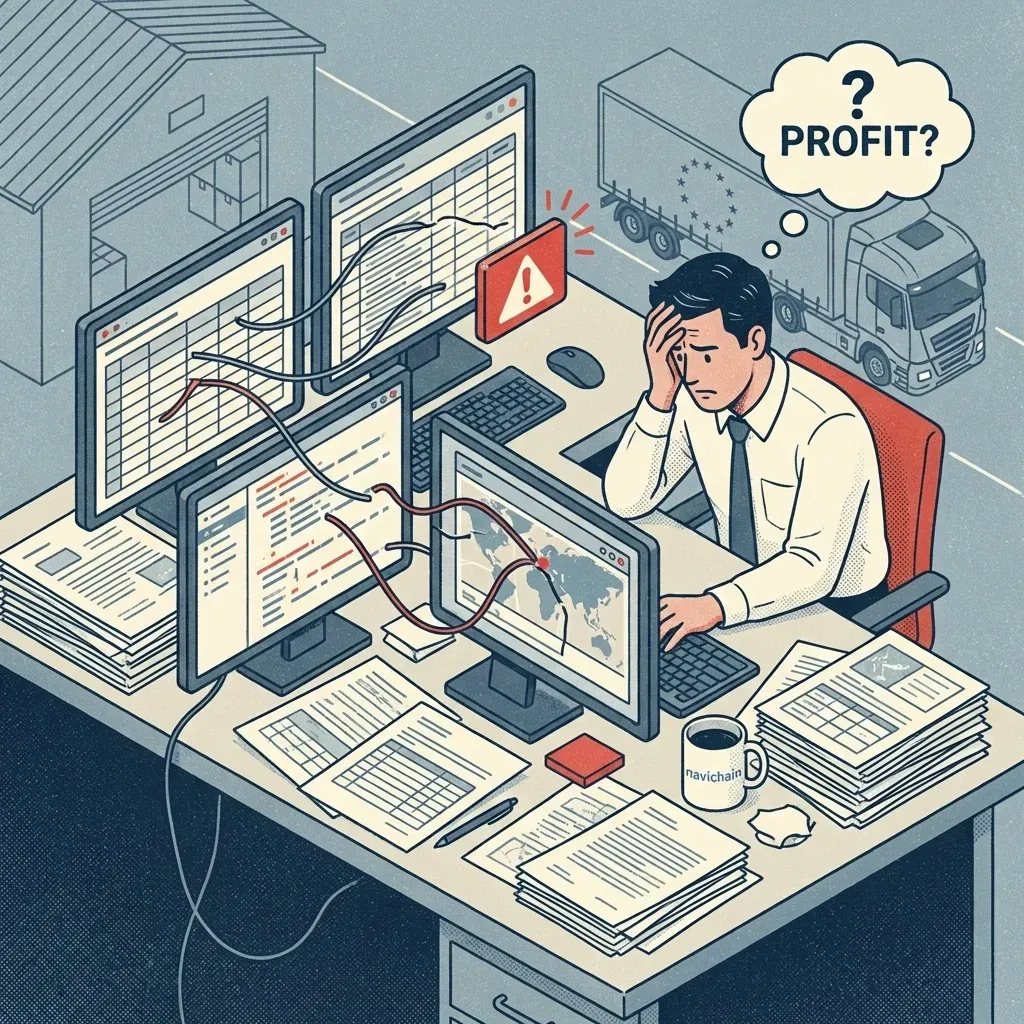
Before we can build a better system, we must diagnose why the current one is broken. The failure of quality assurance in most SME logistics operations isn't a personnel problem; it's a process and system problem. The friction is built into the architecture of our operations.
The 'multiple clipboards' problem
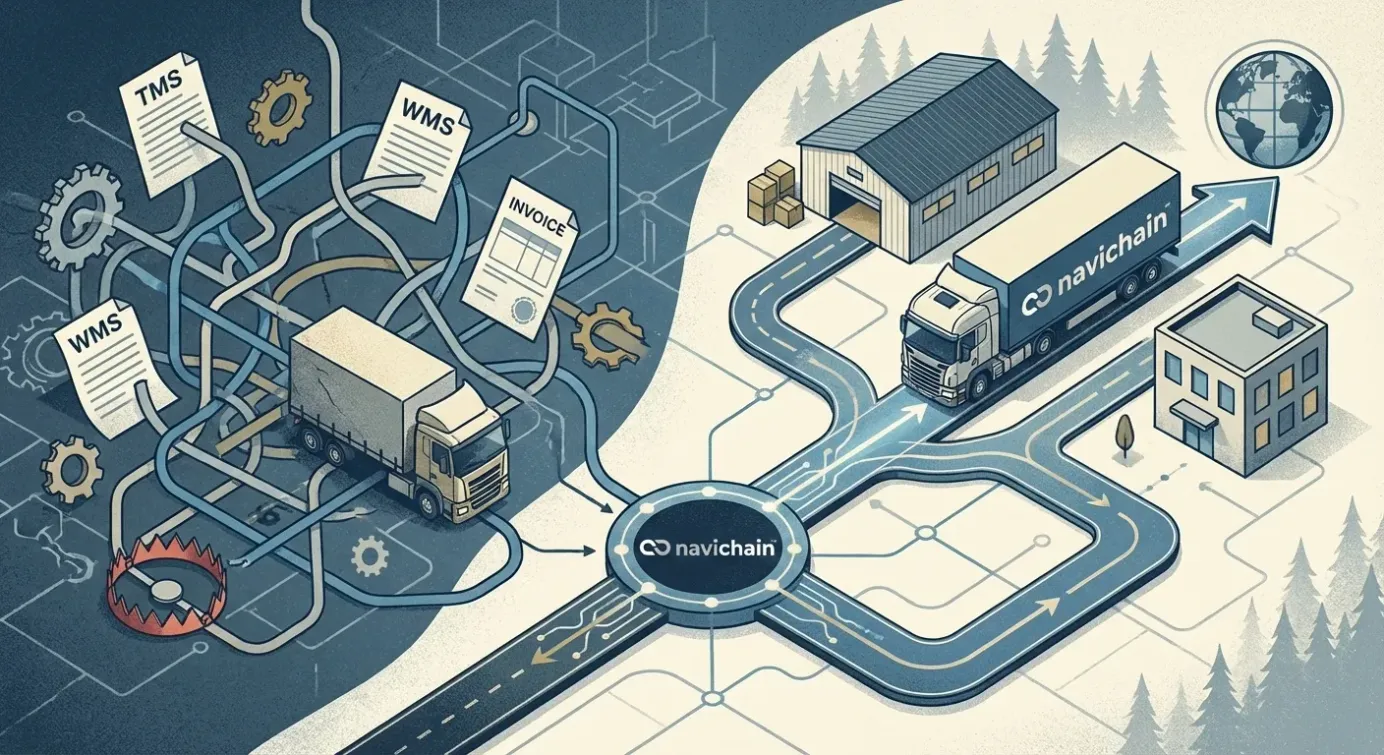
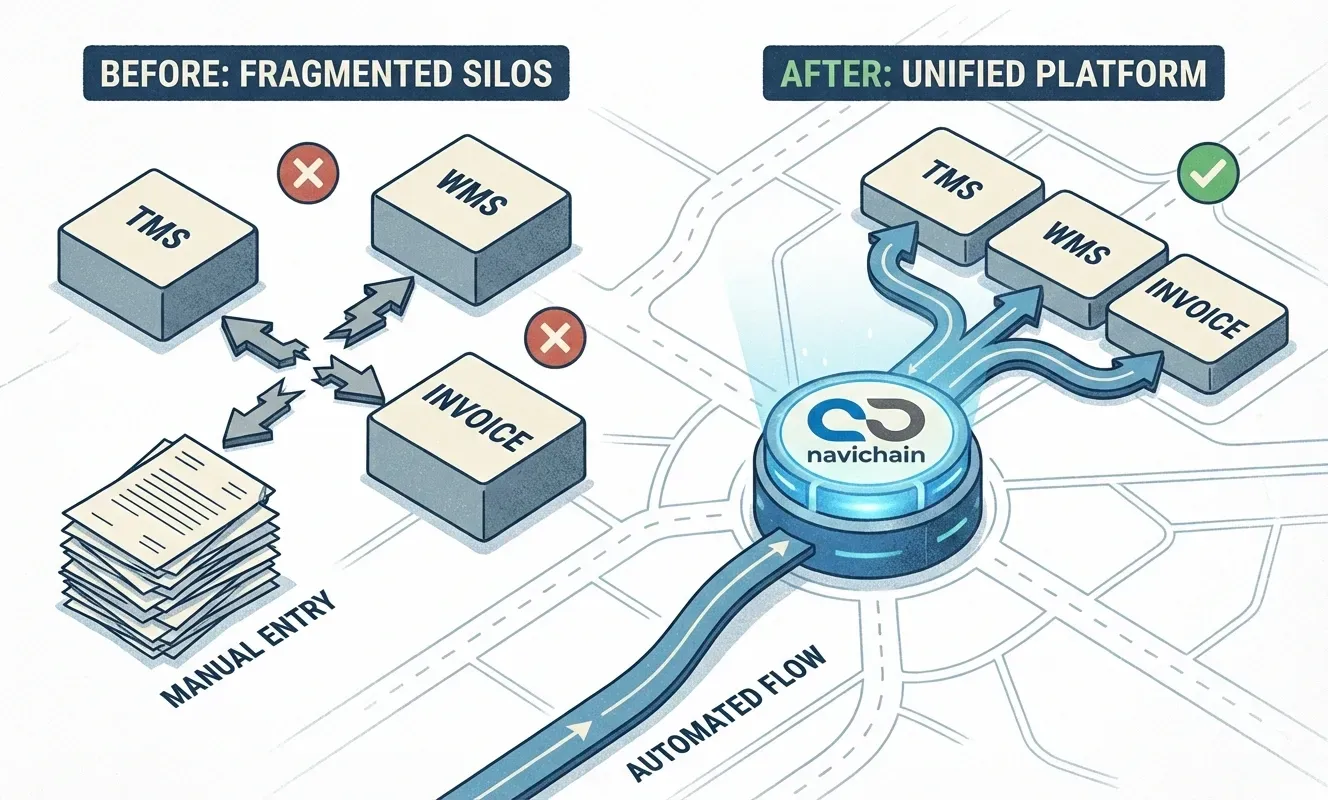
The primary culprit is data silos. A typical SME haulage company runs on a fragmented patchwork of technologies. You have a Transport Management System (TMS) for planning routes, a Warehouse Management System (WMS) for the terminal, a billing system for finance, and – often – a collection of Excel sheets, email inboxes, and messaging apps to fill the gaps.
Where does 'quality assurance' live? Everywhere and nowhere. A driver reports a problem via the TMS app (if it even has that functionality). A warehouse worker emails the operations manager. A customer complaint comes in via the invoicing department. Each deviation is a data point, but it's stranded on a digital island. There's no single source of truth for 'what went wrong', making systemic analysis impossible.
The data lag between field and office
Let's trace the lifecycle of a single deviation report. 1. Incident (Time: 0:00): A driver notices that 1 out of 10 pallets is damaged upon delivery. 2. Capture (Time: +0:10): The driver, pressured to leave, sends a quick SMS: "Damaged pallet at Customer X." 3. Receipt (Time: +2:00): The operations manager sees the SMS between two calls. 4. Query (Time: +2:05): The operations manager texts back: "Which order? How bad? Need photo." 5. Response (Time: +4:30): The driver, now at their next stop, emails a photo. 6. Compilation (Time: +1-2 days): The operations manager, or an administrator, finally has time to find the SMS and email, match it against the order in the TMS, and log it in the 'Deviation Report Q4' Excel file.
What should have been a 2-minute digital recording at the point of occurrence became an administrative task spanning multiple days and people. The data is captured, but the 'cost' in time and resources is astronomical. This is the friction that causes staff to stop reporting problems altogether – it's simply not worth the hassle.
The compliance blind spot
This fragmented, manual approach creates a significant and often overlooked risk: data governance and compliance. Deviation reports contain sensitive commercial data and, often, personally identifiable information (PII) about customers or even staff.
When this data is spread across personal mobile devices, insecure email servers (often hosted by US-based providers), and local spreadsheets, you've lost control. For a European SME, this creates a direct and immediate GDPR compliance challenge. How can you prove that your data is secure, processed correctly, and stored only where it should be? The complexities of international data transfer laws (such as the EU-US Data Privacy Framework) mean that using non-EU cloud tools for this sensitive operational data is a legal and financial minefield. Your inefficient process isn't just costing you money; it's exposing you to regulatory risk.
The way forward: The framework for frictionless quality
To achieve true continuous improvement, we must declare war on this friction. We must redesign our process, not around 'capturing' errors, but around 'channelling' data. This requires a strategic shift in three parts.
Strategy 1: Unify the point of incidence
Deviation reporting cannot be a separate task. It must be an integrated function of the primary workflow. A driver using a mobile app to manage their transport orders must also be able to report a deviation within the same order flow. A warehouse worker scanning pallets with a WMS tool must be able to flag a problem on the same scanner.
When the tool for doing the job is also the tool for reporting a problem, the barrier to capturing data drops to zero. The report is immediately structured, as it's already linked to the correct order, customer, vehicle, and user. This eliminates 90% of the manual 'data wrangling' and the lag between field and office.
Strategy 2: Automate the information flow
Once the data is captured in a structured manner, it must flow – immediately and automatically – from the point of capture to the point of analysis. The 'Deviation Report Q4' Excel file must die.
In a frictionless system, a deviation reported by a driver in the field should appear immediately on the operations manager's dashboard. This isn't just about speed; it's about context. The manager can see the problem, in real time, alongside all other relevant data from the TMS and WMS. This enables immediate action (e.g., sending out a replacement) and trendspotting (e.g., "That's the third time this week we've had damage at that distribution centre").
Strategy 3: Transform data from a record to a resource
This is the final, crucial step. The goal of collecting deviation data isn't to create a historical record of failures. The goal is to build a predictive asset for success. When all your operational data – transport, warehousing, invoicing and quality – lives in a single, unified system, you can finally move from reactive problem-solving to proactive, strategic optimisation.
You can ask, and answer, the questions that truly drive efficiency: * Which routes have the highest correlation with 'late delivery' deviations? * Does a specific driver, vehicle, or warehouse shift correlate with a spike in 'damaged goods' reports? * What is the average 'cost' of a deviation (in credits, re-delivery time, etc.) for our top 10 customers?
This is where 'quality assurance' stops being an administrative cost and becomes the primary engine of operational efficiency. The deviation report is no longer a burden; it's your single most valuable strategic asset.
From diagnosis to design: The blueprint for a resilient logistics operating system
This framework isn't just a theory. It's a blueprint for a specific type of technology architecture. To make frictionless quality assurance a reality, a logistics platform for SMEs must be built on three core principles.
Principle 1: Unified operational fabric
The era of fragmented software is over. A modern logistics operation requires a single, unified platform where TMS, WMS, asset management, invoicing, and order management are not just 'integrated' but are natural components of the same system. This creates a 'central nervous system' for the operation, providing a single, indisputable source of truth. When a quality deviation is logged, it isn't a separate event; it's a new attribute of an existing transport order or warehouse item, visible across the entire platform immediately.
Principle 2: Secure data architecture and control
For European SMEs, data control is non-negotiable. True operational resilience means having complete sovereignty over your data. This requires a platform architecture that's hosted on secure infrastructure within your own legal jurisdiction (e.g., within Sweden or the EU). This approach ensures straightforward GDPR compliance and eliminates exposure to the legal and security complexities of international data transfers. Your operational data, including sensitive deviation reports, must remain under your control, in a fortress you own, not in a shared cloud you can't audit.
Principle 3: Embedded analytical intelligence
Finally, there's no point in unifying your data (Principle 1) and securing it (Principle 2) without the ability to analyse it. The platform itself must have an embedded intelligence layer – a integrated AI – that can operate within the secure environment. This AI's job is to constantly analyse the unified data stream and detect the patterns that a human manager would miss. It's this embedded intelligence that finds the correlation between a specific route and package damage, or between loading times and delivery delays, and transforms your 'deviation data' into actionable, continuous improvement.
Enabling the blueprint: Navichain SaaS unified logistics platform
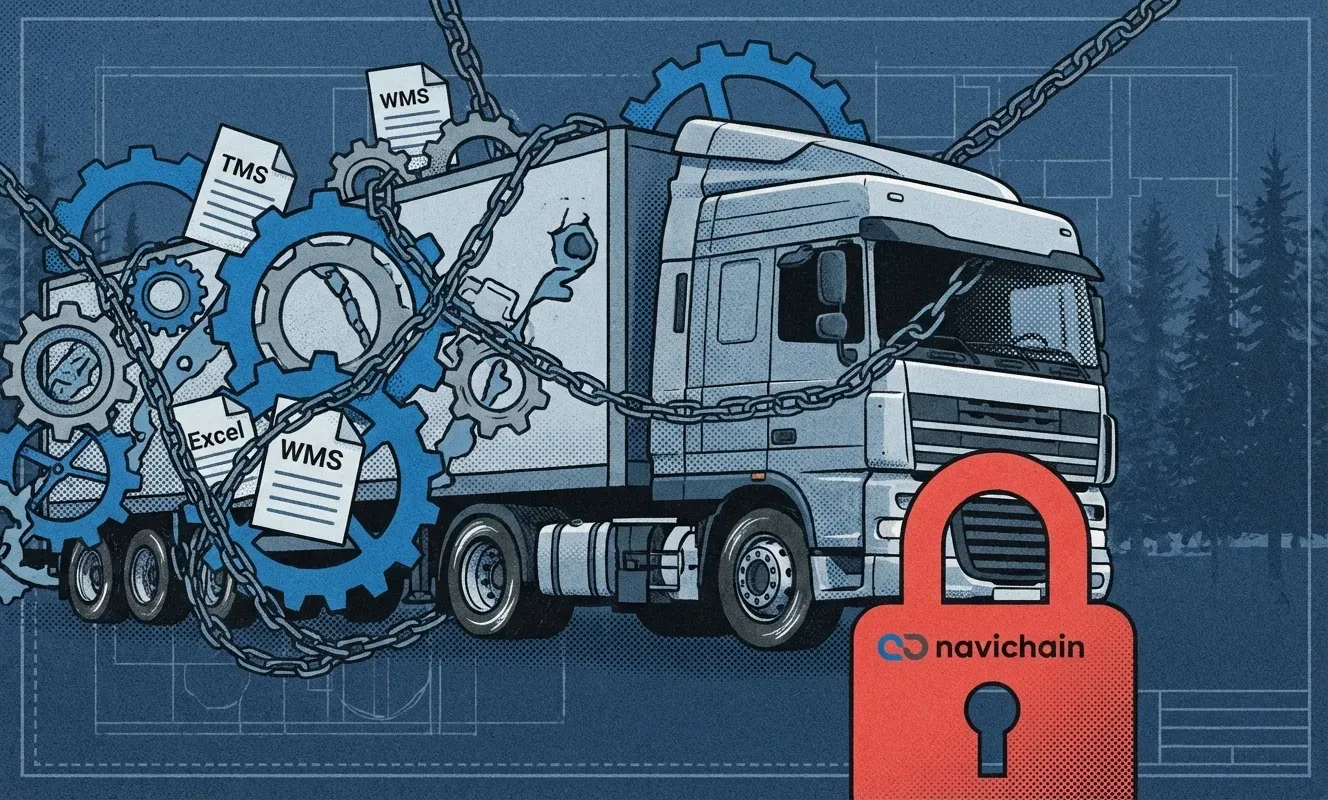
This white paper has laid out a strategic blueprint for transforming quality assurance from a source of friction into an engine for efficiency. The navichain SaaS platform is designed to be the tool that enables this blueprint for European SMEs.
We directly embody the three core principles required for a truly resilient logistics operating system:
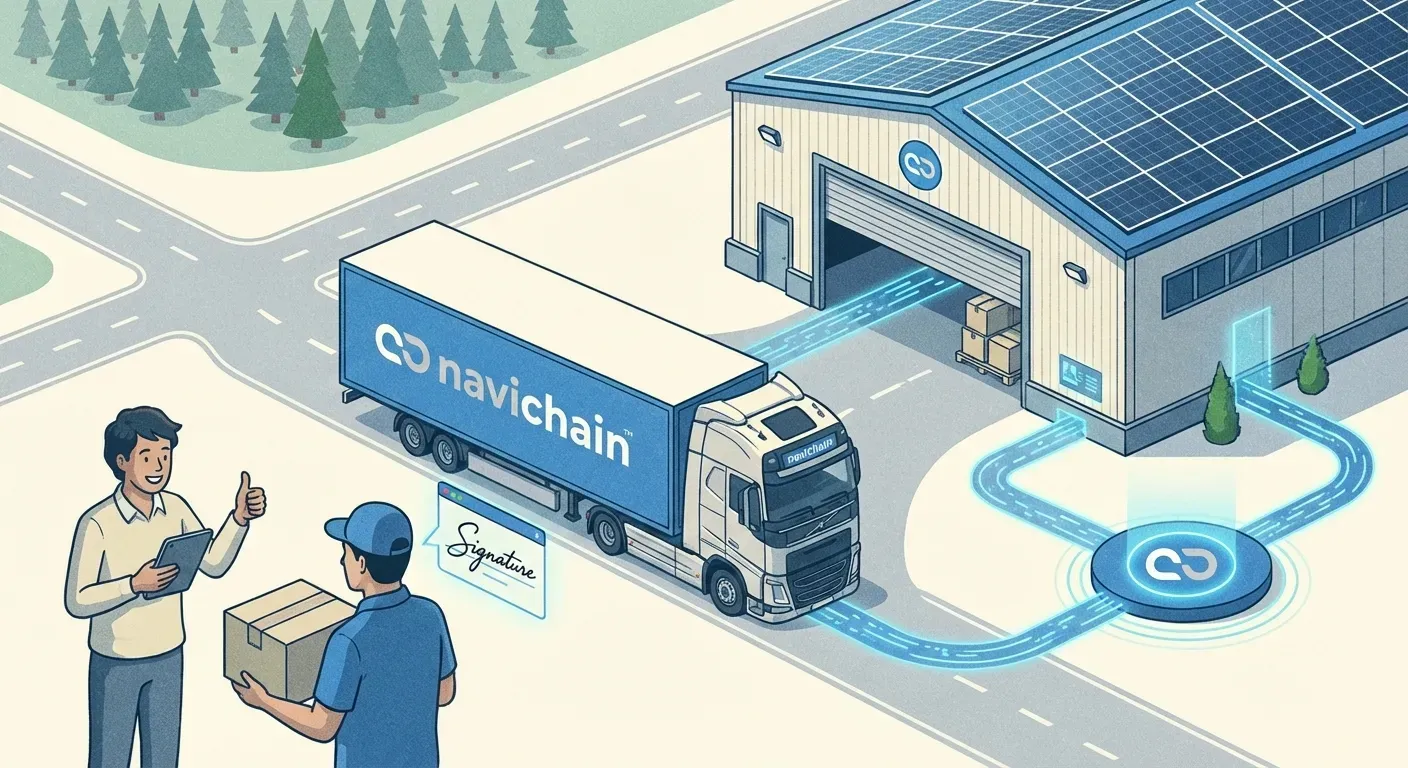
- Unified Operational Fabric: navichain isn't a collection of integrated modules; it's a single, unified logistics operating system. Your Transport Management (TMS), Warehouse Management (WMS), invoicing, and order management all work as one, creating that single source of truth. This allows deviation reporting to be a seamless, integrated part of any workflow.
- Secure Data Architecture and Control: We believe that you should own and control your own data. Our entire platform is hosted on our own secure, Self-Hosted infrastructure in Sweden. This is our key differentiator. By keeping your data strictly within Swedish/EU jurisdiction, we ensure maximum data security, straightforward GDPR compliance, and complete freedom from the complexities of international data transfers.
- Embedded Analytical Intelligence: Because your data is unified and secure, we can apply our integrated AI to it safely. This AI runs on our own Swedish infrastructure, analysing your unified operational data to unlock unique efficiency gains and drive the 'continuous improvement' loop you've been striving for.
Our mission is to democratise logistics technology for the SMEs that form the backbone of the European economy. We provide the powerful, unified, and secure platform you need to stop firefighting and start building a more efficient, resilient, and profitable future.

Turn friction into flow. Start your trial today.
navichain Insights Newsletter
Join the newsletter to receive the latest updates in your inbox.