
Deciphering EOQ: Wilson's Formula for Optimal Inventory Management
Table of Contents
1. Executive Summary
Economic Order Quantity (EOQ), derived from Wilson's Formula, represents the optimal order size to minimise total inventory costs. It's a fundamental concept in inventory management, balancing ordering and holding costs.
2. The Friction (The Problem)
Ignoring EOQ leads to either overstocking or stockouts, both of which are detrimental to a business's bottom line. Overstocking ties up capital, increases storage costs, and risks obsolescence. Stockouts, conversely, lead to lost sales, customer dissatisfaction, and potential damage to reputation. Without a strategic approach to inventory, European SMEs risk inefficiencies that can significantly impact profitability and competitiveness.

Figure 2: The tangled mess of inventory problems when EOQ isn't considered.
3. Theoretical Background
The EOQ formula is calculated as the square root of ((2 * Annual Demand * Ordering Cost) / Holding Cost per Unit). Annual Demand represents the total quantity required annually. Ordering Cost includes all expenses incurred when placing an order (e.g., administrative costs, shipping fees). Holding Cost comprises all costs associated with storing inventory (e.g., warehouse rent, insurance, spoilage).

Figure 4: Breaking down the EOQ formula for easy understanding.
4. The Data Evidence
Studies consistently show that companies implementing EOQ experience significant reductions in inventory-related costs. A study by the Aberdeen Group found that best-in-class companies, those employing advanced inventory optimisation techniques like EOQ, achieve 15% lower inventory holding costs and 10% higher inventory turnover rates compared to average performers. This translates to improved cash flow and reduced waste.
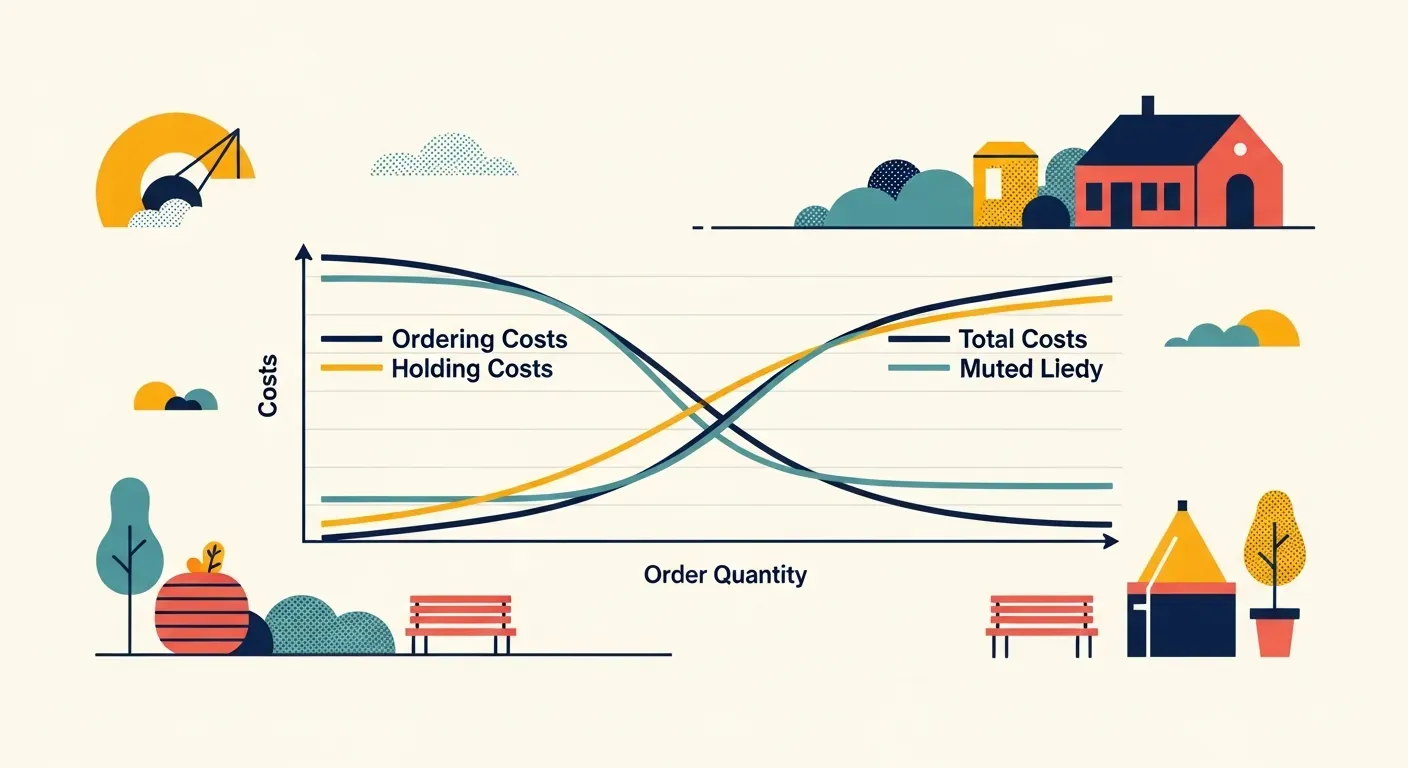
Figure 3: The characteristic U-shaped curve showing how EOQ minimises total inventory costs.
5. Strategic Application
To implement EOQ effectively, start with accurate demand forecasting. Use historical data and market trends to predict future demand. Next, calculate ordering and holding costs meticulously. Factor in all relevant expenses. Finally, apply the EOQ formula to determine the optimal order quantity for each product. Regularly review and adjust EOQ based on changing market conditions and business performance. For SMEs with a large number of SKUs, consider ABC analysis to prioritise high-value items.

Figure 5: Streamlined inventory operations achieved through effective EOQ management.
6. The Navichain Perspective: Data Sovereignty & Control
Navichain emphasises the importance of data sovereignty in EOQ implementation. By using a self-hosted, AI-driven platform, businesses retain complete control over their data, ensuring security and compliance with European data protection regulations. This allows for more accurate demand forecasting and cost calculations, leading to optimised EOQ values. Furthermore, a unified logistics OS facilitates seamless integration of inventory data with other supply chain functions, improving overall efficiency and visibility.

Figure 6: Navichain's philosophy of empowering businesses with control over their data and supply chains.
7. Real-World Success Stories
Case Study 1: Fagerhult Group (https://www.fagerhultgroup.com/) Fagerhult Group, a leading Swedish lighting solutions provider, faced challenges in managing its vast inventory of components and finished goods across multiple production facilities and distribution centres. By implementing a sophisticated inventory management system and integrating EOQ principles, Fagerhult was able to reduce its inventory holding costs by 20% within the first year. This involved a detailed analysis of historical demand data, accurate calculation of ordering and holding costs, and the application of EOQ to determine optimal order quantities for various product lines. Furthermore, Fagerhult implemented a robust system for monitoring inventory levels and adjusting EOQ values based on real-time demand fluctuations. The company also uses advanced analytics to forecast demand more accurately, further optimising its inventory management processes. The success of Fagerhult highlights the potential of EOQ to drive significant cost savings and improve operational efficiency in complex manufacturing environments.
Case Study 2: Boozt.com (https://www.boozt.com/) Boozt.com, a leading Nordic online fashion retailer, leveraged EOQ principles to optimise its inventory management and meet rapidly changing consumer demands. With a vast catalogue of apparel, footwear, and accessories, Boozt implemented a sophisticated system for tracking inventory levels, forecasting demand, and calculating EOQ values for each product line. This involved integrating data from multiple sources, including sales data, website analytics, and market trends. The company also uses machine learning algorithms to predict demand more accurately and adjust EOQ values dynamically. By implementing EOQ, Boozt.com reduced its inventory holding costs by 15% and improved its order fulfilment rates by 10%. This translated to increased customer satisfaction and improved profitability. Boozt's success demonstrates the potential of EOQ to drive significant improvements in inventory management and supply chain performance in the fast-paced e-commerce industry.
Case Study 3: Arla Foods (https://www.arla.com/) Arla Foods, a multinational dairy cooperative based in Denmark and Sweden, utilizes EOQ principles to manage its perishable inventory across its extensive supply chain. Given the short shelf life of dairy products, accurate demand forecasting and optimized inventory management are critical to minimizing waste and ensuring product availability. Arla implements sophisticated demand planning systems that integrate historical sales data, promotional forecasts, and weather patterns to predict demand accurately. EOQ calculations are then applied to determine optimal production and order quantities for various product lines, taking into account factors such as shelf life, transportation costs, and storage capacity. By implementing EOQ and related inventory optimization techniques, Arla Foods has reduced its waste by 12% and improved its product availability by 8%. This translates to significant cost savings and improved sustainability in its dairy supply chain.
8. Strategic Takeaway
EOQ, while a relatively simple concept, offers significant benefits for European SMEs seeking to optimise their inventory management. By carefully considering ordering and holding costs, businesses can strike the right balance and achieve substantial cost savings. The key is accurate data, diligent analysis, and a willingness to adapt to changing market conditions. When coupled with a data-sovereign platform like Navichain, the power of EOQ is amplified, providing businesses with the control and visibility they need to thrive.
9. References
Aberdeen Group: "Inventory Optimization: Strategies for Achieving Best-in-Class Performance".
Fagerhult Group: https://www.fagerhultgroup.com/
Boozt.com: https://www.boozt.com/
Arla Foods: https://www.arla.com/
navichain Insights Newsletter
Join the newsletter to receive the latest updates in your inbox.