
The Bullwhip Effect: Taming Supply Chain Volatility
Table of Contents
1. Executive Summary
Definition and core value. The Bullwhip Effect is a supply chain phenomenon where small fluctuations in retail demand cause progressively larger fluctuations in demand at the wholesale, distributor, manufacturer, and raw material supplier levels. It is the amplification of variability.
2. The Friction (The Problem)
Why this is hard. Panic and waste. A retailer sees a tiny spike in sales and orders a bit extra 'just in case.' The wholesaler sees that increase and orders even more. By the time the signal hits the factory, a 5% increase in sales has become a 50% increase in production, leading to massive overstock and inevitable waste.

Figure 2: Visualizing the strategic problem.
3. Theoretical Background
The Mechanics. First described by Jay Forrester (1961) and named by P&G. Causes: 1. Demand Forecast Updating: Over-reacting to recent data. 2. Order Batching: Accumulating orders to save freight costs, creating spikes. 3. Price Fluctuations: Buying ahead of price rises (Forward Buying). 4. Rationing and Shortage Gaming: Customers ordering 2x what they need because they expect a shortage.
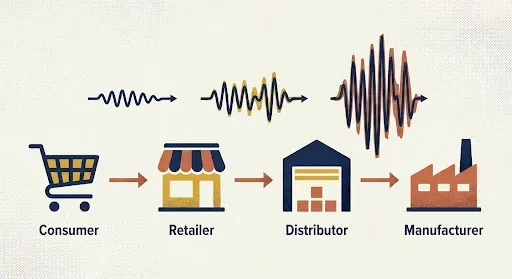
Figure 3: The core framework visualized.
4. The Data Evidence
Why this matters physically. The Bullwhip Effect is estimated to cost industries 12-25% in excess inventory and lost capacity. In the semiconductor industry, this effect can cause lead times to swing from 4 weeks to 50 weeks in a single year, destroying capital efficiency.

Figure 4: The measurable impact of the strategy.
5. Strategic Application
How to implement. Cracking the Whip: * Share POS Data: Don't let upstream partners guess; show them the register data. * Reduce Batch Sizes: Ship more frequently in smaller lots (JIT). * Stabilize Prices: Everyday Low Prices (EDLP) prevent forward buying spikes. * VMI: Vendor Managed Inventory puts the supplier in charge of replenishment.
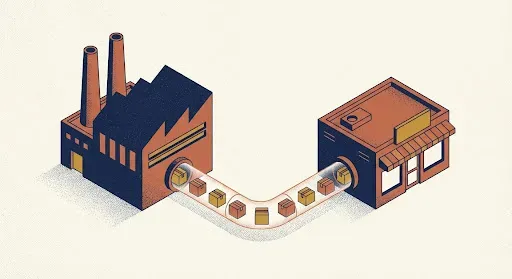
Figure 5: Practical application in a logistics context.
6. The Navichain Perspective: The Digital Enabler
Automated precision. Navichain acts as a damper. By connecting all nodes on a single digital thread, we eliminate the 'Telephone Game' of ordering. The manufacturer can see the actual delivery to the end customer in real-time, bypassing the distorted signals from intermediaries.

Figure 6: How Navichain's digital platform operationalizes this strategy.
7. Real-World Success Stories
Case Studies. * Procter & Gamble: Coined the term when they noticed Pampers diaper orders fluctuated wildly even though babies urinate at a constant rate. * Cisco: Wrote off $2.2 billion in inventory in 2001 due to a massive Bullwhip miscalculation. * Barilla: The pasta maker implemented JITD (Just-in-Time Distribution) to counter the bullwhip effect caused by their own sales promotions.
8. Strategic Takeaway

Conclusion. Information replaces inventory. The only way to stop the whip from cracking is to stop guessing and start sharing the truth.
9. References
Verified links. * Harvard Business Review. (n.d.). Strategy & Innovation. View Resource * Investopedia. (n.d.). Business Essentials. View Resource * Ellen MacArthur Foundation. (n.d.). Circular Economy. View Resource
navichain Insights Newsletter
Join the newsletter to receive the latest updates in your inbox.