Orchestrating Efficiency: Agentic AI in the Modern Supply Chain
Table of Contents
1. Executive Summary
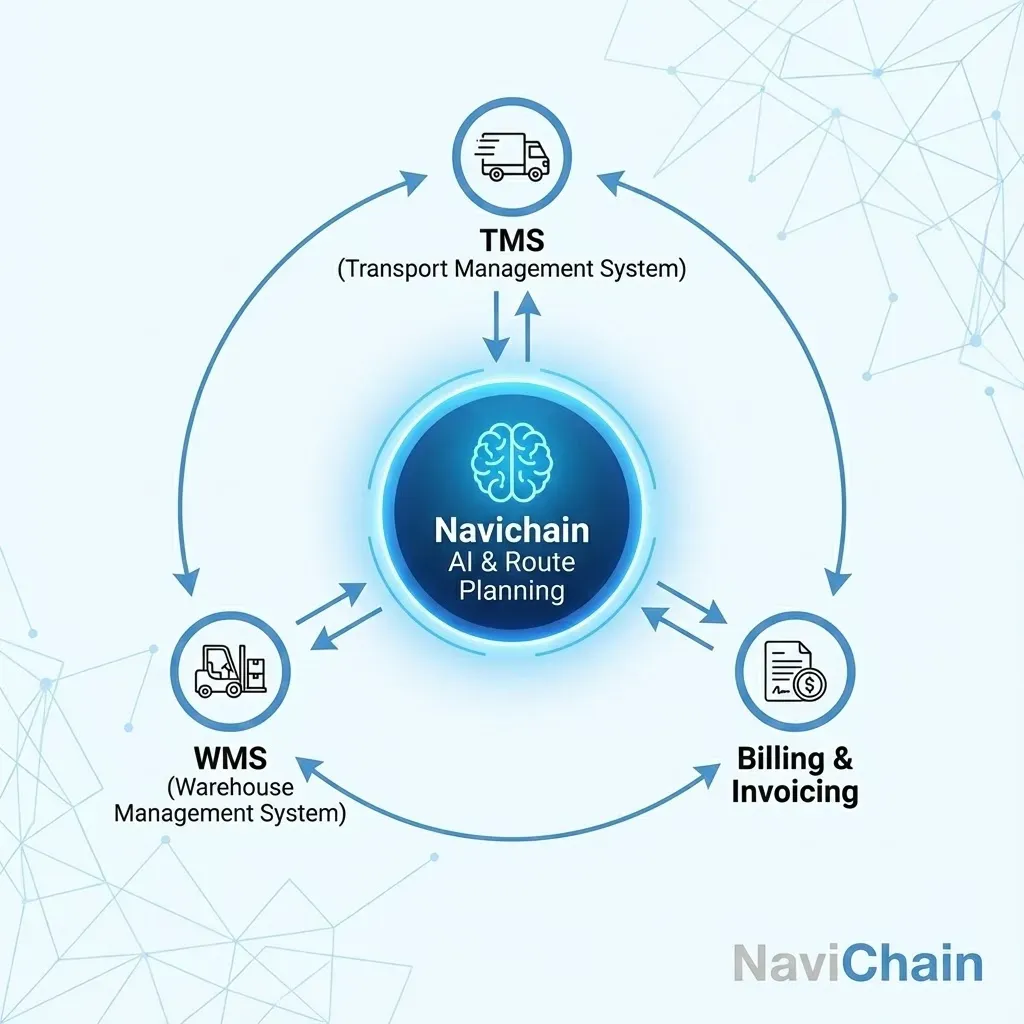
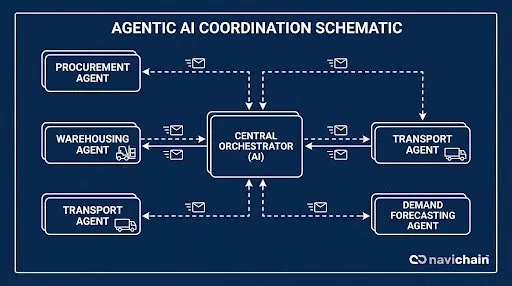
Definition and core value. Agentic AI involves deploying autonomous intelligent agents across a supply chain. These agents use advanced algorithms to make independent decisions regarding procurement, transport, warehousing and more, optimising the overall system.
2. The Friction (The Problem)
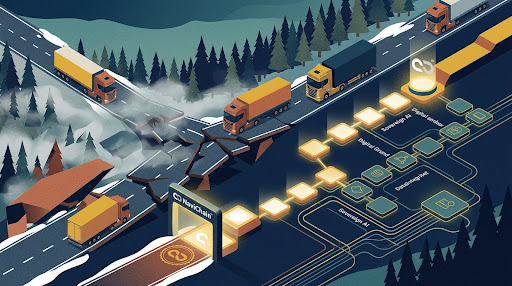
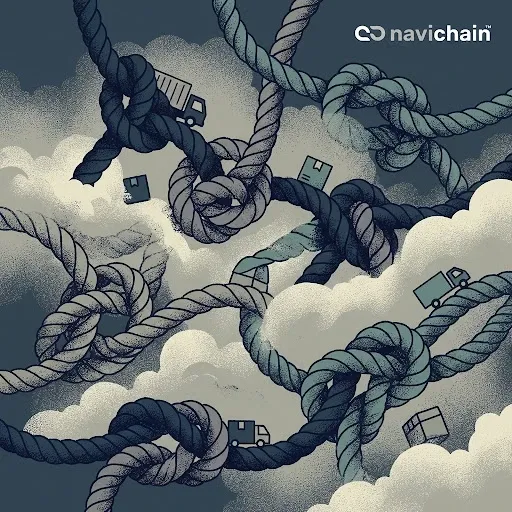
Why this is hard. Traditional supply chains struggle with inflexibility, reacting slowly to disruptions and relying on manual intervention. This leads to inefficiencies, increased costs, and vulnerabilities in the face of unexpected events.
3. Theoretical Background
The Mechanics. Agentic AI leverages techniques like reinforcement learning, game theory and constraint satisfaction to develop intelligent agents that cooperate and compete to achieve optimal system-wide performance. They continuously learn from data, adapting to changing conditions and improving their decision-making over time.
4. The Data Evidence
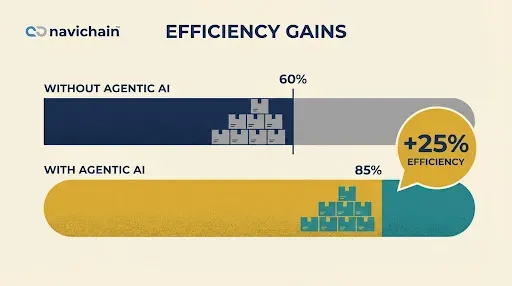
Why this matters physically.
5. Strategic Application
How to implement. Implementing agentic AI requires a phased approach, starting with a pilot project in a specific area of the supply chain, followed by gradual expansion to other areas. Key considerations include data integration, agent design, and security protocols.
6. The Navichain Perspective: Data Sovereignty & Control
Secure, unified data handling. With Navichain SaaS, agentic AI solutions can be deployed on-premise, ensuring complete data sovereignty and control. This is particularly crucial for European SMEs operating in highly regulated industries.
7. Real-World Success Stories
Case Study 1: Maersk - Autonomous Vessel Operations Maersk, a global leader in container shipping, has been actively exploring and implementing agentic AI in several areas, including autonomous vessel operations. Their focus is on optimising vessel routing, predicting equipment failures, and enhancing overall operational efficiency. While a fully autonomous fleet is still in the future, Maersk is developing AI-powered systems that can assist human operators in making better decisions, particularly in complex and dynamic environments. They leverage large datasets collected from their vessels to train AI models that can predict fuel consumption, optimise cargo loading, and even detect potential maintenance issues before they escalate. The integration of AI is helping Maersk reduce operational costs, improve safety, and enhance the reliability of their services. Their ongoing pilot programs with partially autonomous vessels demonstrate a commitment to the future of AI-driven shipping. You can read more about Maersk’s broader AI initiatives on their website (https://www.maersk.com/news/2020/08/25/maersk-and-ibm-discontinue-tradeLens. While this article focuses on TradeLens, it shows Maersk's overall commitment to AI.
Case Study 2: Ocado - Automated Warehousing with Agentic AI Ocado, a British online supermarket, is a pioneer in automated warehousing. They utilise a sophisticated system of thousands of robots moving across a grid to fulfill orders. These robots are managed by an AI system that optimises their movements, preventing collisions and ensuring efficient order picking. This system can be viewed as a form of agentic AI, where each robot acts as an agent working towards a common goal. Ocado’s highly automated warehouses allow them to process a large volume of orders with minimal human intervention, resulting in lower operating costs and faster delivery times. The company is constantly innovating and improving its AI-powered warehouse management system, pushing the boundaries of what's possible in automated logistics. The results are impressive, with significantly reduced fulfillment times and a higher level of accuracy compared to traditional warehousing operations. More information can be found at (https://www.ocado.com/technology.
Case Study 3: Einride - Autonomous Electric Trucks Einride, a Swedish technology company, is developing fully autonomous electric trucks for freight transport. These trucks are designed to operate without human drivers, relying on AI and sensor technology to navigate roads and deliver goods. Einride's autonomous trucks are expected to reduce transportation costs, improve safety, and lower emissions. Their system uses a combination of onboard sensors, cloud connectivity, and AI algorithms to make real-time decisions about routing, speed, and obstacle avoidance. Although still in the early stages of deployment, Einride represents a significant step towards the future of autonomous freight transport. By focusing on electric vehicles and AI-driven automation, Einride is addressing two key challenges in the logistics industry: sustainability and efficiency. See their innovative approach at (https://www.einride.tech/.
8. Strategic Takeaway
Conclusion. Agentic AI offers a transformative opportunity for businesses to optimise their supply chains, improve efficiency, and enhance resilience. By embracing this technology and prioritising data sovereignty, European SMEs can gain a significant competitive advantage in the global market.
9. References
Verified links. * "Agent-Based Modeling and Simulation." Wikipedia, https://en.wikipedia.org/wiki/Agent-based_model. * "Supply Chain Management." Investopedia, https://www.investopedia.com/terms/s/scm.asp. * "Ocado Technology", https://www.ocado.com/technology * "Einride", https://www.einride.tech/ * "Maersk and IBM discontinue TradeLens", https://www.maersk.com/news/2020/08/25/maersk-and-ibm-discontinue-tradeLens
navichain Insights Newsletter
Join the newsletter to receive the latest updates in your inbox.