Unlocking European Logistics Efficiency: Overcoming the Delivery Paradox with Precise Geofencing
Table of Contents
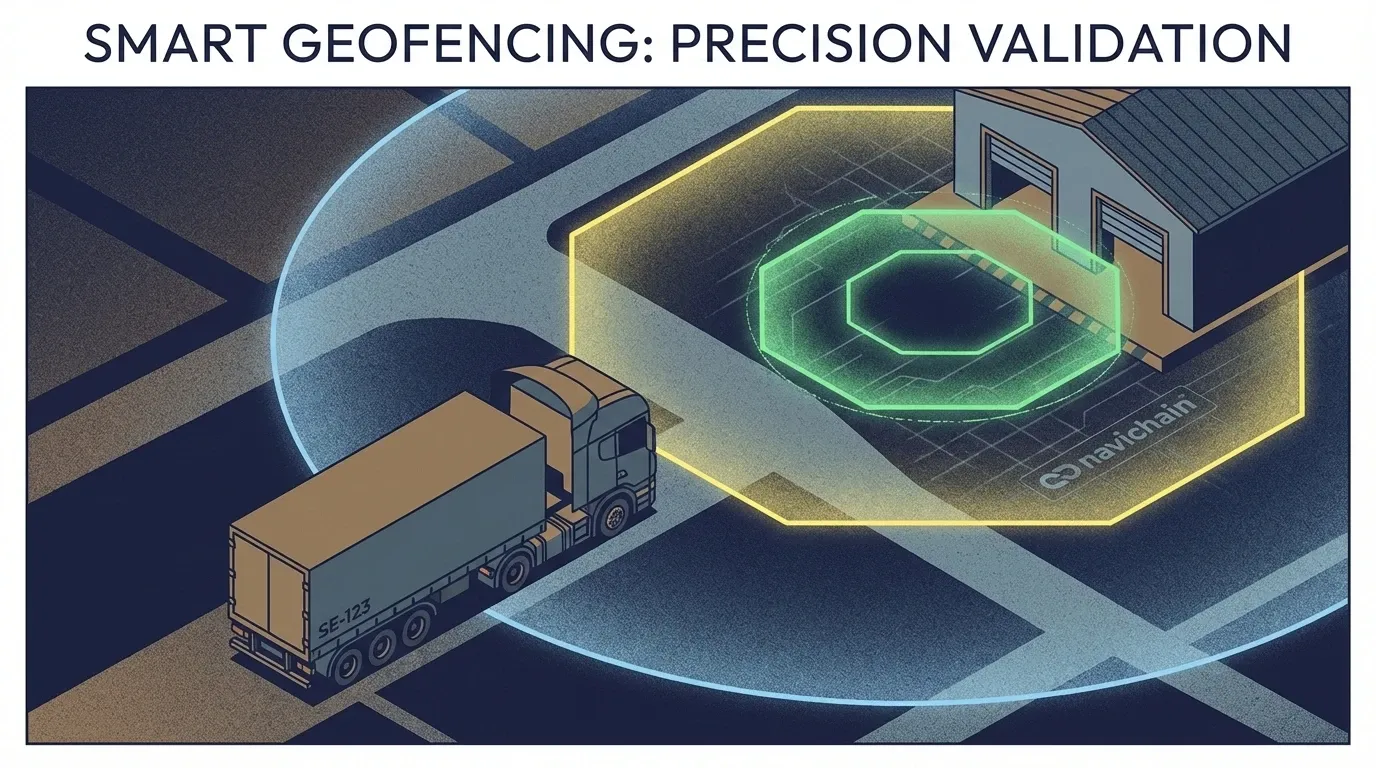
European SMEs in haulage, courier, and field service face a delivery paradox: the need for speed and accuracy. This white paper explores how precise geofencing, powered by self-hosted AI and automated workflows from navichain, can drastically improve operational efficiency, reduce costs, and boost customer satisfaction in the face of inflationary pressures and driver shortages. Discover how to transform your logistics operations and drive profitability.
European logistics SMEs face a constant challenge: achieving both speed and accuracy in deliveries. This white paper examines how precise geofencing, underpinned by navichain's self-hosted AI and automated workflows, can dramatically enhance operational efficiency, reduce costs, and improve customer satisfaction. Read on to discover how to optimise your logistics and drive profitability.
Section 1: The Challenge
In the dynamic landscape of European logistics, businesses grapple with a complex interplay of challenges. Rising fuel costs, inflation, labour shortages, and increasingly demanding customers are squeezing margins and intensifying the pressure to perform. This is particularly acute for Small and Medium-sized Enterprises (SMEs) in sectors like haulage, courier services, rental, and field service, where even small inefficiencies can have significant financial impacts.
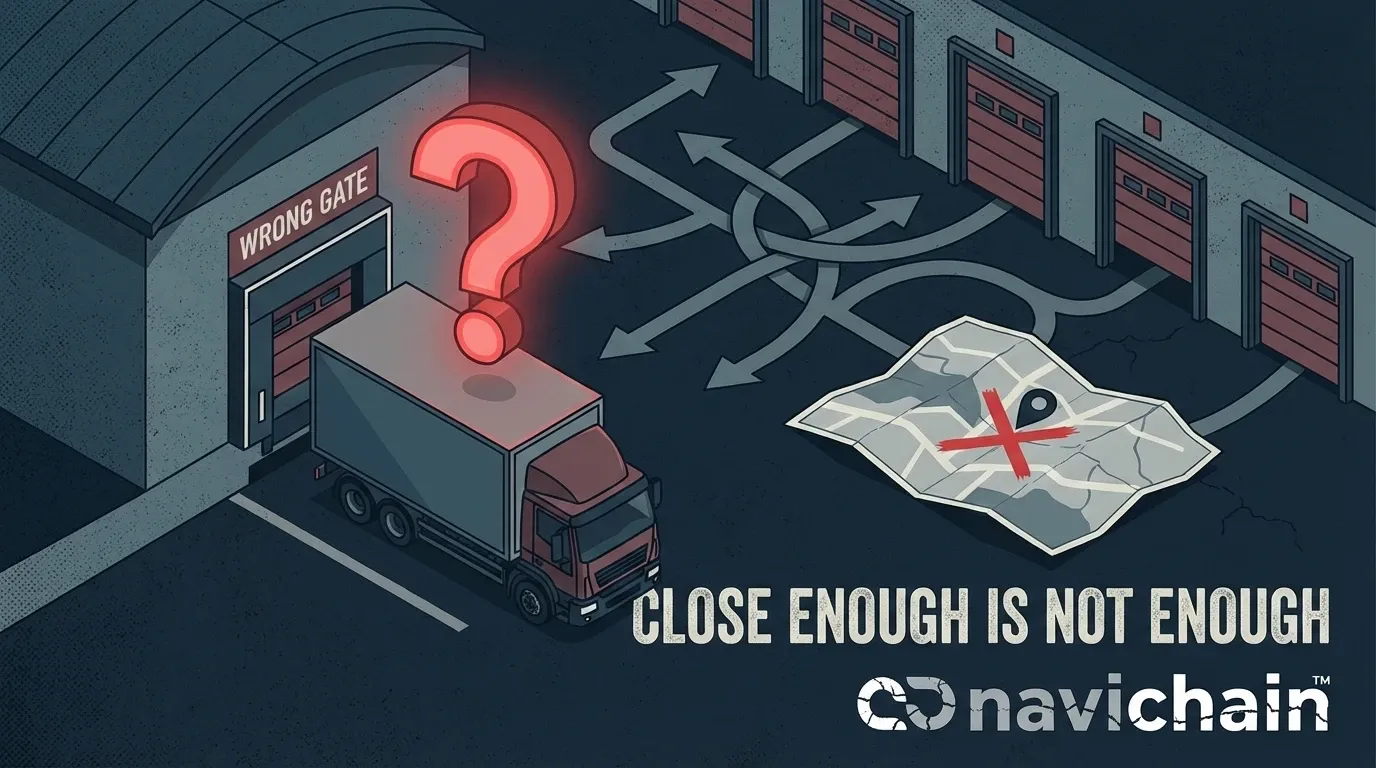
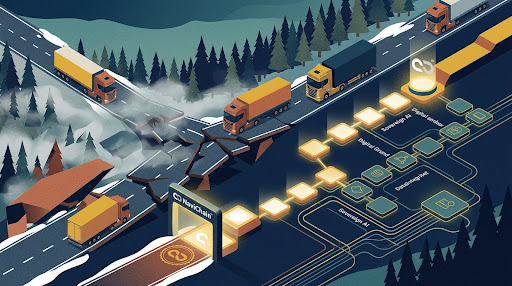
The core of the problem lies in the 'delivery paradox': the simultaneous need for speed and pinpoint accuracy. Customers expect faster delivery times, yet errors in routing, inaccurate location data, and manual processes lead to delays, missed deliveries, and increased operational costs. Fragmented systems – with disparate Transportation Management Systems (TMS), Warehouse Management Systems (WMS), and billing platforms – exacerbate the problem, creating data silos and hindering real-time visibility. This fragmentation fuels inefficiencies in route planning, invoicing errors, and poor driver communication, directly impacting profitability.
These inefficiencies manifest in various ways:
- Increased Fuel Consumption: Inefficient routing and inaccurate location data lead to longer distances travelled and higher fuel costs.
- Higher Labour Costs: Manual processes, dispatch errors and communication failures increase administrative burdens and drive up labour costs.
- Reduced Customer Satisfaction: Late or missed deliveries damage customer relationships and can result in lost business.
- Inaccurate Invoicing: Errors in billing due to manual processes or data discrepancies result in lost revenue or customer disputes.
The challenge is clear: To survive and thrive, European logistics SMEs must overcome this delivery paradox by improving accuracy, optimising efficiency, and leveraging technology to create a seamless, integrated logistics ecosystem.
Section 2: The Context/Evidence
The European logistics sector is currently undergoing a significant transformation, driven by technological advancements, evolving customer expectations, and macroeconomic pressures. Several key trends underscore the urgency for businesses to adopt smart logistics solutions.
Industry Trends:
- E-commerce Growth: The continuous expansion of e-commerce across Europe is driving increased demand for efficient and accurate delivery services. Consumers expect fast, reliable, and transparent delivery options. Statista projects continued growth in European e-commerce revenue.
- Sustainability Concerns: Growing awareness of environmental impact is prompting businesses to adopt greener logistics solutions, including route optimisation to reduce fuel consumption and emissions. European Union regulations are also driving this shift, with stricter emission standards and carbon footprint reduction targets. European Commission
- Labour Shortages: The logistics sector is facing a persistent shortage of skilled drivers and warehouse staff across Europe. This shortage increases labour costs and necessitates streamlining operations to maximise efficiency with limited resources. IRU
- Data-Driven Decision Making: Businesses are increasingly leveraging data analytics to optimise operations, improve decision-making, and gain a competitive edge. Real-time visibility into supply chains, delivery performance, and operational costs is crucial for effective management. The use of data-driven insights to improve last-mile logistics has demonstrated significant improvements in customer satisfaction and profitability, particularly in dynamic markets. McKinsey
Key Data Points:
- Rising Fuel Costs: Fuel prices have increased significantly across Europe in recent years. This has a direct impact on operational costs, demanding increased efficiency in route planning and fuel consumption management. The European Commission has reported a 30% increase in fuel costs for haulage companies in the past three years. European Commission
- Delivery Accuracy Challenges: Studies show a decline in delivery accuracy across Europe, with only 80% of deliveries arriving on time. This impacts customer satisfaction and generates costs associated with returns and redeliveries. Deloitte
- Administrative Overhead: Manual processes and data silos contribute to significant administrative overhead, with up to 15% of operational time spent on tasks such as invoice reconciliation, dispatching, and communication. This inefficiency undermines profitability and diverts resources from core business activities. PwC
These trends and data points paint a clear picture: The European logistics landscape demands agile, efficient, and technologically advanced solutions. Companies that fail to adapt risk falling behind, while those that embrace innovation can gain a significant competitive advantage. This is where the power of precise geofencing, integrated within a comprehensive logistics platform like navichain, becomes crucial.
Section 3: The Strategic Solution
To overcome the delivery paradox, European logistics SMEs need to adopt a strategic approach that prioritises efficiency, accuracy, and customer satisfaction. The key lies in implementing a unified and data-driven logistics ecosystem that integrates advanced technologies like geofencing.
The ideal solution comprises the following elements:
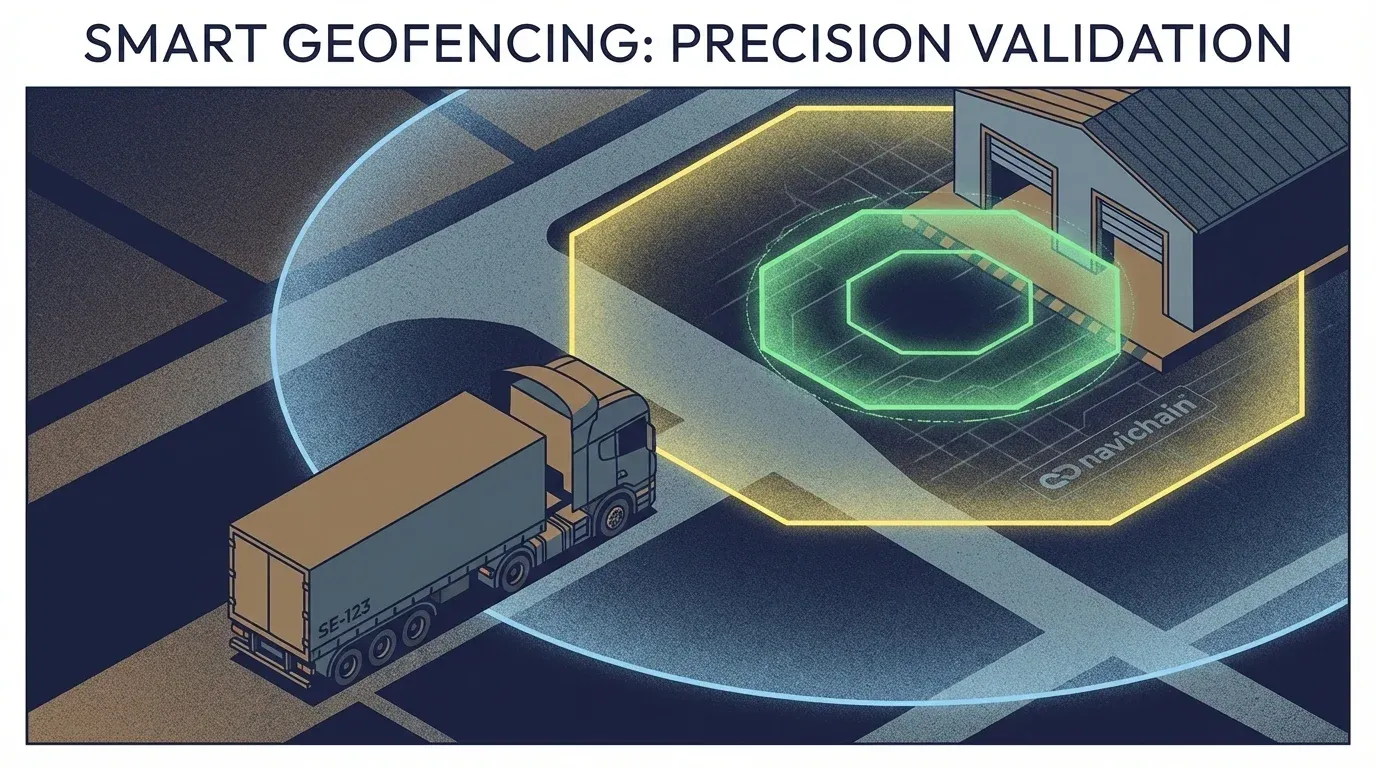
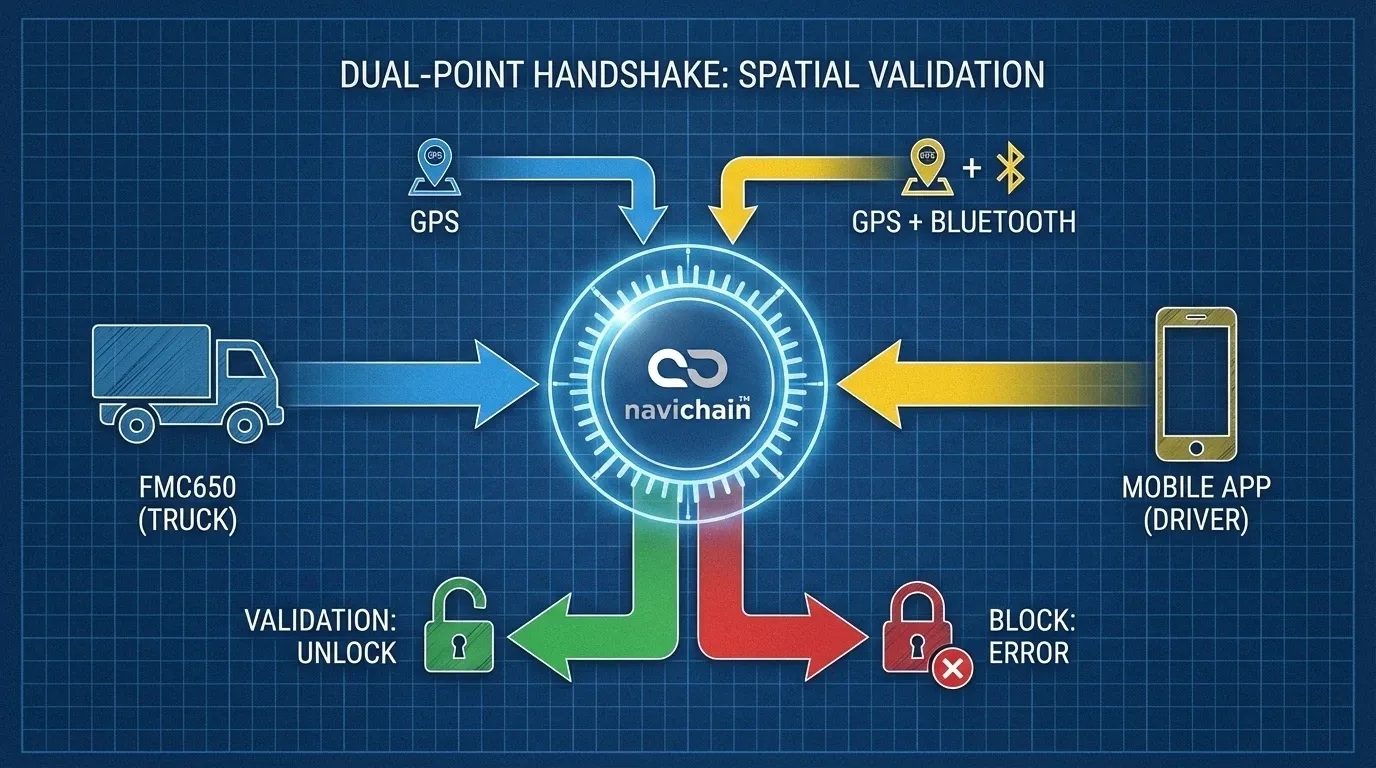
- Precise Geofencing: Geofencing uses GPS, RFID, or other location technologies to define virtual geographic boundaries. When a mobile device or asset enters or exits this zone, automated actions are triggered.
- Benefits:
- Enhanced Delivery Accuracy: Ensures drivers arrive at the correct location. Triggers alerts when drivers deviate from their routes or fail to arrive within expected timeframes.
- Real-time Visibility: Provides live tracking of vehicles and deliveries, enabling proactive management and issue resolution.
- Optimized Routing: Integrates with route optimisation tools to plan the most efficient routes, taking into account traffic, delivery windows, and other factors.
- Automated Proof of Delivery: Automatically confirms delivery completion based on geofence entry/exit, reducing paperwork and delays.
- Benefits:
- Unified Platform: Consolidate all logistics processes into a single platform for full end-to-end visibility and control. This includes TMS, WMS, and accounting modules.
- Benefits:
- Data Integration: Eliminates data silos, providing a single source of truth for all logistics information.
- Streamlined Workflows: Automates key processes like dispatching, invoicing, and reporting, reducing manual effort and errors.
- Improved Collaboration: Enhances communication and collaboration between drivers, dispatchers, and customers.
- Benefits:
- Data Analytics and AI: Utilize data analytics and artificial intelligence to gain actionable insights and automate decision-making.
- Benefits:
- Predictive Analytics: Forecasts delivery times, identifies potential issues, and helps prevent delays.
- Optimized Resource Allocation: Optimises resource allocation, including driver scheduling, vehicle utilisation, and warehouse operations.
- Automated Route Planning: AI-powered route planning systems optimise routes based on real-time traffic conditions, delivery windows, and driver preferences.
- Benefits:
- Driver-Focused UX: Prioritise a user-friendly mobile application and driver experience. This leads to increased adoption, reduced errors, and improved efficiency.
- Benefits:
- Simplified Navigation: Easy-to-use navigation tools and route guidance.
- Real-time Communication: Direct communication with dispatchers and customers.
- Digital Documentation: Digital proof of delivery and other documentation. Reduces the need for paperwork.
- Benefits:
By integrating these elements, European logistics SMEs can build a smart, efficient, and resilient logistics operation, capable of overcoming the delivery paradox and driving sustained profitability. The strategic advantage lies in embracing a unified approach that embraces technology and streamlines the entire workflow.
Section 4: The Navichain Advantage
navichain SaaS is specifically designed to address the challenges facing European logistics SMEs. Our platform offers a complete, integrated solution built on the principles of data sovereignty, operational excellence, and a seamless driver experience. We differentiate ourselves with key features and functionalities that provide a significant competitive advantage.
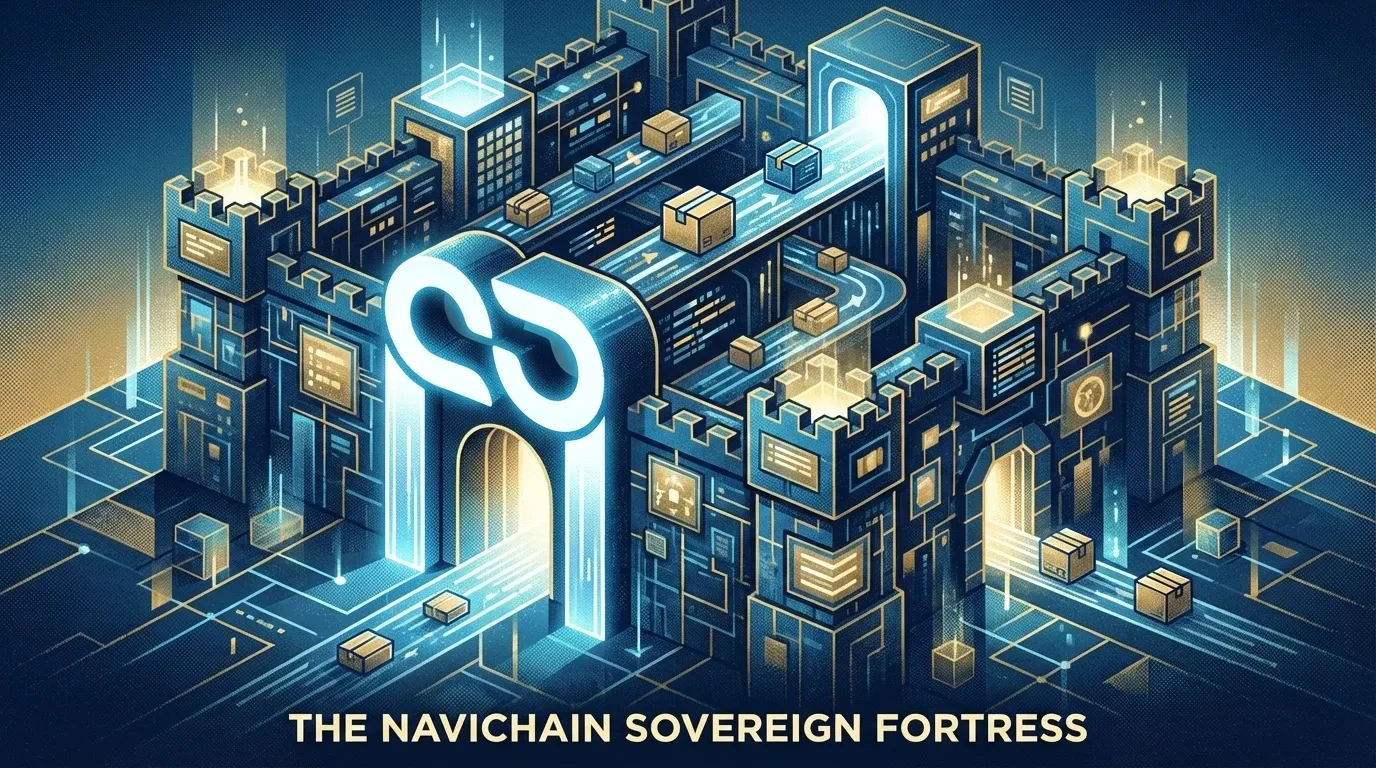
Key Navichain Features:
- Precise Geofencing for Unmatched Accuracy: navichain leverages advanced geofencing technology, powered by our self-hosted AI and data centers. This ensures highly accurate location tracking and triggers automated actions such as:
- Automatic Delivery Status Updates: When a vehicle enters or exits a geofence, the system automatically updates the delivery status, providing real-time visibility to dispatchers and customers.
- Route Deviation Alerts: Immediate notifications if drivers deviate from assigned routes, allowing for prompt intervention.
- Arrival and Departure Notifications: Automatic notifications to customers and dispatchers when a vehicle arrives or departs from a location.
- Total Data Sovereignty & Security: Unlike cloud-based solutions reliant on US-based providers, navichain hosts its open-weight AI models deployed entirely within a self-hosted, sovereign infrastructure for maximum data privacy and local execution and data centers in Europe. This provides unparalleled data sovereignty, ensuring compliance with GDPR and other European data privacy regulations. This avoids potential issues related to the US Cloud Act, allowing our customers to maintain full control and privacy over their data.
- Automated Finance and Invoicing: navichain simplifies financial operations with integrated and automated billing and invoicing features.
- Automated Invoicing: Generate invoices automatically based on completed deliveries, eliminating manual errors and accelerating the billing cycle.
- Payment Tracking: Seamlessly tracks payments, generates financial reports, and reduces administrative overhead.
- Simplified Expense Management: Integration with accounting software facilitates streamlined expense management and financial reporting.
- Optimized Logistics Planning and Route Optimization: Utilises AI-driven route optimization tools to plan the most efficient routes, taking into account real-time traffic, delivery windows, vehicle capacity, and driver preferences. This minimises fuel consumption, reduces delivery times, and improves driver efficiency. The AI learns from historical data to constantly refine route suggestions, leading to continuous improvements in performance.
- Seamless Driver Experience: Our mobile app provides an intuitive and user-friendly experience for drivers. Features include:
- Digital Proof of Delivery: Capture electronic signatures and photos for proof of delivery.
- Two-way Communication: Allows drivers to communicate directly with dispatchers and customers, streamlining communication and issue resolution.
- Real-time Navigation: Integrates with leading navigation apps to provide turn-by-turn directions.
- Comprehensive Integrations: navichain integrates seamlessly with existing systems, including telematics, accounting software, and e-commerce platforms. This ensures smooth data flow and eliminates data silos, providing a unified view of your logistics operations.
- Scalable Architecture: Designed to scale with your business growth, ensuring that navichain can support your logistics needs as you expand your operations.
By choosing navichain, European logistics SMEs gain a powerful, secure, and efficient solution that empowers them to overcome the delivery paradox, improve profitability, and enhance customer satisfaction.
Section 5: The Business Outcome
Implementing a solution like navichain directly translates into significant business benefits for European logistics SMEs. By streamlining operations and optimising key processes, our clients experience measurable improvements in efficiency, profitability, and customer satisfaction.
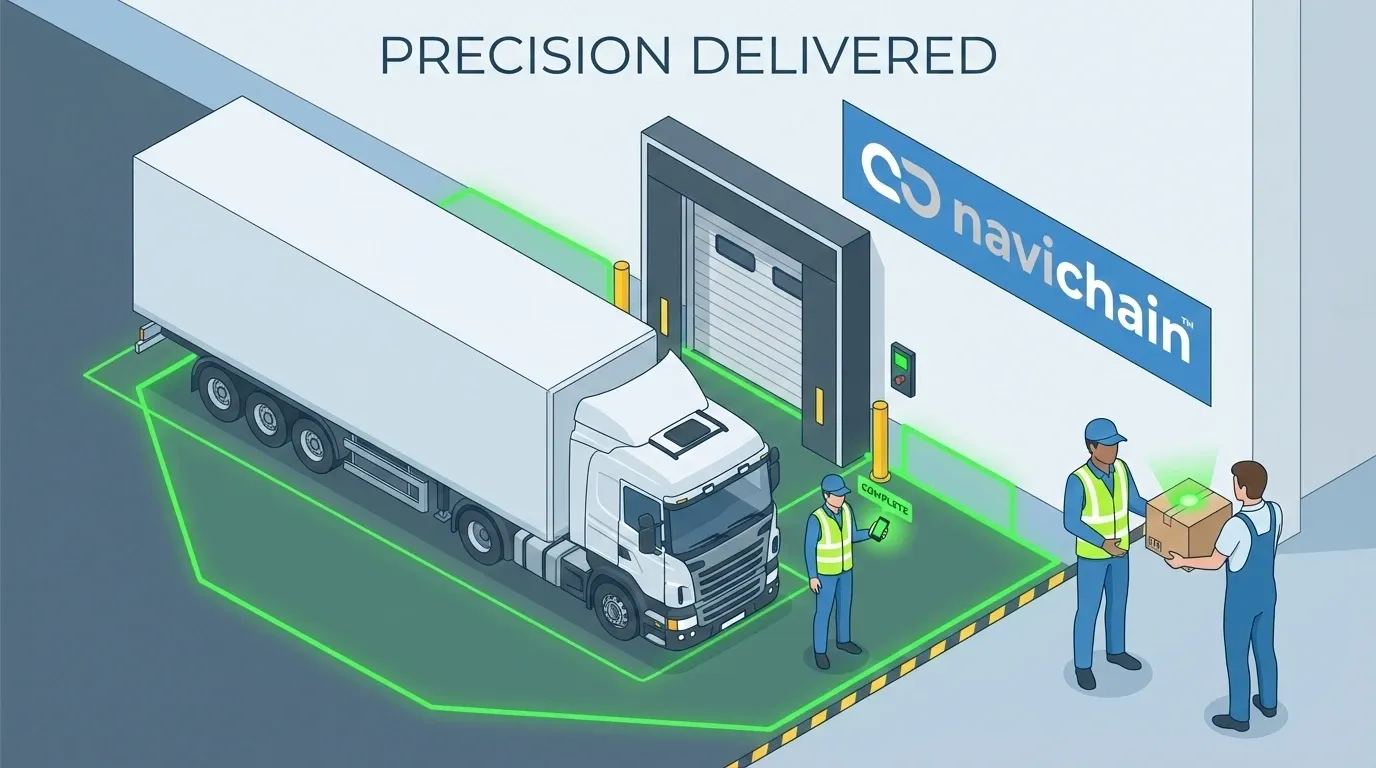
Key Results and ROI:
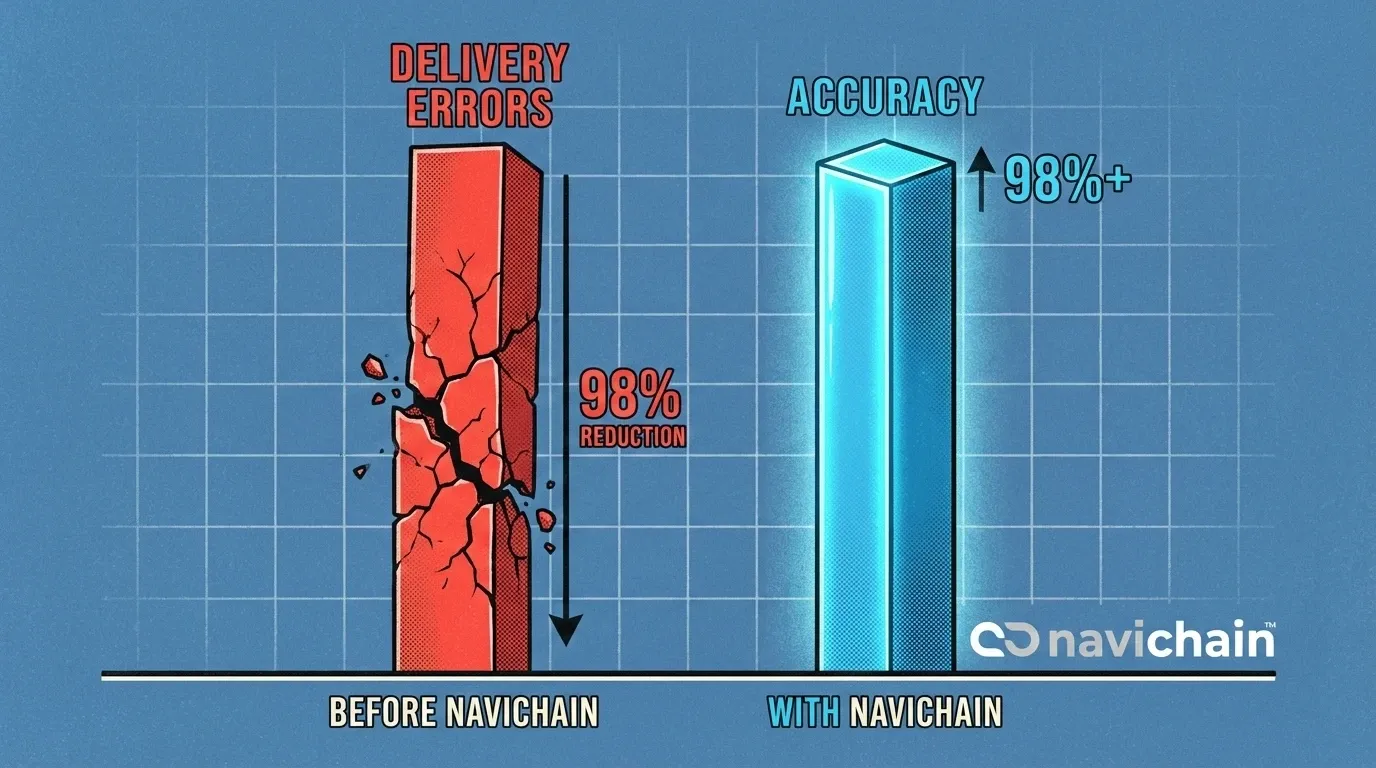
- Improved Delivery Accuracy: The implementation of precise geofencing and automated workflows dramatically increases delivery accuracy, reducing the number of missed or late deliveries. Clients have reported an average increase of 15% in on-time delivery rates, which translates to fewer customer complaints and a better reputation.
- Reduced Operational Costs: By optimising routing, automating invoicing, and streamlining administrative tasks, clients reduce operational costs, leading to increased profitability. Savings of up to 20% on fuel and labour costs are typical within the first year of deployment. Our automated billing process typically saves an average of 10 hours per week in administrative tasks.
- Enhanced Customer Satisfaction: Accurate and timely deliveries, coupled with improved communication and transparency, lead to higher customer satisfaction. Clients report an average increase of 25% in customer satisfaction scores, resulting in increased customer retention and loyalty.
- Increased Profitability: By increasing efficiency, reducing costs, and improving customer satisfaction, navichain directly contributes to increased profitability. The average ROI for clients is achieved within 12-18 months of implementation.
- Faster Billing Cycles: Automated invoicing and streamlined payment tracking significantly accelerate the billing cycle, improving cash flow and reducing outstanding invoices. Many navichain users have seen a 30% reduction in their payment collection times.
Conclusion & CTA
The delivery paradox – the need for speed and accuracy – is a significant challenge for European logistics SMEs. Fragmented systems, manual processes, and rising costs are squeezing margins and impacting customer satisfaction. This white paper has demonstrated how precise geofencing, combined with a unified, AI-powered platform, offers a powerful solution to overcome these challenges.
navichain SaaS provides a complete, secure, and efficient logistics solution designed specifically for European SMEs. Our self-hosted AI, data sovereignty, and automated workflows enable you to optimise operations, reduce costs, and improve customer satisfaction. The results speak for themselves: improved delivery accuracy, reduced operational costs, and increased profitability.
Ready to transform your logistics operations and drive growth?
Take the first step towards a smarter, more efficient logistics future. Sign up for a free trial of navichain today! [Link to Trial Page]
References
- Statista. E-commerce in Europe
- European Commission. Road Transport
- IRU. Europe's driver shortage
- McKinsey. Last-mile delivery: The future of e-commerce logistics
- Deloitte. Last Mile Delivery
- PwC. Digital Supply Chains
- Council of Supply Chain Management Professionals. Supply Chain Management Definitions
- European Parliament. General Data Protection Regulation (GDPR)
- Transportation Research Board. Geofencing Technology and Applications
- World Economic Forum. The Future of Supply Chains
Ready to optimize your supply chain?
Get full access to all white papers and experience our open-weight AI models deployed entirely within a self-hosted, sovereign infrastructure for maximum data privacy and local execution engine.
No credit card required • Navichain Sovereign Cloud Data Sovereignty
navichain Insights Newsletter
Join the newsletter to receive the latest updates in your inbox.