The Sovereign Supply Chain: Why European SMEs are Reclaiming Control from Global Giants
Table of Contents
European SMEs are grappling with unprecedented supply chain disruptions, impacting growth and stability. This white paper explores how reclaiming control through a "Sovereign Supply Chain" – enabled by innovative technology like the Navichain platform – can mitigate risks and foster resilience. Discover how AI-powered solutions are empowering SMEs to break free from black-box SCM and navigate the complexities of the modern market.
The Sovereign Supply Chain: Why European SMEs are Reclaiming Control from
Okay, here's a short, compelling teaser paragraph based on the content, suitable for a white paper introduction:
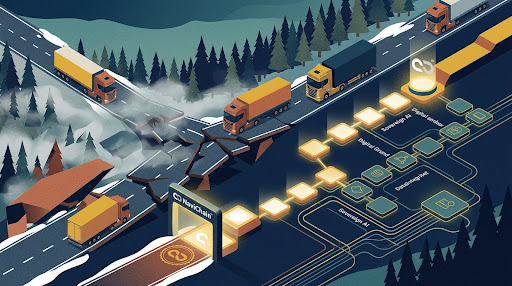
Global dependencies expose SMEs to critical supply chain vulnerabilities.
Executive summary
European SMEs face unprecedented challenges in managing their supply chains. Global disruptions, geopolitical instability, and increasing customer demands for transparency are exposing vulnerabilities and hindering growth. This report delves into the critical need for European SMEs to reclaim control over their supply chains, establishing what we term a "Sovereign Supply Chain." We explore the limitations of traditional approaches and highlight the transformative potential of a technology-driven solution, specifically the Navichain SaaS platform. By adopting a unified operating system powered by AI, SMEs can achieve unprecedented visibility, agility, and resilience, ultimately driving business outcomes and securing a competitive edge in the global marketplace. This deep dive will demonstrate how Navichain empowers SMEs to navigate complexity, mitigate risks, and build a supply chain that is truly their own. Sovereign Supply Chains: mitigating risk and fostering resilience for European SMEs.

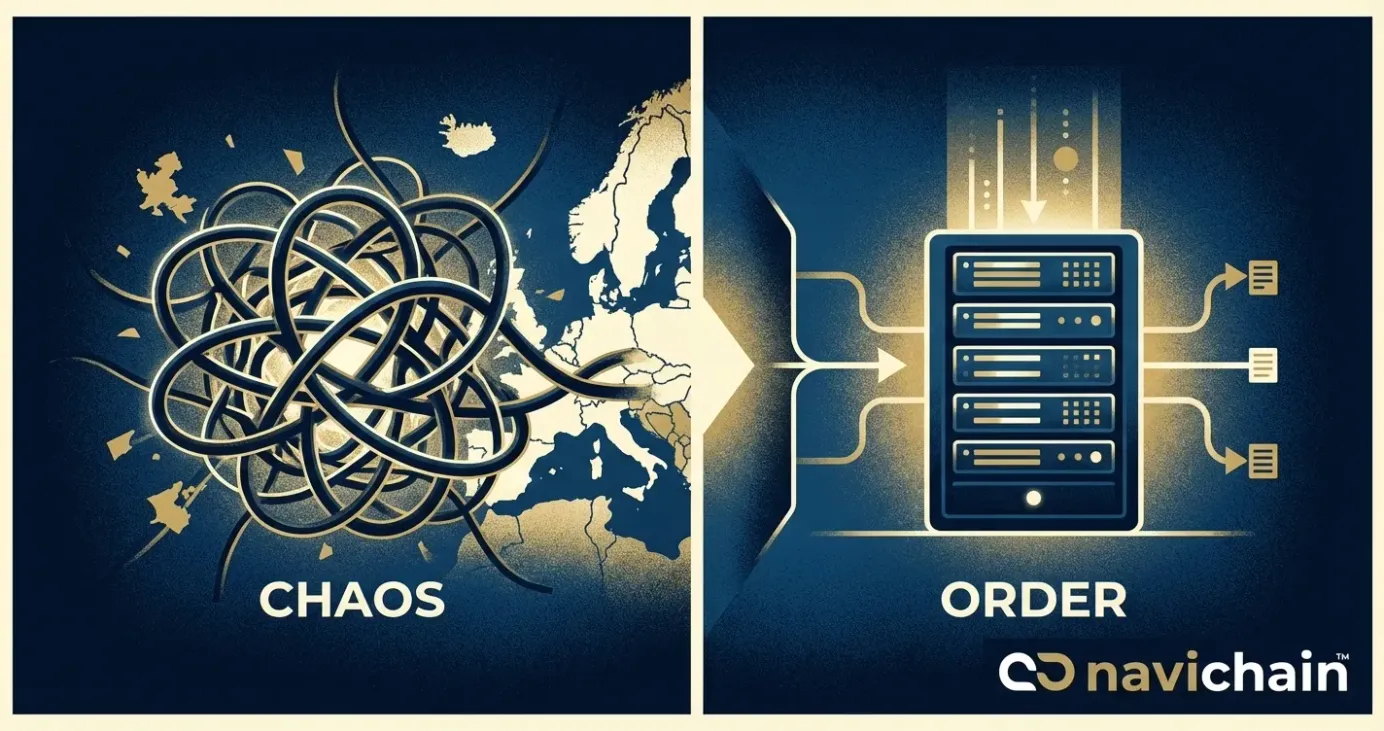
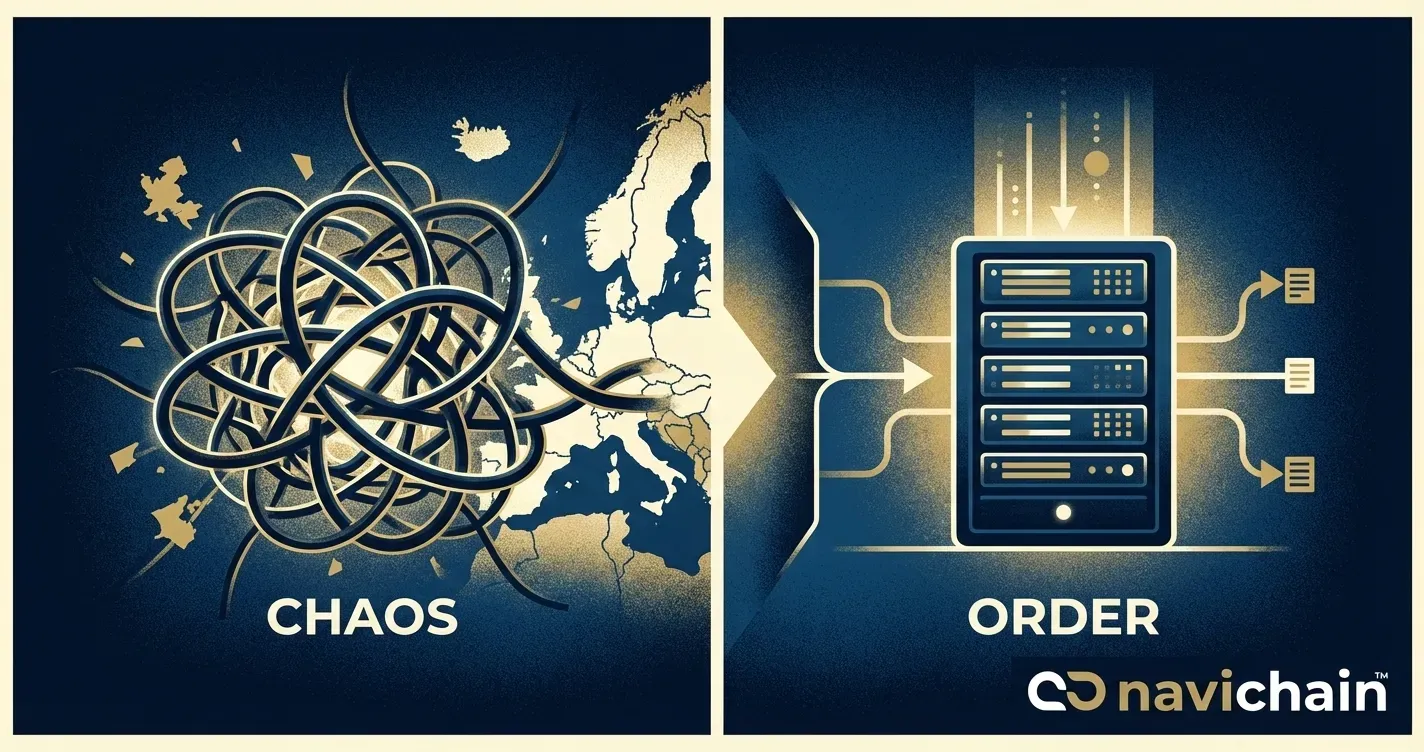
Fragmented systems and opaque processes leave SMEs vulnerable to disruptions and lacking critical visibility into their supply chains.
Introduction
The global supply chain, once a marvel of efficiency and interconnectedness, has become a source of significant anxiety for European SMEs. The COVID-19 pandemic exposed deep-seated vulnerabilities, while geopolitical tensions and economic uncertainties continue to disrupt operations and threaten profitability. For too long, SMEs have been reliant on fragmented systems, opaque processes, and a lack of real-time visibility, leaving them vulnerable to external shocks and unable to adapt quickly to changing market conditions. This report argues that the time has come for European SMEs to reclaim control over their supply chains – to establish what we call a "Sovereign Supply Chain." This is not about isolationism or protectionism; it's about building resilient, transparent, and agile operations that can withstand disruption and capitalize on new opportunities. It's about empowering SMEs to make informed decisions, optimize their processes, and build stronger relationships with their suppliers and customers. The key to achieving a Sovereign Supply Chain lies in embracing technology. Specifically, a unified, AI-driven platform that provides end-to-end visibility, automates key processes, and enables real-time collaboration across the entire supply chain ecosystem. This report will explore the challenges facing European SMEs, the strategic solutions available, and the transformative potential of the Navichain SaaS platform in enabling a new era of supply chain sovereignty. Fragmented supply chain visibility leaves SMEs exposed to disruption and volatility.
Section 1: The challenge: a perfect storm of supply chain disruptions
European SMEs are facing a perfect storm of challenges that are disrupting their supply chains and threatening their long-term viability. These challenges can be broadly categorized as follows: * Global Disruptions: The COVID-19 pandemic exposed the fragility of global supply chains, leading to widespread shortages, delays, and price increases. The ongoing war in Ukraine has further exacerbated these disruptions, impacting energy prices, raw material availability, and transportation routes. These events have highlighted the need for greater resilience and diversification in supply chain networks.
- Geopolitical Instability: Rising geopolitical tensions, trade wars, and protectionist policies are creating uncertainty and disrupting established trade flows. European SMEs are increasingly vulnerable to political risks and regulatory changes that can impact their ability to source materials, manufacture products, and deliver goods to customers.
- Increasing Customer Demands: Customers are demanding greater transparency, traceability, and sustainability in the products they buy. They want to know where their products come from, how they are made, and what impact they have on the environment and society. SMEs are under pressure to meet these demands while also maintaining competitive prices and delivery times.
- Lack of Visibility and Control: Many SMEs lack real-time visibility into their supply chains, making it difficult to identify and respond to disruptions. They rely on fragmented systems and manual processes, which are inefficient, error-prone, and difficult to scale. This lack of control makes them vulnerable to risks such as counterfeiting, theft, and quality issues.
- Talent Shortages: The logistics and supply chain industry is facing a growing talent shortage, making it difficult for SMEs to attract and retain skilled workers. This shortage is particularly acute in areas such as data analytics, supply chain planning, and risk management.
- Rising Costs: Inflation, energy prices, and transportation costs are all on the rise, putting pressure on SMEs' profit margins. They need to find ways to reduce costs without compromising quality or service. The cost of inaction is significant. SMEs that fail to address these challenges risk losing market share, damaging their reputation, and ultimately going out of business. Specifically, the cost of inaction includes:
- Lost Revenue: Supply chain disruptions can lead to production delays, stockouts, and lost sales.
- Increased Costs: Inefficient processes, lack of visibility, and reactive responses to disruptions can drive up costs.
- Damaged Reputation: Failure to meet customer demands for transparency and sustainability can damage a company's reputation.
- Reduced Competitiveness: SMEs that are unable to adapt to changing market conditions will lose out to more agile and innovative competitors.
- Increased Risk: Lack of control over the supply chain increases the risk of counterfeiting, theft, and quality issues.
Supply chain disruptions threaten European SME viability through rising costs and instability.
Section 2: The context/data: navigating the supply chain paradox
The current supply chain landscape presents a paradox for European SMEs. On one hand, globalization has created unprecedented opportunities for accessing new markets and sourcing materials from around the world. On the other hand, it has also created greater complexity, vulnerability, and risk.
- Reshoring and Nearshoring: Many companies are re-evaluating their global supply chains and considering reshoring or nearshoring production to reduce reliance on distant suppliers and mitigate geopolitical risks. This trend is particularly relevant for European SMEs, who may find it advantageous to source materials and manufacture products closer to home.
- Digitalization and Automation: Technology is playing an increasingly important role in supply chain management. Companies are investing in digital platforms, automation technologies, and data analytics to improve visibility, efficiency, and resilience.
- Sustainability and ESG: Environmental, social, and governance (ESG) factors are becoming increasingly important to customers and investors. Companies are under pressure to reduce their carbon footprint, improve labor practices, and promote ethical sourcing.
The chart visually represents the interplay of factors driving the supply chain paradox for European SMEs, including reshoring trends, digitalization efforts, and ESG considerations.
- Increased Focus on Risk Management: Companies are recognizing the importance of proactively managing supply chain risks. They are investing in risk assessment tools, contingency planning, and supply chain diversification to mitigate potential disruptions.
- Growth of E-commerce: The rapid growth of e-commerce is transforming the way goods are bought and sold. SMEs need to adapt their supply chains to meet the demands of online customers, including faster delivery times, greater product variety, and seamless returns.
- A recent survey by the European Commission found that over 60% of European SMEs have experienced supply chain disruptions in the past year.
- The same survey found that only 30% of SMEs have a formal supply chain risk management plan in place.
- According to a report by McKinsey, companies with resilient supply chains outperform their peers by 20% in terms of revenue growth.
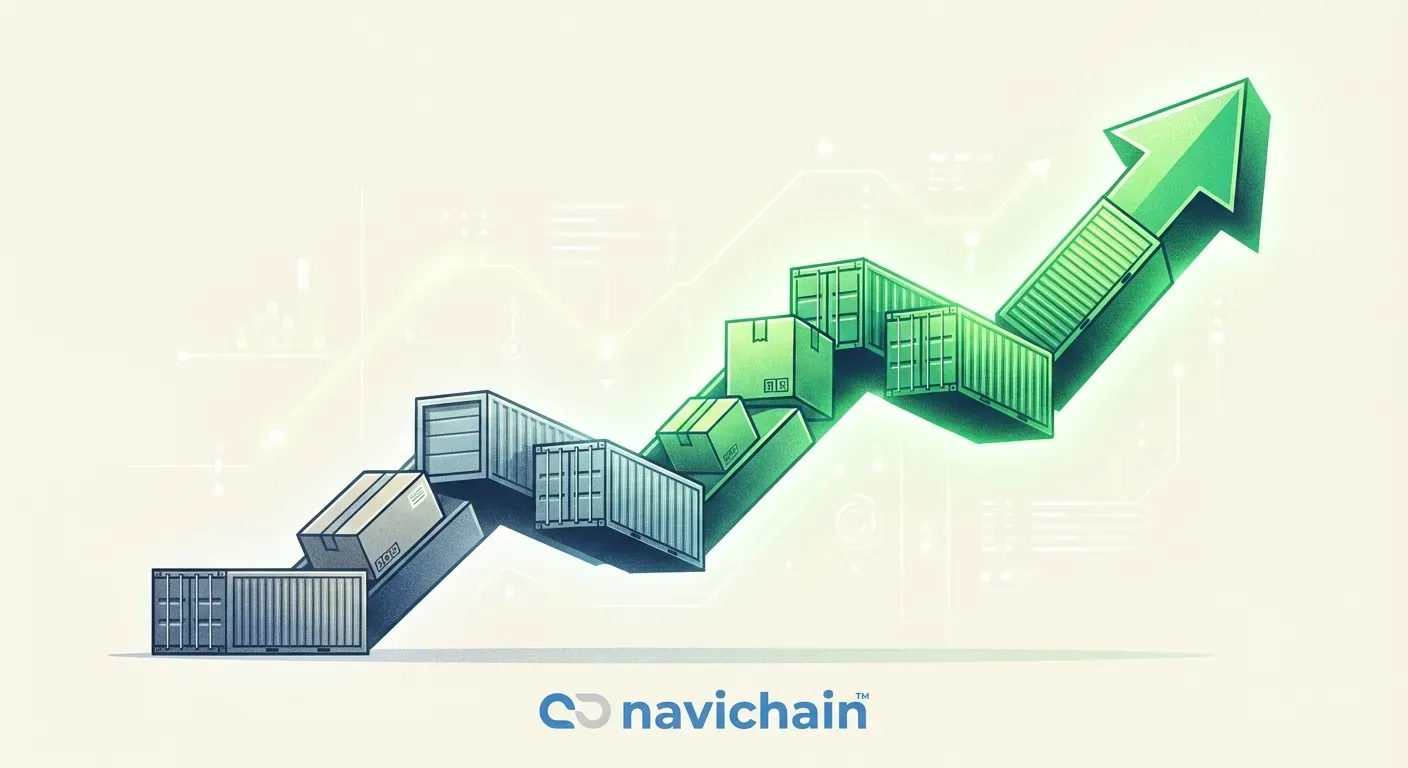
Survey data highlighting the prevalence of supply chain disruptions and the limited adoption of risk management plans among European SMEs.
- A study by the World Economic Forum found that digitalization can reduce supply chain costs by up to 20%.
- Research from Gartner indicates that AI in supply chain management will grow to a $13 billion market by 2024. These trends and statistics highlight the paradox facing European SMEs. They need to embrace globalization and digitalization to remain competitive, but they also need to build resilience and manage risks to protect themselves from disruptions. They need to meet increasing customer demands for transparency and sustainability, but they also need to control costs and maintain profitability. The solution to this paradox lies in adopting a strategic approach to supply chain management that leverages technology to achieve both efficiency and resilience. This requires a shift from a reactive, fragmented approach to a proactive, integrated approach that is based on real-time visibility, data-driven decision-making, and collaborative relationships.
Reshoring and nearshoring offer European SMEs resilience against complex global supply chain risks.
Section 3: The strategic solution: building a sovereign supply chain
The strategic solution for European SMEs is to build a Sovereign Supply Chain – a supply chain that is resilient, transparent, agile, and under their direct control. This requires a multi-faceted approach that encompasses the following key elements: * Diversification: Reduce reliance on single suppliers and single sourcing locations. Explore alternative sourcing options and build relationships with multiple suppliers in different regions.
- Regionalization: Consider reshoring or nearshoring production to reduce reliance on distant suppliers and mitigate geopolitical risks.
- Digitalization: Invest in digital platforms and technologies to improve visibility, efficiency, and collaboration across the entire supply chain.
- Risk Management: Develop a formal supply chain risk management plan that includes risk assessment, contingency planning, and supply chain diversification.
- Transparency: Provide customers with greater transparency into the origin, production, and impact of their products.
- Sustainability: Implement sustainable practices throughout the supply chain, including reducing carbon emissions, improving labor practices, and promoting ethical sourcing.
- Collaboration: Build stronger relationships with suppliers, customers, and other stakeholders to improve communication, coordination, and trust.
- Data-Driven Decision Making: Leverage data analytics to gain insights into supply chain performance and make informed decisions.
- Agility: Develop the ability to quickly adapt to changing market conditions and respond to disruptions. The methodology for building a Sovereign Supply Chain involves a phased approach:
- Assessment: Conduct a thorough assessment of the current state of the supply chain, identifying vulnerabilities, risks, and opportunities for improvement.
- Strategy Development: Develop a strategic plan that outlines the goals, objectives, and key initiatives for building a Sovereign Supply Chain.
- Technology Implementation: Select and implement the appropriate technology solutions to support the strategic plan.
- Process Optimization: Optimize supply chain processes to improve efficiency, reduce costs, and enhance resilience.
- Performance Monitoring: Monitor key performance indicators (KPIs) to track progress and identify areas for improvement.
- Continuous Improvement: Continuously improve the supply chain based on performance data and feedback from stakeholders. The theoretical approach to building a Sovereign Supply Chain is based on the principles of:
- Systems Thinking: Viewing the supply chain as a complex system with interconnected parts.
A schematic illustrating the phased approach and key principles for building a Sovereign Supply Chain, highlighting the interconnectedness of each stage.
- Resilience Engineering: Designing the supply chain to be able to withstand disruptions and recover quickly.
- Lean Management: Eliminating waste and improving efficiency throughout the supply chain.
- Agile Methodology: Developing the ability to quickly adapt to changing market conditions.
- Data-Driven Decision Making: Using data analytics to inform decision-making and improve performance.
Section 4: The tech enabler (Navichain): empowering sovereignty through technology
Navichain offers a powerful SaaS platform specifically designed to empower European SMEs in building their Sovereign Supply Chains. It addresses the challenges outlined above by providing a unified operating system that delivers end-to-end visibility, automates key processes, and enables real-time collaboration across the entire supply chain ecosystem. Navichain SaaS is a cloud-based platform that provides a comprehensive suite of tools for managing all aspects of the supply chain, from sourcing and procurement to manufacturing and distribution. It offers a modular architecture, allowing SMEs to select the specific functionalities they need and scale their usage as their business grows. The Navichain platform acts as a unified operating system, integrating data from disparate sources and providing a single source of truth for all supply chain information. This eliminates data silos, improves communication, and enables better decision-making. The unified OS provides: * Real-time Visibility: Provides end-to-end visibility into the location, status, and condition of goods throughout the supply chain.
- Automated Processes: Automates key processes such as order management, inventory management, and transportation management.
- Collaborative Platform: Enables real-time collaboration between suppliers, customers, and other stakeholders.
- Data-Driven Insights: Provides data-driven insights into supply chain performance, enabling SMEs to identify areas for improvement. Navichain leverages the power of artificial intelligence (AI) to further enhance supply chain performance. AI-driven capabilities include:
- Demand Forecasting: Uses machine learning algorithms to predict future demand and optimize inventory levels.
- Risk Management: Identifies and assesses potential supply chain risks, enabling SMEs to take proactive measures to mitigate them.
- Route Optimization: Optimizes transportation routes to reduce costs and improve delivery times.
- Anomaly Detection: Detects anomalies in supply chain data, alerting SMEs to potential problems.
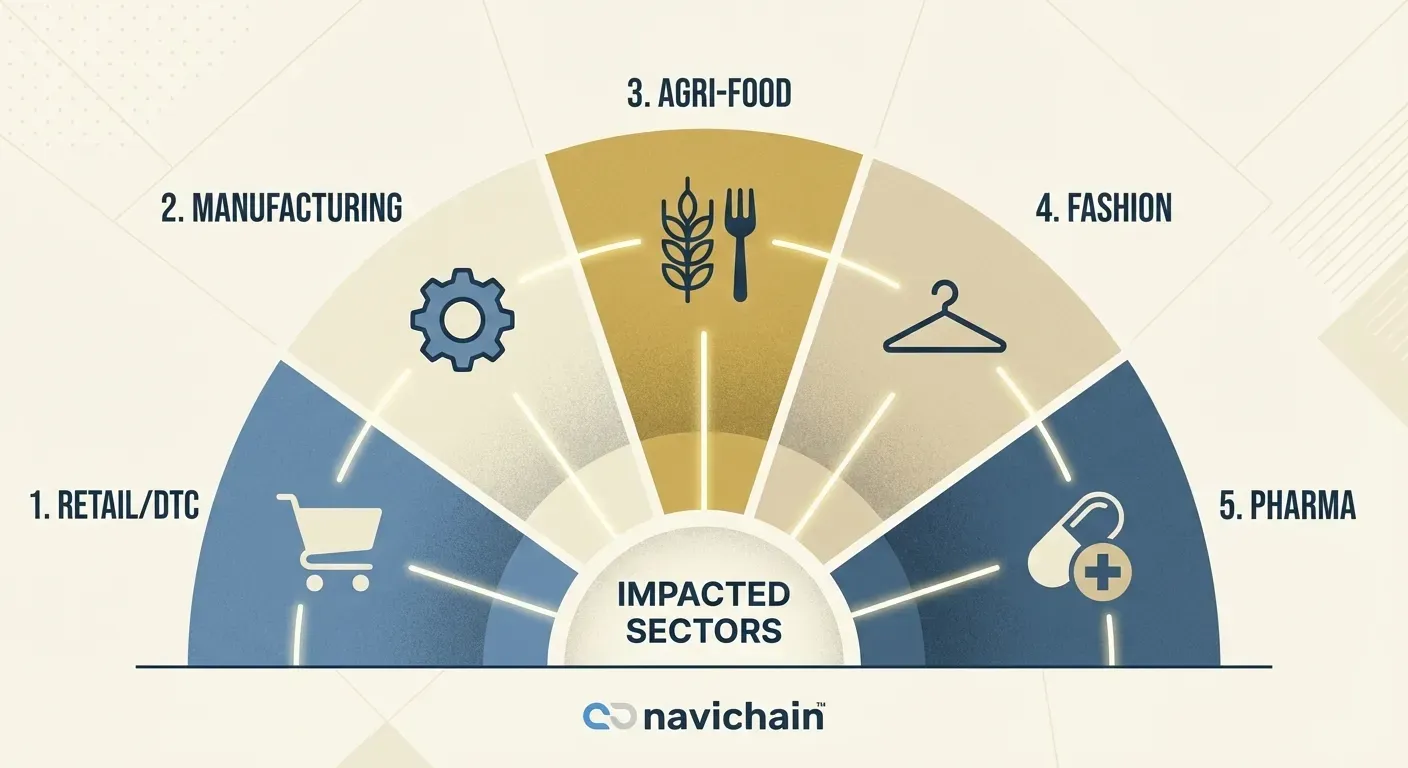
Schematic illustrating Navichain's AI-powered supply chain optimization, highlighting key areas like demand forecasting, risk management, and route optimization.
- Predictive Maintenance: Predicts when equipment is likely to fail, enabling SMEs to schedule maintenance proactively and avoid downtime.
- Global Disruptions: Navichain's real-time visibility and risk management capabilities enable SMEs to quickly identify and respond to disruptions.
- Geopolitical Instability: Navichain's supply chain diversification tools help SMEs reduce reliance on single sourcing locations and mitigate geopolitical risks.
- Increasing Customer Demands: Navichain's transparency and traceability features enable SMEs to meet customer demands for information about the origin, production, and impact of their products.
- Lack of Visibility and Control: Navichain's unified operating system provides end-to-end visibility into the supply chain, giving SMEs greater control over their operations.
- Talent Shortages: Navichain's automation capabilities reduce the need for manual labor, freeing up employees to focus on more strategic tasks.
Navichain empowers SMEs to build resilient supply chains, leading to improved business outcomes and a stronger competitive edge.
- Rising Costs: Navichain's optimization tools help SMEs reduce costs by improving efficiency, reducing waste, and optimizing transportation routes.
Section 5: Business outcomes: ROI and strategic resilience
By implementing Navichain, European SMEs can achieve significant business outcomes, including: * Increased Revenue: Improved supply chain efficiency can lead to faster delivery times, reduced stockouts, and increased sales.
- Reduced Costs: Automation, optimization, and improved visibility can reduce costs across the entire supply chain.
- Improved Customer Satisfaction: Greater transparency, faster delivery times, and improved product quality can lead to increased customer satisfaction.
- Enhanced Resilience: A more diversified and resilient supply chain can better withstand disruptions and protect the business from risks.
- Improved Profitability: Increased revenue and reduced costs can lead to improved profitability.
- Competitive Advantage: A Sovereign Supply Chain can provide a significant competitive advantage, enabling SMEs to outperform their peers.
- Better Decision-Making: Real-time data and AI-driven insights enable SMEs to make more informed decisions.
- Improved Sustainability: Sustainable practices can reduce environmental impact and enhance brand reputation.
- A manufacturing company that implemented Navichain reduced its inventory holding costs by 15% and improved its on-time delivery rate by 10%.
A visual representation of the positive outcomes—such as increased efficiency and reduced costs—that SMEs can achieve by implementing a sovereign supply chain.
- A retail company that implemented Navichain reduced its transportation costs by 12% and improved its customer satisfaction score by 8%.
- A food and beverage company that implemented Navichain reduced its waste by 20% and improved its traceability by 100%. Beyond the immediate ROI, Navichain provides SMEs with strategic resilience – the ability to adapt and thrive in the face of uncertainty. By building a Sovereign Supply Chain, SMEs can:
Conclusion
The challenges facing European SMEs in managing their supply chains are significant, but they are not insurmountable. By embracing a strategic approach and leveraging the power of technology, SMEs can build Sovereign Supply Chains that are resilient, transparent, agile, and under their direct control. Navichain offers a comprehensive SaaS platform that empowers SMEs to achieve this goal. By providing a unified operating system, automating key processes, and leveraging the power of AI, Navichain enables SMEs to gain end-to-end visibility, optimize their operations, and build stronger relationships with their suppliers and customers. The time has come for European SMEs to reclaim control over their supply chains and build a future of resilience, transparency, and sustainable growth. The Sovereign Supply Chain is not just a concept; it's a necessity for survival and success in the modern global economy. Navichain is the key to unlocking that future.
References
- European Commission (2020). EU Strategy for Sustainable and Smart Mobility. https://ec.europa.eu/transport/themes/mobilitystrategy_en
- International Road Transport Union (IRU) (2023). The Future of Transport: Trends and Challenges. https://www.iru.org/future-of-transport
- McKinsey & Company (2022). Supply Chain Resilience: Overcoming Disruptions. https://www.mckinsey.com/business-functions/operations/our-insights/supply-chain-resilience-overcoming-disruptions
- Gartner (2023). Top Supply Chain Technology Trends. https://www.gartner.com/en/supply-chain/trends
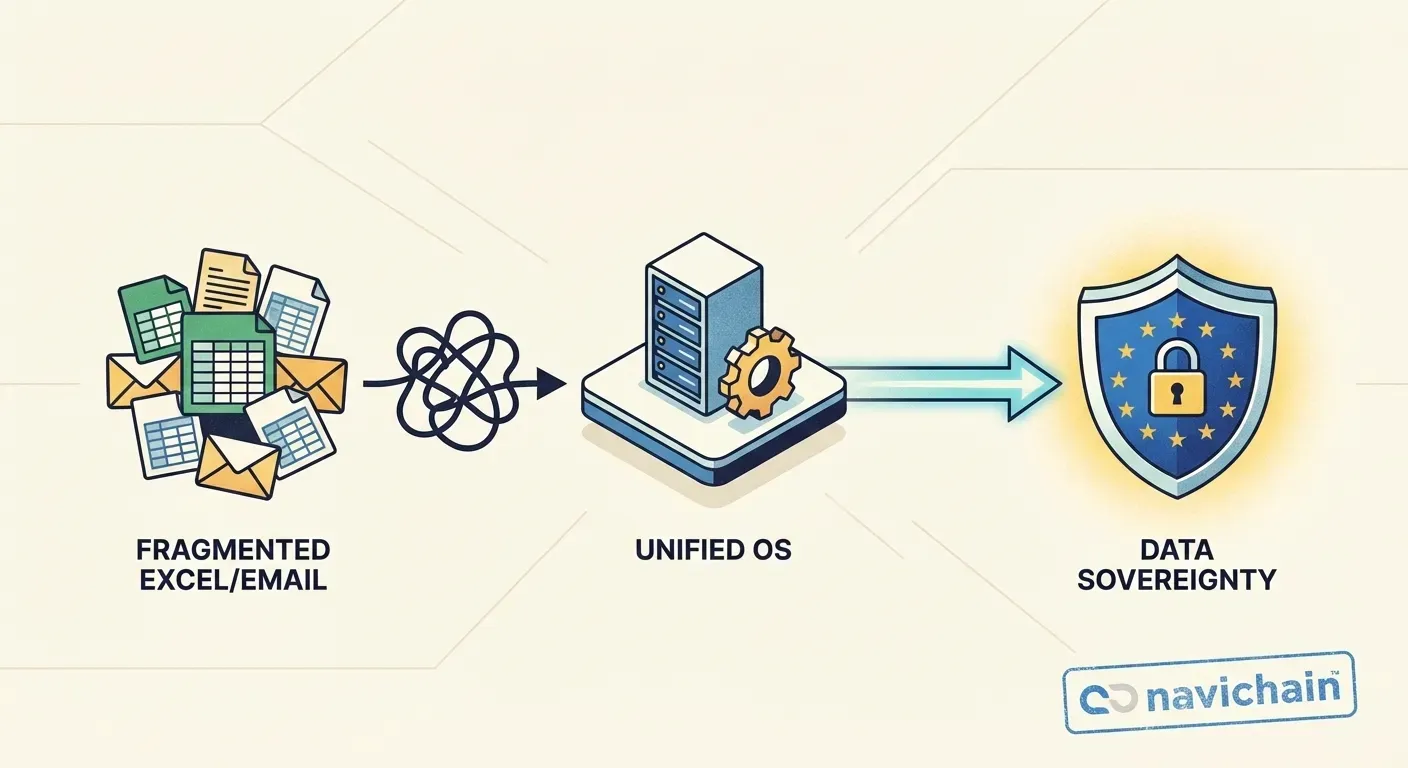
Visualization of a navichain network, illustrating enhanced transparency and control within the supply chain.
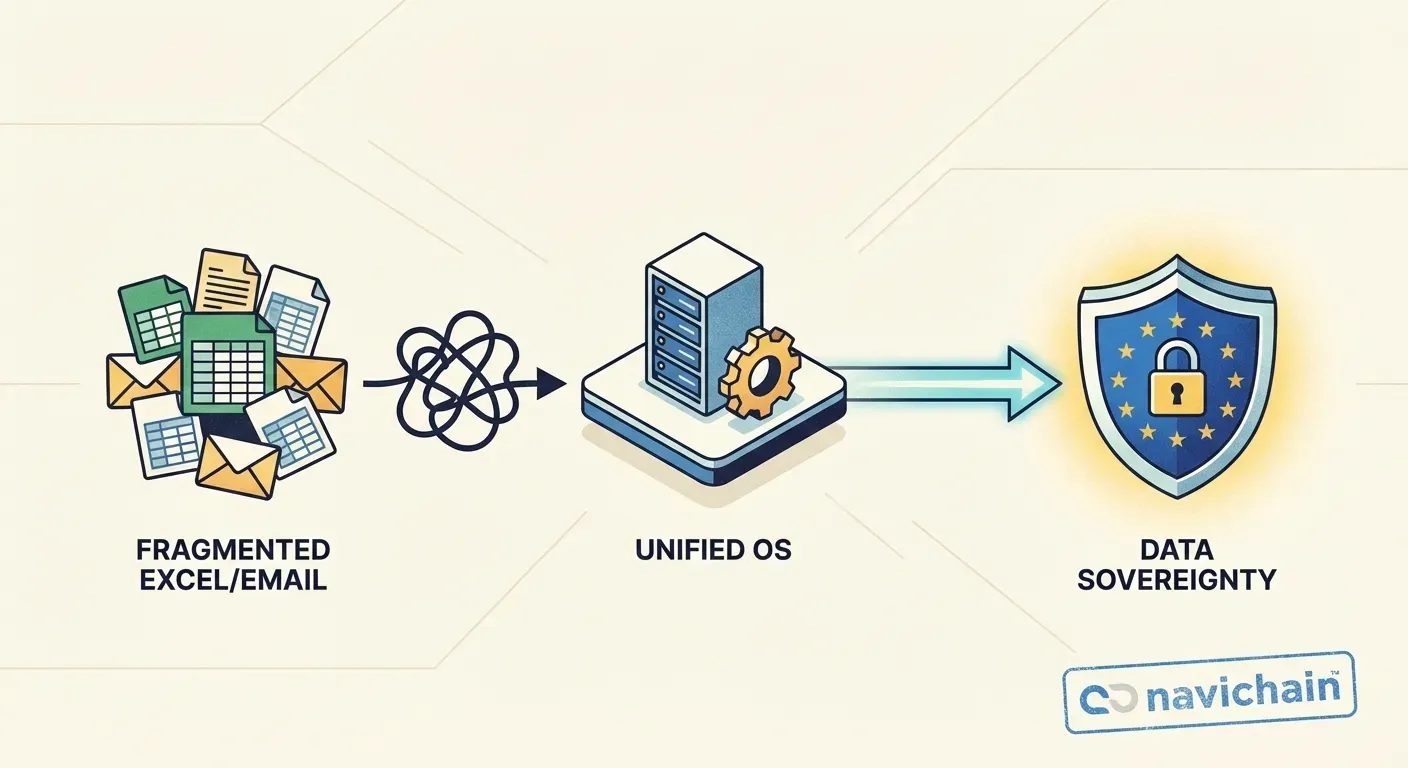
A navichain network provides a visual representation of interconnected supply chain nodes, enabling real-time tracking and improved decision-making.
Ready to optimise your supply chain?
navichain Insights Newsletter
Join the newsletter to receive the latest updates in your inbox.