The ROI Paradox: Why Your 'Reliable' Excel Routines Are Your Most Expensive Operational Cost
Table of Contents
The ROI Paradox: Why Your ''Reliable'' Excel Routines Are Your Most Expensive
Introduction: When 'what works' is no longer profitable
Fig 1: For many small and medium-sized (SME) hauliers in Scandinavia, there is a deep-seated mantra: "It works." The system of Excel sheets for planning, printed fr... For many small and medium-sized (SME) hauliers in Scandinavia, there is a deep-seated mantra: "It works." The system of Excel sheets for planning, printed freight bills in binders, and manual invoicing is ingrained. The staff knows it. It feels safe, predictable, and, above all, cheap. The question "Do we have the energy and budget to digitalize?" is entirely justified when every penny counts and margins, according to industry reports, often hover at a scant 2-4%. But this feeling of security is a dangerous illusion. In a hyper-competitive market where larger players optimize every kilometer with advanced data analysis, 'what works' is no longer synonymous with 'what is profitable' or 'what is sustainable'. The central thesis of this report is that the perceived cost of digitalization—in both money and 'energy'—is a misdirection of leadership focus. The real, escalating cost is the hidden financial drain caused by operational inertia. Those manual processes are not free; they are a hidden tax on every single shipment, every invoice, and every strategic decision you cannot make. This report is not a technical manual. It is a strategic ROI analysis for business leaders. We will shift the discussion from "What does a new system cost?" to "What does it cost us every day to not have one?" We present a framework for quantifying these hidden costs and defining the true, threefold return on investment in a unified operating system: direct savings, liberated working capital, and strategic resilience.
Deconstructing the problem: The true cost of 'what works now'
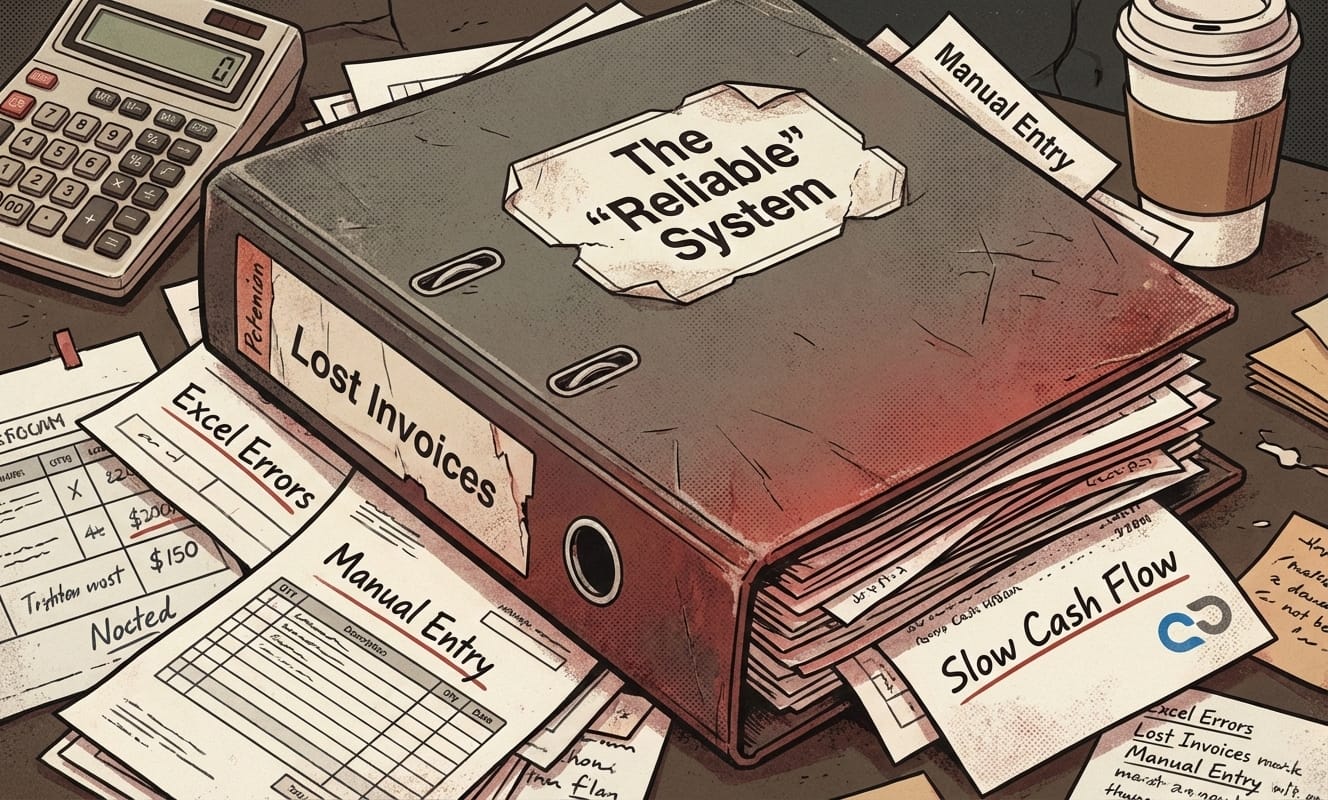
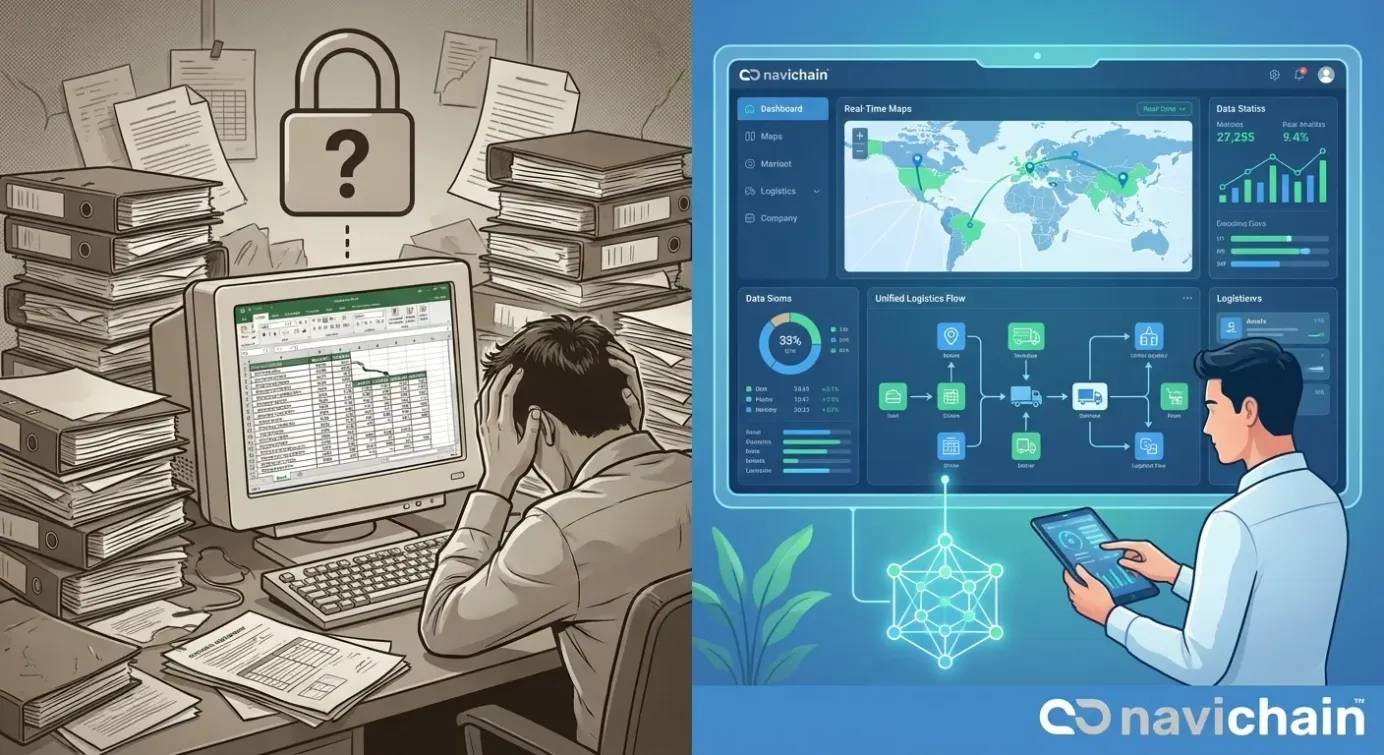
A typical office scene in an SME haulier, where manual processes and paper-based systems are still the norm, obscuring the true cost of operational inefficiencies.
To conduct a proper ROI analysis, we must honestly evaluate both sides of the equation. Often, leaders focus solely on the obvious costs of the 'Investment' (I) while remaining blind to the massive, hidden costs of their current 'status quo'—costs that should, in fact, be part of the 'Return' (R) when they are eliminated.
The investment side: More than just a price tag
Let's be candid about the barriers raised by the question "Do we have the energy and budget?": 1. The Financial Cost: The initial and ongoing license fee for a software platform. This is the most visible, but often the smallest, part of the investment. 2. The Human Cost ('Energy'): This is the cost of change management. It involves time for training, the inevitable initial resistance from staff who are "used to" the old way, and the temporary productivity dip that can occur during the transition. 3. The Implementation Cost: The time and resources required to migrate data (if any), configure the system, and roll it out across the organization. These costs are real and must be respected. But they are one-time or predictable ongoing costs. They pale in comparison to the hidden, recurring costs of doing nothing.
The return side: Uncovering the hidden liabilities of the status quo
This is the core of our ROI analysis. The Return does not just come from new revenue, but primarily from eliminating the hidden, daily cost items that your Excel sheets and binders generate. We divide these into three categories:
1. friction costs (the direct leaks)
These are the measurable, daily wastes that occur when information must be moved manually between systems (paper, Excel, email, accounting).
- Manual Data Entry and Error Correction: Studies in logistics show that manual data entry has an error rate of 1-4%. A single error in an address, a weight, or an item number can lead to misdeliveries, returns, and credit invoices. The cost to correct a single error is often estimated in the dozens, sometimes hundreds, of Euros in lost time and resources.
- Example Calculation: 500 orders/week x 1% error rate x €50/correction = €2,500 per week in pure loss.
- Administrative Overhead: How many hours does your staff spend each week manually transferring data? From handwritten driver logs to Excel. From Excel to the billing system. From various customer emails to a central planning file. Industry estimates show this 'double and triple handling' can consume 20-30% of a dispatcher's or administrator's time. Time they could have spent on customer care, optimization, or upselling.
- Resource Waste (Empty Miles): Without a unified view from a TMS (Transport Management) and WMS (Warehouse Management), it is nearly impossible to optimize routes effectively. Planning becomes reactive. The result is unnecessary empty miles, poor fill rates, and suboptimal use of vehicles and drivers—all direct costs that eat up fuel and margins.
2. silo costs (the lost opportunities)
These are the strategic costs incurred when your data is locked in separate silos (binders, different Excel files, the driver's head). You cannot see the big picture, and it costs you.
- Slow Cash Flow (Order-to-Cash): How long does it take from a delivery being signed (Proof of Delivery, POD) to the invoice being sent? In a paper-based system, the signed freight bill must physically (or via scan/email) return to the office, be manually matched against an order in Excel, and then be keyed into the billing system. This cycle can take anywhere from 3 to 14 days. In a digital system, this happens instantly. Shortening your Order-to-Cash cycle by just 10 days can free up tens of thousands of Euros in working capital.
- Inability to Price Profitably: When a customer asks for a price on a new route, how do you calculate it? Most guess based on experience. Without unified data, you have no idea of your true cost-to-serve per customer, per route, or per job type. You don't know which customers you are making money on and which ones you are losing on.
- Customer Churn: Modern customers expect transparency. They want real-time tracking (ETAs) and proactive notifications. When your only answer is "I have to call the driver" while your competitor offers a customer portal, you will be deselected.
3. risk costs (the strategic threats)
These are the existential threats that build up from relying on outdated, insecure systems.
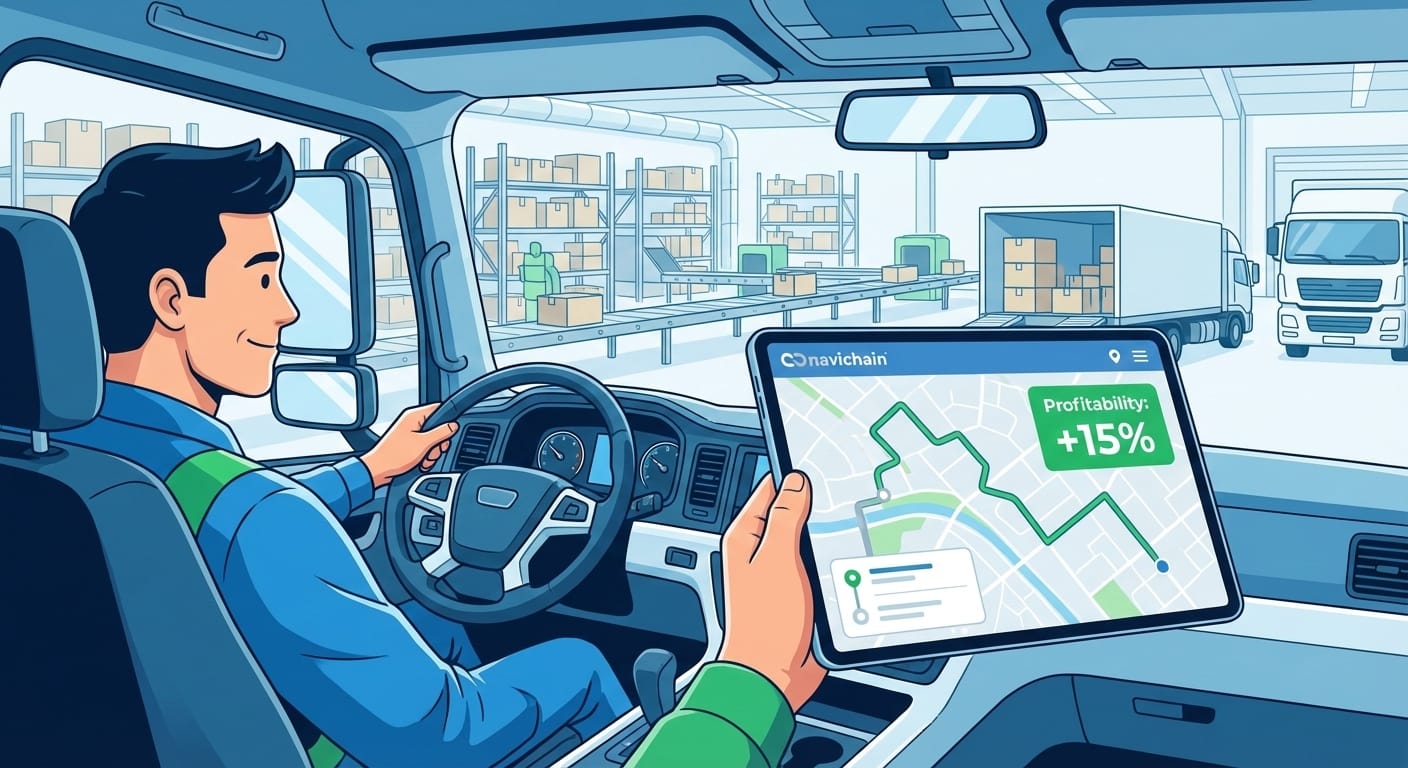
A visual representation of how perceived "reliable" Excel routines can lead to hidden, and often significant, costs for logistics operations.
- Regulatory Compliance (GDPR): "Printed papers in binders" is a nightmare for GDPR compliance. Where is customer data stored? Personal data about employees? How is it managed? A data breach or a lost binder is not just an embarrassment; it is a direct financial risk with fines from data protection authorities that can amount to millions.
- Operational Fragility (Key-Person Dependency): What happens if your dispatcher, the only one who really understands the complex "master Excel sheet," gets sick or quits? The entire operation risks grinding to a halt. This key-person dependency is a massive, undocumented risk on your balance sheet.
- Strategic Blindness: The market is changing. Fuel prices fluctuate. New sustainability requirements (CSRD) are emerging. Without data, you cannot react. You cannot analyze trends, identify efficiency leaks, or make data-driven decisions. You are driving in the dark. When you sum up these three cost categories, the conclusion becomes clear: what you think is free (your current routines) is, in fact, your single largest and most unpredictable operating expense.
The path forward: The unified data ROI framework
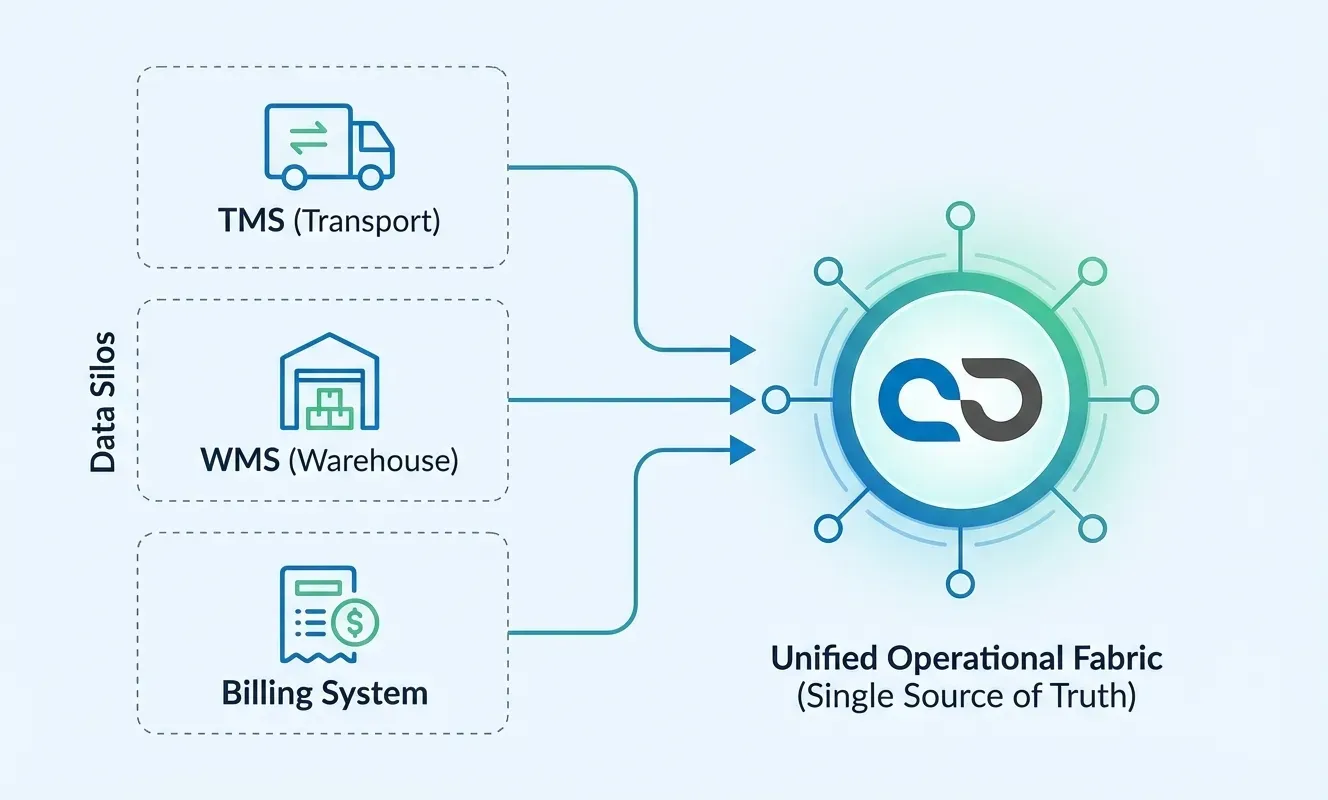
Fig 2: The real ROI is unlocked when you shift from "digitalizing tasks" to "unifying your operation." The return comes from creating a single, central source of truth where data from transport management...
The true "benefit" is not achieved by buying an app to replace one Excel sheet. The real ROI is unlocked when you shift from "digitalizing tasks" to "unifying your operation." The return comes from creating a single, central source of truth where data from transport management, warehousing, billing, and asset management flows together. This three-phase framework helps you calculate the true ROI for your specific business.
Phase 1: Quantify your 'cost of inertia'
Before you look at a single software solution, you must understand your current pain in numbers. This is your baseline. 1. Time-and-Motion Study (Lite): Ask your staff to estimate for one week how much time they spend manually moving data between systems (paper -> Excel, Excel -> invoice, email -> Excel). 2. Measure Your Order-to-Cash (O2C): Take 10 random orders. On average, how many days pass from delivery confirmation (POD) to invoice sent? 3. Audit Your Errors: How many credit invoices did you create last month due to order/billing errors? Multiply this by your estimated cost per correction. Sum this up. The figure you get—let's say €4,000 per month in lost time, error handling, and interest costs on slow cash flow—is your monthly 'Cost of Inertia'. This is what you are already paying for your current system.
Fig 3: Before you look at a single software solution, you must understand your current pain in numbers.
Phase 2: Project direct gains from a 'single source of truth'
Now, model the return from a unified system where data only needs to be entered once.
- Return 1 (Efficiency): Reduce administrative overhead (from Phase 1) by 50-80%. An administrator who spent 20 hours/week on data entry can now spend 15 of those hours on route optimization or proactive customer service. Value that time.
- Return 2 (Cash Flow): Shorten your O2C cycle from 10 days to 1 day (via digital POD and automatic invoicing). Calculate the interest gained/reduced credit costs on the liberated capital.
- Return 3 (Resource Utilization): With a unified view of orders and vehicles, assume a conservative 5-10% improvement in your fill rate or reduction in empty miles. Calculate the direct value in saved fuel and driver costs. Even at this stage, the monthly return often exceeds the monthly cost of a modern SaaS platform.
Phase 3: The strategic multiplier (the benefit you can't get from excel)
This is the most important, yet hardest to measure, 'benefit'. When all your operational data (TMS, WMS, Billing, Assets) resides in one secure system, you can finally ask strategic questions: * "Who is our most and least profitable customer, really?" * "On which routes are we losing money due to inefficiency?" * "How does driver behavior (from vehicle data) impact the profitability of that specific route?" This is where an embedded, secure AI function comes in. By analyzing your own unique, unified data, it can identify patterns and optimization opportunities that are completely invisible to the human eye in a sea of Excel sheets. This isn't just cost savings; it's business intelligence. It's the ability to make better, faster, and more profitable decisions than your competitor. The conclusion of the ROI analysis is simple: you cannot afford the hidden costs, lost opportunities, and strategic risks that your current paper and Excel routines entail. The investment is not about buying software; it's about buying back your time, securing your cash flow, and acquiring the intelligence you need to survive and thrive.
A visual representation of how unified data unlocks strategic insights unavailable through traditional, siloed systems and manual analysis.
From diagnosis to design: The blueprint for a resilient logistics operating system
Fig 4: Based on our analysis, any modern operating system for SME hauliers must be built on three core principles.
Understanding the ROI is the first step. The next is understanding what to look for. Based on our analysis, any modern operating system for SME hauliers must be built on three core principles. Consider this your requirements specification for achieving the ROI we have described.
Principle 1: Unified operational fabric
Stop buying siloed solutions. You need a single, integrated platform where Transport Management (TMS), Warehouse Management (WMS), Order Management, Billing, and Asset Management function as one entity. This creates a 'single source of truth'. Information from a customer order must flow seamlessly to dispatch, out to the driver's app, on to the warehouse, and finally, automatically generate a correct invoice when the delivery is confirmed. This is the business's digital central nervous system; it eliminates friction costs.
Principle 2: Secure data architecture and control
This is non-negotiable for European and Scandinavian companies. Your operational data is your most valuable asset. Placing it on servers outside the EU, subject to foreign data legislation (like the CLOUD Act), is an unacceptable strategic risk. To ensure true operational resilience and simple GDPR compliance, complete control over your data environment is required. This means data stored and processed exclusively within your own legal jurisdiction (e.g., within Sweden/EU) on a secure, or even 'Self-Hosted', infrastructure. This minimizes your exposure and eliminates risk costs.
Principle 3: Embedded analytic intelligence
A system that only collects data is a digital filing cabinet. A system that analyzes data is a strategic partner. You need a platform with an embedded intelligence or 'Integrated AI' layer. This AI must be able to analyze the unified data from Principle 1, within the secure environment of Principle 2. Its job is to find hidden patterns, suggest route optimizations, flag unprofitable jobs, and provide you with the decision-making support (the 'strategic multiplier') needed to navigate a complex market.
References/sources
- Swedish Association of Road Transport Companies (Sveriges Åkeriföretag):** Reports and analyses on the Swedish haulage industry. (Example)
- Swedish Transport Industries (Transportföretagen):** Analyses on cost development and market trends in Swedish transport. (Example)
- Ti Insight (Transport Intelligence):** Reports on the European road freight market, margins, and digitalization trends. (Example)
- Swedish Authority for Privacy Protection (Integritetsskyddsmyndigheten, IMY):** Guidance and sanction decisions regarding GDPR and data protection. (Example)
- IRU (International Road Transport Union):** Data on the impact of digitalization and driver shortages in Europe. (Example)
Fig 4: Understanding the ROI is the first step.
Enabling the blueprint: The navichain SaaS unified logistics platform
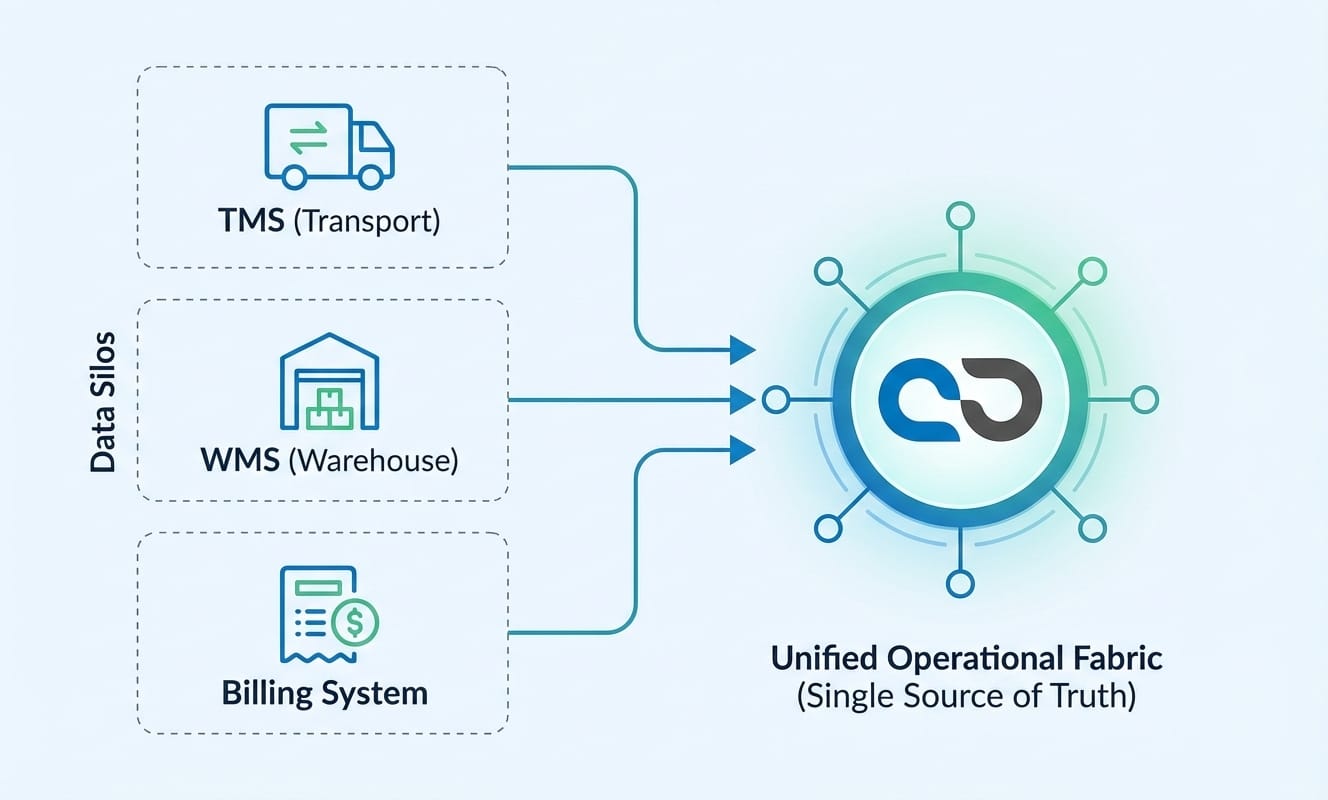
Achieving a positive return on investment requires a clear understanding of the integrated benefits of a unified logistics platform, moving beyond traditional, siloed solutions.
This white paper has presented a strategic blueprint and an ROI framework. We have argued that the resilient haulage company of the future must be built on the principles of a Unified Operational Fabric, Secure Data Architecture and Control, and Embedded Analytic Intelligence. navichain SaaS is engineered from the ground up to embody these exact principles for European SMEs. 1. Unified Operational Fabric: navichain is not a separate TMS or WMS. It is a single, unified operating system where Transport Management (TMS), Warehouse Management (WMS), Order Management, Billing, and Asset Management are built as one integrated whole. This creates the 'single source of truth' that eliminates manual data entry and administrative bottlenecks. 2. Secure Data Architecture and Control: This is our core differentiator. The entire navichain SaaS platform is hosted on our own secure infrastructure (Self-Hosted) in Sweden. For our clients, this means maximum data security and control. Your data remains within Sweden/EU jurisdiction, ensuring straightforward GDPR compliance and freeing you from the complexities of international data transfers. You maintain full control over your operational information. 3. Embedded Analytic Intelligence: Our platform is enhanced by a integrated AI that runs on the same secure, Swedish infrastructure. Because your data is already unified (from Principle 1) and completely secure (from Principle 2), our AI can perform deep, secure analysis on your unified operational data to unlock unique efficiencies and provide the strategic insights that Excel never can. Our mission is to democratize logistics technology, offering a seamless, powerful, and affordable solution that helps SMEs break down data silos, automate workflows, and build truly profitable and resilient operations.
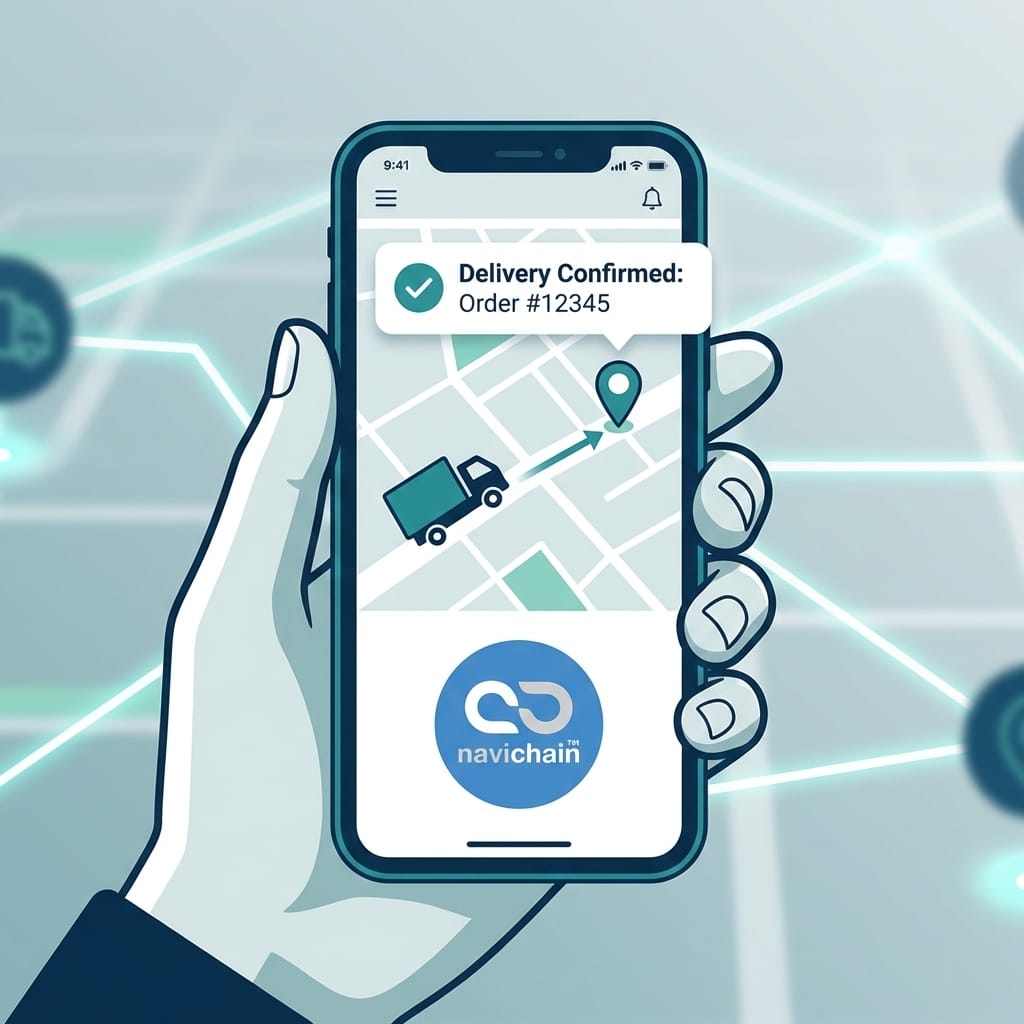
navichain SaaS provides a unified platform built on secure infrastructure, enabling integrated AI-powered analytics for enhanced logistics operations.

navichain's unified platform integrates TMS, WMS, order management, and more, offering a single source of truth for European SME logistics operations.
Ready to optimise your supply chain?
navichain Insights Newsletter
Join the newsletter to receive the latest updates in your inbox.