The Productivity Illusion: Why Your Busiest Staff Might Be Hiding Your Biggest Bottleneck
Table of Contents
European logistics SMEs are facing unprecedented margin pressure, and the relentless 'busyness' of manually processing 3PL data is a dangerous illusion, costing up to €8 per order. This white paper exposes the hidden costs of this 'process friction' and unveils a 3-pillar strategic framework for creating a unified, intelligent operation, enabling you to reclaim control of your data and your margins.
The Productivity Illusion: Why Your Busiest Staff Might Be Hiding Your Biggest
European logistics SMEs face unprecedented margin pressure, with operational costs at an all-time high. Many leaders believe 'busyness' in their dispatch office—staff manually handling PDFs and Excel files from 3PLs—is just the cost of doing business. This is a dangerous illusion. Our analysis, supported by industry data showing manual order processing can cost up to €8 per order, reveals this 'process friction' is a critical symptom of systemic failure, eroding profit and increasing risk. This white paper deconstructs this challenge and presents a 3-pillar strategic framework for creating a unified, integrated, and intelligent operation. It provides a blueprint for eliminating data silos, automating workflows, and regaining control of your data and your margins.
The daily firefight: Recognizing the productivity illusion
.jpeg)
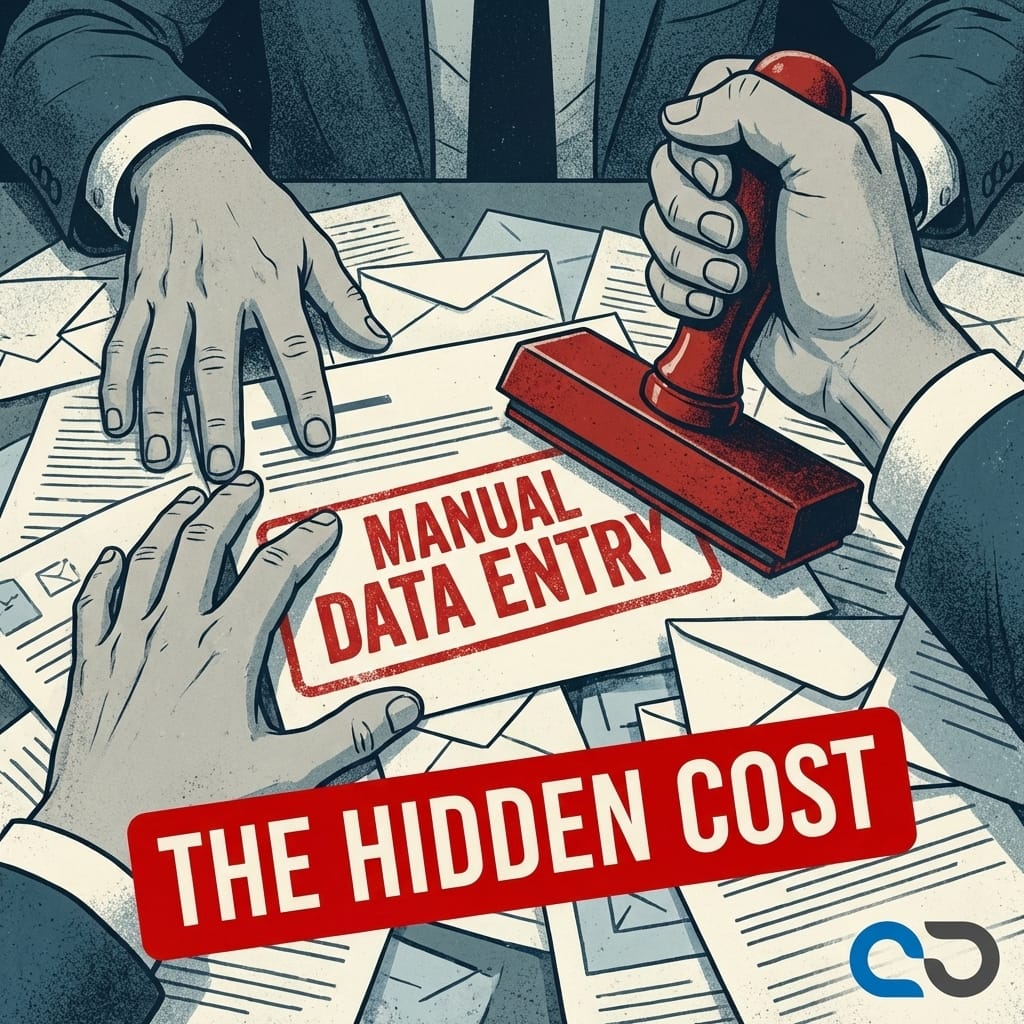
Fig 1: Manual data entry from disparate sources creates a daily "firefight" that distracts from strategic priorities and fuels the productivity illusion.
For the operations manager at a small or medium-sized haulage company, the day starts not with strategy, but with data entry. A flood of emails arrives from various 3PL partners and clients. One contains a PDF transport order. Another holds a sprawling Excel sheet of pickups. A third is a simple free-text email with urgent instructions. Your dispatch team gets to work. They are busy, focused, and productive. Keyboards clatter as they manually transcribe this information from emails and documents into your Transport Management System (TMS). Another team member copies details from the TMS into the billing software. Another checks a separate warehouse system. This "busyness" feels like the pulse of the company. It feels like work is getting done. This is the Productivity Illusion. This manual, repetitive data handling isn't a sign of a healthy operation; it's a critical symptom of a deep, systemic failure. It is process friction, and it is silently costing your business more than you can imagine. In a sector defined by razor-thin margins, this friction is no longer a sustainable cost of doing business. It is an existential threat. This white paper argues that for European logistics SMEs, the greatest challenge is not external market pressure, but this internal, self-inflicted friction. We will deconstruct the true cost of this friction and present a clear, actionable framework built on a Unified Data Integration Strategy—the only sustainable path to efficiency, resilience, and profitability.
Deconstructing the problem: The true cost of process friction
Fig 2: Industry analysts from bodies like the International Road Transport Union (IRU) have estimated the administrative cost of processing a single freight order m...
The reliance on fragmented systems—a standalone TMS, a separate WMS, an isolated billing tool, and the "software" of email and Excel—creates data silos. Information becomes trapped, forcing your team to build flimsy, manual bridges to move it. The cost of this friction is not a line item on your P&L, but it drains resources across three critical areas.
1. the direct financial cost
Manual data entry is a high-cost, low-value activity. Industry analysts from bodies like the International Road Transport Union (IRU) have estimated the administrative cost of processing a single freight order manually can range from €4 to €8. Consider a conservative estimate: * Cost per order: €5 * Orders per day: 100 * Working days per year: 250 That single, "minor" task of manual data entry is costing your business €125,000 per year. This calculation doesn't even include the cost of errors. A simple transposition error—typing "100" units instead of "10"—can lead to incorrect deliveries, customer disputes, and costly remedial action. These errors aren't just financial; they damage the trust you have built with your partners.
2. the strategic opportunity cost
This is the hidden, insidious cost. What could your highly-skilled dispatchers and operations managers be doing if they weren't re-typing data?
- Route Optimization: Instead of data entry, they could be analyzing route efficiency, consolidating shipments, and reducing empty miles.
- Customer Service: They could be proactively communicating with clients about ETAs and potential delays, turning your operation into a valued partner rather than just a supplier.
- Strategic Analysis: They could be analyzing profitability per customer, per route, or per vehicle, providing the strategic insights you, as a leader, need to make informed decisions. Every hour spent on manual data management is an hour not spent on high-value work that actually grows the business and protects its margins.
3. the compliance and security risk
When your critical operational data lives in emails, spreadsheets, and disparate systems, you have no single source of truth. This creates a significant compliance and security nightmare, especially for European operators.
Illustrative chart depicting the time allocation between manual data entry and higher-value activities in a typical logistics operation, highlighting the potential productivity gains of automation.
- GDPR & Data Control: Where is your customer's data? Is that Excel sheet with delivery addresses saved on an unsecured laptop? Is it being emailed across borders? When data is fragmented, proving compliance with the GDPR becomes nearly impossible. You lose control, and in the event of an audit or a breach, the consequences can be severe.
- Data Security: Each manual touchpoint is a point of failure. Each separate, poorly-integrated system is another potential vulnerability. A unified system, hosted on secure infrastructure, dramatically reduces this attack surface. This friction—this reliance on manual, fragmented processes—is a brake on your company's growth. The solution is not to work harder or hire more people to type faster. The solution is to eliminate the friction itself.
The path forward: A unified data integration strategy
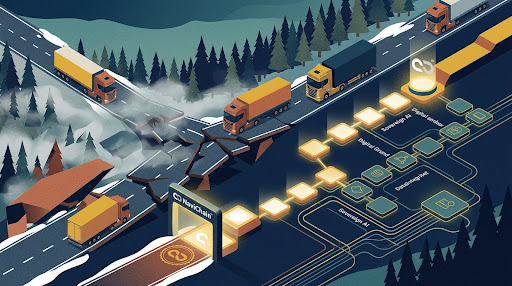
Fig 3: To solve the problem of process friction, you must move from a collection of applications to a single, unified operating system.
To solve the problem of process friction, you must move from a collection of applications to a single, unified operating system. This is the essence of a modern Data Integration Strategy. It is not about buying more software; it is about adopting a central platform that serves as the "central nervous system" for your entire operation. This strategy is built on three pillars.
Pillar 1: Centralize your core operational fabric
First, you must break down your internal data silos. Your Transport Management (TMS), Warehouse Management (WMS), Asset Management, and Billing Management must not be separate, disconnected islands. They must be integrated modules of a single, unified platform. When these functions operate as one, data flows seamlessly: * An accepted order in the Order Management module automatically appears in the TMS for planning.
- The planned route is dispatched to a driver, and the Asset Management module tracks the truck's location and status in real-time.
- Upon delivery (e-POD), the Billing Management module is instantly triggered, generating an accurate invoice with all supporting documentation. This creates a single source of truth. There is no more re-keying data between systems. There is no more debating which spreadsheet is correct. The data is entered once, and it is instantly and accurately available across the entire business.
Pillar 2: Build automated bridges to your ecosystem
Once your internal core is unified, you can strategically address the external problem: the flood of PDFs and Excel files from your partners. The solution is to build automated, digital bridges. A modern logistics operating system is designed for this connectivity. It achieves this through two primary methods: 1. Pre-built Connectors: Many 3PLs and shippers already use standardized platforms (like Ongoing Warehouse, nShift, or Logtrade in the Scandinavian market). A powerful logistics platform will have pre-built, "plug-and-play" integrations for these common systems. This allows you to connect to your partner's system in days, not months, instantly automating the flow of booking information. 2. Modern APIs (Application Programming Interfaces): For custom or less common systems, a robust API is essential. An API is a secure, well-documented "door" that allows your system to talk to another system automatically. Instead of emailing a PDF, your 3PL's system sends the booking data directly to your TMS via the API. The order appears instantly, correctly, and with zero manual effort. This strategy transforms your operation from reactive to proactive. You are no longer at the mercy of your partner's file format. You are providing a clear, efficient, and automated path for them to send you business.
Pillar 3: Secure the foundation with data control
This unified, integrated strategy is only viable if it is built on a foundation of absolute security and data control. For a European SME, this is non-negotiable. When your data is unified, it becomes your most valuable asset. It also becomes your biggest liability if not protected.
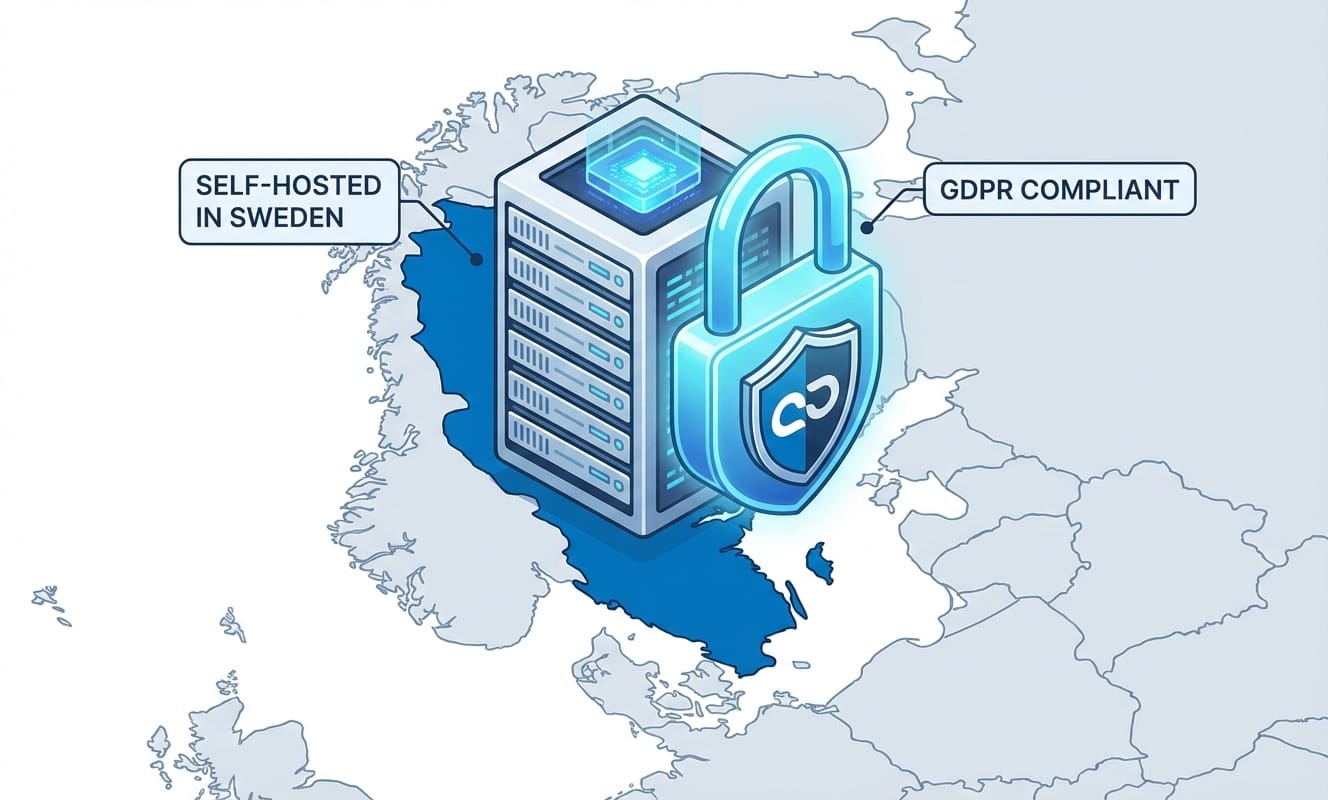
- Data Sovereignty: Where is your data stored? Is it on a server in the US, subject to foreign data access laws? True operational resilience means ensuring your data—your operations, your customer lists, your pricing—is stored and processed exclusively within your own legal jurisdiction (e.g., within Sweden or the EU). This simplifies GDPR compliance and gives you ultimate control.
- Secure Infrastructure: This unified platform must be hosted on secure, resilient infrastructure, protected against breaches and downtime. Whether self-hosted or managed by a trusted partner, you must have clarity and control over your data environment. This pillar turns data security from a liability into a competitive advantage. You can confidently assure your clients that their data is safe, secure, and fully compliant.
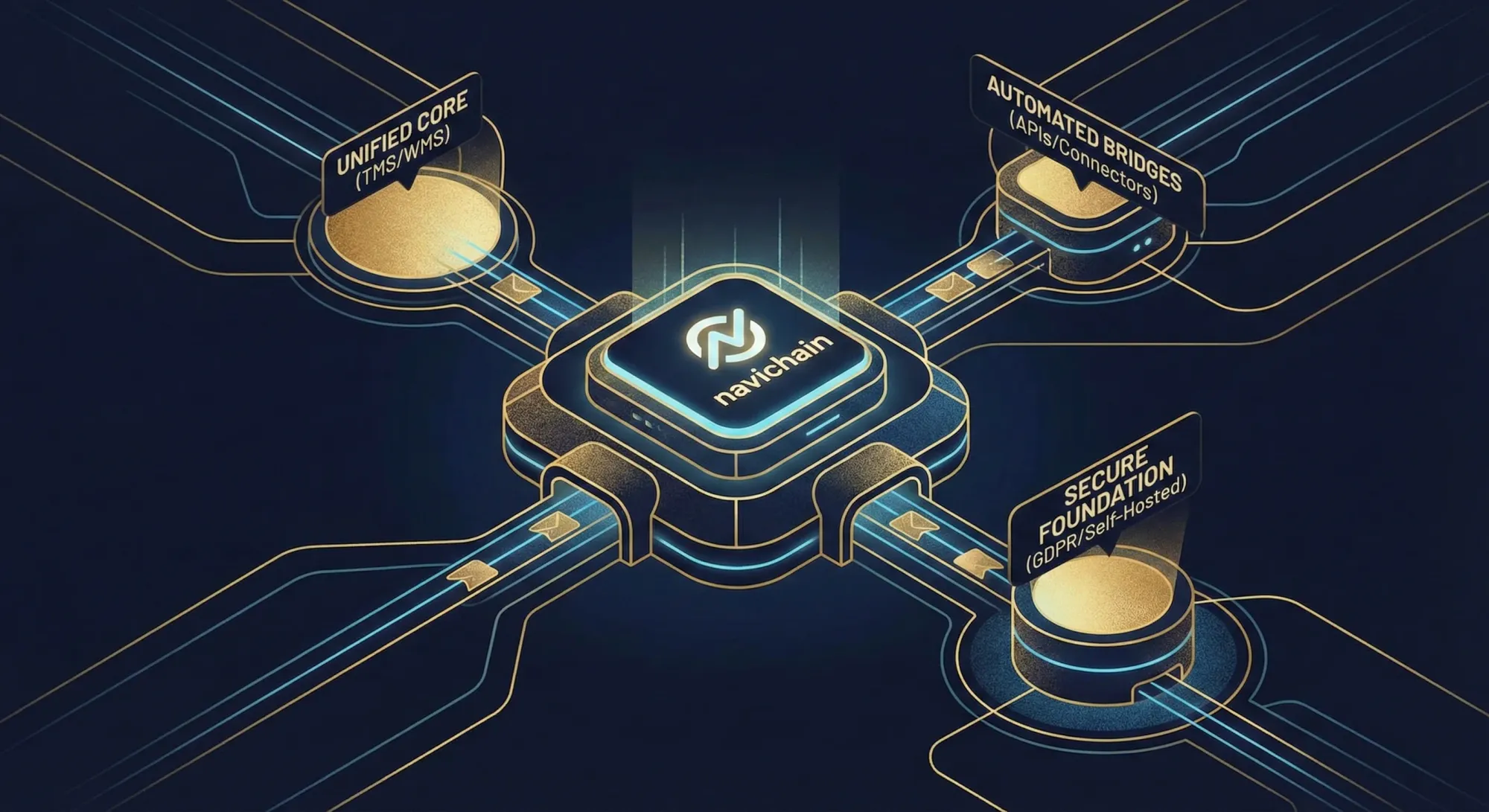
A simplified schematic illustrating the interconnectedness of data flow within a unified logistics platform, highlighting the need for robust data control.
From diagnosis to design: The blueprint for a resilient logistics operating system
Based on this analysis, it becomes clear that any modern logistics platform chosen by a pragmatic SME must embody three core design principles. This is the blueprint for moving beyond friction and building a resilient, intelligent operation.
Principle 1: Unified operational fabric
The platform must not be a collection of disparate tools. It must be a single, integrated "operating system" where TMS, WMS, Billing, Order, and Asset Management are native components. This creates a 'central nervous system' for the business, ensuring a single source of truth and eliminating internal data silos. Data entered once should propagate everywhere it is needed—instantly and accurately.
Principle 2: Secure data architecture and control
For European SMEs, true resilience requires complete control over the operational data environment. The platform's architecture must prioritize this. This means data should be stored and processed on secure, Self-Hosted infrastructure, strictly within the operator's own region's legal jurisdiction (e.g., within Sweden/EU). This design ensures straightforward and demonstrable GDPR compliance and frees the business from the complexities and risks of international data transfers and foreign surveillance laws.
Principle 3: Embedded analytic intelligence
Finally, the platform must do more than just store data; it must help you use it. With a unified data set (from Principle 1) held within a secure environment (from Principle 2), the system must have an embedded intelligence or Integrated AI layer. This AI should not be a generic, third-party tool; it must be a secure, internal engine that can analyze your own operational data. This allows you to perform deep, secure data analysis to identify inefficiencies, optimize routes, predict maintenance, and unlock unique strategic insights without your sensitive data ever leaving your secure environment.
References/sources
- Transport Intelligence (Ti Insight): "European Road Freight Market 2024." (Provides data on market conditions, operational costs, and margin pressures.)
- Source
- International Road Transport Union (IRU): "The Future of Road Transport." (Reports on digitalization trends, driver shortages, and the administrative/cost burdens on hauliers.)
- Source
- European Logistics Association (ELA): "Logistics Digitalization & E-commerce in Europe." (Surveys and analysis on the adoption of digital technologies and the challenges of integration for SMEs.)
- Source
- Fraunhofer Institute for Material Flow and Logistics (IML): "Studies on Warehouse and Transport Management Systems." (Provides benchmarks on the costs and error rates associated with manual vs. automated logistics processes.)
- Source
Fig 4: Based on this analysis, it becomes clear that any modern logistics platform chosen by a pragmatic SME must embody three core design principles.
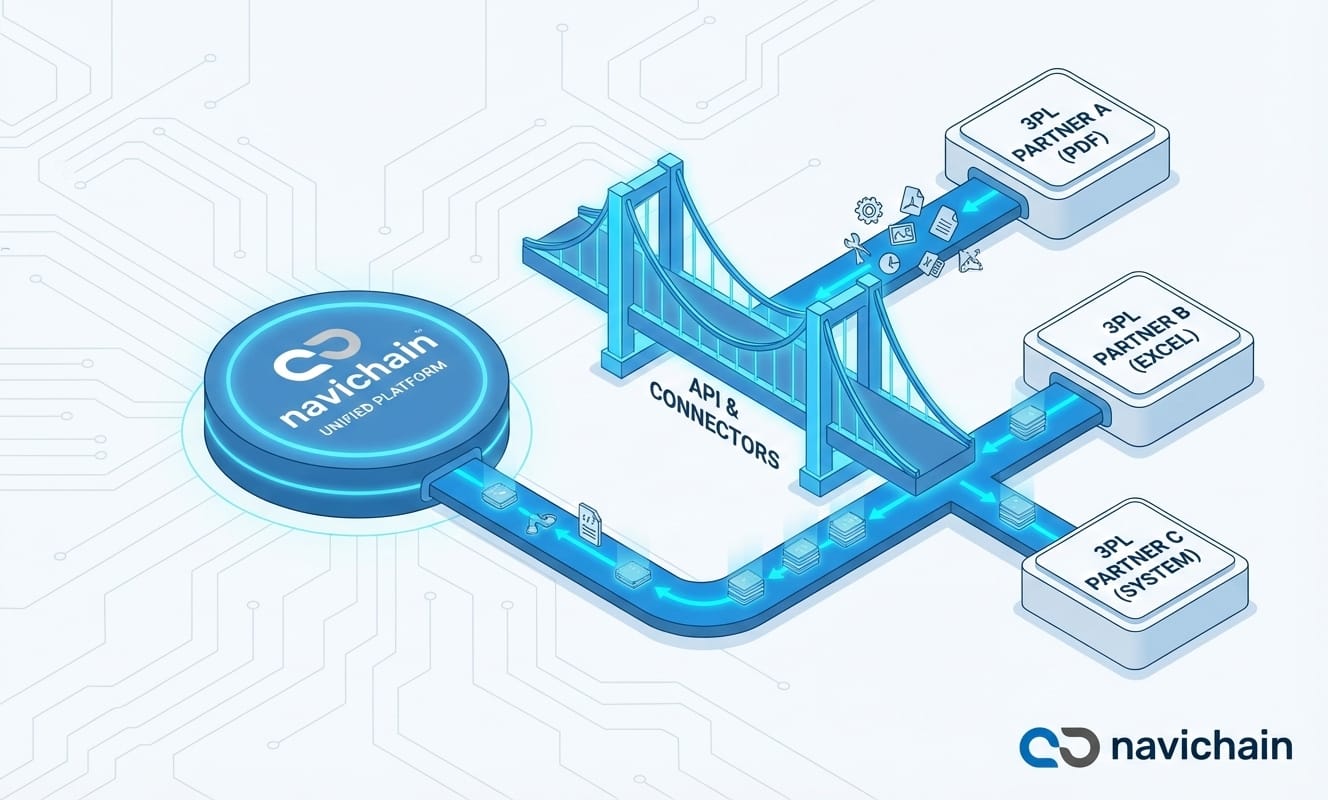
The navichain SaaS platform embodies the principles of a Unified Operational Fabric, Secure Data Architecture and Control, and Embedded Analytic Intelligence, breaking down data silos and streamlining workflows.
Enabling the blueprint: The navichain SaaS unified logistics platform
This white paper has laid out a strategic blueprint for SME logistics operators to overcome process friction and build a resilient, efficient, and intelligent operation. The principles of a Unified Operational Fabric, Secure Data Architecture and Control, and Embedded Analytic Intelligence are not theoretical—they are the design philosophy behind the navichain SaaS platform. navichain SaaS was created to directly address the challenges of data silos and manual workflows that hold SMEs back. 1. Embodying the Unified Operational Fabric: navichain is not a collection of tools. It is a single, unified logistics operating system where Transportation Management (TMS), Warehouse Management (WMS), Asset Management, Billing Management, and Order Management work as one. This creates the single source of truth described in Principle 1, eliminating the need for manual re-keying and internal friction. Furthermore, with pre-built connectors to essential ecosystem platforms like Ongoing Warehouse, nShift, and Logtrade, and a powerful API, it automates the flow of data from external partners, solving the exact challenge of 3PL data integration. 2. Delivering Secure Data Architecture and Control: We believe that for European SMEs, data control is paramount. This is our key differentiator. The entire navichain SaaS platform is hosted on our own secure infrastructure (Self-Hosted) in Sweden. This design is a direct answer to Principle 2. It ensures maximum data security, control, and straightforward GDPR compliance. By keeping your data strictly within Swedish/EU jurisdiction, you maintain full control over your operational information, free from the complexities of international data transfers. 3. Providing Embedded Analytic Intelligence: Our platform is enhanced by a integrated AI that runs on our own secure Swedish infrastructure. This is the realization of Principle 3. Because your data is already unified (Principle 1) and held within our secure environment (Principle 2), our AI can perform deep, secure data analysis on your own operations. This allows you to unlock unique efficiencies and predictive insights without your sensitive data ever being exposed to third-party AI models or leaving your secure, compliant data environment. Our mission is to democratize logistics technology for SMEs. The navichain SaaS platform is the enabler of this strategy, designed to help you thrive by breaking down data silos, automating workflows, and turning your data into your most powerful asset.
navichain SaaS unifies TMS, WMS, and other core logistics functions into a single operating system, hosted on secure, self-hosted Swedish infrastructure for enhanced data control and GDPR compliance.
.jpeg)
navichain's unified platform offers a single source of truth for logistics operations, encompassing TMS, WMS, asset management, and more, all hosted on secure, self-hosted Swedish infrastructure.
Ready to optimise your supply chain?
navichain Insights Newsletter
Join the newsletter to receive the latest updates in your inbox.