The Internal Control Tower: Can Beneficial Cargo Owners Successfully Replace the Freight Forwarder?
Table of Contents
Are you a Beneficial Cargo Owner struggling with rising costs and a lack of visibility in your global supply chain? Discover how the limitations of traditional freight forwarding are driving the adoption of internal control towers. This white paper explores how Navichain's unified operating system, powered by AI, empowers you to take control, optimise operations, and transform your supply chain into a competitive advantage.
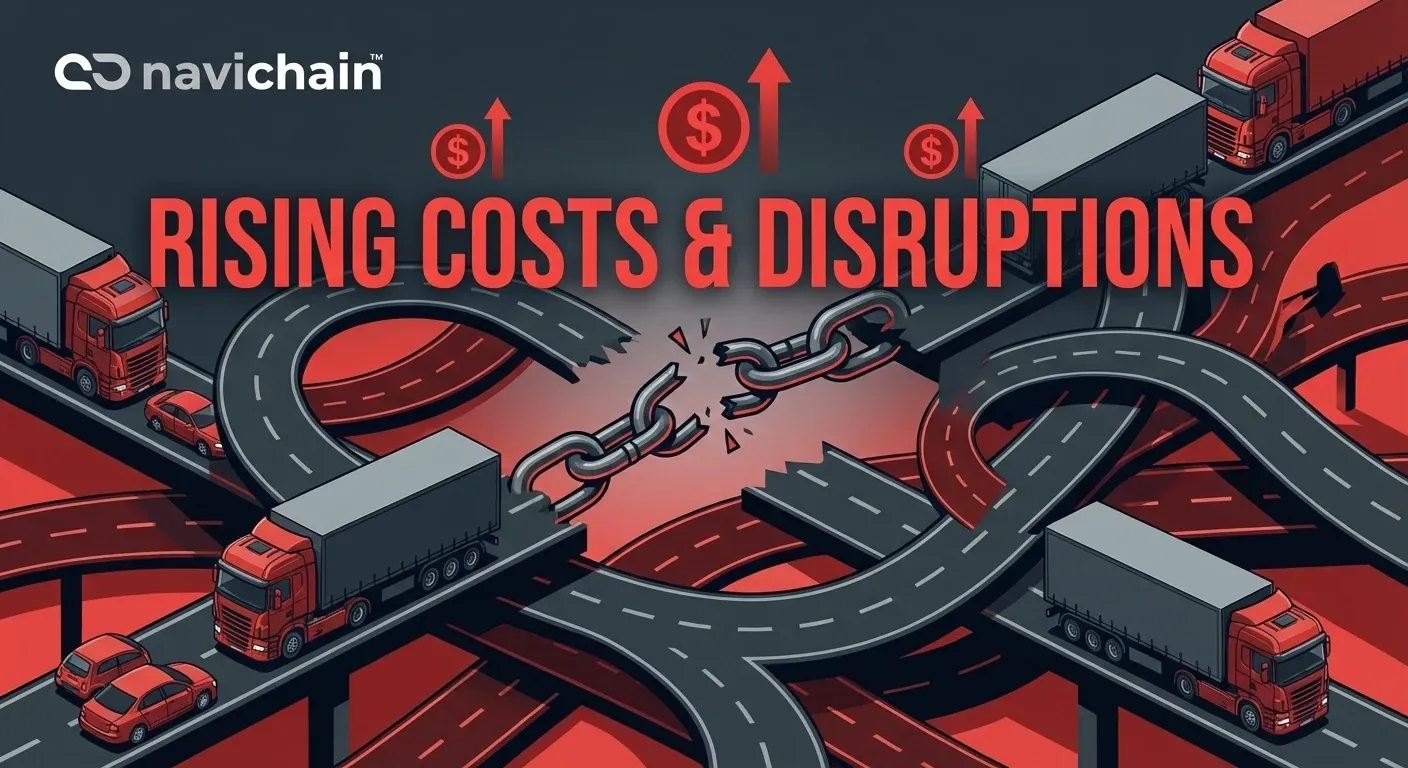
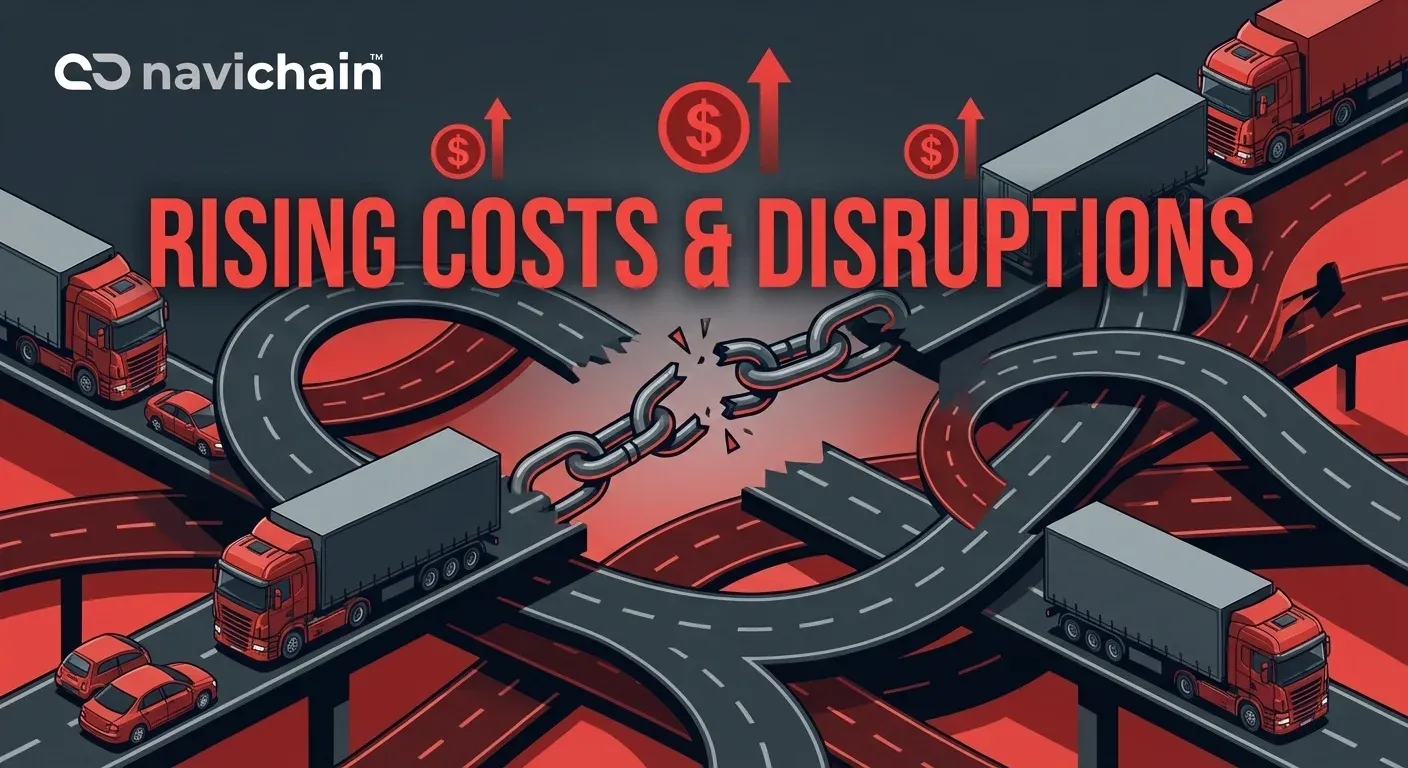
Rising costs and supply chain disruptions leave BCOs struggling to maintain profitability and control.
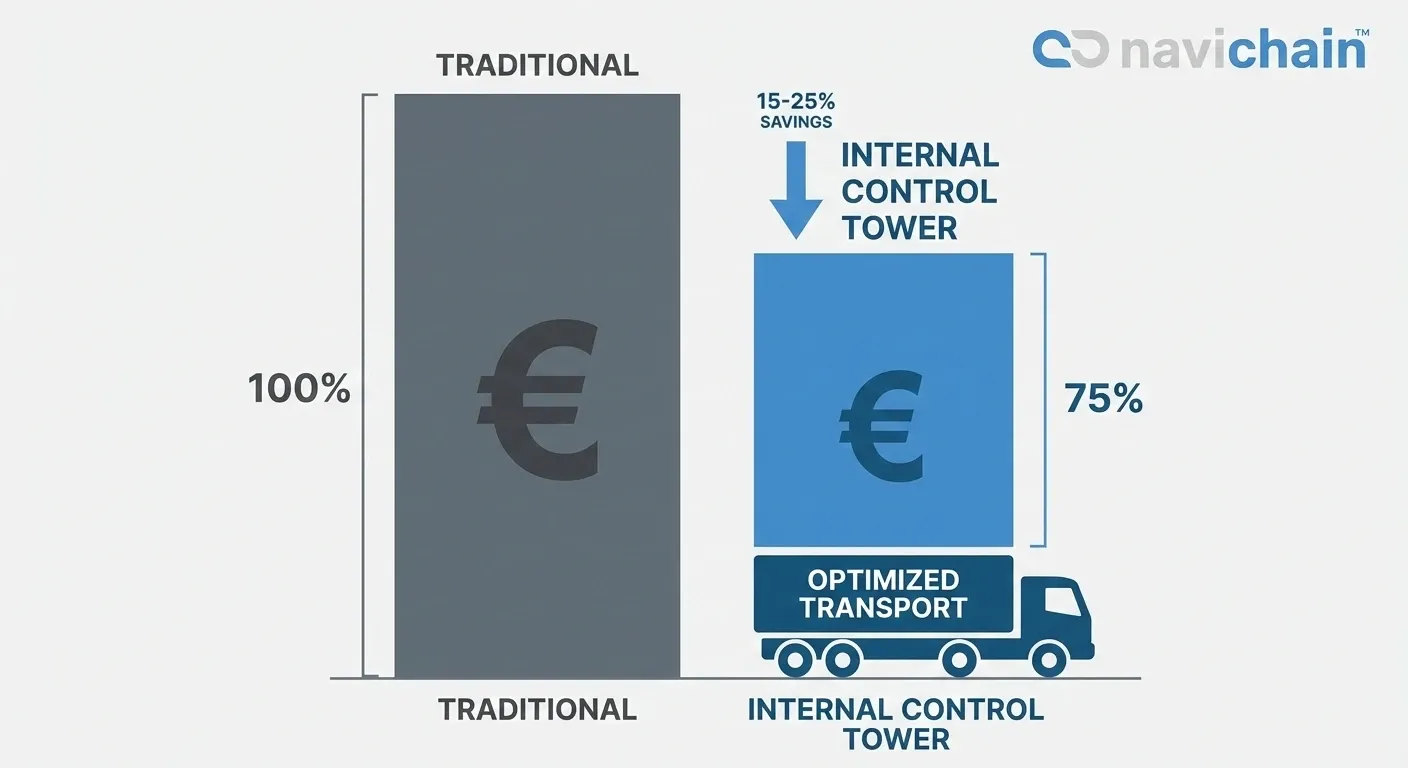
Illustrative data depicting the potential benefits and cost savings achievable through implementing an internal control tower approach for BCOs.
Executive summary
Fragmented data streams and limited control leave BCOs vulnerable to inefficiencies and disruptions.
Fragmented systems and limited visibility create a complex and inefficient supply chain, highlighting the challenges faced by BCOs.
Business Cargo Owners (Beneficial Cargo Owners) are facing unprecedented challenges in today's volatile global supply chain landscape. Rising costs, unpredictable disruptions, and a lack of visibility are forcing them to re-evaluate their reliance on traditional freight forwarders. This deep dive explores the rise of the internal control tower as a strategic solution, empowering Beneficial Cargo Owners to gain greater control, optimize operations, and achieve significant cost savings. We examine the limitations of the traditional freight forwarding model, analyze the industry trends driving this shift, and demonstrate how Navichain's unified operating system, powered by AI, enables Beneficial Cargo Owners to build and manage effective internal control towers, ultimately transforming their supply chains into competitive advantages.
Introduction
The global supply chain has become a complex and interconnected web, vital to the success of businesses across all industries.
The global supply chain has become a complex and interconnected web, vital to the success of businesses across all industries. However, this intricate network is increasingly vulnerable to disruptions, from geopolitical instability and natural disasters to fluctuating fuel prices and port congestion. Business Cargo Owners (Beneficial Cargo Owners), the companies that rely on these supply chains to move their goods, are feeling the pressure. They are grappling with rising costs, unpredictable lead times, and a lack of transparency, all of which impact their bottom line and ability to meet customer demands. Traditionally, Beneficial Cargo Owners have relied on freight forwarders to manage the complexities of international shipping. While freight forwarders offer valuable services, their inherent limitations in terms of visibility, control, and agility are becoming increasingly apparent in today's dynamic environment. This has led Beneficial Cargo Owners to explore alternative strategies, including the development of internal control towers, to gain greater control over their supply chains and mitigate risks. This report delves into the challenges facing Beneficial Cargo Owners, the rise of the internal control tower, and how technology, particularly platforms like Navichain, is empowering them to transform their supply chains.
Section 1: The challenge: the pain points of traditional freight forwarding
Illustrative schematic of the traditional freight forwarding model, highlighting common communication flows and potential points of opacity for Beneficial Cargo Owners.
The traditional freight forwarding model, while established and widely used, presents several significant challenges for Beneficial Cargo Owners in the modern era. These challenges stem from a lack of transparency, limited control, and inherent inefficiencies within the traditional structure.
- Lack of Visibility: One of the most significant pain points is the lack of end-to-end visibility. Beneficial Cargo Owners often rely on their freight forwarders for updates, which can be infrequent, incomplete, and delayed. This lack of real-time information makes it difficult to proactively identify and address potential disruptions, leading to costly delays and increased uncertainty. The "black box" nature of the traditional model leaves Beneficial Cargo Owners in the dark, hindering their ability to make informed decisions and optimize their supply chain.
- Limited Control: Beneficial Cargo Owners often relinquish a significant degree of control to their freight forwarders. While this can be beneficial in some cases, it also means that Beneficial Cargo Owners have limited influence over key decisions, such as carrier selection, routing, and warehousing. This lack of control can lead to suboptimal outcomes, particularly when the freight forwarder's priorities do not align perfectly with the Beneficial Cargo Owner's.
- Inefficiencies and Redundancies: The traditional freight forwarding model often involves multiple intermediaries and manual processes, leading to inefficiencies and redundancies. Information is often passed between parties via email, phone calls, and spreadsheets, which is time-consuming, error-prone, and difficult to track. These inefficiencies can result in higher costs, longer lead times, and reduced overall supply chain performance.
- Data Silos and Lack of Integration: Freight forwarders often operate on disparate systems, creating data silos that hinder collaboration and information sharing. This lack of integration makes it difficult for Beneficial Cargo Owners to gain a holistic view of their supply chain and identify opportunities for improvement. The inability to seamlessly integrate with the freight forwarder's systems also limits the Beneficial Cargo Owner's ability to automate processes and streamline operations.
- Rising Costs and Lack of Transparency in Pricing: Fluctuations in fuel prices, capacity constraints, and geopolitical events are driving up shipping costs. Beneficial Cargo Owners often struggle to understand the underlying drivers of these cost increases and lack the tools to effectively negotiate rates with their freight forwarders. The lack of transparency in pricing makes it difficult for Beneficial Cargo Owners to control their transportation expenses and optimize their supply chain budget. The consequences of failing to address these challenges can be significant. Beneficial Cargo Owners that continue to rely on the traditional freight forwarding model risk:
- Increased Costs: Inefficiencies, lack of visibility, and limited control can lead to higher transportation costs, warehousing expenses, and inventory holding costs.
- Reduced Customer Satisfaction: Delays, stockouts, and inaccurate deliveries can negatively impact customer satisfaction and erode brand loyalty.
- Loss of Competitive Advantage: In today's competitive market, businesses need agile and efficient supply chains to stay ahead. Beneficial Cargo Owners that fail to optimize their supply chains risk falling behind their competitors.
- Increased Risk of Disruption: Lack of visibility and control makes it difficult to proactively identify and mitigate potential disruptions, increasing the risk of costly delays and supply chain failures.
- Missed Opportunities for Optimization: Data silos and lack of integration prevent Beneficial Cargo Owners from identifying opportunities to streamline processes, reduce costs, and improve overall supply chain performance.
Section 2: The context/data: industry trends and the need for change
.jpeg)
Navichain visualizes the intricate, multi-faceted nature of today's global supply chains, emphasizing the urgent need for enhanced visibility and control to mitigate risks and optimize performance.
Industry trends driving Beneficial Cargo Owners to re-evaluate traditional freight forwarding and explore new supply chain management strategies are visualized in the above chart.
Several key industry trends are driving the need for Beneficial Cargo Owners to re-evaluate their reliance on traditional freight forwarders and embrace new strategies for managing their supply chains.
- Globalization and Increased Supply Chain Complexity: Global supply chains are becoming increasingly complex, with goods often sourced from multiple countries and transported across vast distances. This complexity increases the risk of disruptions and makes it more difficult to manage the flow of goods.
- The Rise of E-commerce and Omnichannel Retail: The growth of e-commerce and omnichannel retail is placing new demands on supply chains. Beneficial Cargo Owners need to be able to fulfill orders quickly and efficiently, regardless of whether they are placed online, in-store, or through other channels.
- Increased Customer Expectations: Customers are demanding faster delivery times, greater transparency, and more personalized service. Beneficial Cargo Owners need to be able to meet these expectations to remain competitive.
- Technological Advancements: New technologies, such as cloud computing, artificial intelligence (AI), and the Internet of Things (IoT), are transforming the supply chain landscape. These technologies offer Beneficial Cargo Owners new opportunities to improve visibility, optimize operations, and reduce costs.
- The Volatility of the Global Economy: Geopolitical instability, trade wars, and economic downturns are creating uncertainty and volatility in the global economy. Beneficial Cargo Owners need to be able to adapt quickly to changing market conditions and mitigate risks. Despite advancements in technology and logistics, several paradoxes persist in the modern supply chain:
- Increased Data, Decreased Insight: While Beneficial Cargo Owners have access to more data than ever before, they often struggle to extract meaningful insights from this data. Data silos, lack of integration, and inadequate analytical tools prevent them from gaining a holistic view of their supply chain.
Illustrates the potential for internal control towers to augment or replace traditional freight forwarder roles, offering increased visibility and control.
- Faster Transportation, Slower Delivery: While transportation speeds have increased, overall delivery times often remain stubbornly high. This is due to inefficiencies in other areas of the supply chain, such as warehousing, customs clearance, and last-mile delivery.
- Greater Automation, Increased Complexity: While automation can improve efficiency and reduce costs, it can also increase complexity. Beneficial Cargo Owners need to carefully manage the implementation of automation technologies to avoid creating new problems.
- According to a recent survey, over 70% of Beneficial Cargo Owners are dissatisfied with the level of visibility they have into their supply chains.
- A study by McKinsey found that companies with highly visible supply chains experience 20% fewer disruptions.
- Research by Gartner indicates that AI-powered supply chain solutions can reduce transportation costs by up to 15%. These trends and statistics highlight the urgent need for Beneficial Cargo Owners to adopt new strategies for managing their supply chains. The traditional freight forwarding model is no longer sufficient to meet the challenges of the modern era.
Section 3: The strategic solution: the internal control tower
The internal control tower centralizes supply chain data, enabling proactive management and optimized performance for BCOs.
The internal control tower represents a strategic shift for Beneficial Cargo Owners, empowering them to take greater ownership and control over their supply chain operations. It's not simply about replacing the freight forwarder entirely, but rather about augmenting their services with internal capabilities and leveraging technology to gain unprecedented visibility and control. An internal control tower is a centralized hub that provides Beneficial Cargo Owners with end-to-end visibility into their supply chain, enabling them to proactively manage disruptions, optimize operations, and reduce costs. It's a combination of people, processes, and technology that works together to provide a single source of truth for all supply chain data.
- Visibility Platform: A technology platform that provides real-time visibility into all aspects of the supply chain, from order placement to final delivery. This platform should integrate with the Beneficial Cargo Owner's existing systems, as well as the systems of their freight forwarders, carriers, and other partners.
- Data Analytics: Tools and capabilities for analyzing supply chain data to identify trends, patterns, and opportunities for improvement. This includes predictive analytics for forecasting demand, identifying potential disruptions, and optimizing inventory levels.
- Collaboration Tools: Platforms and processes for facilitating communication and collaboration between all stakeholders in the supply chain, including the Beneficial Cargo Owner's internal teams, freight forwarders, carriers, and customers.
- Skilled Personnel: A team of experienced supply chain professionals who can manage the control tower, analyze data, and make informed decisions. This team should have expertise in areas such as logistics, transportation, warehousing, and inventory management.
- Defined Processes: Clear and well-defined processes for managing all aspects of the supply chain, from order fulfillment to exception management. These processes should be documented and regularly reviewed to ensure they are effective and efficient. The internal control tower approach is rooted in several key theoretical concepts:
- Systems Thinking: The control tower views the supply chain as a complex system, recognizing that changes in one area can have ripple effects throughout the entire network.
Schematic illustrating the interconnected elements of an internal control tower, emphasizing information flow and decision-making across the supply chain.
- Lean Principles: The control tower aims to eliminate waste and improve efficiency by streamlining processes, reducing inventory, and optimizing transportation.
- Agile Methodology: The control tower is designed to be flexible and adaptable, allowing Beneficial Cargo Owners to quickly respond to changing market conditions and unexpected disruptions.
- Data-Driven Decision Making: The control tower relies on data and analytics to inform decision-making, ensuring that decisions are based on facts rather than intuition.
- Improved Visibility: Gain end-to-end visibility into the supply chain, enabling proactive management of disruptions and optimization of operations.
- Increased Control: Take greater ownership and control over the supply chain, allowing for more informed decision-making and better alignment with business objectives.
- Reduced Costs: Optimize transportation, warehousing, and inventory management to reduce costs and improve profitability.
- Enhanced Customer Satisfaction: Improve delivery times, reduce stockouts, and provide more personalized service to enhance customer satisfaction.
- Improved Agility: Respond quickly to changing market conditions and unexpected disruptions, ensuring business continuity.
- Better Collaboration: Facilitate communication and collaboration between all stakeholders in the supply chain, improving efficiency and reducing errors.
Section 4: The tech enabler (Navichain): empowering beneficial cargo owners with a unified OS
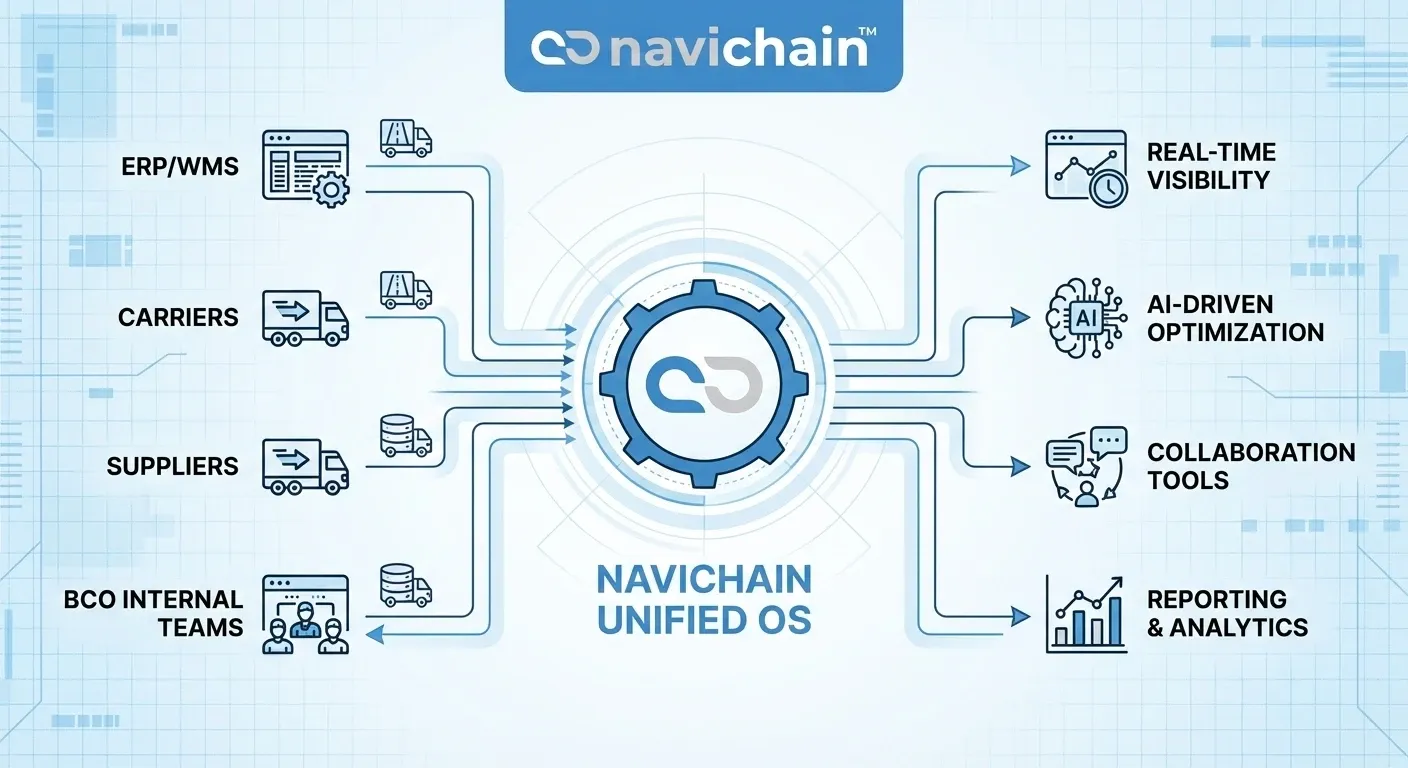
Navichain provides a comprehensive technology platform that enables Beneficial Cargo Owners to build and manage effective internal control towers. The Navichain SaaS platform offers a unified operating system (OS) that integrates all aspects of the supply chain, providing end-to-end visibility, advanced analytics, and collaboration tools.
- Unified Operating System: Navichain provides a single platform for managing all aspects of the supply chain, from order placement to final delivery. This eliminates data silos and provides a holistic view of the entire network.
- Real-Time Visibility: Navichain provides real-time visibility into the location and status of goods, enabling Beneficial Cargo Owners to proactively manage disruptions and optimize operations.
Schematic illustrating Navichain's unified operating system connecting various supply chain elements within a Beneficial Cargo Owner's internal control tower.
- AI-Driven Optimization: Navichain's AI-driven engine analyzes supply chain data to identify trends, patterns, and opportunities for improvement. This includes predictive analytics for forecasting demand, optimizing inventory levels, and identifying potential disruptions.
- Collaboration Tools: Navichain provides tools for facilitating communication and collaboration between all stakeholders in the supply chain, including the Beneficial Cargo Owner's internal teams, freight forwarders, carriers, and customers.
- Integration Capabilities: Navichain seamlessly integrates with the Beneficial Cargo Owner's existing systems, as well as the systems of their freight forwarders, carriers, and other partners. This ensures that all data is accurate and up-to-date.
- Exception Management: Navichain automatically identifies and alerts users to potential disruptions, allowing them to proactively take corrective action.
- Reporting and Analytics: Navichain provides comprehensive reporting and analytics capabilities, enabling Beneficial Cargo Owners to track key performance indicators (KPIs) and identify areas for improvement.
- Visibility: Navichain provides end-to-end visibility into the supply chain, eliminating the "black box" nature of the traditional freight forwarding model.
- Control: Navichain empowers Beneficial Cargo Owners to take greater ownership and control over their supply chain, allowing them to make more informed decisions and better align with business objectives.
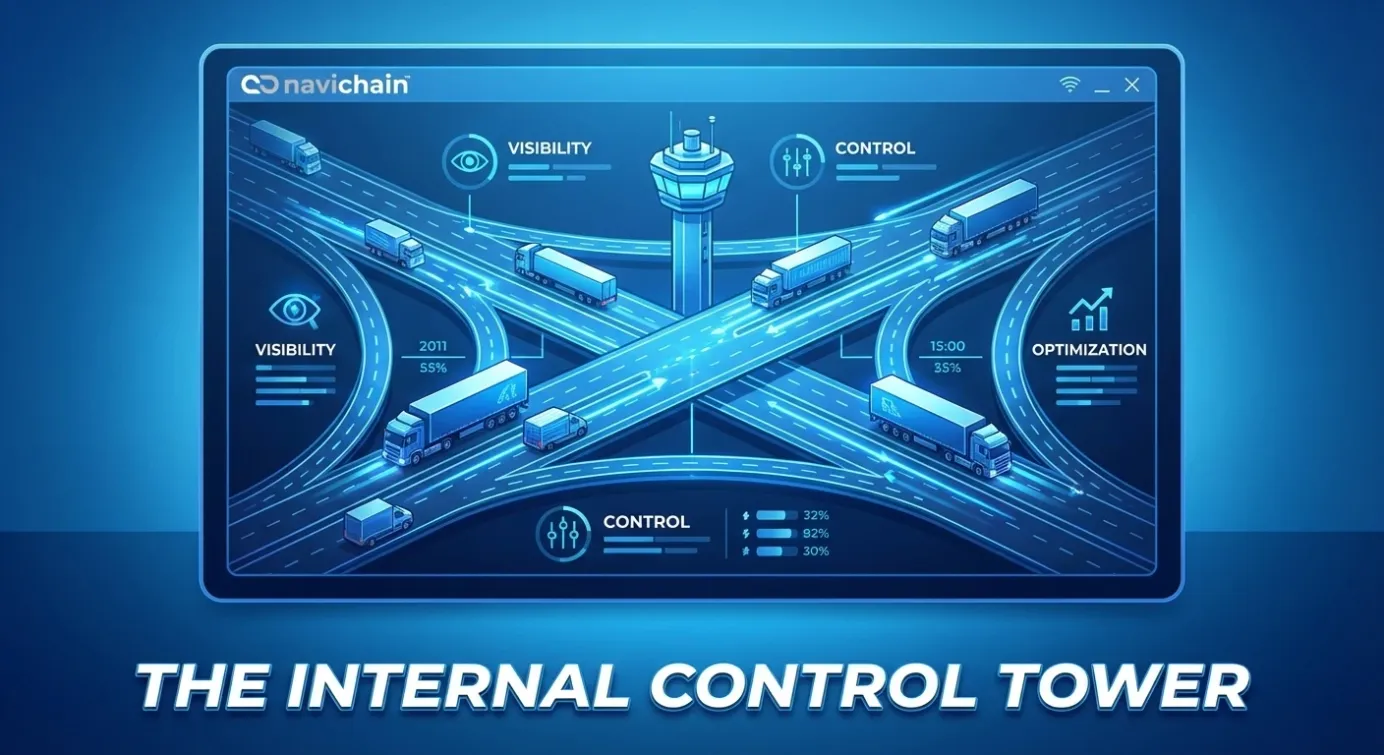
The internal control tower, powered by Navichain, provides BCOs with the visibility and control needed to optimize their supply chains.
- Efficiency: Navichain streamlines processes, reduces redundancies, and automates tasks, improving efficiency and reducing costs.
- Data Integration: Navichain integrates with all relevant systems, eliminating data silos and providing a holistic view of the supply chain.
- Cost Optimization: Navichain's AI-driven engine identifies opportunities to optimize transportation, warehousing, and inventory management, reducing costs and improving profitability. By leveraging Navichain's unified OS and AI-driven capabilities, Beneficial Cargo Owners can build and manage effective internal control towers that transform their supply chains into competitive advantages.
Section 5: Business outcomes: ROI, efficiency gains, and strategic resilience
Implementing an internal control tower, powered by a platform like Navichain, delivers significant business outcomes for Beneficial Cargo Owners. These outcomes span across improved ROI, enhanced efficiency, and increased strategic resilience.
- Reduced Transportation Costs: Optimizing routes, negotiating better rates, and consolidating shipments can lead to significant reductions in transportation costs. Beneficial Cargo Owners can expect to see a 5-15% reduction in transportation expenses.
- Lower Warehousing Costs: Optimizing inventory levels and streamlining warehouse operations can reduce warehousing costs. Beneficial Cargo Owners can anticipate a 10-20% decrease in warehousing expenses.
- Reduced Inventory Holding Costs: Improved demand forecasting and inventory management can reduce inventory holding costs. Beneficial Cargo Owners can expect to see a 15-25% reduction in inventory holding costs.
- Reduced Risk of Disruption: Proactive management of disruptions can prevent costly delays and supply chain failures. The ROI from avoiding disruptions can be substantial, particularly for businesses with time-sensitive products.
- Improved Order Fulfillment Rates: Streamlining processes and improving visibility can lead to higher order fulfillment rates. Beneficial Cargo Owners can expect to see a 5-10% improvement in order fulfillment rates.
- Reduced Lead Times: Optimizing transportation and warehousing can reduce lead times. Beneficial Cargo Owners can anticipate a 10-20% reduction in lead times.
- Increased Productivity: Automating tasks and improving collaboration can increase productivity. Beneficial Cargo Owners can expect to see a 10-15% increase in productivity.
The internal control tower provides BCOs with a comprehensive view of their supply chain, enabling proactive management and improved decision-making.
- Faster Decision-Making: Real-time visibility and data-driven insights enable faster and more informed decision-making.
- Improved Ability to Adapt to Change: The internal control tower provides Beneficial Cargo Owners with the agility and flexibility to quickly respond to changing market conditions and unexpected disruptions.
- Enhanced Risk Management: Proactive management of disruptions and improved visibility into the supply chain can mitigate risks and ensure business continuity.
- Increased Competitive Advantage: Optimizing the supply chain can improve efficiency, reduce costs, and enhance customer satisfaction, giving Beneficial Cargo Owners a competitive edge.
- Greater Supply Chain Visibility: End-to-end visibility provides a clear understanding of the entire supply chain, enabling Beneficial Cargo Owners to identify and address potential vulnerabilities. By achieving these business outcomes, Beneficial Cargo Owners can transform their supply chains into strategic assets that drive growth, improve profitability, and enhance competitiveness.
Conclusion
The traditional freight forwarding model is facing increasing pressure in today's dynamic and volatile global supply chain landscape. Business Cargo Owners (Beneficial Cargo Owners) are seeking greater control, visibility, and agility to mitigate risks, optimize operations, and reduce costs. The internal control tower represents a strategic solution, empowering Beneficial Cargo Owners to take ownership of their supply chains and leverage technology to achieve unprecedented levels of performance. Platforms like Navichain, with its unified operating system and AI-driven capabilities, are enabling Beneficial Cargo Owners to build and manage effective internal control towers. By embracing this transformative approach, Beneficial Cargo Owners can unlock significant business outcomes, including improved ROI, enhanced efficiency, and increased strategic resilience. The future of supply chain management lies in empowering Beneficial Cargo Owners with the tools and capabilities they need to navigate complexity, adapt to change, and thrive in the face of uncertainty. The shift from reliance on traditional freight forwarders to a more proactive, technology-enabled internal control tower model is not just a trend; it's a strategic imperative for Beneficial Cargo Owners seeking to build competitive advantage in the modern global economy.
References
- European Union. (2024). EU Regulation on CO2 Emission Standards for Heavy-Duty Vehicles. (A regulation related to sustainability in logistics). https://ec.europa.eu/clima/policies/transport/vehicles/regulation_en
- International Road Transport Union (IRU). (2023). The Future of Road Transport: Challenges and Opportunities. (An industry report on logistics trends). https://www.iru.org/resources/topics/innovation
- McKinsey & Company. (2023). The Future of Freight Forwarding. (A report on the evolving role of freight forwarders). https://www.mckinsey.com/industries/travel-logistics-and-infrastructure/our-insights/the-future-of-freight-forwarding
- Gartner. (2024). Supply Chain Technology Trends. (A report on technology impacting supply chains and logistics). https://www.gartner.com/en/supply-chain/trends
Navichain's platform empowers Beneficial Cargo Owners to build internal control towers, providing enhanced visibility and control over their supply chains.
Navichain's platform offers a unified view of the supply chain, enabling BCOs to build internal control towers for improved decision-making and efficiency.
Ready to optimise your supply chain?
navichain Insights Newsletter
Join the newsletter to receive the latest updates in your inbox.