
The Driver-Adoption Paradox: Why Your TMS Is Sabotaging Driver Retention (And Your ROI)
Table of Contents

European logistics SMEs are pouring capital into TMS, but driver churn and low adoption are sabotaging ROI. Discover how to bridge the 'great disconnect' between back-office efficiency and frontline realities with our Driver-Copilot Framework. Transform your TMS from a source of frustration into a trusted driver asset built on data sovereignty.
The Driver-Adoption Paradox: Why Your TMS Is Sabotaging Driver Retention (And
SMEs in European logistics are investing millions in Transport Management Systems (TMS) to combat razor-thin margins and rising costs. Yet, ROI remains elusive. Why? Data from the International Road Transport Union (IRU) shows driver churn is at a crisis point, and industry analysis reveals technology adoption on the frontline is staggeringly low. We have created a 'great disconnect': tools designed for back-office efficiency are perceived as a frontline burden. This paper outlines a 'Driver-Copilot Framework.' It argues that true ROI is unlocked only when the technology shifts from a tool of surveillance to a tool of enablement. We present a strategy to transform your TMS from a driver's burden into their most valuable asset, built on a foundational layer of trust and absolute data sovereignty.
Introduction: The €50,000 problem in the driver's pocket
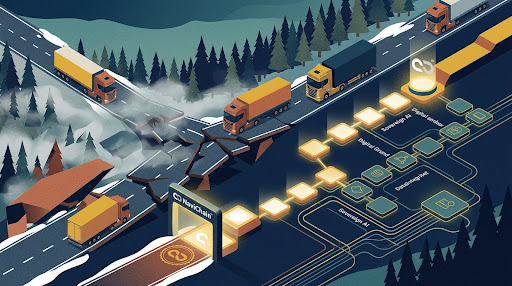
Fig 1: The platform is purchased, training is conducted, and six months later, operations look suspiciously like they did before—a chaotic mix of spreadsheets, phone calls, and manual data entry.

The frustrating reality: significant TMS investment, yet frontline operations remain mired in manual processes and workarounds.
In the European haulage sector, margins are notoriously thin—often as low as 2-3%, according to Eurostat data. In this environment, every investment in technology is a high-stakes bet on efficiency. Small to Medium-sized Enterprises (SMEs) purchase Transport Management Systems (TMS) with a clear promise: optimize routes, reduce fuel consumption, automate billing, and gain critical visibility over the entire operation. Yet, countless implementations fail to deliver this promise. The platform is purchased, training is conducted, and six months later, operations look suspiciously like they did before—a chaotic mix of spreadsheets, phone calls, and manual data entry. Management blames the software. The software vendor blames a lack of training. Both are wrong. This paper argues that the greatest threat to your technology ROI is not the software's features or the training budget. It is driver rejection. The IRU reports a structural driver shortage in Europe exceeding 500,000 positions. Replacing a single driver can cost upwards of €20,000, factoring in recruitment, training, and lost productivity. When you combine the cost of a failed TMS implementation (often €30,000+) with the cost of a single driver quitting in frustration, you are looking at a €50,000 problem. This problem doesn't live in your server room; it lives in the driver's pocket. Our central thesis is this: For European haulage SMEs, true operational efficiency is only unlocked when the TMS transforms from a top-down tracking tool into a bottom-up driver 'copilot'.
The great disconnect: Management's 'efficiency' vs. driver's 'burden'
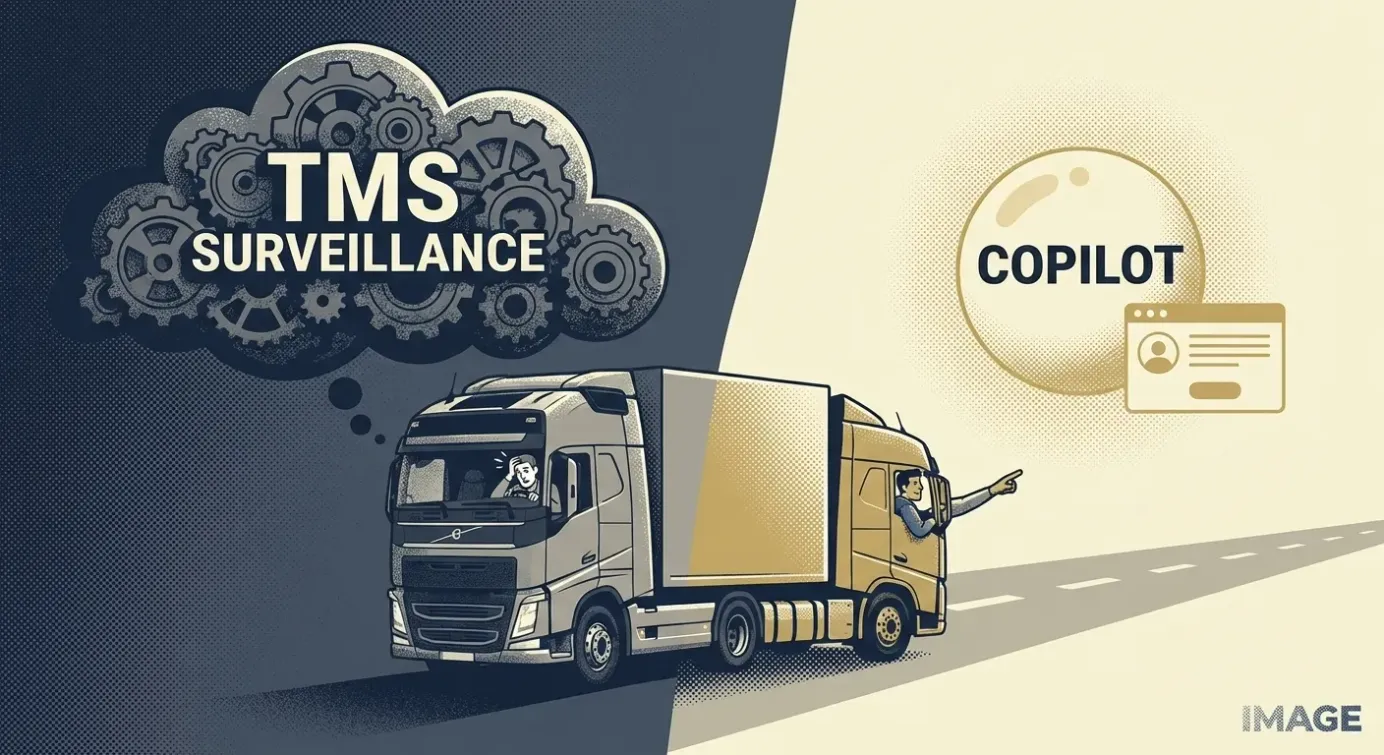
Fig 2: There is a fundamental disconnect in how logistics technology is perceived within the same company. There is a fundamental disconnect in how logistics technology is perceived within the same company. This disconnect is the root cause of adoption failure.
The management view: A tool for control and optimization
From the Operations Director's perspective, the TMS is a vital tool for control. It answers critical questions: * Where are my assets?
- What is my cost-per-kilometer?
- Can we fit one more delivery on this route?
- Did the customer sign the proof of delivery (POD)? This is a top-down perspective focused on visibility and asset utilization. The driver is, in this model, an asset to be managed.
The driver view: A tool for surveillance and administration
From the driver's perspective, the TMS mobile app is often a new source of stress. In their view, it is: * A Surveillance Device: It tracks their every move, monitoring hours of service and delivery times, often feeling more like a parole bracelet than a helpful tool.
- A Data Entry Burden: It demands they stop and tap through multiple complex screens to confirm a pickup, report a deviation, or capture a signature—all of which they see as "admin work" that takes time away from their core job: driving.
- A Clunky Interface: Many apps are poorly designed, slow, and not intuitive, requiring extensive training for basic functions. Research on frontline worker technology from analysts like Gartner confirms this pattern: if a tool does not provide immediate, tangible value to the frontline user, it will be ignored, circumvented, or actively resisted. Drivers will revert to what they know: a phone call to dispatch and a paper manifest. This "shadow IT" doesn't just negate the TMS investment; it actively corrupts the entire data stream.
The hidden costs of poor adoption
Fig 3: When drivers reject the TMS, the costs are not linear. When drivers reject the TMS, the costs are not linear. They are exponential and infect the entire business.
- Direct Costs: The most obvious are the sunk costs of the software licenses and the time spent on failed training sessions.
- Data Integrity Costs: When drivers fail to enter data correctly or in real-time, the entire platform runs on "garbage" data. This makes optimization impossible. Routes aren't efficient, billing is delayed, and customers are given incorrect ETAs. The "single source of truth" becomes a single source of confusion.
- Strategic Costs: This is the most dangerous category.
- Increased Driver Churn: In a market defined by driver shortages, a frustrating app is a perfectly valid reason for a good driver to leave for a competitor. The tool you bought to save money is now actively increasing your labor costs.
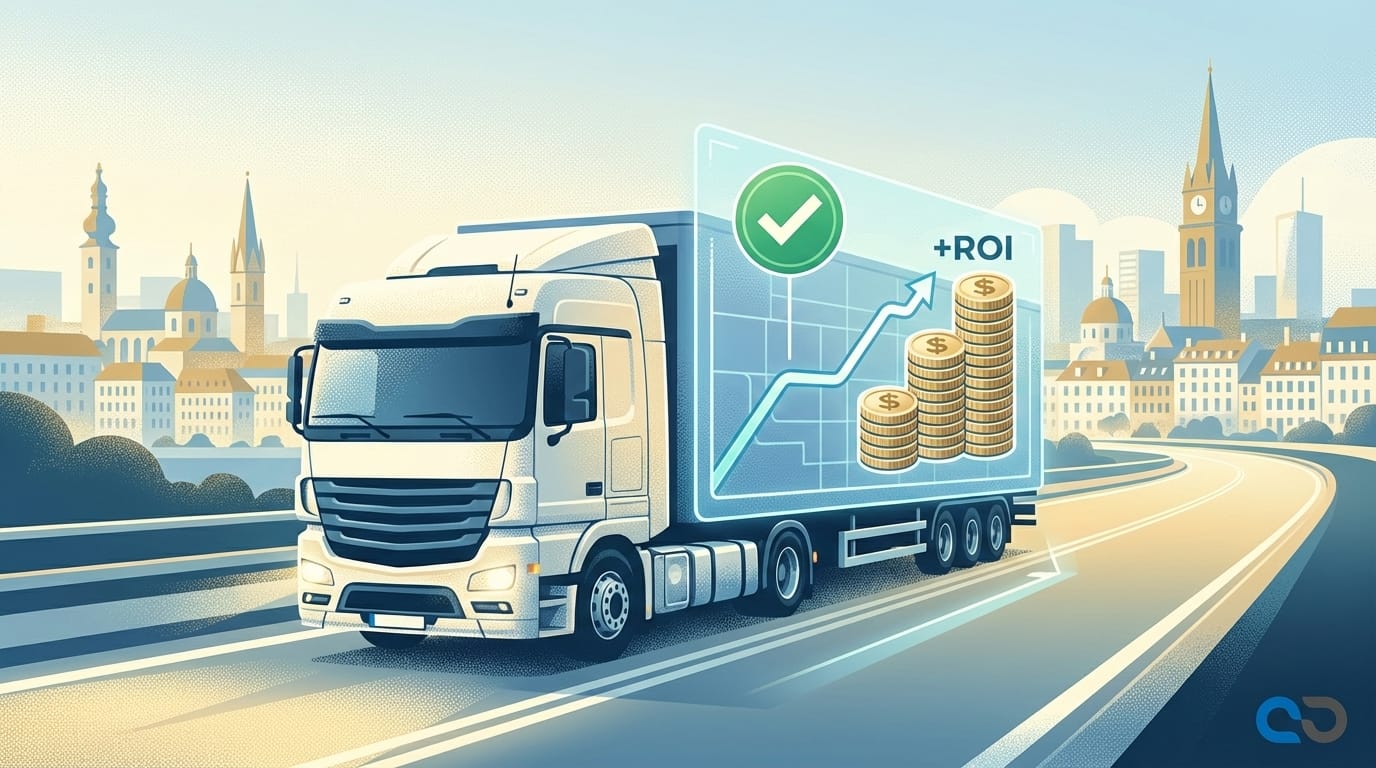
The costs of TMS rejection are exponential, affecting everything from data integrity to driver retention and customer satisfaction.
- Customer Dissatisfaction: Inaccurate data leads to missed delivery windows and frantic "Where is my order?" calls, damaging the client relationships you fought to build.
- Competitive Stagnation: While you wrestle with manual workarounds, your competitors are using their adopted TMS to automate workflows, analyze profitability per-lane, and provide self-service portals to their clients.
The 'copilot framework': Shifting from tracking to enablement
Fig 2: To fix the adoption paradox, you must flip the value proposition.
To fix the adoption paradox, you must flip the value proposition. The primary user of the mobile TMS is not management; it is the driver. The app must be designed, marketed, and implemented as a tool that makes the driver's difficult job easier. It must become their "copilot." The Copilot Framework is built on three principles of tangible value for the driver.
Principle 1: Simplify the complex
Fig 3: The app must be a tool of simplification, not complication.
The app must be a tool of simplification, not complication. This means a radical focus on User Experience (UX).
- One-Click Actions: Functions like "Start Driving," "Arrive at Stop," or "Capture POD" should be single, simple button presses.
- Automated Data Capture: The app should passively capture as much information as possible (geofencing for arrival/departure) rather than demanding manual entry.
- Integrated Workflow: The driver should not have to jump between a map app, a phone, and the TMS. Navigation, communication, and order details must live in one intuitive flow.
Principle 2: Be a navigator, not a warden
A copilot provides value; a warden just watches. The app must proactively help the driver succeed.
- Smart Navigation: It should provide truck-specific routing that accounts for vehicle height, weight, and hazardous materials restrictions—something a standard consumer map app cannot do.
- Real-Time Context: It should feed the driver critical information before they need it: "Customer X requires a hard-hat at this site," or "This delivery requires a temperature check."
- Dynamic Updates: Instead of punitive alerts for being "late," a copilot app provides proactive updates: "Heavy traffic detected on the E4. Rerouting you to save 20 minutes."
Principle 3: Close the loop instantly
The app should be the driver's primary tool for resolving issues and completing work, eliminating paperwork.
- Instant POD: Use the phone's camera to capture a signature or scan a barcode. The moment the driver hits "confirm," the loop is closed. The back office has the POD, and the driver is cleared for their next task.
- Easy Exception Reporting: If a pallet is damaged, the driver should be able to take a photo, add a quick note, and submit it in seconds. This protects them from liability and flags the issue for customer service instantly.
Schematic illustrating the instant feedback loop between drivers, dispatch, and the back office for streamlined issue resolution and real-time data capture.
- Seamless Communication: A built-in, simple messenger to dispatch removes the need for phone calls and texts, keeping all communication logged against the specific order. When a TMS mobile app is designed this way, adoption ceases to be a problem. You are no longer forcing drivers to use a tracking tool. You are giving them a powerful copilot that reduces their stress, simplifies their administrative work, and helps them do their job better. The rich, real-time data for management becomes a natural, positive byproduct of an enabled and engaged driver.
From diagnosis to design: The blueprint for a resilient logistics operating system
We have established that driver adoption is the key to unlocking TMS ROI, and that this is achieved by providing tangible value to the driver. But for this strategy to be sustainable for the business, the driver's "copilot" app cannot be a standalone solution. It must be the frontline interface for a much deeper, unified, and secure operational blueprint. To truly solve the challenges of fragmented data, operational inefficiency, and mounting risk, a modern logistics platform for SMEs must embody three core principles.
Principle 1: Unified operational fabric
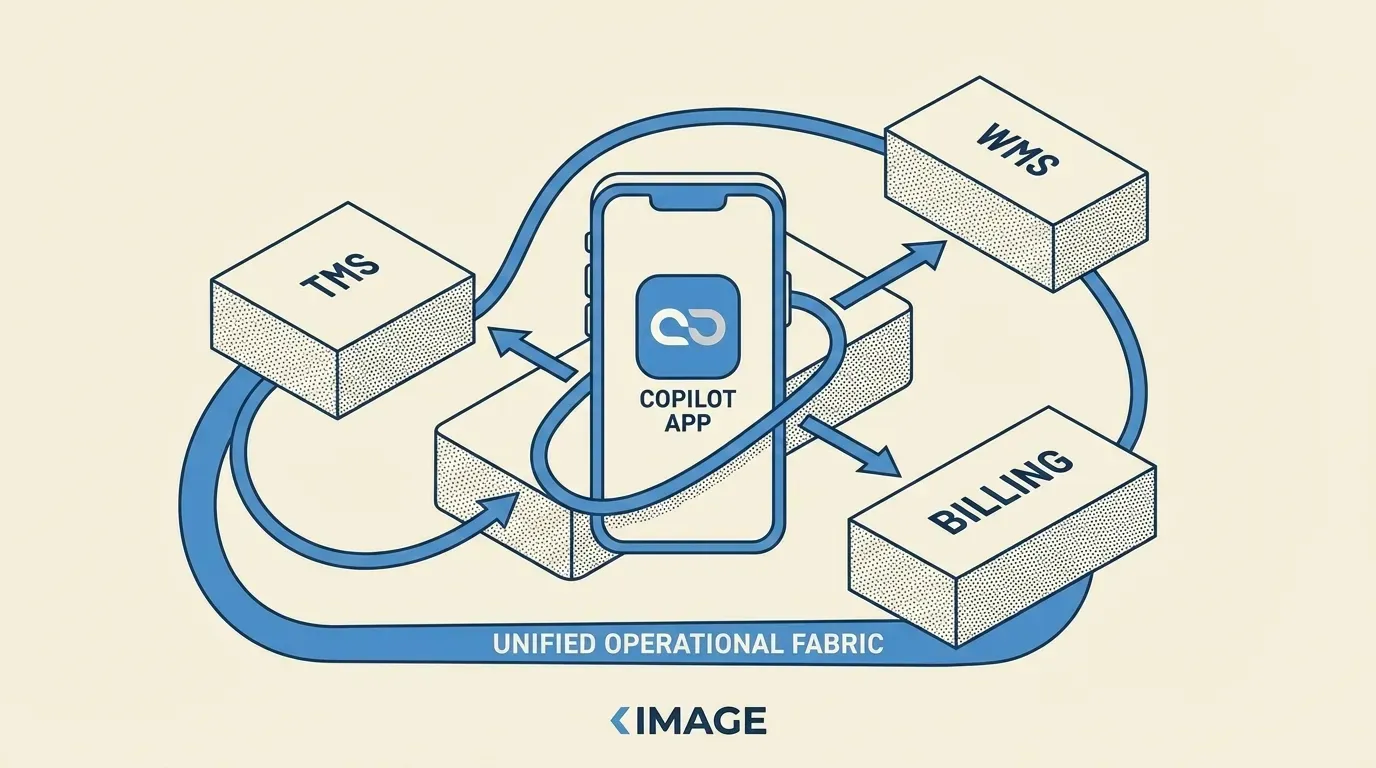
The driver's app is the edge of the network, but its power comes from what it connects to. The problem of data silos—where the TMS, WMS, and billing system all hold different "truths"—is a primary cause of inefficiency. A truly modern platform must be a single, integrated operating system. The driver confirming a POD in the app must simultaneously update the order status in the TMS, alert the WMS to the incoming truck's new ETA, and trigger the billing system to invoice the client. This "central nervous system" creates a single, unimpeachable source of truth, from the driver's hand to the CEO's dashboard.
Principle 2: Sovereign data architecture
Fig 4: In an era of complex data regulation, where your data lives is as important as what it is.
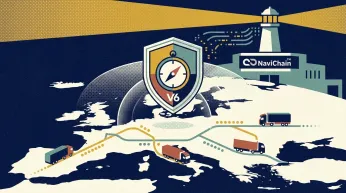
This principle is foundational and non-negotiable for European SMEs. Trust is the currency of adoption. Drivers must trust the app, and you must trust the platform. In an era of complex data regulation, where your data lives is as important as what it is. If your logistics data—your customers, your routes, your pricing—is hosted by a provider subject to foreign legislation like the US CLOUD Act, it can be accessed by foreign governments, regardless of your wishes or GDPR compliance. For European SMEs, true operational resilience and trust require data sovereignty. Your data must be stored and processed under your own region's legal jurisdiction (e.g., within the EU/Sweden), ensuring full GDPR compliance and shielding you from extraterritorial legal overreach. This is the bedrock of risk management.
Principle 3: Embedded analytic intelligence
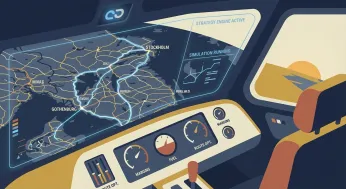
Once you have clean, real-time data from your adopted "copilot" app (Principle 1) flowing into a secure, sovereign platform (Principle 2), you can finally unlock the promise of AI. An embedded intelligence layer can analyze this unified data to move beyond reactive reporting and into predictive insights. This isn't just about route optimization; it's about answering high-value questions: "Which customers are consistently unprofitable?" "What is the likelihood of a delay on this lane next Tuesday?" This intelligence feeds back to the driver, making their "copilot" even smarter and creating a virtuous cycle of efficiency.
Fig 5: This isn't just about route optimization; it's about answering high-value questions: "Which customers are consistently unprofitable?" "What is the likelihood of a delay on this lane next Tuesday?" ...
References/sources
- International Road Transport Union (IRU). (2023). Global Driver Shortage Report 2023. https://www.iru.org/news-resources/newsroom/global-driver-shortage-worsens-60-vacancies-unfilled-2023
- Transport Intelligence (Ti). (2024). Global Logistics Digital Transformation 2024. https://ti-insight.com/report/global-logistics-digital-transformation-2024/
- Gartner, Inc. (2024). Top 9 Future of Work Trends for 2024. https://www.gartner.com/en/articles/9-future-of-work-trends-for-2024
- Eurostat. (2023). Transport services statistics - NACE Rev. 2. https://ec.europa.eu/eurostat/statistics-explained/index.php?title=Transport_services_statistics_-_NACE_Rev._2
Fig 4: We have established that driver adoption is the key to unlocking TMS ROI, and that this is achieved by providing tangible value to the driver.
Enabling the blueprint: The navichain SaaS unified logistics platform
This white paper has outlined a strategic framework for solving the driver adoption paradox and building a resilient, data-driven logistics operation. The navichain SaaS platform is designed from the ground up to be the concrete realization of this blueprint. We directly embody the three core principles—a Unified Operational Fabric, Sovereign Data Architecture, and Embedded Analytic Intelligence.
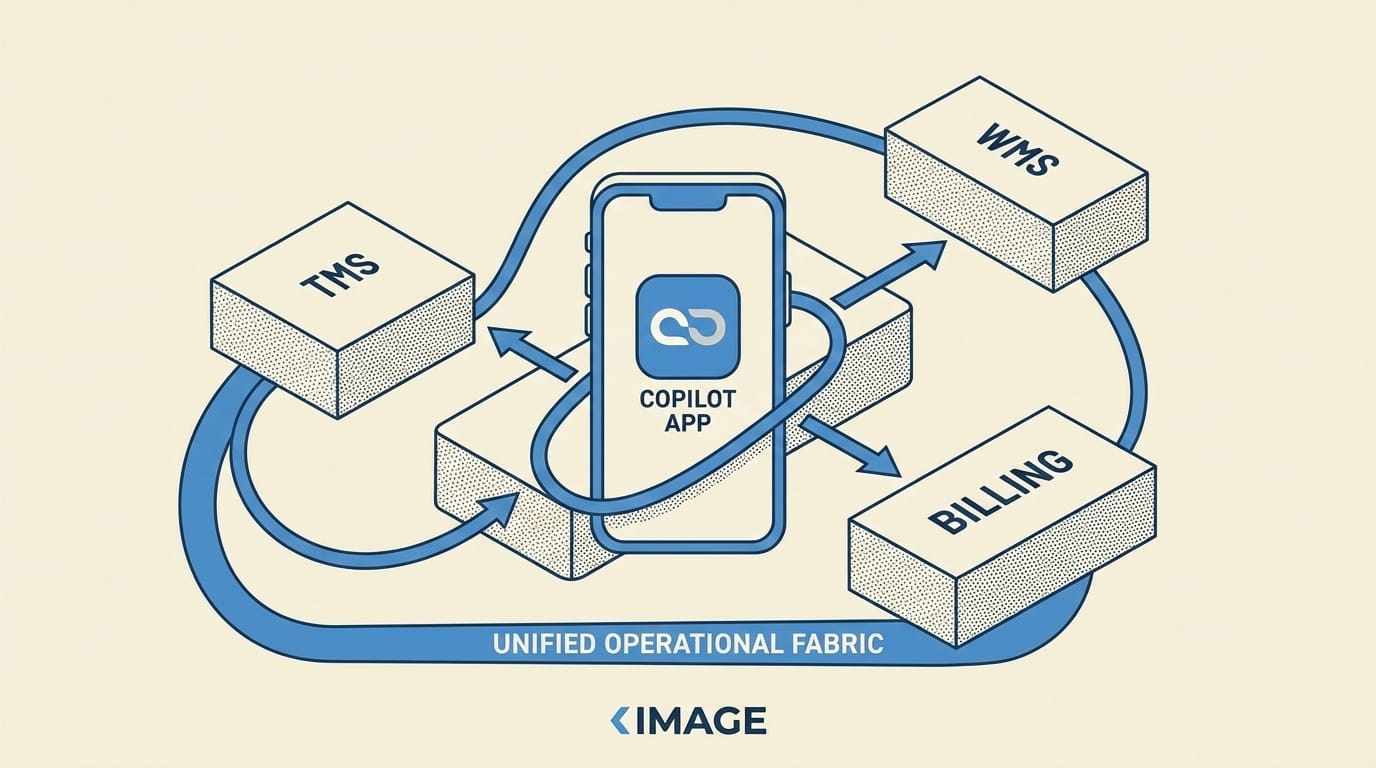
Navichain SaaS provides a unified logistics platform, addressing the driver adoption paradox through a user-friendly mobile app and a single source of operational truth.
- For 'Unified Operational Fabric': navichain SaaS is not a collection of siloed modules. It is a single, unified logistics operating system where Transportation Management (TMS), Warehouse Management (WMS), Asset Management, Billing, and Order Management work as one. This includes our user-friendly mobile app, a true "copilot" designed with driver-first principles to ensure adoption and provide a single source of truth from the field to the back office.
- For 'Sovereign Data Architecture': This is our key differentiator. The entire navichain SaaS platform is hosted on our own proprietary infrastructure in Sweden. Your data stays in Sweden, under Swedish jurisdiction. This guarantees full GDPR compliance and provides complete immunity from foreign legislation like the US CLOUD Act. We provide true data sovereignty, which is the ultimate foundation of trust and security for European SMEs.
- For 'Embedded Analytic Intelligence': Our platform is enhanced by a integrated AI that runs on the same secure Swedish infrastructure. This allows our clients to perform deep, secure data analysis on their unified operational data, unlocking efficiencies and predictive insights without ever exposing their sensitive information to third-party data risks. Our mission is to democratize logistics technology for SMEs. We empower you to break down data silos, manage operational change effectively, and thrive by delivering exceptional service from a single, secure, and sovereign platform.
Navichain's unified platform delivers a single, secure logistics operating system, ensuring data sovereignty and embedded analytic intelligence for European SMEs.

Navichain's secure, Swedish-based platform provides a unified view of logistics operations, enabling SMEs to leverage data sovereignty and embedded AI for enhanced efficiency and insights.
Ready to optimise your supply chain?
navichain Insights Newsletter
Join the newsletter to receive the latest updates in your inbox.


)