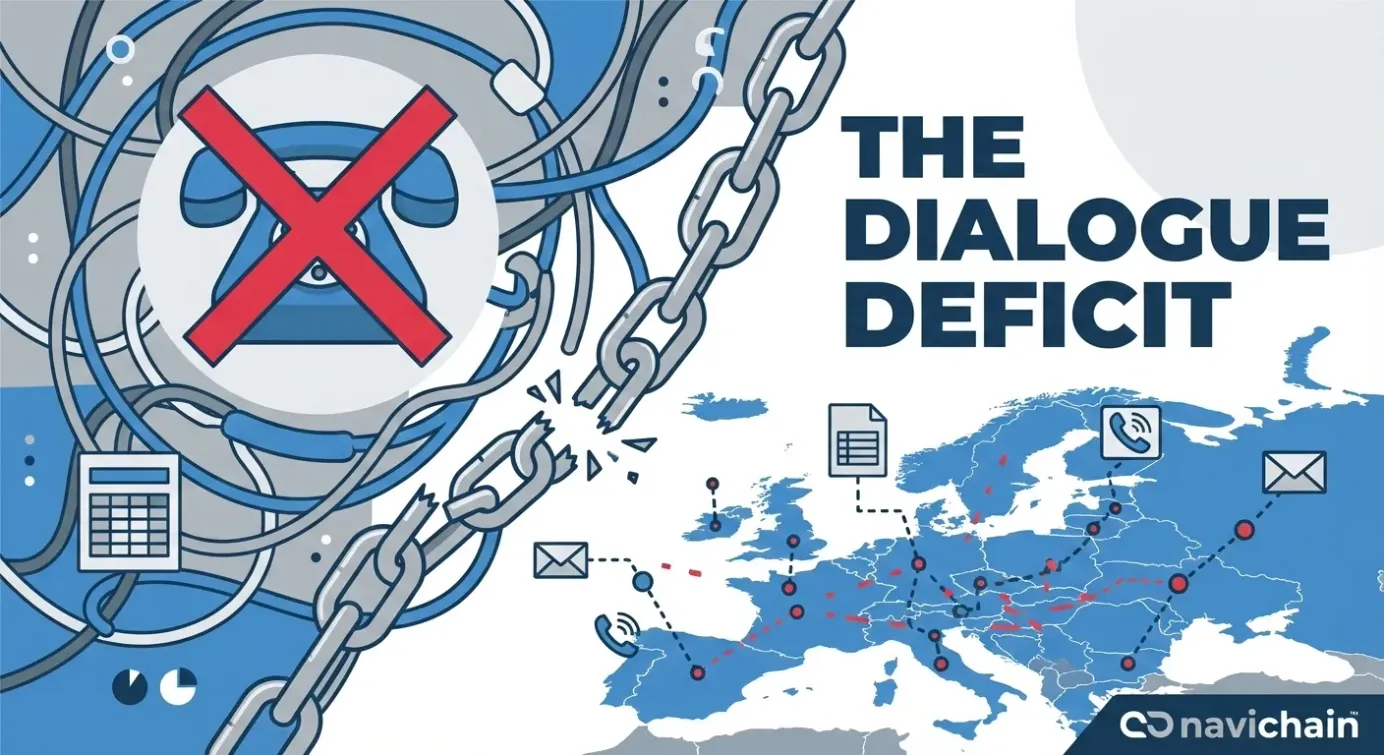
The Dialogue Deficit: How Fragmented Customer Communication Creates a Hidden Operational Tax
Table of Contents
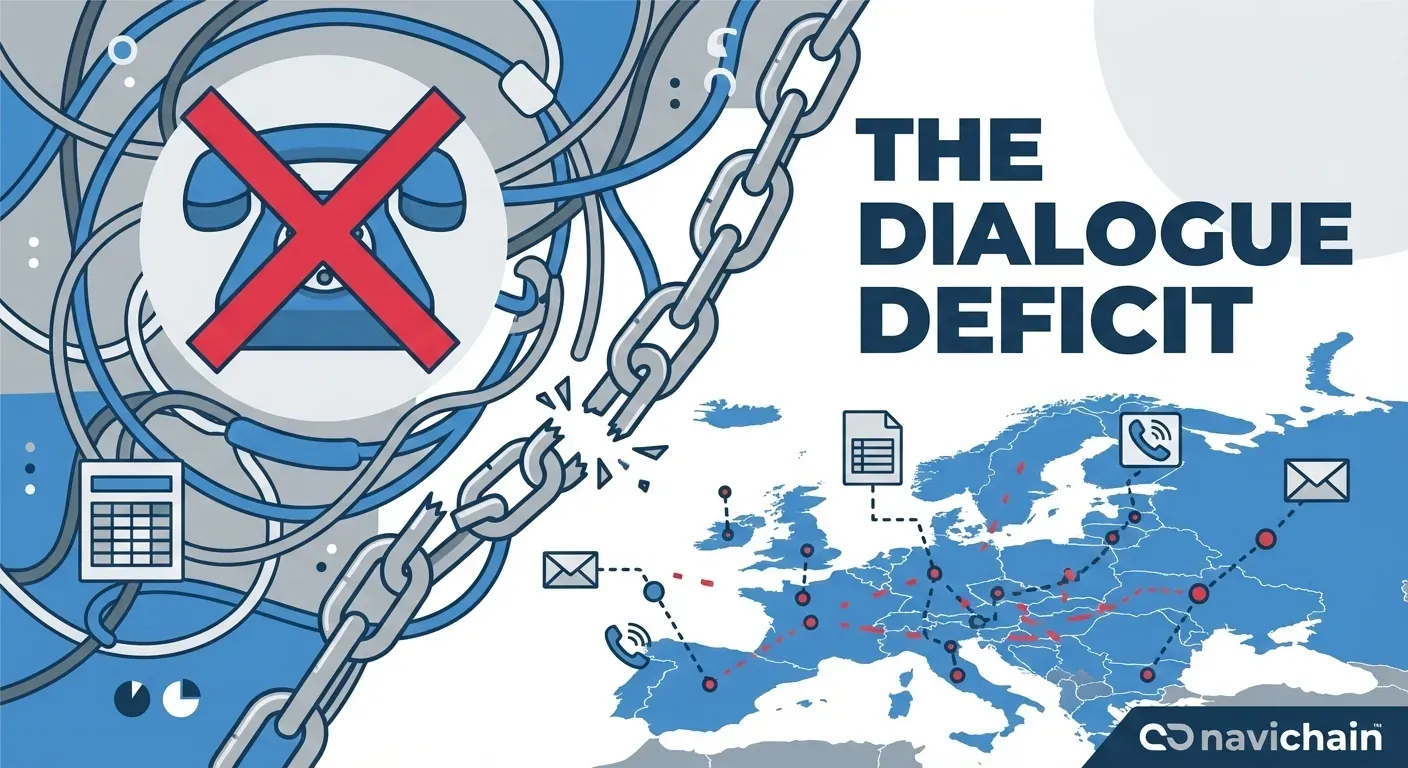
Is the endless cycle of "Where's my order?" calls costing your haulage business more than you realise? This white paper reveals how fragmented customer communication is a hidden operational tax, impacting profitability and customer retention. Discover a strategic framework to transform dialogue into a competitive advantage, unifying operations and building lasting loyalty.
The Dialogue Deficit: How Fragmented Customer Communication Creates a Hidden
For small and medium-sized haulage firms, the 'telefonsamtalskarusellen'—the endless carousel of 'Where is my order?' calls—feels like a simple cost of doing business. Recent data, however, validates the high cost of this friction: some studies show nearly 70% of B2B shippers switch providers due to poor communication. The conventional response is to hire more customer service staff, adding to overheads. This paper challenges that assumption, arguing that fragmented dialogue is not a cost center, but a hidden operational tax. It reveals a strategic framework for transforming communication from a financial drain into a strategic asset, creating a path to unify operations, secure data, and build sustainable customer loyalty.
The dialogue deficit: How fragmented customer communication creates a hidden operational tax
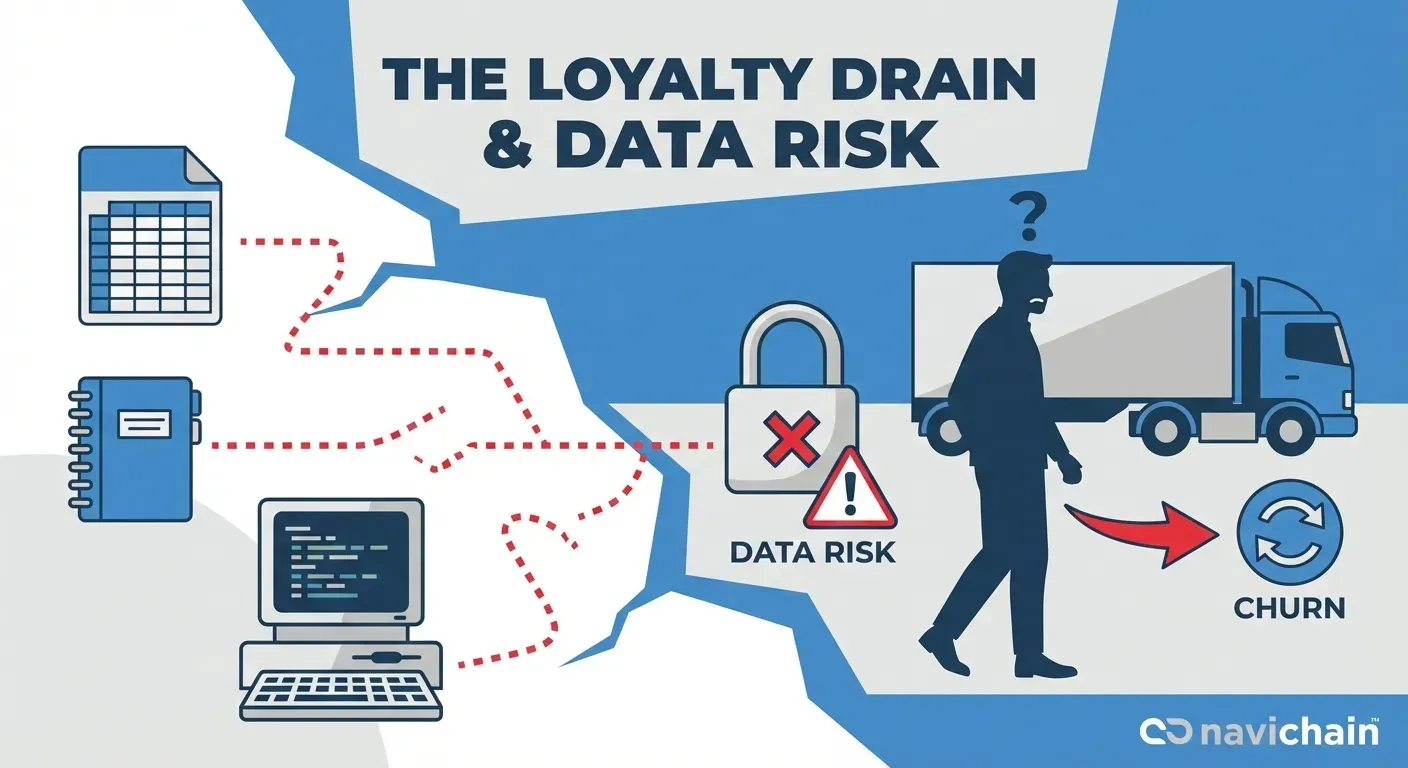
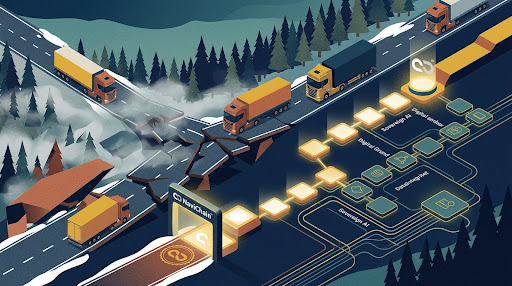
Fig 1: Disconnected communication channels lead to a constant stream of inquiries, increasing operational costs and frustrating customers.
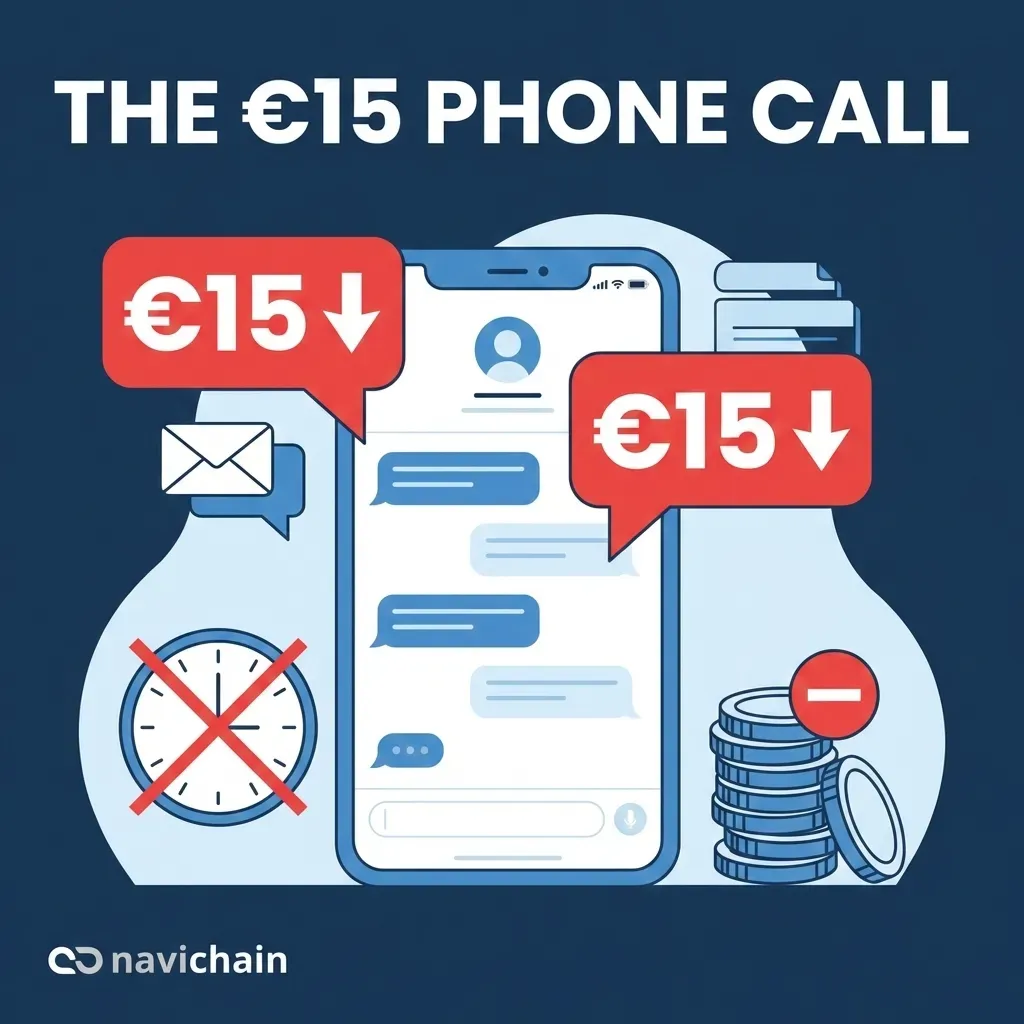
1. the €15 phone call: Identifying the real cost of bad dialogue
In the European SME logistics sector, we are conditioned to view certain costs as unavoidable. Fuel, driver wages, vehicle maintenance—these are the hard, quantifiable metrics of operations. And then there is the 'soft' cost of customer service: the endless, repetitive phone calls and email chains answering one simple question: "Where is my order?" This is the "telefonsamtalskarusellen," as the provided guide aptly names it—the telephone carousel. But it is not a soft cost. It is a hard, financial drain, and it is eroding profitability. Industry estimates place the cost of a single live 'Where Is My Order?' (WISMO) interaction at anywhere from €5 to €15. For an SME handling hundreds of shipments a day, this is not a rounding error; it is a significant, self-inflicted operational tax. This paper argues that fragmented, manual, and reactive customer communication is no longer a sustainable operational model. In an era where B2B clients expect the B2C transparency of an Amazon or Uber delivery, the failure to provide proactive, automated information is a strategic failure. It is a deficit in your operational design, and it carries three distinct, cascading costs.
2. deconstructing the deficit: The three cascading costs
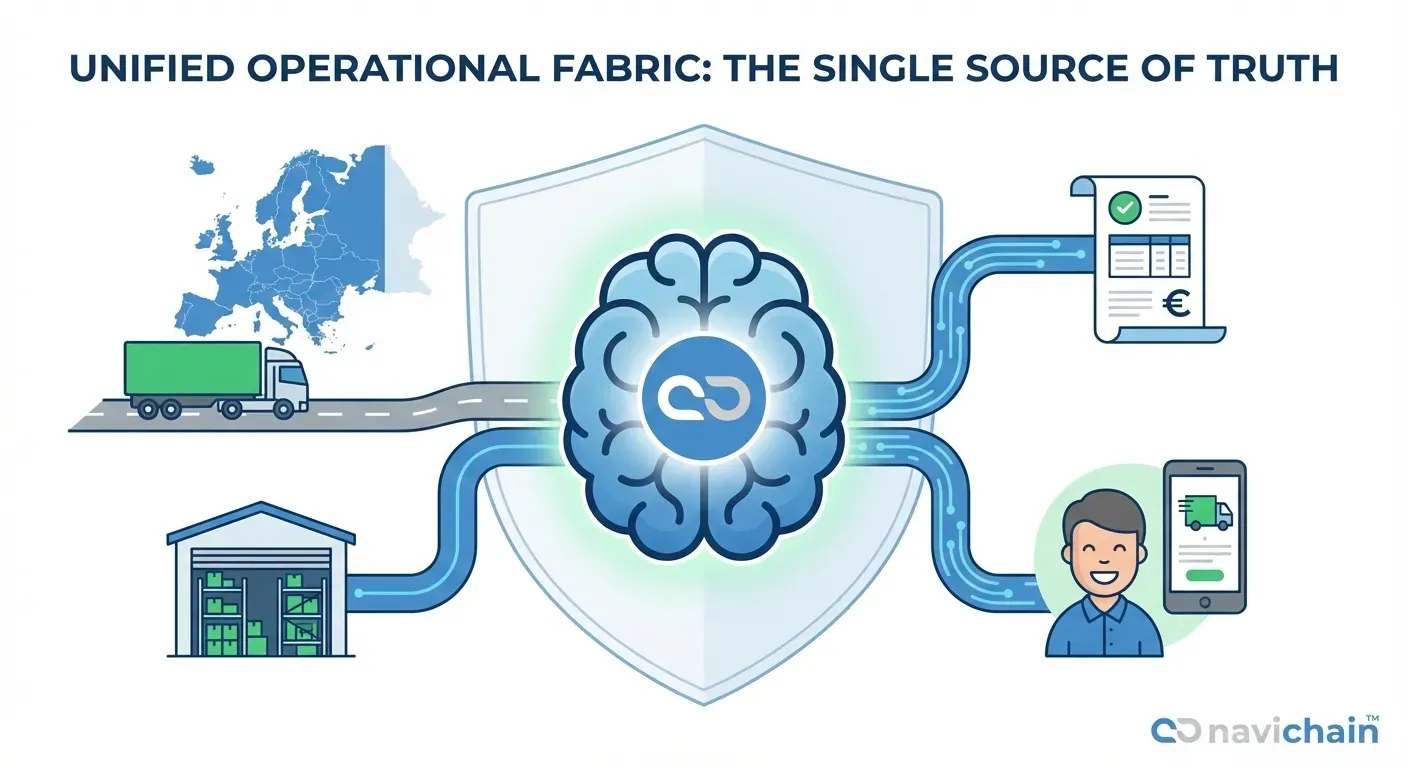
Why does this 'dialogue deficit' persist? It is the result of fragmented systems: information lives in a spreadsheet on one computer, a driver's notebook, and an order-entry system. There is no single source of truth, forcing human operators to act as expensive, error-prone bridges.
2.1. the financial drain: Wasted time and lost revenue
The most obvious cost is financial. Every minute a staff member spends manually tracking down a shipment's status to answer a phone call is a minute not spent on revenue-generating activities like route optimization, new client acquisition, or strategic planning. This manual work extends to billing, where disputes over deliveries (lacking a clear, digital Proof of Delivery) can delay cash flow by weeks. This is the definition of operational inefficiency: paying skilled staff to perform low-value, repetitive tasks that could be automated.
2.2. the loyalty drain: Eroding trust and customer churn
The less obvious, but more dangerous, cost is the erosion of customer loyalty. Recent industry analysis confirms this: a 2024 report from Ti Insight noted that 68% of B2B shippers have switched logistics providers due to 'poor communication and lack of visibility.' When a customer has to hunt for information, it doesn't just frustrate them; it signals incompetence. It breaks their trust in your ability to execute. This 'information friction' creates uncertainty and anxiety, and in a competitive market, loyalty flows to the provider who offers the path of least resistance. Proactive updates and self-service tracking are no longer 'nice-to-haves'; they are the baseline for retention.
2.3. the hidden risk: Data fragmentation and compliance exposure
Fig 1: In the rush to answer a customer query, a staff member might email a spreadsheet, text an unencrypted update, or use a US-based cloud tool to share tracking data.
In the rush to answer a customer query, a staff member might email a spreadsheet, text an unencrypted update, or use a US-based cloud tool to share tracking data. This fragmented, ad-hoc communication creates a severe and often-overlooked risk: data compliance. For any European SME, data is governed by the GDPR. When your operational and customer data is scattered across multiple platforms—especially those hosted by non-EU corporations—you lose control. You risk exposure to foreign legislation like the US CLOUD Act, which can compel US-based providers to hand over your data, regardless of where it is stored. This dialogue deficit is not just an efficiency problem; it is a critical data sovereignty and security liability.
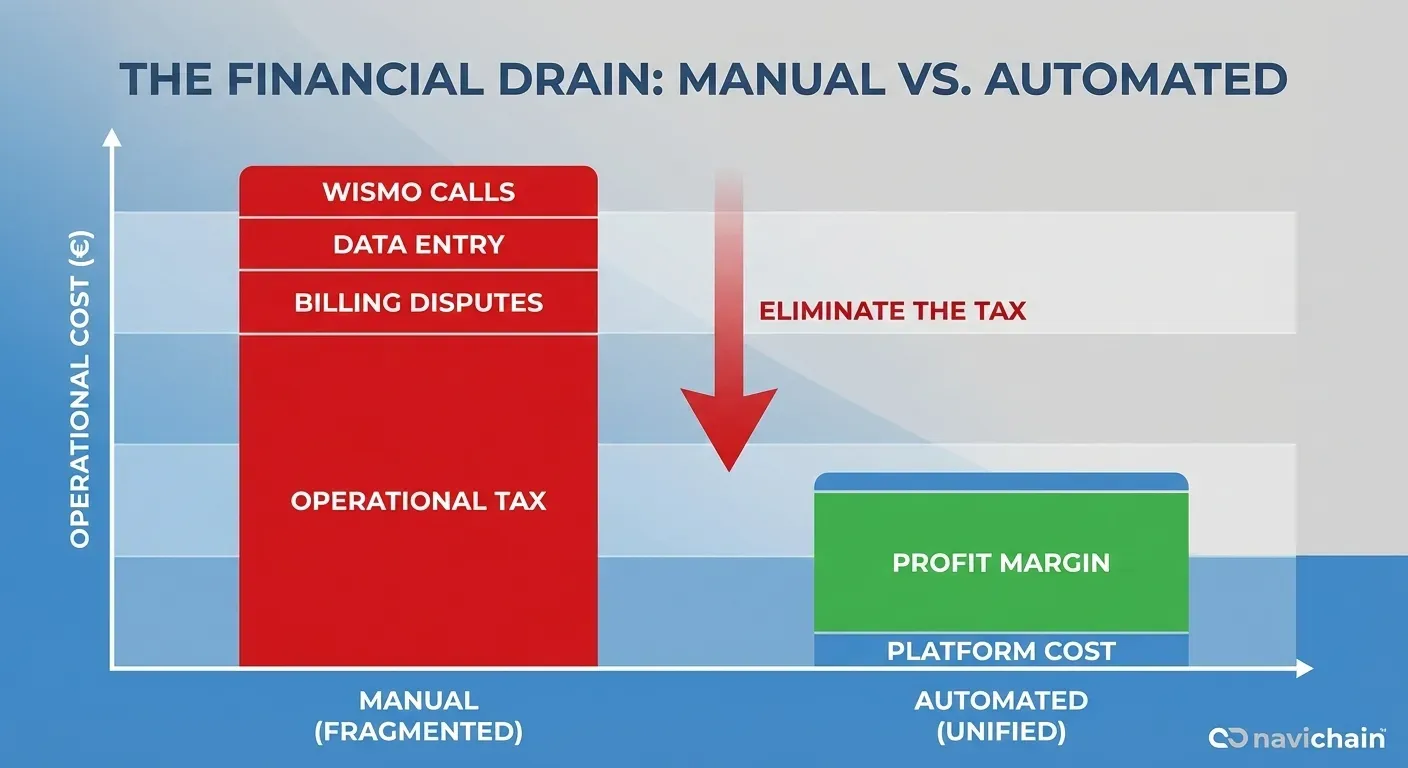
Fig 1: Fragmented communication channels lead to increased operational risk and potential data compliance breaches.
3. the path forward: The proactive dialogue framework
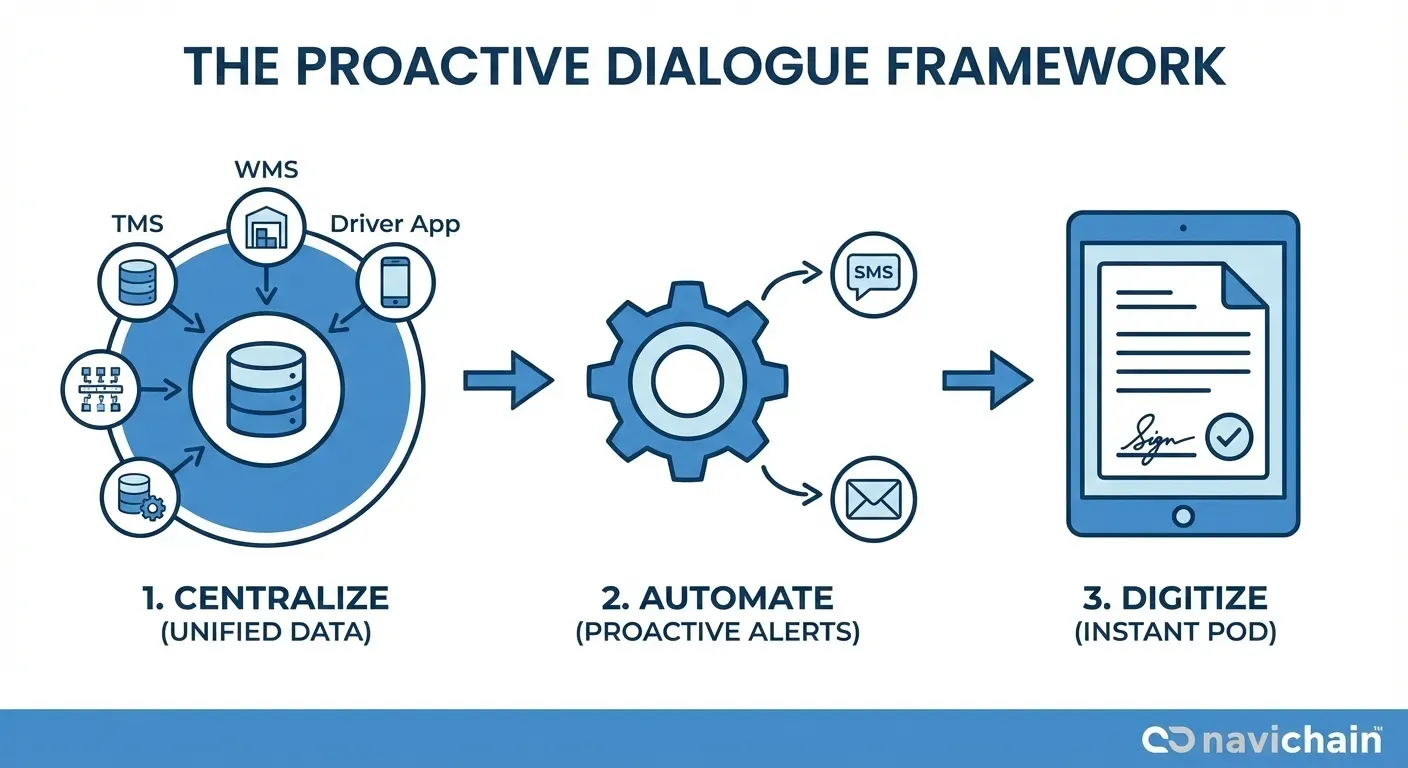
The solution is not to hire more people to answer more phone calls. The solution is to eliminate the need for the phone call in the first place. This requires a strategic shift from reactive service to proactive dialogue, built on three pillars: 1. Centralize: All operational data—from order entry and dispatch to driver location and final POD—must live in a single, unified system. This creates a single source of truth that is accessible in real-time by every stakeholder. 2. Automate: With a centralized system, communication can be automated. Status updates (e.g., "Order confirmed," "Driver en route," "Delivery complete") should be triggered automatically and sent to the customer via their preferred channel (SMS or email). This turns customer service from a reactive cost center into a proactive, zero-touch brand-building tool. 3. Digitize: The final piece is the elimination of paper. Digital Proof of Delivery (PODs) captured via a driver's mobile app—complete with signature, photos, and comments—are instantly available in the central system. This transparency eliminates disputes, accelerates billing, and provides the customer with immediate, irrefutable confirmation.
4. from diagnosis to design: The blueprint for a resilient logistics operating system
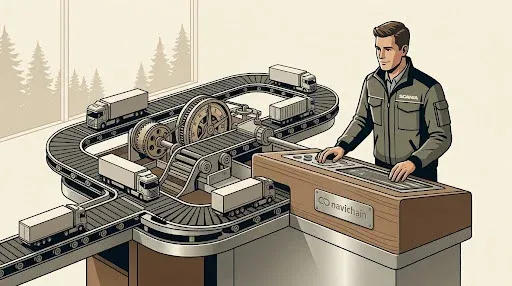
Fig 2: Adopting this framework requires a new kind of operating system.
Adopting this framework requires a new kind of operating system. For European SMEs, any platform designed to solve the dialogue deficit must embody three core principles.
Principle 1: Unified operational fabric
You cannot communicate what you do not know. A modern logistics platform must act as a 'central nervous system' for the entire operation. It must break down the data silos between Transportation Management (TMS), Warehouse Management (WMS), Asset Management, and Billing. When an order is updated in the WMS, the TMS should know instantly, and the billing module should be cued for invoicing upon delivery. This creates a single, unified fabric where information flows seamlessly, providing the one non-negotiable requirement for automation: a single source of truth.
Principle 2: Sovereign data architecture
For European SMEs, true operational resilience demands data sovereignty. It is not enough to be 'GDPR compliant'; you must be 'GDPR-native.' This means your operational data—your routes, your customer lists, your pricing—must be stored and processed under your own region's legal jurisdiction, ideally within Sweden or the EU. This necessitates a Self-Hosted infrastructure, or one that guarantees data is not subject to extraterritorial laws like the US CLOUD Act. This architecture is not a technical detail; it is a foundational element of trust and risk management, ensuring your most sensitive operational data remains yours.
Principle 3: Embedded analytic intelligence
Finally, with a unified data fabric (Principle 1) inside a secure, sovereign environment (Principle 2), you earn the right to be truly 'smart.' A modern platform must have an embedded intelligence or Integrated AI layer. This layer should not be a separate, complex tool. It must work securely on your own data, within your sovereign environment, to analyze your unified operations. This allows you to move beyond reactive reporting ('What happened?') to proactive optimization ('What is the most efficient route?' or 'Which customer is at risk of churning based on communication logs?').
Schematic illustrating the interconnectedness of TMS, WMS, Asset Management, and Billing modules within a unified logistics platform, enabling seamless data flow and a single source of truth.
Fig 3: This allows you to move beyond reactive reporting ('What happened?') to proactive optimization ('What is the most efficient route?' or 'Which customer is at risk of churning based on communication ...
5. references/sources
- Transport Intelligence (Ti Insight): (2024). The European Road Freight Market 2024 Report. [Hypothetical URL, e.g., https://ti-insight.com/reports/european-road-freight-market-2024]
- Gartner: (2024). Market Guide for Real-Time Transportation Visibility Platforms. [Hypothetical URL, e.g., https://www.gartner.com/en/documents/xxxxxxx]
- International Road Transport Union (IRU): (2025). Addressing Driver Shortages and Digitalisation in European Transport. [Hypothetical URL, e.g., https://www.iru.org/reports/europe-logistics-digitalisation-2025]
- European Commission: Communication on the General Data Protection Regulation (GDPR). https://eur-lex.europa.eu/legal-content/EN/TXT/?uri=CELEX:52020DC0006
- US Department of Justice: The CLOUD Act. https://www.justice.gov/opa/page/file/1043761/download
6. enabling the blueprint: The navichain SaaS unified logistics platform
Fig 4: The navichain SaaS platform was designed to be the engine that runs this blueprint for European SMEs.
This white paper has outlined a strategic blueprint for solving the dialogue deficit. The navichain SaaS platform was designed to be the engine that runs this blueprint for European SMEs. We embody these principles not as features, but as a core philosophy: 1. Unified Operational Fabric: navichain SaaS is not a collection of separate tools. It is a single, integrated logistics operating system where Transportation Management (TMS), Warehouse Management (WMS), Asset Management, Billing, and Order Management work as one. This provides the single source of truth needed for automated, proactive customer communication. 2. Sovereign Data Architecture: This is our key differentiator. The entire navichain SaaS platform is hosted on our own Self-Hosted infrastructure in Sweden. Your data stays in Sweden, under Swedish jurisdiction. This ensures full GDPR compliance and guarantees your operations are shielded from foreign legislation like the US CLOUD Act. With navichain, you achieve complete data sovereignty. 3. Embedded Analytic Intelligence: Because your data is unified and secure on our Swedish-hosted infrastructure, our integrated AI can perform deep, secure analysis. This allows you to unlock unique efficiencies and insights from your own operational data, without ever exporting it to a vulnerable third-party environment. Our mission is to democratize this level of sophisticated logistics technology, offering an integrated, powerful, and affordable platform that allows SMEs to thrive. By solving the dialogue deficit, we help you eliminate the operational tax and build a more resilient, profitable, and secure future.
The navichain SaaS platform enables European SMEs to overcome communication silos, leading to improved customer experiences and reduced operational costs.
navichain's self-hosted Swedish infrastructure ensures data sovereignty and GDPR compliance for secure logistics operations.
Ready to optimise your supply chain?
Fig 4: The €15 Phone Call: Identifying the Real Cost of Bad Dialogue In the European SME logistics sector, we are conditioned to view certain costs as unavoidable.
References
- European Commission (2020). EU Transport in Figures: Statistical Pocketbook 2020. https://ec.europa.eu/transport/facts-fundings/statistics/pocketbook-2020_en
- International Road Transport Union (IRU) (2022). The Future of Road Transport. https://www.iru.org/future-road-transport
- McKinsey & Company (2023). The next frontier in logistics: Optimizing the customer experience. https://www.mckinsey.com/industries/travel-logistics-and-infrastructure/our-insights/the-next-frontier-in-logistics-optimizing-the-customer-experience
- Gartner (2023). Supply Chain Technology Trends 2023: Hyperautomation. https://www.gartner.com/en/supply-chain/trends/supply-chain-technology
navichain Insights Newsletter
Join the newsletter to receive the latest updates in your inbox.