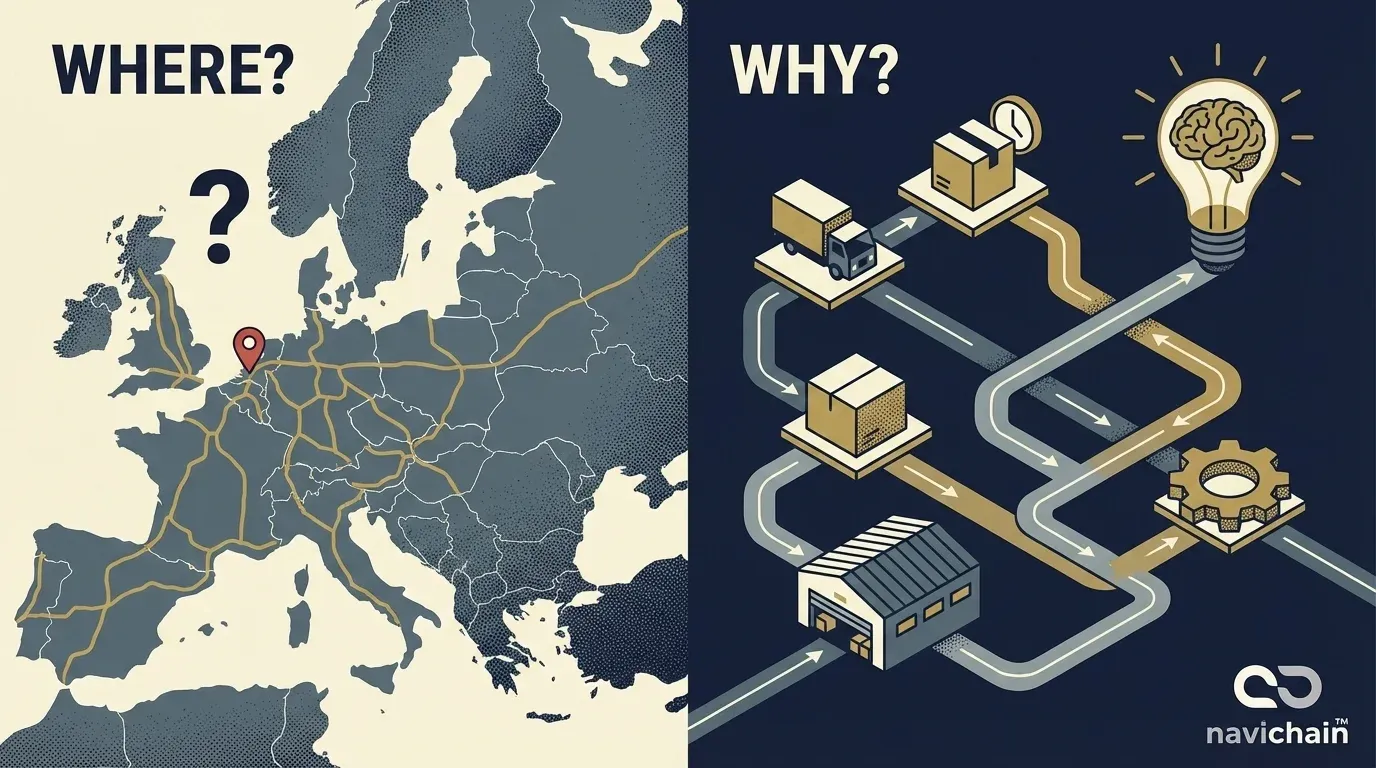
Why vs. Where: Bridging the Context Gap in Telematics and Regaining Control
Table of Contents
In today's competitive landscape, businesses reliant on vehicle fleets require more than just location data. Traditional telematics systems tell you where your vehicles are, but fail to explain why. This context gap leads to inefficiencies, increased operational costs and a lack of strategic insight. Navichain offers a revolutionary approach: Contextual Telematics. By seamlessly integrating order and project data into the GPS stream, Navichain provides the complete picture, empowering you to optimise workflows, improve resource allocation, and drive significant ROI. Discover the difference between "where" and "why" with Navichain – the future of intelligent fleet monitoring.
Phase 1: The Current Pain - The Gap Between Location and Context
The problem is simple: raw GPS data lacks the vital context required for informed decision-making. Imagine looking at a map dotted with vehicle icons, knowing their real-time location, but having no understanding of why they are there. Are they on schedule? Are they fulfilling a high-priority order? Are they adhering to planned routes? Without context, this data is merely noise.
The current telematics landscape focuses primarily on location tracking, speed monitoring, and basic vehicle diagnostics. While these functionalities are valuable, they represent only a fraction of the potential. They fail to address the fundamental question that C-level executives and operations managers desperately need answered: "What is the business purpose of this vehicle movement?"
This lack of context manifests in several critical areas:
- Inefficient Route Planning: Routes are planned based on distance and time, not real-time operational priorities.
- Poor Resource Allocation: Vehicles and drivers may be dispatched to less critical tasks when more pressing needs exist.
- Lack of Transparency: Difficulty in tracking the progress of specific orders or projects, leading to communication breakdowns and delays.
- Difficulties in Proof of Delivery: Verifying service completion and delivery accuracy becomes cumbersome and prone to error.
- Suboptimal Fuel Consumption: Drivers may take inefficient routes due to lack of real-time guidance based on order priorities.
Phase 2: Implications - Why It Harms Your Business and ROI
The inability to understand the "why" behind vehicle movements has significant implications for your bottom line. The inefficiencies mentioned earlier translate directly into:
- Increased Fuel Costs: Suboptimal routing and unnecessary mileage drive up fuel consumption.
- Increased Labour Costs: Drivers spend more time on the road, resulting in overtime and decreased productivity.
- Delayed Project Completion: Lack of real-time tracking and efficient dispatching leads to project delays.
- Lower Customer Satisfaction: Missed deadlines and inaccurate deliveries erode customer trust and loyalty.
- Reduced Profit Margins: The cumulative effect of these inefficiencies significantly impacts your profit margins.
Moreover, the lack of contextual information hinders strategic decision-making. Without a clear understanding of how vehicle movements contribute to overall business objectives, it becomes impossible to identify areas for improvement and optimise resource allocation.
Consider the following:
- Difficulty in Identifying Bottlenecks: Without knowing the purpose of each trip, it's challenging to pinpoint bottlenecks in your logistics chain.
- Inability to Measure Performance: Tracking key performance indicators (KPIs) related to specific orders or projects becomes difficult, hindering performance measurement.
- Poor Data-Driven Decision Making: Decisions are often based on incomplete or inaccurate information, leading to suboptimal outcomes.
- Missed Opportunities: Without a comprehensive understanding of your operations, you miss opportunities to improve efficiency, reduce costs, and enhance customer satisfaction.
Phase 3: The Solution - Navichain: Contextual Telematics in Practice
Navichain addresses the "context gap" by seamlessly integrating order and project data into the GPS stream. This allows you to understand not only where your vehicles are, but also why they are there, providing a complete and actionable view of your operations.
The core concept is simple: Link each vehicle's location data to the specific order, project, or task it is currently fulfilling. This provides a layer of context that transforms raw GPS coordinates into valuable business intelligence.
Here's how Navichain works:
- Data Integration: Navichain seamlessly integrates with your existing order management, CRM, and project management systems.
- Real-Time Contextualisation: As vehicles move, Navichain automatically links their location data to the relevant order, project or task.
- Intelligent Monitoring: Navichain provides real-time visibility into the progress of each order or project, allowing you to track key milestones and identify potential delays.
- Automated Reporting: Navichain generates comprehensive reports that provide valuable insights into vehicle utilisation, driver performance and overall operational efficiency.
- Smart Alerts: Configure custom alerts based on deviations from planned routes, ETAs or other key metrics to proactively manage potential issues.
By providing this contextual layer, Navichain empowers you to:
- Optimise Route Planning: Prioritise routes based on order urgency and real-time traffic conditions.
- Improve Resource Allocation: Dispatch vehicles and drivers to the most critical tasks.
- Enhance Transparency: Track the progress of specific orders or projects in real-time.
- Streamline Proof of Delivery: Automatically verify service completion and delivery accuracy.
- Reduce Fuel Consumption: Guide drivers along the most efficient routes.
- Improve Customer Satisfaction: Meet deadlines and deliver accurate orders.
Navichain is more than just a telematics system; it's a strategic tool that empowers you to optimise your entire fleet operation and drive significant ROI.
Conclusion
The era of simply tracking vehicle location is over. To truly optimise your fleet operations and unlock the full potential of your resources, you need to understand the "why" behind every vehicle movement. Navichain's Contextual Telematics provides the missing piece of the puzzle, empowering you to make informed decisions, improve efficiency and drive significant ROI. Take control of your fleet and bridge the context gap with Navichain – the future of intelligent fleet management.
navichain Insights Newsletter
Join the newsletter to receive the latest updates in your inbox.