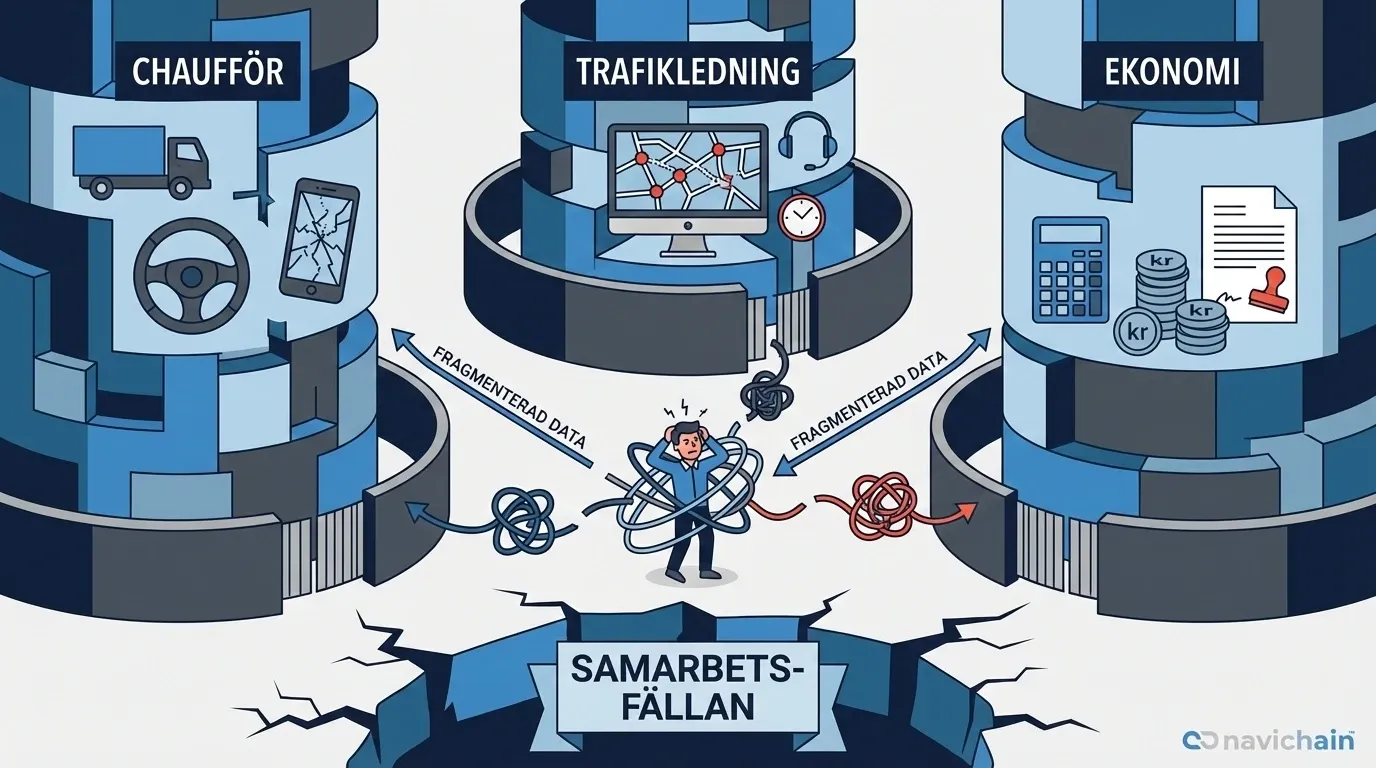
The Collaboration Trap: Why Fragmented Data Dooms Continuous Improvements
Table of Contents
Central Thesis: Successful and sustainable quality development in logistics is operationally impossible without a unified data architecture. Companies attempt to build a culture of collaboration on a technical foundation of fragmented data silos, creating a paradox where attempts to optimise one function (such as route planning) inevitably create data conflicts and extra work for another (such as invoicing).
The Collaboration Trap: Why Fragmented Data Dooms Continuous Improvements
Many logistics managers struggle to implement continuous improvements. Despite countless meetings and initiatives, data from industry organisations shows that over 60% of medium-sized haulage companies consider operational inefficiency to be their biggest business threat. But what if the problem isn't your personnel or your strategy? What if your 'improvement programmes' are actually creating more work by forcing teams to manually reconcile conflicting data from separate systems for TMS, finance and order management? This white paper presents a framework for solving this 'collaboration trap'. It argues that successful quality management doesn't start with culture, but with a unified data architecture. We describe a practical model for uniting drivers, transport managers and finance staff around a single source of truth, making continuous improvements an operational reality instead of a strategic frustration.
The strategic anomaly: When 'improvement' creates more work
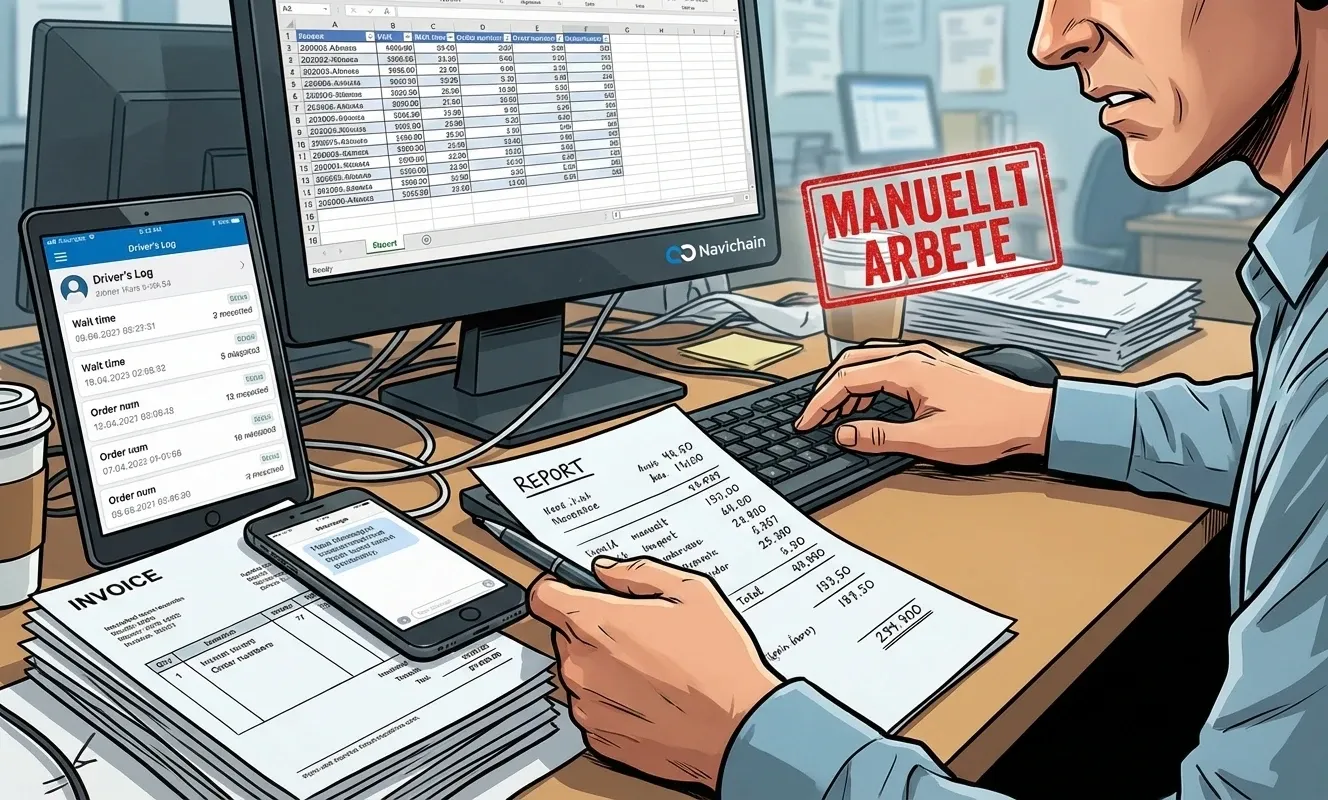
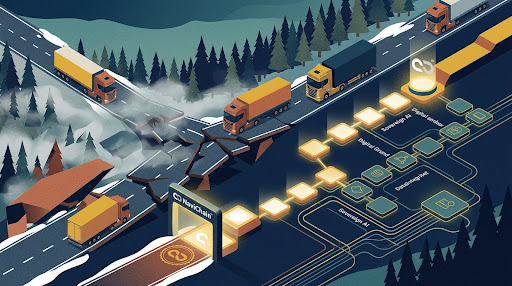
Fig 1: The frustration of working in disconnected systems, where data conflicts and manual reconciliation become the norm, hindering true collaboration and improvement.
For leaders in logistics and haulage, the mantra of 'continuous improvement' (CI) – whether it's called Kaizen, Lean or Total Quality Management (TQM) – is a given. The goal is to systematically identify and eliminate waste, improve service quality and strengthen margins. Initiatives are launched, process maps are drawn and meetings are held. Yet a frustrating reality persists for many medium-sized businesses: the efforts rarely lead to the transformative results promised. Instead, they often lead to more administration, conflicting reports and a staff that feels more divided than ever. This leads us to a strategic anomaly: Is our 'continuous improvement' work actually creating more work by forcing teams to manually reconcile conflicting data? This white paper argues that most CI initiatives within SME logistics are doomed to fail from the start. The reason isn't a lack of will, a poor culture or incompetent staff. The problem is architectural. To successfully engage drivers, transport managers and finance staff in a joint quality initiative, we must stop treating this as a cultural problem and start treating it as an information problem. The solution isn't more meetings, but a single source of truth.
The collaboration trap: Why three departments see three different realities
Fig 2: 2-hour waiting time at the customer), the data often disappears into a 'black hole'.
The practical challenge that the user raised – getting drivers, transport managers and finance on board – is at the heart of the problem. These three groups aren't just different departments; in most haulage companies, they operate in completely different operational and digital realities. Their incentives are different, their KPIs are different and, most importantly, their data is different. Any attempt at 'continuous improvement' that doesn't address this fundamental fragmentation will inevitably fall into the 'Collaboration Trap'.
1. the driver's reality: The frontline of data collection
The driver is the most important data source in the entire operation. They handle deviations in real time, record loading/unloading times, report waiting times and manage fuel consumption.
- Tools: They are often forced to navigate multiple, often disconnected, systems: a driver app for order status, a separate system for time reporting, a third-party app for fuel cards and perhaps even paper-based consignment notes.
- Quality Goals (as they see them): Deliver on time, avoid damage, minimise fuel consumption.
- Friction Point: When they report a deviation (e.g. a 2-hour waiting time at the customer), the data often disappears into a 'black hole'. They rarely see how this information is used by transport management or finance, leading to resignation. "Why should I report accurately when it doesn't matter anyway?"
2. the transport manager's reality: Master of the operational puzzle
The transport manager lives in their Transport Management System (TMS). Their world is a complex puzzle of available vehicles, driving and rest times, customer bookings and urgent problems.
- Tools: At the core is the TMS, supplemented by email, telephone and GPS tracking.
- Quality Goals (as they see them): Maximise load capacity, ensure all deliveries are on schedule, minimise empty running and manage inevitable disruptions.
- Friction Point: They often lack reliable real-time data from the drivers directly into the TMS. At the same time, they lack insight into the financial consequences of their decisions. A decision to send a vehicle on an urgent but low-profit run may look like a 'win' for transport management (the customer is happy) but a 'loss' for the finance department (the run was unprofitable).
A visual representation of the transport manager's operational puzzle, highlighting the many factors they must consider daily.
3. the finance department's reality: The moment of truth
The finance department works in the enterprise resource planning (ERP) system or billing system. Their task is to ensure that every penny spent and every penny earned is accounted for correctly.
- Tools: ERP system, bank files, fuel invoices and – above all – the documentation submitted by transport management.
- Quality Goals (as they see it): Accurate and prompt invoicing, control over costs (fuel, wages, tolls) and ensuring profitability per assignment.
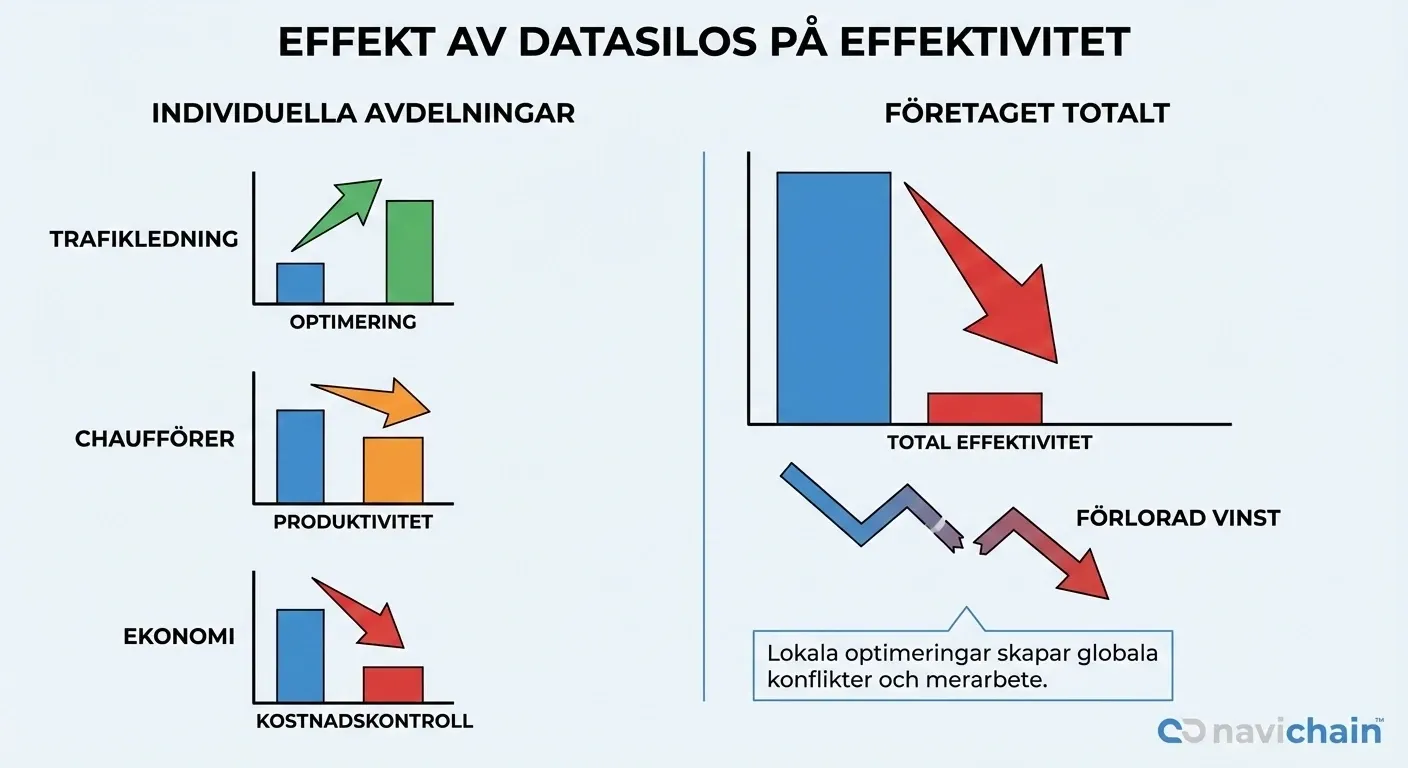
- Friction Point: This is where all the data fragmentation collapses. A driver has reported a 2-hour waiting time in their app. The transport manager has approved this in the TMS. But the original agreement with the customer doesn't include charges for waiting time. The result? A manual, time-consuming detective job. The finance staff must call the transport manager, who must try to find the driver's original report. In this scenario, 'continuous improvement' fails. The driver is frustrated, the transport manager feels questioned and finance sees the other two as careless. Everyone is 'right' based on their own data silo, but the company as a whole loses.
The foundation for kaizen: Continuous improvements require a single source of truth
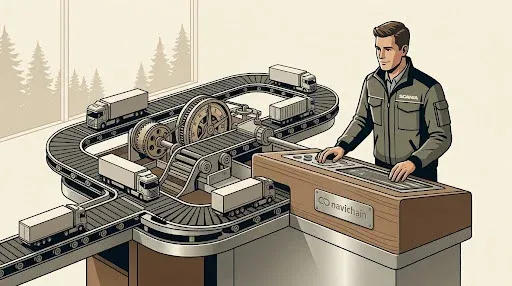
Fig 3: The core of all successful CI methods, from the Deming Cycle (Plan-Do-Check-Act) to Lean, relies on a fundamental principle: You can't improve what you...
In the traditional, silo-based haulage company, the PDCA cycle (Plan-Do-Check-Act) looks like this: 1. Plan: Management decides to "reduce fuel costs". 2. Do: Transport management plans 'smarter' routes. Drivers are encouraged to drive more economically (eco-driving). 3. Check (This is where the collapse happens): At the end of the month, the teams gather.
- Finance looks at the total fuel bill and says: "Costs have increased!"
- Transport Management looks at the TMS data and says: "But we've reduced empty running by 10%!"
- The Drivers look at their driving reports and say: "But we've been stuck in more traffic jams and forced to take detours because of the 'smart' routes!" The discussion is no longer about how to improve. It's about whose data is 'true'. The meeting ends in frustration, and no one 'Acts' in a meaningful way.
The role of the unified platform
For CI to work, the 'Check' step must be immediate, data-driven and indisputable. It requires a platform where events are recorded once and immediately become visible and relevant to all three groups. Imagine the same scenario with a unified platform: 1. Event: The driver registers 'Waiting time at customer' in their app. 2. Immediate connection: * The Transport Manager immediately sees that the vehicle is delayed and can proactively adjust the next assignment. The event is already linked to the correct order in the TMS.
- The Finance Department immediately sees that 2 hours of waiting time has been recorded against a customer order. The system automatically flags that this customer's agreement does not allow charging for waiting time. Now the 'Check' meeting can become strategic. Instead of arguing about what happened, the team can discuss why and how they should act:
- "We see a pattern of waiting time at Customer X."
- Action 1 (Finance): "We need to renegotiate the agreement with Customer X to include charges for waiting time."
- Action 2 (Transport Management): "Can we avoid sending deliveries to Customer X during their rush hour between 08:00-10:00?"
- Action 3 (Driver): "If I arrive at 07:45 instead, I'll get ahead of the queue." This is true, practical quality management. It's collaboration-driven, data-based and only becomes possible when everyone shares the same, single source of truth.
Trust as a cornerstone: The hidden role of data sovereignty in quality management
Uniting teams around a common platform solves the internal data chaos. But for European, and in particular Scandinavian, SME companies, there is an external threat that is equally large: the lack of data control. Quality management is built on trust. Staff must trust that the data they generate is handled carefully, securely and in accordance with the law. Company management must trust that their most sensitive operational data – customer lists, pricing, routes, margins – is protected from competitors and foreign state powers. This is where a critical vulnerability arises. Many popular cloud-based TMS, WMS or ERP systems, especially those provided by American hyper-scale providers (such as AWS, Google Cloud or Microsoft Azure), are subject to American law. The most problematic of these is the US CLOUD Act. This law gives US authorities the right to demand data from US cloud service companies, regardless of where in the world the data is physically stored. Even if your company's data is on a server in Frankfurt or Dublin, it can legally be requested by US authorities without your knowledge or consent. This creates two enormous problems for a European haulage company: 1. GDPR Conflict: There is a fundamental legal conflict between GDPR's data protection requirements and the CLOUD Act's data access requirements. Relying on such a supplier places the company in a legal grey area and creates a significant compliance risk. 2. Trust Crisis: How can you build an internal culture of transparency and data sharing (as CI requires) if the very foundation of your data architecture isn't sovereign? Competition-sensitive information about your margins, your most profitable routes and your customer agreements is potentially exposed. True 'quality' in 2025 therefore encompasses not only operational efficiency but also digital resilience. For quality management to be sustainable, it must be built on a foundation of data sovereignty – a guarantee that your data stays in your country (e.g. Sweden), is subject to your legislation (Swedish law and GDPR) and is completely beyond the reach of foreign legislation.
A schematic illustrating the potential conflict between GDPR's data protection principles and the US CLOUD Act, highlighting the risks associated with using American cloud providers for sensitive European data.
From diagnosis to design: The blueprint for a resilient logistics operating system
We have established that the 'collaboration trap' – where well-intentioned attempts at improvement are stifled by data silos – is the primary obstacle to successful quality management. We have also established that data unification alone isn't enough; the data must also be sovereign and secure. So how do we translate this diagnosis into a practical solution? The answer lies in designing an operating system for logistics that is built on three core principles. These principles form a mental checklist for all leaders evaluating a way forward.
Principle 1: A unified operational fabric
This is the strategic opposite of data silos. Instead of having separate 'best-in-class' systems for TMS, WMS, order management and invoicing that are grudgingly 'integrated' (which is often just a synonym for 'nightly file transfers'), a modern platform must be a single, unified fabric. It should function as a central nervous system for the entire operation. When an order is created, it should exist as one object, which is then handled by the transport manager, updated by the driver and finally invoiced by finance – all within the same system. This eliminates the main source of extra work: manual reconciliation and data entry. For the driver, transport manager and accountant, this is transformative; they no longer work against each other, but with each other in the same digital space.
Principle 2: Sovereign data architecture
This principle is the foundation for trust and risk management. For European SME companies, this isn't a 'nice-to-have'; it's an existential necessity. A sovereign data architecture means that all your operational data – from the second it's created by the driver to the time it's archived by finance – is stored and processed exclusively on infrastructure that is subject to your own region's legislation (e.g. within Sweden or the EU). This guarantees full GDPR compliance and, most importantly, protects you from extraterritorial laws like the US CLOUD Act. It signals to your employees that the data they handle is secure, and to your customers that their information is handled responsibly. It's the digital equivalent of having a secure, locked and well-guarded headquarters.
Principle 3: Embedded analytical intelligence
With a unified fabric (Principle 1) and a secure foundation (Principle 2), you have, for the first time, a complete and reliable dataset. Now you can finally do what 'continuous improvements' is all about: analyse, understand and act. The third principle is that the intelligence (AI and analysis) must be embedded in the platform. Instead of exporting data to external BI tools (which again creates a security risk and a new silo), the platform itself should be able to analyse the unified data. It should be able to answer complex questions such as: 'What is our most profitable route, taking into account actual driving times, fuel consumption and the customer's willingness to pay for waiting time?' This embedded intelligence, running on your own secure, sovereign infrastructure, becomes the real engine for continuous improvement. It finds patterns that no human or silo-based system could ever see.
References/sources
- International Road Transport Union (IRU). (2024). Addressing Driver Shortages and Operational Inefficiencies in European Haulage. https://www.iru.org/resources/iru-library/2024-european-road-freight-report
- European Commission. (2023). Data Act: Impact on non-personal data flows and data sovereignty. https://digital-strategy.ec.europa.eu/en/policies/data-act
- Liker, J. K. (2021). The Toyota Way, 2nd Edition: 14 Management Principles from the World's Greatest Manufacturer. McGraw-Hill.
- Transport & Logistik Idag. (2024). Digitaliseringens paradox: Varför fler system leder till lägre effektivitet på svenska åkerier. https://www.transportnet.se/article/view/1089330/digitaliseringens_paradox_pa_akerierna
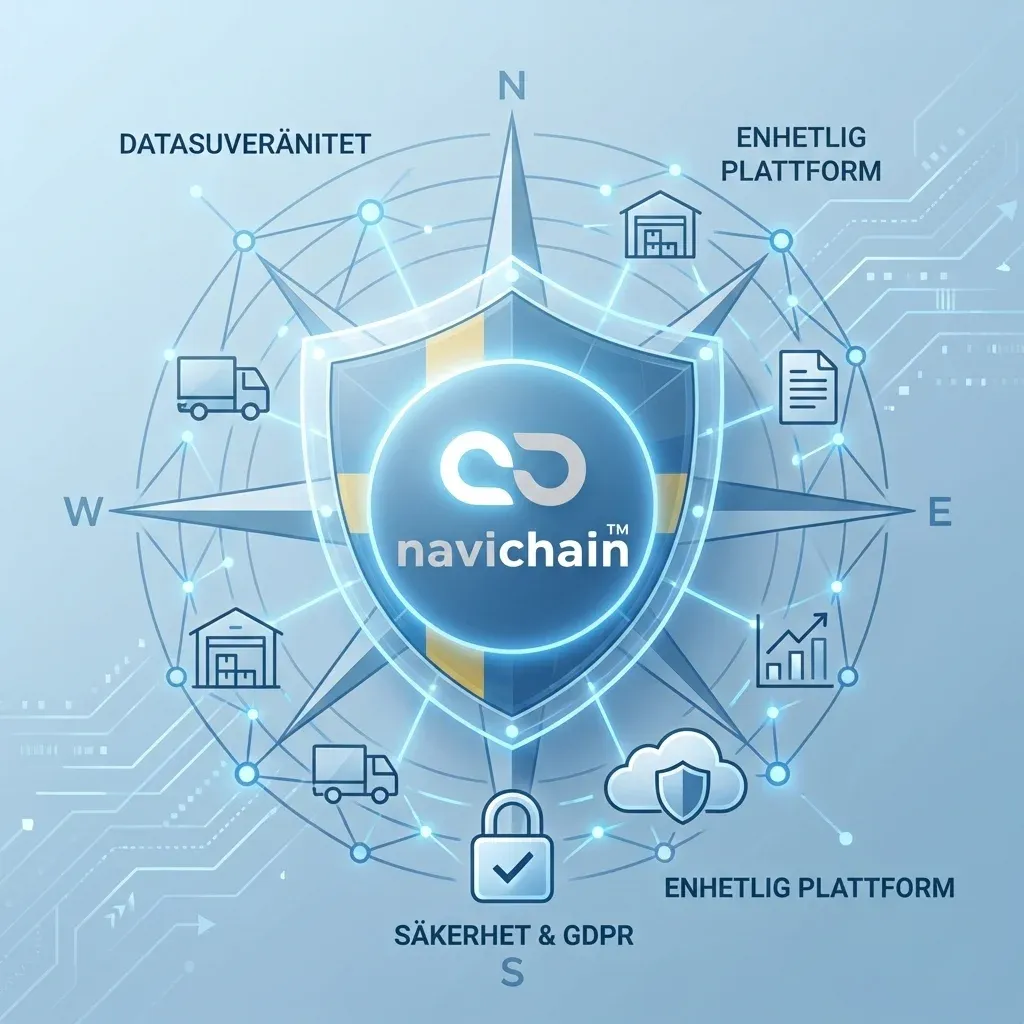
Fig 4: We have established that the 'collaboration trap' – where well-intentioned attempts at improvement are stifled by data silos – is the primary obstacle to successful qual...
From blueprint to reality: Navichain SaaS unified logistics platform
The blueprint described above – a unified operational fabric, sovereign data architecture and embedded analytical intelligence – isn't just a theoretical model. It's the exact strategic foundation on which the navichain SaaS platform is built. We have designed our system from the ground up to solve the 'collaboration trap' that plagues so many SME haulage companies. We realise the three principles as follows: * For the 'Unified Operational Fabric': navichain SaaS isn't a collection of modules. It's a single, unified operating system for logistics. Transport Management (TMS), Warehouse Management (WMS), Asset Management, Invoicing and Order Management aren't 'integrated' – they are the same thing. When a driver updates an order status (Principle 1), that information is immediately available for invoicing, without duplication or reconciliation.
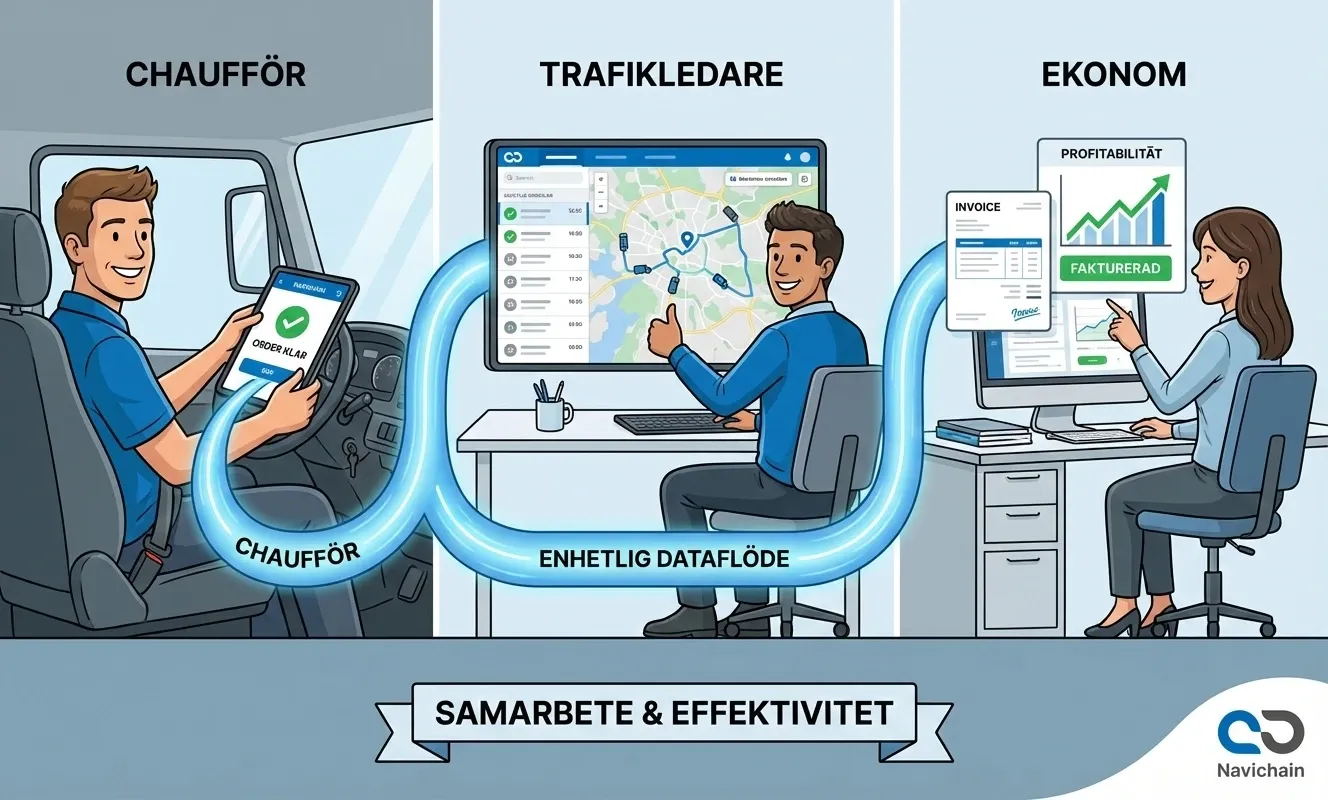
Navichain's SaaS platform provides a unified view, breaking down data silos and fostering collaboration across all logistics functions.
- For 'Sovereign Data Architecture': This is our core differentiator. The entire navichain SaaS platform is hosted on our own, proprietary infrastructure in Sweden. Your data never leaves Swedish jurisdiction (Principle 2). This guarantees full GDPR compliance and, unlike platforms built on American cloud services, total immunity from the US CLOUD Act. For our customers, this means complete data sovereignty and an unparalleled level of security and trust.
- For 'Embedded Analytical Intelligence': Our platform is equipped with a integrated AI (Principle 3) that runs on the same secure, Swedish infrastructure. This enables our customers to perform deep, secure data analyses on their unified operational data. Our AI helps you find the profitability patterns and efficiency gains needed to drive real, continuous improvements – and engage your entire staff, from driver to management, in that process. Our mission is to democratise logistics technology for SME companies. We give you the tools that were previously only available to the largest players, so you can increase your efficiency, reduce your costs and deliver exceptional service from a single source of truth.
Navichain's unified platform provides a single operating system for logistics, ensuring seamless data flow between TMS, WMS, and other key functions, all hosted on secure, sovereign infrastructure.
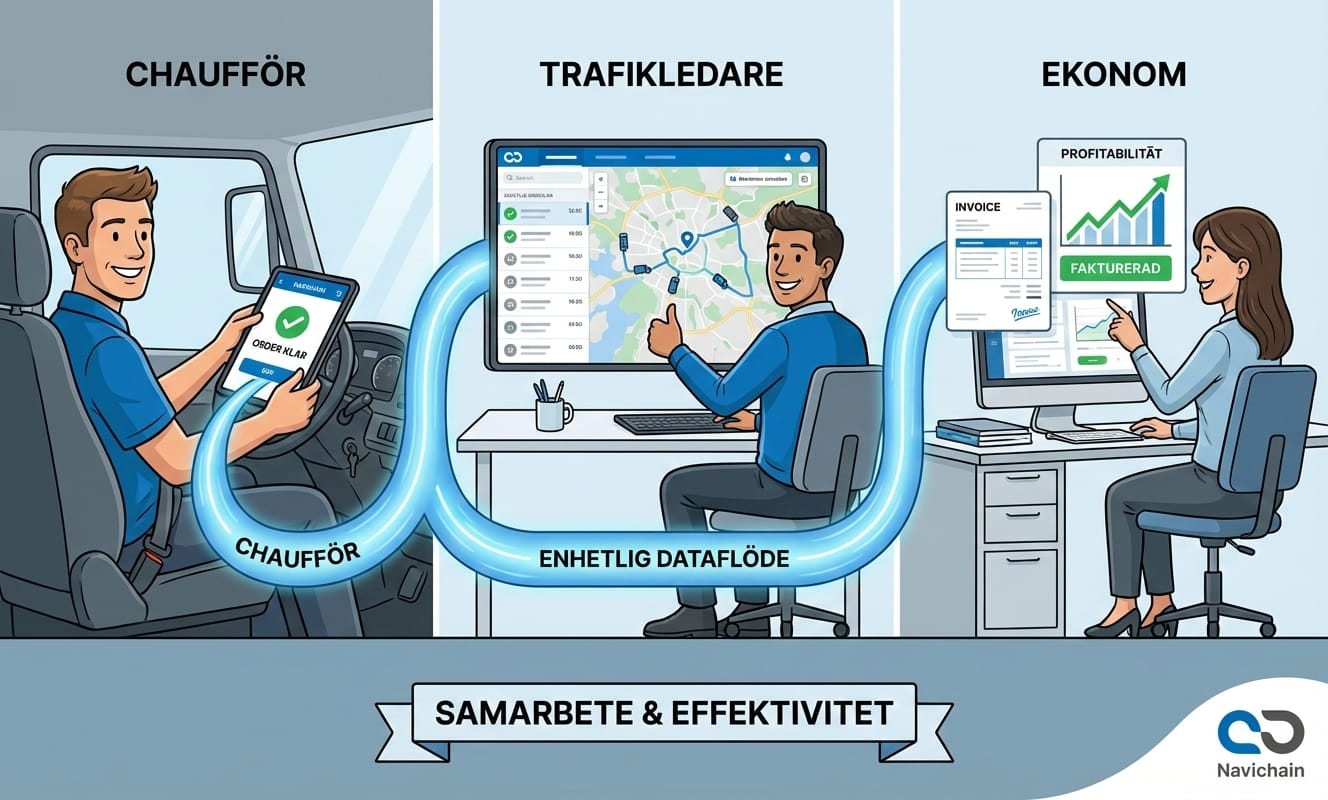
Navichain's unified platform provides a single operating system for logistics, ensuring seamless data flow and secure data analysis, all hosted on sovereign Swedish infrastructure.
Ready to optimise your supply chain?
navichain Insights Newsletter
Join the newsletter to receive the latest updates in your inbox.