Road Tolls & Distance Taxes: How to Stop Revenue Leakage
Table of Contents
Europe's road network is becoming increasingly expensive to use. The introduction of CO2-based surcharges in Germany's LKW-Maut has nearly doubled costs for some vehicles, and similar schemes are rolling out across the EU. For hauliers, the risk is clear: if these rising costs are not accurately passed on to the customer, they will eat directly into your already thin margins. It's time to plug the leak.
Executive Summary
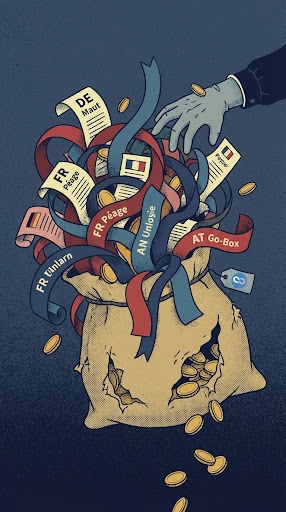
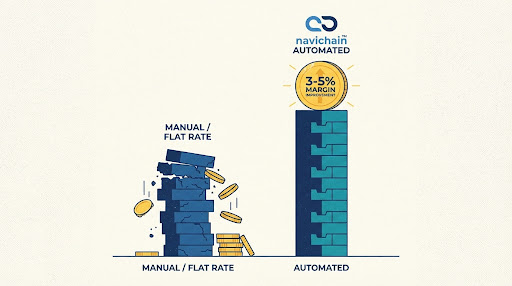
The complexity of road charges has exploded. It is no longer just about buying a time-based vignette; fees now vary dynamically based on distance, vehicle weight class, number of axles, Euro emission class, and CO2 emissions. Many hauliers still handle this manually or rely on outdated "flat rate" surcharges, which often leads to significant under-invoicing.
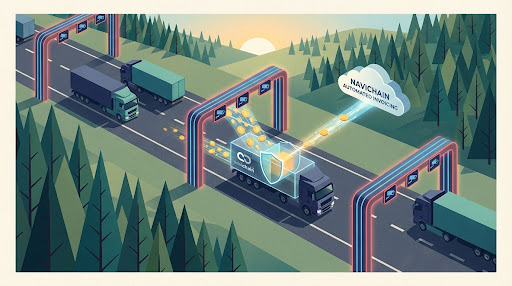
Navichain integrates toll calculation directly into the order management and invoicing process. By using real-time data and precise route mapping, we ensure that every cent of road tax is captured, allocated, and charged correctly.
Part 1: The Problem - The Invisible Hole in the Wallet
The New Cost Reality: CO2 Maut
On December 1, 2023, Germany introduced a CO2 surcharge of €200 per ton of carbon emitted. For a standard 5-axle Euro VI tractor-trailer, this resulted in a toll increase of over 80%. * Expansion: From July 1, 2024, this toll obligation extends to smaller vehicles over 3.5 tons. * The Ripple Effect: Austria, Hungary, and other EU nations are following suit with their own CO2-based toll adjustments to comply with the Eurovignette Directive.
Complexity Kills Margins
Keeping track of these shifting rules in every country is a full-time job. * Variable Prices: Fees change often with short notice. A route that was profitable last month might be a loss-maker today if toll rates have spiked. * Manual Handling: Administrators often "guesstimate" the toll cost or fail to update customer price lists in time. A missing €15 toll charge on 1,000 trips strips €15,000 directly from your bottom line.
The Consequence of Flat Rates
If you charge a fixed percentage or flat fee for "road tax," you are gambling. 1. Direct Loss: If the actual detailed cost of a specific route is higher than your average flat rate, you pay the difference out of your own pocket. 2. Opaque Pricing: Modern transport buyers, especially large logistics integrators, demand itemized invoices where tolls are reported separately and transparently. They refuse to pay undefined "surcharges."
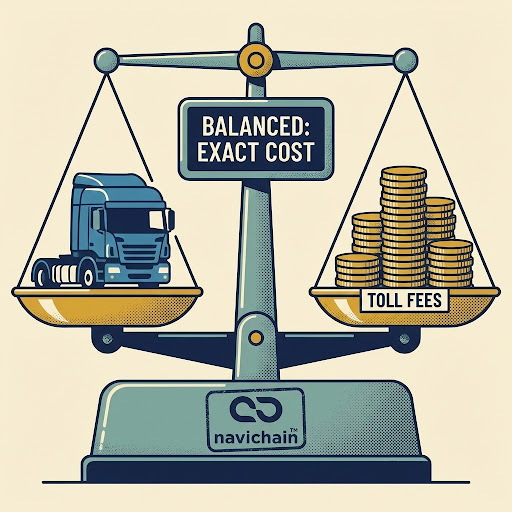
The balance between cost and revenue is delicate. One error tips the scale.
Part 2: Our Angle - Automated Cost Control
Right Price, Every Time
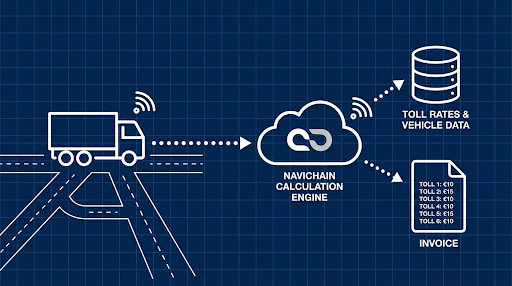
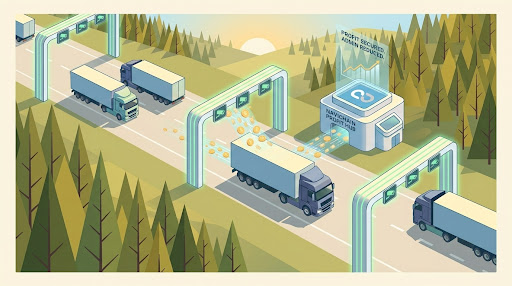
Navichain removes the guesswork. We calculate the exact cost for every specific route before the truck has even left the terminal. * Route-Based Calculation: The system maps the exact path the truck will take (or took) and sums up all known charges for every kilometer of toll road, bridge, and tunnel. * Vehicle Data Integration: The calculation takes into account the specific characteristics of the vehicle assigned to the trip—its axle configuration, Euro class, and CO2 class. A trip driven by an electric truck will automatically generate a lower cost base than one driven by a diesel truck.
Dynamic Markup & Updates
No more static price lists that become outdated after a month. * Automatic Updates: When Germany, Belgium, or France raises their tolls, our system updates the underlying cost tables. Your pricing remains accurate without manual intervention. * Transparent Invoicing: The toll cost is clearly itemized on the invoice. This transparency increases customer trust and willingness to pay, as they can see exactly what they are paying for.
EETS Integration
Navichain supports the workflow of European Electronic Toll Service (EETS). By consolidating data from your On-Board Units (OBUs), we can verify that invoice amounts match the actual road usage, flagging discrepancies immediately.
Part 3: Technical Enabler - Geo-Intelligence
Mapping Engine with a Price Tag
Our advanced route optimization engine doesn't just look at time and distance; it looks at cost. 1. Cost Optimization: The system can suggest alternative routes that avoid expensive toll roads if the time penalty is minimal. For example, bypassing a specific tunnel might save €50 while only adding 10 minutes to the trip. 2. Post-Calculation Analysis: We compare the planned route with the actual driven route. Did the driver take a detour that incurred unnecessary tolls? This data allows you to coach drivers and optimize future planning.
Results in Practice
What does this mean for your business? * Increased Profit: Customers report a 3-5% direct margin improvement simply by eliminating under-invoicing of tolls. * Reduced Administration: No manual checking of toll provider invoices or look-up tables is required. * Compliance & Peace of Mind: You know you are always following current rules and pricing, protecting you from audits and disputes.
Conclusion
Road tolls are a cost of doing business that you cannot avoid, but they are a cost you should never have to bear yourself. In an era of shrinking margins and rising taxes, precise cost management is the difference between profit and loss.
With navichain, toll management becomes an integrated, automated part of your business process. Stop guessing, start calculating.
Take control of your costs with navichain.
Want to stop revenue leakage?
See how navichain automates your road toll calculations.
navichain Insights Newsletter
Join the newsletter to receive the latest updates in your inbox.