The Competitiveness Trap: Why Legacy Platforms Like Opter Are Costing You the Game
Table of Contents
European logistics SMEs face unprecedented challenges, squeezed by razor-thin margins and global competition. Discover why adopting seemingly standard, legacy platforms could be a strategic risk, resulting in increased operational complexity and consultant dependencies. This white paper compares traditional approaches—typified by platforms like Opter—with the 'Sovereign-by-Design' approach of navichain SaaS, demonstrating how to transform your data into a protected competitive advantage.
The Competitiveness Trap: Why Your Legacy Platform Is Costing You the Game
European logistics SMEs are fighting for survival, with margins now consistently below 3% and intense, technology-driven pressure from global giants. The default strategy—adopting well-known, modular legacy systems like Opter—is increasingly becoming a strategic challenge. This approach often leads to increased operational complexity with additional modular investments, growing consultant dependencies, and the management of multiple third-party tracking licenses. More dangerously, non-sovereign cloud deployments expose core competitive data (routes, client lists, pricing) to foreign jurisdictions via the US CLOUD Act.
This white paper presents a detailed comparison and a new framework for sustainable competitiveness. It argues that SMEs must break free from legacy commercial models, unifying TMS, WMS, and billing, and leveraging secure, integrated Self-Hosted AI on EU infrastructure to turn their operations into a decisive asset.
1. What is the New Competitive Battlefield?
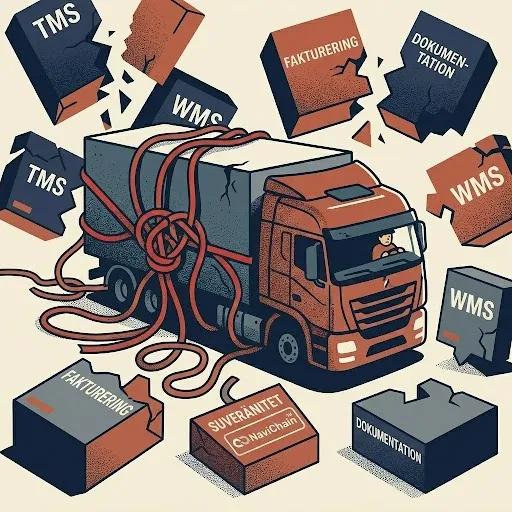
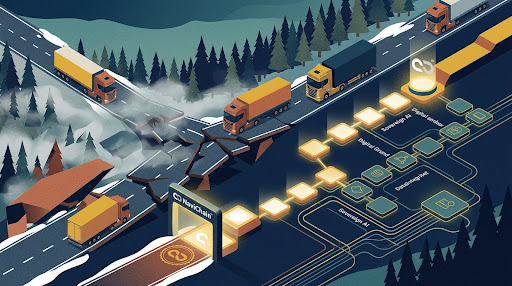
Fig 1: Fragmented data and outdated commercial models leave many European logistics SMEs vulnerable in an increasingly competitive landscape.
For decades, small and medium-sized enterprises (SMEs) in the European logistics sector competed on two primary fronts: price and personal relationships. Today, this model is collapsing under the weight of digital transformation.
The industry is now a data-driven battlefield. Large, tech-enabled giants leverage vast, integrated platforms to offer real-time, end-to-end visibility, AI-driven predictive ETAs, and dynamic pricing. They present clients with dashboards, analytics, and optimization insights that a typical SME, running on a patchwork of disconnected or overly complex modular systems, simply cannot match.
You have valuable information trapped in separate 'black boxes': * Your Transportation Management System (TMS) knows your routes, fuel costs, and driver hours. * Your Warehouse Management System (WMS) knows your inventory turns and pick-and-pack times. * Your accounting software and Excel spreadsheets know your customer profitability and billing cycles.
Because these systems—or rigidly monetized modules within legacy platforms—do not talk to each other seamlessly without costly integrations, you are forced to compete in a reactive mode. This operational drag is a direct competitive disadvantage.
2. The Legacy Trap: Opter versus navichain SaaS
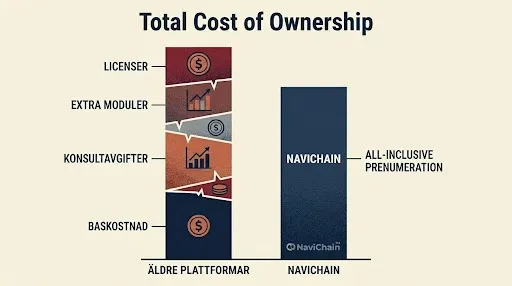
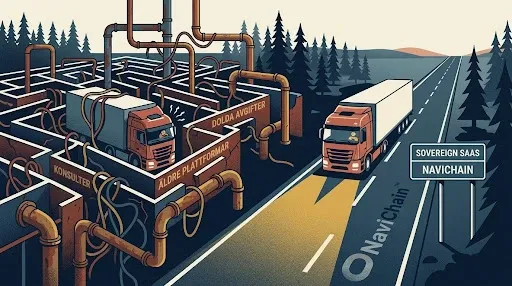
Fig 2: A comparative look at the total cost of ownership: Legacy modular systems vs. Unified SaaS platforms.
When seeking to digitize, many SMEs gravitate towards established industry names like Opter. However, what begins as a standard software procurement often develops into a complex and fragmented IT landscape. Understanding the fundamental architectural and commercial differences between yesterday's systems (where Opter is a typical representative) and the system of the future—a modern, unified SaaS platform like navichain—is critical for long-term viability.
Pros and Cons Comparison
| Feature/Aspect | Legacy Software (e.g., Opter) | navichain SaaS |
|---|---|---|
| Pricing Model | Fragmented. Core system plus separate charges for various modules. | Transparent. You pay for active users per month – pro rata (i.e., a user active for half a month is only billed for half a month), with all-inclusive functionality in a clear subscription model. |
| Implementation | Heavy reliance on expensive, specialized consultants for setup and ongoing adjustments. | Designed for rapid deployment and ease-of-use without forcing costly consultant hours. |
| Tracking & Telematics | Requires integration with third-party software and separate licenses (adding overhead). | Includes FMC650 state-of-the-art connection encapsulated within the vehicle subscription, seamlessly integrated with HERE Maps advanced smart routing for truck-specific paths, real-time traffic, and dynamic ETAs. |
| Data Sovereignty | Variable. Often relies on US-owned hyperscalers (Azure, AWS), risking US CLOUD Act exposure. | 100% Self-Hosted on proprietary Swedish infrastructure. Fully immune to the US CLOUD Act. |
| Intelligence | Retrospective reporting requiring manual data synthesis across different paid modules. | Embedded Self-Hosted AI analyzing a unified data fabric (TMS/WMS/Billing) for predictive insights. |
The Challenge of Modular Architectures
The traditional architecture of platforms like Opter is often modular. While they are sold as a core base, achieving operational efficiency frequently requires navigating multiple interconnected add-ons—each carrying an additional investment. Need specialized invoicing? That's a module. Want advanced route optimization? That's another module. This structure can cause the Total Cost of Ownership (TCO) to increase significantly, impacting an SME's budget predictability.
In contrast, navichain was engineered with a unified philosophy. The features required to run a competitive logistics operation—from core TMS and WMS to billing and order management—are integrated natively. There is no need for complex add-on structures; there is simply a powerful, cohesive operating system.
The Consultant Dependency
Legacy software is notoriously complex to configure and alter. Making changes to workflows in platforms like Opter frequently necessitates hiring expensive external consultants. This not only drains financial resources but also slows down operational agility. When the market shifts, you must wait (and pay) for a consultant to adapt your system.
navichain is built for agility. Its architecture is modern and intuitive, empowering your internal team to manage operations without being held hostage by exorbitant consulting fees.
Third-Party Licenses vs. Integrated Tracking
A critical operational difference lies in tracking and telematics. Systems like Opter typically act as a hub that requires you to purchase and integrate separate, third-party licenses to achieve comprehensive fleet tracking. This means managing multiple vendor relationships and disparate data streams.
Conversely, navichain drastically simplifies this. Our vehicle subscription includes Hardware-as-a-Service (HaaS), providing you with the state-of-the-art Teltonika FMC650 vehicle device directly 'in the box'. This isn't just a basic tracking beacon; it enables full Tachograph integration, predictive vehicle maintenance, and eco-driving analytics natively within the platform. You pay one transparent subscription, and your vehicles are connected seamlessly, eliminating the need for complex multi-vendor license management.
3. The Hidden Liability: Competing with Exposed Data
Beyond commercial traps, there is a profound geopolitical and legal risk. The conversation about data in Europe is typically dominated by the General Data Protection Regulation (GDPR). What is dangerously overlooked is the direct conflict between EU law and foreign surveillance laws.
The 'CLOUD Act' vs. GDPR Collision
Here lies the core conflict for any European company using a US-based cloud provider (which many legacy platforms host their services on): * The EU Position (GDPR): The 'Schrems II' ruling by the CJEU invalidated previous data-sharing agreements, finding that US surveillance laws do not provide adequate protection for EU data. * The US Position (CLOUD Act): The US CLOUD Act of 2018 gives US federal agencies the power to compel US-based technology companies to provide requested data, regardless of where that data is physically stored (e.g., even if in servers located in Frankfurt or Stockholm).
For an SME, this is a direct threat. If your routes, client-specific pricing, and operational cost models are hosted on a non-sovereign platform, you are essentially handing your competitive playbook to a third party that cannot legally promise to protect it from foreign surveillance.
4. From Diagnosis to Design: The Blueprint for a Resilient Logistics Operating System
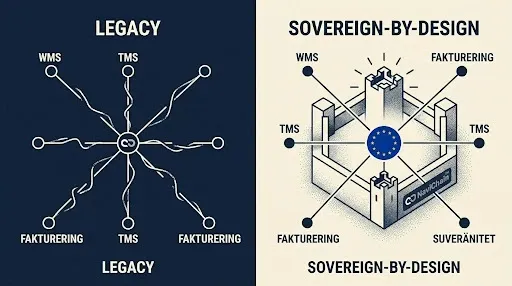
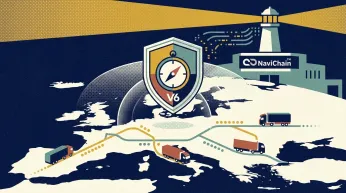
Fig 3: Schematic illustrating the 'Sovereign-by-Design' operating system, emphasizing data sovereignty and unified operational fabric.
To escape the modular traps of legacy systems and build a sustainable competitive advantage, SME logistics leaders must adopt a 'Sovereign-by-Design' blueprint based on three core principles:
Principle 1: The Unified Operational Fabric
Competitiveness starts with a single source of truth. You must move away from the "module-per-function" pricing model and implement a single, integrated platform where TMS, WMS, Billing, and Order Management are part of one cohesive system. This acts as the 'central nervous system', eliminating data redundancy and bridging operational silos.
Principle 2: The Sovereign Data Architecture
Your unified operational fabric must be built upon a 'sovereign' data architecture. Your platform and all your data must be hosted on infrastructure located within the EU, by a company operating entirely under EU jurisdiction, without any parent, sister, or subsidiary companies in the US. This is the only structural way to ensure full GDPR compliance and shield your data from the US CLOUD Act.
Principle 3: Embedded Analytic Intelligence
With a unified data fabric secured within a sovereign architecture, you can deploy a Self-Hosted AI layer directly into this secure system. This AI analyzes complete, real-time data to identify margins, predict demand, and optimize routes, all within your secure data fortress.
5. Enabling the Blueprint: The navichain SaaS Unified Logistics Platform
This white paper has laid out a strategic blueprint for escaping the hidden costs and rigid consultants of legacy software like Opter. The navichain SaaS platform was designed from the ground up to embody this precise solution.
- Transparent, Unified Economics: We offer a transparent and predictable pricing model. navichain SaaS natively unifies your operations, providing FMC650 tracking included directly in the vehicle subscription. This significantly reduces the administrative burden compared to integrating separate third-party licenses and securing consultant availability. Just transparent, comprehensive logistics management.
- Delivering Sovereign Data Architecture: navichain SaaS is hosted entirely on our own proprietary infrastructure in Sweden. Your data stays in Sweden, under Swedish and EU jurisdiction at all times, making us immune to the US CLOUD Act and ensuring absolute competitive security.
- Activating Embedded Analytic Intelligence: Your unified data remains within our secure Swedish infrastructure, where our Self-Hosted AI engine analyzes your operations safely, unlocking efficiencies without your data ever leaving its sovereign environment.
Democratize your logistics technology. Stop paying for legacy complexity and start securing your competitive advantage today.
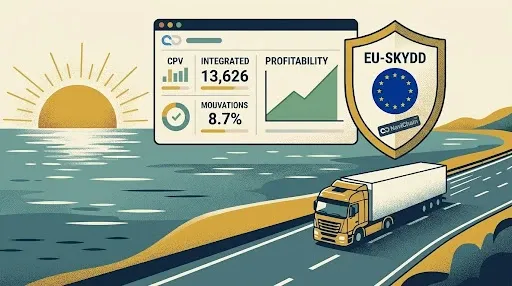
The navichain platform unifies logistics operations, ensuring data sovereignty and transparent pricing without consultant dependencies.
Ready to escape the legacy trap?
About the Author
Manusha is an Integration & Automation Specialist at navichain, dedicated to helping European logistics SMEs bridge the gap between legacy systems and modern, sovereign digital infrastructure. Discover more about sovereign logistics solutions at navichain.se.
navichain Insights Newsletter
Join the newsletter to receive the latest updates in your inbox.