Cost Control: Taming Unpredictable Freight Rates
Table of Contents
Stop Paying the 'Standard' Rate: Automate your way to the best price.
We are witnessing a fundamental paradigm shift in European logistics. Small and Medium Enterprises (SMEs) are no longer accepting "standard price lists" from global carriers as a fact of life. Driven by the need for financial resilience against volatile markets, companies are moving to "insource" their freight procurement strategy.
This trend is critical for: 1. DTC Retail: Where free shipping expectations squeeze margins. 2. High-Tech: Where air freight costs for rush orders destroy profitability. 3. Food & Beverage: Where low-margin, high-volume goods require penny-perfect transport costs. 4. Fashion: Where returns logistics can cost double the outbound shipping.
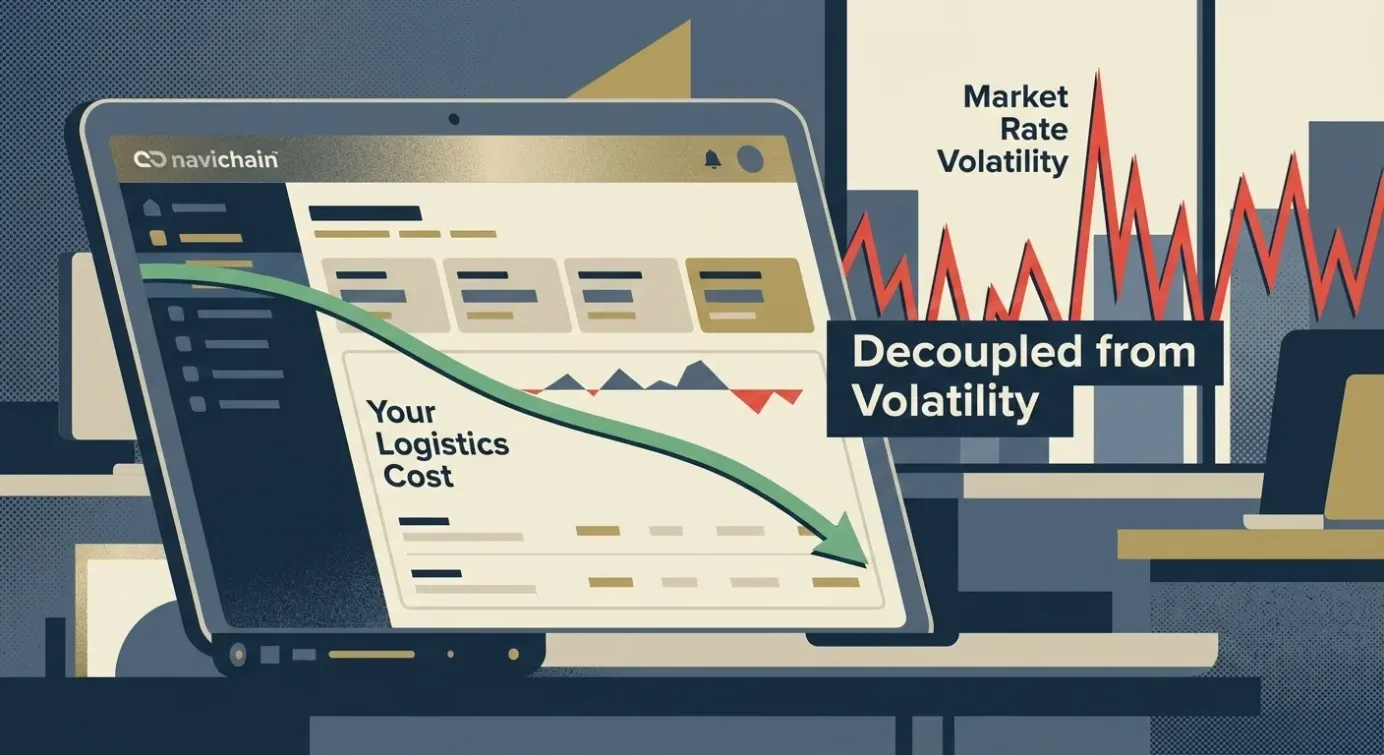
The Challenge: Volatility. Freight rates fluctuate wildly based on oil prices, capacity, and seasonality. Without digital tools, SMEs pay the highest "spot" prices while big players negotiate bulk discounts. Navichain levels the playing field.
Take Action
Protect your margins.
- Auto-Comparison: Instantly check rates across multiple carriers for every shipment.
- Consolidation: Combine small LTL orders into Full Truck Loads (FTL) automatically.
- Audit: Automatically check invoices against agreed rates to catch overcharging.
- Predictive Costing: Know the transport cost before you accept the customer's order.
If you are calling a courier to book a shipment, you are overpaying.
1.1 The Volatility Problem
Freight markets are as dynamic as stock markets. * The Price Spike: A sudden lack of drivers in Germany can double rates overnight. * The Hidden Fees: Fuel surcharges, congestion charges, and "remote area" fees often appear only on the final invoice.
SMEs relying on manual booking (email/phone) cannot compare options fast enough. They take the first available truck, regardless of price.

The Volatility Tax: paying for urgency instead of planning for efficiency.
Navichain turns your TMS into a real-time freight broker.
2.1 The Comparison Engine
When you create an order, Navichain pings your entire carrier network via API. * The Result: A list of options ranked by Price and Speed. * Example: "Carrier A is €400 (2 days). Carrier B is €350 (3 days)." * Smart Choice: The system can auto-select the cheapest option that still meets the customer's promised delivery date.
2.2 The Power of Consolidation
The biggest saving comes from sending less air. * Scenario: You have 5 small pallet orders going to different customers in the Lyon area next week. * Manual Way: Send 5 separate vans. Cost: €2,500. * Navichain Way: The system identifies the overlap. It suggests consolidating them onto one truck to a local hub, then doing last-mile delivery. Cost: €1,200.
This is Optimization.
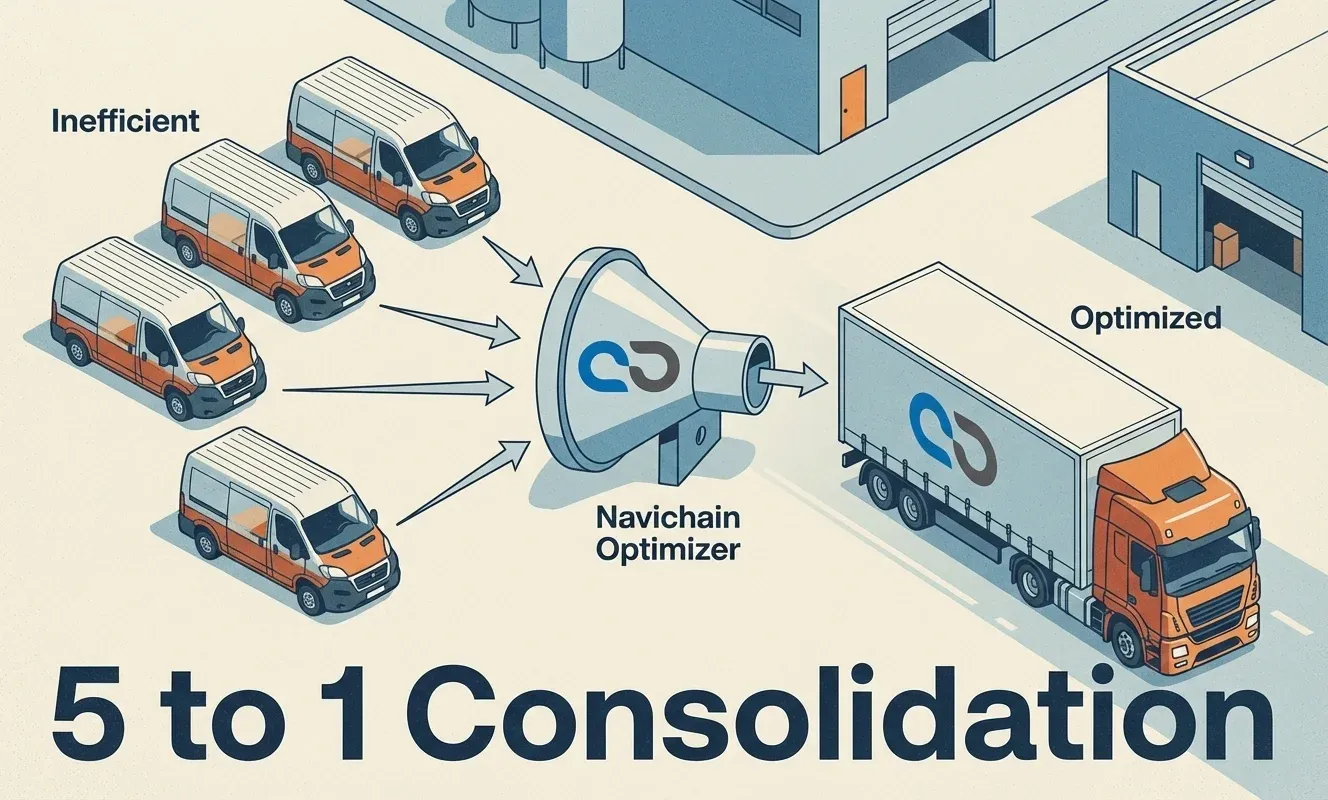
Consolidation Logic: Stop shipping air. Start shipping value.
Studies show that 5-10% of logistics invoices contain errors—usually in the carrier's favor.
3.1 Trust, but Verify
Manually checking every freight bill against a rate card is impossible. Navichain does it automatically. * Match: The system compares the invoiced amount vs. the quoted amount. * Flag: If there is a discrepancy (e.g., an unauthorized "waiting time" fee), the invoice is flagged for review. * Result: You only pay what you agreed to.
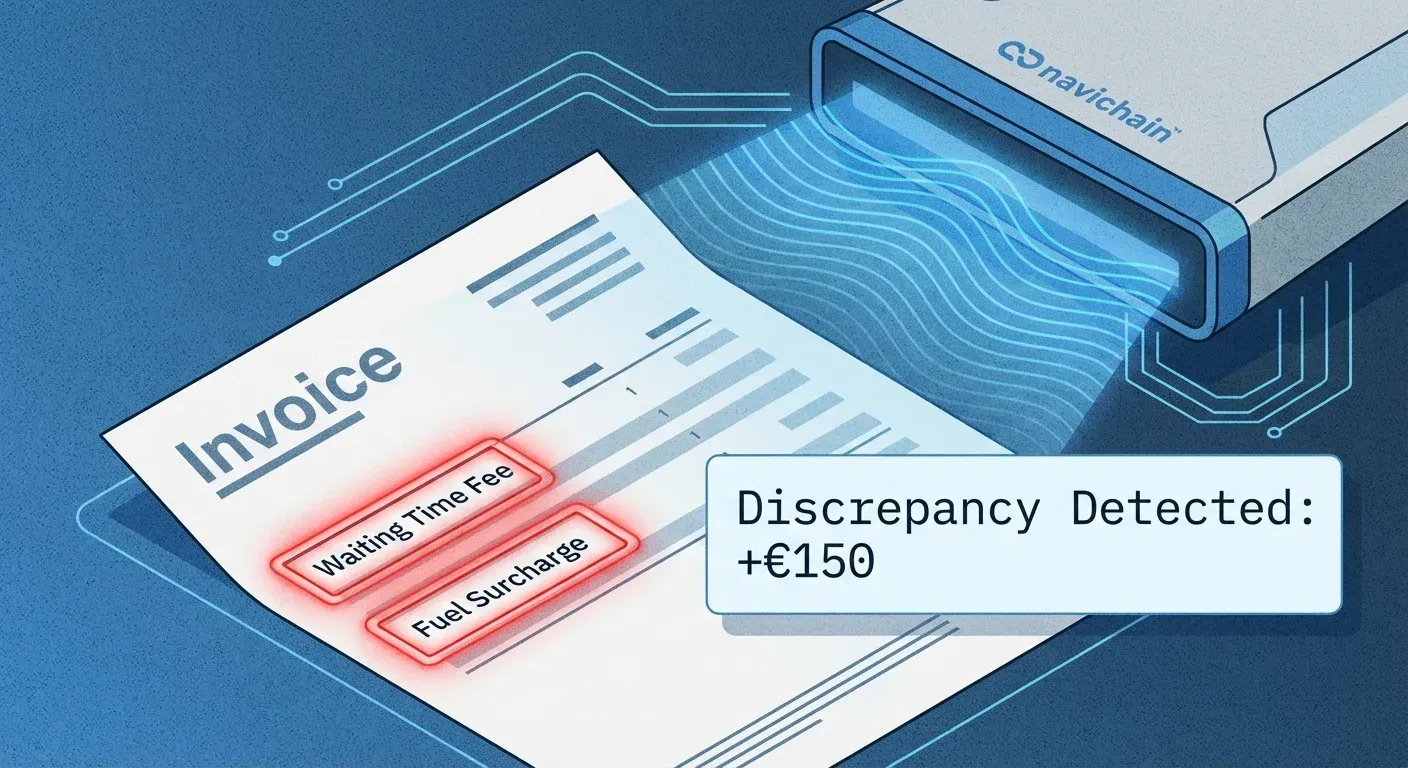
The Digital Auditor: Finding the 10% savings hidden in your paperwork.
- DTC Retail: Optimizing carrier selection allows you to offer "Free Shipping" without losing money.
- Construction: Consolidating deliveries to a job site reduces site traffic and crane costs.
- Wholesale: Predicting freight costs accurately allows you to price your products protectively.
In a world of rising costs, you cannot control the oil price. But you can control how you buy it. Navichain gives you the data and the automation to buy freight like a pro.

Navichain: Your Financial Firewall.
References/sources
- Capgemini (2025). State of Logistics Report.
- FreightWaves (2024). The Impact of Digitalization on Freight Rates. https://www.freightwaves.com/
- McKinsey & Company (2023). Automation in Logistics Procurement.
- Transport Intelligence (Ti) (2025). European Road Freight Market Sizing.
Enabling the Vision: Navichain SaaS Unified Logistics Platform
This white paper addresses the third critical challenge: Cost Control. Navichain SaaS is your cost-control center.
We directly embody the three core principles required for financial efficiency: 1. Unified Operational Fabric: Cost data is linked to operation data. We know why a shipment cost more (e.g., waiting time recorded by driver app). 2. Sovereign Data Architecture: Your rate cards and negotiated contracts are confidential. We keep them secure from competitors. 3. Embedded Intelligence: The system learns. It can predict freight costs for next year's budget based on historical trends and volume forecasts.
Our mission is to make sure every Euro you spend on transport builds value for your customer.
Ready to cut your freight bill?
navichain Insights Newsletter
Join the newsletter to receive the latest updates in your inbox.