ESG: Surviving the CSRD Compliance Deadline
Table of Contents
Greenwashing is dead. Data is the new green.
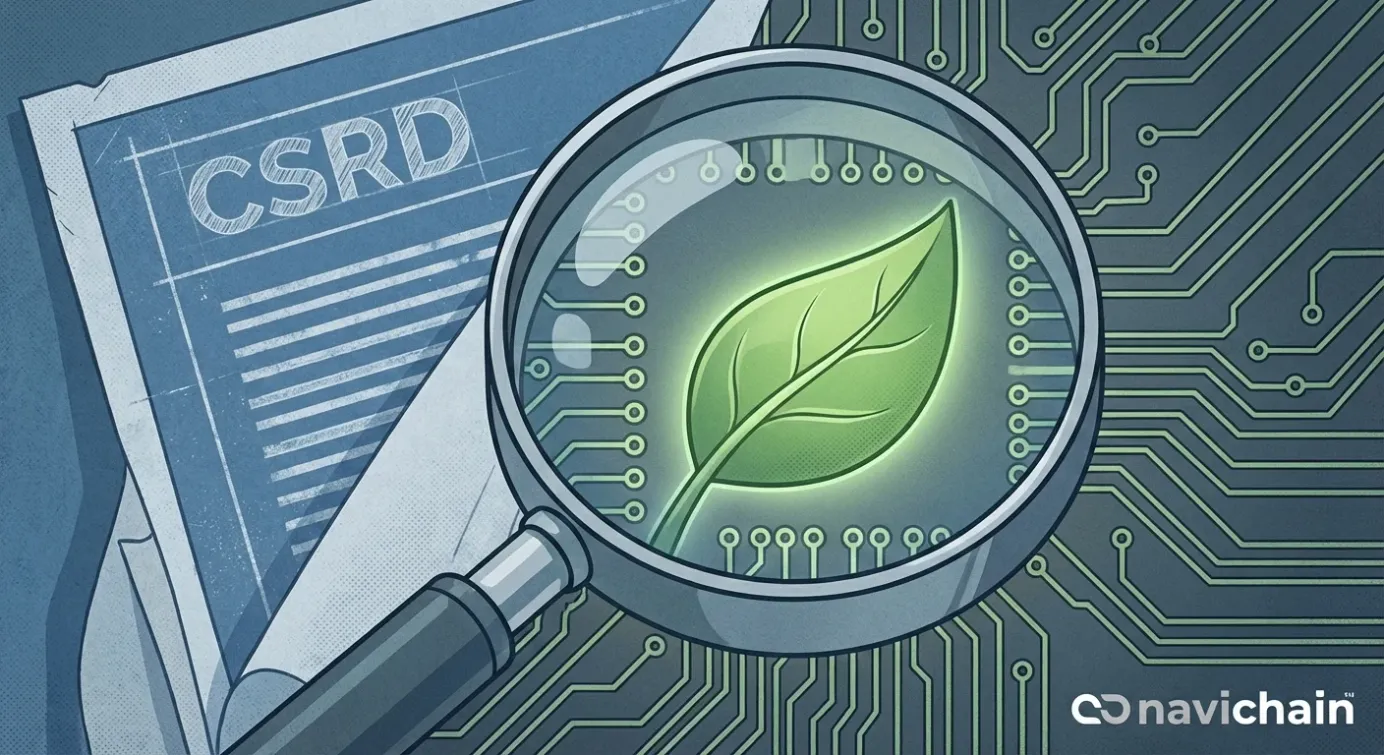
We are witnessing a fundamental paradigm shift in European logistics. Small and Medium Enterprises (SMEs) are moving from "Marketing Sustainability" (vague promises) to Operational Compliance (audit-proof data). The catalyst is the EU's Corporate Sustainability Reporting Directive (CSRD), which makes carbon reporting as mandatory—and as legally risky—as financial reporting.
This trend is non-negotiable for: 1. DTC Brands: Whose Gen-Z customers demand carbon-neutral delivery. 2. Manufacturing: Who must report "Scope 3" emissions to their enterprise clients. 3. Transport: Where "low emission zones" in cities restrict access for dirty fleets. 4. Agri-Food: Where retailers demand full environmental impact footprints.
The Challenge: The Excel Gap. Most SMEs calculate emissions using rough averages in spreadsheets. Under CSRD, this is no longer acceptable. You need real, primary data from your trucks. Navichain provides it automatically.
Take Action
Get audit-ready.
- Real-Time Carbon Tracking: Calculate CO2e per shipment based on actual fuel consumption, not guesses.
- ISO 14083 Compliance: Ensure your methodology meets the new global standard for transport emissions.
- One-Click CSRD Export: Generate the exact tables your auditors need.
- Green Routing: Automatically select the route with the lowest environmental impact.
If you think "I am too small for CSRD," think again. Even if you are not directly in scope, your biggest customers are. They must report their Scope 3 emissions—which means they must get data from you.
1.1 The "Scope 3" Trap
- Scope 1: Fuel you burn.
- Scope 2: Electricity you buy.
- Scope 3: Emissions from your supply chain (Transport).
Large enterprises are sending non-compliance letters to suppliers who cannot provide granular carbon data. * The Risk: Losing your biggest contracts not because of price, but because you are a "data black hole" for ESG.
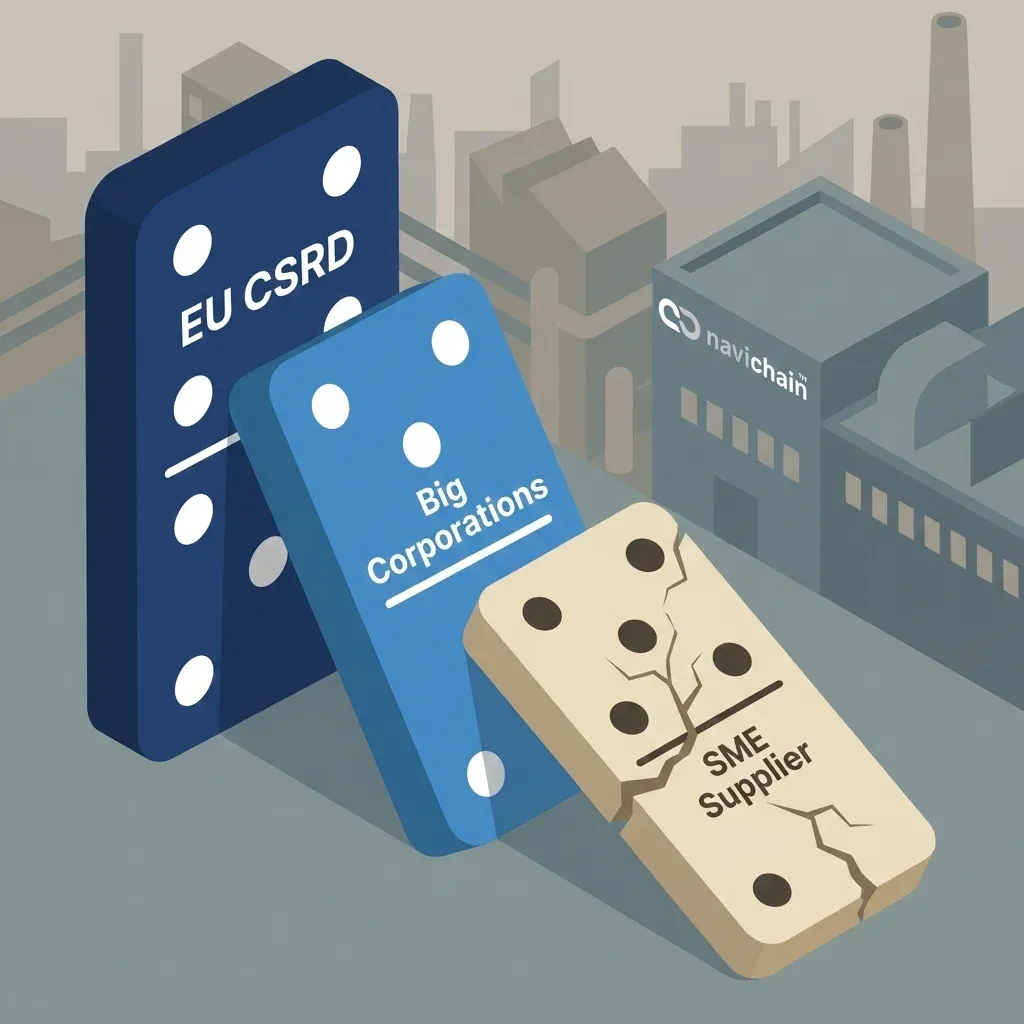
The Compliance Cascade: You are part of the chain reaction.
Navichain embeds sustainability into the operational fabric. We don't calculate emissions after the fact; we calculate them as the wheels turn.
2.1 From Average to Actual
- The Old Way: "We drove 100km, so we guess we used 30 liters of diesel."
- The Navichain Way: "The CAN-bus data shows we injected 28.4 liters of HVO100 biodiesel."
2.2 ISO 14083 "Verified Green"
Our algorithms are aligned with the ISO 14083 standard. * Allocation: If a truck carries pallets for three different customers, the system allocates the CO2 burden accurately based on weight and distance (ton-kilometers). * Result: You can give every customer a precise "Emission Certificate" for their invoice.
This is Credibility.
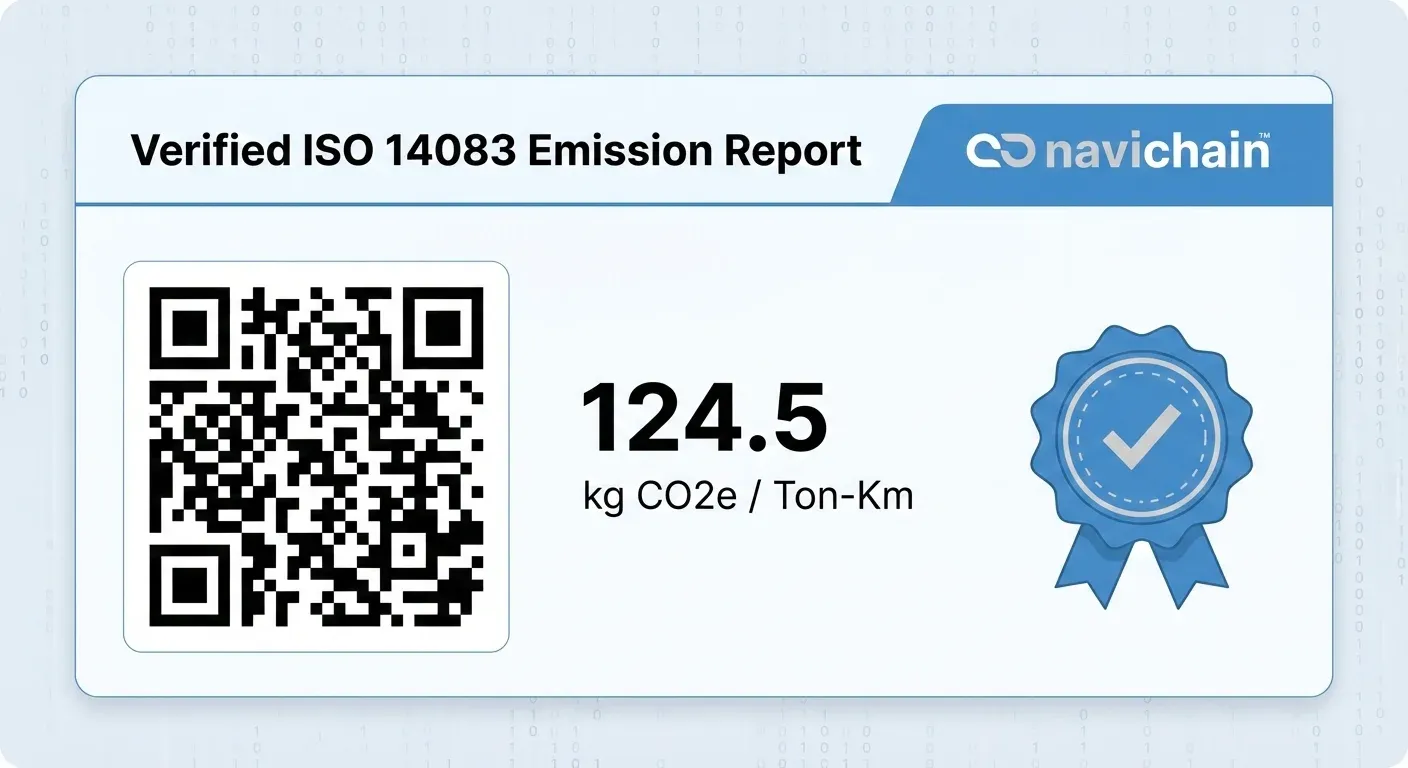
Proof, not Promises: Give your customers the data they need to report.
Sustainability is not just a cost; it is a sales tool.
3.1 The "Green Option" at Checkout
For DTC brands, Navichain enables a "Green Delivery" option in the checkout. * Feature: "Standard Delivery (2 days) - 5kg CO2" vs "Green Delivery (4 days) - 2kg CO2". * Impact: 40% of consumers choose the slower, greener option when presented with data. This reduces your rush-shipping costs.
3.2 Optimization = Decarbonization
The most sustainable mile is the one you don't drive. Navichain's route optimization reduces mileage by 15-20%. This is a direct reduction in both fuel cost and carbon footprint.
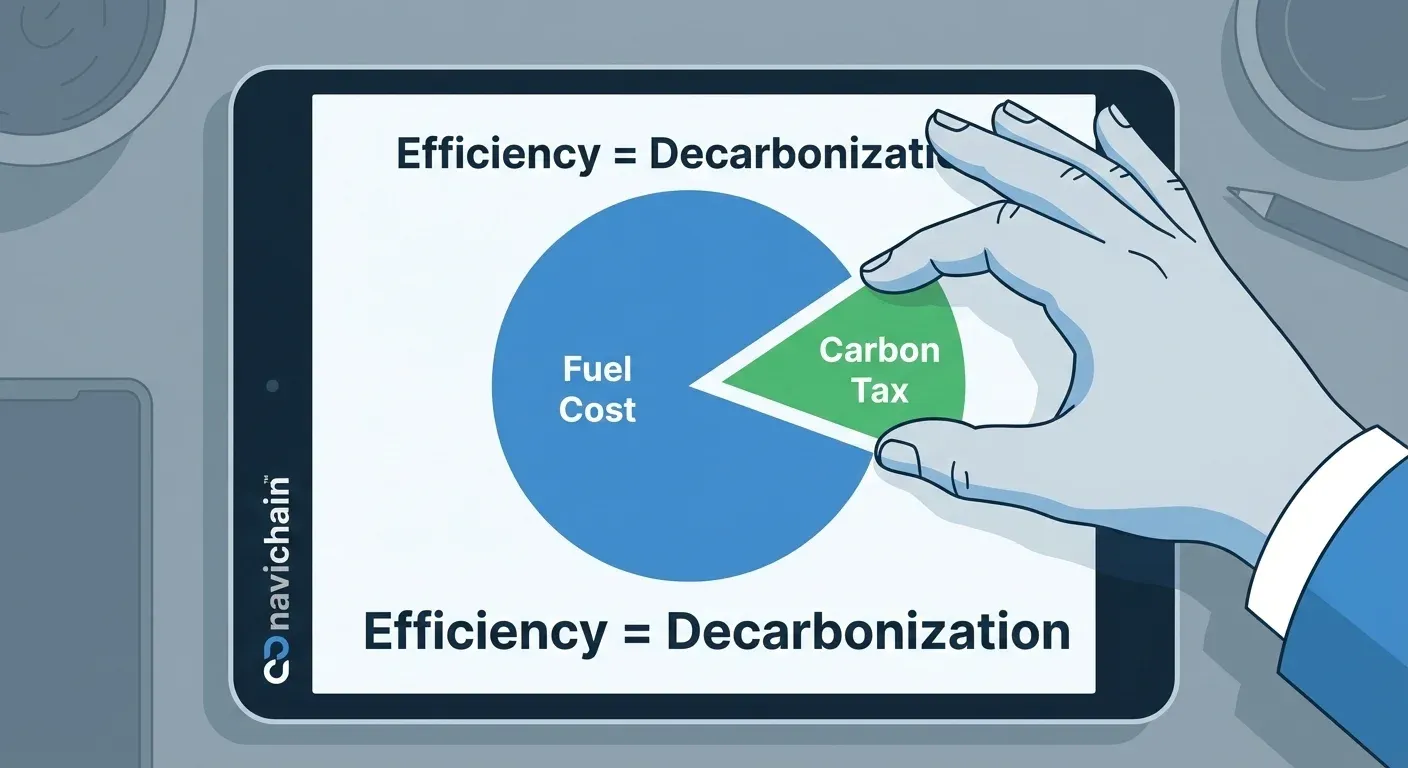
The Double Win: Save the planet, save money.
- Construction: Bidding for government infrastructure projects now requires a detailed carbon management plan. Navichain automates this.
- Fashion: Brands use Navichain to prove they are reducing the carbon intensity of their logistics, a key metric for investors.
- Food: Tracking cold-chain energy usage helps reduce the carbon footprint of refrigerated transport.
The era of voluntary sustainability is over. The era of mandatory transparency is here. Navichain creates the digital paper trail you need to survive the audit and thrive in the green economy.

Navichain: Your Shield Against the Auditor.
References/sources
- European Commission (2024). Corporate Sustainability Reporting Directive (CSRD).
- ISO (2023). ISO 14083: Greenhouse gases — Quantification and reporting of greenhouse gas emissions arising from transport chain operations.
- Deloitte (2025). The ROI of Sustainability in Logistics.
- Smart Freight Centre (2024). The GLEC Framework for Logistics Emissions.
Enabling the Vision: Navichain SaaS Unified Logistics Platform
This white paper addresses the fifth critical challenge: ESG Compliance. Navichain SaaS is your automated sustainability officer.
We directly embody the three core principles required for green compliance: 1. Unified Operational Fabric: Operational data (km driven, load weight) is the raw material for Environmental data. No manual data entry needed. 2. Sovereign Data Architecture: Your emissions data is sensitive. We store it securely, ensuring you control who sees your footprint. 3. Embedded Intelligence: The system proactively suggests greener alternatives (e.g., "Switching this route to Electric Vehicle will save 40kg CO2").
Our mission is to make sustainability easy, so you can focus on making it profitable.
Ready to automate your carbon reporting?
navichain Insights Newsletter
Join the newsletter to receive the latest updates in your inbox.