The Liquidity Crisis: Why Profitable Hauliers Go Bust
Table of Contents
The European transport sector is bleeding. In Q3 2024 alone, insolvencies in the sector rose by nearly 30%. But here is the tragic paradox: Many of these companies were profitable on paper. They didn't run out of work; they ran out of cash. In an industry defined by low margins and long payment terms, "Cash is King" is not a cliché—it is the law of survival.
Executive Summary
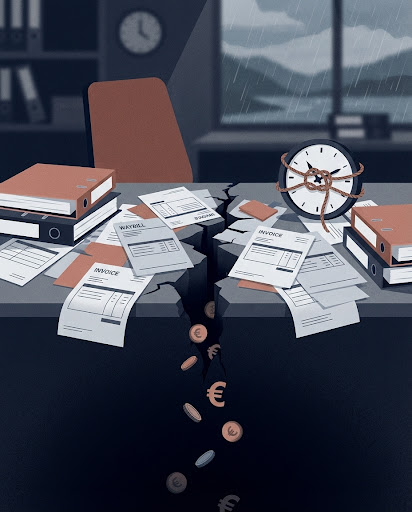
Haulage is a capital-intensive business with a fatal flaw in its financial model: The "Liquidity Gap." * The Costs: Fuel, tolls, and wages must be paid almost immediately (7-30 days). * The Revenue: Customers often demand 60, 90, or even 120 days payment terms.
This gap forces hauliers to act as banks for their customers. When costs rise (as they have with fuel and wages) or when volume dips, this gap becomes a "Valley of Death" that swallows even well-run companies.
This white paper explores how Automation—specifically the watertight integration of operations (e-CMR) and finance (Invoicing)—can close this gap, reduce potential insolvencies, and safe-guard your business.
Part 1: The Anatomy of a Collapse
The "Valley of Death"
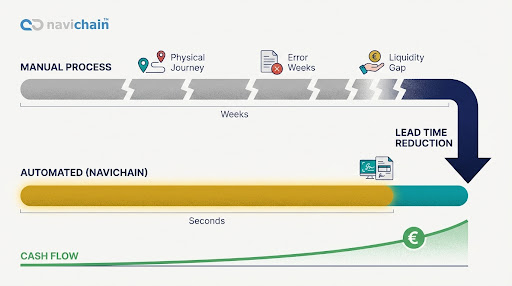
Imagine you win a major new contract. Great news? Not necessarily. 1. Month 1: You deploy 10 trucks. You pay €20,000 in fuel and €30,000 in wages. Revenue: €0. 2. Month 2: You do it again. Costs: €50,000. Revenue: €0. 3. Month 3: You invoice the client. They have 60-day terms. By the time the first Euro hits your account, you have paid out €150,000. If you don't have that cash reserve, you are bankrupt before you even started.
The Administrative Lag
To make matters worse, many hauliers add internal delays to this process. * The Paper Chase: Waiting for drivers to return to base with physical PODs (Proof of Delivery). * The Dispute Trap: Manual data entry errors lead to invoice disputes. A disputed invoice is not paid until resolved, adding weeks to the DSO (Days Sales Outstanding).
Part 2: Factoring is Morphine, Not a Cure
To survive the gap, many companies turn to factoring (selling invoices at a discount). * The Cost: Factoring typically costs 2-4% of the invoice value. * The Impact: In an industry where the net margin is often only 3-5%, factoring eats almost all your profit. You are working just to pay the finance company.
The Automaton Alternative
What if you could reduce the need for factoring by speeding up the process? If you can invoice 7 days earlier, you improve your cash flow by 7 days for free.
Part 3: Operational Excellence = Financial Health
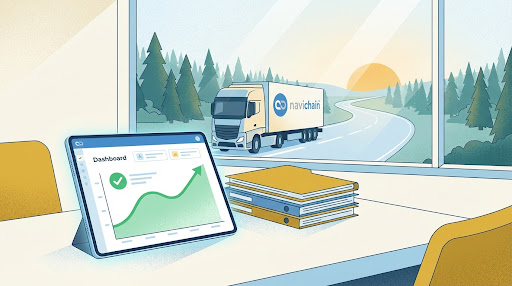
At Navichain, we believe that Operations and Finance are the same thing.
The "Signed = Sent" Principle
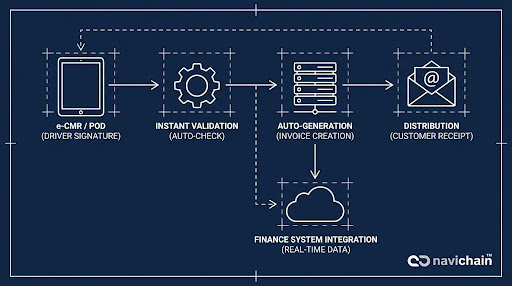
- e-CMR as the Trigger: The moment the receiver signs the glass on the driver's app, the legal transfer of responsibility is complete.
- Instant Validation: The system checks the order. Do the weights match? Are there waiting time charges?
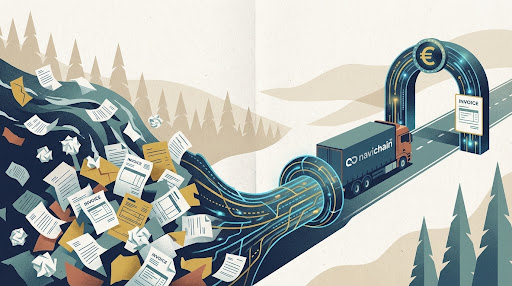
- Zero-Touch Invoicing: If the data matches, the invoice is generated and emailed to the customer instantly.
Why This Matters
- Psychological Impact: Receiving the invoice while the goods are still being unloaded sends a message of extreme efficiency.
- Dispute Prevention: The invoice attaches the GPS location, timestamp, and photo of the signed goods. It is irrefutable evidence.
- Reduction of DSO: By eliminating the "admin lag," you essentially shorten your payment terms by 5-10 days without negotiating with the customer.
Conclusion
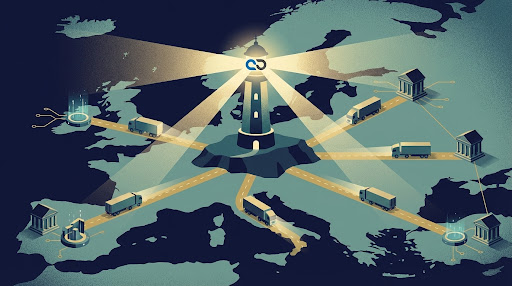
In 2026, you cannot afford to have a disconnected finance department. Your trucks, your drivers, and your bank account must be part of the same digital ecosystem.
The insolvency wave is real. It is taking down companies that are good at trucking but bad at cash flow. Don't be one of them. Automate your invoicing. Close the gap. Keep your cash.
Stop Acting Like a Bank.
See how Navichain automates your cash flow from the cab to the ledger.
navichain Insights Newsletter
Join the newsletter to receive the latest updates in your inbox.