

The Insight Paradox: Why Your Logistics Data is Hiding the Truth (and How to Unlock It)
Table of Contents
Are data silos crippling your logistics SME? Over 60% of logistics managers identify data fragmentation as their biggest obstacle to operational visibility, hindering accurate decision-making and impacting margins. This white paper reveals the strategic pitfalls of applying AI to 'dirty' data and unveils a three-step framework for building a unified data foundation for sustainable, insightful AI implementation.
Insiktsparadoxen Logistikdata Lasa Upp

The core dilemma: Drowning in data, starving for Insight
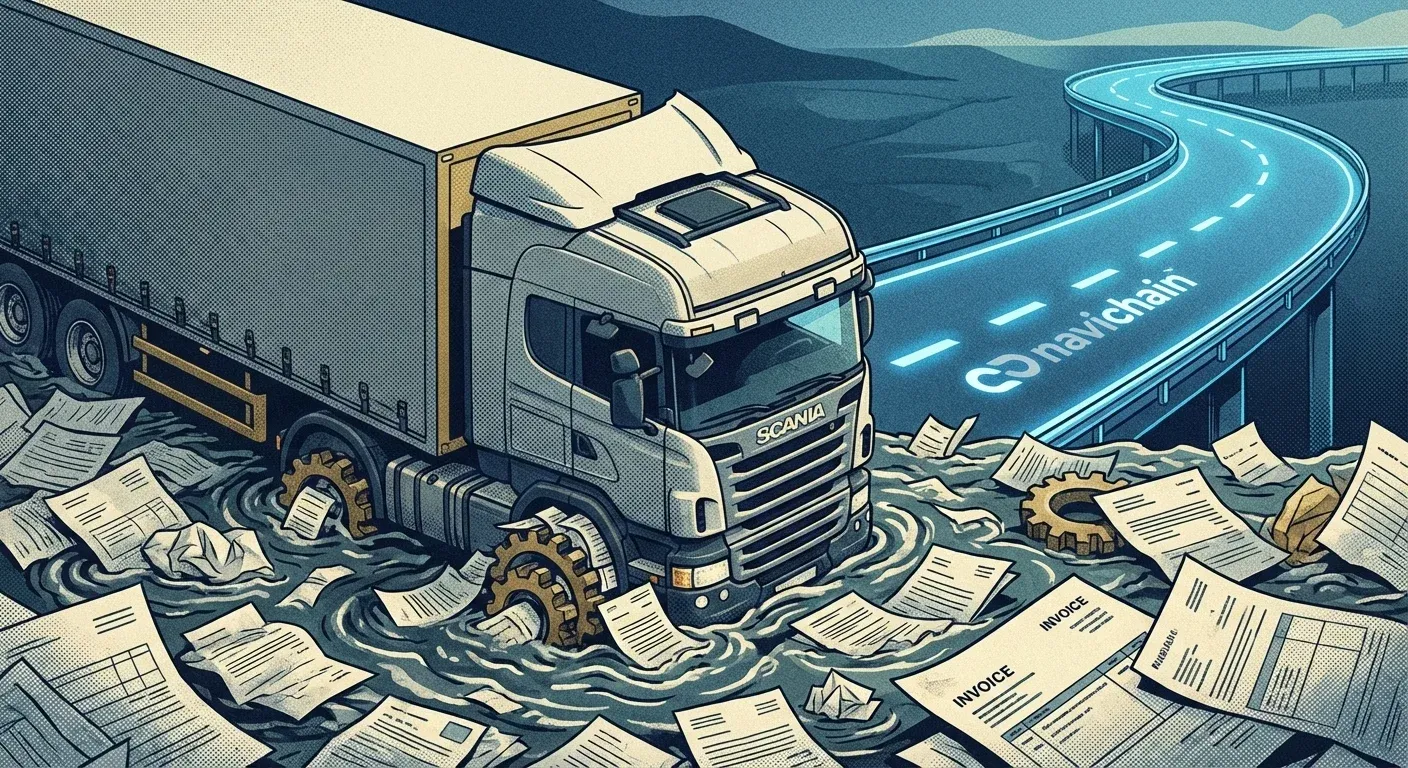
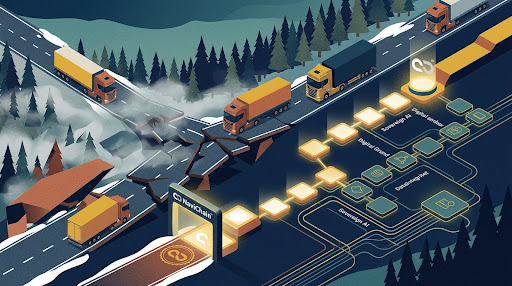
Data silos create a fragmented view of operations, making it difficult to extract meaningful insights and hindering effective decision-making.
"It's almost impossible to draw accurate conclusions from all our operational data. How are we supposed to see the patterns? Is it possible to use AI?"
This question, from a Scandinavian logistics manager, resonates across the European SME haulage sector. In an industry defined by razor-thin margins and intense operational pressure, data should be the ultimate asset – a source of truth for optimising routes, managing assets, and streamlining invoicing. Instead, for too many, it has become a source of friction.
Logistics SMEs are drowning in data from telematics, transport management systems (TMS), warehouse management systems (WMS), driver apps, and accounting software. Yet, they're starving for actionable insights. The pursuit of efficiency feels like a paradox: the more data you collect, the harder it is to see the whole picture.
This paper argues that the industry's focus on individual 'best-in-class' systems for each function has created a strategic crisis of fragmentation. Before any SME can realistically harness the power of Artificial Intelligence, it must first solve a more fundamental problem: its data integration strategy.
Dismantling the problem: The real cost of data silos
The challenge isn't the lack of data.
The challenge isn't the lack of data. The challenge is that this data exists in isolated, warring silos.
- Your TMS knows the optimal route and the planned cost.
- Your WMS knows the exact inventory balance and picking time.
- Your Asset Management System knows a lorry's maintenance schedule.
- Your Invoicing System knows what the customer was actually invoiced for.
When these systems don't talk to each other, a cascade of operational and strategic failures occurs. You can't 'see the patterns' because there is no single, unified pattern to see. There's just a collection of scattered facts.
The operational costs of fragmentation
- Manual Reconciliation: Your team spends dozens of hours each week manually exporting data from WMS and TMS to Excel just to create a single invoice. This isn't just slow; it's a breeding ground for human error, leading to under-billing or customer disputes.
- Impaired Decision-Making: A transport manager plans a route in the TMS without knowing that the WMS is reporting a delay in order picking. The result is a lorry waiting at the dock, burning fuel and driver hours – a cost that only becomes visible at the end of the month, if at all.
- Revenue Leakage: A driver performs an extra, unscheduled service (e.g., waiting time, special handling) and records it in their app. Because this data isn't integrated with the invoicing system, the charge is never passed on to the customer. This is a direct, irretrievable loss of profit.
The strategic barrier to AI
The allure of AI is understandable. It promises to find the hidden patterns – to optimise fuel consumption across the fleet, predict maintenance needs, or forecast inventory demand.
However, there's a dangerous misconception: that AI is a 'magic box' you can just plug into your business. The truth is that AI is an amplifier. If you apply AI to a foundation of fragmented, contradictory, and 'dirty' data, it will only amplify the chaos. It will produce recommendations that are illogical, unreliable, or downright wrong, shaking management's confidence in technology altogether.
Asking "Is it possible to use AI?" is asking the wrong question. The right question is: "Is our data ready for AI?"
The way forward: A 3-step framework for AI readiness
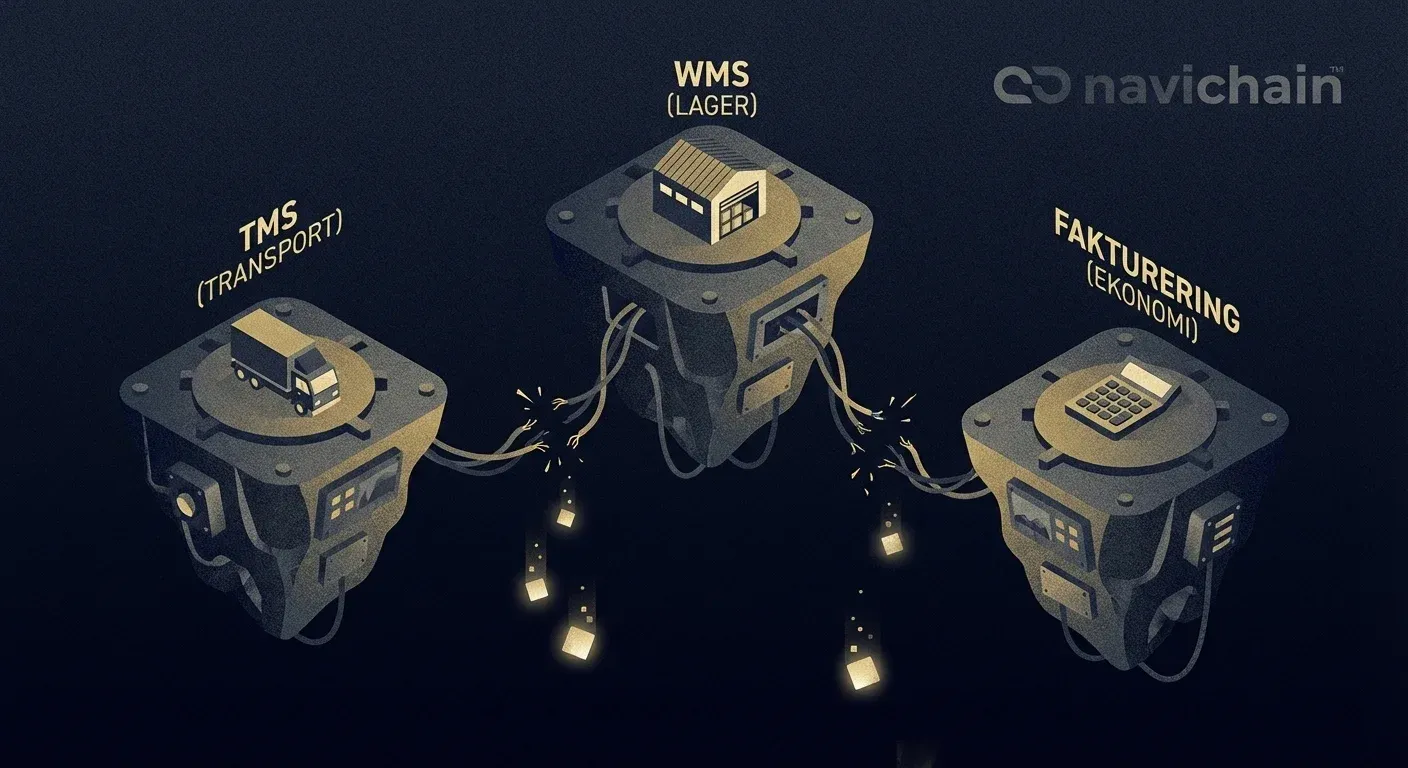
A successful AI implementation relies on a solid data foundation, rather than being a standalone solution, as illustrated in the three-phase framework.
True operational efficiency for a European SME logistics company isn't achieved by buying a standalone AI tool. It's achieved by building a secure, unified data foundation on which intelligence can be built. We propose a three-phase framework: Unify, Secure, and Analyse.
Phase 1: Unify (the single source of truth)
The first step is to tear down the silos. The goal is to move from a collection of scattered applications to a single, unified operating system for logistics. In this model, TMS, WMS, Asset Management, Order Management, and Invoicing aren't separate programs that need to be 'integrated' (which is often costly and fragile). Instead, they are components of a single platform, all working against the same central database.
When a warehouse worker scans a pallet (WMS), the information is immediately available to the transport manager (TMS) and the invoicing department (Invoicing). There's no "data lag". There's no "reconciliation". There's just one version of the truth, visible to all functions, in real-time.
This Unified Operational Fabric is the non-negotiable prerequisite for all further analysis. It eliminates manual data entry, stops revenue leakage, and provides a clean, holistic dataset across the entire business, from start to finish.
Phase 2: Secure (the data sovereignty mandate)
Once your data is unified, the next critical question is: Where does it live?
For European SMEs, this isn't just a technical question – it's a core strategic and legal issue. Using large, non-EU-based cloud providers for your core operational data (routes, manifests, customer lists, driver information) is fraught with risk and complexity. Regulations like GDPR and the Schrems II ruling have turned international data transfers into a legal minefield. The risk of data breaches, audits, or being subject to foreign data access laws is significant.
True data control, or Data Sovereignty, means that your unified data lives in a secure environment, under your own region's legal jurisdiction. For a Scandinavian haulage company, this means data hosted and processed within Sweden or the EU.
This approach, often on secure or self-hosted infrastructure, transforms regulatory compliance from a complex burden to a simple fact. Your data is safe, its location is known, and it's fully GDPR compliant by default. This security is the foundation of trust – trust from your customers, your partners, and your own team.
Phase 3: Analyse (the embedded intelligence layer)
Only now, with a clean, unified dataset (from Phase 1) residing in a secure, compliant environment (from Phase 2), can you effectively leverage AI.
And you don't need a third-party AI platform that requires you to export your sensitive data.
Instead, you can leverage a Integrated AI that runs inside your own secure infrastructure. This embedded intelligence layer has access to the full, operational picture. It can finally 'see the patterns' you've been missing because it's analysing all the data at once.
- It can correlate fuel consumption data (Asset) with route planning (TMS) and driver hours (Invoicing) to find the most profitable routes and drivers.
- It can analyse warehouse picking times (WMS) against order inflow (Order) to predict staffing needs before a rush occurs.
- It can audit all completed jobs (TMS) against all invoices (Invoicing) to automatically flag 100% of unbilled services, immediately recovering lost revenue.
This is the true promise of AI in logistics: not as a separate, complex tool, but as a natural, secure, and powerful extension of a unified operational core.
From diagnosis to design: The blueprint for a resilient logistics operating system
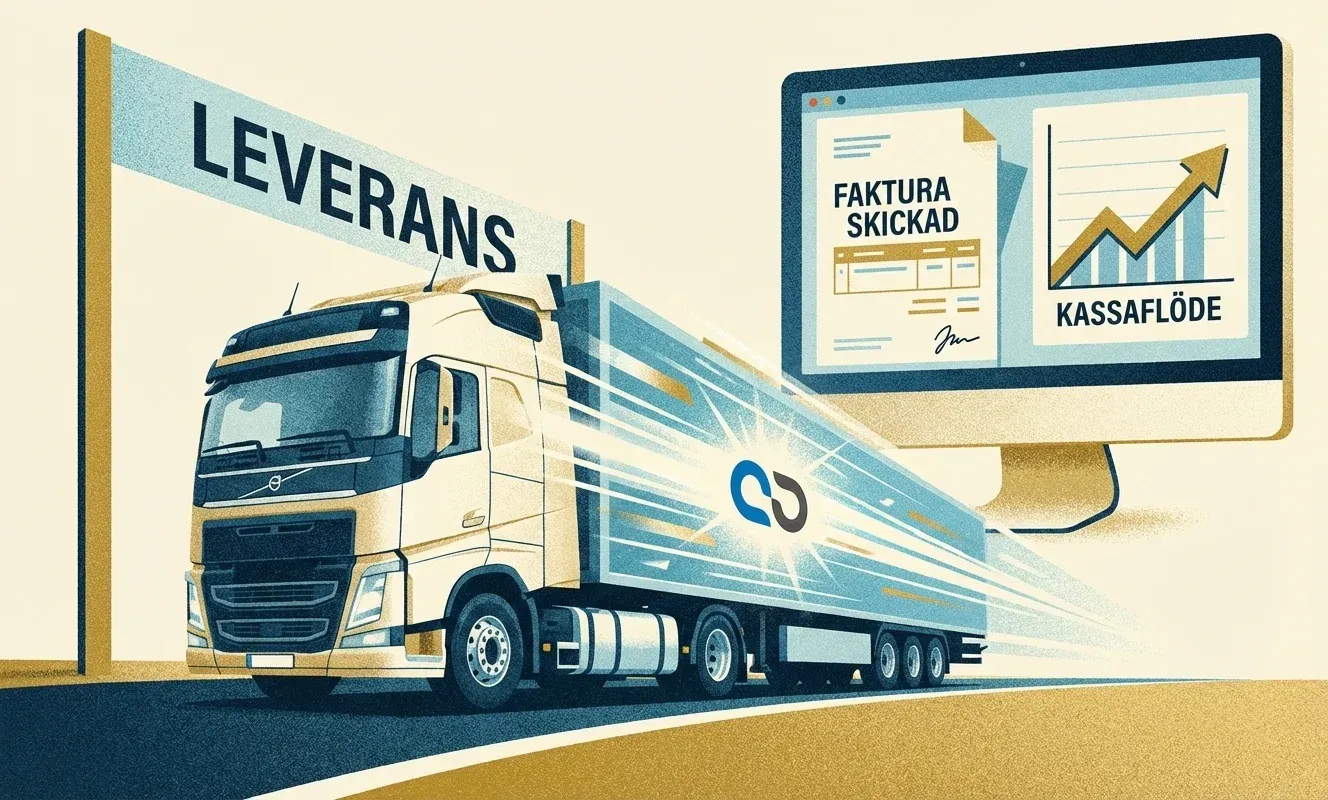
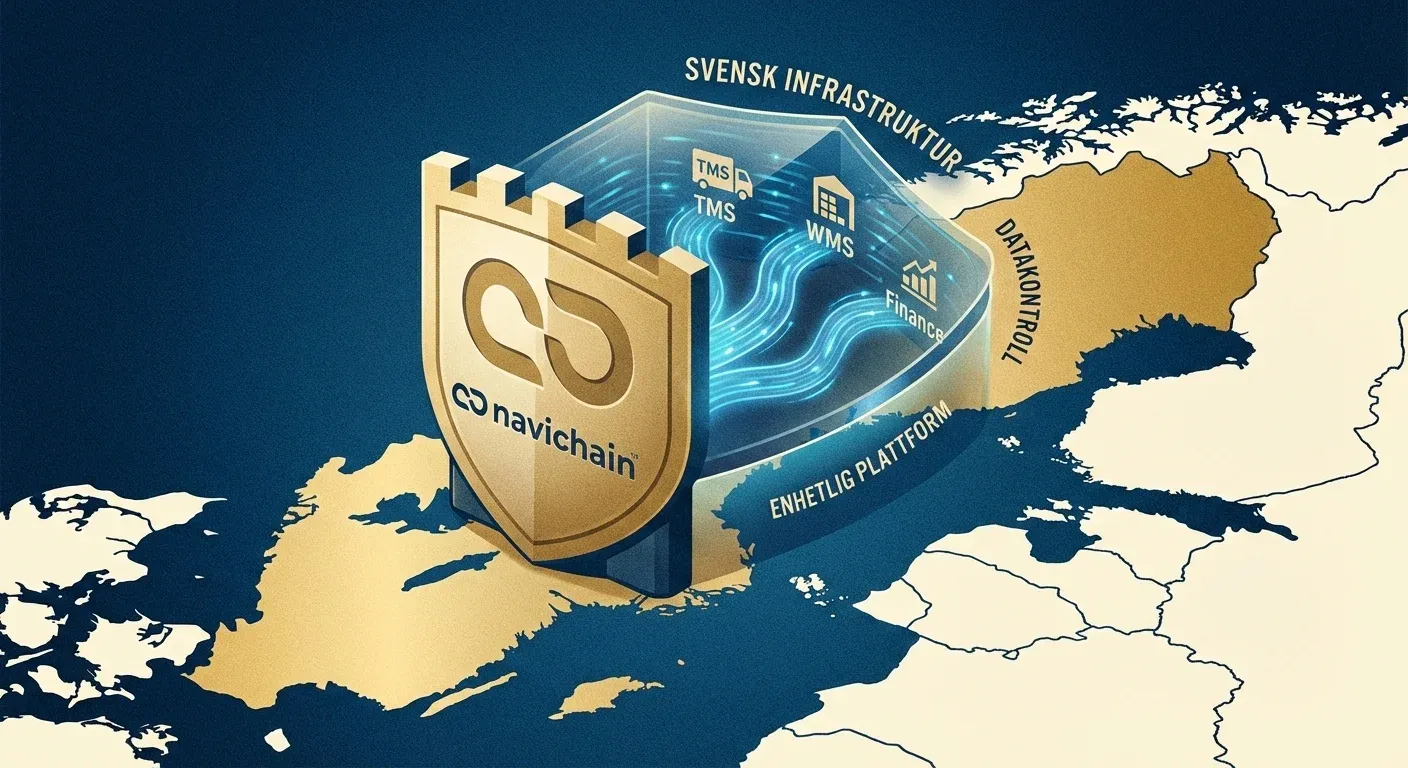
Schematic illustrating the unified logistics operating system, highlighting real-time data flow between key functions like TMS, WMS, and Invoicing to enable predictive insights and automated revenue recovery.
To translate this framework into a technical reality, any modern logistics platform for European SMEs must be built on three non-negotiable principles.
Principle 1 - unified operational fabric
The platform cannot be a collection of acquired tools. It must be a single, integrated system built from the ground up, where TMS, WMS, Invoicing, and Asset Management share a single database and a single user interface. This acts as the 'central nervous system' for the entire operation, providing a single source of truth and eliminating the friction of data silos. Every event, from a new order to a final delivery scan, should be visible across all functions in real-time.
Principle 2 - secure data architecture and control
For European SMEs, operational resilience is synonymous with data control. The platform's architecture must prioritise data sovereignty. This means that the infrastructure is secure and that data is stored and processed exclusively within the EU, or even better, within a specific country like the UK. A self-hosted or dedicated secure infrastructure model ensures easy and complete GDPR compliance, protecting the SME from the legal and financial risks of international data complexity. Control over your data is control over your business.
Principle 3 - embedded analytical intelligence
Intelligence shouldn't be an add-on; it must be embedded. A integrated AI layer, running securely within the platform's own infrastructure (Principle 2), is essential. This AI must have access to the full, unified dataset (Principle 1) to perform deep, secure analysis. This allows it to unlock efficiencies and identify patterns that are unique to that specific business, without the data ever leaving the secure environment. This is how SMEs can harness the power of AI without compromising security or control.
References/sources
- Ti Insight (2024). European Road Freight Transport 2024. (Analyses margin pressure and operating costs in the European haulage sector). https://ti-insight.com/report/european-road-freight-transport-2024
- International Road Transport Union (IRU). 2024 European Road Freight Rate Report. (Provides context on the intense competition and thin margins faced by SMEs). https://www.iru.org/resources/news-and-reports
- European Commission. Data, GDPR and rules for artificial intelligence. (Outlines the legal framework for data management and AI within the EU). https://digital-strategy.ec.europa.eu/en/policies/data-gdpr-and-ai-rules
- Logistics Management. The Persistent Problem of Data Silos in the Supply Chain. (Industry analysis on the operational impact of fragmented data). https://www.logisticsmgmt.com/ (representative article)
- Information Commissioner's Office (ICO). Guide to the UK GDPR. (Details the specific compliance challenges for UK businesses under GDPR). https://ico.org.uk/
Enabling the blueprint: Navichain SaaS unified logistics platform
This white paper has outlined a strategic framework for moving from data chaos to operational clarity. The navichain SaaS platform was designed to be the practical embodiment of this blueprint.
We're not a collection of separate tools. navichain SaaS is a single, unified logistics operating system where Transport Management (TMS), Warehouse Management (WMS), Asset Management, Invoicing, and Order Management work as one. This architecture provides the single source of truth (Principle 1) that SMEs need to tear down data silos and automate cross-functional workflows.
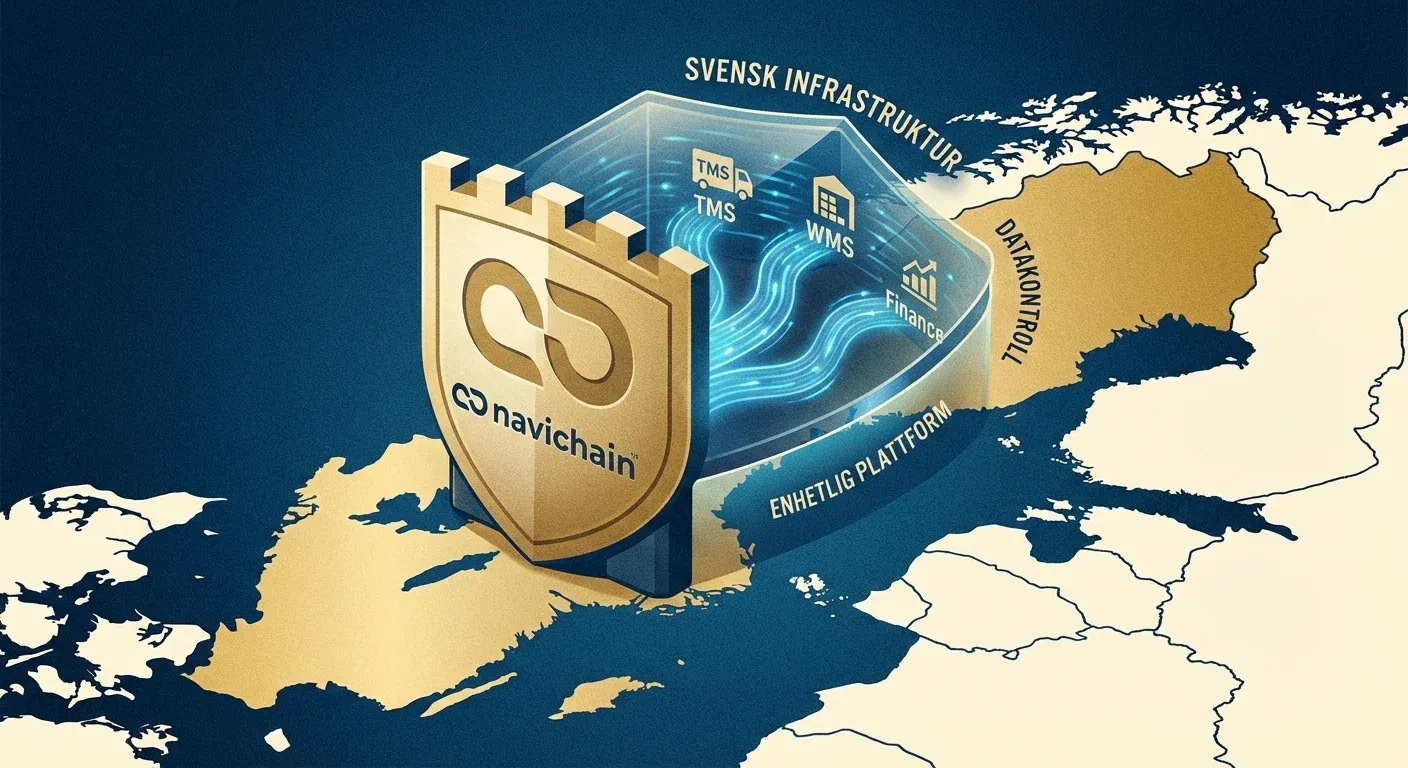
The navichain platform provides a unified view of logistics data, enabling SMEs to unlock actionable insights and improve operational efficiency across their entire supply chain.
We believe that for European SMEs, data control is non-negotiable. This is our key differentiator. Our entire platform is hosted on our own secure, self-hosted infrastructure in the UK (Principle 2). This ensures maximum data security, resilience, and easy GDPR compliance. By keeping your operational data strictly within UK/EU jurisdiction, you retain full control and are free from the complexities of international data transfers.
3. Enables Embedded Analytical Intelligence:
Because your data is unified (Principle 1) and secure in our UK-hosted environment (Principle 2), we can put our integrated AI to work for you. This embedded intelligence layer (Principle 3) runs securely on our own infrastructure, analysing your unique, unified data to find patterns, automate tasks, and unlock efficiencies that would otherwise remain hidden.
Our mission is to democratise logistics technology. The navichain SaaS platform is the seamless solution designed to help SMEs in the logistics sector thrive by finally making their data work for them.
The navichain platform provides a unified view of logistics data, enabling SMEs to unlock actionable insights and improve operational efficiency.
The navichain platform provides a centralized dashboard for managing and visualizing logistics data, empowering informed decision-making.
Ready to optimise your supply chain?
navichain Insights Newsletter
Join the newsletter to receive the latest updates in your inbox.



)