The Implementation Paradox in Haulage: Is Your Tech Investment Making Drivers' Jobs Harder?
Table of Contents
The European haulage sector faces a crippling driver shortage, but new technology, intended to alleviate the burden, is often met with resistance. This white paper introduces a 'Driver-Centred Implementation Framework', a 3-phase change management strategy designed to build trust, deliver tangible value and simplify workflows through a genuinely unified, secure, and intelligent operating system. Discover how to empower your drivers and unlock the true potential of your technological investments.
Implementeringsparadoxen Inom Akeribranschen Gor Er Teknikinvestering Chaufforernas Jobb Svarare
The European haulage sector is grappling with a historic driver shortage, with the IRU reporting over 800,000 vacancies across the continent. Many SMEs are investing heavily in new technology to compensate, only to encounter a critical obstacle: resistance from drivers. This isn't a training problem. It's a strategic failure. We're implementing fragmented, unreliable tools that drivers perceive as 'Big Brother', increasing their administrative burden instead of simplifying their day-to-day lives. This white paper introduces a 'Driver-Centred Implementation Framework', a 3-phase change management strategy focused on building trust, delivering tangible value, and simplifying workflows through a genuinely unified, secure, and intelligent operating system.
The million-pound question: Is your new technology costing you your best drivers?
You've spent months selecting and thousands of pounds implementing a new Transport Management System (TMS), telematics solution or warehouse scanner.
You've spent months selecting and thousands of pounds implementing a new Transport Management System (TMS), telematics solution or warehouse scanner. The goal was simple: increase efficiency, reduce fuel costs, and gain better oversight. Instead, your office is filled with complaints. Drivers are threatening to quit. The data is inaccurate because they're reverting to paper forms. Your new 'efficiency tool' has become an operational bottleneck.
This scenario is playing out at small and medium-sized haulage companies across Europe. In an industry already crippled by driver shortages – where the IRU (International Road Transport Union) forecasts a shortfall of over 800,000 drivers – retaining experienced staff is a matter of survival. Yet, management consistently makes a critical error: they treat technology implementation as a training issue. They assume drivers are simply 'resistant to change'.
This is a fundamental misdiagnosis.
The problem isn't the driver; it's the technology strategy. Low adoption isn't a failure of training, but a failure of trust, value and integration. We're foisting fragmented tools onto a workforce who see no personal benefit, only increased surveillance and administrative friction. This document argues that the only path to successful digitisation is through a change management strategy that puts the driver's workflow at the absolute centre of the solution.
Deconstructing failure: Why 'top-down' technology doesn't work
To build a successful change strategy, we must first understand the underlying causes of resistance.
To build a successful change strategy, we must first understand the underlying causes of resistance. For a driver, the implementation of new technology often represents three distinct threats.
1. the 'big brother is watching' effect: A crisis of trust
For a professional driver, the cab is their office. The introduction of telematics, geofencing and constant tracking – often from systems hosted by unknown third-party vendors outside the EU – feels like an intrusion. Management introduces these tools to 'monitor performance' and 'ensure compliance', but the driver hears 'we don't trust you'.
This trust deficit is amplified by a lack of data transparency. Where does this data go? Who sees it? Is it even hosted in a GDPR-compliant manner? When a driver's sensitive location and performance data are handled by opaque, non-European systems, resistance isn't just obstinacy; it's a rational response to a perceived risk.
2. 'app fatigue': The tyranny of fragmentation
The second failure is complexity. A typical driver's workday can require them to interact with four or five different, non-integrated systems:
- The TMS App: For order details and dispatch.
- The WMS Scanner: At the warehouse to confirm loading.
- A Third-Party GPS: For navigation (because the TMS app's is clunky).
- A Messaging App: (like WhatsApp) for informal updates with the office.
- A Digital POD App: For capturing signatures.
Because these systems don't talk to each other, the driver is forced into repetitive data entry, increasing the risk of errors and adding significant administrative time to their day. The technology, which promised to reduce workload, has in fact increased it. They aren't resisting a tool; they're resisting the chaos of five.
3. the 'what's in it for me?' factor
Most logistics technology is procured by management to solve management's problems (e.g. asset visibility, billing accuracy, fuel costs). The benefits to the driver are rarely the primary driver.
If a new system doesn't demonstrably make a driver's personal workflow easier, faster or less stressful, why should they embrace it? If it doesn't provide them with clearer instructions, better-optimised routes that avoid known traffic, or a faster way to get paid, it offers them no value. From their perspective, it's purely a cost with no benefit.
The way forward: A driver-centred implementation framework
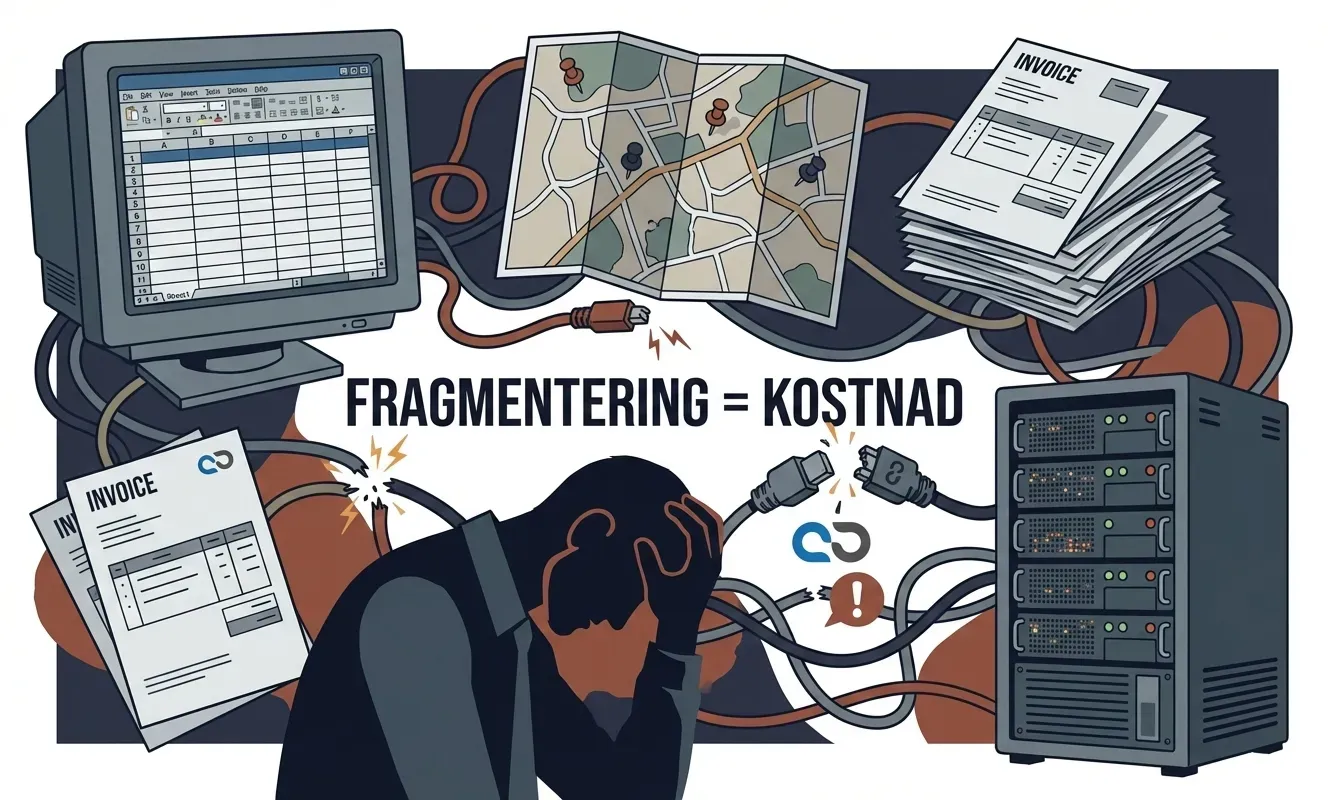
A driver-centric approach to technology implementation focuses on easing workflows, ultimately fostering adoption and maximizing the return on technology investments.
Successful technology implementation is a change management challenge that can be solved by shifting the focus from monitoring to enabling. This framework is built on three phases.
Phase 1: Diagnosis & empathy (before you buy)
Instead of watching a software demo with a salesperson, spend a day in a truck cab. Map out every single step in your driver's workflow, from the moment they receive an order to the final proof of delivery. Identify every point of friction, every double entry, every time they have to switch apps.
Engage your most sceptical drivers. Ask them: 'What's the most frustrating part of your day?' 'If you had a magic wand, what would you fix?' Their answers will give you the exact requirements for any technology you procure. This process builds initial buy-in and ensures you're solving the right problems.
Phase 2: Strategy – 'a single pane of glass'
The antidote to 'app fatigue' is a unified platform. Your technology strategy must be to consolidate all critical functions into a single application for the driver. A driver should be able to see their orders, manage their route, scan barcodes, communicate with dispatch, and capture Proof of Delivery (PODs) all in one place.
When a driver logs in once and has their entire workday streamlined in one tool, the 'What's in it for me?' question is answered. The value is immediate and obvious: less friction, fewer errors, and an easier, less stressful job. This is the non-negotiable foundation of adoption.
Phase 3: Implementation – the 'trust covenant'
You can't expect adoption without addressing the 'Big Brother' fear. This requires a 'trust covenant' with your staff, built on data security and transparency.
- Be Transparent: Communicate clearly what is being tracked and why. Frame it as a tool for safety, compliance, and collaboration, not punishment. For example: 'We're tracking route data so our new AI can find better routes for everyone, reducing your time in traffic.'
- Guarantee Data Control: This is the most critical step. You must be able to tell your drivers exactly where their personal data is stored and processed. Choosing a platform that is Self-Hosted on your own infrastructure, or at least hosted securely within your own legal jurisdiction (e.g. in the UK/EU for European companies), is a massive strategic advantage. It shifts data control from an abstract compliance issue to a concrete promise: 'Your data never leaves our secure UK servers. It's protected by UK and EU law, and we control it, not some foreign third party.'
Phase 4: Reinforcement – from data to dialogue
Once the unified system is implemented, it will generate a single, clean source of operational data. The final step in change management is how you use this data. Don't use it as a 'digital whip' to criticise drivers for long stops.
Instead, use it as a 'diagnostic tool' for collaboration. Use the insights from your platform's embedded AI to identify patterns. Approach a driver and say: 'Our system's AI noted that the pickup at Customer X always takes an hour longer than planned. What's actually happening on-site there?'
This approach transforms data from a surveillance tool into a tool for empowerment. The driver becomes a strategic partner in solving operational problems, building a culture of continuous improvement and solidifying trust in the new system.
From diagnosis to design: A blueprint for a resilient logistics operating system
This framework reveals that driver adoption isn't a standalone HR issue; it's a direct consequence of your core system architecture.
This framework reveals that driver adoption isn't a standalone HR issue; it's a direct consequence of your core system architecture. To succeed, a logistics platform for SMEs must be built on three fundamental principles.
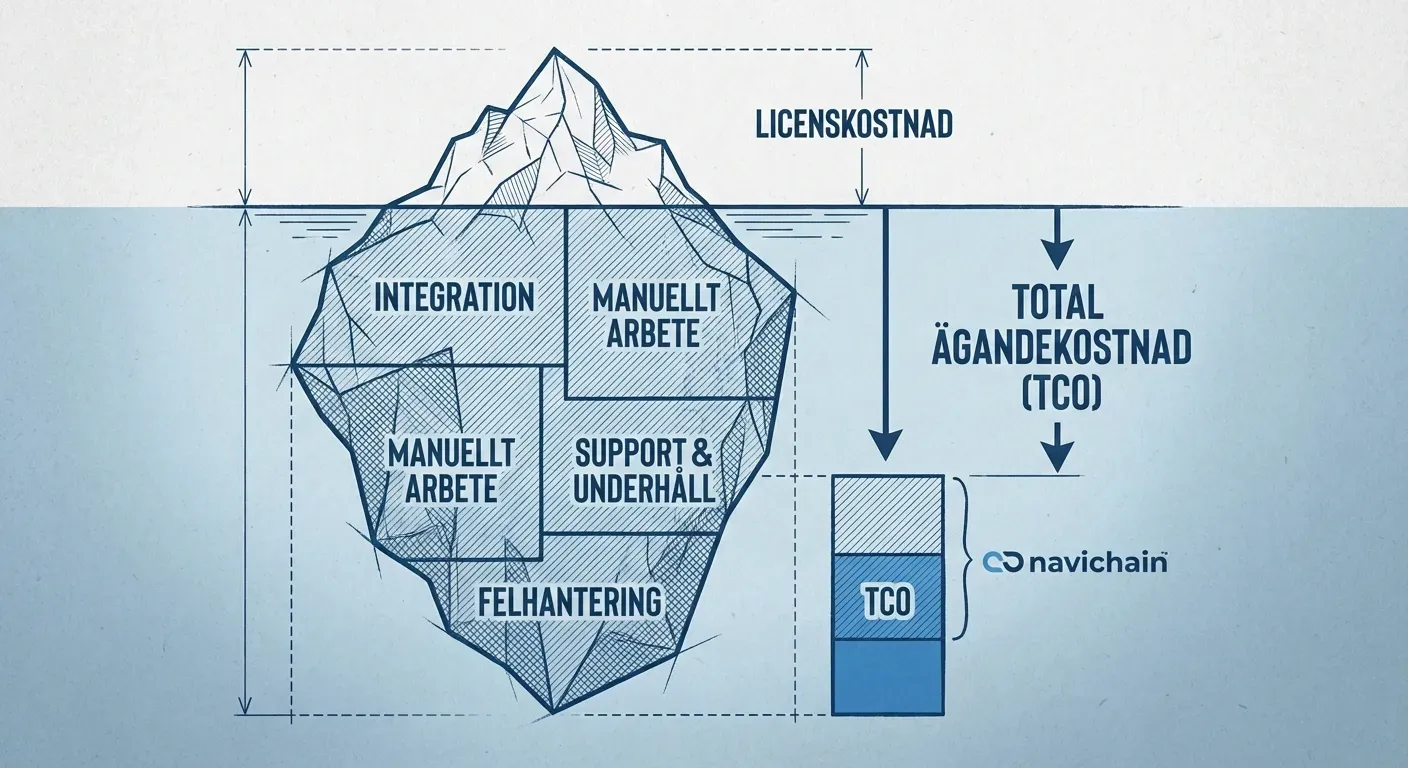
Schematic illustrating the integrated architecture of a resilient logistics operating system, highlighting the interconnectedness of various modules.
Principle 1 – unified operational fabric
The system must function as a single 'central nervous system' for the entire operation. All modules – Transport Management (TMS), Warehouse Management (WMS), Invoicing and Order Management – must be part of the same, seamless platform. For the driver, this manifests as 'a single pane of glass' – one app that intelligently connects their actions in the cab with the real-time needs in the warehouse and the office. This eliminates data silos and duplication, which is the primary source of friction for the driver.
Principle 2 – secure data architecture and control
For European SMEs, trust is a tangible asset. Real operational resilience and driver buy-in require complete control over the company's data environment. Driver telematics, customer lists and pricing are sensitive information. This data must be stored and processed under the company's own region's legal jurisdiction (e.g. within the EU/UK) on secure, ideally Self-Hosted, infrastructure. This is the only way to ensure uncomplicated GDPR compliance, build lasting trust with drivers, and protect the business from the complexities and risks of international data transfers.
Principle 3 – embedded analytical intelligence
Data is only useful if it leads to better decisions. A modern platform must have an embedded, integrated AI or intelligence layer that can analyse the unified data from Principle 1, all within the secure environment from Principle 2. This intelligence shouldn't just be for management dashboards. It must provide actionable insights that help both managers and drivers – optimising routes, predicting delays, and identifying the root cause of bottlenecks, making data a collaborative tool for problem-solving.
References/sources
- IRU (International Road Transport Union): 2023-2024 Driver Shortage Report (Europe). https://www.iru.org/news-resources/newsroom/europe-driver-shortage-could-exceed-2-million-2026-without-action
- Ti Insight (Transport Intelligence): European Road Freight Transport 2024 Report. https://ti-insight.com/report/european-road-freight-transport-2024/
- European Commission: General Data Protection Regulation (GDPR) and Employee Data. https://commission.europa.eu/law/law-topic/data-protection/data-protection-eu_sv
- Harvard Business Review: 'How to Get Employees to Adopt New Technology' (General Change Management Principles). https://hbr.org/2021/11/how-to-get-employees-to-adopt-new-technology
The enabler of your blueprint: The navichain SaaS unified logistics platform
This white paper has presented a change management framework and a technology blueprint for driving technology adoption and operational efficiency.
This white paper has presented a change management framework and a technology blueprint for driving technology adoption and operational efficiency. The navichain SaaS platform was designed from the ground up to embody these principles.
We directly enable the 'Driver-Centred Implementation Framework' by providing the technology that builds trust and simplifies work.
- Principle 1 (Unified Operational Fabric): navichain isn't a collection of loosely integrated apps. It's a single, unified logistics operating system. Our platform seamlessly combines Transport Management (TMS), Warehouse Management (WMS), Asset Management, Invoicing and Order Management into one ecosystem. For your drivers, this means one application, one login, and one source of truth – the 'single pane of glass' that eliminates 'app fatigue' and makes their jobs easier.
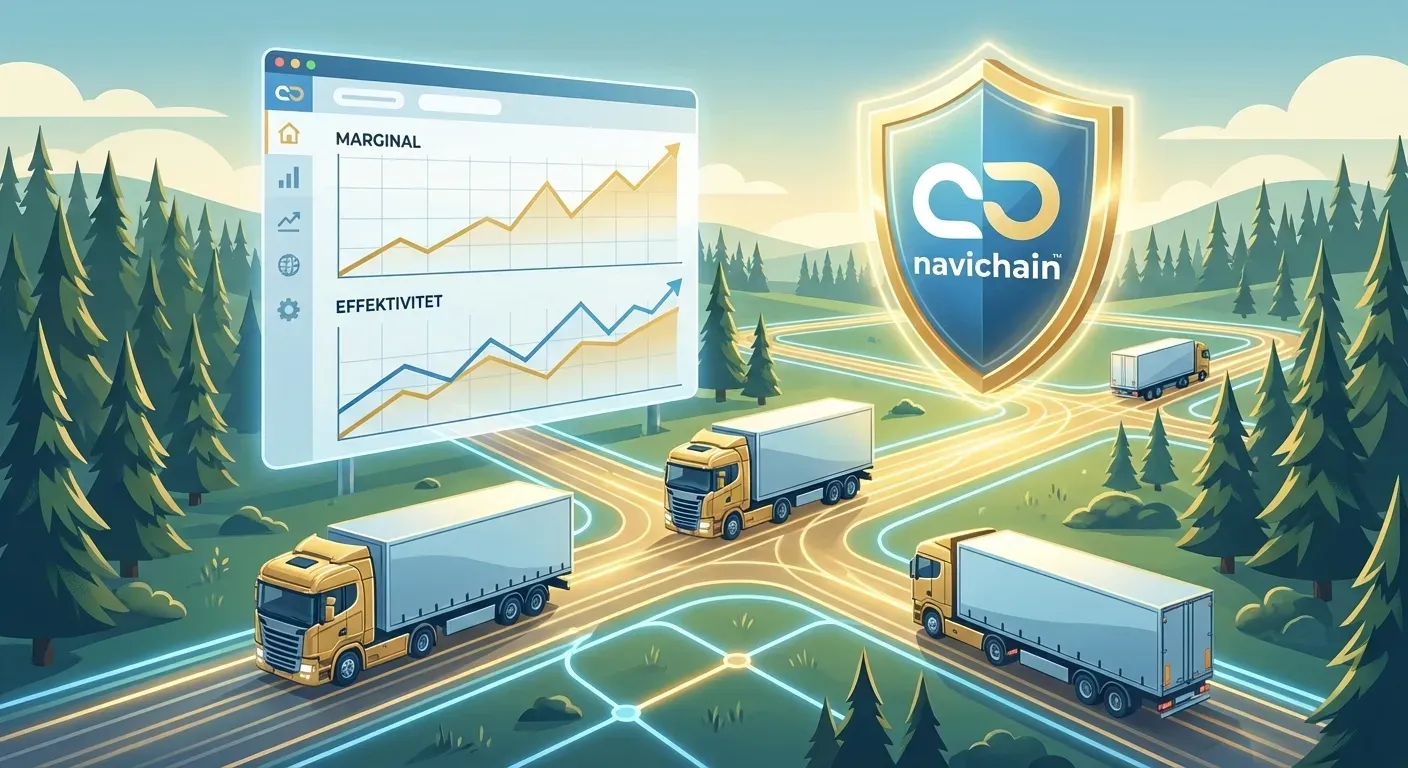
The navichain platform delivers a unified, user-friendly experience, simplifying workflows and reducing app fatigue for drivers.
- Principle 2 (Secure Data Architecture and Control): This is our core differentiator. The entire navichain SaaS platform is hosted on our own secure, Self-Hosted infrastructure in the UK. This isn't a vague 'EU cloud'. It means your operational data, and your drivers' sensitive data, never leaves UK/EU jurisdiction. This gives you maximum data control, resilience, and the most uncomplicated path to GDPR compliance, forming the foundation of the 'Trust Covenant' you build with your team.
- Principle 3 (Embedded Analytical Intelligence): Because all your data is unified (Principle 1) and secure on our infrastructure (Principle 2), our integrated AI can deliver powerful, secure insights. This intelligence layer runs on your own data within our secure environment, allowing you to optimise routes, analyse profitability and identify operational bottlenecks – transforming data from a point of friction into your most valuable collaborative asset.
Our mission is to democratise logistics technology and provide SMEs with the integrated, secure and intelligent tools they need to thrive.
navichain's unified platform offers a single, secure solution for TMS, WMS, asset management, invoicing, and order management, all hosted on our UK-based infrastructure.
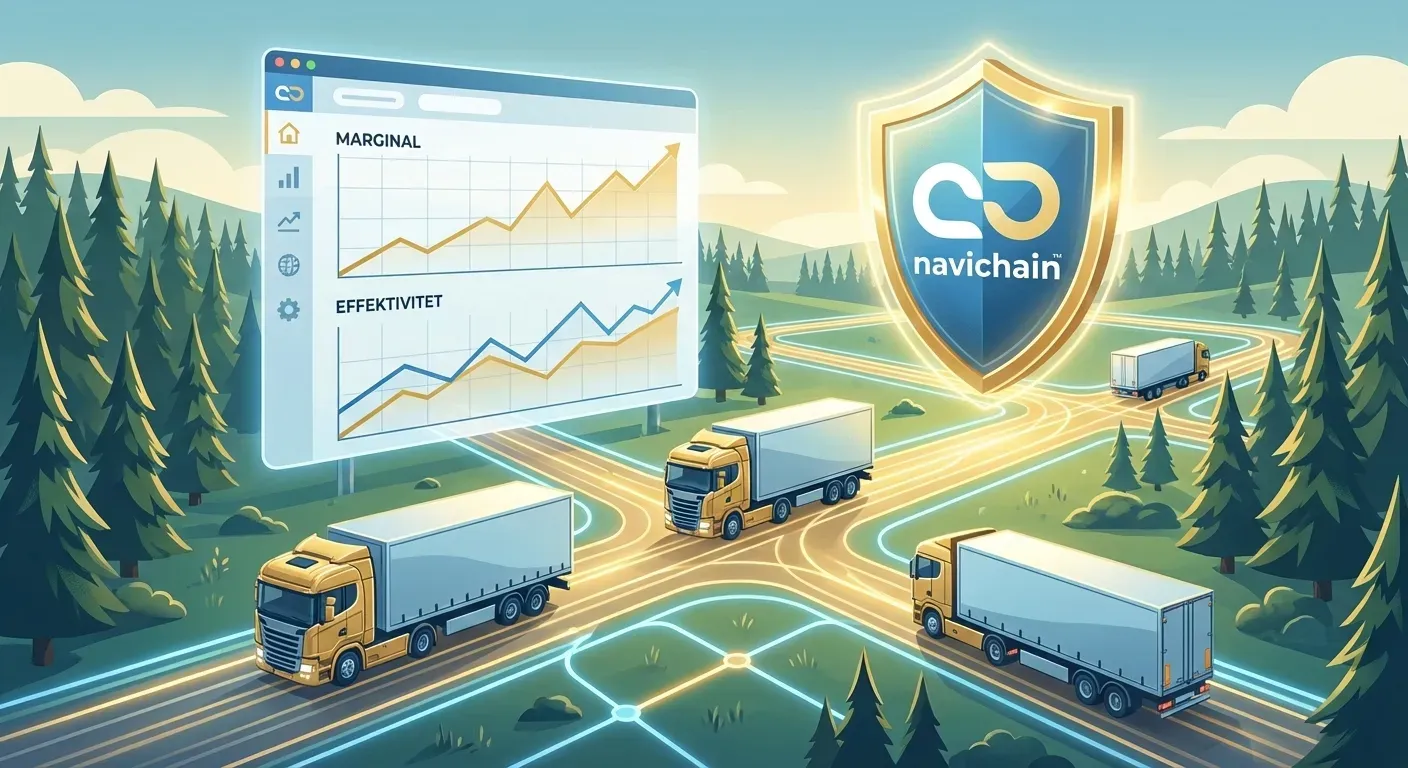
Navichain's unified platform: a single, secure solution hosted on our UK-based infrastructure, integrating TMS, WMS, asset management, and more, to empower logistics SMEs.
Ready to optimise your supply chain?
navichain Insights Newsletter
Join the newsletter to receive the latest updates in your inbox.