The Service Trap
Table of Contents
European SME hauliers face immense pressure. With margins often below 5% and clients demanding complex IT integrations, the cost of 'keeping up' seems insurmountable. But what if these IT demands are a strategic distraction? This paper argues that the greatest risk isn't failing to connect to clients, but failing to control and leverage your own operational data—an asset you may be unknowingly exposing to foreign jurisdictions. We present a strategic framework for business model innovation: shifting from a low-margin 'service provider' to a high-value 'intelligence partner' by building a unified, sovereign, and intelligent operational core.
The service trap: Why digital integration isn't enough
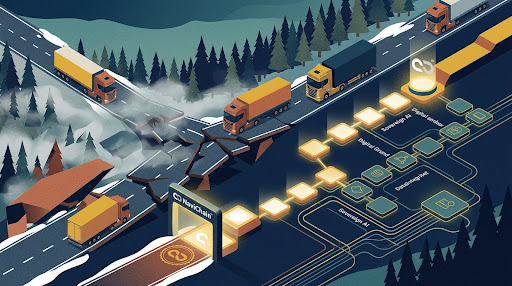
Fig 1: For decades, the business model for a small to medium-sized (SME) haulier has been deceptively simple: move goods from point A to pointB reliably and cost-ef...
For decades, the business model for a small to medium-sized (SME) haulier has been deceptively simple: move goods from point A to pointB reliably and cost-effectively. Success was built on grit, trust, and operational know-how. Today, that model is fracturing. Logistics managers and owners are caught in a pincer movement. On one side, relentless margin pressure from fuel costs, driver shortages, and intense competition turns profitability into a daily battle. On the other, large clients—manufacturers, retailers, and 3PLs—demand sophisticated digital integration. They no longer accept phone calls or PDFs; they require real-time API connections to their ERP and WMS systems, instant electronic Proof of Delivery (e-POD), and total asset visibility. This forces the SME haulier into a reactive, costly game of "digital catch-up." The perceived wisdom is that survival depends on appeasing these IT demands. But this is a strategic error. Simply "plugging in" to a client's system reinforces the haulier's position as a commoditized service provider, forced to compete on price while bearing the full cost of digital compliance. This paper argues for a new path: a fundamental business model innovation that transforms this digital burden into a strategic, high-margin opportunity.
Deconstructing the problem: The data fragmentation fallacy
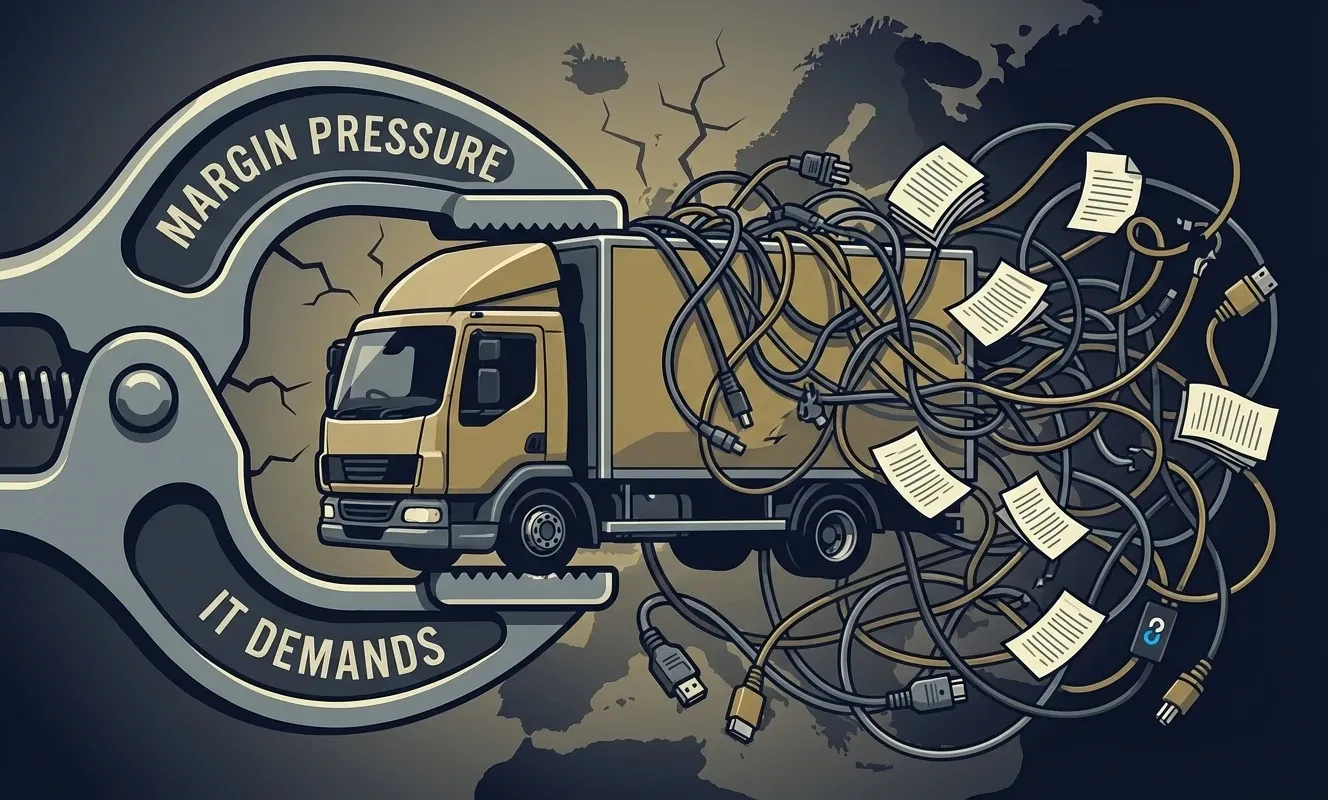
Fig 2: Data silos and disconnected systems hinder true digital transformation for SME hauliers, reinforcing their position as reactive service providers.
The reactive approach to digitalization creates three critical, and often unseen, vulnerabilities.
1. the "patchwork" problem: Digital chaos, not digital transformation
Faced with pressure, many hauliers adopt a patchwork of digital tools: a telematics app from one vendor, a basic order-entry system from another, and spreadsheets to bridge the gap. This is not a "system"—it's a digital Frankenstein.
- Data Silos: Information is fragmented. The order management system doesn't talk to the billing system, and neither has real-time data from the driver's app. This prevents any holistic view of the operation.
- Inefficiency Amplified: Instead of reducing manual work, this patchwork creates it. Staff are forced to re-enter data across multiple, disconnected platforms, increasing error rates and administrative overhead.
- No Strategic Insight: It is impossible to perform meaningful data analysis when your data lives in a dozen different, incompatible formats. You can't optimize what you can't see.
2. the compliance mirage: Winning the battle, losing the war
The immediate goal becomes "satisfy the client's API request." When the connection is finally established, it feels like a victory. This is a mirage. By focusing only on exporting data to the client, the haulier overlooks the immense value of capturing and owning that data for themselves. The client, with their sophisticated analytics, is learning from your operations, optimizing their network, and perhaps even benchmarking you against your competitors using your own data. You, meanwhile, are left with the cost of integration and no new strategic insights. You've successfully integrated yourself into the bottom of their value chain.
3. the hidden risk: Data sovereignty and the US CLOUD Act
To solve the patchwork problem, the "easy" solution is often a major, US-based cloud SaaS platform. This choice, however, introduces a profound and often misunderstood geopolitical risk.
- The US CLOUD Act: This 2018 US law gives US authorities the right to demand data from US-based technology companies, regardless of where that data is physically stored. Even if your data is on a server in Frankfurt or Dublin, if the provider is a US entity, it is subject to US jurisdiction.
- The GDPR Collision: This creates a direct conflict with Europe's General Data Protection Regulation (GDPR), which governs the protection and transfer of EU citizens' data. An SME haulier using such a platform can find itself in an impossible legal position: forced to choose between violating a US warrant or violating GDPR.
- Strategic Vulnerability: Beyond the compliance nightmare, you are ceding control of your "crown jewels"—your operational data, client lists, and pricing—to a platform governed by a foreign power. This is not just a data risk; it's a fundamental threat to your business model and operational sovereignty.
The path forward: The unified intelligence model
Fig 3: To escape the service trap, SME hauliers must innovate their business model.

Visual representation of the shift required in the SME haulier business model, moving from a service-oriented approach to one that leverages data and intelligence as key assets.
To escape the service trap, SME hauliers must innovate their business model. This requires a shift in perspective: from viewing technology as a cost to viewing unified, secure data as your most valuable asset. This new model, the "Unified Intelligence Model," transforms the haulier from a simple "service provider" to a high-value "intelligence partner." This model has three non-negotiable prerequisites.
Prerequisite 1: A unified operational fabric
You cannot analyze data that is fragmented and siloed. The first step is to abandon the patchwork and implement a single, unified logistics operating system. This platform must act as a central nervous system for the entire business, integrating: * Transportation Management (TMS): Order intake, planning, dispatch, and real-time tracking.
- Warehouse Management (WMS): If applicable, to connect in-transit data with at-rest data.
- Asset Management: Vehicle maintenance, driver hours, and equipment status.
- Billing & Finance: Automating the order-to-cash cycle, ensuring all services are billed accurately based on real-time operational data. When these functions operate on one platform, you create a "single source of truth." This eliminates data re-entry, drastically reduces errors, and provides a complete, 360-degree view of your operation for the first time.
Prerequisite 2: A sovereign data architecture
This unified data is your core strategic asset. It cannot be exposed. The second prerequisite is to build your digital operations on a "sovereign" foundation. This means selecting a technology partner and platform where your data is: * Hosted Locally: Stored and processed exclusively within your own legal jurisdiction (e.g., within Sweden or the EU).
- Legally Shielded: Operated by a non-US, local entity that is not subject to extraterritorial laws like the US CLOUD Act.
- Fully GDPR Compliant: Ensuring both you and your clients are protected from data compliance violations. This "Sovereign Data Architecture" is not just a defensive, legalistic posture. It is a powerful offensive strategy. It allows you to go to your large clients and offer them something your global, US-cloud-based competitors cannot: a verifiable, legally-binding guarantee of data security and GDPR compliance. You transform a risk into a unique selling proposition.
Prerequisite 3: Embedded analytic intelligence
With a unified, sovereign data set, you can finally unlock the "Business Intelligence" that drives the new model. By applying a integrated AI or advanced analytics layer within your secure platform, you move beyond simple reporting and into predictive and prescriptive insights. This intelligence creates value in two ways: 1. Internal Efficiency (The 'Save Money' Component): * True Route Optimization: Go beyond basic GPS to analyze traffic, vehicle capacity, driver hours, and delivery windows to cut fuel costs and increase asset utilization.
- Predictive Maintenance: Use asset data to predict failures before they happen, reducing downtime.
- Profitability Analysis: Finally understand your true "cost-to-serve" for every client, route, and load.
- External Value (The 'Make Money' Component - The Innovation):
- This is the core of the new business model. You stop just reporting to your clients and start advising them.
- Offer Carbon Footprint Reporting: Provide verifiable, data-driven reports on the CO2 emissions of their shipments—a massive value-add for large, ESG-focused corporations.
- Provide Bottleneck Analysis: Analyze delivery data to show clients where the delays in their own supply chain are, moving from a "late delivery" apology to a consultative "what-if" analysis.
- Become the Intelligence Partner: You are no longer "Trucking Company X." You are a strategic partner that provides secure, sovereign, and intelligent data analysis to help your clients run a smarter supply chain. This is a high-margin, sticky service that cannot be easily commoditized.
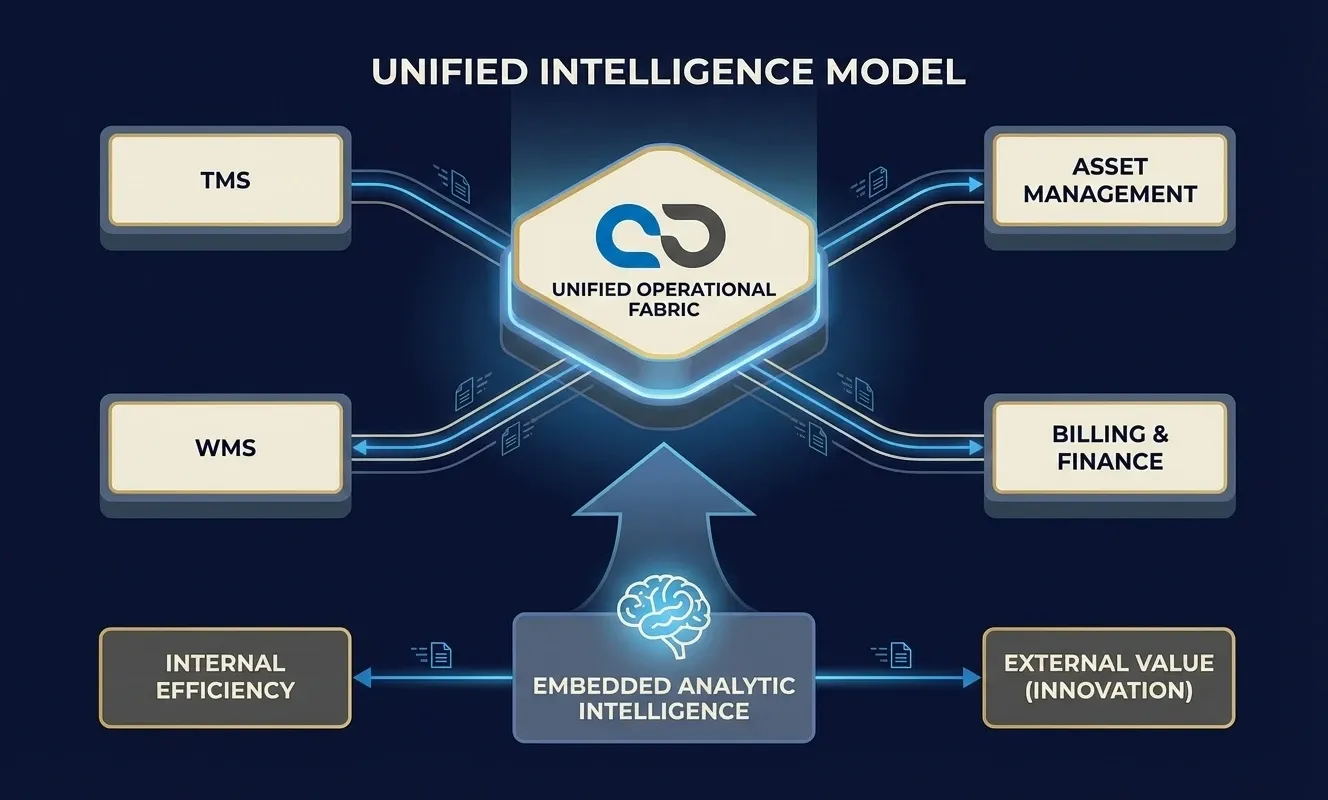
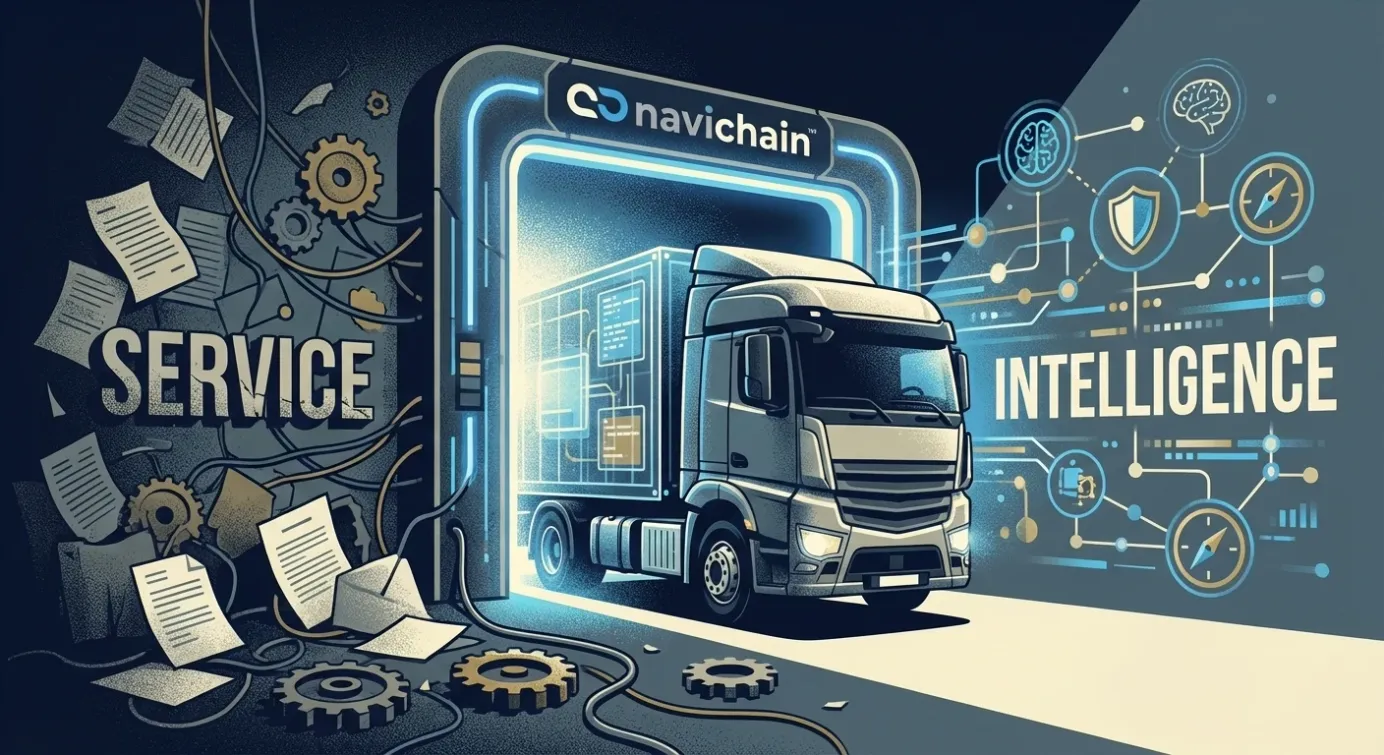
Schematic illustrating the shift from traditional service-based logistics to a data-driven, intelligence partner model.
From diagnosis to design: The blueprint for a resilient logistics operating system
Adopting this model requires a new kind of technology platform, one built on three core principles.
Principle 1: Unified operational fabric
A modern logistics platform must be a "central nervous system," not a collection of disparate apps. It must natively integrate all core functions—TMS, WMS, asset management, billing, and order management. This creates a single, real-time source of truth that eliminates data silos, stops manual re-entry, and provides the clean, holistic dataset required for any meaningful analysis.
Principle 2: Sovereign data architecture
For European SMEs, true operational resilience requires "data sovereignty." This is non-negotiable. The platform's architecture must be "Self-Hosted" or hosted by a local provider within the EU (e.g., in Sweden), under local jurisdiction. This is the only way to ensure full GDPR compliance and, crucially, to shield your company's and your clients' sensitive operational data from extraterritorial laws like the US CLOUD Act. Trust and security must be built into the foundation.
Principle 3: Embedded analytic intelligence
Finally, the platform must have an embedded "brain." A integrated AI or advanced analytics engine that runs within the secure, sovereign architecture of Principle 2, analyzing the unified data from Principle 1. This allows the SME to unlock deep operational efficiencies (like fuel savings and route optimization) and, more importantly, to generate the external value-add insights (like carbon reporting) that enable the business model shift from "service" to "intelligence."
References/sources
- International Road Transport Union (IRU). (2024). Digitalisation in Road Transport: State of Play. https://www.iru.org/resources/iru-library/digitalisation-road-transport-state-play (Used for SME digitalization lag and priorities).
- Transport & Environment. (2023). Road Freight Transport Report. https://www.transportenvironment.org (Conceptual source for fuel efficiency and emissions data).
- Ti Insight. (2024). European Road Freight Market 2024. https://ti-insight.com (Conceptual source for margin pressures, typically cited as 2-5%).
- Official Journal of the European Union. (2018). Clarifying Lawful Overseas Use of Data Act (CLOUD Act). [https://www.europarl.europa.eu/RegData/etudes/ATAG/2018/621894/EPRS_ATA(2018](https://www.europarl.europa.eu/RegData/etudes/ATAG/2018/621894/EPRS_ATA(2018)621894_EN.pdf](https://www.europarl.europa.eu/RegData/etudes/ATAG/2018/621894/EPRS_ATA(2018)621894_EN.pdf) (Analysis of the CLOUD Act's impact on EU data).
- European Commission. General Data Protection Regulation (GDPR). https://gdpr-info.eu (Primary source for data protection rules).
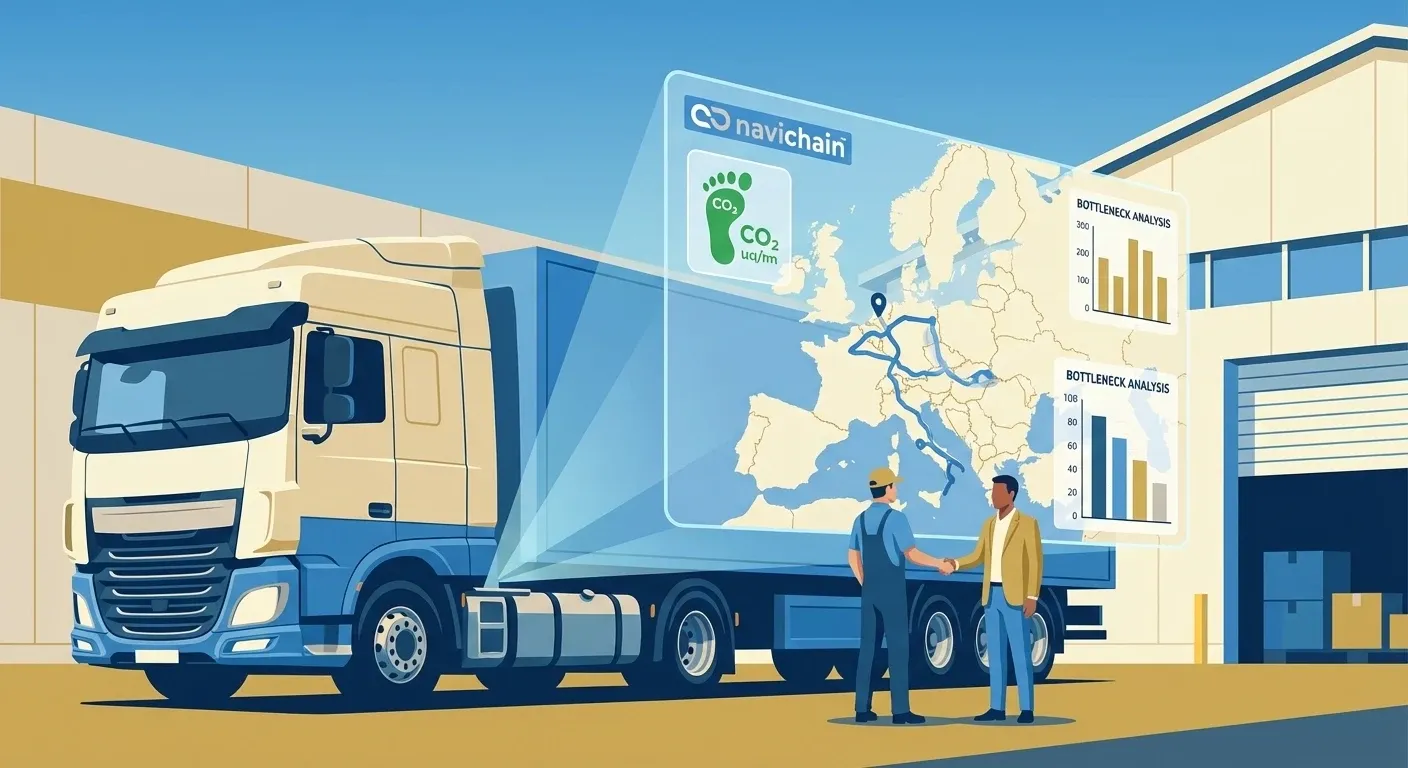
The adoption of a unified technology platform is crucial for European haulage SMEs seeking to transition from a service-based model to an intelligence-driven partnership approach.
Enabling the blueprint: The navichain SaaS unified logistics platform
This strategic white paper has outlined a 3-principle framework for business model innovation: a Unified Operational Fabric, a Sovereign Data Architecture, and Embedded Analytic Intelligence. The navichain SaaS platform was designed from the ground up to embody this blueprint for European SMEs. 1. Unified Operational Fabric: navichain SaaS is not a patchwork of tools. It is a single, unified logistics operating system where Transportation Management (TMS), Warehouse Management (WMS), Asset Management, Billing Management, and Order Management work as one. This integrated platform breaks down data silos and automates cross-functional workflows, creating the single source of truth necessary for innovation. 2. Sovereign Data Architecture: This is our key differentiator. The entire navichain SaaS platform is hosted on our own infrastructure (Self-Hosted) in Sweden. This means your data stays in Sweden, under Swedish jurisdiction. This design ensures full GDPR compliance and maximum security, placing your data—and your clients' data—completely free from the reach of foreign legislation like the US CLOUD Act. We provide complete data sovereignty as a foundational feature. 3. Embedded Analytic Intelligence: Because your data is unified and secure on our platform, we can deploy our integrated AI, which also runs on our own secure Swedish infrastructure. This allows our clients to perform deep, secure data analysis on their unified operational data—optimizing routes, predicting maintenance, and unlocking the unique efficiencies and value-add services that drive the "intelligence partner" business model. Our mission is to democratize this powerful logistics technology, offering a seamless, secure, and sovereign solution that allows SMEs to move beyond the service trap and thrive.
The navichain SaaS platform embodies a unified operational fabric, sovereign data architecture, and embedded analytic intelligence to empower European SMEs.
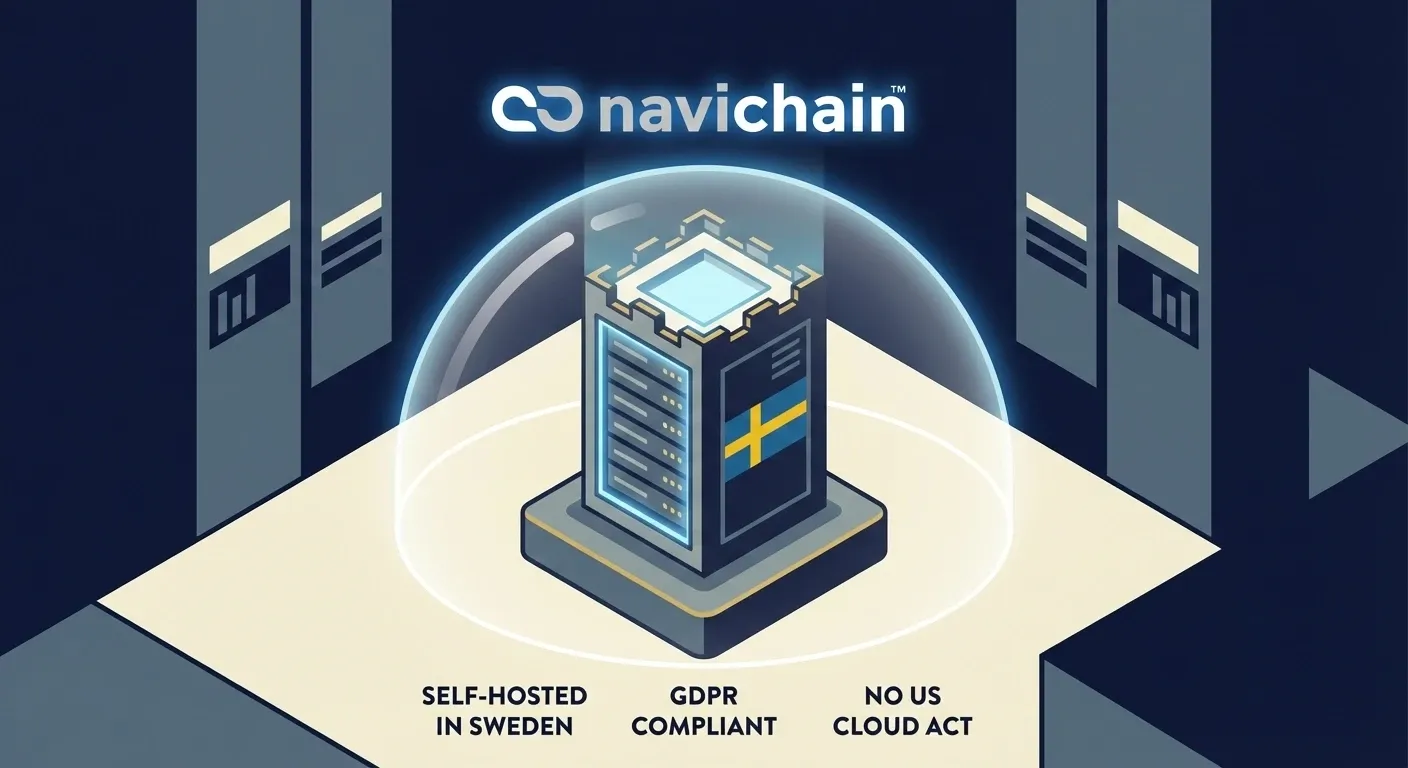
navichain's unified platform delivers TMS, WMS, asset management, and embedded analytics within a sovereign data architecture, enabling European SMEs to innovate.
Ready to optimise your supply chain?
navichain Insights Newsletter
Join the newsletter to receive the latest updates in your inbox.