Empty Miles: The Silent Killer of Haulage Margins
Table of Contents
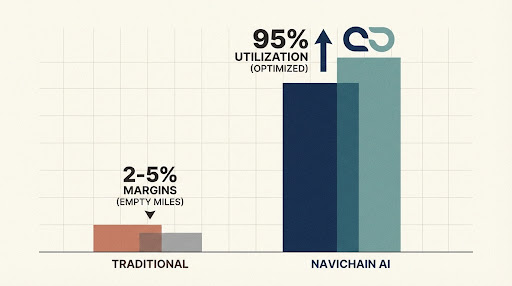
It is the industry's dirty secret, barely whispered in boardrooms but screaming on the balance sheet: Almost 22% of all heavy transport kilometers in the EU are driven with an empty trailer. In an era of rising fuel prices, severe driver shortages, and fierce price competition, "Hauling Air" is not just a waste—it is an existential threat. For the average haulier operating on razor-thin margins of 2-5%, reducing empty miles is the single most effective lever for survival.
Executive Summary
"Empty Miles," also known as "Deadhead Miles," occur when a truck returns from a delivery without a return load. This phenomenon persists due to a fundamental flaw in the market: Information Asymmetry. Most hauliers know where their trucks are, but they don't know where the freight is. Conversely, shippers have freight but don't know where the capacity is.
Traditionally, this gap was bridged by phone calls to brokers or scrolling through fragmented freight exchanges. Today, Navichain bridges this gap with Algorithmic Matching. By treating capacity as a liquid asset and applying Dynamic Pricing models similar to Uber or Airlines, we help hauliers turn cost centers into revenue streams.
Part 1: The Economics of the Empty Truck
The "Double Loss" Phenomenon
An empty mile is not just a zero-revenue event; it is a negative-revenue event. 1. Direct Cost: You are burning diesel (€1.70/liter), wearing down tires, and paying the driver's wage. 2. Opportunity Cost: Every hour spent driving empty is an hour not spent moving paying cargo. 3. The CO2 Penalty: With the introduction of carbon taxes (ETS2), you are now literally paying for the privilege of polluting the air while earning nothing.
The Margin Squeeze
The logistics industry is notoriously low-margin. * Cost Inflation: Since 2022, operational costs (labor, fuel, maintenance) have risen by over 30%. * Rate Stagnation: Freight rates have not kept pace with inflation, squeezed by large buyers with immense purchasing power. * Result: The buffer for inefficiency is gone. A route that was profitable with 10% empty running in 2020 is now a loss-maker.
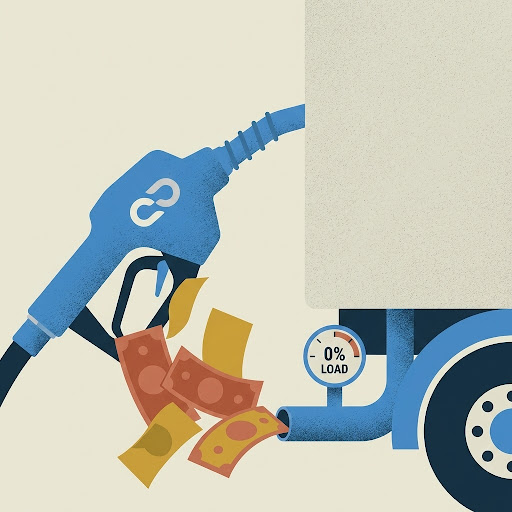
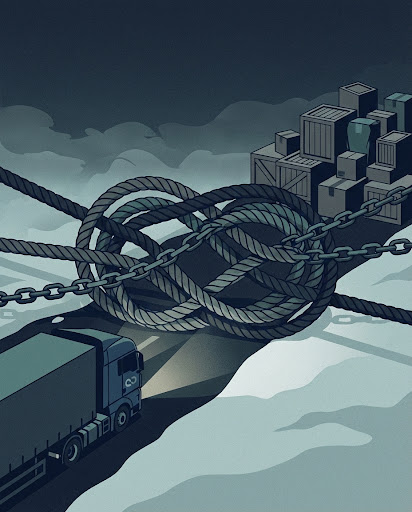
The difference between bleeding cash and building wealth.
Part 2: Dynamic Pricing - The Airline Model for Freight
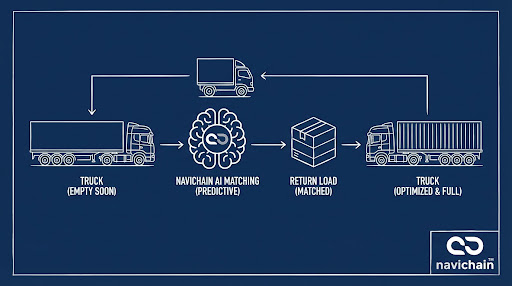
Why does a flight ticket cost €50 today and €200 tomorrow? Because airlines understand Supply and Demand. The trucking industry largely does not. We still rely on static "Rate Cards" negotiated once a year.
The Navichain Approach
Navichain introduces intelligence into pricing. * Scenario: Your truck is in Munich and needs to return to Verona. It is empty. * Static Thinking: "My rate is €1.50/km. Take it or leave it." Result: No load. Truck drives empty. Loss: €300 fuel. * Dynamic Thinking: "The market rate for Munich-Verona is low today because there is excess capacity. But getting €0.90/km is better than €0.00/km." * The Algorithm: Navichain analyzes the Spot Market in real-time and suggests a competitive price that guarantees a booking. It understands that Revenue > Cost > Zero.
Breaking the Breakeven Point
By using dynamic pricing to secure backhauls (return loads), you cover your fixed costs. The "Headhaul" (outbound trip) generates the profit, but the "Backhaul" ensures that the profit isn't eaten up by the return journey.
Part 3: Collaborative Logistics - "Coopetition"
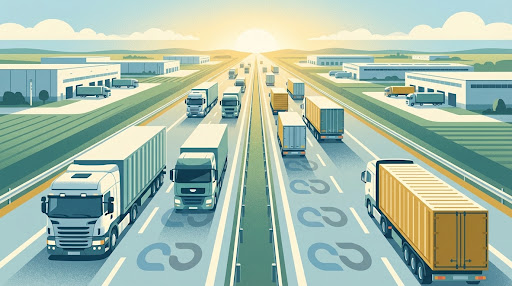
The days of guarding your fleet like a state secret are over.
The Shared Network
Navichain enables a "Virtual Fleet." * Internal Matching: If you have multiple depots, the system first looks for your own internal freight to fill the empty leg. * Partner Matching: If no internal freight is available, the system checks trusted partners. "My truck is empty in your region; do you have a load?" * Public Spot Market: As a last resort, the capacity is broadcast to the open market, priced to sell.
Predictive Capacity
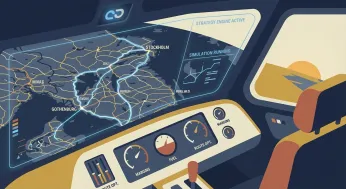
The best time to fix an empty mile is before the truck leaves the depot. * Look-Ahead Logic: When a dispatcher plans a trip from Stockholm to Malmö, Navichain immediately calculates the probability of a return load. If the probability is low, the system warns the dispatcher: "Warning: High risk of deadhead. Increase outbound rate to compensate?"
Conclusion
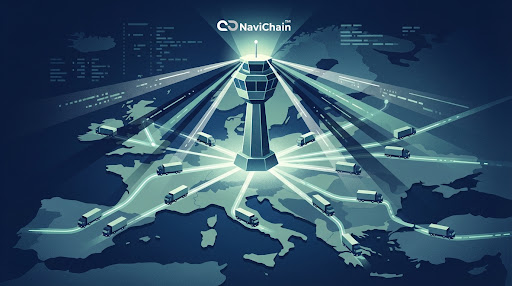
Empty running is not a "cost of doing business." It is a failure of planning and a failure of data.
In 2026, we have the technology to make the invisible visible. We can see every truck, every pallet, and every pricing trend in real-time. To continue driving 20% of kilometers with air in the trailer is a choice. A choice to be less profitable, less sustainable, and less competitive.
Stop hauling air. Start hauling data.
Maximize Your Margins.
See how Navichain's Dynamic Pricing fills your empty trucks.
navichain Insights Newsletter
Join the newsletter to receive the latest updates in your inbox.