The e-CMR Paradox: Why your Implementation isn’t About Technology, but System Failure
Table of Contents
Facing increasing customer demands for e-CMR is squeezing already tight margins for Swedish hauliers, but digitalisation offers a potential 75% reduction in administrative time. This white paper moves beyond panic implementations, presenting a three-step framework to build a unified, efficient, and data-driven operating system by tackling the hidden costs of fragmented systems.
E Cmr Paradoxen Varfor Er Implementering Inte Handlar Om Teknik Utan Om Systemfel
Swedish hauliers are facing increasing customer demands for e-CMR, placing further pressure on already tight margins. According to the IRU, digitalisation could reduce administration time by up to 75%, but the path to get there seems complex. However, this isn't just another technology problem. Focusing solely on e-CMR misses the point. The real challenge is that your customer's requirement has exposed the hidden costs of your fragmented systems and data silos. This white paper replaces 'panic implementation' with a strategic data integration model. We present a three-step framework not only to implement e-CMR, but to build a unified, efficient, and data-driven operating system for your haulage business.
Introduction: When a customer requirement reveals all
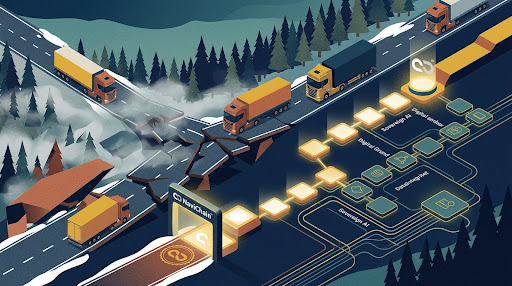
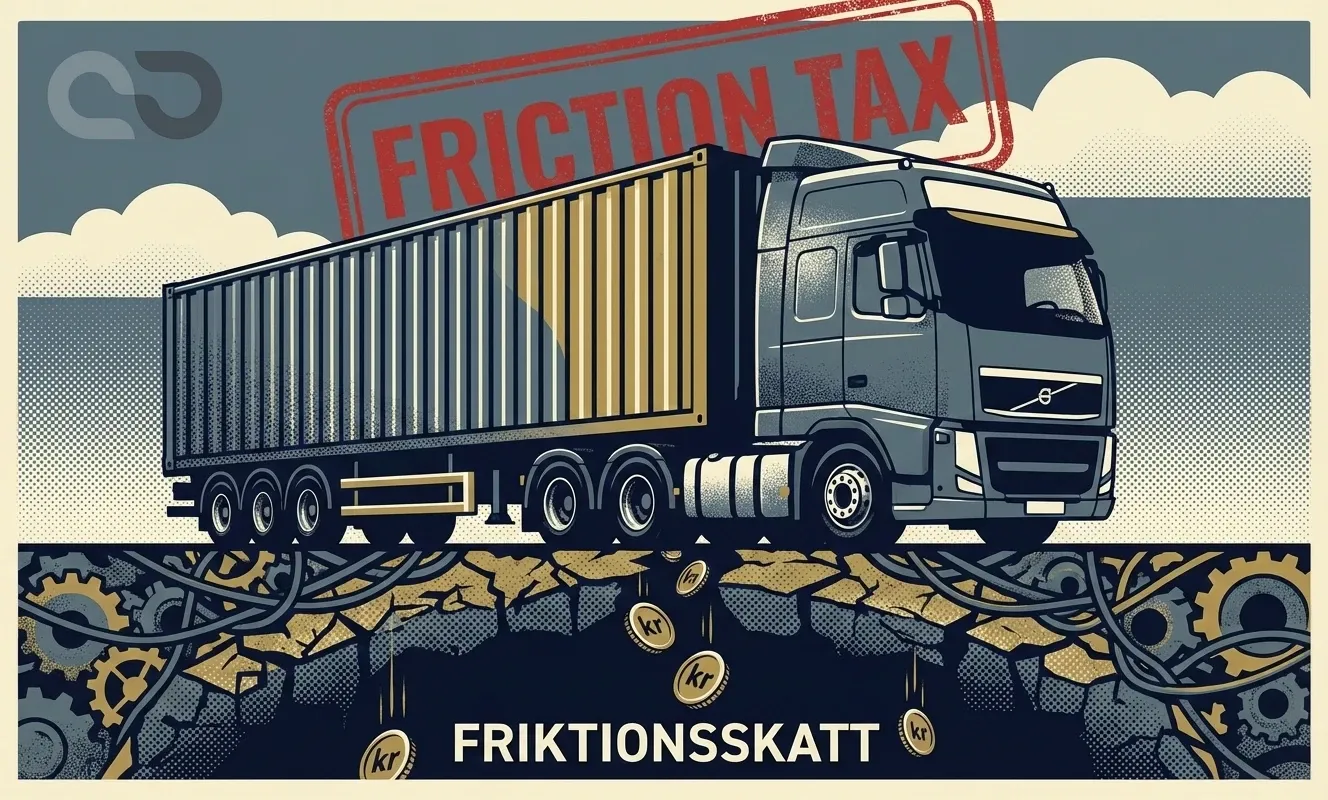
This illustrates the immediate pressure felt by hauliers when faced with a mandated e-CMR requirement, highlighting the perceived burden of new systems and costs.
The requirement has come from your biggest customer: "From next quarter onwards, we require you to use e-CMR." For many small and medium-sized haulage companies in Sweden, this feels like yet another burden. Yet another system to learn, another cost to bear, and another technical complexity to manage in a business where margins are already squeezed.
But what if this requirement isn't the problem, but in fact an unexpected catalyst? What if your customer's demand has unknowingly given you the most powerful reason to tackle a much deeper, more expensive problem that has long hindered your growth?
This is the e-CMR paradox. The struggle to implement a digital consignment note isn't about the e-CMR technology itself. It's about the requirement highlighting the painful, hidden cost of system fragmentation.
This white paper isn't a technical manual for e-CMR. It's a strategic guide to transform this customer requirement from a reactive cost into a proactive investment in your business's future. We argue that the solution isn't to 'buy an e-CMR app', but to embrace a data integration strategy that solves the root cause of the problem.
The real challenge: The cost of a fragmented truth
For the average SME haulage firm, the operational reality rarely looks like a streamlined process.
For the average SME haulage firm, the operational reality rarely looks like a streamlined process. Instead, it's a digital archipelago:
- Order management happens via email and manual entry into an Excel spreadsheet.
- Transport planning takes place in a standalone TMS (Transport Management System) – if one even exists.
- Warehouse status (WMS) is a separate system, if it's not managed with pen and paper.
- Invoicing takes place in an accounting program that requires manual transfer of data from the TMS or Excel.
Each system contains a small piece of the truth, but nowhere is there a consolidated picture. This is system fragmentation. And it's expensive.
The hidden cost of manual integration
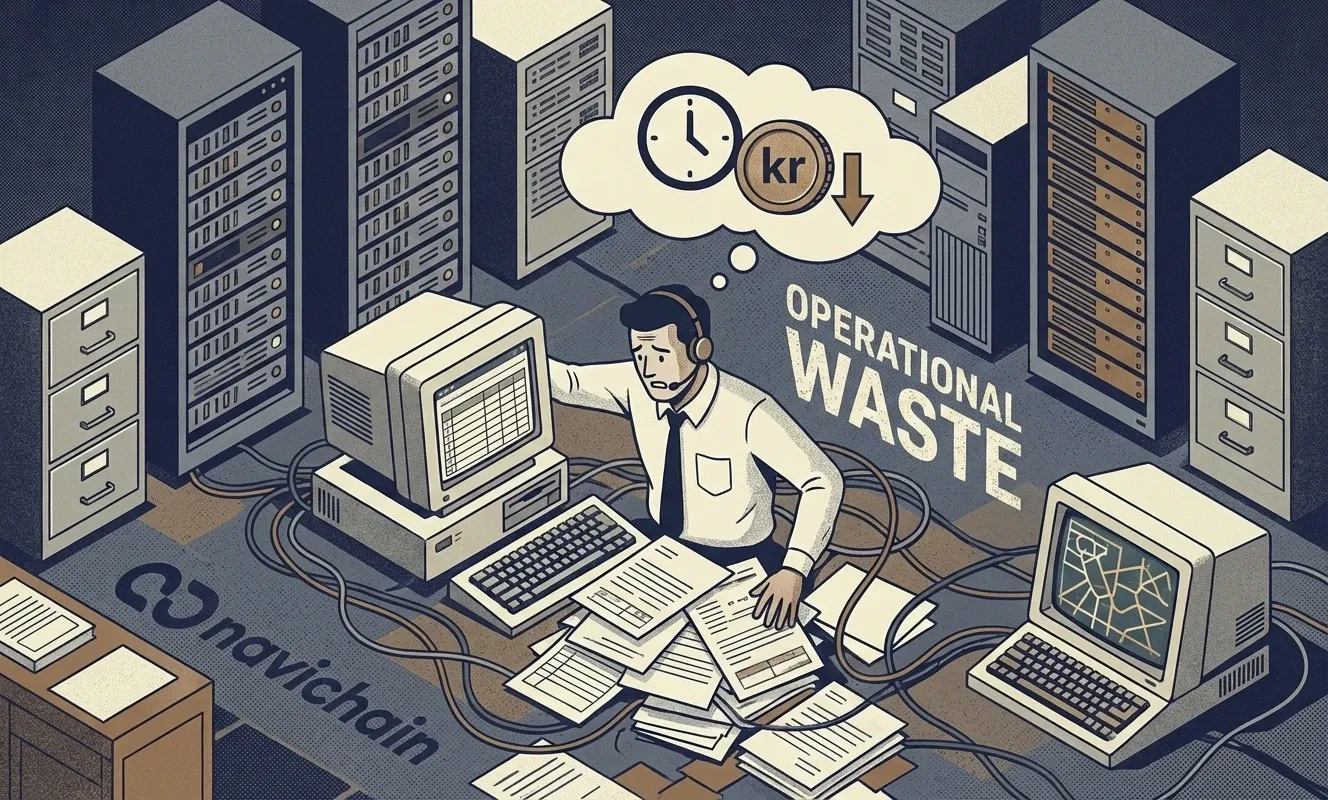
In this fragmented environment, your employees – transport managers, administrators, and even drivers – act as human 'APIs'. They spend hours each week manually moving data from one system to another. A study from industry analysts shows that transport managers can spend up to 20% of their working time manually transferring data, correcting errors, and chasing missing information.
When the requirement for e-CMR comes along, this fragile manual system collapses. Why? Because e-CMR isn't an isolated event. To work, an e-CMR must:
- Fetch data from the TMS (what is to be transported, where, by whom).
- Be updated in real-time by the driver (status, deviations, signature).
- Immediately send data to the invoicing system (Proof of Delivery, to start invoicing).
- Be available to the customer via a portal or notification.
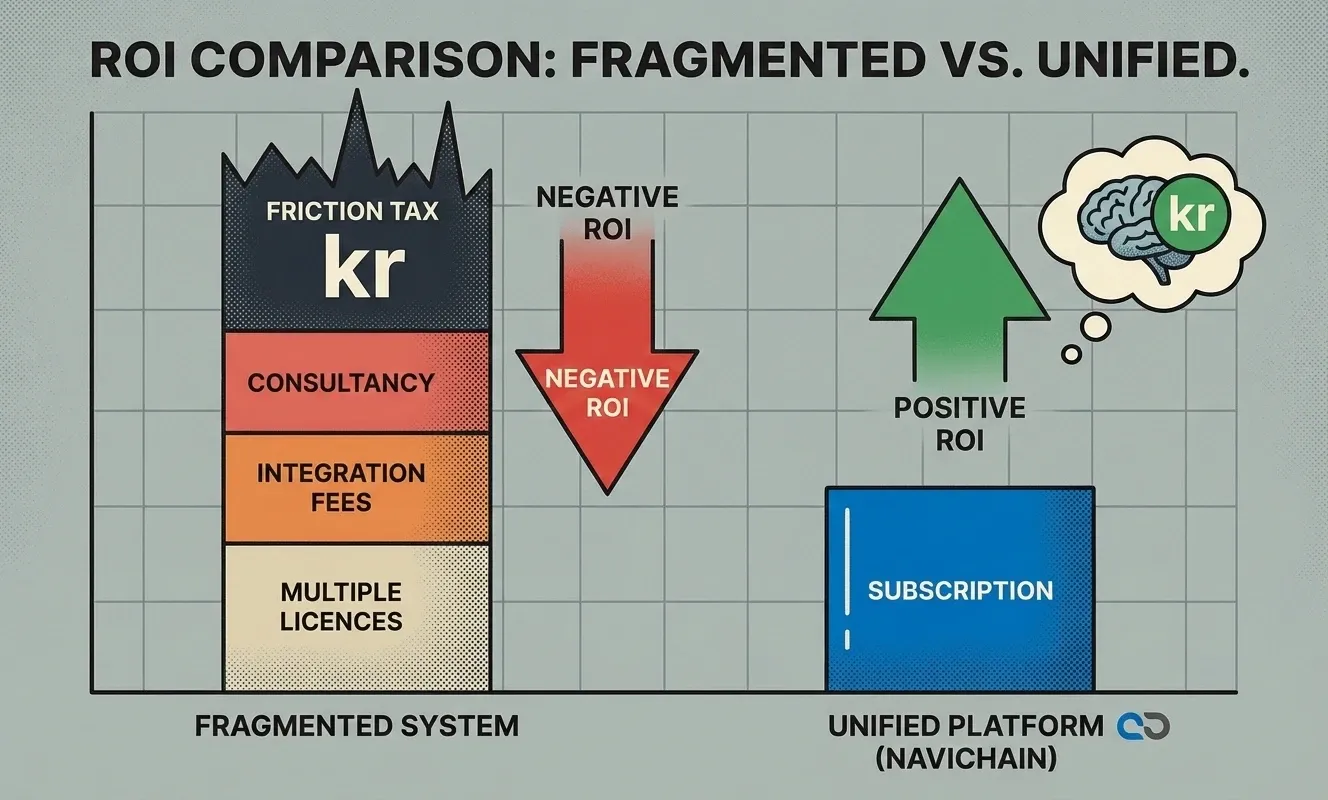
In a fragmented landscape, this isn't one integration; it's three, four, or five separate, complex, and expensive integrations. The implementation problem isn't e-CMR; it's the lack of a unified data foundation.
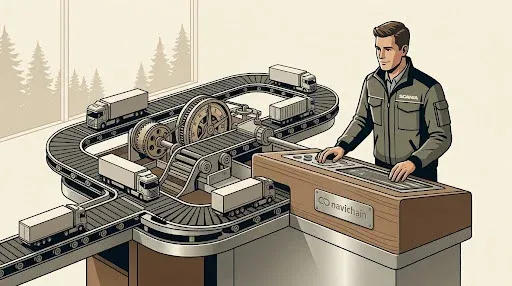
A typical example of the complex data flows and system integrations often required for a single shipment in a fragmented logistics landscape.
The way forward: A 3-step framework for strategic data integration
Instead of 'patching' the system with yet another standalone solution, the e-CMR requirement forces a strategic decision.
Instead of 'patching' the system with yet another standalone solution, the e-CMR requirement forces a strategic decision. The way forward is to switch focus from the technology (e-CMR) to the strategy (integration). Solving this correctly not only solves the e-CMR problem, but also automates dozens of other processes in the bargain.
Step 1: Mapping (audit) – where does your data live?
Before you can build a bridge, you need to understand the distance. Start by creating a visual map of your data flows. Ask these questions for each step in your core process (from order to invoice):
- What information is needed?
- Where is this information created (which system, which person)?
- Where does the information need to go next?
- Who or what moves the information there (manual entry, email)?
You will quickly see where the bottlenecks and manual transfers are. This becomes your 'pain map'.
Step 2: Consolidation (unify) – create a single source of truth
The single most important goal is to eliminate data silos. You need to move from a fragmented truth to a Single Source of Truth (SSOT). In the logistics world, this means a platform where TMS, WMS, order management, and invoicing aren't separate programs that 'talk' to each other, but different modules in the same operating system.
When an order is created, it should exist in the same system that is used to plan the transport, track the asset (the lorry), and generate the invoice. The data is entered once and then flows automatically through the entire process.
Step 3: Automation (automate) – implement e-cmr as a natural output
Once you have a consolidated platform (Step 2), implementing e-CMR becomes trivial. It's no longer a complex integration project; it's a natural output of your existing flow.
- The transport manager creates a transport order in the unified system.
- The system automatically generates an e-CMR with all the correct data (from the order, the customer, the asset).
- The driver manages the e-CMR via their mobile device, which is connected to the same system.
- When the customer signs (Proof of Delivery), the status in the system changes immediately.
- This status change automatically triggers the invoicing module to create and send a correct invoice.
In this scenario, you haven't 'implemented e-CMR'. You have implemented an efficient logistics flow, where e-CMR is an automated part.
From diagnosis to design: The blueprint for a resilient logistics system
This strategic transition from fragmentation to integration requires a new type of technical foundation.
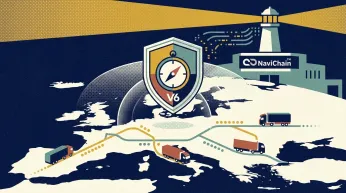
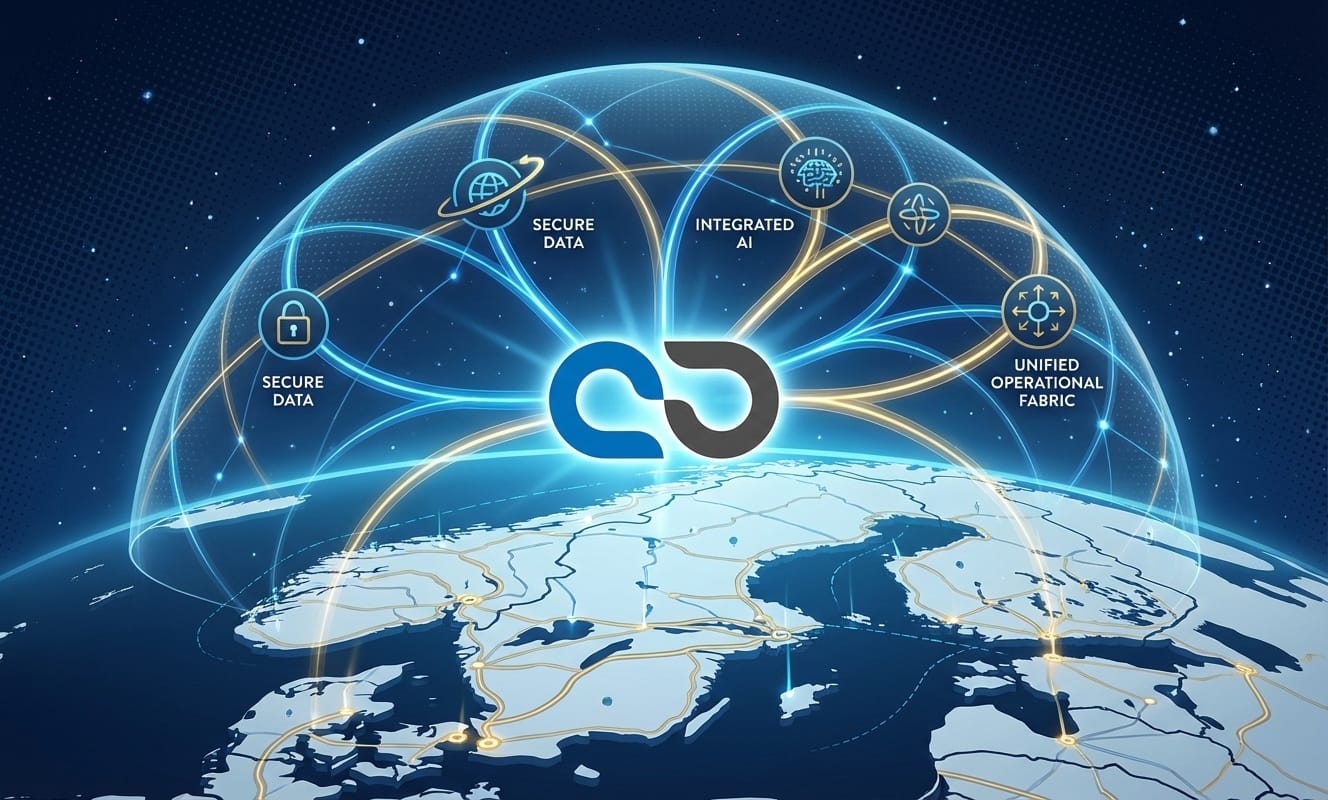
Schematic representation of the integrated logistics flow, highlighting the transition from siloed systems to a unified operational fabric.
This strategic transition from fragmentation to integration requires a new type of technical foundation. To be future-proof, especially in Europe, a modern logistics operating system for small and medium-sized businesses must be built on three fundamental principles.
Principle 1 - unified operational fabric
Stop thinking in terms of separate 'systems' (TMS, WMS, etc.). The future is a unified operational fabric – a central nervous system for your business. This platform must be designed from the ground up to handle the entire flow, from order to invoice, in a single interface. This is the only way to achieve a true 'Single Source of Truth' and eliminate the manual data entry that is killing your efficiency.
Principle 2 - secure data architecture and control
In a world of increasing cyber threats and strict regulations like GDPR, it's no longer sustainable not to know where your data is or who has access to it. For European and Swedish hauliers, data control is synonymous with operational resilience. Your data is your most valuable asset. It must be stored and processed on a secure infrastructure, preferably within your own legal jurisdiction (Sweden/EU). This not only ensures easy GDPR compliance, but protects you from international data complexities and gives you full sovereignty over your own business information.
Principle 3 - embedded analytical intelligence
Data is only useful if it leads to insight. In a fragmented system, analysis is impossible because the data is incomplete. But in a unified platform (Principle 1) that is secured (Principle 2), your data becomes a goldmine. The next step is to have an embedded, integrated AI that can analyse 100% of your operational data within your secure environment. This AI can identify inefficient routes, optimise load capacity, and predict maintenance needs – giving you the margin improvements that your competitors can only dream of.
References/sources
- International Road Transport Union (IRU): "e-CMR: The Future of Logistics" (Information on adoption and benefits) - https://www.iru.org/what-we-do/facilitating-trade-and-transit/e-cmr
- Swedish Transport Administration (Transportstyrelsen): "Digitalisation of freight transport" (Swedish initiatives and regulations) - https://www.transportstyrelsen.se/sv/vagtrafik/Yrkestrafik/Gods-och-buss/ (Specific digitalisation reports)
- European Commission: "Digital Transport and Logistics Forum (DTLF)" (EU framework for digital transport documents) - https://transport.ec.europa.eu/transport-themes/intelligent-transport-systems/digital-transport-and-logistics-forum-dtlf_en
- Ti Insight: "European Road Freight Transport Market Report" (Analyses of market trends, costs and digitalisation) - https://ti-insight.com/
Enabling the blueprint: Navichain SaaS unified logistics platform
The strategic blueprint outlined in this white paper – a unified operational fabric, secure data architecture, and embedded intelligence – is precisely what we have built navichain SaaS to be.
We saw that Swedish and European small and medium-sized haulage companies were being left out of the digital transformation, forced to choose between costly, fragmented systems or continuing with manual processes. navichain SaaS is designed to democratise logistics technology.
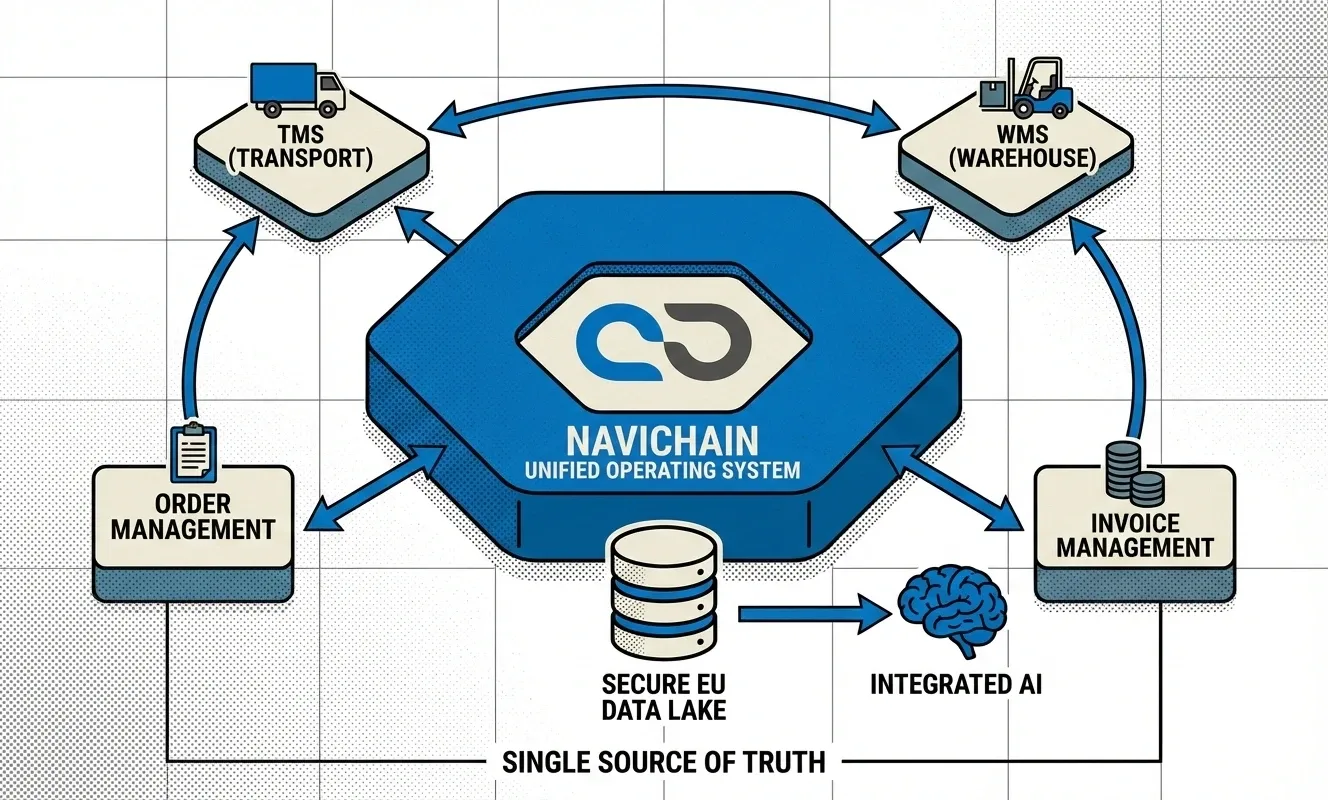
The navichain SaaS platform delivers a unified view across TMS, WMS, order management, asset tracking, and invoicing, establishing a single source of truth for logistics operations.
- For Principle 1 (Unified Fabric): navichain SaaS isn't 'integrated with' a TMS or WMS; it is your TMS, WMS, Order Management, Asset Management, and Invoicing. It's a single, unified platform that creates an immediate 'Single Source of Truth' and eliminates manual data entry.
- For Principle 2 (Secure Data Control): This is our core differentiation. The entire navichain platform is hosted on our own secure infrastructure (Self-Hosted) in Sweden. Your data never leaves Swedish/EU jurisdiction. This guarantees maximum data security, resilience, and the absolute easiest path to full GDPR compliance. You have full control over your operational information.
- For Principle 3 (Embedded Intelligence): On top of this unified, secure data foundation, we run our integrated AI. Because it analyses data within our secure Swedish infrastructure, you can perform deep, secure data analyses to unlock unique efficiency gains – without ever exposing your sensitive data to third parties.
Implementing e-CMR in navichain SaaS isn't a project. It's a standard feature, a natural consequence of having a unified and smart platform. Stop patching systems and start building a foundation for the future.
navichain SaaS: A unified platform encompassing TMS, WMS, order management, asset tracking, and invoicing, ensuring a single source of truth and eliminating data silos.
Navichain's unified SaaS platform, hosted on secure Swedish infrastructure, integrates TMS, WMS, order management, asset tracking, and invoicing to provide a single source of truth.
Ready to optimise your supply chain?
navichain Insights Newsletter
Join the newsletter to receive the latest updates in your inbox.