The e-CMR Advantage: Transforming Operations and Delighting Customers
Table of Contents
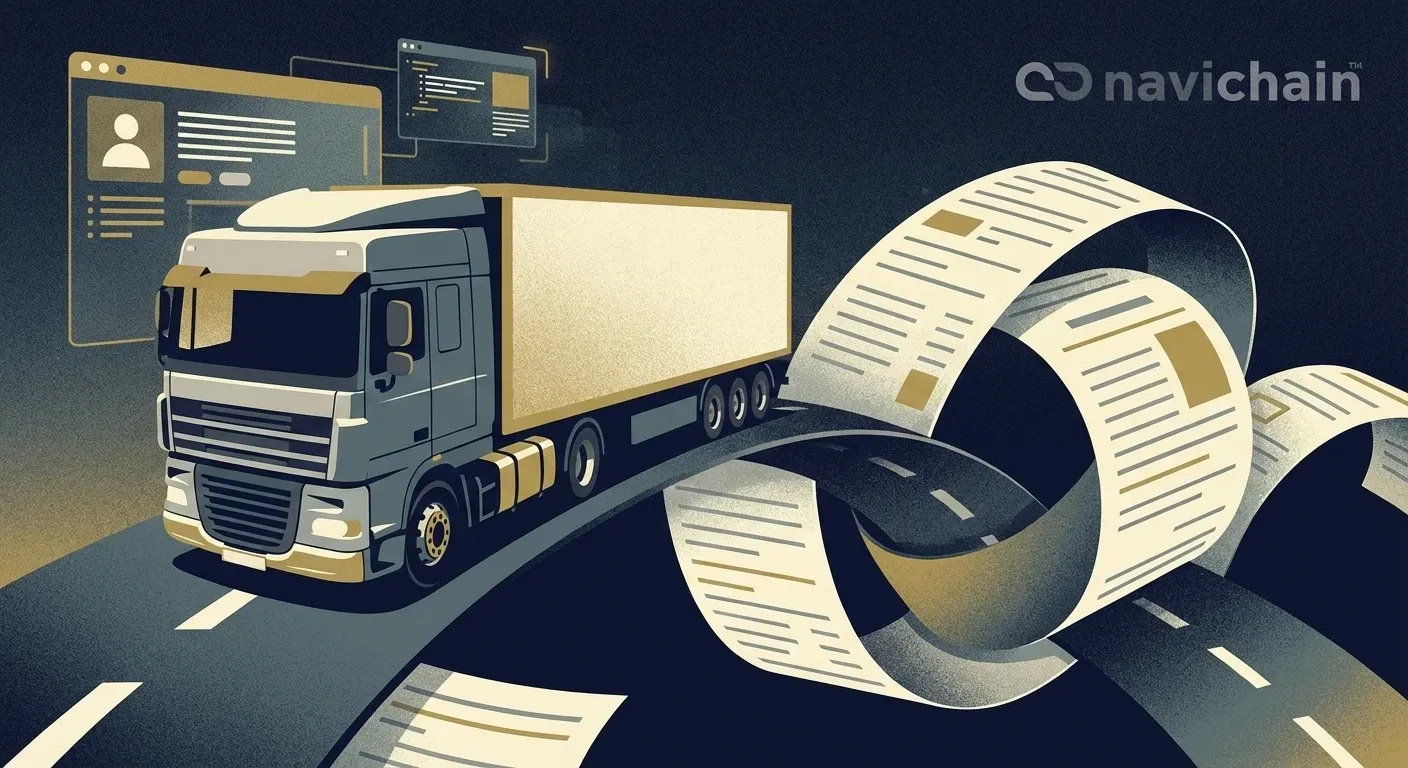
Executive Summary
The EU's mandatory e-CMR adoption aims to streamline logistics for SMEs. However, implementing disparate e-CMR apps creates operational silos, increasing costs and frustrating customers. This paper explores how a unified logistics platform solves this problem, maximizing efficiency and boosting customer satisfaction.
Discover how integrating e-CMR within a comprehensive system streamlines processes, eliminates manual data entry, and reduces errors. Real-time visibility improves communication, enabling proactive issue resolution and enhancing service delivery. By consolidating workflows and data, a unified platform empowers SMEs to achieve regulatory compliance while simultaneously optimizing operations and fostering stronger customer relationships, ultimately leading to a competitive advantage.
The EU's e-CMR mandate is driving SMEs to embrace digital solutions, but a standalone app isn't the path to success. This white paper explains how such 'solutions' can hinder operational efficiency, reduce customer satisfaction and disconnect your TMS, WMS, and invoicing systems.
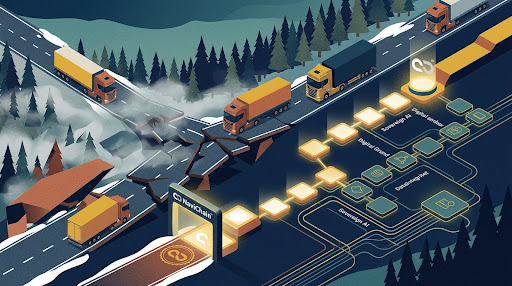
E Cmr Paradoxen Skapar Ny Datasilo
The EU's push for mandatory digital freight information (e-CMR) is now a reality, prompting SME transport providers to move beyond paper processes. The typical reaction? Implementing a standalone e-CMR app. This report argues that this approach misses the strategic opportunity. Such a 'solution' can create operational inefficiencies, disconnect from your TMS, WMS, and invoicing systems, and ultimately impact customer satisfaction. This white paper presents a strategic framework for leveraging e-CMR, not as another isolated tool, but as a catalyst for genuine operational unity and enhanced customer experience. We outline how to build an integrated and efficient operation where compliance becomes a competitive advantage, boosting efficiency and delighting customers.
The Ticking Clock: e-CMR as a Driver of Efficiency, not Just Compliance
For decades, the paper consignment note (CMR) has been a simple, tangible, albeit inefficient, part of European logistics.
For decades, the paper consignment note (CMR) has been a simple, tangible, albeit inefficient, part of European logistics. Its digital successor, e-CMR, along with the broader EU regulation on Electronic Freight Transport Information (FTI), is transitioning from an emerging trend to a fundamental operational requirement. By 2026, all relevant public authorities within the EU will be obliged to accept transport data in digital format, making the transition unavoidable. For large multinational transport providers, this transition may be a complex systems upgrade. However, for the small and medium-sized enterprises (SMEs) that form the backbone of the Scandinavian and European transport industry, it presents a unique set of challenges and opportunities. It's a chance to streamline operations, improve customer service, and boost efficiency in an industry already facing challenges like driver shortages and rising operating costs. The immediate temptation may be to find the cheapest, quickest e-CMR app, install it on drivers' phones, and meet the compliance requirement. This report argues that this seemingly pragmatic approach is a missed opportunity. It’s a decision that, instead of solving efficiency problems, can create new ones and potentially harm customer satisfaction.
The Efficiency Paradox: How Standalone Apps Can Create Operational Bottlenecks
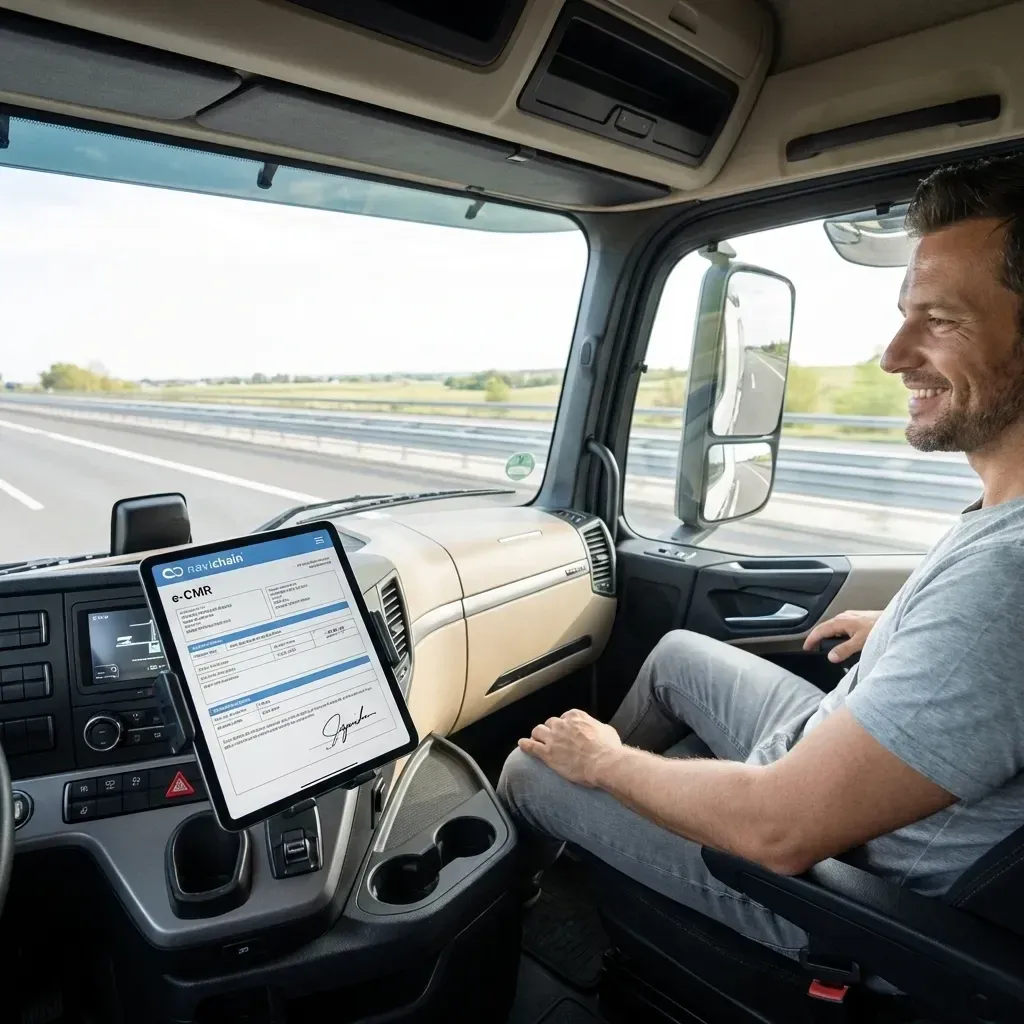
An inexpensive e-CMR app may satisfy compliance, but does it contribute to streamlined operations and enhanced customer service? It's a question of short-term savings versus long-term value.
Your operation isn't just about consignment notes; it's about the information they contain and how quickly that information can be leveraged. Who's the consignor? What's the cargo? Where is it going? Most importantly: has it been delivered, and is the customer satisfied? The moment of delivery and confirmation of customer satisfaction is the moment of truth – it triggers the invoice, proves Service Level Agreement (SLA) compliance, provides valuable customer feedback, and starts the clock on your payment cycle.
The Pitfalls of "App-for-Everything"
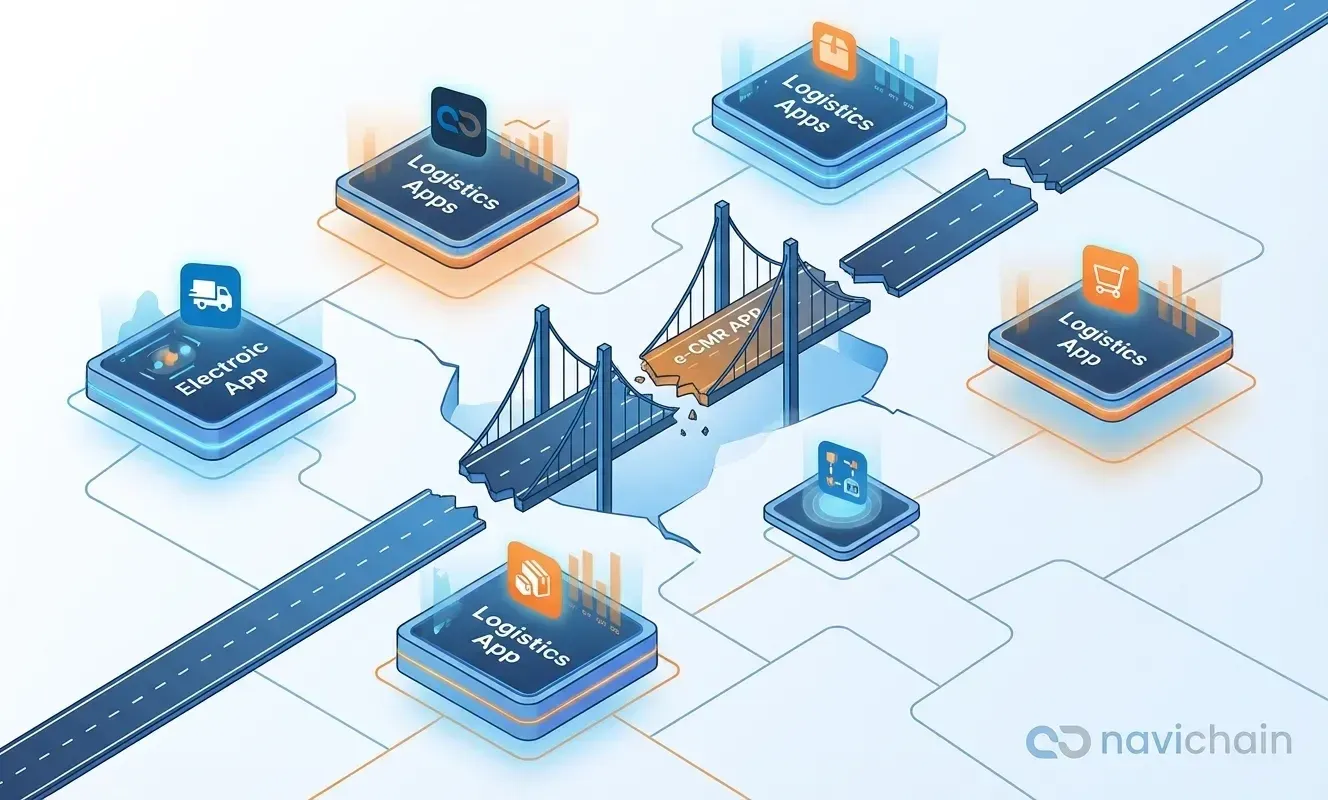
The typical SME logistics operation is often fragmented. A Transport Management System (TMS) might be used for planning, a Warehouse Management System (WMS) for storage, an accounting package for invoicing, and a vehicle management tool for tracking. These systems often operate independently, creating information silos. Now, consider adding a standalone e-CMR app. While this app may capture a digital signature and proof of delivery (POD), the critical question remains: where does that data reside? In the e-CMR app. This creates a critical disconnect. Your operations manager must manually access a separate system to verify delivery before initiating the invoicing process. The data must be re-entered, verified, and reconciled. Each manual step introduces potential errors, delays, and added costs. Instead of streamlining operations, the bottleneck is simply moved to a different digital interface. Furthermore, there's no easy way to capture customer satisfaction data at the point of delivery.
The Hidden Costs of Disconnected Systems
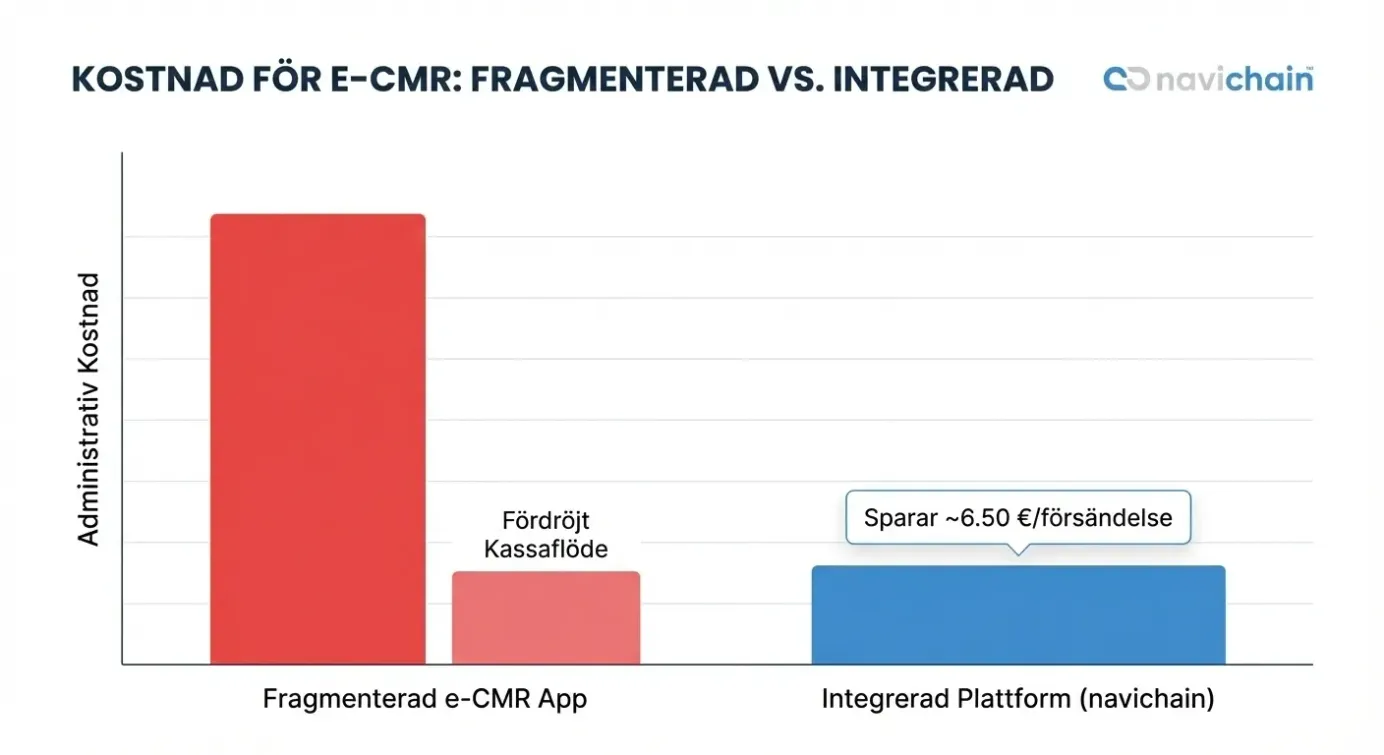
This fragmented approach, driven by a compliance-focused mindset, can lead to significant hidden costs and hinder customer satisfaction: * Increased Administrative Overhead: Teams spend valuable time manually transferring data between disconnected systems. A process that should be immediate – from delivery to invoice – becomes a time-consuming manual process. Studies by industry bodies like the IRU have shown that while e-CMR can save up to €6.50 per shipment, these savings are only realized if the data flows automatically. Manual re-entry completely negates the benefit.
- Delayed Cash Flow: A key advantage of digital POD is the potential to accelerate the order-to-cash cycle. If e-CMR data doesn't automatically trigger an invoice in the billing system, revenue is delayed, and cash flow suffers.
- Compromised Data Integrity: Manually copied data is prone to errors. This raises concerns about data accuracy, compliance, and the ability to resolve disputes. How can you confidently demonstrate that the data from the e-CMR app perfectly matches the data in your TMS and the final invoice?
- Limited Visibility: Without a single source of truth, it's difficult to gain a comprehensive view of operations. Powerful questions like "What's our average dwell time at this specific customer's bay, confirmed by e-CMR data?" remain unanswerable.
The Path to Efficiency: Leveraging e-CMR as a Catalyst for Operational Unity
This chart illustrates how fragmented data silos, including those created by isolated e-CMR implementations, hinder comprehensive operational analysis and optimization.
The e-CMR mandate should be viewed as an opportunity to achieve the operational unity that your business needs. Instead of focusing solely on adding e-CMR, the strategic question is: "How can we integrate e-CMR into a single, unified operating system to maximize efficiency and improve customer satisfaction?". This framework focuses on three core pillars:
- Unified Core (TMS + WMS + Invoicing): The foundation is a unified operating system where transport, warehouse, and invoice management are integrated. Data from an order should flow seamlessly from creation to planning (TMS), to picking (WMS), to in transit (Asset Management), to delivery (e-CMR) and finally to invoicing (Billing) without manual intervention. This ensures all aspects of your operations are in sync.
- Built-In Compliance: In a unified system, e-CMR isn't a separate 'app' or 'integration'; it's a built-in feature. The driver's mobile interface is simply a window into the central system. When the delivery is marked as complete, the data isn't sent to the billing module; the billing module already has it. This seamless integration enables true, automated compliance, reducing administrative burden. The marginal benefit of considering Data Sovereignty is also achieved, as your data is centralised in one system.
- Data Security and Flow: With data flowing in real time, it’s crucial to ensure its security and integrity. For a European SME, relying on cloud platforms outside the EU can be a risk (e.g., CLOUD Act, GDPR complexities). Your data flow must be secure and legally compliant. Adopting this framework transforms e-CMR into a valuable asset, automating the order-to-cash cycle and providing a single source of truth for the entire operation, enhancing both efficiency and customer service.
From Diagnosis to Design: Building a Resilient Logistics Operating System
To move from fragmented, friction-filled processes to a streamlined, resilient operation, Scandinavian SMEs must demand a new standard from their technology.
To move from fragmented, friction-filled processes to a streamlined operation that delivers exceptional customer service, Scandinavian SMEs must demand more from their technology. Modern logistics platforms must be built on three essential principles.
Principle 1 - Unified Operational Fabric
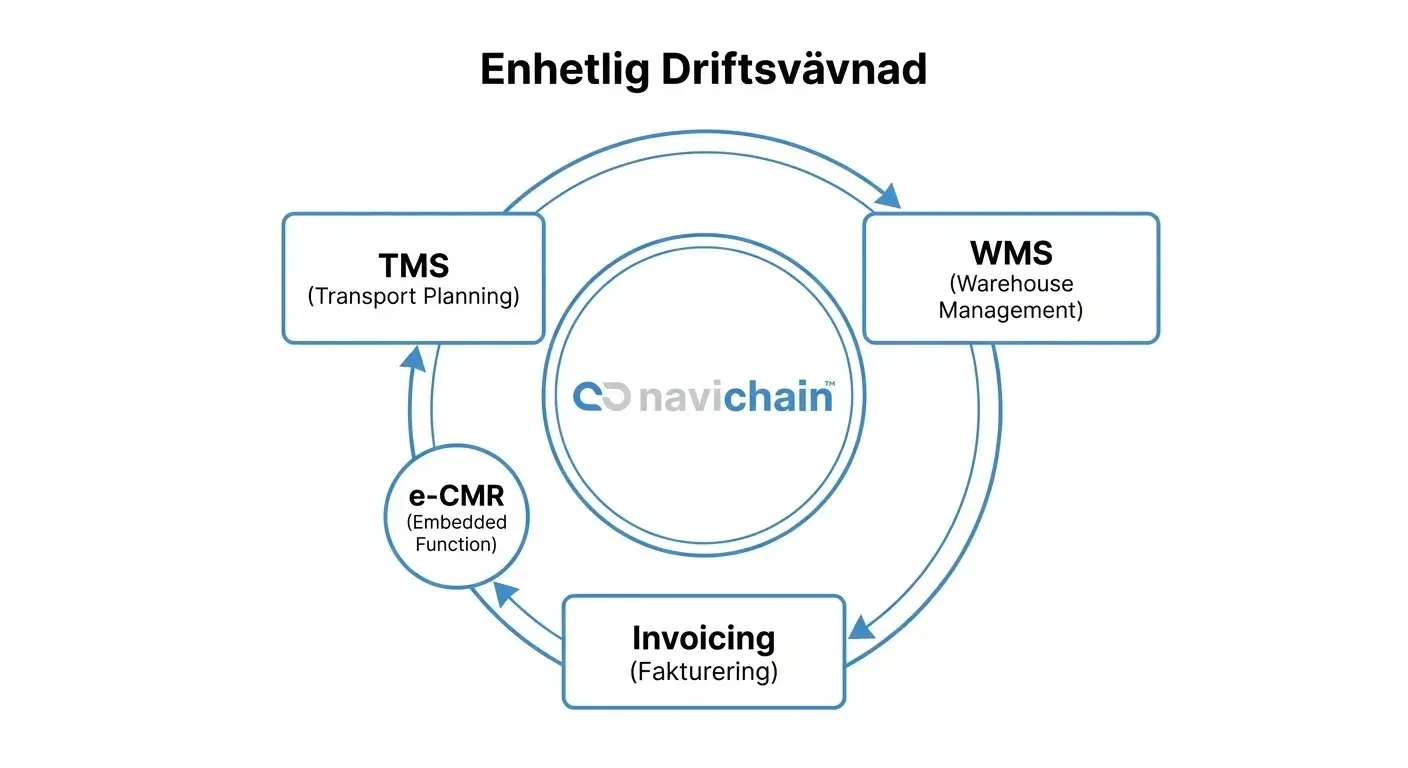
Demand a 'fabric' instead of buying 'modules'. A modern logistics system must be a single, integrated platform, functioning as the central nervous system of your operation. Transport Management (TMS), Warehouse Management (WMS), Invoicing, and Asset Management should be built-in components of a single system, sharing a database and a single source of truth. This ensures that a change made in one area (e.g., an e-CMR is signed) is immediately and universally available. This eliminates data re-entry, reduces errors, and automates workflows.
Principle 2 - Secure Data Architecture and Control
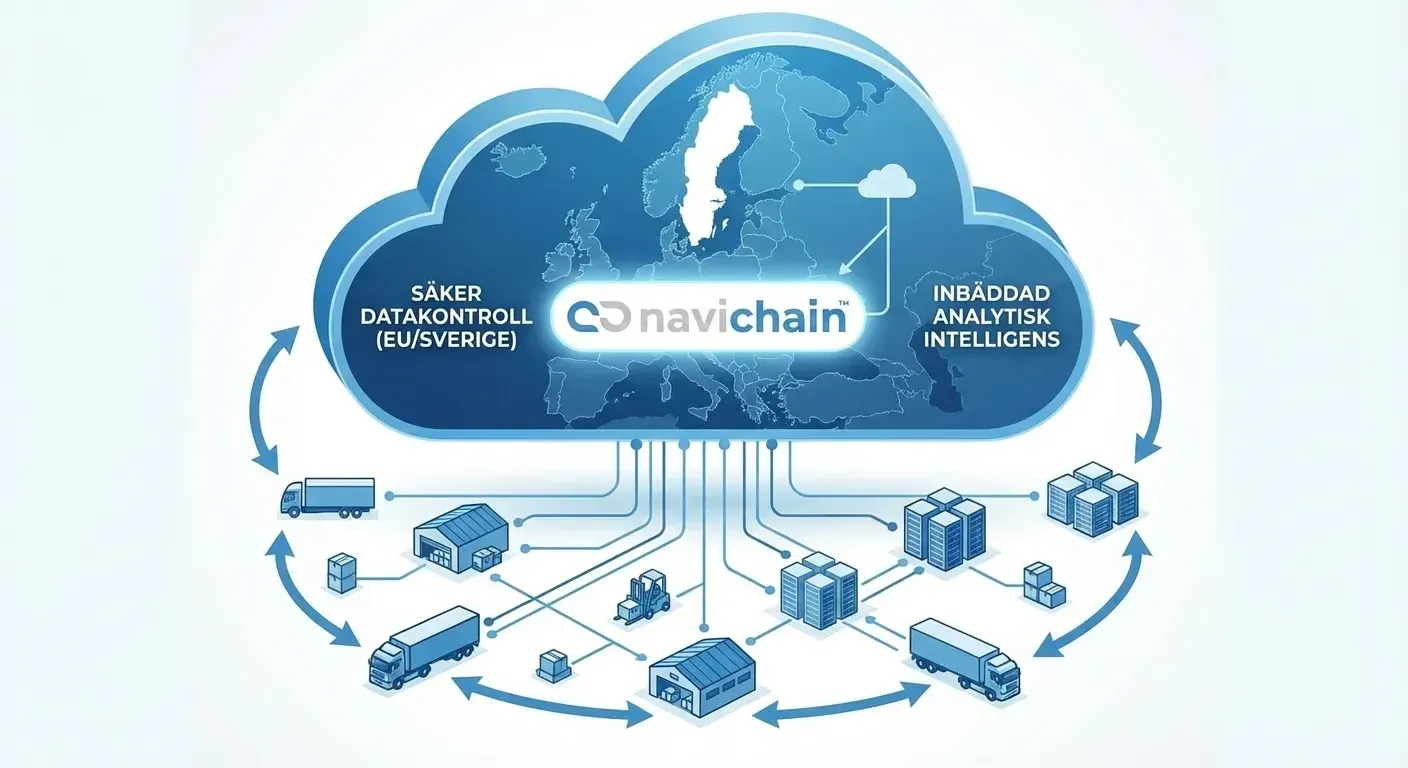
For European SMEs, data is a critical asset governed by stringent regulations. Operational resilience requires complete control over the data environment. Data must be stored and processed within the region's legal jurisdiction – specifically within the EU/UK – on secure, high-performance infrastructure. This 'self-hosted' or 'sovereign' approach simplifies GDPR compliance and provides confidence in data security and integrity.
Principle 3 - Data-Driven Optimization
With a unified fabric (Principle 1) and a secure data architecture (Principle 2), you can unlock data-driven optimization. By leveraging this data, you can identify areas for improvement and implement strategies to enhance efficiency and customer satisfaction. This includes optimising routes, predicting potential delays, and proactively addressing customer concerns.
Schematic illustrating the interconnectedness of a unified logistics platform, highlighting data flow between TMS, WMS, invoicing, and asset management within a secure, regional data environment.
Conclusion
The digital transformation of logistics in Scandinavia is no longer a distant aspiration, but a present reality. Navichain offers more than just e-CMR compliance; it delivers a unified operational fabric designed to propel SMEs into a new era of efficiency and growth. By securely connecting your supply chain, empowering data-driven decisions, and ensuring unwavering data sovereignty, Navichain eliminates the silos and unlocks the full potential of e-CMR. Embrace the future of logistics – a future where seamless operations, enhanced security, and optimized performance converge to create a competitive edge. Step into a world where your data works for you, driving resilience and exceptional customer experiences.
References/sources
- European Commission: Regulation (EU) 2020/1056 on electronic freight transport information (eFTI). https://transport.ec.europa.eu/transport-themes/logistics-and-multimodal-transport/electronic-freight-transport-information-fti_en
- International Road Transport Union (IRU): The benefits of e-CMR. https://www.iru.org/what-we-do/innovate-and-lead/e-cmr
- Transport Intelligence (Ti): The Digitalisation of Road Freight in Europe Report. https://www.ti-insight.com/briefs/the-digitalisation-of-road-freight-in-europe/
- CLECAT (European Association for Forwarding, Transport, Logistics and Customs Services): Position Paper on the eFTI Regulation. https://clecat.org/
Enabling the Blueprint: Navichain SaaS Unified Logistics Platform
This white paper has outlined a strategic blueprint for transforming the e-CMR mandate into a driver of operational excellence and enhanced customer satisfaction. The principles of a Unified Operational Fabric, Secure Data Architecture and Control, and Data-Driven Optimization are the foundation of the navichain SaaS platform. We designed navichain SaaS to address the fragmentation that hinders SME logistics.
- Embodying Principle 1 (Unified Fabric): Our platform is a single, unified operating system where Transport Management (TMS), Warehouse Management (WMS), Asset Management, Billing, and Order Management operate as one. The e-CMR functionality is built-in, enabling a zero-touch, automated order-to-cash cycle.
- Delivering Principle 2 (Secure Data Control): The entire navichain SaaS platform is hosted on our own secure infrastructure (Self-Hosted) in the UK. This guarantees that your data, your customers' data, and all e-CMR information remains strictly within UK/EU jurisdiction, maximizing data security, control, and GDPR compliance.
- Activating Principle 3 (Data-Driven Optimization): Because all data resides in a unified, secure system, Navichain helps identify bottlenecks, optimise planning, and improve customer service. Our mission is to provide a seamless, secure, and intelligent solution that enables Scandinavian SMEs to thrive. Stop managing apps and start building a unified, resilient operation that delivers exceptional customer experiences.

Navichain SaaS delivers a unified operational fabric, secure data control, and data-driven optimization, empowering Scandinavian SMEs to overcome e-CMR challenges and achieve operational excellence.
Navichain's integrated platform offers a comprehensive overview of your logistics operations, facilitating data-driven decision-making and streamlined workflows.
Ready to optimise your supply chain?
navichain Insights Newsletter
Join the newsletter to receive the latest updates in your inbox.