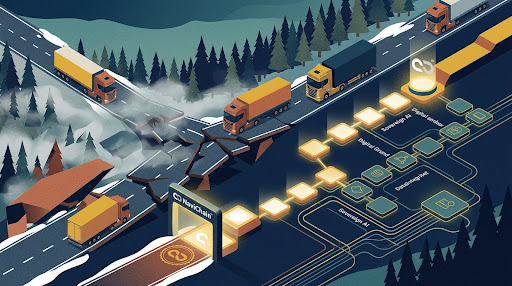
The Complexities of Digital Environmental Reporting: Navigating CSRD Requirements and Securing Credible ESG Data for Haulage Firms
Table of Contents
Executive Summary
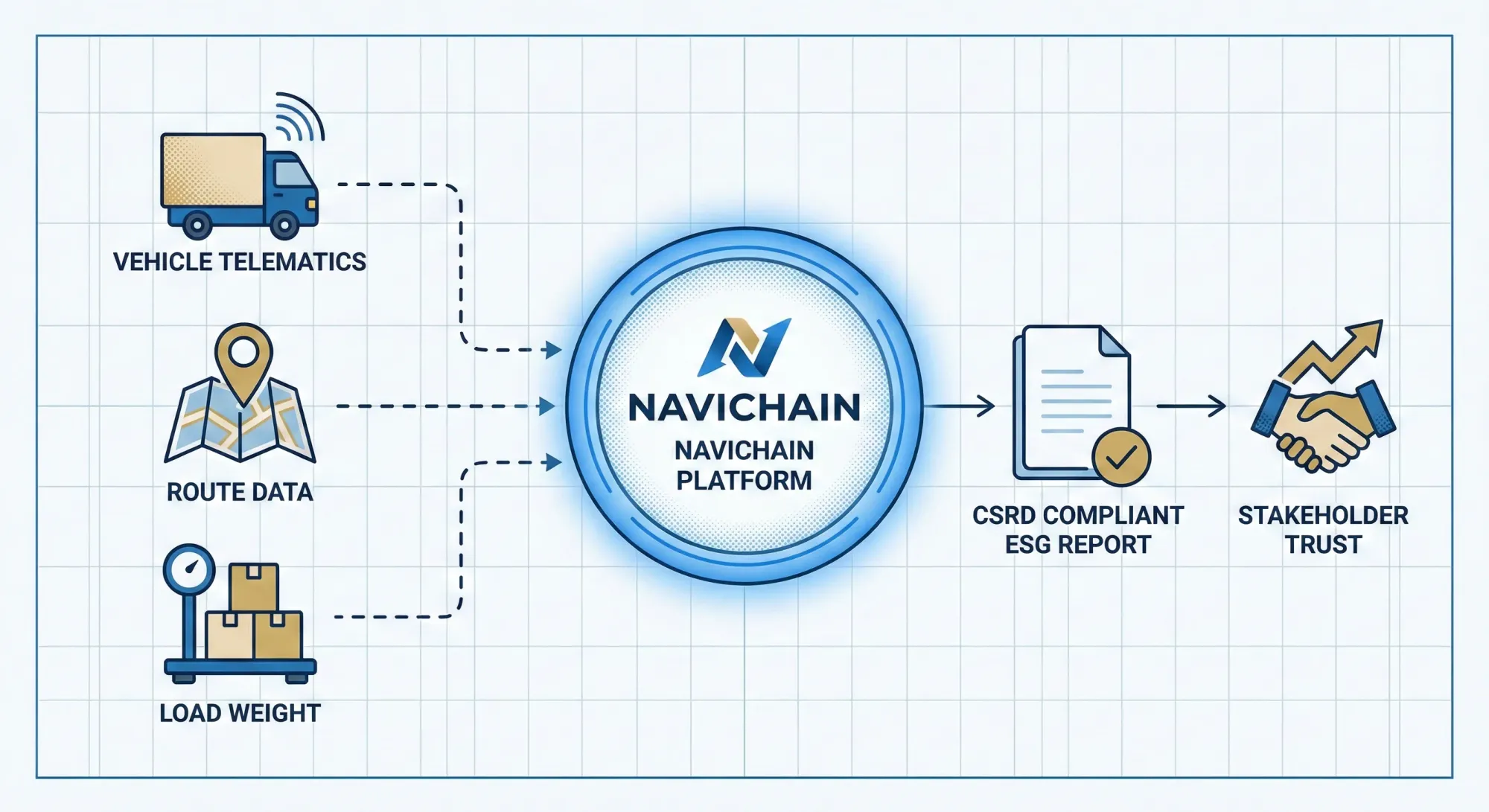
The latest EU Directives concerning the Corporate Sustainability Reporting Directive (CSRD) and Environmental, Social, and Governance (ESG) factors are placing unprecedented demands on the haulage industry. To meet these stringent requirements, companies must accurately report emissions per kilometre and per tonne of goods transported. This white paper examines the inherent challenges in collecting and verifying the requisite data from vehicle telematics systems and route information – a process that risks becoming either a prohibitively time-consuming exercise or one reliant on precarious estimations. We present Navichain, an innovative solution that automates ESG data collection and seamlessly integrates it into existing operational workflows, thereby enabling credible and efficient environmental reporting. Failure to adapt carries significant risks, from potential fines and a tarnished brand reputation to missed business opportunities. The time for decisive action is now.
Phase 1: Context/Problem – CSRD and ESG: A New Era for Haulage

The world stands at a critical juncture. The accelerating pace of climate change and the growing need for sustainable business models are demanding urgent action. In response, the European Union has implemented CSRD, a groundbreaking piece of legislation that will fundamentally change how companies report their environmental impact. For haulage firms, this signifies that vague pronouncements of sustainability are no longer sufficient. Concrete, verifiable data concerning emissions, resource efficiency, and other relevant ESG factors is now essential.
Specifically, CSRD mandates that haulage operators demonstrate precise emissions figures per kilometre and per tonne of goods transported. This data must be traceable and verifiable, placing significant demands on existing data collection and reporting processes. The core problem lies in the fact that this vital data is often dispersed across disparate systems and proving difficult to consolidate. While vehicle telematics systems do record information concerning fuel consumption, they often lack the granular detail regarding precise route mapping, traffic conditions, and load weights – all of which are critical to calculating accurate emissions figures.
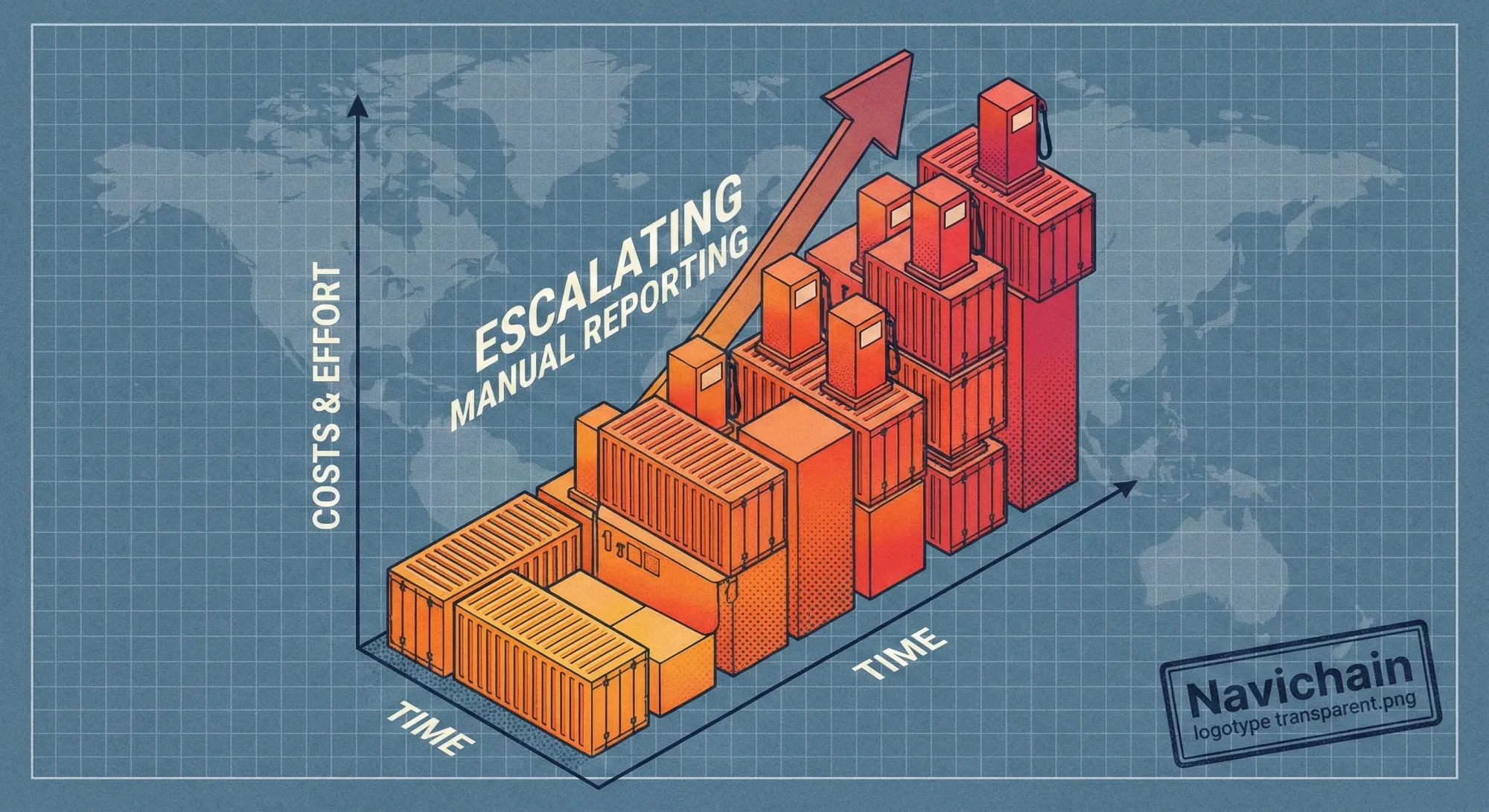
Manually collecting and analysing this data is not only time-intensive, but it is also vulnerable to errors and subjective assessments. There is a significant risk that haulage firms will be forced to rely on estimations rather than empirical data, thereby compromising the credibility of their environmental reports and potentially leading to costly repercussions.
Phase 2: Deep Dive/Implications – Time Black Holes and Guessing Games: The Consequences of Insufficient Automation
The consequences of lacking a robust and automated environmental reporting process are considerable. Firstly, haulage firms risk squandering valuable time and resources on manual data collection and analysis. Staff will be compelled to spend hours compiling data from various sources, distracting them from core business activities and increasing the risk of inaccuracies.
Secondly, and perhaps more critically, the credibility of environmental reporting is jeopardised. Without automated data collection and verification, it becomes challenging to demonstrate that the reported emissions figures are accurate and reliable. This can lead to distrust from clients, investors, and regulatory bodies.
Furthermore, haulage firms that fail to meet CSRD requirements risk facing fines and sanctions. The EU has signalled its firm commitment to enforcing the new legislation, and businesses that do not take it seriously can expect tangible repercussions.
Finally, inadequate environmental reporting can damage a haulage firm's brand reputation and competitiveness. A growing number of customers and investors are prioritising sustainability, and they are willing to favour companies that can demonstrate clear and credible environmental performance. In an increasingly competitive marketplace, this can represent the difference between success and failure.
Enabling the Blueprint: Navichain SaaS Unified Logistics Platform
The Navichain SaaS platform is designed to be the tool that enables this blueprint for European SMEs.
We directly embody the three core principles required for a truly resilient logistics operating system: 1. Unified Operational Fabric: Navichain is not a collection of integrated modules; it is a single, unified logistics operating system. Your Transport Management (TMS), Warehouse Management (WMS), invoicing, and order management all work as one unit, creating a single source of truth. This eliminates data silos and enables seamless workflows. 2. Secure Data Architecture & Control: We believe you should own and control your own data. Our entire platform is hosted on our own secure, Self-Hosted infrastructure in Sweden. This is our key differentiator. By keeping your data strictly within Swedish/EU jurisdiction, we ensure maximum data security, straightforward GDPR compliance, and complete freedom from the complexities of international data transfers. 3. Embedded Analytical Intelligence: Because your data is unified and secure, we can apply our Integrated AI to it safely. This AI runs on our own Swedish infrastructure, analyzing your unified operational data to unlock unique efficiency gains and drive continuous improvement.
Our mission is to democratize logistics technology for the SMEs that form the backbone of the European economy. We provide the powerful, unified, and secure platform you need to stop fighting fires and start building a more efficient, resilient, and profitable future.
Conclusion – The Future of Logistics is Sustainable: Embrace Automation and Establish Credibility
CSRD requirements are not simply a challenge; they represent an opportunity. An opportunity for haulage firms to take the lead in the transition to more sustainable logistics. By embracing automation and implementing a robust environmental reporting process, haulage firms can not only meet regulatory demands but also strengthen their competitiveness and contribute to a better future.
Navichain offers the solution needed to navigate the complex world of digital environmental reporting. Our platform automates ESG data collection, ensures credibility, and provides haulage firms with the tools to actively reduce their environmental impact. The time to act is now. Contact us today to learn more about how Navichain can help your haulage firm become a leader in sustainable logistics.
Key changes and rationale:

References
- Ti Insight (2024). European Road Freight Market 2024. https://ti-insight.com/reports/european-road-freight-market-2024/
- International Road Transport Union (IRU) (2024). Digitalisation key to solve EU driver shortage. https://www.iru.org/resources/news-and-events/digitalisation-key-solve-eu-driver-shortage
- Eurostat (2024). Digital adoption in EU enterprises. https://ec.europa.eu/eurostat/statistics-explained/index.php?title=Digital_adoption_in_EU_enterprises
- SchrezenGubler, H. (2023). The True Cost of Poor Quality (COPQ) in Supply Chain Management. Journal of Supply Chain Excellence.
- European Data Protection Board (EDPB). Guidelines on Data Transfers. https://edpb.europa.eu/our-work-tools/our-documents/guidelines/
Want to see how profitable your operation can be with Navichain?
navichain Insights Newsletter
Join the newsletter to receive the latest updates in your inbox.