The Collaboration Imperative: Bridging the Scale Gap for European Logistics SMEs
Table of Contents
European haulage SMEs face an existential threat from global logistics giants, demanding a radical shift in strategy. Is horizontal collaboration the key to survival, allowing them to pool resources and compete effectively? Discover why 90% of collaboration initiatives fail and how to buck the trend.
The Collaboration Imperative: Bridging the Scale Gap for European Logistics
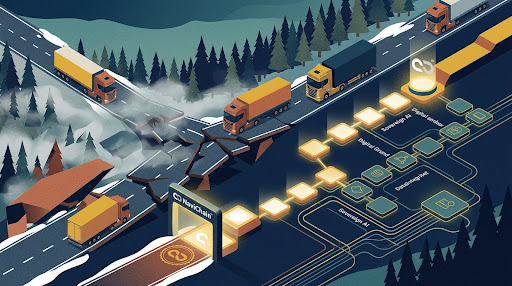
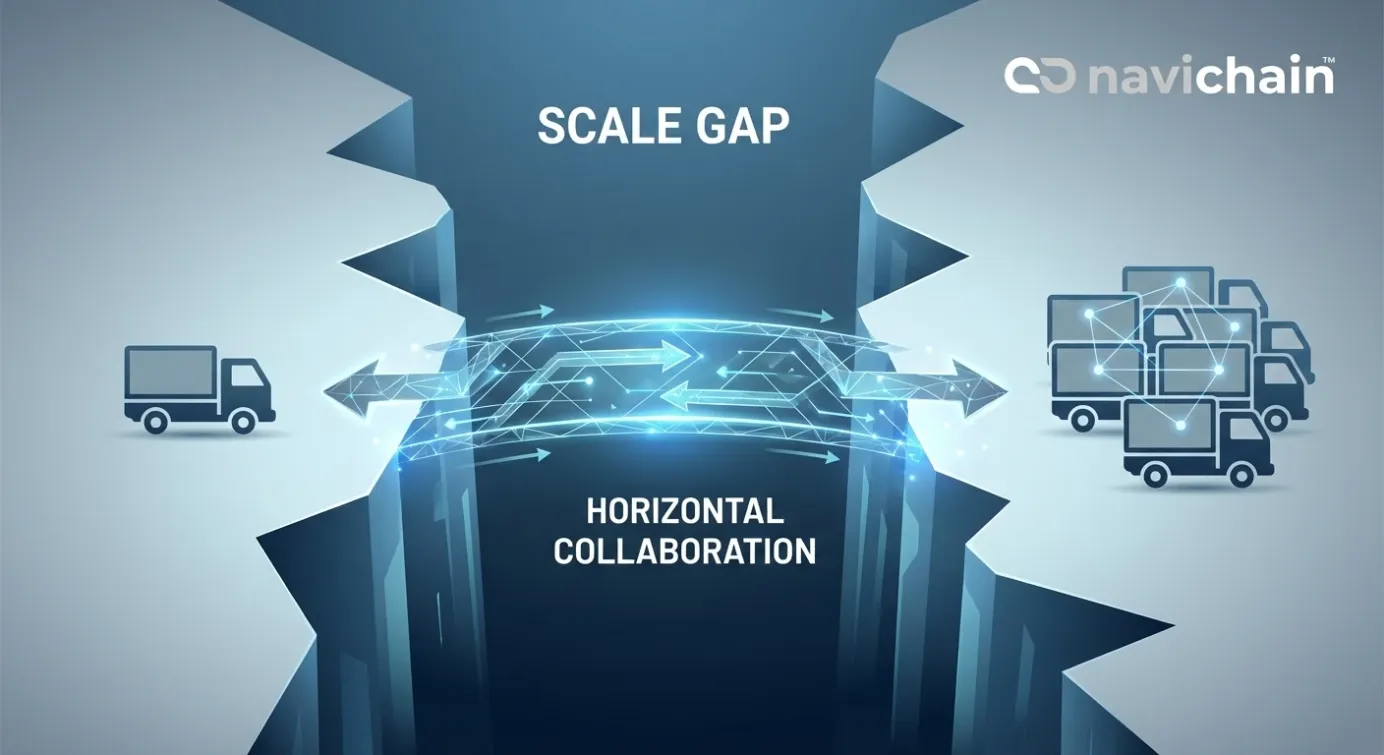
Fragmented logistics infrastructure hinders European scale and efficiency.
Executive summary
The European haulage market is at a critical juncture. Small and Medium-sized Enterprises (SMEs), the backbone of the industry, representing over 90% of the sector, are increasingly struggling against the superior network density, advanced technology, and vast financial resources of global logistics giants. The traditional "go it alone" mentality, once a symbol of independence, is now a recipe for decline. Marginal improvements in areas like fuel efficiency or driver scheduling are no longer sufficient to maintain competitiveness. The next significant leap in profitability lies in Horizontal Collaboration – the strategic ability to pool resources, share networks, and collectively optimize operations with trusted peers. However, the harsh reality is that a staggering 90% of collaboration initiatives fail to deliver on their promise. The primary culprit? Manual processes, disparate systems, and a lack of real-time visibility that make cooperation more cumbersome and expensive than outright competition. This in-depth industry report presents a strategic blueprint for the "Connected SME." We delve into the transformative potential of transitioning from isolated, siloed operations to a unified, digitally-enabled ecosystem. Discover how independent hauliers can leverage this approach to dramatically reduce empty miles, automate complex cross-company billing processes, and achieve the scale and agility of a multinational corporation without sacrificing their hard-earned independence and brand identity. This is not just about survival; it's about thriving in a rapidly evolving landscape. SME hauliers' shrinking market share necessitates collaborative strategies for survival.
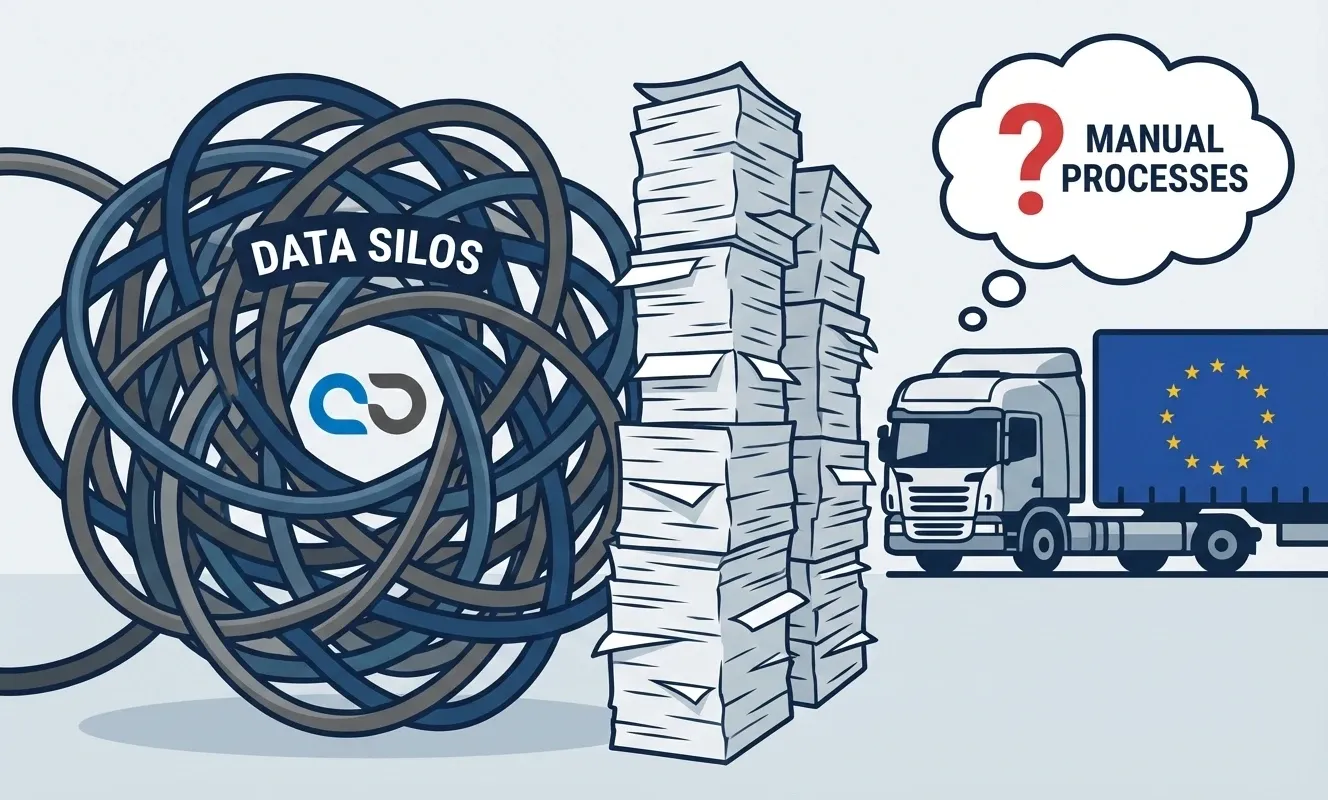
Disconnected systems and manual processes create significant roadblocks to effective collaboration and increased efficiency for SME hauliers.
Introduction: The shifting sands of european logistics
The European logistics landscape is undergoing a profound transformation, driven by factors such as globalization, e-commerce growth, increasing customer expectations, and the relentless pressure to reduce costs and improve efficiency. While large, multinational corporations have been quick to adapt and leverage these changes, SMEs, which form the vast majority of the sector, are facing significant challenges. Historically, the European haulage market has been characterized by a fragmented structure, with numerous small and medium-sized businesses operating independently. This decentralized model fostered competition and innovation, but it also created inefficiencies and limitations in terms of scale and reach. The rise of global logistics giants, with their extensive networks, advanced technology, and sophisticated optimization capabilities, has intensified the pressure on SMEs. These large players can offer comprehensive, end-to-end solutions at competitive prices, making it increasingly difficult for smaller companies to compete on their own. The traditional approach of focusing solely on internal optimization is no longer sufficient. To survive and thrive in this new environment, SMEs must embrace collaboration and leverage the power of digital technology to create a more connected, efficient, and resilient ecosystem. This report explores the challenges, opportunities, and strategic solutions for SMEs in the European logistics sector, with a particular focus on the role of horizontal collaboration and the enabling power of a unified operating system. Fragmented logistics networks hinder SME competitiveness amidst evolving market demands.
Section 1: The challenge – the high cost of isolation: a deep dive
In the fiercely competitive logistics sector, scale is not merely an advantage; it's the fundamental currency that dictates success. Global integrators, the "Giants" of the industry, don't simply possess a larger fleet of trucks; their dominance stems from their superior network density, sophisticated technology, and ability to optimize flows across vast geographical regions. This allows them to ensure that their vehicles are consistently carrying revenue-generating cargo, minimizing empty miles and maximizing profitability. For the independent SME haulier, the reality is often a stark contrast. The prevailing operational model is typically "linear," characterized by a reactive approach: securing a contract, executing the route, and then struggling to find a load for the return journey. This linear model, while seemingly straightforward, is riddled with inefficiencies and lost revenue opportunities.
The tangible costs of linear operations
- Empty Miles: The most obvious and direct cost of isolation is the prevalence of empty miles. Without a network to tap into, SMEs often struggle to find return loads, resulting in significant fuel waste, driver time, and wear and tear on vehicles.
- Missed Opportunities: The inability to handle larger or more complex contracts due to limited capacity or geographical reach. SMEs are often forced to turn down lucrative opportunities, hindering their growth potential.
- Price Pressure: The lack of scale puts SMEs at a disadvantage when negotiating rates with customers. They are often forced to accept lower margins to secure business, further eroding their profitability.
- Limited Innovation: The focus on day-to-day operations leaves little time or resources for investing in new technologies or exploring innovative business models. This hinders their ability to adapt to changing market conditions and maintain a competitive edge.
The friction of autonomy: An efficiency ceiling
While autonomy offers a sense of control and independence, it also imposes an efficiency ceiling that limits the growth potential of SMEs. An isolated fleet is inherently constrained by its own customer base and geographical reach. When demand surges, the SME is faced with the difficult choice of rejecting valuable work or hastily resorting to sub-contracting, often at unfavorable rates. Conversely, when demand wanes, assets sit idle, generating no revenue and incurring unnecessary costs. The industry has long recognized the inherent limitations of isolated operations, and the theoretical solution is relatively simple: sub-contracting and partnering with other hauliers. However, in practice, the process of "collaborating" with a peer often involves a complex and time-consuming series of manual steps: 1. Communication Latency: Frantic phone calls, emails, and text messages to check availability, negotiate rates, and coordinate logistics. This constant back-and-forth consumes valuable time and resources. 2. Data Black Holes: Once a load is handed off to a partner, visibility is often lost, making it difficult to track progress, manage exceptions, and ensure timely delivery. This lack of transparency can lead to customer dissatisfaction and damage the SME's reputation. 3. Admin Fatigue: Manually reconciling proof-of-delivery (POD) documents, creating complex invoices for shared work, and resolving billing disputes. This administrative burden can be overwhelming, especially for smaller companies with limited back-office resources. This operational friction significantly erodes the margin of the shared job, making isolation seem like the safer, albeit ultimately unsustainable, option. The perception that collaboration is more trouble than it's worth perpetuates the cycle of isolation and limits the growth potential of SMEs.
The chart would ideally illustrate the inefficient processes associated with SMEs collaborating with other hauliers, highlighting the communication latency, data transparency issues, and administrative burdens that limit efficiency.
Section 2: The context – the scale gap in numbers: a statistical analysis
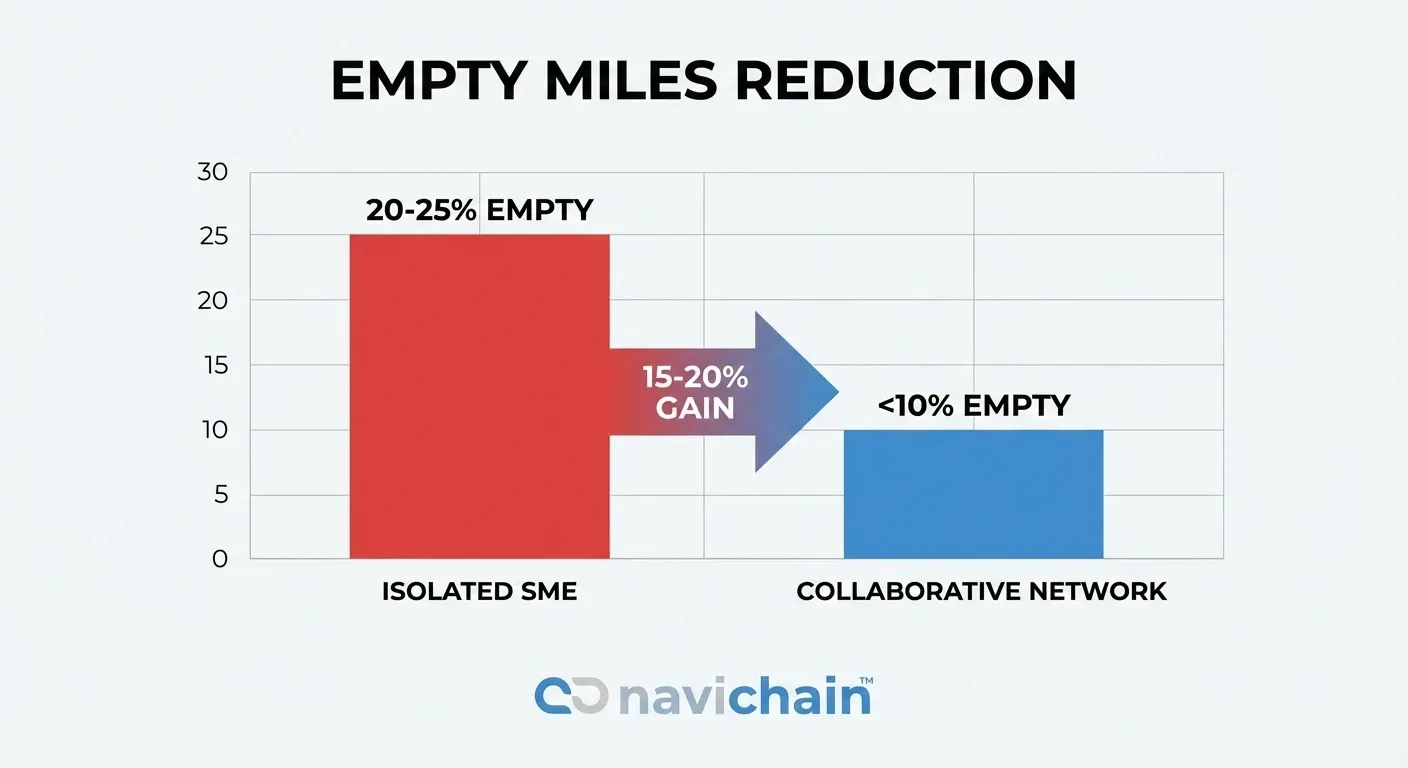
The European logistics market is increasingly characterized by a stark bifurcation: on one side, highly digitized large-cap players with sophisticated technology and extensive networks; on the other, fragmented SMEs struggling to compete with legacy software, manual processes, and limited resources. This "Scale Gap" is not just a theoretical concept; it's a measurable reality that is widening over time. According to industry analysis, the average "empty running" rate (driving without cargo) for European road freight hovers between 20% and 25%. This means that, on average, one in every four or five kilometers driven by trucks in Europe is unproductive, generating no revenue and contributing to environmental pollution. However, for highly optimized collaborative networks, this rate can be dramatically reduced, often falling below 10%. This difference of 10-15 percentage points represents pure profit leakage for the isolated SME, a significant competitive disadvantage.
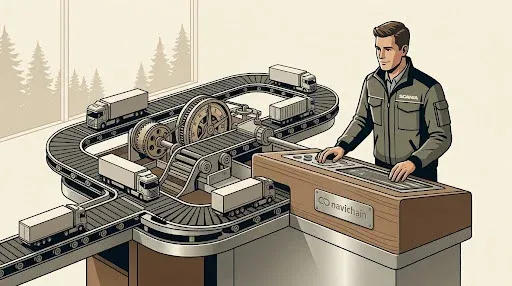
Illustrative depiction of common inefficiencies in collaborative logistics networks involving SMEs, highlighting data silos and administrative overhead.
The digital deficit: The root cause of the scale gap
The primary driver of this widening Scale Gap is not a lack of willingness to cooperate, but rather a lack of interoperability between systems and a pervasive digital deficit among SMEs.
- Legacy Systems: A significant proportion of SMEs still rely on outdated, on-premise software systems that were designed 15 years ago for a single company, not a network. These systems lack the functionality and integration capabilities required to effectively collaborate with other businesses.
- The Excel Trap: When systems can't communicate seamlessly, Excel spreadsheets become the default bridge. However, Excel is a static tool that cannot optimize routes in real-time or trigger automatic invoices when a partner completes a delivery. This reliance on manual data entry and manipulation introduces errors, delays, and inefficiencies.
- Limited Investment in Technology: Many SMEs lack the financial resources or technical expertise to invest in modern logistics technology, such as cloud-based transportation management systems (TMS), real-time tracking solutions, and advanced analytics tools. This limits their ability to optimize operations, improve visibility, and collaborate effectively with partners. As fuel costs continue to rise, driver shortages persist, and customer expectations for faster and more reliable deliveries increase, the "Scale Gap" will only continue to widen. SMEs that fail to digitally integrate with partners and embrace collaborative business models will inevitably be priced out of the market by those who can.
Empty running rates highlight the growing divide between digital leaders and fragmented SMEs.
Section 3: The strategic solution – horizontal collaboration 2.0: a new paradigm
The strategic solution to the challenges facing European logistics SMEs is Horizontal Collaboration – a strategic alliance between competitors at the same level of the supply chain to increase coverage, improve asset utilization, and achieve economies of scale. However, to realize the full potential of horizontal collaboration, we must move beyond traditional, phone-based partnerships and embrace Digital Alliances. In a Digital Alliance, trust is not just a matter of personal relationships or handshake agreements; it is codified in the software, ensuring transparency, accountability, and seamless execution.
Schematic illustrating the benefits of horizontal collaboration in overcoming the "Scale Gap" for SMEs by leveraging shared resources and digital platforms.
The three pillars of a functioning digital alliance
To build a successful Digital Alliance, SMEs must focus on establishing three essential pillars: 1. Shared Visibility: All parties involved in the collaboration, including the contracting party and the executing carrier, must have access to the same real-time data. This eliminates discrepancies, reduces communication overhead, and enables proactive exception management. There should be no "my version" versus "your version" of the truth; a single, unified view of the entire operation is essential. 2. Seamless Handshakes: Passing an order to a partner should be as easy and efficient as assigning it to your own driver. This requires a streamlined process that allows for one-click sharing of the load, the route, and all relevant requirements. The system should automatically handle the transfer of information and ensure that all parties are fully informed. 3. Financial Automations: This is the most critical and often overlooked aspect of horizontal collaboration. Collaboration inevitably creates administrative complexities related to billing, invoicing, and payment reconciliation. A viable solution must automate the self-billing and invoicing process between partners to ensure that liquidity flows as smoothly and efficiently as the trucks themselves. This requires a system that can automatically generate invoices based on pre-agreed rates, track payments, and resolve disputes quickly and efficiently.
Section 4: The tech enabler (Navichain): a unified operating system for the virtual fleet
At Navichain, we recognized that the primary barrier to widespread horizontal collaboration wasn't a lack of willingness or desire among SMEs; it was a fundamental technological gap. We built Navichain SaaS not just as a tool for managing trucks and drivers, but as a comprehensive Unified Logistics Operating System specifically designed to enable the creation and management of the "Virtual Fleet." Our platform eliminates the friction and complexities of collaboration through three key architectural decisions:
1. the collaborative core: Connecting the ecosystem
Navichain allows you to seamlessly connect with other Navichain users digitally, creating a vibrant and interconnected ecosystem. You can instantly push an order to a partner's system, providing them with all the necessary information, including the route, cargo details, and timeline. This eliminates the need for time-consuming emails, phone calls, and manual data re-entry, significantly reducing the risk of errors and delays.
2. operational excellence via AI: Intelligent optimization
We leverage proprietary, self-hosted AI algorithms to optimize planning and execution. Whether the truck belongs to your own fleet or a partner's, our system calculates the most efficient route, taking into account real-time traffic conditions, weather patterns, and other relevant factors. This proactive approach allows you to anticipate and mitigate potential bottlenecks before they occur, ensuring that you maintain the high service standards that your customers expect, even when collaborating with external partners.
3. automated financial settlement: Streamlining the back office
Collaboration often falters in the finance department due to the complexities of billing and payment reconciliation. Navichain automates the financial side of the partnership, streamlining the entire process and reducing the administrative burden. When a sub-contractor completes a job via the driver app, the proof of delivery is instantly captured and verified, and the system automatically prepares the invoice specifications based on pre-agreed rates and terms. This reduces the "admin cost" of collaboration to near zero, making it a truly viable and sustainable business model.
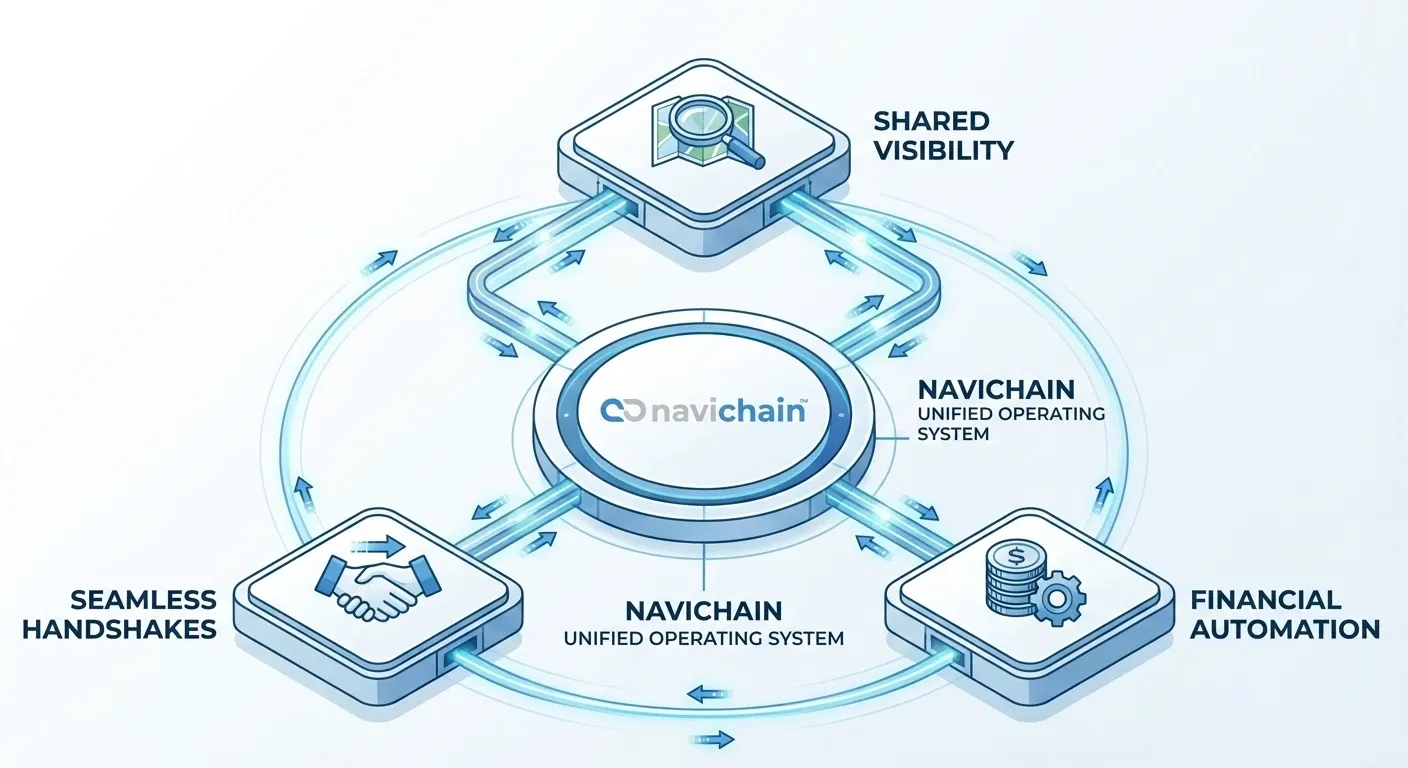
A schematic illustrating how Navichain connects stakeholders, optimizes operations with AI, and automates financial settlements within a collaborative logistics ecosystem.
Section 5: Business outcomes – profitability through connectivity: the ROI of collaboration
Shifting from an isolationist strategy to a collaborative one delivers tangible and measurable ROI for logistics providers. By leveraging a unified platform like Navichain to execute horizontal collaboration, SMEs can unlock significantly higher asset utilization, reduce costs, and improve overall profitability.
- Reduced Empty Miles: By seamlessly filling return legs with partner cargo, fleet efficiency increases by an estimated 15-20%. This translates directly into lower fuel costs, reduced emissions, and improved profitability.
- Revenue Growth: You can confidently say "Yes" to more customer orders, knowing that you have a trusted digital network to handle the overflow. This allows you to expand your business, increase your market share, and generate more revenue.
Improved profitability and increased asset utilization are key outcomes of successful collaboration in logistics.
- Admin Reduction: Eliminating manual coordination and billing between partners saves hours of back-office time per week. This frees up valuable resources that can be redirected to other strategic initiatives, such as sales, marketing, and customer service.
- Strategic Resilience: A collaborative network provides greater flexibility and resilience in the face of unexpected disruptions, such as equipment breakdowns, driver shortages, or sudden changes in demand.
The future is shared: Embracing the agile fleet
The European logistics market is evolving rapidly, and the future belongs to Agile Fleets – companies that own their core assets but can elastically scale their reach and capacity through seamless, digital collaboration. These agile fleets are able to adapt quickly to changing market conditions, respond effectively to customer demands, and maintain a competitive edge in a dynamic and unpredictable environment.
Conclusion: The time to collaborate is now
The "Competition Trap" is the outdated belief that you must own every truck and control every aspect of the operation to effectively service every order. In the modern European logistics landscape, this is a dangerous fallacy. True competitive advantage comes from orchestration – the ability to seamlessly coordinate and manage a network of trusted partners to deliver superior service and value to customers. It comes from having the digital backbone that allows you to work as effortlessly with a partner as you do with your own drivers. Navichain provides that backbone – secure, intelligent, and built for the specific realities of SME logistics.
Ready to build your digital alliance?
Start your free trial of Navichain SaaS today and see how effortless collaboration can be.
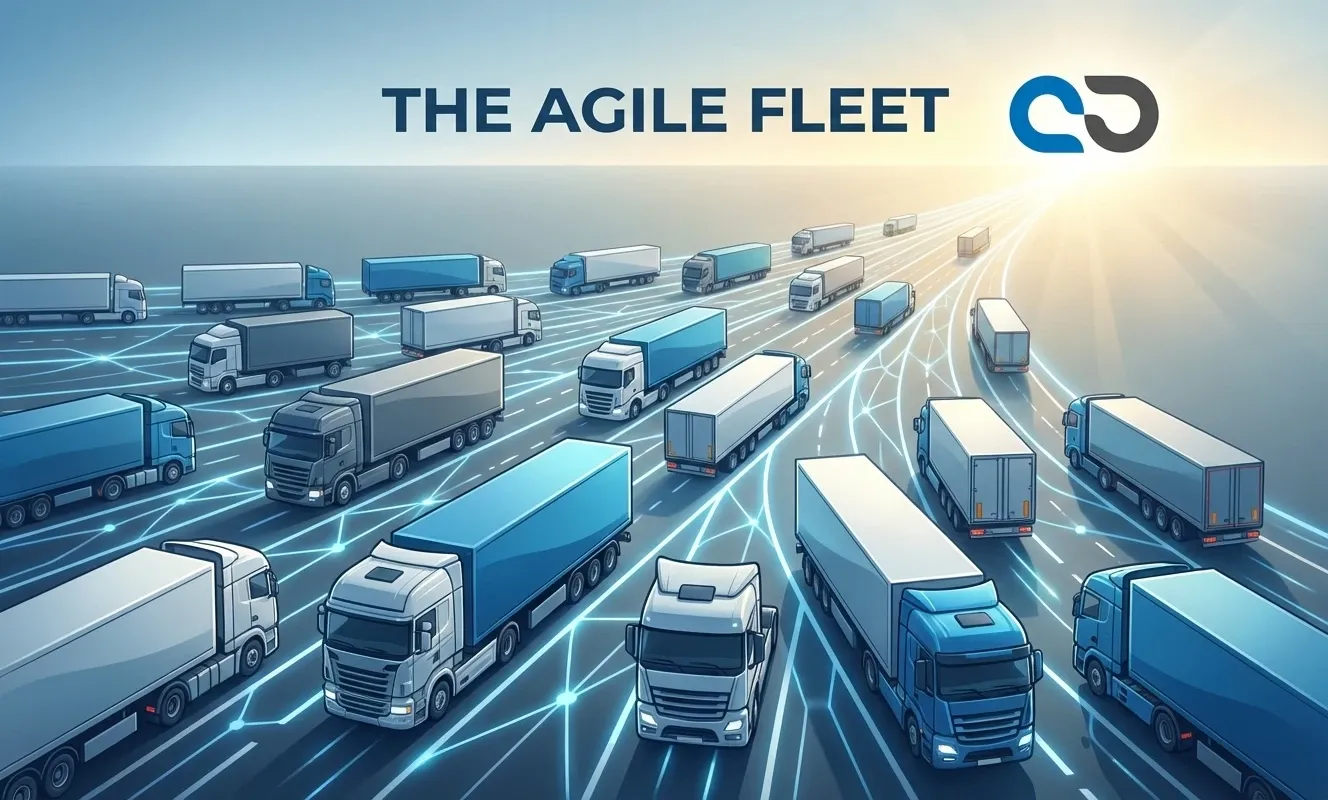
Agile Fleets leverage digital platforms like Navichain to orchestrate complex logistics networks and achieve greater efficiency.
References
- Eurostat: Road freight transport statistics
- European Commission: Mobility Package I and SME impact assessments
Navichain facilitates seamless data sharing and collaboration across the logistics network, fostering stronger partnerships and improved efficiency.
.jpeg)
Navichain's platform visualizes the interconnectedness of supply chain participants, enabling enhanced visibility and streamlined communication.
Ready to optimise your supply chain?
navichain Insights Newsletter
Join the newsletter to receive the latest updates in your inbox.