Beyond the Price Tag: Calculating the True ROI of a Unified Logistics Platform
Table of Contents
Scandinavian SME hauliers: tired of battling data silos and struggling with razor-thin margins? This white paper redefines ROI, demonstrating how a unified, sovereign data platform can transform your operations from a cost centre into a strategic asset. Discover how to unlock hidden value and secure your future in a competitive market.
Beyond The Price Tag True Roi Unified Logistics Platform
The 2% margin trap

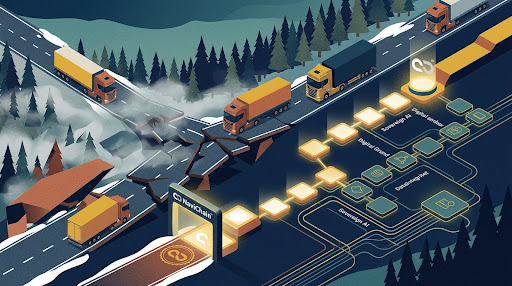
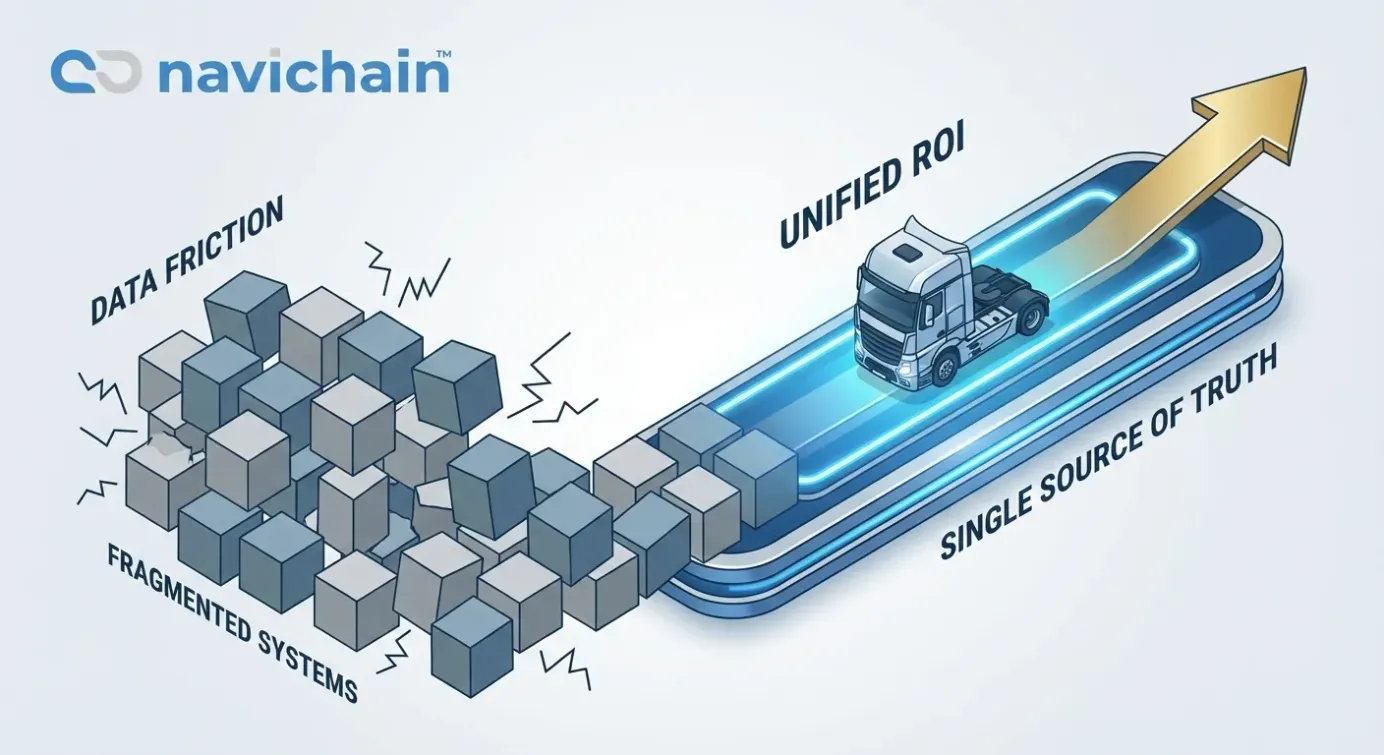
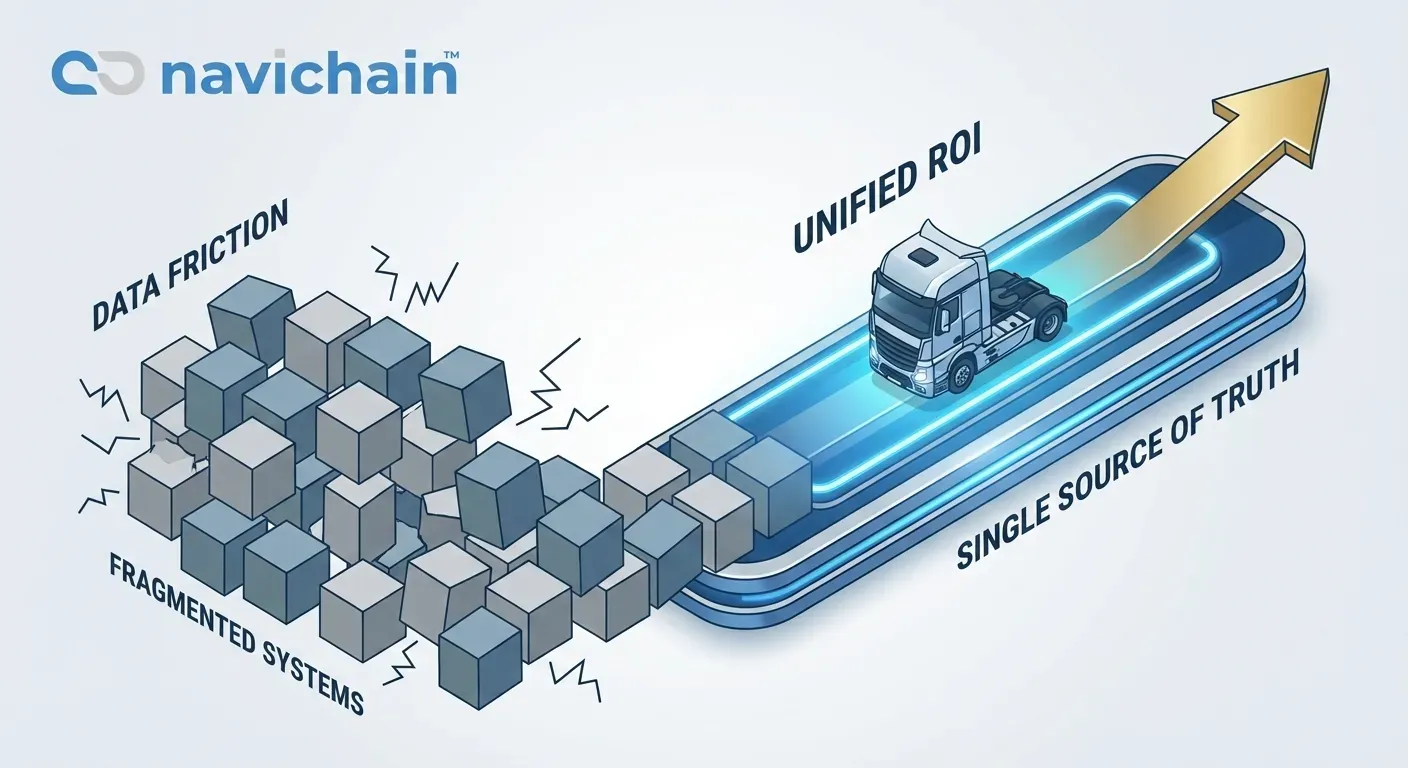
Fragmented systems and disconnected data flows contribute to inefficiencies that erode already slim profit margins for Scandinavian SME hauliers.
For the Scandinavian SME haulier, the market is a high-stakes balancing act. You are squeezed between the non-negotiable high costs of a compliant, high-wage economy and the relentless downward price pressure from larger players and non-compliant operators. The result is a '2% margin trap,' where profitability is so fragile that a single inefficient route or billing error can wipe out a week's gains. In this environment, every investment is scrutinized. The logical response has been to 'go digital' on a budget, procuring what appear to be 'best-in-class' point solutions: one system for transport, another for the warehouse, and a third for finance. The perceived wisdom is that this piecemeal approach controls upfront costs. This paper argues that this strategy, while seemingly prudent, is the single greatest destroyer of value in the modern logistics SME. The 'savings' from fragmented software are a mirage, concealing a deep and persistent drain on your Return on Investment (ROI). The real, measurable costs are not on the software invoice; they are hidden in the data friction, operational ignorance, and strategic risks that this fragmentation creates. We will provide a new framework for calculating the true ROI of your technology stack, proving that a unified, sovereign platform is no longer a luxury, but the most significant investment you can make in your own profitability.
The hidden costs: Calculating the true drain of data fragmentation
To understand the solution, we must first accurately diagnose the problem.
To understand the solution, we must first accurately diagnose the problem. The cost of a fragmented data landscape is not a single line item. It is a series of interconnected 'taxes' that quietly drain your profitability every day.
1. the cost of data friction (the 'labor tax')
Data friction is the cost of moving information between systems that do not speak to each other. Every time an order from a customer email is manually typed into your Order Management system, then re-typed into your TMS for planning, and finally re-typed into your billing system for invoicing, you are paying a 'friction tax.' Consider the ROI calculation: * Cost: (Hours per day on manual data entry) x (Employee hourly rate) x (Working days per year)* **Cost:** (Hours per week correcting data errors) x (Manager hourly rate) x 52 This tax is paid in wasted labor, delayed invoicing, and the high cost of correcting the inevitable human errors. Research from industry analysts suggests that administrative automation via unified platforms can reduce this overhead by 20-30%. For an SME, this saving alone can represent a significant, immediate return.
2. the cost of invisibility (the 'ignorance tax')
This is the most insidious cost. When your transport data (fuel, driver hours) lives in the TMS and your customer order data (revenue, item details) lives in a separate system, it is nearly impossible to answer the single most important question: "Is this customer or this route actually profitable?" Without a single source of truth, you are 'flying blind.' You cannot: * Identify your top 10% most (and least) profitable customers.
- Analyze profitability per-kilometer, per-driver, or per-truck.
- Make data-driven decisions about where to expand or where to cut. The 'ignorance tax' is the revenue you lose by continuing to service unprofitable routes or by failing to double-down on your most valuable clients. The ROI of visibility is the ability to strategically re-allocate 100% of your assets toward profit-maximizing activities.
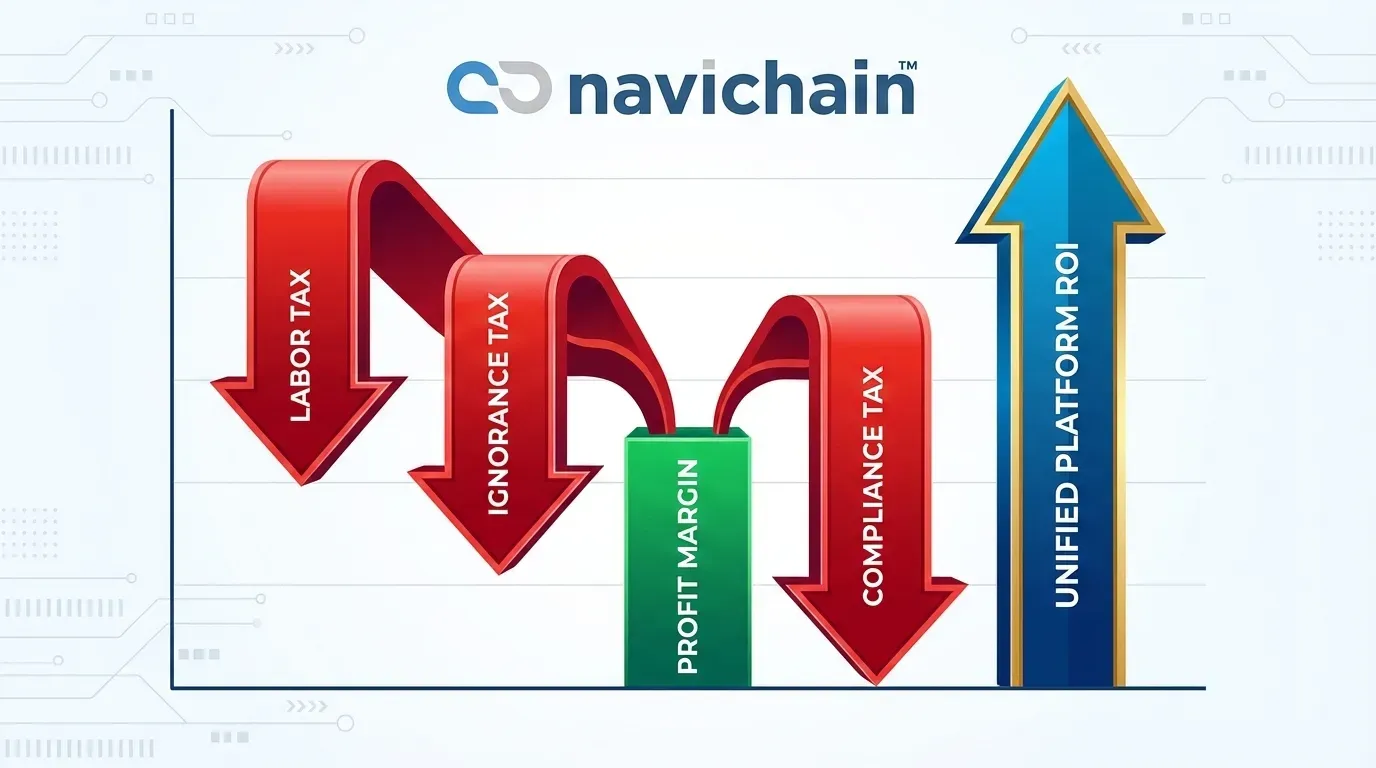
This chart illustrates how a lack of unified data leads to an inability to accurately assess profitability across key areas of the logistics operation.
3. the cost of risk (the 'compliance tax')
Finally, we must calculate the ROI of de-risking. In a fragmented system, proving compliance with GDPR or the EU Mobility Package is a nightmarish, manual task of pulling reports from multiple, disconnected databases. But a far greater, more modern risk now exists: data jurisdiction. If your 'affordable' cloud software is hosted by a U.S. provider (like AWS, Azure, or Google Cloud), your data—including client lists and shipping manifests—is subject to the US CLOUD Act. This puts you in direct violation of GDPR principles, as established by the Schrems II ruling. The 'compliance tax' has two parts: 1. The Known Cost: The potential for fines up to 4% of global revenue. 2. The Hidden Cost: The catastrophic, unquantifiable cost of losing a single major customer (e.g., in pharmaceuticals, high-tech, or defense) who will not tolerate their sensitive supply chain data being exposed to foreign government access. The ROI of eliminating this risk is immense. It is an insurance policy on your entire business.
From diagnosis to design: The blueprint for a high-roi logistics operating system
This diagnosis of hidden costs leads to a clear design for a high-return solution.
This diagnosis of hidden costs leads to a clear design for a high-return solution. To survive and thrive, SME hauliers must shift their technology investment from fragmented 'cost centers' to a unified, value-generating 'operating system.' This system must be built on three core principles that directly address the ROI drains we've identified.
Principle 1: The unified operational fabric (the ROI of automation)
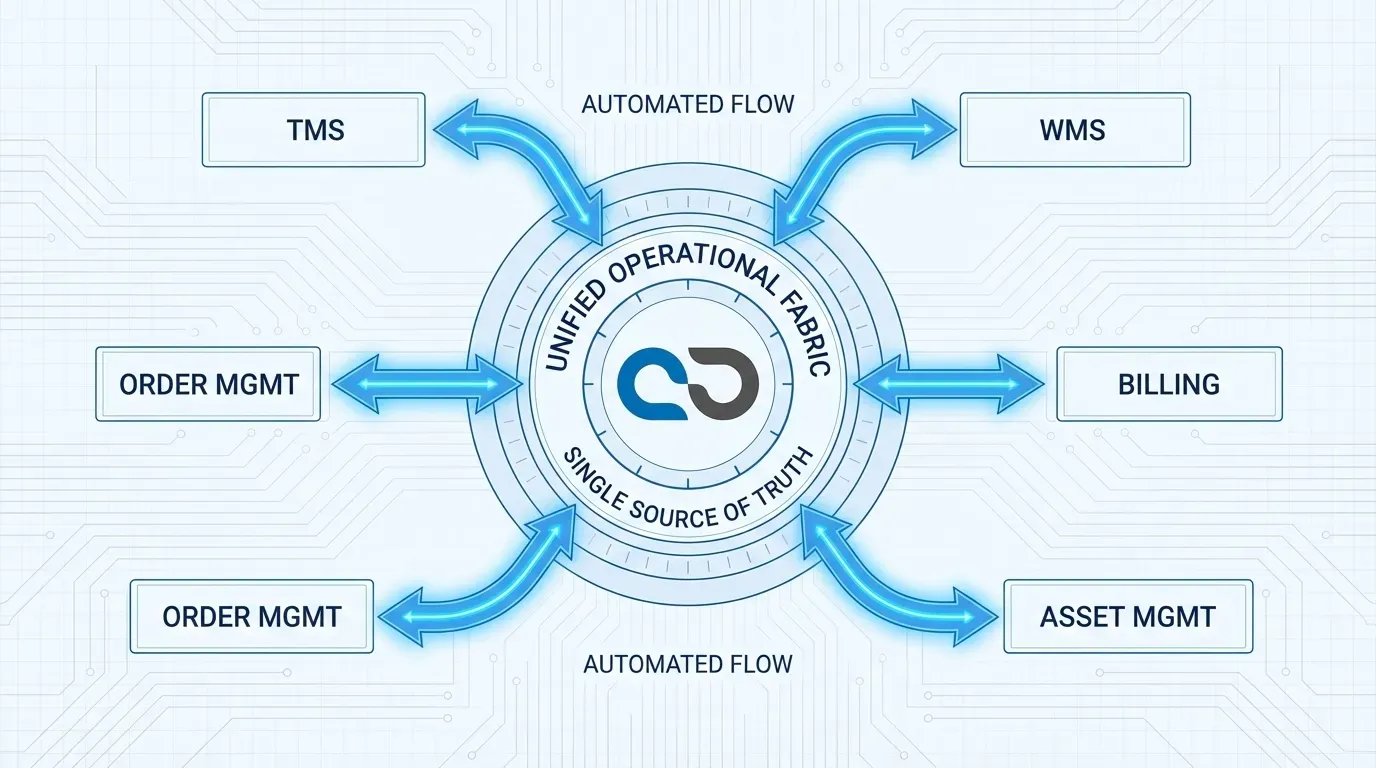
First, you must eliminate data friction. The era of separate TMS, WMS, and billing systems is a relic of an inefficient past. A modern, high-ROI platform must be a single, integrated fabric where all functions—Order Management, Transportation, Warehouse, Billing, and Asset Management—are native components of one system. This 'central nervous system' creates a single, immutable source of truth. Its ROI is immediate and measurable: the elimination of manual data entry, the reduction of administrative overhead, and the eradication of costly billing errors. Data is entered once and flows automatically from quote to invoice, freeing your team to focus on value-added tasks instead of data-entry.
Principle 2: The sovereign data architecture (the ROI of trust & de-risking)
This unified fabric is worthless if it's built on a foundation of risk. The second principle is a non-negotiable for European SMEs: data sovereignty. To truly control your operations and deliver a high-return, low-risk service, your data must reside within your own legal jurisdiction. This means choosing a platform that is not just hosted in the EU, but is owned, operated, and located on our own independent, Self-Hosted infrastructure by a non-U.S. entity (e.g., in Sweden, under Swedish law). This is the only ironclad guarantee that your data is shielded from extraterritorial laws like the US CLOUD Act. The ROI is measured in risk avoidance (zero fines, no CLOUD Act exposure) and customer retention. You can now win high-value pharma and tech clients who require this level of auditable data security. This transforms compliance from a cost center into a powerful, revenue-enabling asset.
Principle 3: Embedded analytic intelligence (the ROI of optimization)
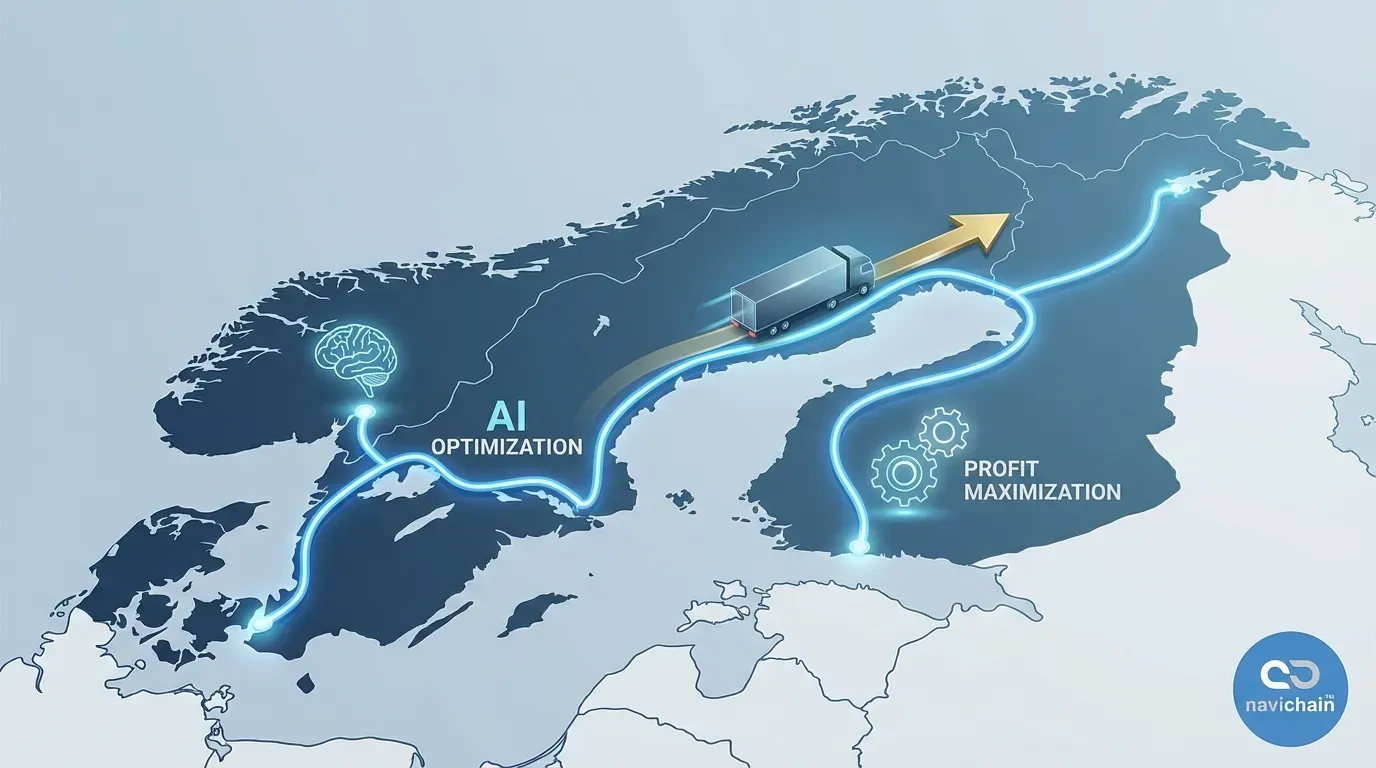
With a unified, sovereign data platform, you finally have an asset that is clean, complete, and secure. The third principle is to leverage it. Once data is no longer fragmented, you can apply an embedded AI layer running on our own sovereign platform to analyze 100% of your operational data, securely and in real-time. This is where you move from cost-saving to profit-maximization. This AI, running safely within your sovereign environment, can analyze your unified data to: * Identify and rank all customers and routes by true profitability.
- Predict asset maintenance needs before a costly breakdown occurs.
- Optimize load-building and routing in real-time to maximize per-kilometer profit. An AI finding just 10% fewer empty miles or optimizing load capacity drops straight to your bottom line. This is the ultimate return, potentially doubling your narrow profit margin.
A schematic representation of the AI-powered unified logistics platform, illustrating its ability to analyze data and optimize various aspects of the supply chain for maximized profitability.
References/sources
- International Road Transport Union (IRU). (2024). Global Transport Costs, Prices and Demand. (Data on rising operational costs and market pressures). https://www.iru.org/resources/iru-library/global-transport-costs-and-prices
- Gartner. (2024). Top Trends in Supply Chain Cost Optimization. (Analysis of technology's role in reducing operational overhead). https://www.gartner.com/en/supply-chain/trends/supply-chain-cost-optimization
- European Data Protection Board (EDPB). Schrems II Ruling Implications. (Analysis of the legal risks of EU-US data transfers). https://edpb.europa.eu/our-work-tools/our-documents/recommendations/recommendations-012020-measures-supplement-transfer-tools_en
- McKinsey & Company. (2023). The future of the logistics industry: A new operating model. (Analysis of AI and data analytics in driving logistics profitability). https://www.mckinsey.com/industries/travel-logistics-and-infrastructure/our-insights/the-future-of-the-logistics-industry
Enabling the blueprint: The navichain SaaS unified logistics platform
This white paper has outlined a strategic blueprint for SME hauliers to build a resilient, defensible, and high-ROI operation.
This white paper has outlined a strategic blueprint for SME hauliers to build a resilient, defensible, and high-ROI operation. This framework, built on the principles of a Unified Operational Fabric, Sovereign Data Architecture, and Embedded Analytic Intelligence, is not just a theoretical model. It is the exact blueprint we used to build navichain SaaS. navichain SaaS is a unified logistics operating system designed from the ground up to embody these ROI-driven principles and solve the core challenges of the Scandinavian SME.
- Embodying the Unified Operational Fabric: We are not a collection of separate tools. navichain SaaS is a single, integrated platform where Transportation Management (TMS), Warehouse Management (WMS), Asset Management, Billing Management, and Order Management work as one. This isn't just convenient; it's a direct assault on operational costs, eliminating the 'friction tax' of manual data entry and providing a single source of truth for profitability analysis.
- Delivering the ROI of True Data Sovereignty: This is our key differentiator. Unlike U.S.-based cloud providers, the entire navichain SaaS platform is hosted on our own independent, Self-Hosted infrastructure in Sweden. Your data never leaves the country. It remains exclusively under Swedish jurisdiction, guaranteeing full GDPR compliance and making it immune to foreign legislation like the US CLOUD Act. This is a tangible, strategic asset you can use to win and retain high-value customers.
The tangible outcomes of a unified logistics platform: reduced operational friction, enhanced data security, and actionable analytic intelligence, leading to significant ROI for SME hauliers.
- Providing Embedded Analytic Intelligence: Because your data is unified and secure on our platform, our integrated AI can safely perform deep analysis. This new feature, running on our own secure Swedish infrastructure within the EU (and notably NOT on US-controlled cloud servers), analyzes your unified operational data to unlock efficiencies, identify your most profitable routes, and provide the strategic insights you need to turn your 2% margin into a 10% margin. Our mission is to democratize logistics technology for SMEs. We believe that by providing a powerful, affordable, and truly sovereign platform, we can empower serious, compliant businesses to stop leaking profit and start building sustainable value.
navichain SaaS: A unified platform providing seamless integration of TMS, WMS, Asset Management, Billing, and Order Management for enhanced ROI.

navichain's unified platform architecture enables seamless data flow and integrated functionality across key logistics processes.
Ready to optimise your supply chain?
navichain Insights Newsletter
Join the newsletter to receive the latest updates in your inbox.