Lighten the Load: How a Single App Drives Driver Satisfaction and Profitability
Table of Contents
Is 'App Fatigue' Silently Sapping Your Profits? In today's hyper-competitive logistics market, driver satisfaction directly impacts your bottom line. Discover how a unified driver app can transform your operations, boost driver retention, and unlock hidden profitability.
Lighten the Load: How a Single App Drives Driver Satisfaction and Profitability
Fragmented workflows burden drivers; integrated apps boost efficiency and earnings.
Executive summary
European transport and courier SMEs face intense pressure to optimize operational efficiency. A significant, often overlooked, obstacle is 'app fatigue' – the burden placed on drivers forced to juggle multiple, disparate applications for navigation, dispatch, proof of delivery, and communication. This fragmentation leads to lost time, increased error rates, higher operational costs, and critically, driver dissatisfaction and turnover. This deep dive report explores the detrimental effects of app fatigue and presents a strategic solution: a unified driver app powered by Navichain. By consolidating essential functions into a single, intuitive interface, Navichain empowers drivers, streamlines workflows, reduces administrative overhead, and unlocks significant cost savings, ultimately creating a more profitable and driver-friendly operation. This report will demonstrate how Navichain SaaS, leveraging a Unified OS and AI-driven capabilities, provides a competitive edge in today's demanding logistics landscape. App fragmentation hinders SME efficiency, increasing driver burden and operational costs.
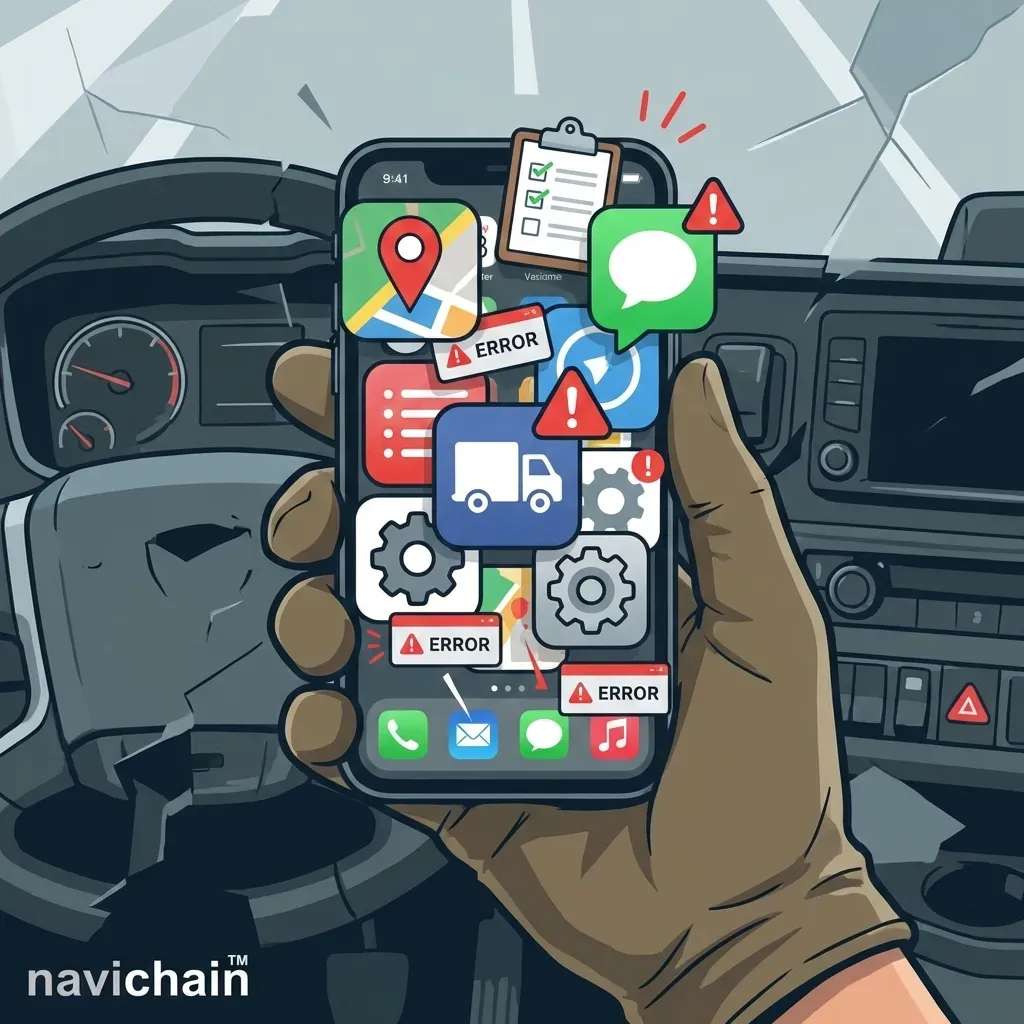
Multiple apps lead to driver frustration, impacting efficiency and potentially compromising safety due to constant switching and distractions.
Introduction
The European logistics sector is a complex and dynamic ecosystem, vital to the continent's economic health. From multinational corporations to small, family-owned courier services, the industry is characterized by tight margins, demanding customers, and a constant drive for efficiency. In this environment, even seemingly minor inefficiencies can have a significant impact on profitability. One such inefficiency, often underestimated, is the burden placed on drivers by the proliferation of disconnected mobile applications. This "app fatigue" is not merely an inconvenience; it's a silent drain on productivity, a source of driver frustration, and a significant contributor to operational costs. This report delves into the causes and consequences of app fatigue, presenting a compelling case for a unified, driver-centric approach to logistics technology. We will explore how Navichain provides a strategic solution, empowering SMEs to thrive in a competitive market. Driver workflow inefficiencies: Small delays, significant cost burdens in EU logistics.
Section 1: The challenge: app fatigue and its hidden costs
The modern logistics driver is more than just a transporter of goods; they are a mobile data hub, a customer service representative, and a critical link in the supply chain. However, the tools they are often provided with are anything but streamlined. Instead of a cohesive digital experience, drivers are frequently forced to navigate a fragmented landscape of separate applications, each with its own login, user interface, and data requirements. This creates a phenomenon we call "app fatigue," a state of mental and operational exhaustion caused by the constant need to switch between and manage multiple applications. The costs of app fatigue are multifaceted and far-reaching: * Reduced Productivity: The most immediate impact is a decrease in driver productivity. Time spent switching between apps, re-entering data, troubleshooting technical issues, and dealing with inconsistent user interfaces directly translates to fewer deliveries per day. Consider the cumulative effect of even a few minutes lost per delivery across an entire fleet over the course of a year. The lost revenue can be substantial.
- Increased Error Rates: A distracted and frustrated driver is more likely to make mistakes. Data entry errors, missed delivery instructions, incorrect routing, and inaccurate reporting become more frequent. These errors not only lead to operational inefficiencies but can also result in costly delays, damaged goods, and dissatisfied customers. The cost of correcting these errors, both in terms of time and resources, adds significantly to operational expenses.
- Higher Operational Costs: Beyond the direct costs of lost time and increased errors, app fatigue contributes to higher operational costs in several other ways. Inefficient routing due to reliance on generic navigation apps (rather than those optimized for commercial vehicles) leads to increased fuel consumption and wear and tear on vehicles. The need for back-office staff to manually reconcile data from multiple sources increases administrative overhead.
- Driver Dissatisfaction and Turnover: Perhaps the most significant, and often overlooked, cost of app fatigue is its impact on driver satisfaction and retention. Drivers are the backbone of any logistics operation, and retaining skilled, experienced drivers is crucial for maintaining service quality and controlling costs. App fatigue creates a frustrating and demoralizing work environment, leading to increased stress, burnout, and ultimately, higher turnover rates. The cost of recruiting, hiring, and training new drivers can be substantial, making driver retention a critical priority. In a market already facing a severe driver shortage, the ability to attract and retain top talent is a significant competitive advantage.
- Compromised Safety: The constant need to interact with multiple devices while driving can be a significant safety hazard. Distracted driving is a leading cause of accidents, and forcing drivers to juggle multiple apps increases the risk of collisions. The potential costs associated with accidents, including property damage, injuries, and legal liabilities, are enormous. The cost of inaction is clear: continued reliance on fragmented app ecosystems will lead to decreased productivity, increased costs, higher turnover, and potentially, compromised safety. SMEs that fail to address the challenge of app fatigue will find themselves at a significant disadvantage in an increasingly competitive market.
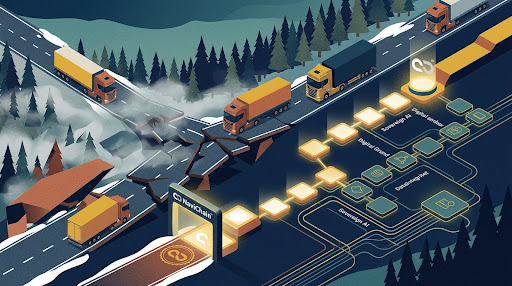
App fatigue: Fragmented tools hinder drivers and choke supply chain efficiency.
Section 2: The context/data: industry trends and paradoxes
The European logistics sector is undergoing a period of rapid transformation, driven by several key trends: * E-commerce Boom: The continued growth of e-commerce is fueling unprecedented demand for last-mile delivery services. This puts immense pressure on logistics providers to optimize efficiency and deliver goods faster and more reliably.
- Rising Customer Expectations: Customers are demanding faster delivery times, greater transparency, and more personalized service. Logistics providers must adapt to meet these evolving expectations or risk losing market share.
- Driver Shortage: The European road freight sector is facing a severe shortage of qualified drivers. This shortage is expected to worsen in the coming years, making driver retention a critical priority.
Fragmented technology landscape contributing to inefficiencies in the European logistics sector, hindering driver productivity and overall supply chain performance.
- Technological Advancements: New technologies, such as AI, automation, and cloud computing, are transforming the logistics industry. Companies that embrace these technologies will be better positioned to compete and succeed.
- Sustainability Concerns: Growing environmental awareness is driving demand for more sustainable logistics practices. Companies are under pressure to reduce their carbon footprint and adopt more eco-friendly transportation methods. These trends create a paradox for many SMEs: they need to embrace technology to improve efficiency and meet customer expectations, but the proliferation of disconnected apps is actually hindering their progress. While technology is intended to simplify and streamline operations, the reality is that many drivers are struggling to navigate a complex and fragmented digital landscape.
- The IRU (International Road Transport Union) estimates a shortage of over 400,000 drivers in Europe.
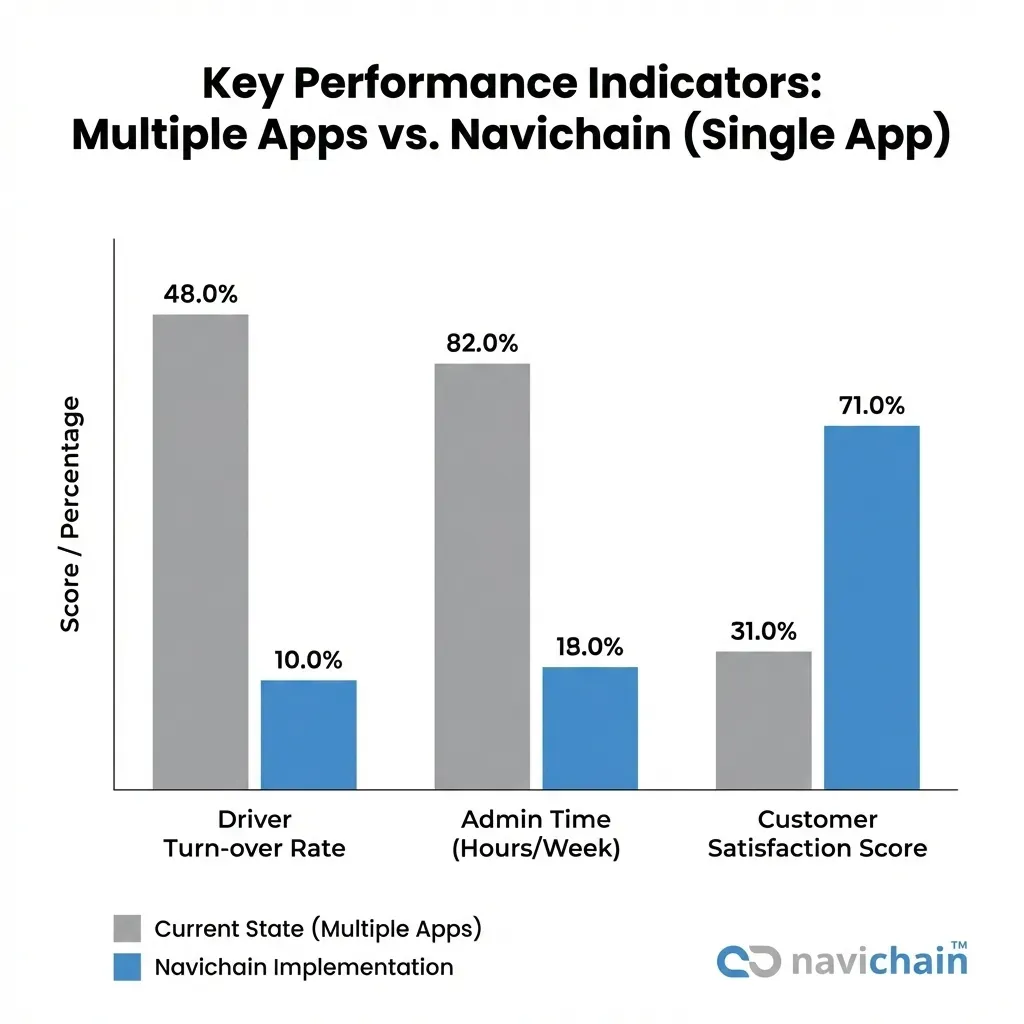
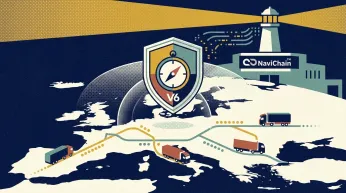
Visual representation of the fragmented technology landscape in European logistics, highlighting the prevalence of disconnected apps.
- A Harvard Business Review study suggests that toggling between different apps can cost up to 9% of an employee's time at work.
- Research shows that manual data re-entry has an error rate of approximately 1% per keystroke handling.
- Route deviations caused by unintegrated navigation can increase fuel consumption by 5-10%.
- Studies show that employee turnover can cost a company up to twice the employee's annual salary. These statistics highlight the significant impact of app fatigue on productivity, costs, and driver retention. SMEs that fail to address this challenge will struggle to compete in an increasingly demanding market.
Navichain platform: Enabling logistics providers to meet rising e-commerce demands.
Section 3: The strategic solution: a unified, driver-centric approach
The solution to app fatigue lies in adopting a unified, driver-centric approach to logistics technology. This involves consolidating essential functions into a single, intuitive application that simplifies the driver's day and empowers them to be more productive and efficient. The key principles of a unified driver app are: * Integration: All essential functions, such as navigation, dispatch, proof of delivery, communication, and reporting, should be seamlessly integrated into a single application.
- Intuitive User Interface: The app should be easy to use, even for drivers with limited technical skills. Large buttons, clear text, and a clutter-free design are essential.
- Real-Time Data: Drivers should have access to real-time information on traffic conditions, delivery schedules, and customer updates.
Schematic illustrating the key integrations and functionalities within a unified, driver-centric logistics application.
- Automation: The app should automate routine tasks, such as data entry and reporting, freeing up drivers to focus on driving and delivering.
- Offline Functionality: The app should be able to function offline, allowing drivers to continue working even in areas with poor connectivity.
- Customization: The app should be customizable to meet the specific needs of different drivers and delivery types. By adopting a unified, driver-centric approach, SMEs can eliminate the frustrations of app fatigue and unlock significant benefits, including increased productivity, reduced costs, improved driver satisfaction, and enhanced customer service.
Section 4: The tech enabler (Navichain): streamlining operations with a unified OS
Navichain offers a comprehensive solution to the challenge of app fatigue, providing a unified driver app that streamlines operations and empowers drivers. The Navichain SaaS platform is built on a Unified OS, providing a single, integrated environment for all essential logistics functions. This eliminates the need for drivers to switch between multiple applications, reducing frustration and improving efficiency.
- Single Sign-On: Drivers log in once and access all the tools they need, eliminating the need to remember multiple usernames and passwords.
- Integrated Navigation: Turn-by-turn navigation optimized for commercial vehicles, taking into account factors such as vehicle size, weight, and load restrictions.
- Digital Proof of Delivery (POD): Integrated sign-on-glass, photo capture, and barcode scanning, eliminating the need for paper-based POD forms and streamlining the invoicing process.
- Seamless Communication: Real-time messaging keeps drivers connected to dispatchers and customers, allowing for quick and efficient communication.
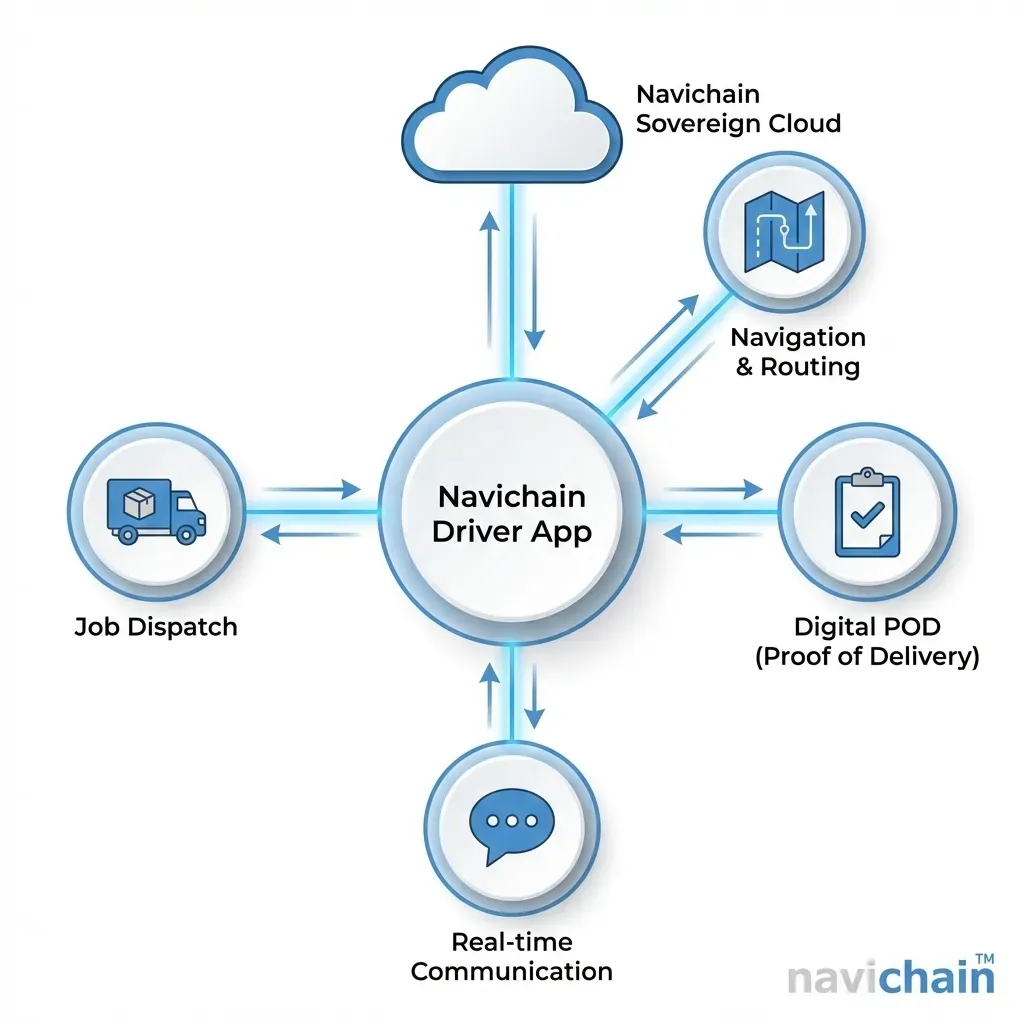
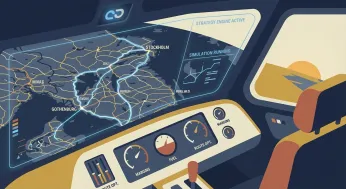
Schematic illustration of the Navichain Unified OS, demonstrating the integration of key logistics functions within a single platform.
- Automated Workflows: The app guides drivers through standard operating procedures, ensuring compliance and data consistency.
- Offline Mode: Critical for rural routes, the app stores data locally and syncs automatically when connectivity is restored.
- AI-Driven Optimization: Navichain leverages AI to optimize routes, predict delivery times, and identify potential problems before they occur. This helps drivers to be more efficient and proactive. The Navichain SaaS platform is built on a Unified OS, which provides a single, integrated environment for all essential logistics functions. This allows for seamless data flow between different modules, such as TMS, WMS, and billing, eliminating the need for manual data entry and reducing the risk of errors. The Unified OS also provides a centralized platform for managing drivers, vehicles, and deliveries, making it easier to track performance and identify areas for improvement. Navichain leverages AI to optimize various aspects of the logistics operation, including:
- Route Optimization: AI algorithms analyze traffic patterns, weather conditions, and delivery schedules to optimize routes and minimize travel time.
Navichain streamlines logistics, freeing up personnel to focus on strategic initiatives and growth.
- Predictive Maintenance: AI algorithms analyze vehicle data to predict potential maintenance issues before they occur, reducing downtime and maintenance costs.
- Demand Forecasting: AI algorithms analyze historical data to forecast future demand, allowing companies to better plan their resources and optimize inventory levels. By leveraging AI, Navichain helps SMEs to improve efficiency, reduce costs, and enhance customer service.
Section 5: Business outcomes: ROI, efficiency gains, and strategic resilience
Implementing Navichain's unified driver app delivers significant business outcomes, including: * Increased Productivity: By eliminating app fatigue and streamlining workflows, Navichain helps drivers to be more productive, completing more deliveries per day.
- Reduced Costs: Navichain helps to reduce costs in several ways, including lower fuel consumption, reduced maintenance costs, and lower administrative overhead.
- Improved Driver Satisfaction: By providing drivers with a user-friendly and efficient tool, Navichain helps to improve driver satisfaction and reduce turnover.
- Enhanced Customer Service: Navichain helps to improve customer service by providing drivers with real-time information and enabling them to communicate effectively with customers.
- Strategic Resilience: By providing a unified platform for managing logistics operations, Navichain helps SMEs to be more resilient and adaptable to changing market conditions.
- Significant ROI: The combination of increased productivity, reduced costs, and improved customer service translates into a significant return on investment for SMEs. By investing in Navichain, SMEs can transform their logistics operations and achieve significant business outcomes.
Navichain delivers a powerful combination of benefits, from streamlined operations and enhanced customer service to significant return on investment for SMEs.
Conclusion
In today's competitive logistics landscape, operational efficiency and driver satisfaction are paramount. The challenge of app fatigue is a significant obstacle for many European SMEs, hindering productivity, increasing costs, and contributing to driver turnover. Navichain offers a strategic solution: a unified driver app built on a Unified OS and powered by AI. By consolidating essential functions into a single, intuitive interface, Navichain empowers drivers, streamlines workflows, and unlocks significant cost savings. Investing in Navichain is not just about improving efficiency; it's about building a more profitable, driver-friendly, and resilient logistics operation. Embrace the power of a unified approach and unlock your full potential with Navichain. The future of logistics is unified, and Navichain is leading the way.
References
- European Union. (2006). Regulation (EC) No 561/2006 of the European Parliament and of the Council of 15 March 2006 on the harmonisation of certain social legislation relating to road transport and amending Council Regulations (EEC) No 3821/85 and (EC) No 2135/98 and repealing Council Regulation (EEC) No 3820/85. https://eur-lex.europa.eu/legal-content/EN/TXT/?uri=CELEX%3A32006R0561
- International Road Transport Union (IRU). (2023). The Future of Trucking: Addressing the Driver Shortage. https://www.iru.org/future-trucking-driver-shortage
- McKinsey & Company. (2022). The next frontier in truckload transportation. https://www.mckinsey.com/industries/travel-logistics-and-infrastructure/our-insights/the-next-frontier-in-truckload-transportation
- Gartner. (2023). Supply Chain Technology Trends. https://www.gartner.com/en/supply-chain/trends
- U.S. Department of Transportation, Federal Motor Carrier Safety Administration (FMCSA). (2011). Driver Coercion Rule. https://www.fmcsa.dot.gov/regulations/driver-coercion/driver-coercion-rule
Navichain's platform offers end-to-end visibility and control across the supply chain, from origin to final destination.
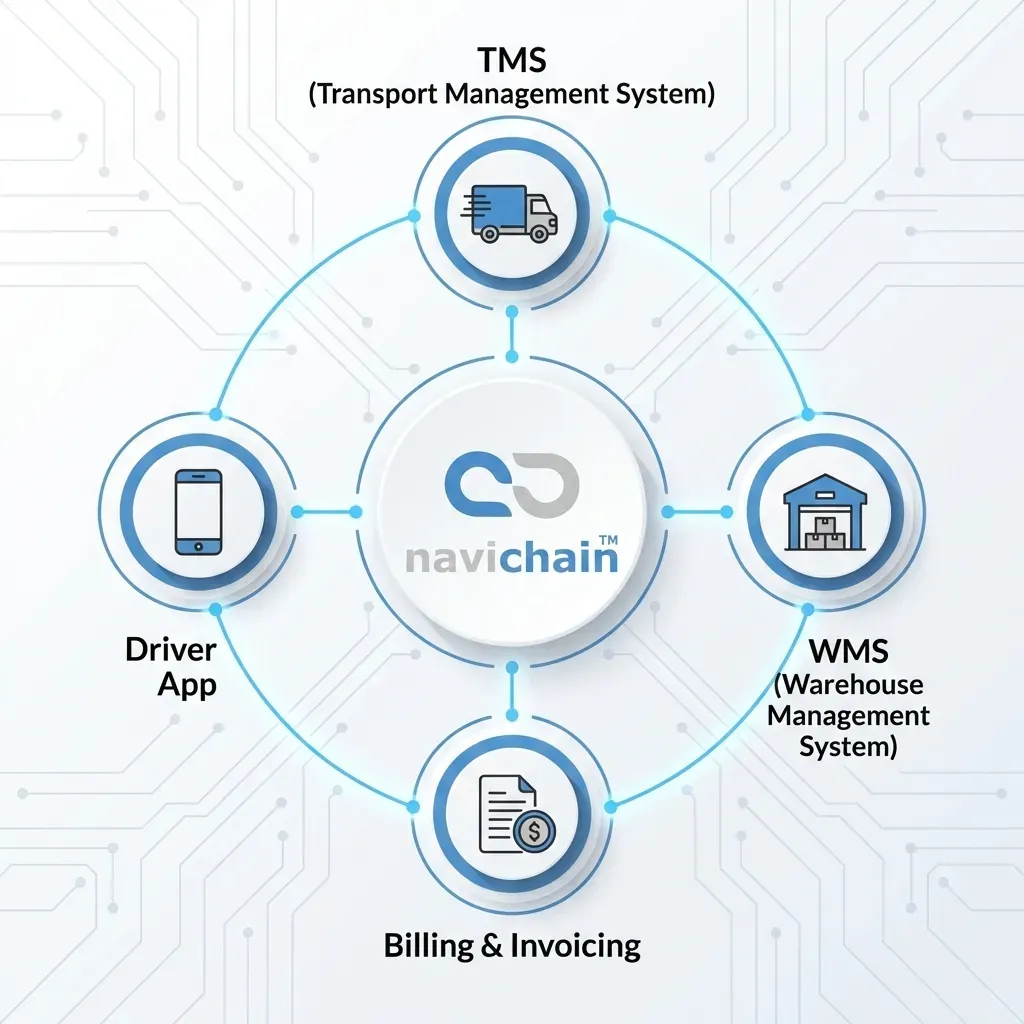
Navichain's platform enables real-time tracking and management of goods throughout the transportation process, fostering transparency and efficiency. This comprehensive approach helps businesses optimize their supply chains and reduce potential disruptions.
Ready to optimise your supply chain?
navichain Insights Newsletter
Join the newsletter to receive the latest updates in your inbox.