5 Steps to Simpler Everyday Life for Haulage Owners: Automate Your Administration
Table of Contents
To simplify your haulage business and reduce administrative complexity, you need to transition from manual paperwork to an integrated Transportation Management System (TMS). By following 5 steps—digitizing consignment notes (e-CMR), automating invoicing, utilizing driver apps, implementing real-time tracking, and securing data sovereignty—you can drastically improve cash flow and operational control.
Key Takeaways / Executive Summary:
- The Burden of Complexity: Manual paperwork and fragmented communication drain resources.
- The e-CMR Advantage: Digital consignment notes speed up invoicing and limit legal risks.
- Intelligent Automation: Integrating systems via a unified TMS like navichain SaaS saves time and improves cash flow.
- Empowering Teams: Modern driver apps elevate operational control and customer satisfaction.
- Data Sovereignty: Protecting your data from foreign jurisdiction (like the US Cloud Act) is crucial for modern logistics.
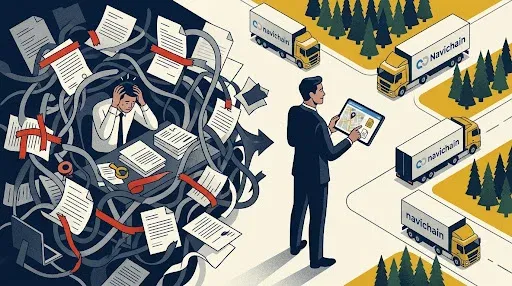
Running a haulage business is tough. You're constantly juggling demanding clients, rising fuel costs, driver shortages, and a mountain of paperwork. But what if there was a way to drastically reduce the administrative burden? This guide unveils five actionable steps you can take today to eliminate complexity and pave the way for a more efficient and profitable future.
The Heavy Burden of Administrative Complexity
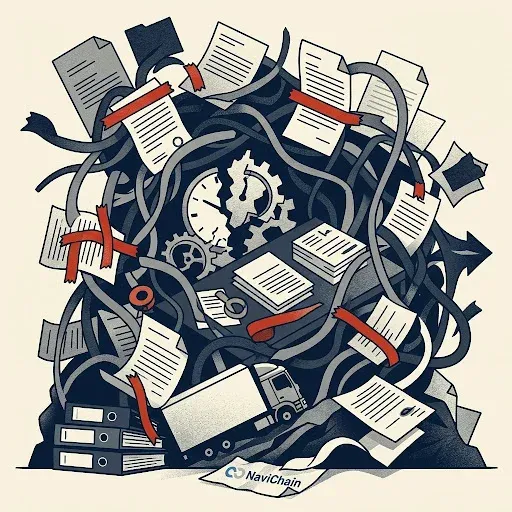
Before diving into solutions, let's acknowledge the problem. Administrative complexity manifests itself in many ways:
- Paperwork overload: Invoices, delivery notes, and compliance documents are overwhelming.
- Manual data entry: Transferring info from paper to digital is slow and error-prone.
- Lack of visibility: Not knowing vehicle locations leads to customer dissatisfaction.
These burdens hinder growth. Here is how you solve them.
Step 1: Digitize Consignment Notes with e-CMR
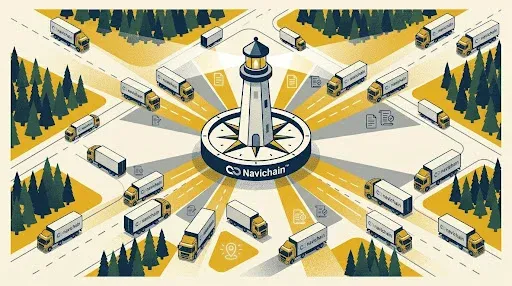
The traditional paper-based CMR is a major source of administrative overhead. e-CMR (electronic Consignment Note) replaces traditional paper documentation, enabling real-time, error-free data exchange.
By digitizing this process with navichain SaaS, you gain:
- Zero Paperwork: Eliminate the need to print and store paper CMR documents.
- Instant Data: Drivers update information directly through the intuitive navichain driver app.
- Immediate Proof of Delivery (POD): Capture electronic signatures and photos on the spot.
Step 2: Automate Invoicing to Supercharge Cash Flow
Manual invoicing is a massive time sink. The true power of Operational Excellence comes when Step 1 and Step 2 connect.
With navichain SaaS, the moment a driver captures a digital POD (Step 1), the system's built-in intelligence takes over:
- Zero-Touch Invoicing: Invoices are generated automatically based on pre-defined rates, distance, and weight the second the delivery is signed for.
- Faster Payment Cycles: Send invoices electronically and track status in real-time.
- Eliminate Disputes: Automated calculations prevent manual billing errors before they occur.
Step 3: Equip Your Fleet with a Modern Driver App
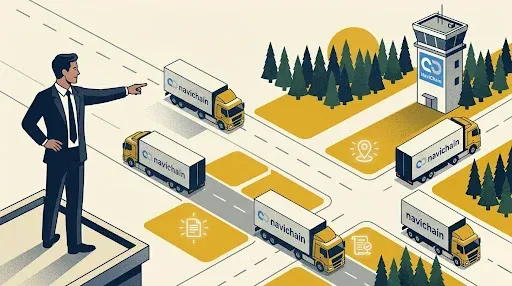
A well-designed driver app significantly improves communication. The navichain driver app is built with user experience (UX) in mind, simplifying the driver's day on the road:
- Real-Time Communication: Instant text or voice messages.
- Digital Workflows: From electronic vehicle inspection reports to simple route overviews.
Want to execute these steps flawlessly?
Download our complete checklist: "The 30-Day Haulage Digitalization Blueprint".
Download Free Checklist
Step 4: Implement Real-Time Tracking for Total Control
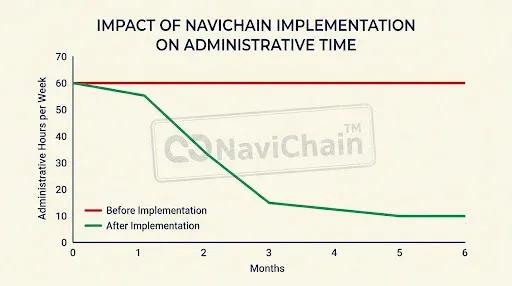
Knowing the exact location of your goods is crucial. Real-time data provides unprecedented visibility:
- Live Fleet Tracking: See all vehicles on a centralized map.
- Accurate ETAs: Provide customers with precise arrival times based on live traffic.
- Proactive Management: Receive alerts for unexpected delays to adjust routes instantly.
Step 5: Integrate Systems and Secure Your Data Sovereignty
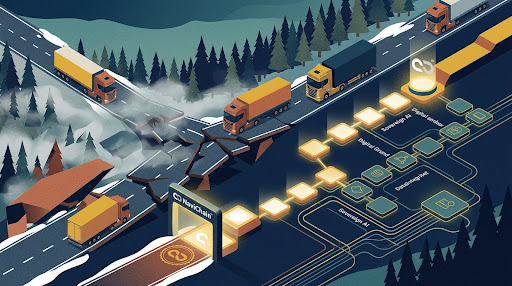
Traditional IT relies on fragmented systems requiring manual data transfer. An integrated TMS connects seamlessly with your ERP, CRM, and WMS platforms.
However, as you digitalize all your transport data, Strategic Trust and Security become your most critical assets. Many cloud solutions expose your sensitive corporate data to foreign legislation.
- The navichain SaaS Difference: We operate our self-hosted AI on sovereign Swedish infrastructure, ensuring US CLOUD Act immunity and host your data in our self-hosted data centers. This means you are completely shielded from the US Cloud Act. You retain 100% data sovereignty, ensuring your clients' logistics data is safe, compliant, and strictly European.
Traditional IT vs. Integrated navichain TMS
| Operational Aspect | Fragmented IT Systems | Integrated TMS (navichain) |
|---|---|---|
| Data Flow | Manual data transfer | Automatic, real-time sync |
| Invoicing | Delayed, manual creation | Zero-touch, automatic upon POD |
| Security | Vulnerable third-party clouds | Self-hosted, No US Cloud Act |
The navichain Advantage: Your Partner in Simplification
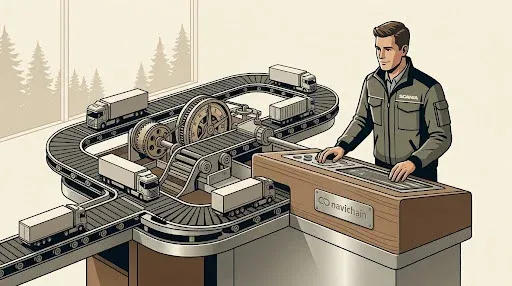
navichain SaaS is designed specifically for modern hauliers. It reduces administrative burdens, secures your data, and allows you to manage all transport operations within a single, user-friendly platform.
Are you ready to stop wasting time on manual paperwork and future-proof your operations?
Start Your Free navichain SaaS Trial Today
Experience automated invoicing and full data control within minutes.
About the Author: Manusha works with system integration and logistics automation at navichain. She specializes in helping haulage companies eliminate administrative complexity through secure, scalable SaaS solutions.
navichain Insights Newsletter
Join the newsletter to receive the latest updates in your inbox.