The Workforce Paradox: How Prioritizing Driver Admin Tools Unlocks Total Operational Efficiency
Table of Contents
2. The Data Integrity Crisis
The Workforce Paradox Driver Admin Unlocks Operational Efficiency
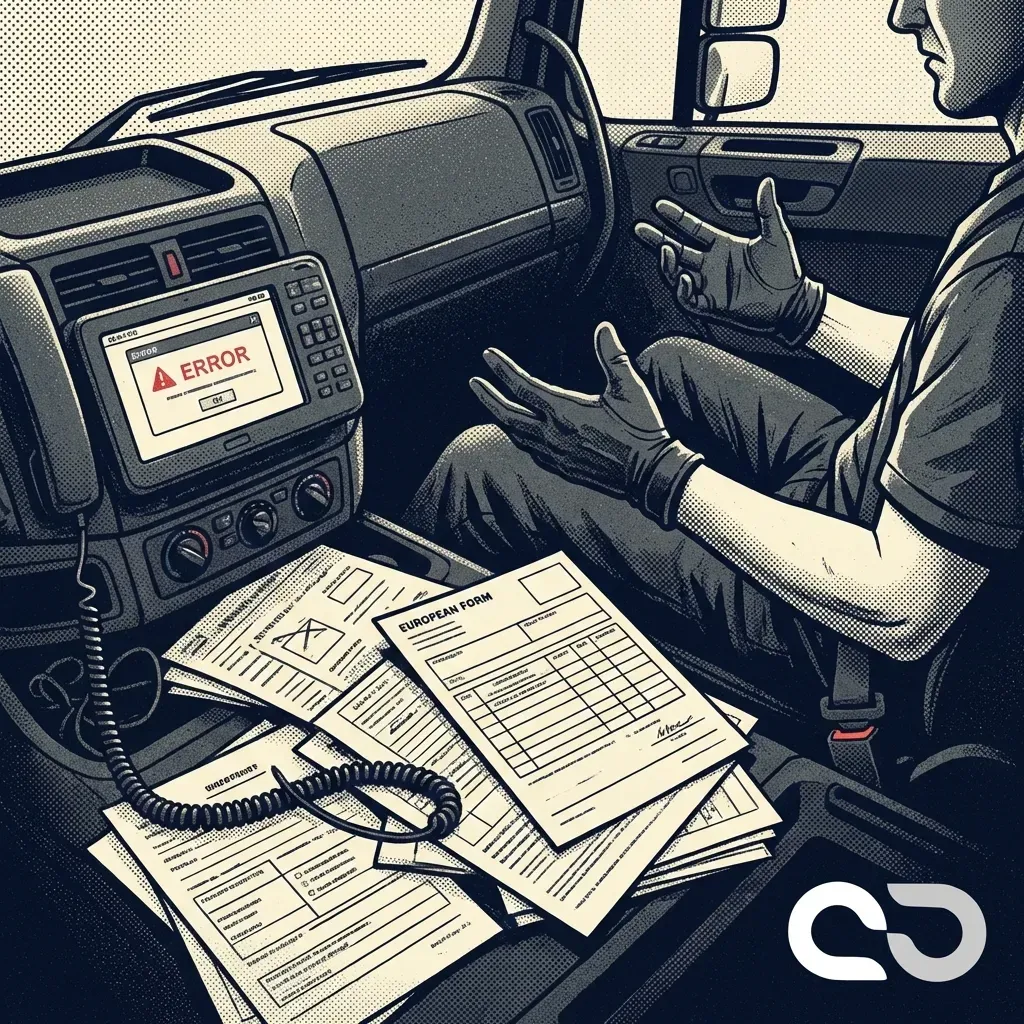

The European logistics sector faces a severe driver shortage, with the IRU reporting hundreds of thousands of vacancies. For SME haulage firms, this isn't just a hiring problem; it's an efficiency crisis. Conventional wisdom suggests focusing on route optimization, but this overlooks the bottleneck hiding in plain sight: the driver's cab. The administrative burden placed on drivers—from manual proof-of-deliveries to fragmented reporting—is a primary source of operational friction, data inaccuracy, and workforce burnout. This white paper presents a strategic framework for re-engineering your operation, arguing that by solving the driver's administrative challenges first, you create a ripple effect of efficiency, data integrity, and profitability across your entire business.
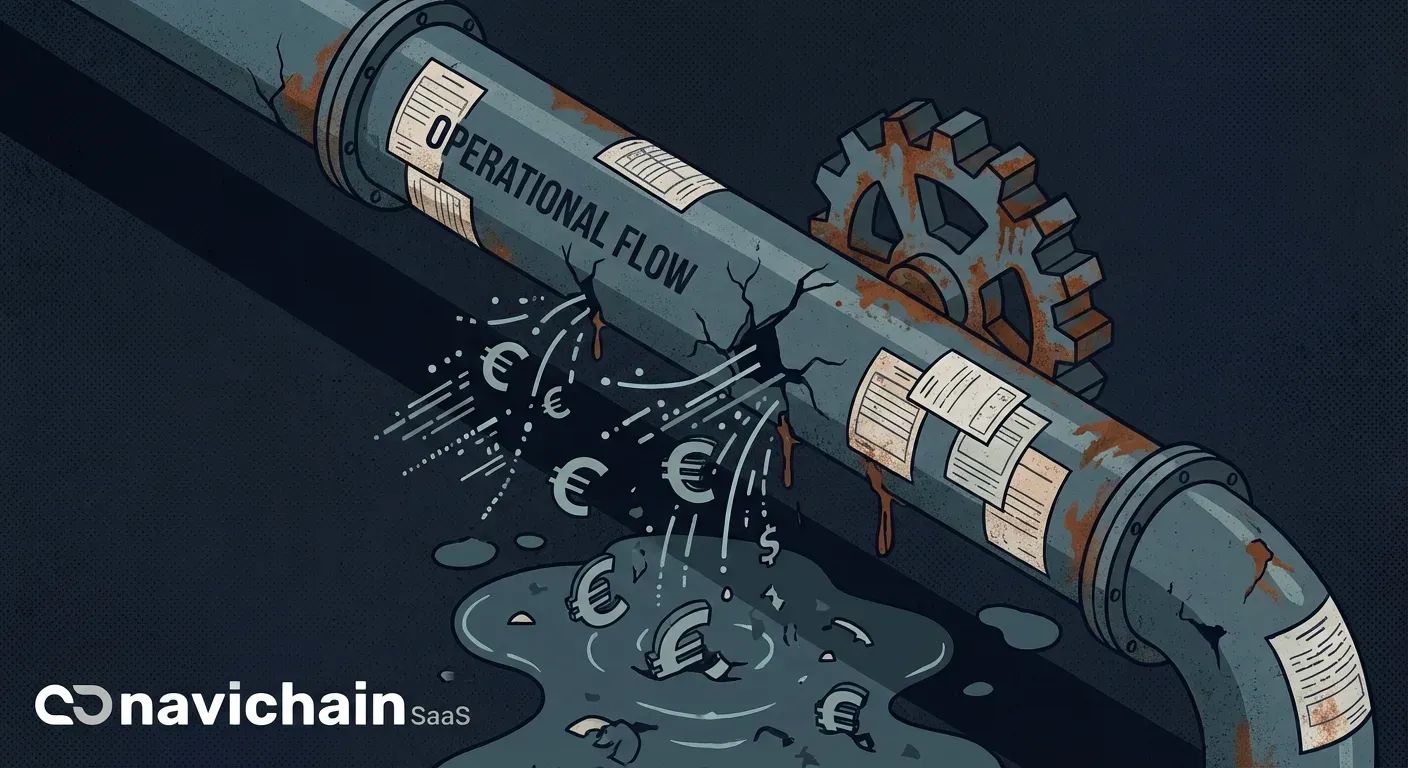
The €100,000 papercut: How driver administration is silently draining your haulage SME
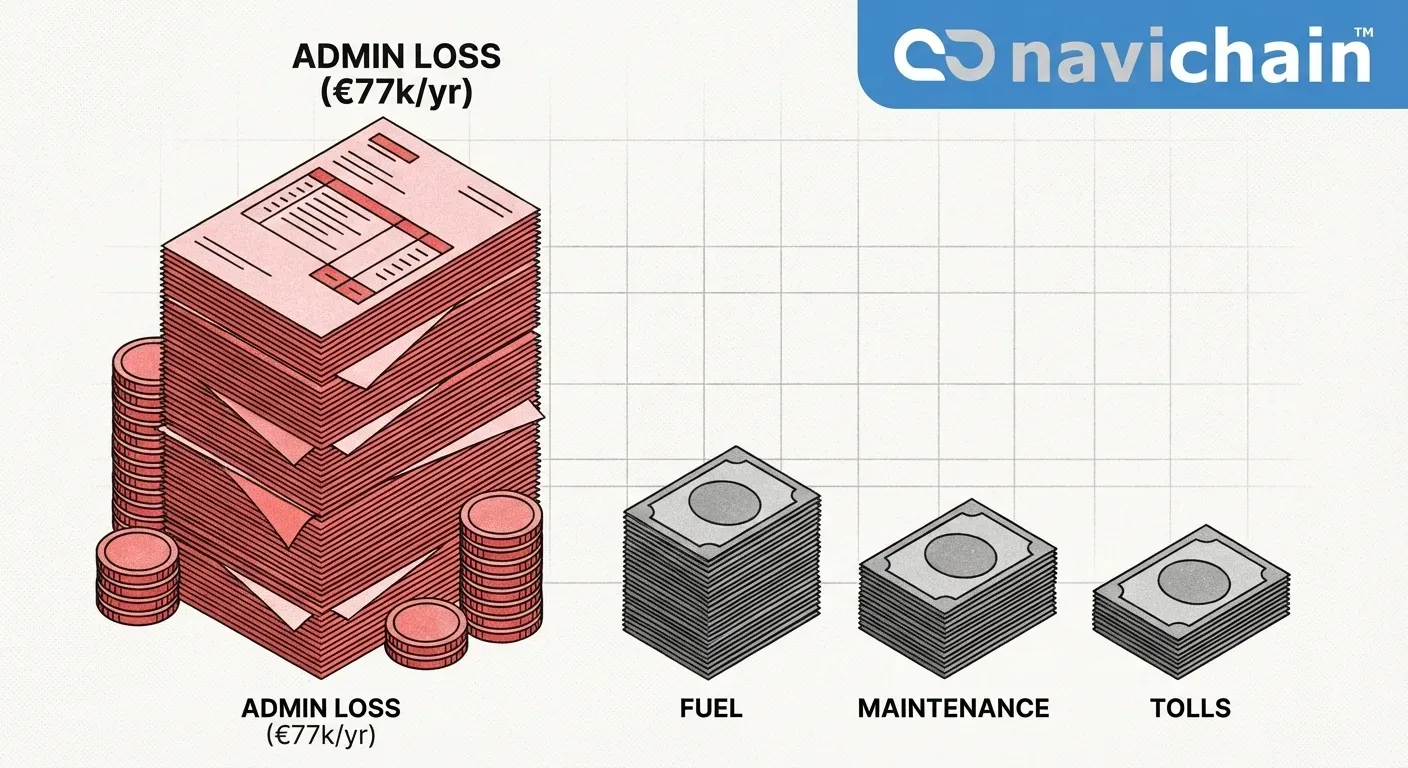
The daily pressures facing haulage SMEs, compounded by driver shortages, create a challenging operational environment.
For a Small to Medium-sized Enterprise (SME) in the European haulage sector, the list of daily pressures is relentless. Fuel costs fluctuate, competition from larger, tech-enabled giants is fierce, and profit margins are perpetually thin. Compounding this is the single greatest operational threat: the driver shortage. The International Road Transport Union (IRU) has consistently reported staggering deficits, with Europe facing a shortfall of hundreds of thousands of professional drivers. SME owners and logistics managers are in a constant battle to do more with less. The logical response has been to invest in point solutions: a new routing algorithm, a separate telematics system, or a patch for the billing software. Yet, profitability remains elusive, and operational chaos feels like the norm. This is because the most significant drain on resources is not the route, but the friction at the point of execution. We are asking our most valuable, scarcest resource—the driver—to be a data entry clerk, a compliance officer, and an administrator, all while navigating the complexities of the road. This white paper argues that this administrative burden is not just an inconvenience; it is a strategic liability that creates data silos, delays cash flow, and actively drives your workforce to competitors.
Deconstructing the problem: The true cost of administrative friction
When a driver has to pull over to manually fill out paperwork, juggle three different apps, or call the office for instructions, the cost is not measured in minutes. It is measured in cascading operational failures. Let's quantify the "papercut." Assume a conservative estimate of 30 minutes per driver, per day, spent on fragmented administrative tasks. This includes manual entry for proof-of-delivery (PoD), filling out paper manifests, and reporting delays or exceptions via phone or text.
- Calculation: 0.5 hours/day x 220 working days/year = 110 hours per driver, per year.
- At an average loaded cost of €35/hour: This is €3,850 lost per driver.
- For a small fleet of 20 drivers: This equates to €77,000 annually in lost productivity, spent entirely on low-value, automatable tasks. This calculation doesn't even include the cost of the errors, the illegible handwriting, or the fuel wasted while idling. Manual, fragmented reporting is the enemy of strategy. When a PoD is a physical piece of paper in a driver's cab, your entire operation is flying blind.
- Delayed Billing: The finance department cannot invoice the client until they receive the PoD. A 2-day delay on PoD submission across your entire fleet can throttle your cash flow, turning a 30-day net term into a 35- or 40-day reality.
- WMS & TMS Desynchronization: The warehouse believes a load is still in transit when it was, in fact, delivered two hours ago. The transport manager is planning routes based on data that is 6 hours old. This data lag makes "optimization" a theoretical exercise rather than a practical reality.
- Lack of Strategic Insight: As a manager, you cannot analyze what you cannot see. Without clean, real-time data from the field, your ability to identify inefficient routes, problematic customers, or accurate demurrage is non-existent. You are managing by anecdote, not by data. 3. The Workforce Burnout Multiplier In a market with a severe driver shortage, workforce retention is your primary competitive advantage. Professional drivers are skilled operators; they are not aspiring administrators. When their primary interaction with the company's "technology" is a frustrating, fragmented, and time-consuming process, their job satisfaction plummets. This administrative friction is a key, unspoken driver of turnover. The cost to recruit, hire, and train a new driver in Europe can exceed €5,000. If poor tools and processes contribute to losing just four drivers a year, that's another €20,000 in costs, not to mention the operational disruption of an idle truck.
The path forward: The 'driver-centric' efficiency framework
To solve this, we must invert the traditional approach. Instead of buying more technology to track the driver, we must implement a unified system that serves the driver. By making the driver's workflow seamless, we unlock efficiency for the entire organization. This framework is built on three pillars: Unify, Automate, and Empower. Pillar 1: Unify the Workflow The core problem is fragmentation. A driver may use one app for navigation, another for telematics, a paper form for PoD, and a phone call for exceptions. This is the root of data silos.
- The Solution: A single, unified application. The driver should have one tool, on one device, that is their central hub for everything. This tool must be a seamless extension of the core business systems—Transportation Management (TMS), Warehouse Management (WMS), and Billing.
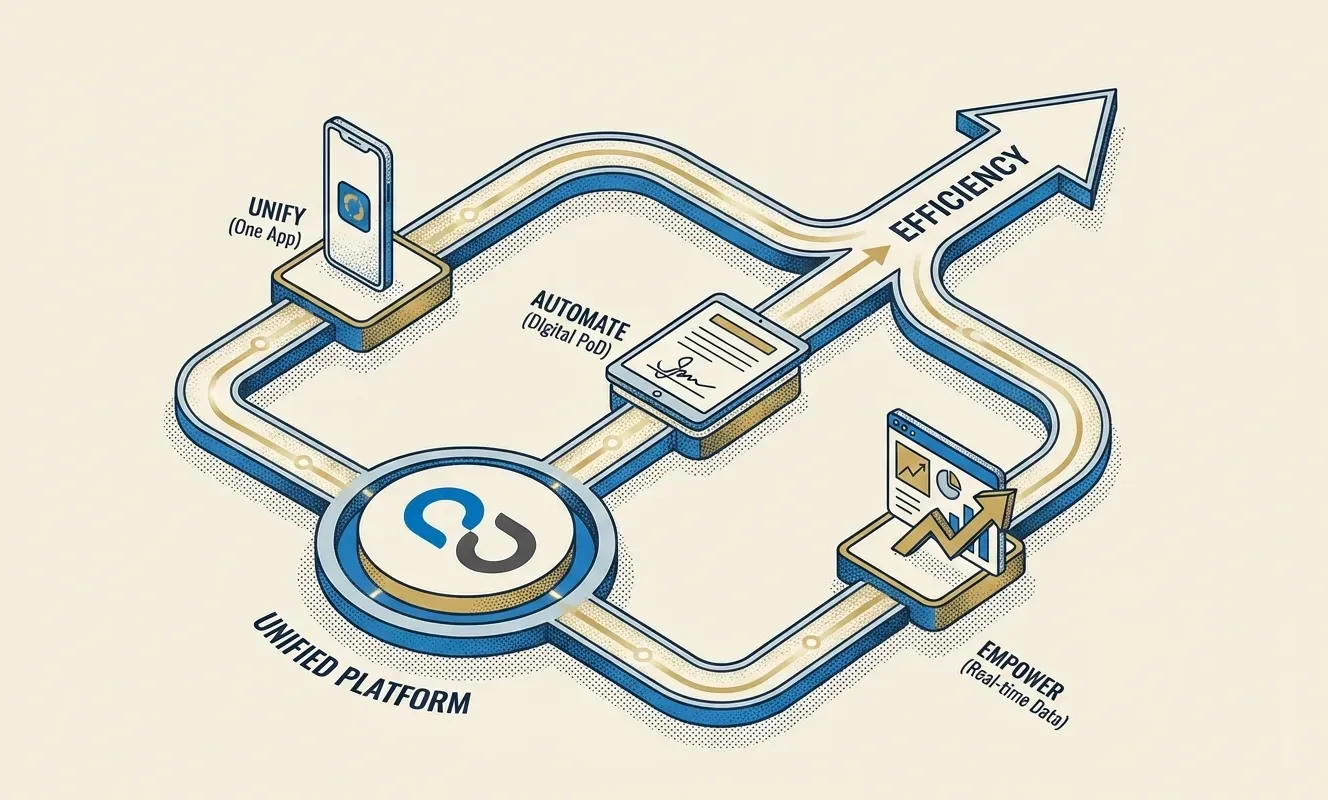
A unified, driver-centric application streamlines workflows and minimizes administrative tasks, leading to improved efficiency and reduced operational costs.
- In Practice: When a transport manager assigns a job in the TMS, it appears instantly on the driver's app with all necessary information. The driver doesn't just see an address; they see the order details from the WMS, the client's contact information, and specific delivery instructions. Pillar 2: Automate the Administrative Burden Once the workflow is unified, you can begin to automate low-value tasks. The goal is to eliminate "data entry" and replace it with "data capture."
- The Solution: Leverage the power of a modern, integrated system to do the work.
- In Practice:
- Digital PoD: The driver captures a signature or photo on their device. This digital PoD is instantly time-stamped, geo-tagged, and attached to the order in the TMS and the billing system. The invoice can be generated automatically before the driver has even left the customer's site.
- Geofencing: The system automatically logs arrival and departure times at customer locations, eliminating manual logs and providing precise data for demurrage calculations.
- Exception Reporting: Instead of a phone call, the driver selects a pre-defined reason for a delay (e.g., "Traffic," "Customer Not Present") which instantly updates the TMS, alerting the manager and the customer simultaneously. Pillar 3: Empower with Intelligence A unified system, fed by clean, automated data, creates a powerful new asset: a single source of truth. For the first time, managers and owners can see their entire operation in real-time.
- The Solution: Use this new data layer to make smarter decisions, moving from reactive to predictive management.
- In Practice:
- For the Driver: The system can provide real-time route optimization based on live data from other drivers, not just static maps.
- For the Manager: Dashboards light up with true performance data. You can finally answer critical questions: "Which customers consistently delay our drivers?" "What is our true cost-to-serve for this route?" "Where are our hidden efficiency gains?" This transformation—from a fragmented, high-friction environment to a unified, low-friction one—is the single most impactful strategic shift an SME haulage firm can make.
From diagnosis to design: The blueprint for a resilient logistics operating system
This 'Driver-Centric' framework is a strategy, not a product.
This 'Driver-Centric' framework is a strategy, not a product. To implement it, your technology foundation must be built on three non-negotiable principles.
Principle 1 - unified operational fabric
You cannot fix driver friction if your back office is a mess of data silos. A modern logistics platform must be a single, integrated system—a central nervous system for your entire operation. Your Transportation Management (TMS), Warehouse Management (WMS), Billing Management, and Asset Management must work as one, drawing from and feeding a single source of truth. When a driver updates an order, the billing, warehousing, and transport teams must see it instantly.
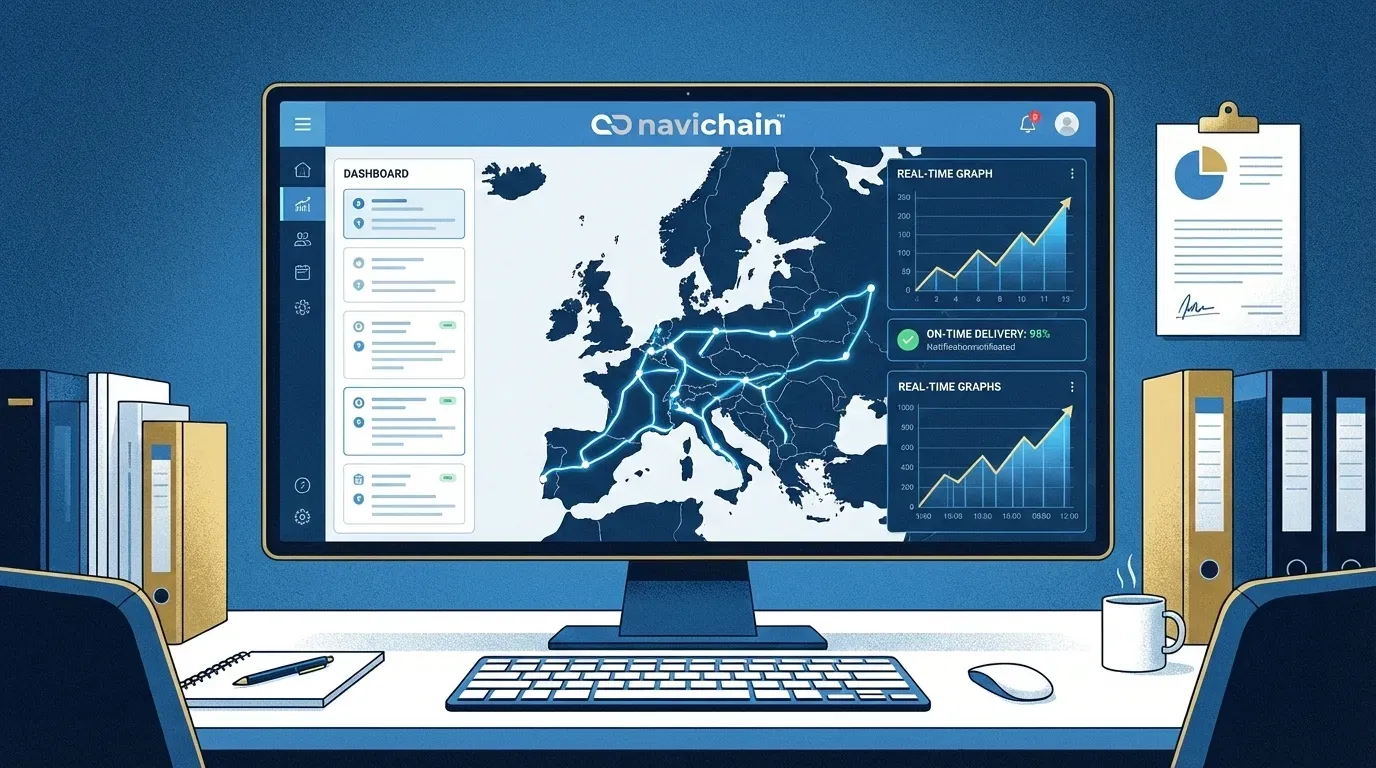
Schematic illustrating the interconnectedness of key logistics functions within a unified operating system, emphasizing real-time data flow for optimal efficiency.
Principle 2 - secure data architecture and control
For European SMEs, data is not just an asset; it's a liability if mismanaged. Operational resilience requires complete control over your data environment. Entrusting your core operational data—your routes, client lists, and pricing—to third-party platforms hosted in insecure or legally complex jurisdictions is an unacceptable risk. True control means your data is stored and processed under your own region's legal jurisdiction (e.g., within the EU/Sweden) on secure, Self-Hosted, or privately controlled infrastructure. This ensures straightforward GDPR compliance and insulates your business from the complexities and risks of international data transfers.
Principle 3 - embedded analytic intelligence
Data is only useful if you can act on it. A resilient platform must have an embedded intelligence or Integrated AI layer. This AI should not be a complex, separate tool but an integrated part of the system. It must be able to analyze the unified data from Principle 1, within the secure environment of Principle 2, to deliver actionable insights. This intelligence should automate tasks, identify cost-saving patterns, and provide predictive recommendations, turning your clean data into a proactive, profit-driving engine.
References/sources
- IRU (International Road Transport Union) - 2023 Driver Shortage Report: Provides global and regional data on the driver deficit and its impact on the industry.
[https://www.iru.org/resources/news-events/iru-2023-driver-shortage-report-globally-driver-shortage-exceeds-3-million](https://www.iru.org/resources/news-events/iru-2023-driver-shortage-report-globally-driver-shortage-exceeds-3-million`)
- Eurostat - Freight Transport Statistics: Offers data on the costs, volume, and performance of the European freight transport sector.
[https://ec.europa.eu/eurostat/statistics-explained/index.php?title=Freight_transport_statistics](https://ec.europa.eu/eurostat/statistics-explained/index.php?title=Freight_transport_statistics`)
- Ti Insight (Transport Intelligence) - European Road Freight Market Reports: Provides expert analysis on market trends, costs, and digitalization in European logistics.
[https://www.ti-insight.com/report-category/digital-transformation/](https://www.ti-insight.com/report-category/digital-transformation/`)
- European Commission - Mobility and Transport: Outlines regulations, including driving hours and compliance, that contribute to the administrative load.
[https://transport.ec.europa.eu/transport-modes/road_en](https://transport.ec.europa.eu/transport-modes/road_en`)
Enabling the blueprint: The navichain SaaS unified logistics platform
The strategic framework outlined in this paper—moving from administrative friction to a 'Driver-Centric' model of efficiency—requires a technology partner built on the same principles.
The strategic framework outlined in this paper—moving from administrative friction to a 'Driver-Centric' model of efficiency—requires a technology partner built on the same principles. navichain SaaS is designed to be the operating system for European logistics SMEs, embodying the three core principles of a modern, resilient platform.
- Principle 1: Unified Operational Fabric: We deliver a single, seamless solution where Transportation Management (TMS), Warehouse Management (WMS), Asset Management, Billing Management, and Order Management work as one. This breaks down data silos and provides the single source of truth needed to empower your drivers and back office.
- Principle 2: Secure Data Architecture and Control: This is our foundational differentiator. The entire navichain SaaS platform is hosted on our own secure infrastructure (Self-Hosted) in Sweden. This ensures maximum data security and straightforward GDPR compliance. By keeping your data strictly within Swedish/EU jurisdiction, you maintain full control, free from the complexities of international data transfers.

Data-driven insights empower drivers and streamline administrative tasks, leading to significant gains in operational efficiency.
- Principle 3: Embedded Analytic Intelligence: Our platform is enhanced by a integrated AI that also runs on our secure Swedish infrastructure. This allows our clients to perform deep, secure data analysis on their unified operational data, unlocking unique efficiencies and insights without ever compromising their data sovereignty. Our mission is to democratize logistics technology, offering a powerful, integrated, and affordable platform that allows SMEs to compete, grow, and thrive. By solving the driver's administrative burden, we unlock the full potential of your entire operation."
Navichain's unified platform offers a single source of truth across all logistics operations, hosted on secure, self-owned Swedish infrastructure.
Navichain provides a unified view of logistics data, facilitating comprehensive analysis and improved operational oversight. This integrated platform allows SMEs to leverage powerful data-driven insights.
Ready to optimise your supply chain?
navichain Insights Newsletter
Join the newsletter to receive the latest updates in your inbox.