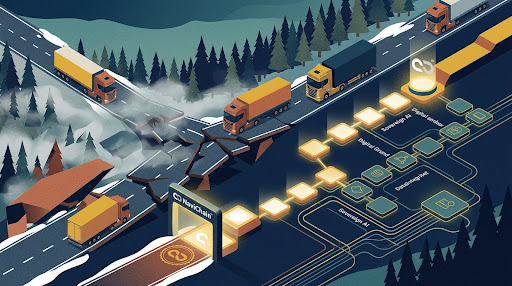
The Fragility Trap: Why Competing on Cost is a Losing-Sum Game for Scandinavian Hauliers
Table of Contents

Scandinavian SME hauliers are struggling against social dumping and razor-thin margins. Are your cost-cutting measures making your business more vulnerable, not competitive? This white paper reveals how to turn complex data and compliance into a strategic advantage, moving beyond price wars to build a resilient and profitable future.
The Fragility Trap: Why Competing on Cost is a Losing-Sum Game for Scandinavian
Scandinavian SME hauliers are caught in an impossible squeeze. Faced with persistent social dumping and price pressure from non-compliant, low-wage operators, profitability has eroded to unsustainable levels. Recent data shows operating margins for European operators remain razor-thin, often hovering between 1-3%. The instinctive response is to cut costs, streamline, and match prices. But this is a trap. What if every 'cost-saving' measure you take to compete is actually making your business more fragile, brittle, and less resilient to the next market shock? This white paper presents a strategic pivot: stop competing in a race to the bottom you can't win. We outline a framework for transforming your greatest burden—complex operational data and regulatory compliance—into your most powerful offensive weapon. It's time to shift from competing on price to competing on provable intelligence and resilience.
The squeeze: A war on two fronts
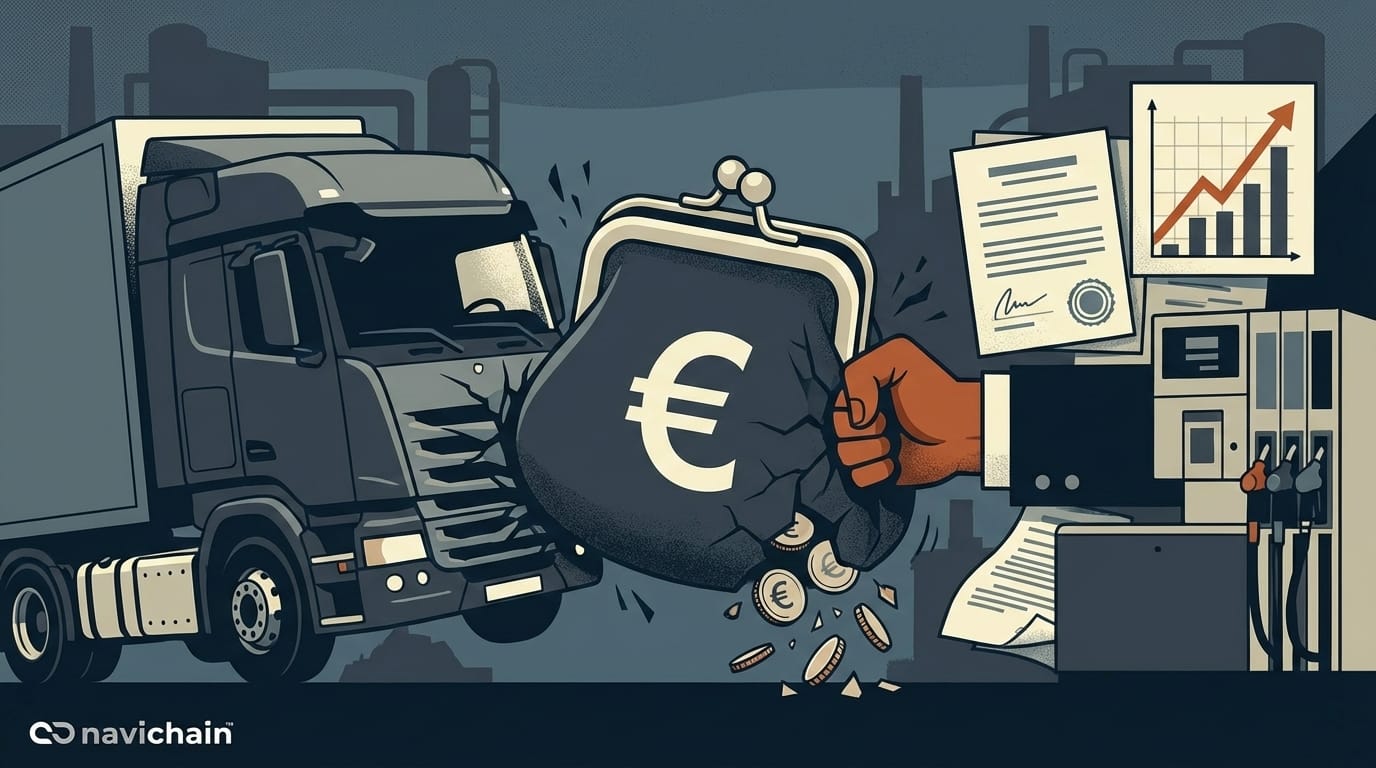
Fig 1: Squeezed between rising operational costs and downward price pressure from non-compliant competitors, Scandinavian SME hauliers face unsustainable market dynamics.
For the serious, compliant Small to Medium-sized Enterprise (SME) haulier in Scandinavia, the current market is not merely competitive; it is structurally antagonistic. The challenge is a war fought on two distinct fronts: one external and one internal.
The external threat: An unlevel playing field
The primary source of margin erosion is the persistent, systemic issue of unfair competition. This manifests as 'social dumping,' where operators from low-wage countries exploit loopholes and lax enforcement to operate in high-cost markets like Sweden, Norway, and Denmark. These actors often circumvent complex rules governing cabotage, driver posting, and mandatory rest periods. Scandinavian transport associations, such as Sweden's Transportföretagen, consistently report that this creates a distorted market. Compliant SMEs, which pay fair local wages, taxes, and invest heavily in adhering to the EU Mobility Package, are forced to bid for contracts against operators whose primary competitive advantage is non-compliance. The result is a relentless downward pressure on prices, forcing legitimate businesses to choose between profitability and survival.
The internal threat: The high cost of compliance
Simultaneously, the internal cost structure for these same compliant companies is escalating. The very regulations designed to create a fairer market, chiefly the EU Mobility Package I, have introduced significant administrative and operational burdens. Requirements such as the mandatory return of trucks to their home base and new 'cooling-off' periods for cabotage operations add complexity and cost. When combined with volatile fuel prices, driver shortages, and the capital expenditure required for greener fleets, the operational overhead for a 'serious' company is substantial. You are being penalized for playing by the rules. The International Road Transport Union (IRU) has noted in its 2024-2025 market analysis that while freight rates have struggled to keep pace, operational costs have surged, placing SME operators in a position of extreme financial vulnerability. This two-front war creates a profitability squeeze that is unsustainable. The logical, MBA-101 response is to focus on the only variable you can control: your own costs. And that is precisely the trap.
The fragility trap: When 'lean' becomes 'brittle'
Fig 2: The dominant strategic response to this squeeze has been a relentless focus on cost reduction.
The dominant strategic response to this squeeze has been a relentless focus on cost reduction. Logistics managers are tasked with finding new efficiencies, trimming fleet overhead, negotiating fuel contracts, and optimizing routes to save every last krona. On paper, this 'lean' approach makes sense. If you cannot control the market price, you must control your cost to protect your margin. However, this strategy is a race to the bottom, and the bottom is zero. We call this 'The Fragility Trap'. It is the point at which efficiency measures, taken under duress, cease to build a stronger business and begin to create a 'brittle' one. A brittle operation has no shock absorbers. It has no buffer for the inevitable disruptions that define modern logistics: * Deferred Investment: New, more efficient trucks are too expensive. Technology upgrades (like a modern TMS or WMS) are pushed to 'next year's budget.' * Service Degradation: To save on driver hours or fuel, routes are consolidated, and delivery windows become less flexible, diminishing the very service quality that differentiates you from low-cost actors.
- Inability to Adapt: When a key client demands a new type of compliance report or a last-minute route change, the 'lean' system, with no slack, breaks. You lose the contract—not to a cheaper competitor, but to a more agile one. Competing on price against an actor whose cost base is structurally and, often, illegally lower is not a strategy; it is a slow-motion surrender. You cannot win their game. The only path forward is to fundamentally change the game.
The strategic pivot: From competing on price to competing on data
Fig 3: The pivot away from the fragility trap requires a fundamental shift in mindset. The pivot away from the fragility trap requires a fundamental shift in mindset. You must stop defining your value by your price and start defining it by your provable intelligence. Your greatest competitive advantage is the one you are currently treating as a burden: your data. The non-compliant operator competing on price has chaotic, unverifiable, or non-existent data. You, the compliant operator, are sitting on a goldmine of it. You have driver logs, TMS records, WMS movements, asset maintenance schedules, and detailed billing information. Right now, this data is a defensive tool—an archive used to prove compliance to an auditor after the fact. The strategic pivot is to transform this data into an offensive weapon. Imagine bidding for a new, high-value contract. The low-cost operator says, "We can do it 10% cheaper." You say, "We can provide you with a real-time dashboard showing that every one of your deliveries is 100% compliant with all EU and local regulations. We can show you our emissions data per-pallet, our exact 'on-time-in-full' metric for the last 12 months, and provide predictive ETAs based on real-time fleet data. We can integrate our billing directly with your order system to eliminate invoicing errors. We are not just a haulier; we are your strategic partner in building a resilient, transparent, and fully-compliant supply chain." Who wins that contract? You win the client who values resilience over an unsustainable, risky discount. You exit the race to the bottom.

Illustrating the shift from price-based competition to data-driven value proposition, highlighting the strategic advantage of compliant operators.
The unification barrier
There is a critical barrier to achieving this vision: data silos. For most SMEs, this data goldmine is fragmented. Your Transportation Management System (TMS) doesn't talk to your Warehouse Management System (WMS). Your billing software is separate from your order management. Your asset (fleet) data lives in another system entirely. You cannot prove your unified value when your own data is not unified. To wield data as a weapon, you must first break down these internal silos and create a single, unified logistics operating system. Only from a single source of truth can you generate the kind of strategic insights that high-value clients will pay a premium for.
The data sovereignty imperative: A new strategic risk
As you begin to unify and leverage your data, a new, critical risk emerges: data sovereignty. In the rush to digitize, many SMEs have adopted powerful, cost-effective cloud-based software. The hidden risk is that many of these platforms are hosted by U.S.-based corporations. This places your most sensitive operational data—your client lists, your pricing structures, your routes, your driver information—under the jurisdiction of foreign legislation. The most significant threat is the U.S. CLOUD Act (Clarifying Lawful Overseas Use of Data Act). This law empowers U.S. authorities to demand access to data stored by U.S. service providers, even if that data is stored on servers physically located in Europe. This creates a direct and irreconcilable conflict with the EU's General Data Protection Regulation (GDPR). For a Scandinavian SME haulier, this is not a theoretical legal problem. It is a fundamental strategic risk: 1. Compliance Risk: You are the data controller. If your U.S.-based provider is compelled to hand over data in a way that violates GDPR, you are liable for the massive fines and reputational damage. 2. Competitive Risk: Your 'strategic goldmine'—all your unified operational data—could be legally accessed by a foreign government, potentially exposing your competitive strategy and client relationships. Therefore, the strategic pivot to competing on data has a non-negotiable prerequisite: true data sovereignty. For a European SME, operational data must be hosted on European (ideally, local) infrastructure, managed by a European entity, and governed exclusively by European and local law (e.g., Swedish law). Resilience is not just operational; it is digital. You cannot build a resilient, trustworthy operation on a foundation of data risk.
From diagnosis to design: The blueprint for a resilient logistics operating system
Fig 3: We have diagnosed the problem: a profitability squeeze caused by unfair competition, a fragility trap created by a cost-cutting response, and the challenge of data silos and data sovereignty.
We have diagnosed the problem: a profitability squeeze caused by unfair competition, a fragility trap created by a cost-cutting response, and the challenge of data silos and data sovereignty. The solution is a strategic framework built on a new kind of digital foundation. To execute the pivot from price to intelligence, an SME logistics platform must embody three core principles. This is the blueprint for a resilient operating system.
Principle 1: A unified operational fabric
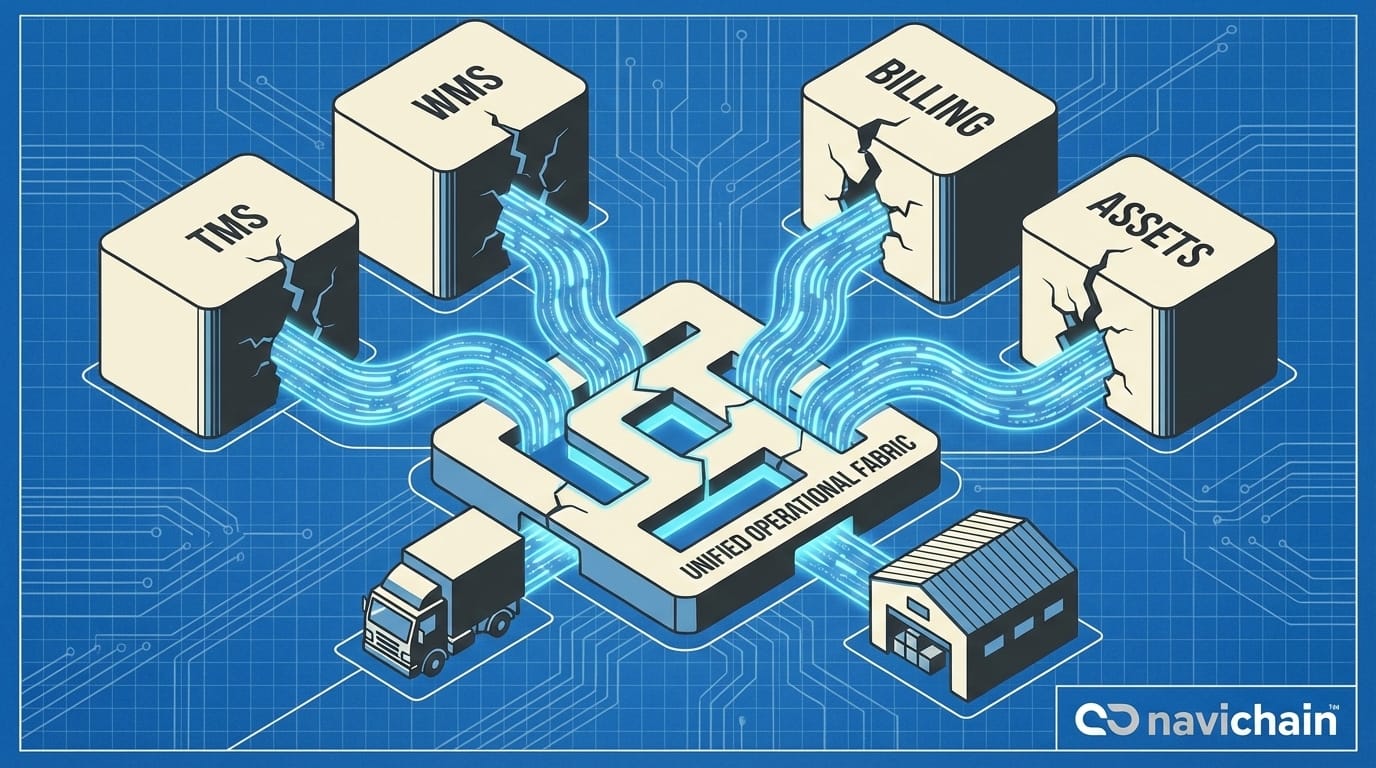
The problem of data silos must be solved at the architectural level. A modern logistics platform cannot be a collection of loosely integrated 'modules.' It must be a single, unified operational fabric—a 'central nervous system' for the entire business. Transportation Management (TMS), Warehouse Management (WMS), Order Management, Billing, and Asset Management must not just 'talk' to each other; they must operate as one cohesive system. This creates the non-negotiable single source of truth required to generate real-time, cross-functional insights. When an order is updated, the warehouse, the truck, and the invoice should all know simultaneously, without manual data entry or fragile integrations.
Principle 2: A sovereign data architecture
To counter the strategic and legal risks of foreign legislation, the platform's architecture must be 'sovereign by design.' For European SMEs, this is not an optional feature; it is a foundational requirement. This means the platform and all client data must be hosted, processed, and managed on infrastructure located within the EU (ideally, within your home jurisdiction, like Sweden). This ensures that your operational data is governed exclusively by local and EU law (like GDPR) and is completely shielded from the extraterritorial reach of laws like the US CLOUD Act. This is the bedrock of digital trust and risk management.
Principle 3: Embedded analytic intelligence
With a unified fabric (Principle 1) built on a sovereign foundation (Principle 2), you can finally unlock the power of your data. The platform must have an embedded intelligence or AI layer that can analyze this unified, secure data. This intelligence should not be a complex, separate tool; it must be embedded within the daily workflows. It should proactively identify cost-saving opportunities (e.g., more efficient routes), predict maintenance needs for assets, highlight compliance risks before they happen, and provide the deep analytic insights needed to prove your superior value to high-value clients. This is how data becomes your most powerful offensive weapon.
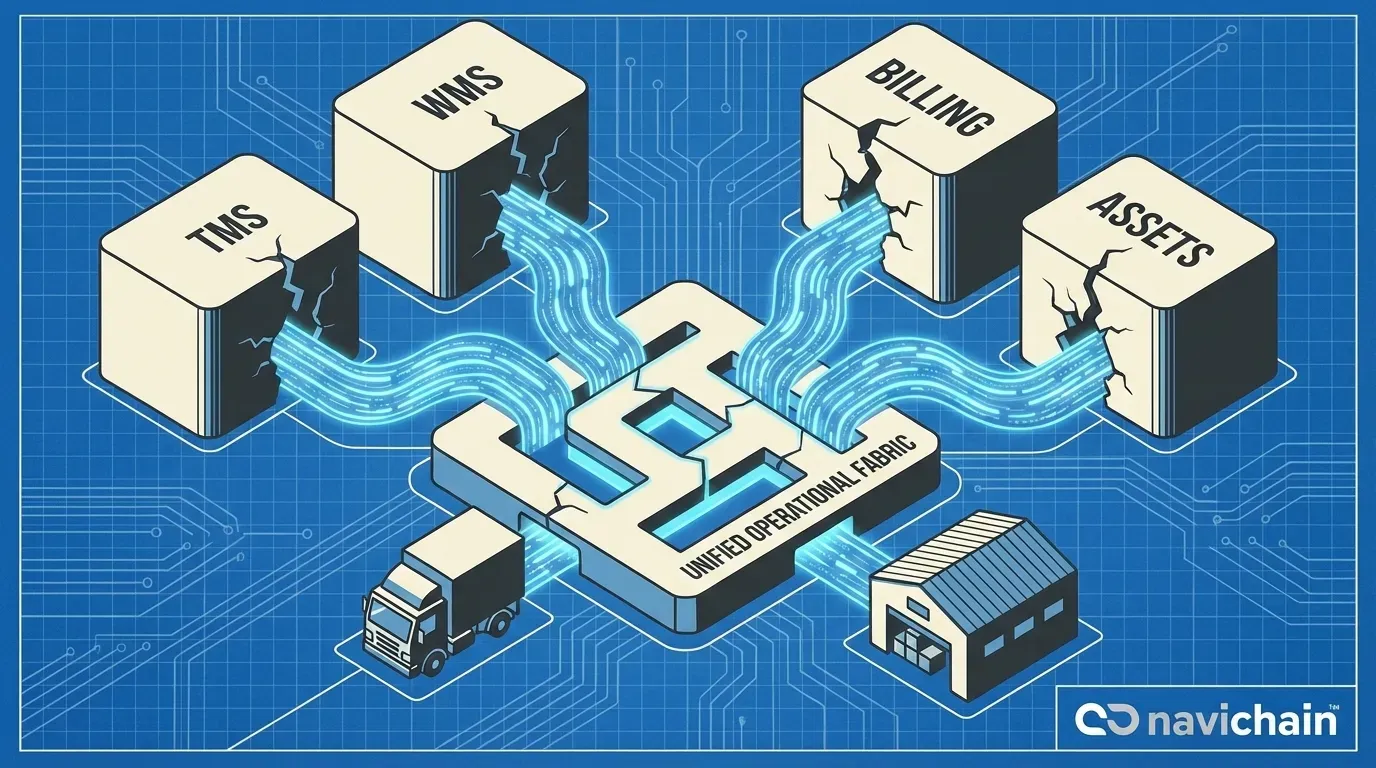
Schematic illustrating a unified logistics platform architecture, highlighting data flow and integration across key modules like TMS, WMS, and order management, all underpinned by a sovereign data foundation.
References/sources
- EU Mobility Package I: European Commission, Transport. "Mobility Package I."
- URL
- Market Conditions & Competition: Transportföretagen. "Vägatlas & Konkurrensläget." (Reports on the competitive landscape and challenges in the Swedish haulage market.)
- URL
- Operational Costs & Market Analysis: International Road Transport Union (IRU). "European Road Freight Rate and Cost Indices." (Data on the spread between operational costs and freight rates.)
- URL
- GDPR vs. CLOUD Act: TechTarget. "The GDPR vs. CLOUD Act conflict explained."
- URL
- SME Profitability: Ti Insight. "European Road Freight Transport 2024." (Market analysis on operator costs and margins.)
- URL
Fig 4: We have diagnosed the problem: a profitability squeeze caused by unfair competition, a fragility trap created by a cost-cutting response, and the challenge o...
Enabling the blueprint: The navichain SaaS unified logistics platform
Fig 5: It is the exact blueprint we used to build the navichain SaaS platform.
The strategic framework outlined in this paper—a Unified Operational Fabric, a Sovereign Data Architecture, and Embedded Analytic Intelligence—is not a theoretical construct. It is the exact blueprint we used to build the navichain SaaS platform. We are designed from the ground up to solve the specific challenges of Scandinavian SMEs caught in the fragility trap.
- Embodying the Unified Operational Fabric: navichain SaaS is not a collection of modules. It is a true, unified logistics operating system. We break down the silos by providing Transportation Management (TMS), Warehouse Management (WMS), Asset Management, Billing Management, and Order Management as one seamless platform, creating the single source of truth you need to manage your entire operation.
- Delivering True Data Sovereignty: Our key differentiator is the uncompromising foundation for Principle 2. The entire navichain SaaS platform is hosted on our own proprietary infrastructure in Sweden. Your data never leaves Sweden. It remains under Swedish jurisdiction, ensuring full GDPR compliance and complete, legally-binding immunity from foreign legislation like the US CLOUD Act. This is not just a feature; it is our promise of trust and digital security.
This visual represents the tangible outcomes achieved by Scandinavian SMEs leveraging the navichain SaaS platform to overcome the 'fragility trap' by competing on value, not just cost.
- Activating Embedded Analytic Intelligence: Because your unified data is already on our secure, sovereign platform, our integrated AI can perform deep, secure data analysis. This new feature runs on the same Swedish infrastructure, allowing you to unlock unique efficiencies, predict trends, and generate the provable insights you need to win high-value contracts—all without ever exposing your sensitive data to third-party risks. Our mission is to democratize logistics technology for SMEs. We empower you to stop competing on price and start competing on intelligence, resilience, and trust.
Navichain SaaS: A unified logistics operating system providing TMS, WMS, Asset Management, Billing Management, and Order Management on a secure, sovereign platform hosted in Sweden.

Navichain's unified platform provides a comprehensive view of logistics operations, enabling data-driven decision-making and improved efficiency for Scandinavian hauliers.
Ready to optimise your supply chain?
navichain Insights Newsletter
Join the newsletter to receive the latest updates in your inbox.