The Efficiency Trap: Why Your Most ''Optimized'' Routes Are Costing You Margin
Table of Contents

European SME hauliers are battling shrinking margins, with the relentless pursuit of route 'efficiency' often exacerbating the problem. But what if optimising for cost-per-km is a strategic trap, obscuring the real path to profitability? This white paper unveils a new ROI-driven framework for route planning, turning your logistics operation into a strategic profit driver.
The Efficiency Trap: Why Your Most ''Optimized'' Routes Are Costing You Margin
Okay, here's a compelling teaser paragraph for your white paper, wrapped in bold asterisks, using British English: European SME hauliers face unprecedented margin pressure. With fuel costs volatile and driver shortages persistent, industry reports show average margins shrinking to a razor-thin 2-4%. The default response? Squeeze more efficiency from every route. But what if this obsession with 'efficiency' is a strategic trap? Why do your most 'optimized' routes often fail to deliver a healthy profit? The truth is, optimizing for cost-per-km is no longer a proxy for maximizing profit-per-mile. This white paper presents a new ROI-driven framework for route planning. It outlines a strategic shift from isolated cost minimization to a unified, data-driven model that calculates and maximizes the real-time profitability of every single asset, turning your logistics operation from a cost center into a strategic profit driver.
The strategic anomaly: When 'efficient' routes lose money
The mandate for every Scandinavian and European logistics manager is deceptively simple: make operations more efficient. For decades, 'efficiency' has been a direct proxy for minimizing the cost-per-kilometer. We invest in route planning software that promises the shortest or fastest path, we monitor fuel consumption with hawk-like precision, and we measure driver performance against rigid schedules. Yet, a troubling paradox has emerged. Despite these efforts, profit margins remain under relentless assault. A 2024 analysis from the International Road Transport Union (IRU) confirms that while operational costs, particularly fuel and driver wages, continue to climb, freight rates are failing to keep pace. This leaves SMEs in a margin vise, where working harder and 'more efficiently' no longer guarantees profitability. This leads to the strategic anomaly: Why do our most 'optimized' route plans often lead to our lowest-margin weeks? The answer is as uncomfortable as it is critical: we are optimizing for the wrong metric. The pursuit of a lower cost-per-kilometer has blinded us to the much more important metric: real-time profit-per-mile. An 'efficient' route that is 10km shorter is a net loss if it: * Goes to a low-value client that takes three hours to unload.

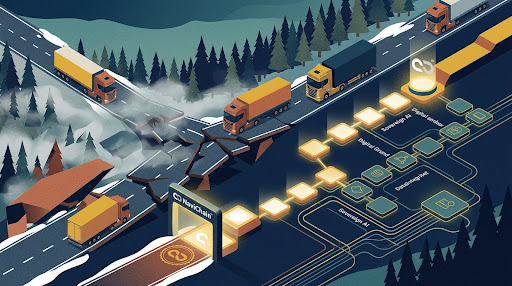
Chasing the lowest cost-per-kilometer can lead to routes that, while seemingly efficient, ultimately erode profitability.
- Runs through a high-traffic zone, destroying driver hours-of-service.
- Ends in a 'dead zone' with no available backhaul, forcing the asset to return empty. In the current high-cost, high-compliance environment, focusing on cost-per-km is like meticulously navigating a ship by compass while ignoring the financial currents pulling you onto the rocks. Sustained profitability demands a new model—one that calculates the Return on Investment (ROI) of every single asset movement in real-time.
The root cause: Flying blind with siloed data
Fig 1: The fundamental reason logistics managers cannot optimize for profit-per-mile is not a lack of will, but a lack of unified data.
The fundamental reason logistics managers cannot optimize for profit-per-mile is not a lack of will, but a lack of unified data. The typical SME logistics operation runs on a patchwork of disconnected systems: 1. A Transportation Management System (TMS): It plans the routes. It knows the planned distance and estimated time. 2. A Billing or ERP System: It holds the revenue. It knows what the customer is paying for that specific load. 3. An Asset Management System (or spreadsheet): It tracks the true costs—fuel, driver wages, vehicle depreciation, upcoming maintenance, and tolls. 4. A Warehouse Management System (WMS): It knows the real-world friction—how long it actually takes to pick, pack, and load that specific order. Because these systems do not communicate, it is impossible to ask the most important question: "What is the actual profit margin for this specific route, right now?" Without this answer, your routing software will default to its only available metric: cost. It will diligently send your most valuable assets on low-margin journeys, simply because they look efficient on a map. This is not optimization; it is automated guesswork. You are making million-euro decisions based on a fraction of the available data.
The new metric: From total cost of ownership (TCO) to real-time profit-per-mile (RPPM)
For decades, the gold standard for asset management was Total Cost of Ownership (TCO). This static, long-term calculation is useful for procurement—deciding which truck to buy. It is utterly useless for dispatch—deciding where that truck should go at 10:00 AM on a Tuesday. The new imperative is to operationalize financial data, shifting to a dynamic, real-time metric: Real-time Profit-per-Mile (RPPM). Calculating RPPM requires a single, unified data model: $$RPPM = (\text{Route Revenue} - (\text{Variable Costs} + \text{Allocated Fixed Costs})) / \text{Total Miles}$$ * Route Revenue: Pulled directly from the order and billing system.
- Variable Costs: Real-time fuel consumption, tolls, and driver wages for this route.
- Allocated Fixed Costs: A micro-slice of the vehicle's depreciation, insurance, and maintenance budget, applied to this job. When your route planner can see this number before dispatching the asset, the entire game changes. It can now choose between Route A (100km, 'efficient', 0.10€ profit-per-mile) and Route B (115km, 'less efficient', 0.45€ profit-per-mile). The choice becomes obvious. This is the shift from a cost center mindset to a profit center mindset.
The strategic multipliers: Why this matters more in europe
This data silo problem is universal, but for European SMEs, two external forces make it an existential threat: a complex regulatory landscape and the geopolitical risk to data itself.

Example route cost comparison: Route B, though longer, offers a significantly higher profit margin after considering all variable and allocated costs.
1. the compliance cost calculator
The European Union's regulatory framework, while designed to create a fair and sustainable market, adds immense complexity to cost calculations.
- The Mobility Package: Strict rules on driving times, rest periods, and cabotage mean that an 'efficient' route that burns a driver's weekly hour limit on a low-margin run is a massive financial blunder.
- The EU Emissions Trading System (ETS): From 2027, road transport will be included in the ETS. This means your carbon emissions become a direct, variable cost. A route that involves heavy traffic or mountainous terrain will not only cost more in fuel but will also incur a higher carbon tax. Your route planner must be able to factor these compliance costs into its ROI calculation. If it can't, its "optimized" plan is a financial fantasy.
2. the data sovereignty risk
The most overlooked risk in logistics is the one posed to the data itself. In the process of unifying your TMS, WMS, and billing data, you are creating your company's most valuable strategic asset: a complete digital twin of your entire operation, including your routes, your costs, and your customer list. Now, ask yourself: Where is this data hosted? If your SaaS provider is based in the United States, your data—even if stored on a European server—is subject to the US CLOUD Act. This legislation gives US authorities the right to demand access to your data, regardless of local EU privacy laws. This is not a theoretical problem. The 'Schrems II' ruling by the EU Court of Justice invalidated the previous 'Privacy Shield' data transfer agreement precisely because of this conflict. For a European SME, this presents two massive risks: * Compliance Risk: You are in a constant state of legal ambiguity regarding your GDPR obligations, which mandate that EU citizens' data be protected.
- Commercial Risk: Your competitive intelligence—your pricing, your customer relationships, your operational weak spots—could be legally exposed to a foreign government and, by extension, its commercial interests. The ROI of route optimization becomes meaningless if the very data you use to calculate it becomes a liability. Therefore, a truly resilient logistics strategy must be built on a foundation of data sovereignty—the guarantee that your operational data remains exclusively under your own legal jurisdiction.
From diagnosis to design: The blueprint for a resilient logistics operating system
Fig 2: We have established that the old model of optimizing for cost-per-km is broken.
We have established that the old model of optimizing for cost-per-km is broken. It is a strategic trap rooted in siloed data. A modern, profitable, and resilient SME logistics operation must be built on a new model, one that calculates and maximizes real-time ROI. To achieve this, any technology platform you consider must embody three core principles. This is the strategic blueprint for moving from diagnosis to design.
Principle 1: The unified operational fabric
You must break down the walls between your departments. The solution is not to buy five different software tools and pray they integrate; the solution is a single, unified operating system where TMS, WMS, Billing, and Order Management are not just 'connected' but are one and the same. This creates a single source of truth. When an order is entered, the system instantly knows the revenue (from Billing), the warehouse labor required (from WMS), and the transport cost (from TMS). This is the 'central nervous system' that makes real-time profit calculation possible.
Principle 2: Sovereign data architecture
This unified data fabric is your crown jewel. It must be protected as such. For any European SME, this principle is non-negotiable: your platform must be built on a sovereign data architecture. This means your operational data must be stored and processed on infrastructure located within the EU (ideally in a data-secure nation like Sweden), managed by a European entity, and exclusively subject to European law. This is the only way to guarantee 100% GDPR compliance and complete immunity from extraterritorial laws like the US CLOUD Act. This is the foundation of trust and long-term risk management.
Principle 3: Embedded analytic intelligence
Finally, unifying your data is not enough. You must be able to use it. A modern logistics platform must have an embedded intelligence or AI layer that runs inside this secure, sovereign environment. This AI's job is to analyze the complete, unified data from Principle 1, within the secure fortress of Principle 2, to find the patterns you can't. It should proactively suggest the most profitable routes, identify your highest- and lowest-margin customers, and predict operational bottlenecks before they happen. This is how you turn your data from a simple record into a predictive, profit-driving asset.
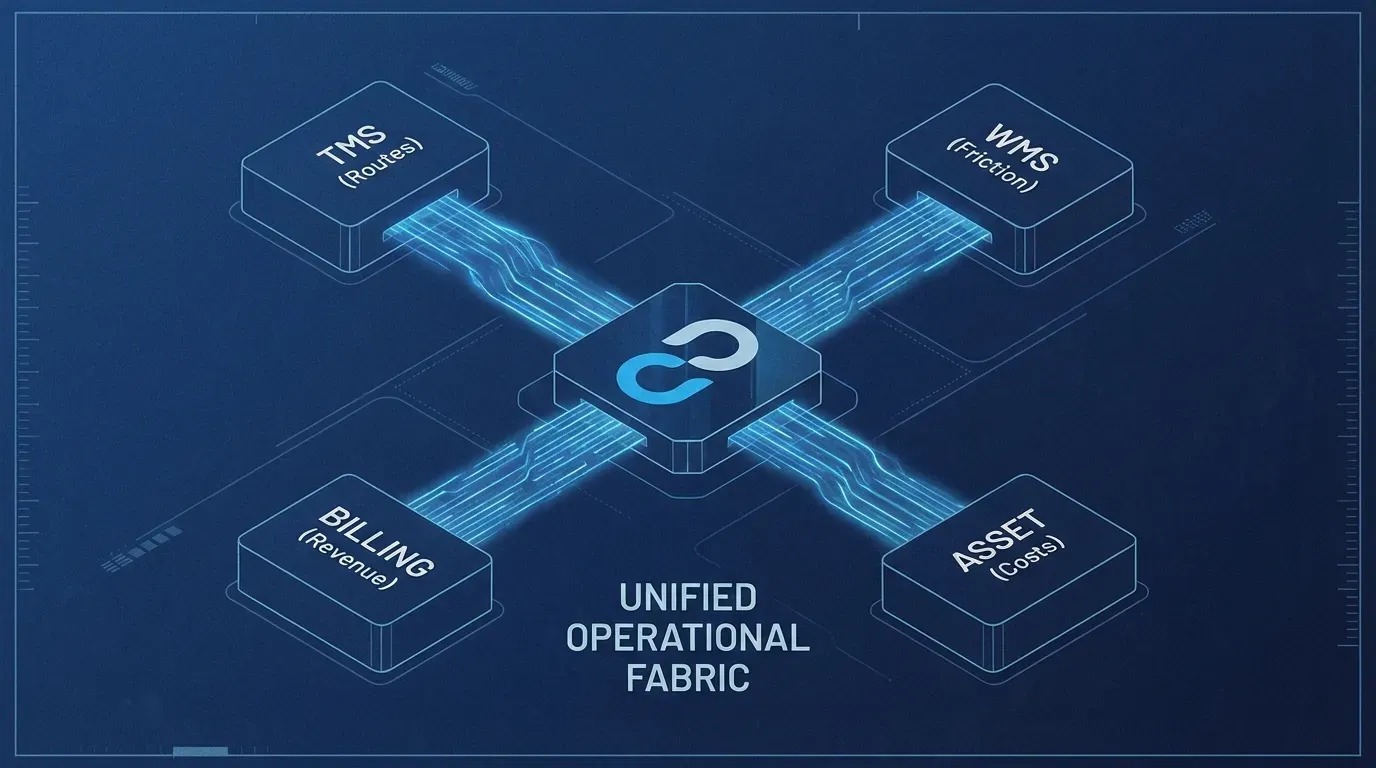
Schematic illustrating the unified operational fabric, sovereign data architecture, and embedded analytic intelligence working in concert.
Fig 3: It should proactively suggest the most profitable routes, identify your highest- and lowest-margin customers, and predict operational bottlenecks before they happen.
References/sources
- IRU (International Road Transport Union). (2024). European Road Freight Market Intelligence Report. (Provides data on driver shortages, operational costs, and market sentiment). https://www.iru.org/resources/news-and-reports/reports/european-road-freight-market-intelligence-report-2024
- Transport Intelligence (Ti). (2025). European Road Freight Market 2025. (Analyzes margin compression and technology adoption trends in the EU logistics sector). https://ti-insight.com/report/european-road-freight-market-2025/
- European Commission. (2024). Road transport: Commission proposes 2027 as new start date for the emissions trading system. (Official details on the ETS for road transport). https://climate.ec.europa.eu/news-your-voice/news/road-transport-commission-proposes-2027-new-start-date-emissions-trading-system-2024-07-09_en
- European Data Protection Board (EDPB). (2023). Schrems II Ruling & Implications. (Provides the legal foundation for data transfer risks between the EU and US). https://edps.europa.eu/data-protection/data-protection/legal-framework/schrems-ii_en
Enabling the blueprint: The navichain SaaS unified logistics platform
Fig 4: Our mission is to democratize logistics technology, empowering SMEs to compete and win.
This white paper has laid out a strategic blueprint for survival and profitability. It moves beyond the trap of 'efficiency' to a new model of real-time ROI, built on three principles: a Unified Operational Fabric, Sovereign Data Architecture, and Embedded Analytic Intelligence.
- Embodying the Unified Operational Fabric: navichain SaaS is not a collection of modules. It is a single, unified logistics operating system. Our platform seamlessly integrates Transportation Management (TMS), Warehouse Management (WMS), Asset Management, Billing Management, and Order Management into one cohesive OS. This breaks down the data silos that prevent real-time profit calculation, creating the single source of truth demanded by Principle 1.
- Delivering Sovereign Data Architecture: We address Principle 2 as a foundational, non-negotiable requirement. As our key differentiator, the entire navichain SaaS platform is hosted on our own proprietary infrastructure in Sweden. Your data stays in Sweden, under Swedish and EU jurisdiction. This guarantees full GDPR compliance and provides complete, iron-clad immunity from foreign legislation like the US CLOUD Act. For our clients, data sovereignty is not an add-on; it is an architectural fact.
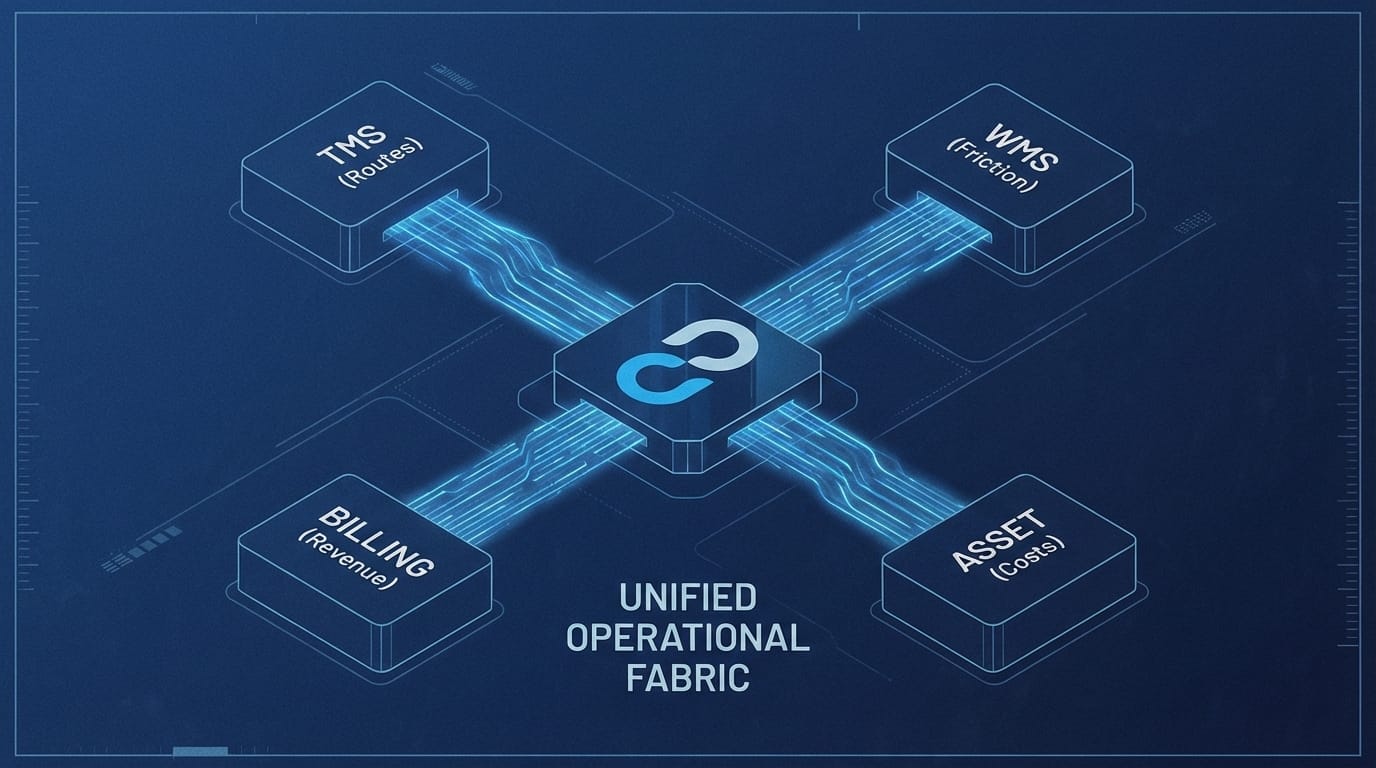
The navichain SaaS platform unifies logistics operations, providing a single source of truth for real-time profitability analysis and informed decision-making.
- Providing Embedded Analytic Intelligence: In alignment with Principle 3, our platform is enhanced by a integrated AI that runs on the same secure Swedish infrastructure. This allows our clients to perform deep, secure data analysis on their unified operational data. Our AI helps you move from asking "What did this route cost?" to "What will this route earn?", unlocking the unique efficiencies and predictive insights needed to thrive. Our mission is to democratize logistics technology, empowering SMEs to compete and win. We provide the tools to not only manage your operation but to make it truly profitable.
Navichain SaaS: A unified logistics operating system providing a single source of truth, hosted on proprietary infrastructure in Sweden for data sovereignty.

Navichain's unified platform provides a single view of logistics operations, enabling data-driven decision making and improved route profitability.
Ready to optimise your supply chain?
navichain Insights Newsletter
Join the newsletter to receive the latest updates in your inbox.