

The Driver Communication Paradox: Why Your Driver App Isn't Solving Inefficiency (And What Will)
Table of Contents
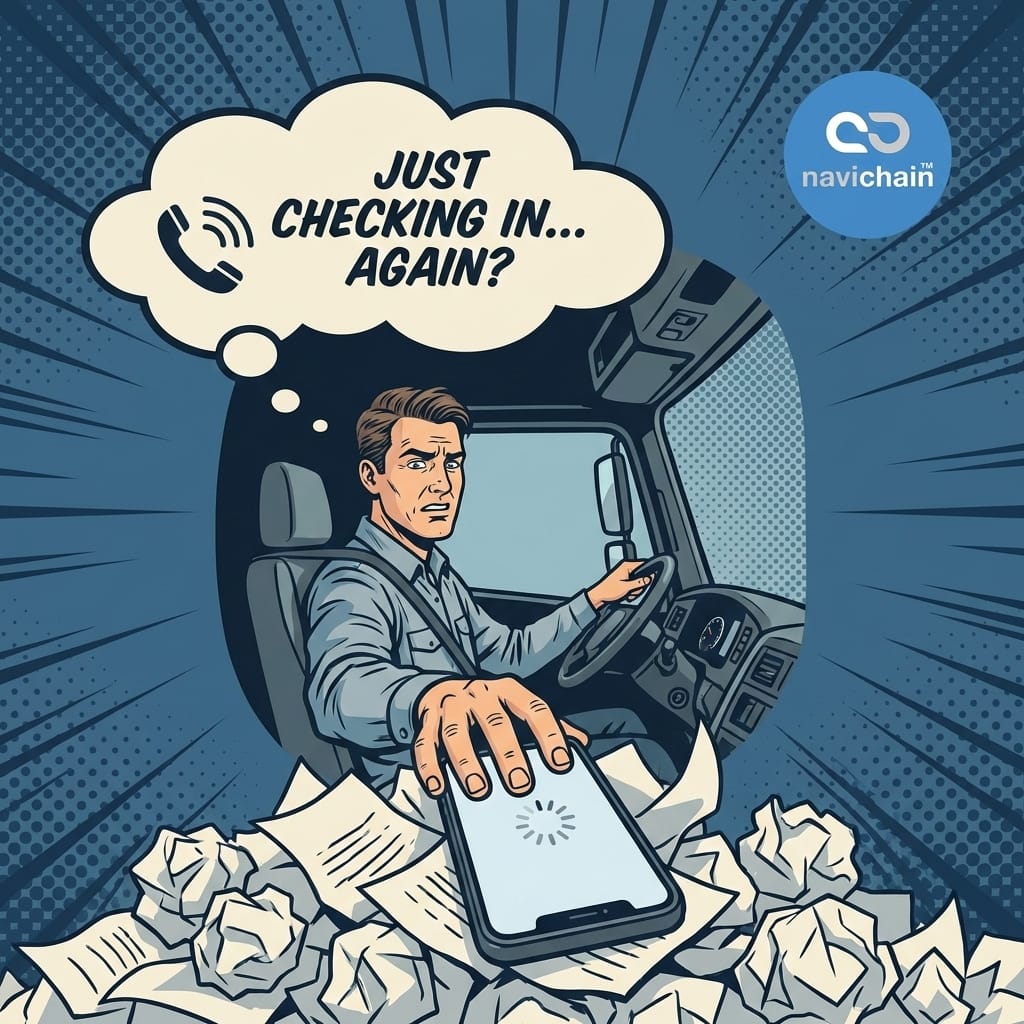
European SME hauliers are caught in a vicious cycle: constant driver communication fuelled by inefficient systems leads to frustration and high turnover. Discover how a unified operational fabric can break this cycle, turning constant check-ins into a streamlined, single source of truth, freeing drivers and managers to focus on what truly matters.
The Driver Communication Paradox: Why Your Driver App Isn''t Solving Inefficiency
European SME hauliers face a daily battle with driver communication. A recent study by the IRU notes that driver shortages remain a critical threat, with high turnover rates driven by frustration. Managers spend hours 'just checking in,' and drivers feel micromanaged, yet costly errors persist. The conventional response has been to bolt on a new driver app. But this often makes the problem worse, creating another data silo. The core issue isn't the quality of communication; it's the necessity of it. Why must a driver call to confirm an order status that should already be in the system? This paper presents a strategic framework for solving the communication paradox. It argues that the solution lies not in better apps, but in a unified operational fabric that creates a single source of truth, making most manual communication obsolete and freeing drivers and managers to focus on value-adding work.
The core question that leads us astray
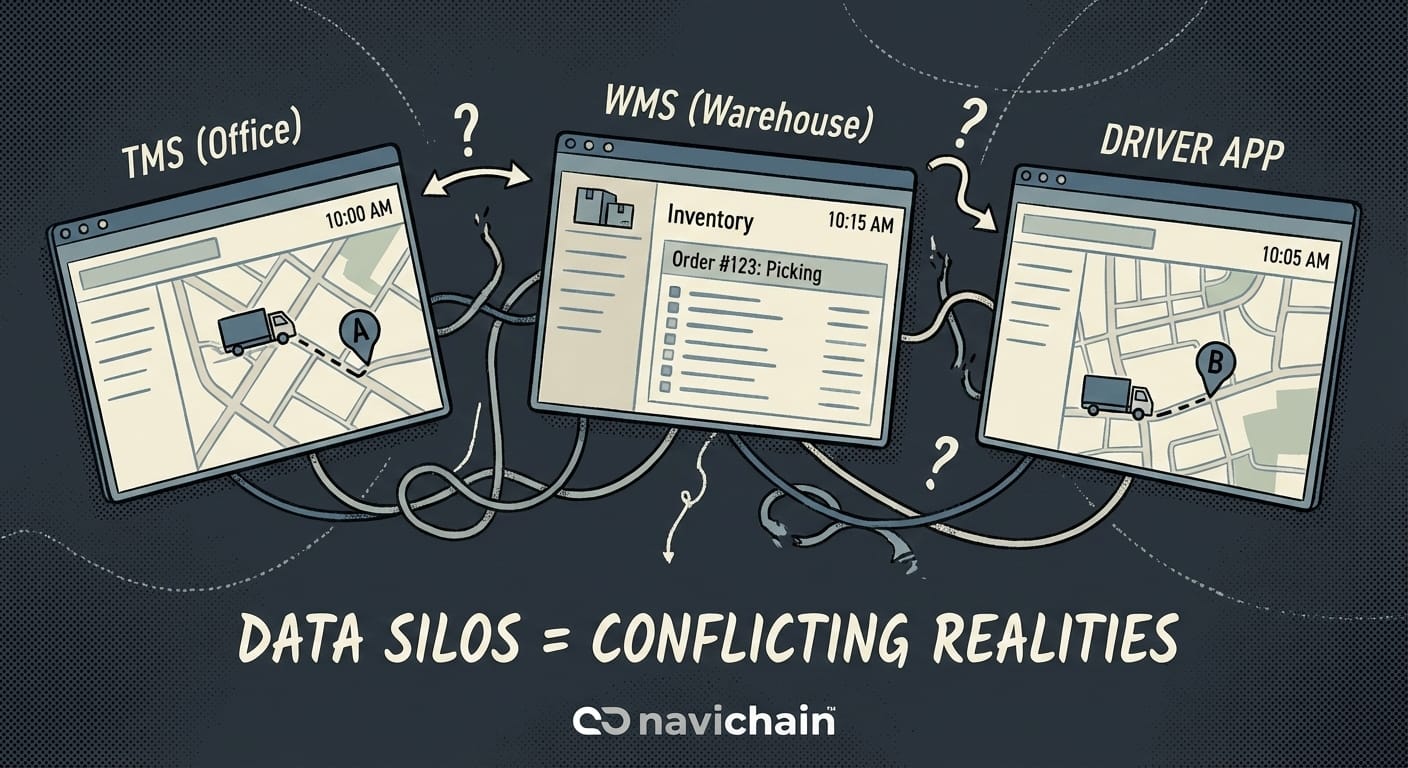
The endless back-and-forth between drivers and dispatchers highlights the inefficiencies plaguing many SME hauliers, ultimately hindering productivity and driving up costs.
"How can we facilitate better communication between our drivers and the office?" For logistics managers and SME owners, this question is a daily reality. It’s born from the constant friction of missed updates, incorrect order details, driver frustration, and the endless stream of 'just checking in' phone calls that burn time and fuel. The perceived problem is communication. The logical solution, therefore, must be a communication tool—a better driver app, a new messaging platform, or stricter check-in policies. This paper argues that this is the wrong question, leading to the wrong investments. The persistent friction between drivers and transport managers is not a communication problem to be solved with better apps. It is a symptom of a fragmented data architecture. The only viable, long-term solution is to create a unified operational platform—a single source of truth—that makes most of this manual, error-prone communication unnecessary. This isn't just about efficiency; in an era of critical driver shortages, it is the key to driver retention.
The high cost of 'just checking in'
Fig 2: Consider the anatomy of a single, 'simple' communication failure: 1.
For SMEs in the haulage sector, margins are perpetually under siege. Rising fuel costs, intense competition, and complex tolling systems create a high-pressure environment. In this context, operational 'noise' is not just an annoyance; it is a direct financial drain. Consider the anatomy of a single, 'simple' communication failure: 1. The Event: A driver arrives at a customer site, but the order details in their app are different from the customer's paperwork. 2. The Friction: The driver parks, stops working, and calls the transport manager. 3. The Scramble: The manager, pulled from dispatching two other trucks, puts the driver on hold. They open the TMS, but it shows what the driver sees. They must then open the separate WMS or, worse, the original order email, to find the discrepancy. 4. The Resolution: Ten minutes later, the manager identifies the error (an update was never pushed to the driver's app) and verbally gives the driver the correct information. Now, multiply this by 10 drivers, 5-10 times a week. The costs are staggering: * Administrative Overhead: The transport manager, your highest-paid operational asset, spends hours per day acting as a human data-transfer node.
- Wasted Hours & Fuel: The driver's idling time and delayed departure disrupt the entire day's schedule, impacting driving-hour compliance and future customer slots.
- Driver Churn: This is the hidden, strategic cost. The IRU's 2023 report on the global driver shortage highlights that in Europe, driver frustration is a leading cause of turnover. Drivers don't quit over one bad call; they quit from the accumulated stress of being held accountable for information they were never given—of feeling set up to fail. When a frustrated, skilled driver quits, the cost to replace them (recruitment, onboarding, lost productivity) can run into thousands of euros. Your communication problem has become a critical retention and profitability crisis.
The 'app-for-everything' trap
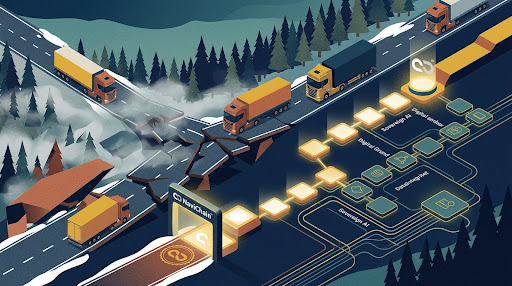
The default solution has been to bolt on new technology. "We have a TMS," a manager might say, "and we bought a separate driver app that 'integrates' with it." This is the 'App-for-Everything' trap. This approach fails because it mistakes a data-sharing connection (an API) for a data-unified core. The driver's app, the manager's TMS, the warehouse's WMS, and the finance team's billing software remain separate systems. They are different databases, with different logic, sending data back and forth. This creates three critical points of failure: 1. Latency: The sync isn't instant. An order update in the TMS may not appear on the driver's app for several minutes, or until they manually refresh. 2. Fidelity: Data is often 'lost in translation' between systems. A complex order note in the TMS may not have a corresponding field in the driver app, so it's simply dropped. 3. Source of Truth: When a discrepancy inevitably occurs, which system is 'right'? The manager sees one screen, the driver sees another. This "two-realities" problem forces them to communicate, validating the very inefficiency you sought to eliminate. The new app, bought to solve communication, has only created a new, digital version of the same old problem.
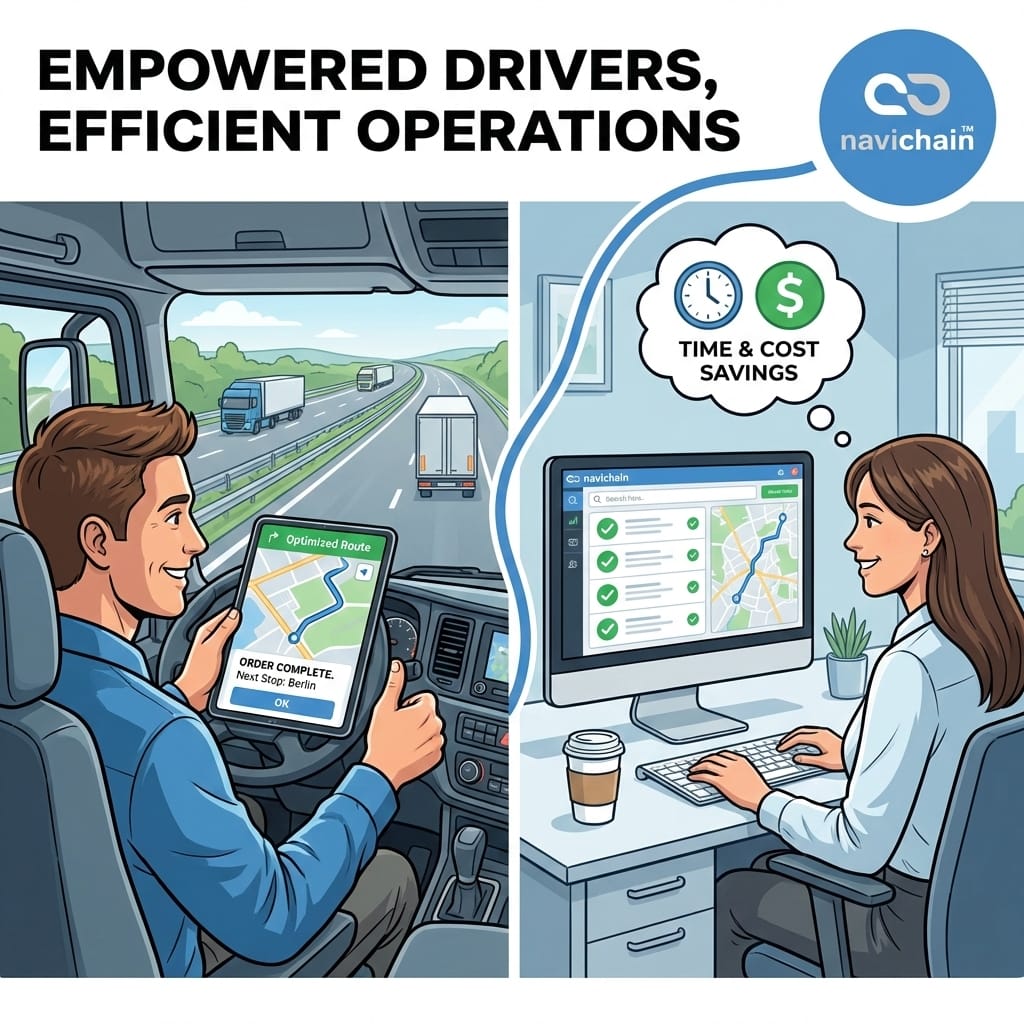
Fig 3: Siloed systems force communication, while a unified platform minimizes it by providing a single source of truth.
The strategic shift: From communication to unification
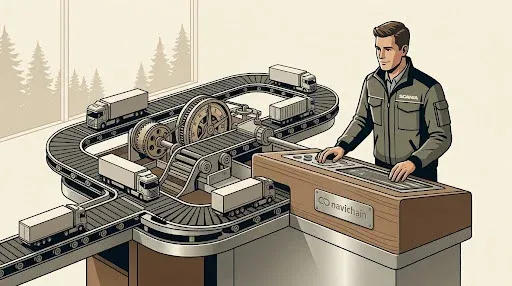
Fig 3: The solution is to stop trying to manage communication and start eliminating the need for it.
The solution is to stop trying to manage communication and start eliminating the need for it. This requires a strategic shift from patching fragmented systems to adopting a single, unified logistics operating system. Imagine a world where the driver, the transport manager, the warehouse picker, and the billing clerk all view the exact same data from the exact same platform. An order is entered once. It instantly populates the manager's dispatch board, the driver's manifest, the warehouse's picking list, and the billing module. When a customer service rep adds a note to the order, it appears on the driver's app in real-time. When the driver marks the delivery as complete with a proof-of-delivery (POD) photo, the order status instantly changes to 'Ready for Invoice' in the finance module. There is no 'check-in' call because the status is already known. There is no discrepancy because there is only one source of truth. You have not 'facilitated' communication; you have replaced it with seamless, automated, real-time information. The driver is empowered, the manager is free to manage exceptions, and the business runs on a central nervous system instead of a series of frantic phone calls.
From diagnosis to design: The blueprint for a resilient logistics operating system
This strategic shift requires a new kind of platform. The central thesis—that unification, not communication, is the goal—leads to a clear blueprint for what SME hauliers must demand from their technology. Any effective, modern logistics platform must embody three core principles.
Principle 1: The unified operational fabric
This is the architectural foundation. You cannot solve a fragmentation problem with more fragmented tools. The platform itself must be a single, cohesive system—a 'central nervous system' for the entire operation. This means Transportation Management (TMS), Warehouse Management (WMS), Billing Management, and Order Management must not be separate modules 'bolted together.' They must be native functions of one, single platform, sharing one database and one source of truth. When an action is taken in one part of the system, the entire operation knows it instantly, from order entry to final invoice.
Principle 2: A sovereign data architecture
For a European SME, where your data lives is not a trivial IT detail; it is a core strategic and risk-management issue. As your entire operation becomes dependent on this unified fabric, the security and legal jurisdiction of that data become paramount. A platform hosted outside the EU—particularly in the US—exposes your business to significant risks like the US CLOUD Act, which can compel US-based providers to hand over your data, and your customers' data, to foreign authorities, regardless of GDPR protections. True operational resilience for a European business requires data sovereignty. Your platform and your data must be hosted and processed within a secure EU jurisdiction (like Sweden), under the full protection of EU law and the GDPR, shielded from foreign legislation.
Principle 3: Embedded analytic intelligence
Finally, the reward for achieving unification and sovereignty is the ability to use your own data—securely. With a fragmented system, data analysis is a nightmare of exporting spreadsheets. But when all your operational data (from transport, to warehouse, to billing) lives in one unified system, you can apply an embedded intelligence or AI layer directly to it. This AI, running securely within your own sovereign data environment, can analyze your unified data to find efficiencies you never knew existed: What are your truly most profitable routes? Which customers are causing the most delays? How can you optimize truckloads by combining orders that your old, siloed systems could never see were related?
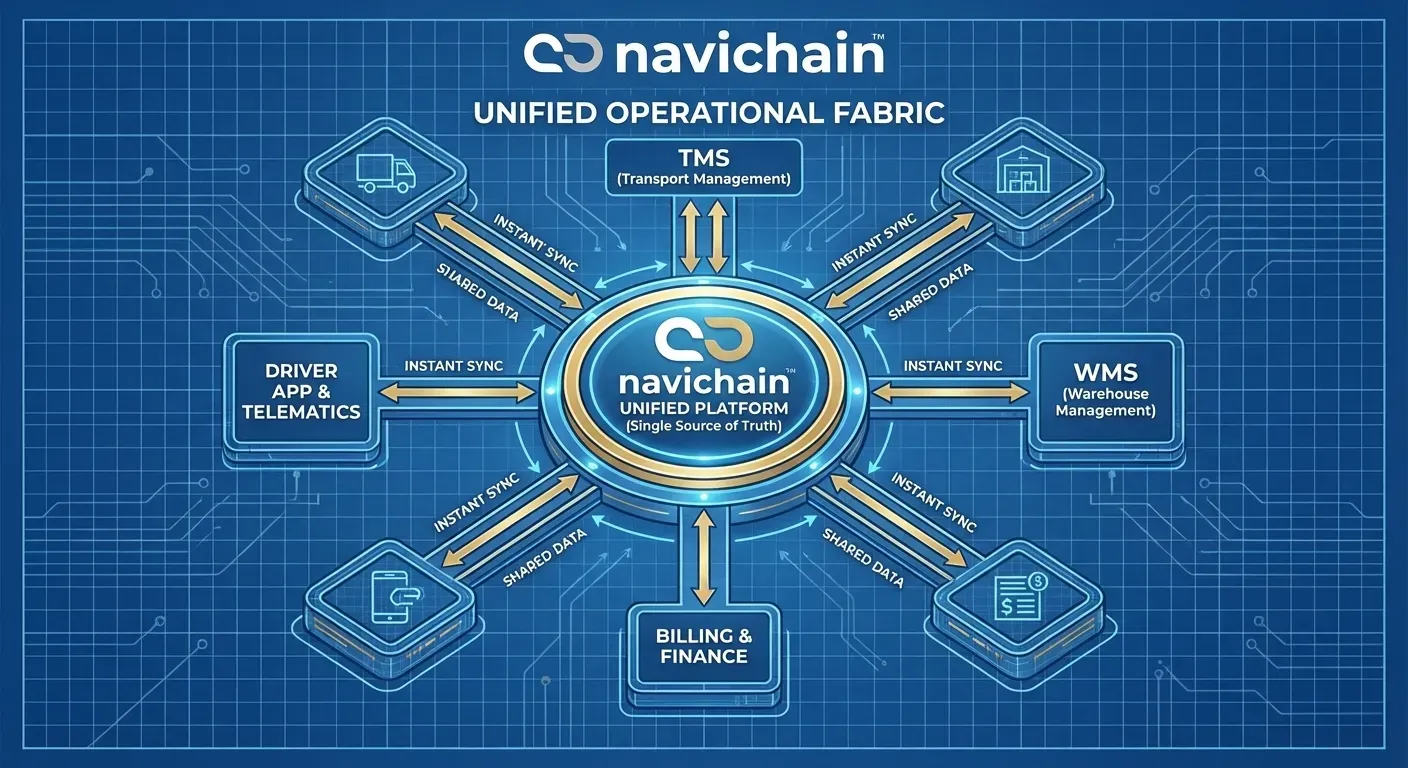
Schematic illustrating the desired unified platform architecture, where all core functions share a single database and operate as a cohesive system for enhanced operational visibility and control.
References/sources
- International Road Transport Union (IRU). (2023). Global Driver Shortage Report 2023. https://www.iru.org/resources/iru-reports/global-driver-shortage-report-2023
- Transport Intelligence (Ti). (2024). European Road Freight Market 2024. https://www.ti-insight.com/report/european-road-freight-market-2024/
- European Parliament. (2018). The US CLOUD Act and its possible impact on the EU. [https://www.europarl.europa.eu/RegData/etudes/BRIE/2018/621898/EPRS_BRI(2018](https://www.europarl.europa.eu/RegData/etudes/BRIE/2018/621898/EPRS_BRI(2018)621898_EN.pdf](https://www.europarl.europa.eu/RegData/etudes/BRIE/2018/621898/EPRS_BRI(2018)621898_EN.pdf)
- Official EU GDPR Portal. Art. 44: General principle for transfers. https://gdpr.eu/article-44-general-principle-for-transfers/
Fig 4: This strategic shift requires a new kind of platform.
Enabling the blueprint: The navichain SaaS unified logistics platform
This paper has laid out a strategic blueprint for solving the driver communication paradox—a blueprint based on a Unified Operational Fabric, a Sovereign Data Architecture, and Embedded Analytic Intelligence. The navichain SaaS platform was designed from the ground up to embody these three principles.
- Principle 1: Unified Operational Fabric. navichain SaaS is not a collection of modules. It is a single, unified logistics operating system where Transportation Management (TMS), Warehouse Management (WMS), Asset Management, Billing Management, and Order Management work as one. This creates the single source of truth that eliminates data silos and makes manual, error-prone communication obsolete.
- Principle 2: Sovereign Data Architecture. We fully embrace this principle as our key differentiator. The entire navichain SaaS platform is hosted on our own proprietary infrastructure in Sweden. This means your data—and your clients' data—stays in Sweden, under Swedish jurisdiction. This guarantees full GDPR compliance and ensures your operations are completely shielded from the reach of foreign legislation like the US CLOUD Act. For our clients, this provides complete data sovereignty and a non-negotiable foundation of trust.
- Principle 3: Embedded Analytic Intelligence. Because your data is unified and secure on our Swedish infrastructure, our integrated AI can perform deep, secure data analysis. This new capability runs on the same sovereign platform, allowing you to analyze your unified operational data to unlock unique efficiencies—from route optimization to predictive asset maintenance—without your sensitive data ever leaving the security of its jurisdiction. Our mission is to democratize this level of logistics technology, empowering SMEs to increase efficiency, reduce costs, and deliver exceptional service from a single, secure, and sovereign platform.
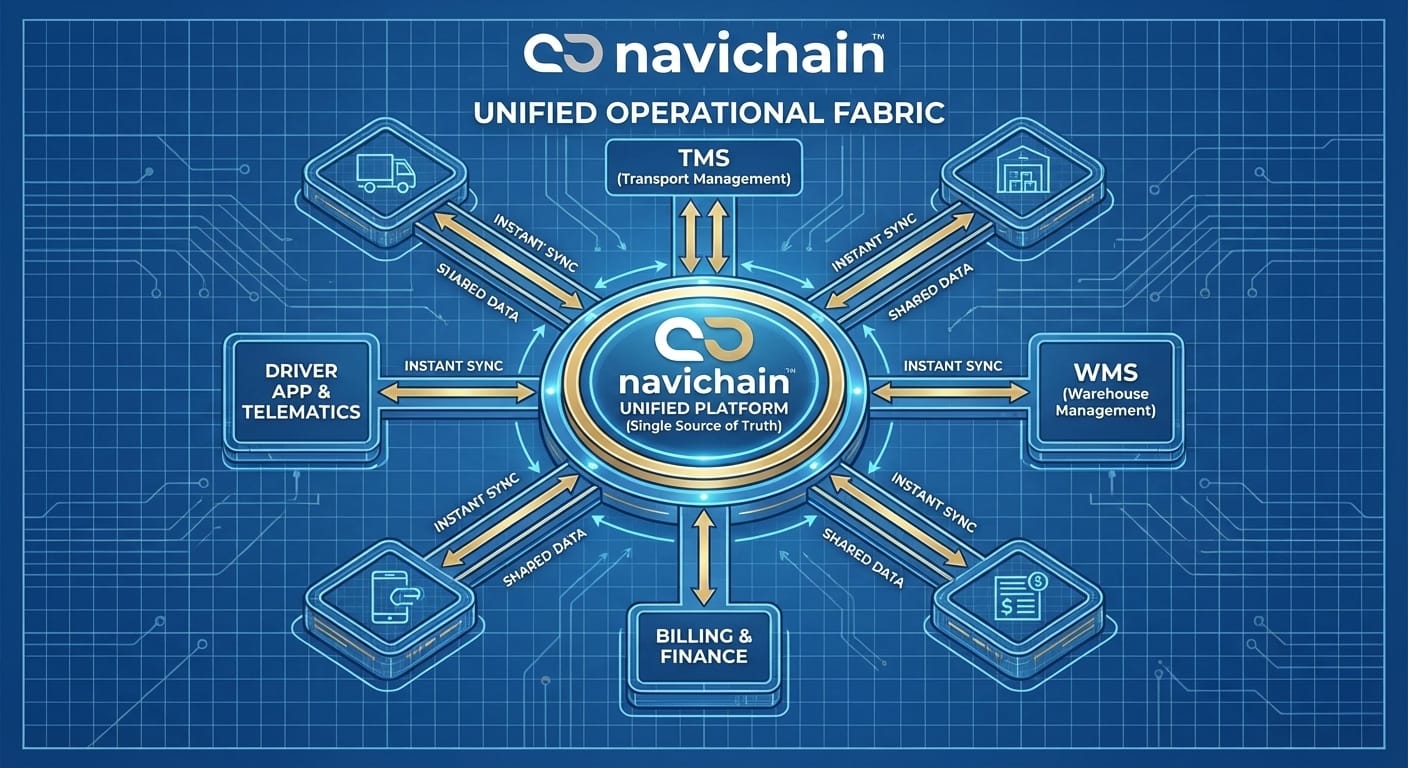
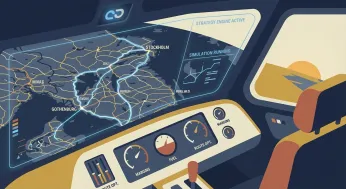
The navichain SaaS platform delivers a unified, secure, and sovereign environment for streamlined logistics operations, as depicted in the driver interface.
Navichain's platform visualizes unified operational data, enabling AI-powered insights for route optimization and predictive maintenance.
Ready to optimise your supply chain?
navichain Insights Newsletter
Join the newsletter to receive the latest updates in your inbox.

)