AI Washing & Trade Secrets: Who Are You Training?
Table of Contents
Everyone talks about AI. Everyone sells AI. But how much is really true intelligence, and how much is marketing? "AI Washing" is the new greenwashing, and the risks are greater than just a bad investment. If your TMS uses your data to train its general models, you could practically be sitting there optimizing your competitors' operations.
Executive Summary
In the rapidly evolving landscape of 2026, Artificial Intelligence has become the baseline requirement for logistics technology. However, this ubiquity has birthed a dangerous trend: AI Washing. Vendors are rebranding legacy algorithms as "cutting-edge AI" to inflate valuations and lock in customers.
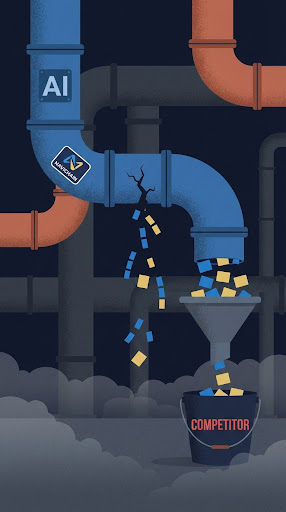
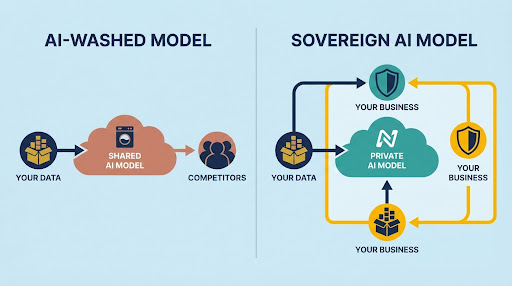
But the financial cost of overpaying for "dumb" software is arguably the lesser evil. The greater threat lies in the invisible data contracts buried within these SaaS agreements. Many modern logistics platforms operate on a "give-to-get" model, where your proprietary data—your routes, your pricing, your vendor performance metrics—is ingested to train global models.
The result? AI Monoculture. Your unique competitive advantages are aggregated, averaged, and sold back to the market as "industry standard optimizations."
This white paper dissects the mechanics of AI Washing, explores the severe implications of the EU AI Act and NIS2 directives on your data strategy, and presents Sovereign AI as the only viable path for logistics leaders who refuse to train their competitors.
Navichain stands out from the crowd by offering Sovereign AI. This means your data stays with you. We do not train our general models on your unique trade secrets. Your optimization is your competitive advantage, not a commodity.
Part 1: The Anatomy of AI Washing
The Emperor's New Clothes
The term "AI Washing" implies that companies exaggerate or arguably lie about the AI functionality in their products. It is the digital equivalent of slapping a "Certified Organic" sticker on a factory-farmed product. In logistics, this usually manifests in three ways:
- Old Code, New Name (The "If-Then" Trap): A diverse range of legacy Transport Management Systems (TMS) have rebranded their rule-based engines as "AI Optimizers." If a system triggers an alert because a truck is 50km off route, that is not AI; that is a geofence trigger. True AI predicts the deviation before it happens based on traffic patterns and driver behavior.
- Statistics Masquerading as ML: Ordinary regression analysis—fitting a line to a scatter plot—is frequently sold as Machine Learning. While useful, it lacks the adaptive, self-learning capabilities of neural networks. It does not "learn" from new data unless manually recalibrated.
- Window Dressing: This is the most insidious form. A vendor integrates a ChatGPT wrapper into their dashboard to answer support queries and claims the entire platform is "AI-Powered." The core optimization engine remains a 20-year-old heuristic solver, but the chatbot gives it a modern veneer.
The Financial & Strategic Cost
The immediate risk is financial: you pay a premium for technology that doesn't deliver the promised efficiency gains. The global AI in logistics market is projected to reach over $20 billion by 2026, driven largely by the promise of predictive capabilities. If your "AI" cannot predict, you are paying for a Ferrari engine and getting a lawnmower.
However, the strategic cost is higher. By relying on tools that cannot truly adapt or learn, you miss out on the compounding gains of genuine AI. While your competitors leverage responsive, autonomous agents that navigate supply chain disruptions in real-time, you are left with static rules that break the moment reality diverges from the plan.
Part 2: The Monopoly of Intelligence (AI Monoculture)
A less discussed but more profound risk is the rise of AI Monoculture.
In agriculture, planting a single crop makes the entire field vulnerable to the same disease. In logistics, relying on the same massive, centralized AI models as everyone else creates a similar fragility.
The "Regression to the Mean"
When every logistics company uses the same SaaS platform powered by the same "Global AI Model," they are all optimized toward the same mean. * The Scenario: You and your three biggest competitors all use Vendor X's route optimizer. * The Mechanism: Vendor X trains its model on data from all clients to "improve accuracy." * The Result: The model identifies the "optimal" route for a given corridor. It tells you to take it. It tells your competitors to take it. * The Consequence: You lose your edge. Your proprietary knowledge—that "secret" back road that avoids the 5 PM bottleneck—is ingested, generalized, and distributed to the market. You are no longer competing on intelligence; you are competing on price.
High-performing logistics requires differentiation. If your AI is training on the industry average, it will inevitably guide you toward average performance. To beat the market, your AI must know things the market does not—and it must keep that knowledge secret.
Part 3: Shadow AI & The Internal Threat
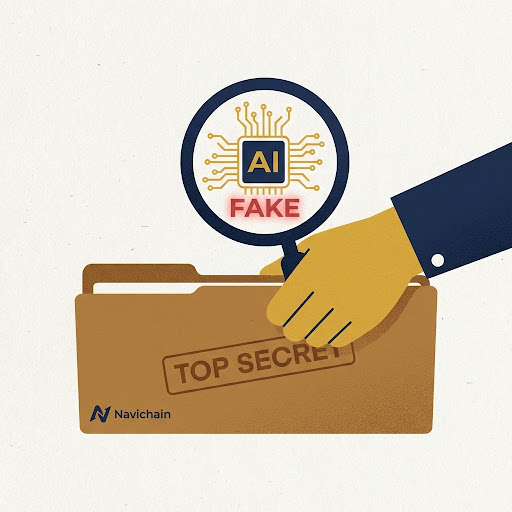
Is it really AI under the hood?
While vendors pose an external threat, Shadow AI represents the internal leak.
The Unauthorized Assistant
The pressure to be efficient is immense. Dispatchers and planners, eager to do their jobs better, often turn to public tools like ChatGPT, Claude, or Gemini without IT approval. * The Breach: A planner pastes a CSV of "problematic delivery addresses" into a public LLM and asks, "Format this for a report." * The Data: That CSV contains customer names, gate codes, and volume data. * The Reality: Depending on the tool's terms of service, that interaction may be used to train future versions of the model. That sensitive customer data is now part of the global corpus.
According to recent cybersecurity reports, Shadow AI use has exploded in corporate environments, creating a massive, unmonitored surface for data exfiltration. In a supply chain context, this is critical. If a dispatcher pastes a load manifest to translate it, they may be violating GDPR, NDA agreements with clients, and exposing the very fabric of your network to the public domain.
Part 4: The Regulatory Thunderstorm (NIS2 & EU AI Act)
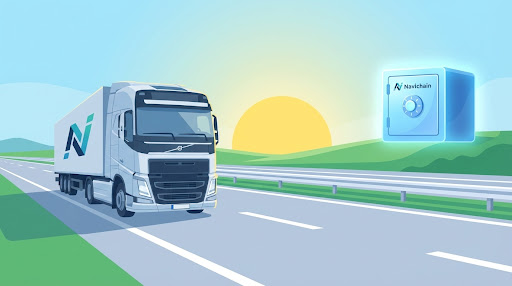
The regulatory landscape in Europe has shifted dramatically. The EU AI Act and NIS2 Directive have transformed data sovereignty from a "nice-to-have" into a board-level compliance imperative.
The EU AI Act: Transparency vs. Secrecy
The EU AI Act categorizes AI systems by risk. Many logistics use cases—such as biometric driver monitoring or critical infrastructure management—fall into "High Risk" categories. * Transparency Obligations: Deployers of high-risk AI must ensure traceability and transparency. You must know how the model works. * The Conflict: If you use a "Black Box" AI from a vendor who refuses to disclose their training data (perhaps because it includes your competitors' data), you cannot comply. You are liable for a system you do not understand.
NIS2: Supply Chain Security
The NIS2 Directive classifies transport and logistics as "Essential Entities." This mandates rigorous risk management and supply chain security. * Data Sovereignty: You must ensure the security of your supply chain. Relying on a third-party AI vendor who processes your critical operational data in a public cloud (potentially outside the EU) introduces a compliance risk that is increasingly difficult to justify. * Ownership: If a cyberattack hits your AI vendor, do you have a contingency? If they own the model that runs your business, what happens if they go offline?
NIS2 demands that you have control. Sovereign AI—models you host, own, and control—is the ultimate answer to this requirement.
Part 5: Navichain's Promise - Sovereign AI
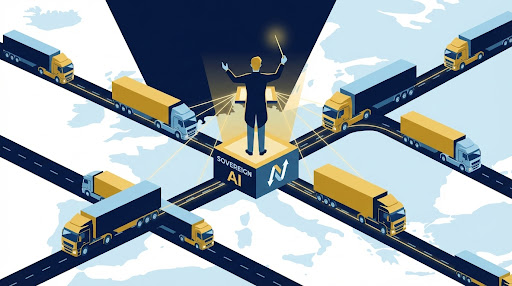
At Navichain, we reject the "Data Vampire" model of modern SaaS. We believe in Sovereign AI.
Your Data, Your Model
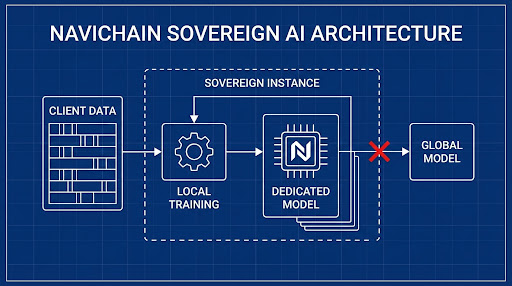
We have architected our platform to ensure that your intelligence remains yours. 1. Local Instance Training: Our AI agents are deployed within your isolated environment. They learn from your history, your drivers, and your successes. 2. No Federation: We do not federate your data to train a master model. Your "secret sauce"—the unique way you bundle loads or route through complex urban centers—is never diluted or shared. 3. Transparent Architecture: We define clearly what is deterministic automation and what is probabilistic AI. You are never left guessing why a decision was made.
The "Data Moat" Strategy
By using Sovereign AI, you build a Data Moat. * Defensibility: As your AI learns your specific business constraints, it becomes more valuable to you and useless to anyone else. * Valuation: An untethered, open-weight AI models deployed entirely within a self-hosted, sovereign infrastructure for maximum data privacy and local execution is an asset on your balance sheet. A subscription to a generic API is just an expense. * Future-Proofing: You are insulated from the "en-shittification" of public models. If a major LLM provider changes their alignment or pricing, your local, fine-tuned agents keep running.
Conclusion: The Choice is Yours
The era of "trusting the black box" is over. As AI becomes the central nervous system of logistics, the question of who owns the brain becomes the defining question of business strategy.
You have two choices: 1. The Tenant Model: Rent intelligence from a giant vendor. Feed them your data. Train their models. Watch as your unique advantages are sold to the market as "features" in the next update. 2. The Sovereign Model: Own your intelligence. Train your own agents. Build a moat around your business that no competitor can cross.
Don't be dazzled by AI buzzwords. Ask the hard questions: Is this real AI? Who owns the model? Where does my data go?
With navichain, the answer is always: asking you.
Stop Training Your Competitors.
Discover how Sovereign AI protects your trade secrets.
navichain Insights Newsletter
Join the newsletter to receive the latest updates in your inbox.