Taming the Chaos: How AI Transforms Unstructured Emails into Profitable Transport Bookings
Table of Contents
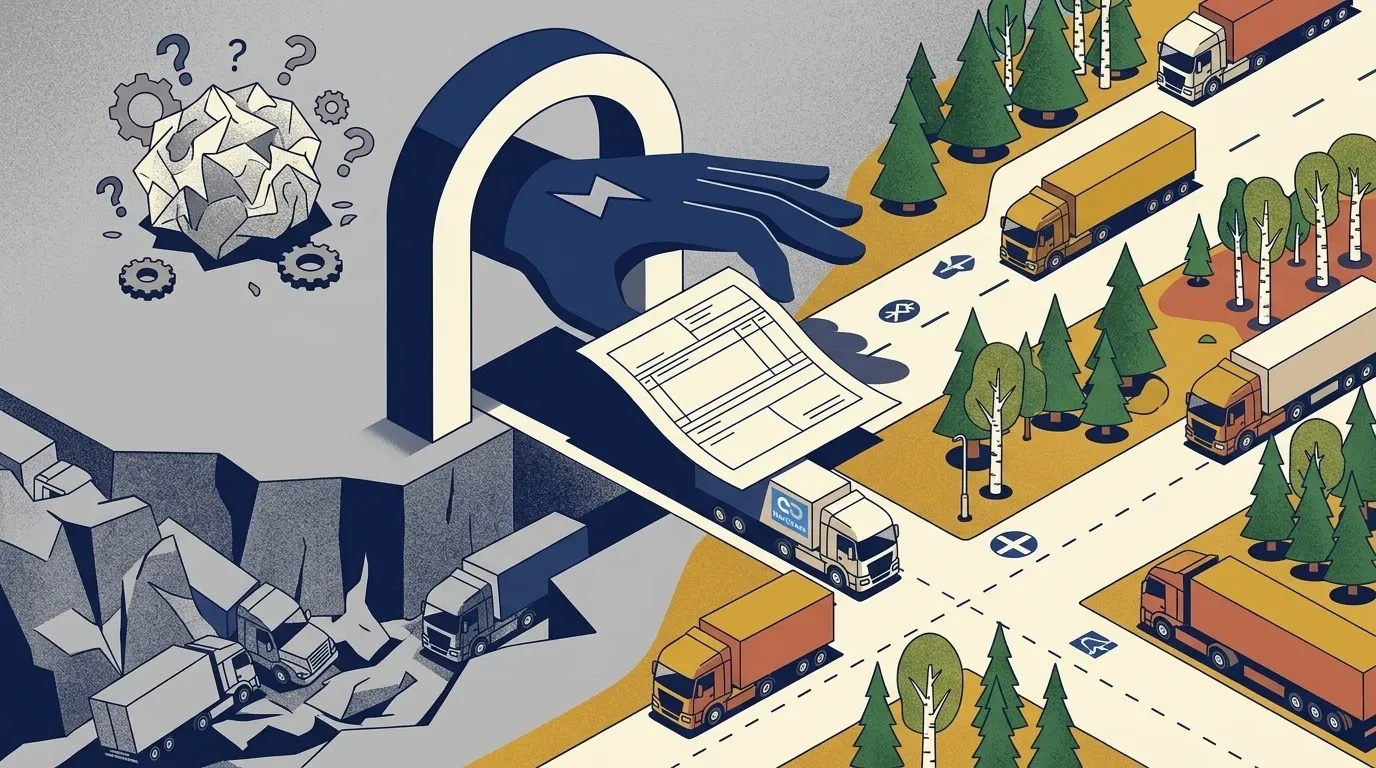
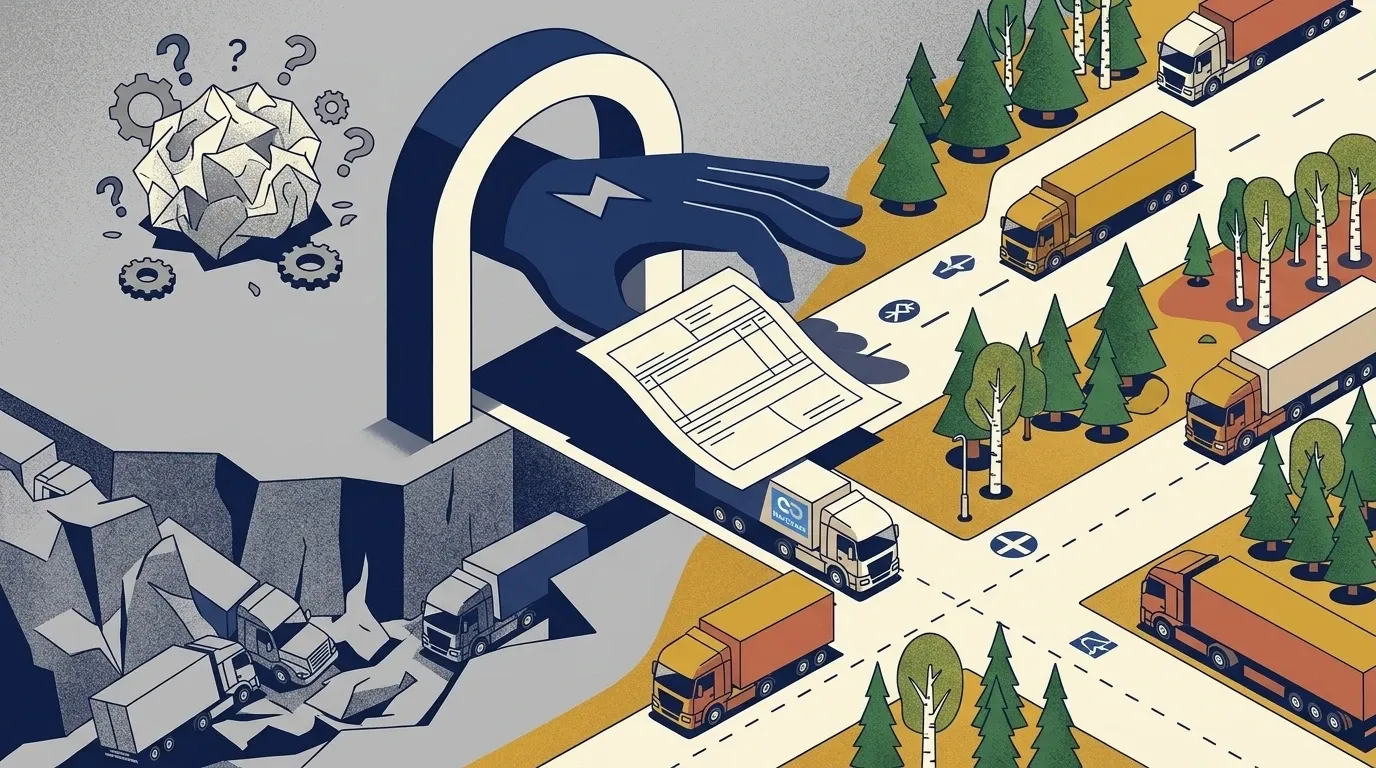
For many European transport companies, spot shipments and ad-hoc bookings are a double-edged sword: absolutely crucial for revenue, but a nightmare to manage administratively. Customers send unstructured emails, photos of goods, or messy PDFs that require slow and error-prone manual entry. navichain's new AI-Assisted Booking Import eliminates this friction. By intelligently interpreting unstructured data and immediately generating formatted bookings, transport managers save hours, route planning becomes seamless, and invoicing happens automatically.
The Operational Challenge: Ad-Hoc Bookings that Drain Profitability
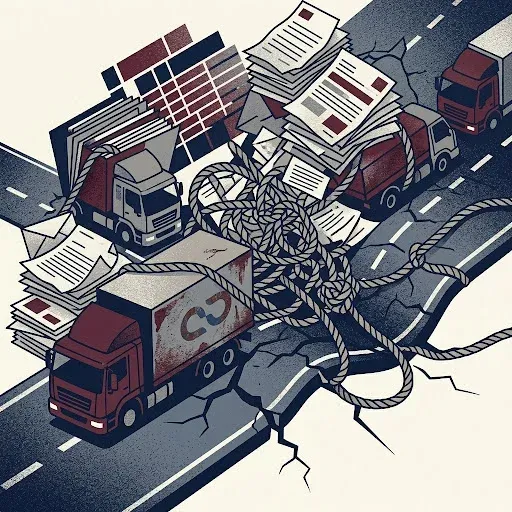
In the real world of European road transport, not all customers have an advanced IT department. While large corporate clients may integrate smoothly with your systems via API or EDI, the backbone of many regional carriers relies on ad-hoc orders.
These arrive in every conceivable format: a hastily written email, a photographed consignment note via mobile, or an unclearly structured PDF.
For a transport manager, this means an operational bottleneck. Manually decoding these unstructured requests and typing them into a transport management system (TMS) consumes enormous resources. Often, the administrative cost of manually registering a spot shipment eats up the entire profit margin for the assignment itself. Even worse, in a stressful transport management environment, manual data entry inevitably leads to typos – an incorrect address or missed weight class – creating chain reactions of problems throughout the flow.
The Conceptual Shift: Data is Data, Regardless of Structure
Historically, the industry has regarded structured data (APIs) as "good" and unstructured data (email/PDF) as "bad". The solution was always to force the customer to change their behavior – ask them to log into a portal they don't want to use, or require them to fill in rigid templates.
Operational excellence requires a different approach: Adapt to the customer, not the other way around.
With modern AI, the format of the incoming request no longer dictates the speed of your business. By implementing intelligent interpretation, we build a bridge between human communication and machine-readable logistics planning.
Introducing AI-Assisted Booking Import
navichain SaaS proudly presents our new AI-Assisted Booking Import. This feature is designed specifically for SME transporters who need enterprise-level efficiency, without requiring their smaller customers to change how they do business.
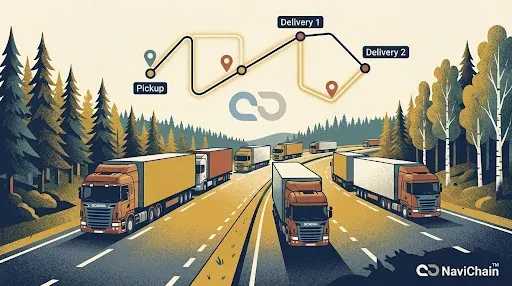
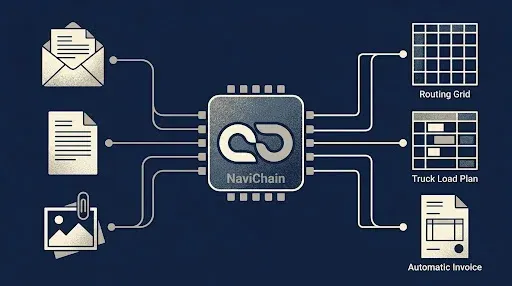
Instead of manual entry, your team simply forwards the unstructured email, PDF, or image to a dedicated navichain inbox, or drags the file directly into the platform. Our sovereign AI immediately reads the document, understands the context (identifies pickup addresses, delivery locations, weight, volume, and goods descriptions), and automatically generates a structured Booking ready for transport planning.
Technical Walkthrough: From Email to Route Planning
How does this integrate into your daily workflow? Completely seamlessly.
Once the AI has translated the messy email into a structured booking, it behaves exactly like any other order in your system.
- Intelligent Extraction: Our sovereign AI identifies the core elements of the transport order. It maps the sender's text to your predefined settings to ensure precision.
- Immediate Availability: The new booking appears directly in your pool of unassigned bookings.
- Frictionless Planning: From here, your planners can navigate to the Runs module to open the main Run Grid. By having the Filter Bookings panel open, they can directly locate the newly created AI booking.
- Drag and Drop Assignment: The transport manager simply clicks on the booking and drags it from the right panel directly onto the desired route (Run).
The Data Argument: Reclaim Hours and Margins
Imagine a medium-sized carrier that handles 50 ad-hoc bookings a day via email. With an average of 4 minutes per manual entry, that's over 3 hours of pure administrative work each day.
By sending these via the AI-Assisted Booking Import, the handling time drops to a few seconds of review. This represents a massive reclamation of human capital. Transport managers are freed from data entry to instead focus on value-creating tasks: negotiating better prices, communicating with drivers, and optimizing vehicle utilization.
In addition, subsequent processes are accelerated because the data is clean from the start. Once a job is completed, the structured data flows directly into the finance module. Invoices are generated automatically, and precisely respect the InvoicingIn (Days) rules you have established in your Payment Terms (such as '30 days net').
The Navichain Difference: Built-In, Not Glued On
While other systems may require you to purchase third-party OCR software or build fragile Zapier integrations to achieve this, navichain's AI is built into the core platform itself. It understands the logistical context – it knows the difference between pallet balance and loading meters, and it understands European address formats automatically.
Most importantly for European operators, this is handled with Sovereign AI in mind, keeping your customer data secure and sovereign within the navichain ecosystem.
Strengthen the SME Ecosystem
Operational bottlenecks should not dictate your ability to grow. By implementing AI-Assisted Booking Import, you transform unstructured ad-hoc orders from an administrative thorn into a highly profitable and easily managed revenue stream.
You can answer 'yes' to more customers, regardless of how they send their orders, in the safe knowledge that your operating system from navichain will structure the chaos, optimize the route and automate the invoice.
navichain Insights Newsletter
Join the newsletter to receive the latest updates in your inbox.