The Collaboration Paradox: Why Data Control is Key to Successful Alliances
Table of Contents
The European SME trucking sector faces unprecedented pressure as operating costs surge and margins shrink. But the answer – collaboration to win larger contracts – often fails due to manual processes and data friction, introducing the "Collaboration Paradox". This white paper deconstructs this paradox, arguing that successful alliances are built not on contracts, but on a cohesive data integration strategy.
The Collaboration Paradox: Why Data Control is Key to Successful Alliances
European Small and Medium-sized Enterprises (SMEs) in the haulage sector are facing immense pressure, with recent data showing operating costs increasing while margins are shrinking. The logical answer – to collaborate to win larger contracts – often fails and collapses under the weight of manual processes and data friction. This failure introduces the 'Collaboration Paradox': the belief that sharing data with partners increases risk, when in fact, it is the inability to share data securely and efficiently that guarantees failure. This white paper deconstructs this paradox and argues that successful alliances are built not on contracts, but on a cohesive data integration strategy. We present a framework with three principles for building a unified, secure, and intelligent operating structure that enables the trust and efficiency required to compete and win.
The pressure: Why SME haulage companies must collaborate to survive
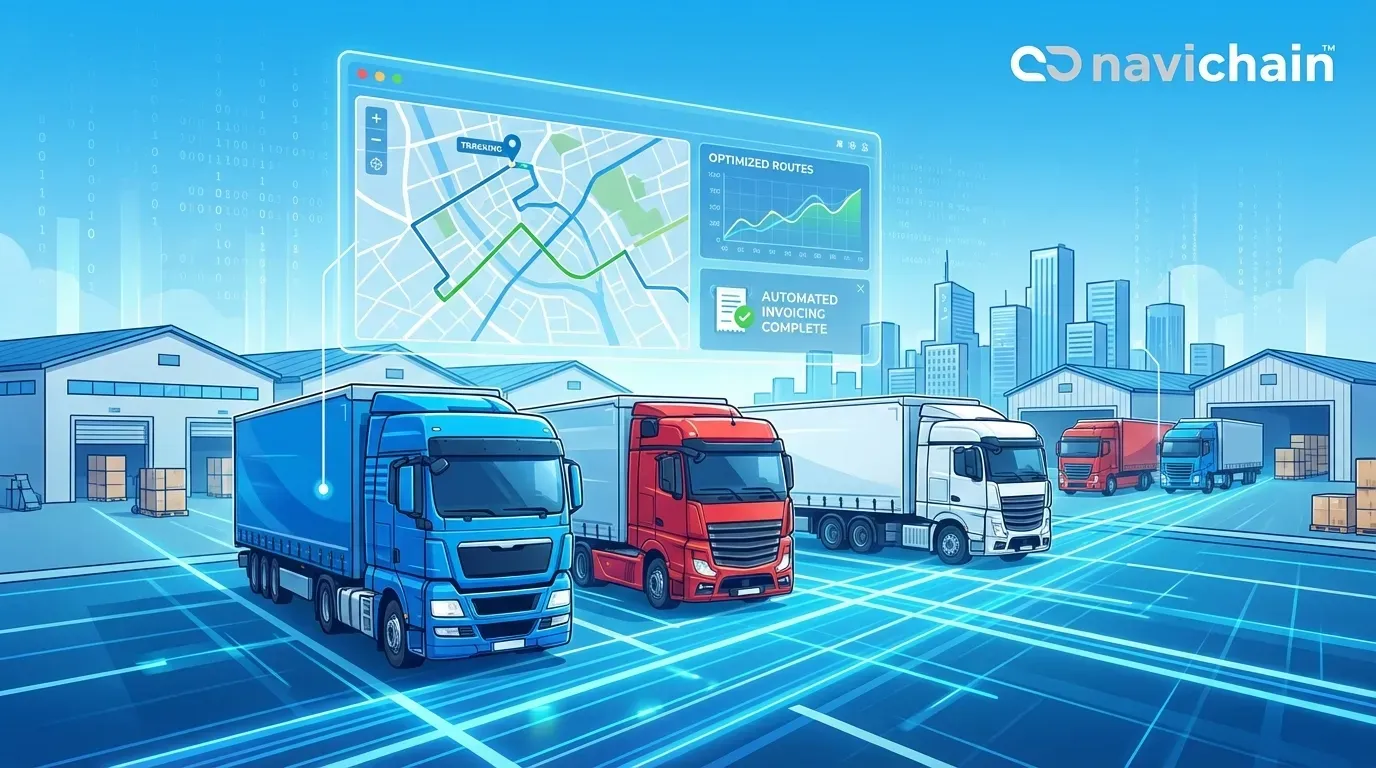
Fig 1: The European logistics landscape is characterised by intense and growing pressure.
The European logistics landscape is characterised by intense and growing pressure. For the Small and Medium-sized Enterprises (SMEs) that form the backbone of the haulage industry, the challenges are acute. Fuel costs, driver shortages, complex toll systems, and razor-thin margins create a difficult operating environment. At the same time, large-scale transport buyers are consolidating their contracts, preferring larger logistics providers with end-to-end solutions that can offer complete visibility and scale.
This leaves the ambitious SME haulage company with a difficult choice: accept smaller, less profitable contracts or risk being squeezed out of the market altogether. The most strategic response is clear: collaboration. By forming alliances or networks, multiple SME haulage companies can pool their resources, capacity, and geographic reach to bid on and manage the larger, more lucrative contracts they cannot win on their own.
This strategy is sound in theory. In practice, it almost always fails.
Deconstructing the failure: The collaboration paradox
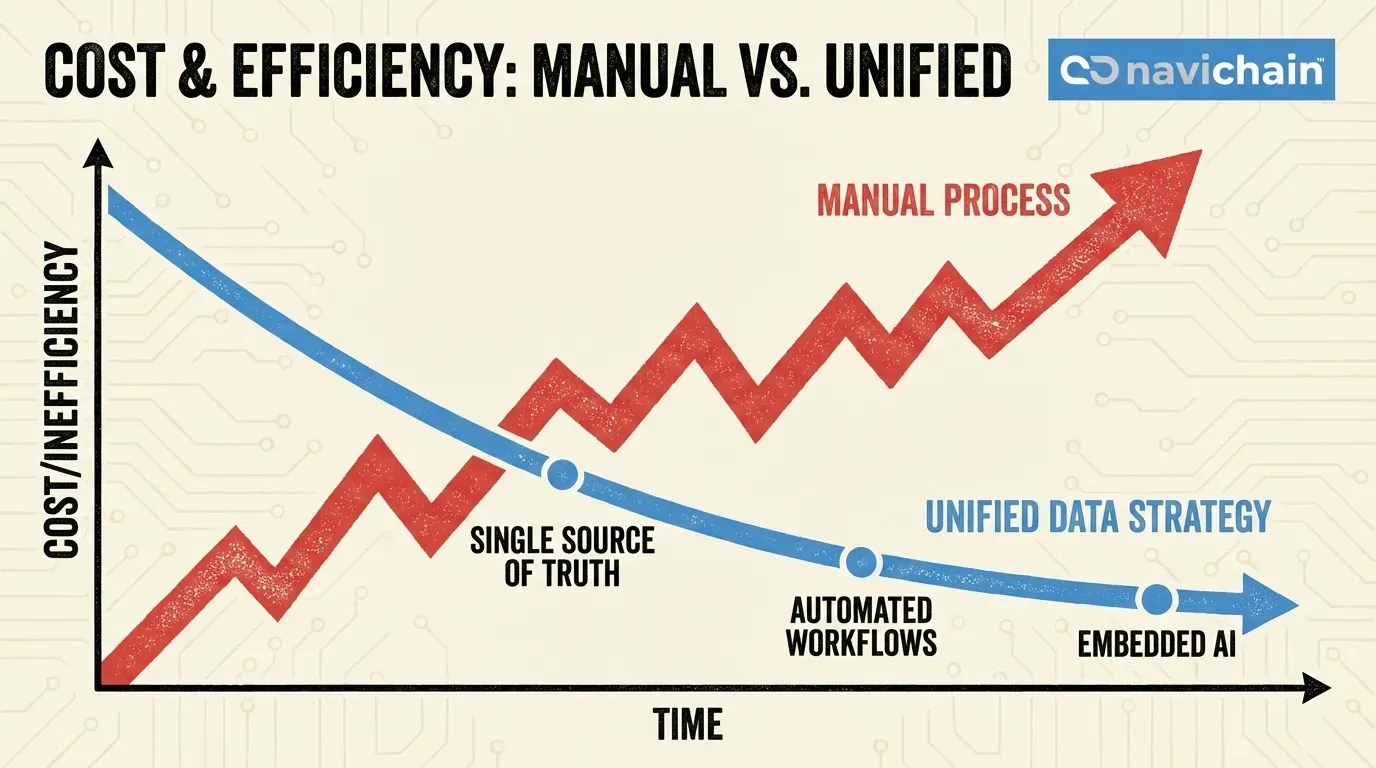
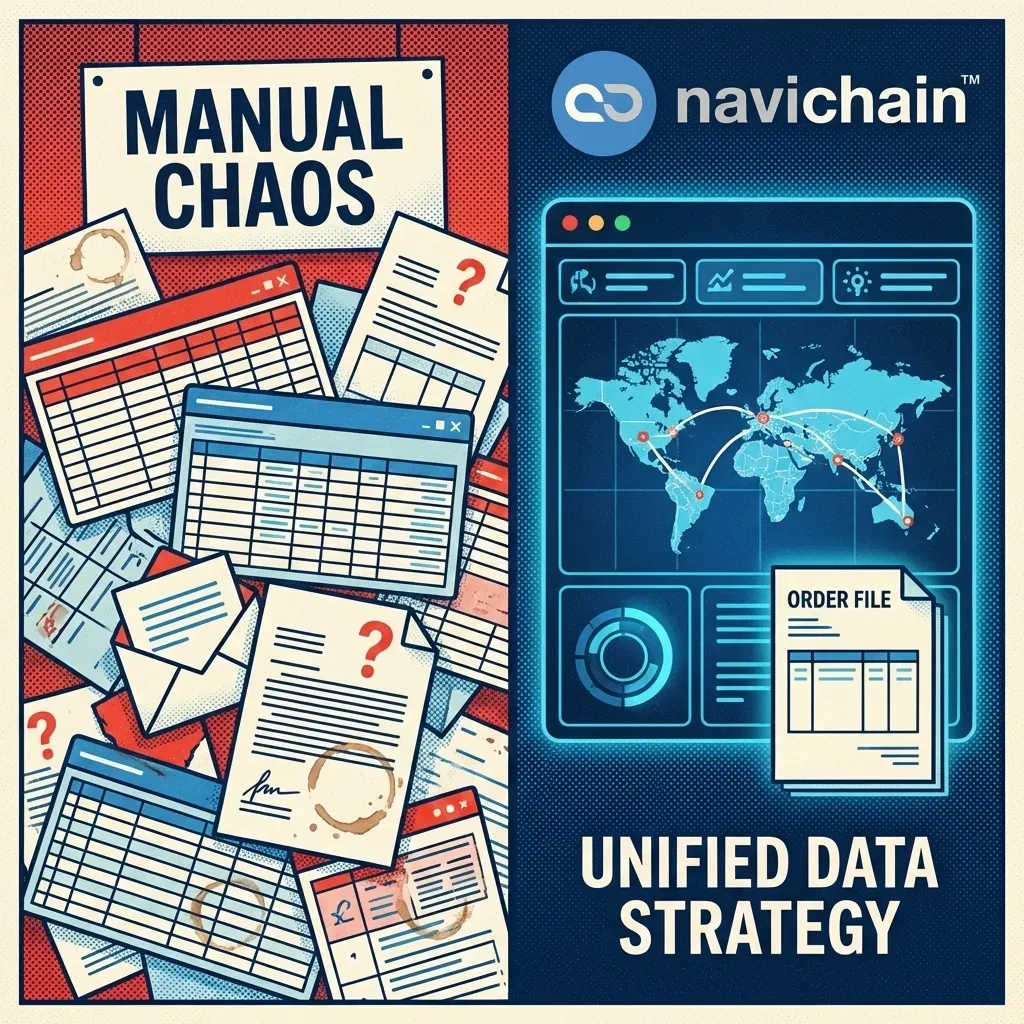
Fig 2: Disparate systems and a lack of real-time data visibility often hamstring collaborative efforts, leading to inefficiencies and mistrust.
The user’s core question – "how should we design our processes for collaboration to be effective?" – hits the nail on the head. Most companies approach this as a process- and trust issue. They hold meetings, sign agreements, and establish rules of communication. They rely on phone calls, emails, and shared spreadsheets to manage joint operations.
This manual approach is precisely why collaboration fails. It creates friction, breeds inefficiency, and ultimately shatters the fragile trust between partners. This is the Collaboration Paradox: the fear of sharing data securely leads companies to rely on insecure, manual methods, which in turn create the very operational failures and distrust they were trying to avoid.
We can trace the failure of manual collaboration back to three central shortcomings in data integration:
1. the partner as a 'black box'
When you hand off a shipment to a partner, your visibility ends. You no longer know the status of the order, the location of the asset, or whether a Proof of Delivery (POD) has been signed. You are operating blind. To provide an update to the end customer, you must manually call or email your partner, who then manually checks their own separate system. This is slow, error-prone, and deeply unprofessional. The customer doesn’t see an "alliance"; they see a fragmented, incompetent service.
2. the data integration gap: Friction, errors, and costs
Your partner uses one TMS. You use another. A third partner has no TMS at all and uses spreadsheets. An order that needs to be handled by all three parties must be manually entered into three different systems. This is not just inefficient; it is a critical point of failure. Keying errors, incorrect addresses, and missed details spread like wildfire through the system, resulting in service failures, customer disputes, and endless, costly reconciliation work for billing.
3. the trust and compliance chasm
This is the biggest hurdle. How can you give a partner access to your system without exposing your entire customer list or sensitive pricing? How do you manage data compliance – especially under strict GDPR regulations – when customer data is emailed and copied between multiple, unsecured systems? Without a secure, neutral, and auditable platform to manage data sharing, partners rightly withhold full transparency. This lack of trust makes true operational integration impossible.
The way forward: A data-first framework for collaboration
Fig 3: Effective collaboration is not a process problem; it’s a data integration problem.
Effective collaboration is not a process problem; it’s a data integration problem. To build an alliance that works, you must first build a shared digital foundation. The strategy must shift from manual process agreements to a unified data strategy.
This framework is built on a single, powerful idea: The Shared Operating System. Instead of four companies trying to connect four disparate systems, all partners operate on a single, unified platform. This platform serves as the neutral "digital ground" for the entire alliance.
Step 1: Establish the 'single source of truth' (SSoT)
The first step is to eliminate data fragmentation. When a customer books a "collaborative load," it is entered once into the shared platform. From that moment on, every partner involved in the job – from the initial leg to the warehouse to the final mile – sees and updates the exact same order file.
- Order Management: The order, the documents, and the specifications are visible to all authorised partners.
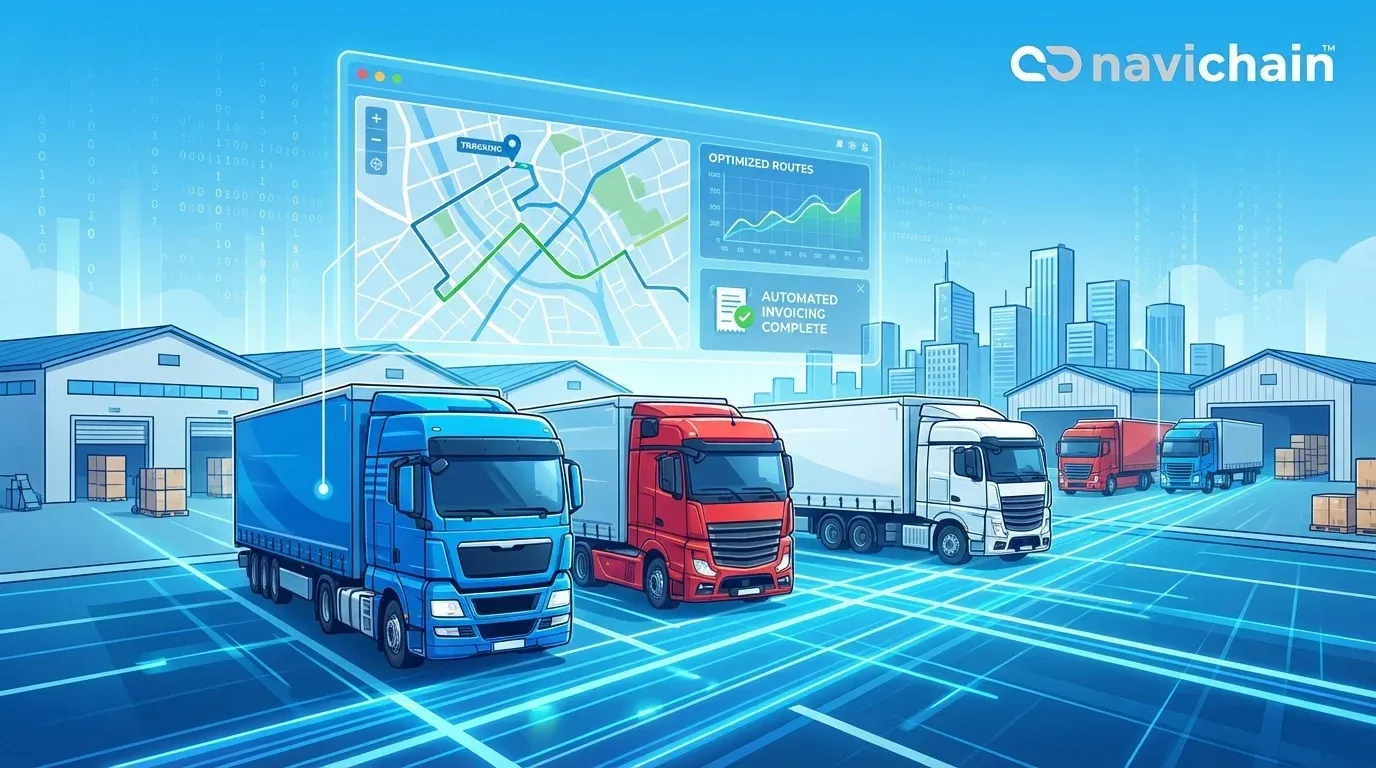
Visual representation of the 'Shared Operating System' concept, highlighting data flow between partners on a unified platform.
- Real-Time Tracking: When Partner A’s truck is on the initial leg, its GPS data flows into the shared platform. When they hand off to Partner B, the tracking continues seamlessly. The end customer gets a single, unbroken tracking link.
- Digital Proof of Delivery (POD): The final driver captures the proof of delivery on their mobile device, and it is immediately available to all partners and the end customer. No more chasing paperwork.
Step 2: Define and enforce role-based data access
This SSoT solves the "black box" problem, but it creates a new one: trust. This is where the integration strategy becomes critical. A sophisticated, shared platform allows for granular, role-based permissions. This is the key to trust.
- Partner A can see all the details for the orders they are assigned to, but they cannot see Partner B’s customer list or pricing.
- The "Alliance Manager" (a role that one partner can take) can have oversight of all collaborative jobs but not the individual partners’ private business.
- The Customer can be given a portal to see only their own orders, regardless of which partner is physically moving the freight.
This model shifts data security from a vague "trust me" agreement to an enforceable architectural feature. You don’t have to trust your partner not to see your data; the system prevents them from doing so.
Step 3: Automate inter-partner workflows and billing
Once you have a single source of truth (Step 1) and secure data partitioning (Step 2), you can automate the high-friction workflows that kill profitability.
- Automated Handovers: When Partner A marks their leg as "completed" at the transload terminal, the system automatically notifies Partner B that the load is ready for pickup.
- Unified Billing: At the end of the job, the system has all the data: who drove which leg, which assets were used, and the final proof of delivery. It can automatically generate the correct invoice to the end customer and create self-billing/payment reconciliations between the partners. This eliminates weeks of manual reconciliation and disputes.
This data-first approach transforms the alliance from a fragile, high-friction arrangement into a single, cohesive, and efficient virtual logistics company. You can now approach large customers with the same scale as a major corporation, backed by the flexibility and service of the SMEs.
From diagnosis to design: The blueprint for a resilient logistics operating system
This strategic framework is not theoretical. It dictates a clear architectural blueprint for the technology required to execute it. For an SME alliance to succeed, its shared platform must be built on three non-negotiable principles.
Principle 1: Unified operating structure
The system cannot just be a TMS. To manage the entire collaborative workflow, it must be a single, unified platform that natively integrates Transportation Management (TMS), Warehouse Management (WMS), Asset Management, and Billing. Trying to bolt together separate systems just recreates the data silo problem on a smaller scale. You need a "central nervous system" that connects every part of the operation, from order placement to final billing, and creates a single, unquestionable source of truth for all partners.
Schematic illustrating the unified platform architecture, highlighting the integration of TMS, WMS, Asset Management, and Billing into a single, cohesive system.
Principle 2: Secure data architecture and control
This is the most critical principle for building trust. For European SMEs, operational data is business-critical. A collaborative platform that processes customer lists, pricing, and routes cannot be a "black box" cloud service hosted in an unknown jurisdiction. True resilience and trust require complete data control. This means that the platform must be hosted on secure infrastructure, ideally within the alliance’s own legal jurisdiction (e.g., within the UK/EU). This self-hosting or private infrastructure approach ensures easy and provable GDPR compliance, protects sensitive commercial data from data requests from foreign jurisdictions, and gives partners the absolute confidence required to participate fully.
Principle 3: Embedded analytical intelligence
With a unified structure (P1) and a secure data environment (P2), a new, powerful capability emerges. The alliance now has a clean, aggregated dataset of all its joint operations. The platform must include an embedded, integrated AI or analytics layer that can analyse this shared data within the secure environment. This AI can identify systematic inefficiencies, optimise routes across the entire partner network, and forecast demand for the alliance as a whole. This moves collaboration from reactive to predictive, creating a competitive advantage that no single SME can achieve on its own.
References/sources
- International Road Transport Union (IRU): Driver Shortage Global Report 2023. (Provides context on operational pressures driving the need for efficiency and collaboration.) <https://www.iru.org/resources/iru-library/iru-global-driver-shortage-report-2023>
- Transport Intelligence (Ti): European Road Freight Transport 2024. (Analyses market trends, margin pressure, and the competitive landscape for European haulage companies.) <https://www.ti-insight.com/report/european-road-freight-transport-2024/>
- European Commission: General Data Protection Regulation (GDPR) Guidelines. (Outlines the legal framework for data processing and control, underpinning the importance of Principle 2.) <https://ec.europa.eu/info/law/law-topic/data-protection/data-protection-eu_sv>
- Capgemini Research Institute: The supply chain collaboration disconnect. (Discusses barriers and benefits of integration and data sharing among supply chain partners.) <https://www.capgemini.com/insights/research-library/supply-chain-collaboration-disconnect/>
Fig 4: This strategic framework is not theoretical.
Enabling the blueprint: Navichain SaaS unified logistics platform
This white paper has outlined a strategic framework for successful SME collaboration, rooted in a cohesive data integration strategy. The three core principles of this blueprint – a Unified Operating Structure, Secure Data Architecture and Control, and Embedded Analytical Intelligence – are not just theoretical. They are the design philosophy behind the navichain SaaS platform.
navichain SaaS was built to solve exactly this challenge, democratising powerful logistics technology for the SMEs that need it most.
- Embodies the Unified Structure (Principle 1): navichain is not just a TMS. It’s a single, integrated logistics operating system where Transportation Management (TMS), Warehouse Management (WMS), Asset Management, Billing, and Order Management function as one. This creates the 'single source of truth' necessary for any successful collaboration.
- Delivers Secure Data Control (Principle 2): Our primary differentiator is our commitment to your data sovereignty. The entire navichain SaaS platform is hosted on our own secure infrastructure in Sweden. For our customers, this isn’t a small detail – it’s everything. It guarantees maximum data security, ensures that your operations are governed by Swedish/EU law, and makes GDPR compliance straightforward. You retain full control over your operational information, free from the complexities and risks of international data transfers. This is the layer of trust that makes collaboration possible.

The navichain SaaS platform provides a unified view of logistics operations, enabling seamless collaboration and data-driven decision-making for SME alliances.
- Provides Embedded Intelligence (Principle 3): Our platform is augmented with a integrated AI that runs on our own secure Swedish infrastructure. This allows your alliance to perform deep, secure data analysis on your newly unified operational data. You can unlock efficiencies and insights from your combined efforts, secure in the knowledge that this sensitive analytical data never leaves the secure, controlled environment.
Our mission is to provide a seamless, powerful, and affordable solution to break down the data silos that are holding SMEs back. navichain SaaS provides the digital foundation for you to collaborate effectively, compete with confidence, and win the larger contracts you deserve.
navichain: A unified logistics operating system providing a single source of truth, secure data control, and embedded intelligence for effective collaboration.
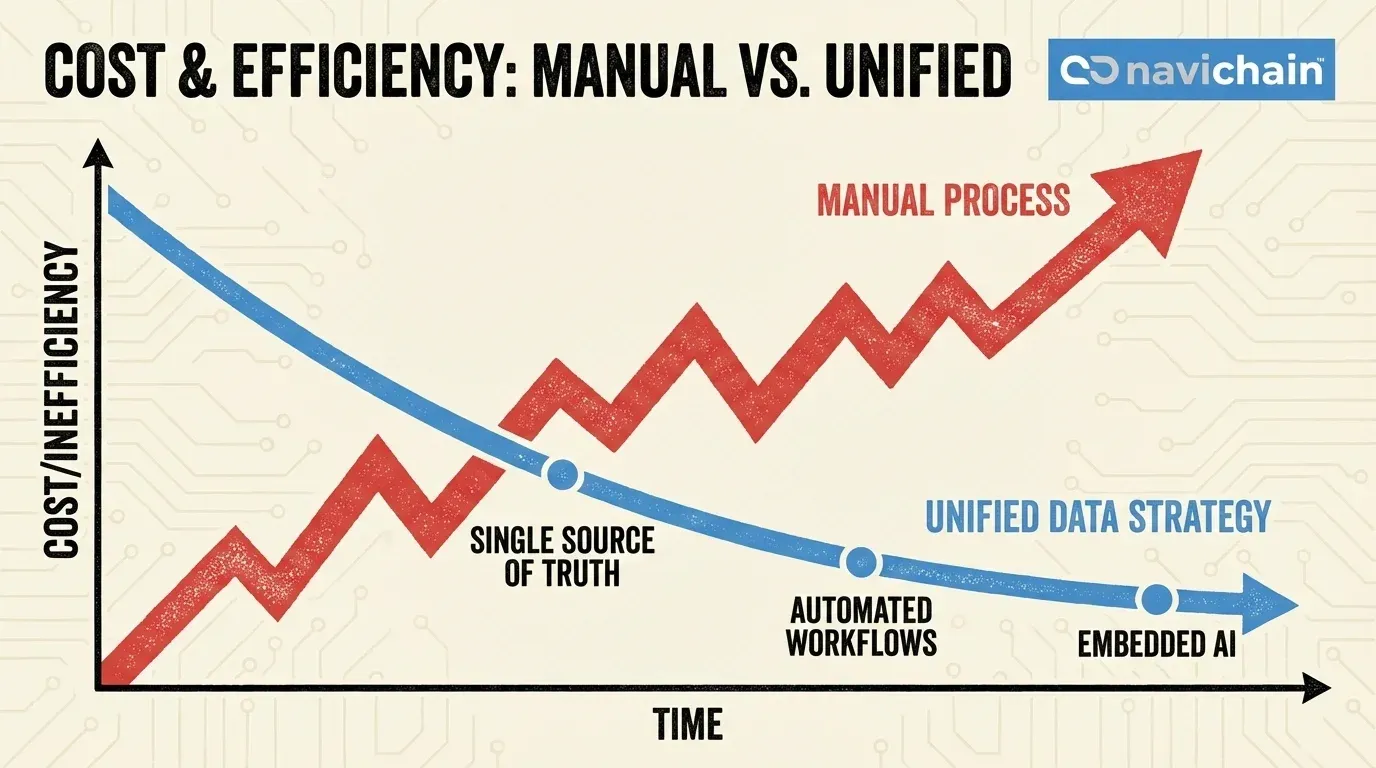
Navichain's unified platform delivers a single source of truth, enabling secure data control and embedded intelligence for collaborative logistics operations.
Ready to optimise your supply chain?
navichain Insights Newsletter
Join the newsletter to receive the latest updates in your inbox.