The TCO Fallacy: Why Your Truck TCO Is Blinding You to the 12% Revenue Cost of Bad Data
Table of Contents
SME hauliers are struggling to reconcile sustainability goals with the perceived cost of new, greener assets, but are they looking in the wrong place? This white paper unveils the hidden operational costs bleeding value from logistics businesses, demonstrating that a unified data architecture delivers a 300%+ ROI by eliminating waste and mitigating compliance risks – making it the most impactful investment an SME can make.
The TCO Fallacy: Why Your Truck TCO Is Blinding You to the 12% Revenue Cost
SME hauliers are trapped, paralyzed by the complex Total Cost of Ownership (TCO) of new 'green' assets. But this focus on asset CapEx is a strategic error. While managers debate uncertain residual values, their businesses are bleeding value from a source they ignore: operational TCO. New research shows that fragmented data and operational silos cost organizations up to 12% of their annual revenue. This white paper challenges the conventional focus on assets and presents a new, quantifiable ROI framework. We demonstrate how investing in a unified and sovereign data architecture is not a cost, but the highest-return investment an SME can make—one that has been shown to deliver a 300%+ ROI by eliminating operational waste and mitigating catastrophic, multi-million euro compliance risks.
The TCO fallacy: Trapped by the wrong calculation
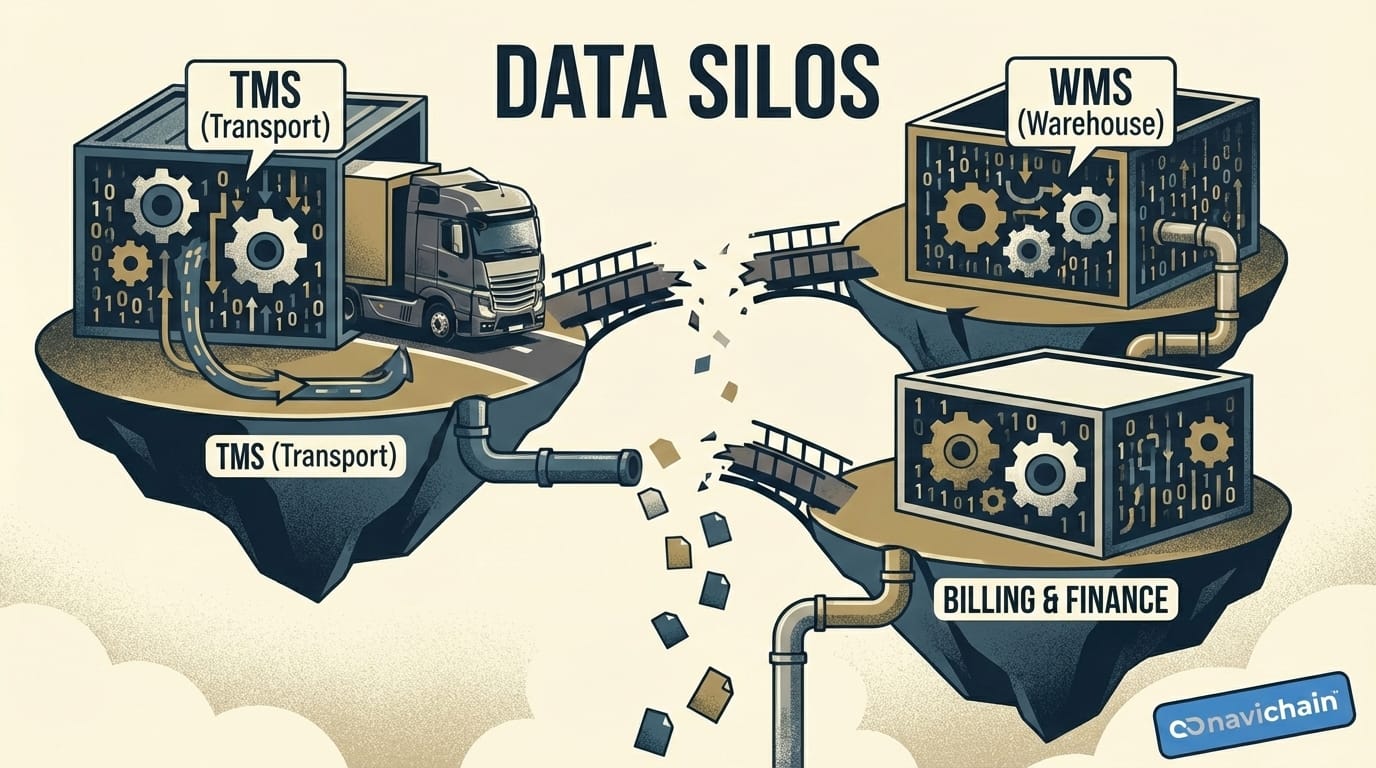
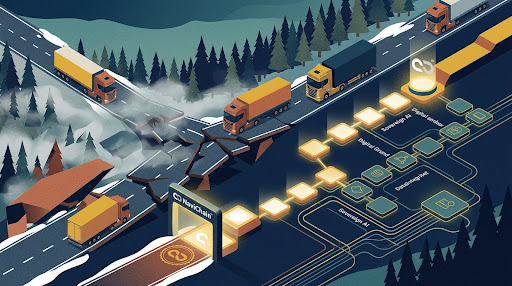
Fig 1: Many logistics businesses are trapped by the paralyzing complexity of TCO calculations, focusing on asset costs while overlooking significant operational inefficiencies.
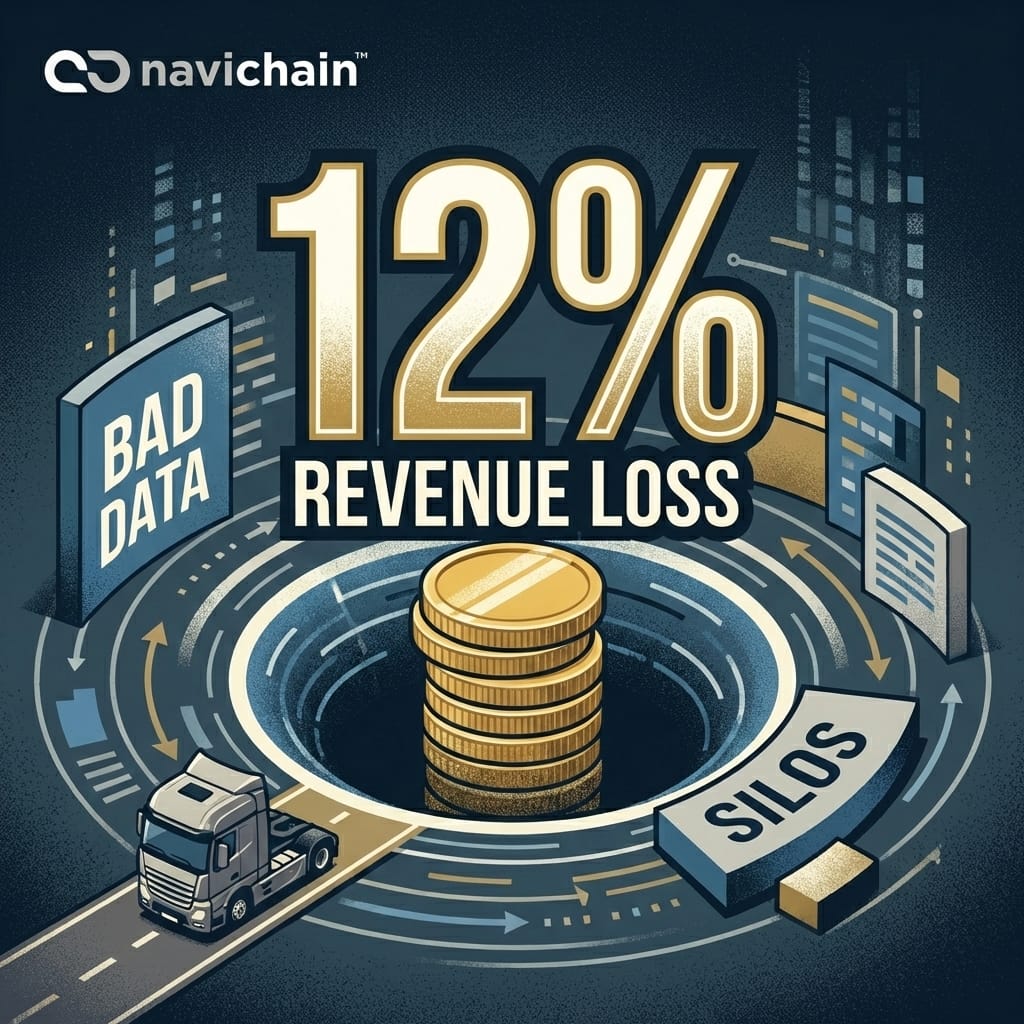
For logistics managers and SME owners, 'Total Cost of Ownership' (TCO) has become a paralyzing calculation. The strategic dilemma is understandable: do you invest in a new Euro 6 diesel, a BEV, or an HVO-compatible truck? The variables are maddeningly uncertain. As the International Road Transport Union (IRU) notes, the TCO for any of these assets varies wildly based on unpredictable national subsidies, energy costs, and future road tolls. Volvo Trucks confirms this, stating that an electric truck's cost-effectiveness "all depends on the prices of fuel," which are volatile and market-specific. This uncertainty has created a rational 'wait-and-see' approach. But this is the TCO Fallacy. By focusing exclusively on the TCO of the asset, leaders are ignoring the far larger, more immediate, and more controllable cost: the TCO of the Operation. While you are paralyzed by a future, five-figure CapEx decision, your company is actively bleeding revenue today from operational inefficiency. The cost of this inefficiency, driven by fragmented data, is staggering. Recent industry analysis shows that poor data practices and silos cost organizations 12% of their annual revenue. This isn't a future risk; it's a present and compounding loss.
Quantifying the real cost: The negative ROI of 'doing nothing'
Fig 2: Studies show 76% of businesses suffer from reduced cross-departmental collaboration due to data silos.
'Doing nothing' is not a zero-cost strategy. It is an active investment in inefficiency. For most SMEs, their 'data architecture' is a costly, fragmented mess of a TMS for transport, a WMS for the warehouse, spreadsheets for billing, and another tool for asset management. This fragmentation creates three distinct and massive financial drains.
1. the direct cost of operational inefficiency
When your systems don't talk to each other, you create friction, manual work, and blindness. This translates directly into OpEx waste: * Wasted Hours: Your team spends time re-entering data, correcting invoices, and manually cross-referencing spreadsheets. Studies show 76% of businesses suffer from reduced cross-departmental collaboration due to data silos.
- Wasted Fuel & Utilization: Without a single source of truth, you cannot optimize routes in real-time, leading to empty miles and poor asset utilization—the single biggest cost driver in haulage.
- Inaccurate Decisions: You cannot accurately bid on new contracts because you don't know the true cost of a specific client or route. You are, in effect, driving blind. This isn't a small leak. It's a cascade of high-velocity costs that add up. In contrast, case studies of small logistics firms moving to a unified platform show a 30% increase in user productivity and a 28% reduction in deal cycles, culminating in a 303% ROI over three years.
2. the strategic cost: A lowered TCO ceiling
Even if you did buy the 'perfect' truck, you could never achieve its optimal TCO with a fragmented data system. A unified platform, by contrast, acts as an ROI multiplier. Research on unified commerce platforms shows they deliver, on average, a 22% lower Total Cost of Ownership. Why? Because they allow for holistic optimization. You can analyze real-time fuel costs against route profitability, integrate predictive maintenance data, and achieve a level of forecast accuracy (one firm hit 85%) that is simply impossible when your data is in five different places. Your fragmented system puts an artificial ceiling on your efficiency, and you pay for that ceiling every day.
3. the hidden liability: The multi-million euro risk
This is the cost that is entirely off the balance sheet for most SMEs, yet it represents an existential threat. In an effort to digitize cheaply, many firms use 'cloud-first' platforms (for TMS, WMS, or CRM) that are owned by US-based parent companies. This creates a direct, unavoidable, and financially catastrophic conflict between EU and US law: * EU GDPR: Demands you protect your clients' data.
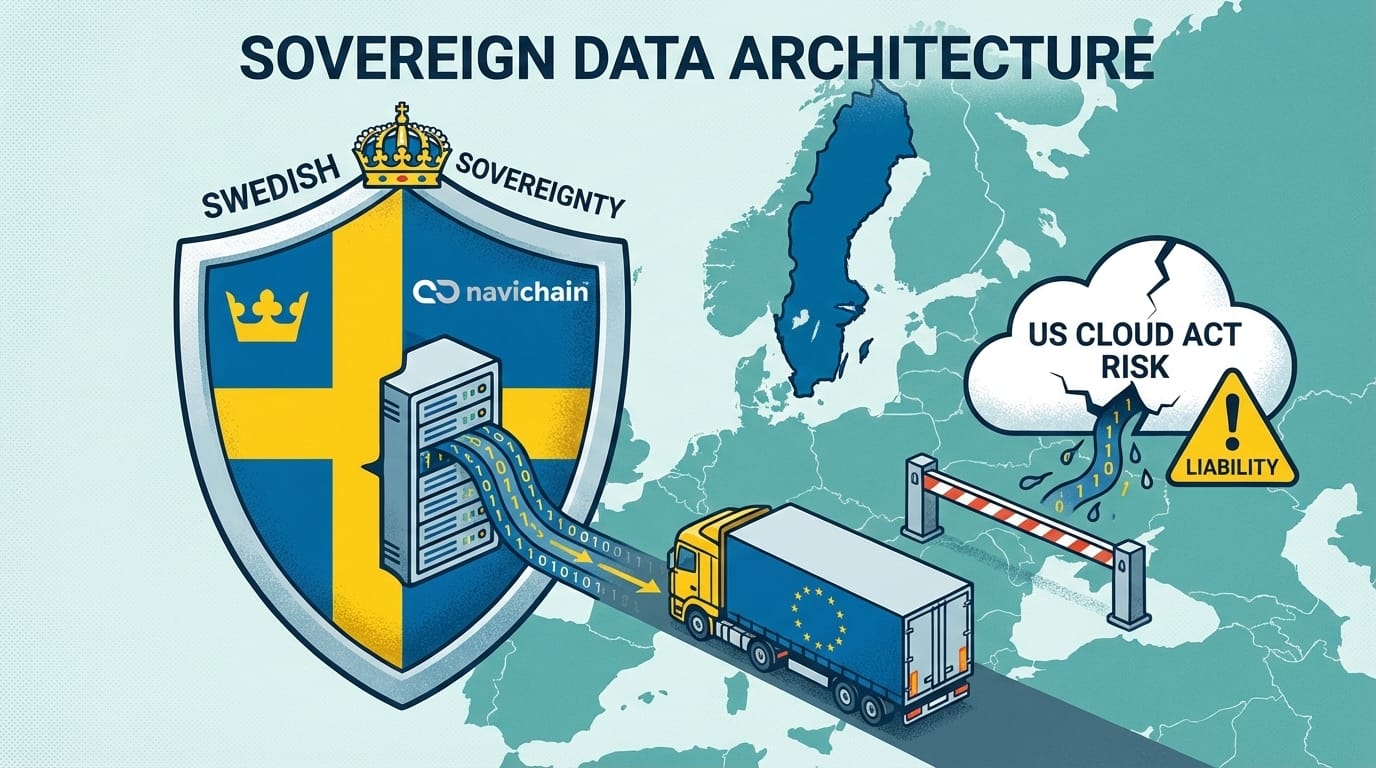
Visual representation of the ROI potential achievable through unified logistics platforms, highlighting key areas of cost savings and efficiency gains.
- US CLOUD Act: Grants US authorities the power to seize your data, even if it's stored on a server in Stockholm. This is not a theoretical risk. This is a clear and present financial danger. In 2024, Uber was fined €290 million by the Dutch DPA for storing European drivers' data in the US without adequate safeguards. LinkedIn was fined €310 million for GDPR violations. Amazon France Logistique was fined €32 million. Your 'affordable' cloud software may, in fact, be a €300 million unquantified liability sitting on your books. The ROI of 'doing nothing' is catastrophically negative.
From diagnosis to design: The blueprint for a resilient logistics operating system
Fig 3: To escape the TCO fallacy, SMEs must shift their investment focus from the asset to the architecture.
To escape the TCO fallacy, SMEs must shift their investment focus from the asset to the architecture. The solution is a strategic blueprint for a resilient logistics operating system, built not on features, but on three core principles of positive ROI.
Principle 1: The unified operational fabric
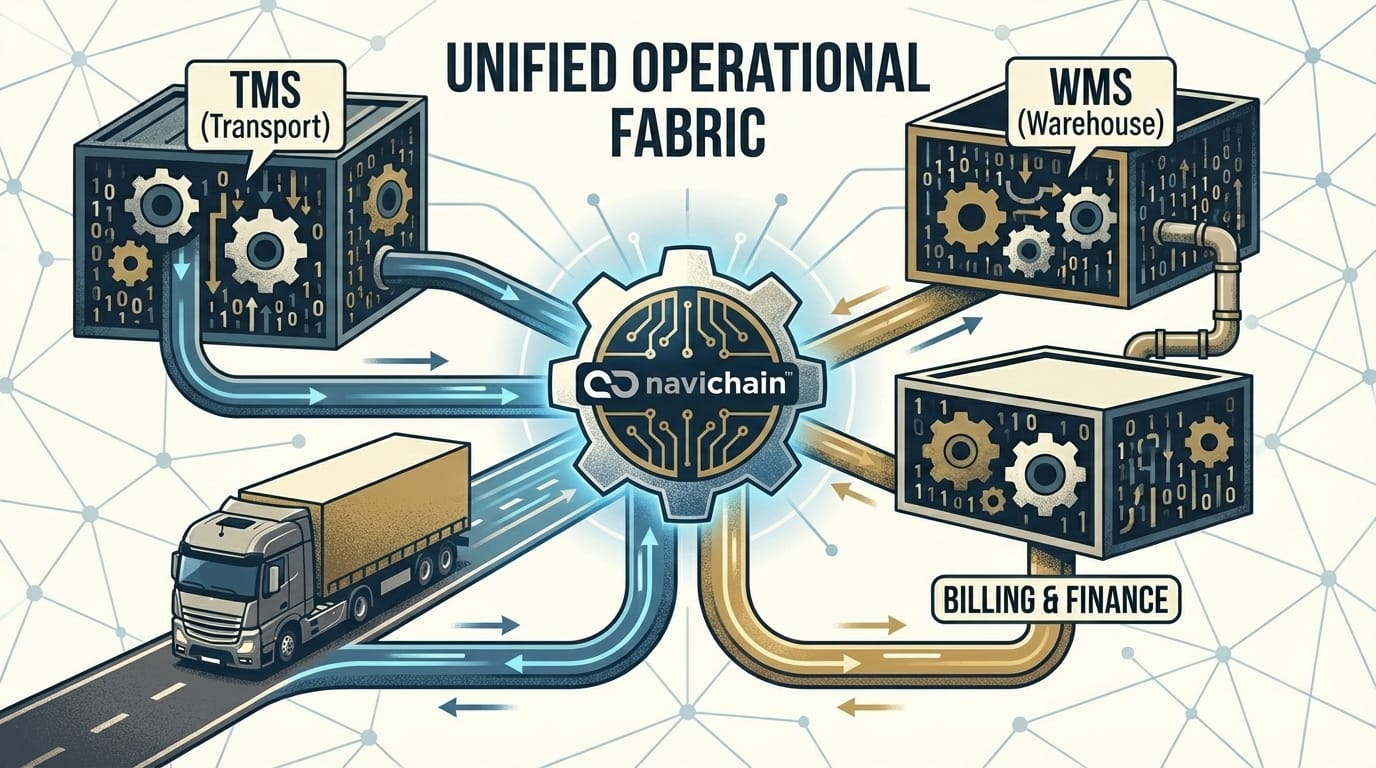
The first investment is in eliminating data silos. You must move to a single, integrated platform—a 'central nervous system'—where TMS, WMS, Billing, Order Management, and Asset Management operate as one.
- The Investment: Consolidating systems onto one platform.
- The Return: Immediate OpEx reduction. This is the 30% productivity gain and 22% lower TCO reported by unified businesses. It is the elimination of manual data entry, the optimization of routes, and the ability to make accurate, profitable decisions.
Principle 2: Sovereign data architecture
The second investment is in a risk-mitigation architecture. For a European SME, operational data must be sovereign. This means it must be stored and processed entirely within your own legal jurisdiction (e.g., in Sweden) on Self-Hosted infrastructure, by a European-owned company that is not subject to extraterritorial laws like the US CLOUD Act.
- The Investment: Choosing a sovereign platform over a (seemingly cheaper) non-sovereign US-based one.
- The Return: The elimination of a nine-figure financial liability. The ROI of this decision is the €290 million fine you don't have to pay. It is the ultimate insurance policy that also guarantees 100% GDPR compliance for you and your clients.
Principle 3: Embedded analytic intelligence
The third investment is the ROI-multiplier. With a unified fabric (Principle 1) built on a sovereign foundation (Principle 2), you can now safely apply a Integrated AI layer to your own data. This AI runs securely within your sovereign environment, not in a public cloud, to find efficiencies you cannot see.

Schematic illustrating the flow of operational data within a sovereign data architecture, ensuring compliance and security by remaining within the defined legal jurisdiction.
- The Investment: Leveraging an embedded AI engine.
- The Return: Moving from cost-cutting to profit-generation. This is the 8.9% average increase in gross revenue and the 85% forecast accuracy that allows you to optimize pricing, predict maintenance, and identify your most (and least) profitable customers with surgical precision.
References/sources
- [1.1] Digital Transformation Playbook. (2025, Oct 16). How This Small Business achieved 303% ROI with Salesforce. https://medium.com/@digitaltransformationplaybook/how-this-small-business-achieved-303-roi-with-salesforce-dcf5c7272163
- [1.4] Shopify. (2025, Oct 3). Unified Commerce Software Guide 2025: ROI, Platforms, TCO. https://www.shopify.com/enterprise/blog/unified-commerce-software
- [2.3] Fivetran. (2025, Aug 14). Breaking Down Data Silos: Strategies + Tools to Unify Data. https://www.fivetran.com/learn/breaking-down-data-silos
- [2.4] PrismHQ. (2025). The 7 Most Common Costs of Data Silos and How to Solve Them. https://prismhq.com/the-7-most-common-costs-of-data-silos-and-how-to-solve-them/
- [3.1] CMS Law. (2025, Mar 1). Numbers and Figures | GDPR Enforcement Tracker Report 2024/2025. https://cms.law/en/int/publication/gdpr-enforcement-tracker-report/numbers-and-figures
- [3.4] Compliance Hub Wiki. (2024, Dec 1). Top GDPR Fines in December 2024: Key Lessons for Compliance. https://www.compliancehub.wiki/top-gdpr-fines-in-december-2024-key-lessons-for-compliance/
- [4.1] International Road Transport Union (IRU). (2025, Sep 17). Alternative vs traditional truck powertrains in the EU: Total cost of ownership 2024. https://www.iru.org/intelligence/road-transport-intelligence/alternative-vs-traditional-truck-powertrains-eu-total-cost-ownership-2024
- [4.4] Volvo Trucks. (2024, Sep). How alternative fuels impact total cost of ownership. https://www.volvotrucks.com/en-en/news-stories/insights/articles/2024/sep/how-alternative-fuels-impact-total-cost-of-ownership
Fig 4: To escape the TCO fallacy, SMEs must shift their investment focus from the asset to the architecture.
Enabling the blueprint: The navichain SaaS unified logistics platform
This white paper has laid out a strategic blueprint for a high-ROI, resilient, and intelligent logistics operation. This blueprint—built on the principles of a Unified Operational Fabric, Sovereign Data Architecture, and Embedded Analytic Intelligence—is the exact design philosophy behind the navichain SaaS platform. navichain SaaS is a unified logistics operating system designed to deliver maximum ROI for European and Scandinavian SMEs by addressing operational TCO, not just asset TCO.
- Embodying the Unified Operational Fabric (Principle 1): We provide a single, integrated platform where Transportation Management (TMS), Warehouse Management (WMS), Asset Management, Billing Management, and Order Management work as one. This is the foundation for the 300%+ ROI that comes from eliminating data silos, boosting productivity, and slashing operational waste.
- Delivering True Data Sovereignty (Principle 2): Our platform is hosted on our own Self-Hosted infrastructure in Sweden. This is our key differentiator. Your data stays in Sweden, under Swedish and EU jurisdiction. This is not just a compliance feature; it is a core financial strategy that makes your operation immune to the €290 million+ financial liabilities of the US CLOUD Act.
Shifting the investment focus from individual assets to a holistic architectural approach unlocks significant operational ROI, as demonstrated by navichain's unified platform.
- Providing Embedded Analytic Intelligence (Principle 3): Our platform is enhanced by a integrated AI that runs on our own secure Swedish infrastructure. This allows our clients to perform deep, secure data analysis on their unified operational data, unlocking the predictive insights and new efficiencies that drive revenue growth, without ever compromising data sovereignty. Our mission is to democratize logistics technology, empowering SMEs to shift their focus from high-risk asset TCO to the high-return certainty of operational ROI.
Navichain's integrated platform unifies TMS, WMS, and other key functions, providing a single source of truth for enhanced operational efficiency and data-driven decision-making.
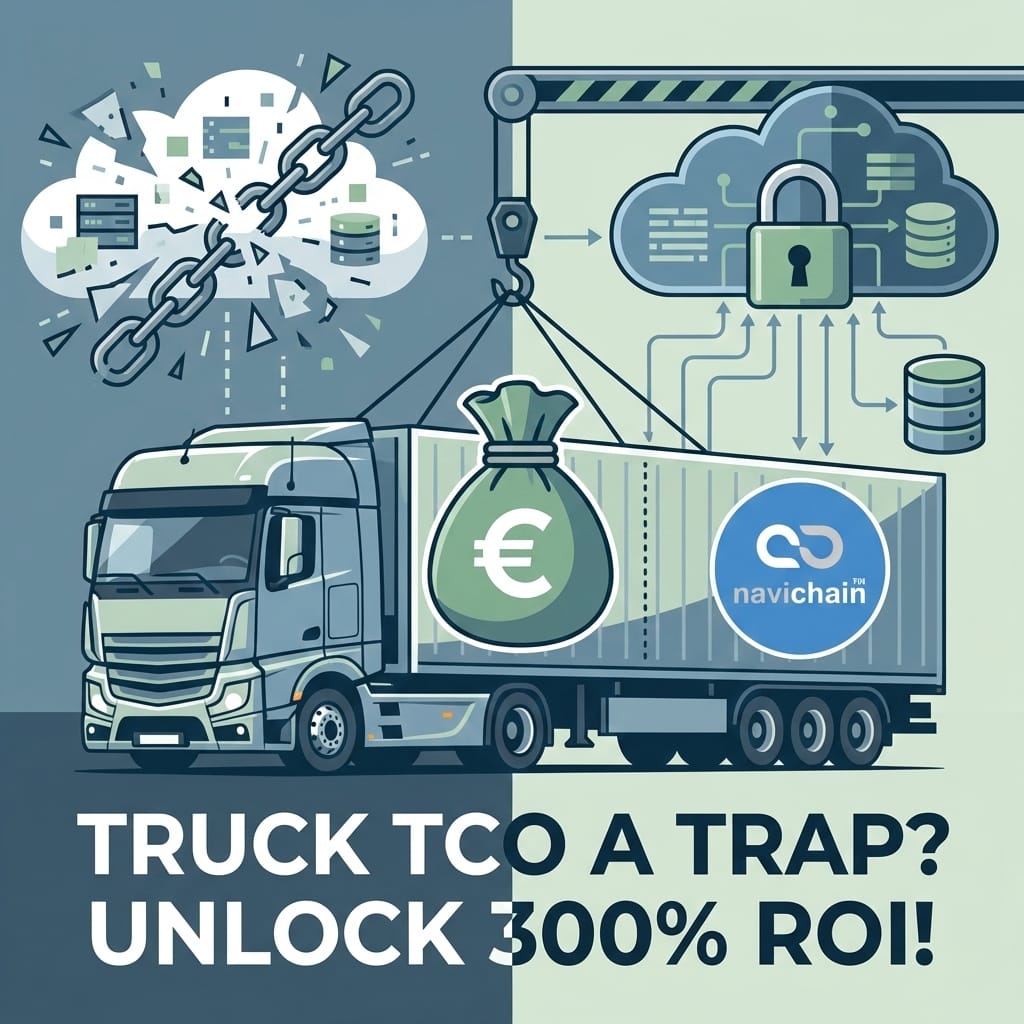
Navichain's unified view of logistics data enables smarter, faster decision-making across the supply chain, driving operational ROI.
Ready to optimise your supply chain?
navichain Insights Newsletter
Join the newsletter to receive the latest updates in your inbox.