

The Friction Tax: Why Your Logistics IT Costs More Than You Think (and How You Can)
Table of Contents
Scandinavian haulage SMEs are grappling with razor-thin margins, yet are often burdened by complex, fragmented IT systems. Discover how chasing "best-of-breed" solutions can lead to a hidden "Friction Tax," eroding profitability through integration costs and operational bottlenecks. This white paper unveils the true Total Cost of Ownership and presents a strategic framework for a unified, intelligent platform.
Friktionsskatten Logistik It Kostnad Roi Sverige
The core dilemma: When 'saving' costs you more
For a small or medium-sized enterprise (SME) in the Scandinavian haulage industry, every krone matters.
For a small or medium-sized enterprise (SME) in the Scandinavian haulage industry, every krone matters. Margins are constantly squeezed by fuel costs, driver shortages and intense competition. In this environment, IT investments are understandably laser-focused on one thing: the visible licence cost. The logic is simple: acquire a 'best-of-breed' Transport Management System (TMS) for transport, a separate Warehouse Management System (WMS) for the terminal, and another system for invoicing. On paper, this à la carte strategy seems cost-effective.
This report argues that this strategy is a financial illusion. The explicit licence and consultancy costs, which you correctly identify as 'too expensive', are just the tip of the iceberg. The real, devastating cost is a hidden, recurring charge we call the 'Friction Tax': the total financial drag created by the lack of integration between these systems.
This tax is paid daily in wasted man-hours, lost business opportunities and escalating strategic risks. This white paper provides a strategic framework for SME leaders to move beyond a flawed Total Cost of Ownership (TCO) calculation and implement a unified platform that delivers a quantifiable, positive Return on Investment (ROI).
Problem analysis: The anatomy of a negative ROI
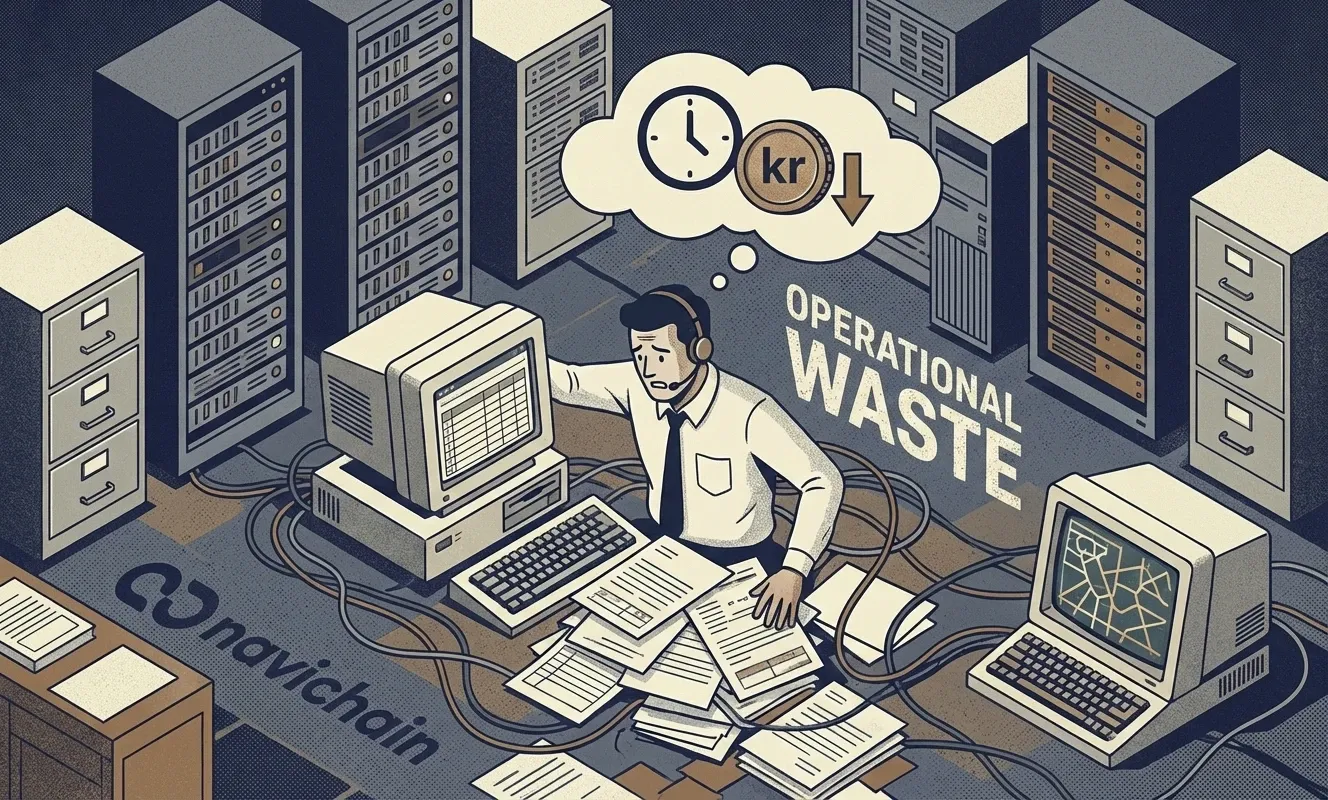
A fragmented IT landscape, seemingly cost-effective at first glance, ultimately hinders efficiency and profitability.
The central challenge is that a fragmented IT stack creates a constantly negative ROI loop. The 'investment' is not a one-off purchase; it's an accumulating, multi-layered cost. Meanwhile, the 'Return' is limited by operational ceilings that a disjointed architecture inevitably creates.
H3: The 'investment' you see: visible costs
These are the costs that appear on your income statement and cause immediate financial stress:
- Multiple Licence Fees: You pay for a TMS, a WMS, an invoicing platform, and perhaps a separate tool for asset tracking. Each has its own subscription or maintenance fee, creating a costly 'stack'.
- Initial Integration Costs: The 'consultancy costs' required to get the TMS to 'talk' to the WMS are significant. Industry data suggests that integration projects at the SME level often land at between SEK 200,000 and SEK 500,000 per connection.
- Ongoing Consultancy Fees: The initial integration is fragile. When a vendor (e.g. your TMS) releases an update, the connection to your WMS often breaks, requiring another expensive consultancy visit.
H3: The 'investment' you don't see: the hidden 'friction tax'
These hidden costs are far greater and more corrosive to your ROI. They are the direct result of system friction.
- The Cost of Operational Waste: A recent study in logistics showed that transport managers and planners can spend up to 40% of their working day simply reconciling data – manually entering order information from an email to the WMS, then to the TMS, and again to the invoicing system. If a transport manager earning SEK 500,000 a year spends 40% of their time on this, you are paying SEK 200,000 annually for duplication of effort. This is a tax levied by friction.
- The Cost of 'Integration Debt': Your reliance on external consultants to 'glue together' your systems creates an 'integration debt'. You become operationally dependent on a complex, bespoke-coded solution that only a handful of expensive specialists understand. You cannot innovate, scale or adapt without incurring massive new consultancy fees. This stifles your agility and creates a 'single point of failure'.
- The Cost of Strategic Risk (Data & GDPR): This is the ticking time bomb in the fragmented model. Where is your data? Your TMS vendor may host in Ireland (on AWS), your WMS in Germany (on Azure), and your invoicing data in the USA. This creates a nightmare for GDPR compliance. You, as the data controller, are responsible for data you physically do not control, spread across multiple jurisdictions. The potential cost of a data breach or regulatory violation – with fines averaging SEK 1.5 million or more for SMEs – is an uncalculated financial risk that must be added to your TCO.
H3: The 'return' you miss: the strategic ceiling
The deepest cost of the 'Friction Tax' is the 'Return' you can never achieve.
- No 'Single Source of Truth': You cannot answer basic business questions. What is your real cost of serving a specific customer (from pick at the warehouse to final delivery and invoice)? Which routes are actually most profitable? Because the data lives in disconnected silos, you are flying blind, making strategic decisions based on guesswork, not unified data.
- Inability to Leverage AI: The promise of AI in logistics – route optimisation, predictive maintenance, inventory optimisation – is enormous. But AI is only as good as the data it can access. Your fragmented systems create data cemeteries. A integrated AI cannot deliver value if it cannot see the whole, unified picture of your business in real-time. Your 'Return' is limited to the level of basic operational execution, with no path to strategic optimisation.
This analysis provides a clear verdict: the fragmented 'best-of-breed' model has a disastrous TCO and a fundamentally broken ROI equation for SMEs.
The way forward: The framework for positive ROI
To solve the problem, you need to change the equation.
To solve the problem, you need to change the equation. The goal is to move from a high, unpredictable 'Investment' and a low 'Return' to a low, predictable 'Investment' and a high, accumulating 'Return'. This is achieved by adopting a strategy built on three pillars.
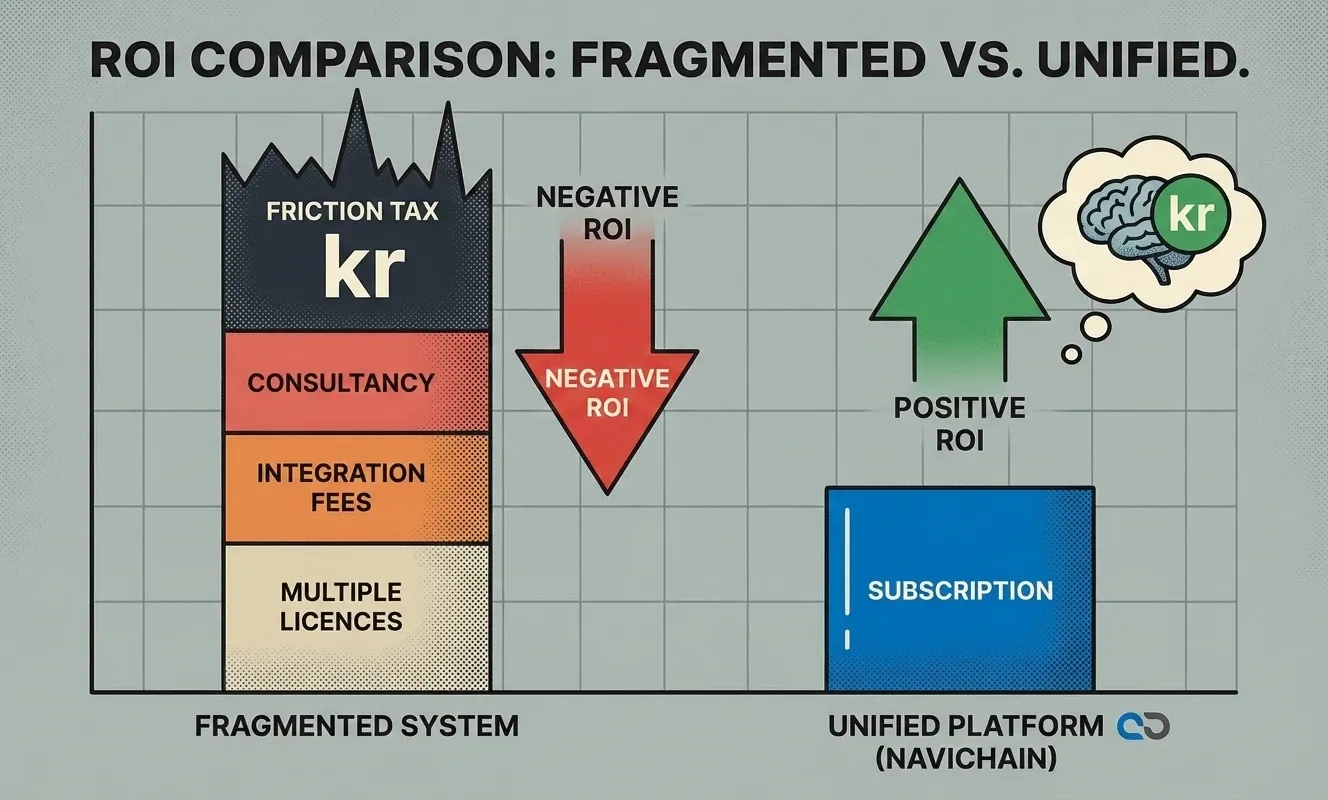
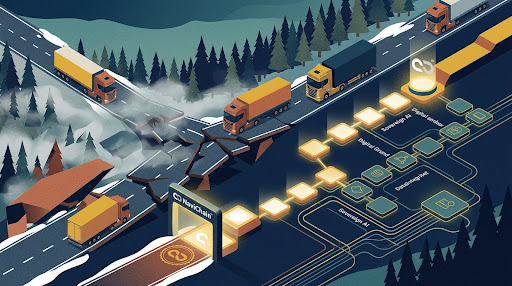
Visual representation of shifting from a negative ROI associated with fragmented systems to a positive ROI through a unified logistics platform.
H3: Pillar 1: attack TCO with unity
The most effective way to eliminate the 'Friction Tax' is to eliminate the friction itself. A unified operating system for logistics – where TMS, WMS, Asset Management and Invoicing are components of a single platform – is the foundation for a positive ROI.
- Investment Impact: The 'Investment' side of the equation is immediately restructured.
- Multiple licence fees collapse to one predictable subscription.
- Integration consultancy costs are reduced to zero because the modules are pre-integrated.
- The 40% of time spent on manual data entry is recovered and can be reinvested in high-value activities such as customer service and business development.
This move alone can represent a 20-30% reduction in TCO in the first year.
H3: Pillar 2: risk-minimise the 'investment' with data control
A positive ROI is not just about saving money; it's about not losing it. The strategic risk of data compliance (GDPR) must be shifted from a large, variable 'cost' to a controlled, zeroed 'asset'.
This requires a platform built on secure, self-hosted infrastructure within your own legal jurisdiction. For a Scandinavian haulier, this means data hosted and processed in Sweden/the EU, under your full control.
- Investment Impact: The uncalculated, multi-million risk of GDPR fines and data breaches is neutralised. Compliance becomes straightforward because you and your vendor can specify exactly where the data is, who controls it, and that it never leaves the EU. This risk minimisation of the 'Investment' is a critical, concrete financial benefit.
H3: Pillar 3: maximise the 'return' with embedded intelligence
With a unified, secure data foundation, you can finally unlock the 'Return' side of the equation. When your operational data (from lorries, warehouses and invoices) flows into a single secure data lake, you can apply intelligence to it.
A integrated AI layer running on the same secure infrastructure can analyse 100% of your business. This is where the 'Return' becomes exponential.
- Return Impact:
- Operationally: The AI can perform dynamic route optimisation, predictive asset maintenance, and intelligent inventory management, directly cutting fuel and labour costs.
- Strategically: The AI can analyse unified data to reveal your true customer profitability, identify inefficient routes, and model the impact of new business. You move from being reactive to being predictive.
This framework turns the old, broken model upside down. It creates a virtuous circle: unity reduces costs, security eliminates risk, and the resulting data asset generates new, accumulating value.
From diagnosis to design: The blueprint for a resilient logistics operating system
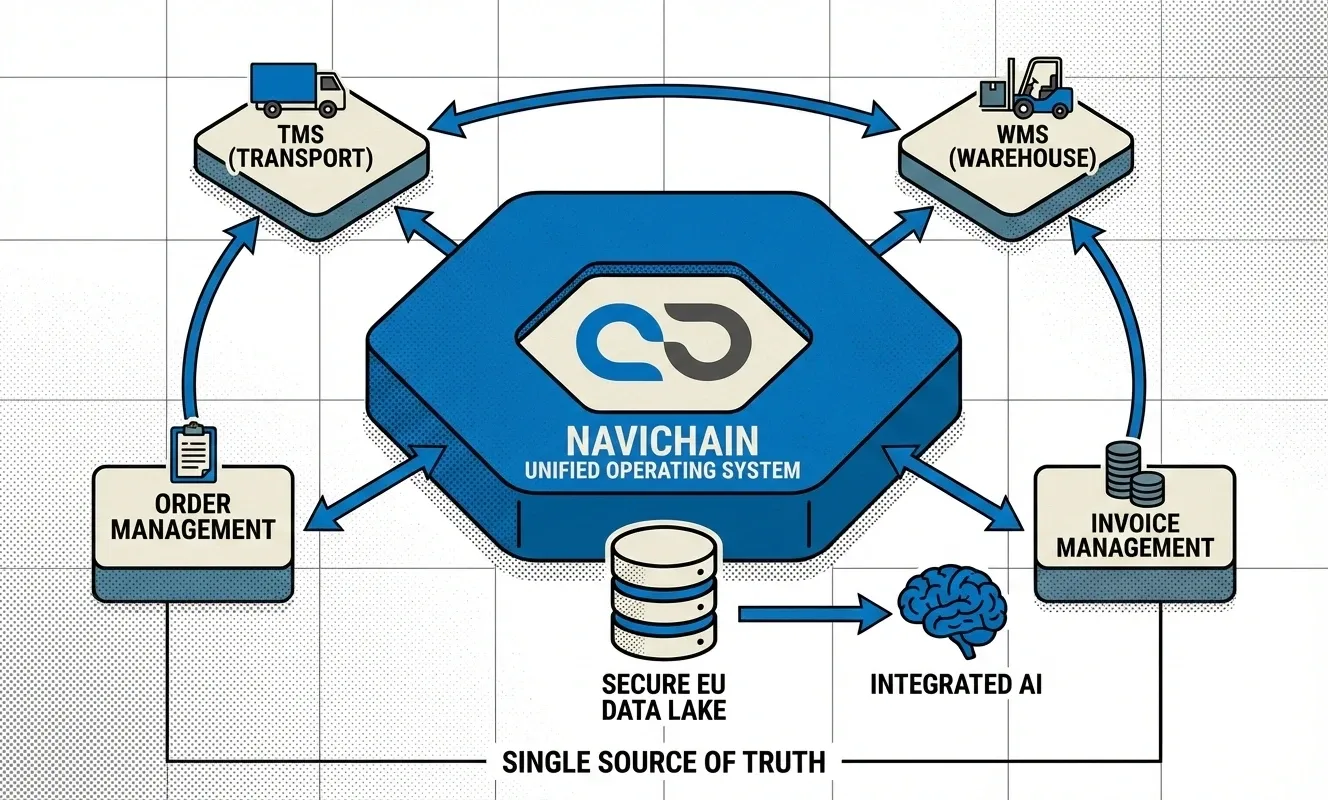
A schematic illustrating the interconnectedness of a resilient logistics operating system, highlighting the flow of data and its impact on cost reduction and strategic advantage.
Based on this ROI-driven analysis, it is clear that any modern logistics platform for SMEs must be built on three non-negotiable design principles.
Principle 1 – unified operational fabric
The platform cannot be a collection of scattered tools. It must be a single, integrated 'central nervous system' for the entire operation. Transport Management (TMS), Warehouse Management (WMS), Invoice Management and Order Management must work as one, creating a single source of truth from order intake to final invoice. This eliminates data silos and manual reconciliation, which are the primary sources of operational friction and hidden costs.
Principle 2 – secure data architecture and control
For European SMEs, true operational resilience and a sound ROI require complete control over their data environment. The platform's architecture must prioritise data security and sovereignty. This means that the data must be stored and processed on secure, preferably Self-Hosted, infrastructure within the operator's own region's legal jurisdiction (i.e. within Sweden/the EU). This design ensures straightforward GDPR compliance, minimises exposure to the complexities of international data transfers and protects the company's most valuable asset – its operational data – from external threats.
Principle 3 – embedded analytical intelligence
To move from simple cost savings to strategic value creation, the platform must have an embedded intelligence layer. This Integrated AI must be able to analyse the complete, unified data set (from Principle 1) within the secure environment (from Principle 2). This allows the system to move beyond simple reporting and provide predictive, actionable insights for route optimisation, inventory efficiency and asset management, thereby maximising the 'Return' on the technology investment.
Sources/references
---
- Transportföretagen (2024). Konjunkturrapport Åkerinäringen. (Provides data on margin pressure and cost challenges for Swedish hauliers). https://www.transportforetagen.se/
- Ti Insight (2024). European Road Freight Market 2024 Report. (Data on SME margins and cost pressures). https://ti-insight.com/
- Gartner (2024). Total Cost of Ownership (TCO) for Supply Chain Technology. (Conceptual framework for TCO analysis in logistics). https://www.gartner.com/en
- Integritetsskyddsmyndigheten (IMY). Rapporter om GDPR och sanktionsavgifter. (Analysis of the financial consequences of data security breaches for SMEs). https://www.imy.se/
- Supply Chain Quarterly (2024). The Cost of Disparate Systems in Logistics. (Survey data on time spent on manual data reconciliation). https://www.supplychainquarterly.com/
The enabler of the blueprint: Navichain SaaS unified logistics platform
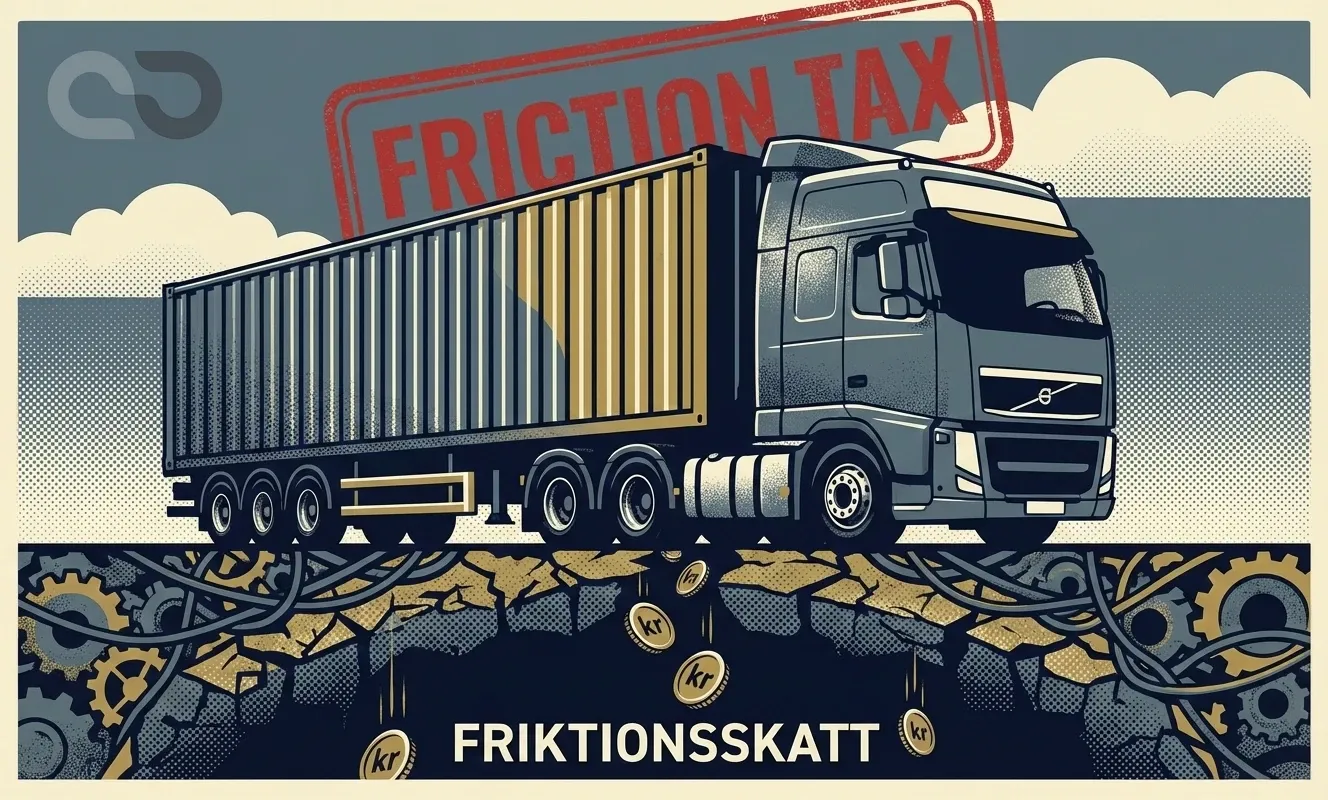
A unified logistics platform like navichain addresses the 'Friction Tax' by consolidating disparate systems and streamlining workflows, leading to improved ROI for Scandinavian SMEs.
This white paper has outlined a strategic framework for achieving a positive ROI by overcoming the 'Friction Tax' from fragmented IT. The navichain SaaS platform was designed from the ground up to embody these three core principles for Scandinavian SMEs.
- The Embodiment of the Unified Operational Fabric: navichain is not a collection of separate tools. It is a single, unified operating system for logistics where Transport Management (TMS), Warehouse Management (WMS), Asset Management, Invoice Management and Order Management work as one. This design directly attacks your TCO by eliminating integration costs and data silos, just as described in Principle 1.
- Delivery of Secure Data Architecture and Control: We address the strategic risk of data compliance directly. Our entire platform is hosted on our own secure infrastructure (Self-Hosted) in Sweden. This is our core differentiation. Your data never leaves Swedish/EU jurisdiction, ensuring maximum data security, control and the most straightforward path to GDPR compliance possible. This directly delivers the risk-minimised 'Investment' described in Principle 2.
- Activation of Embedded Analytical Intelligence: Because your data is unified (Principle 1) and secure on our infrastructure (Principle 2), we can use our integrated AI to run in-depth analyses. This AI, running securely on our Swedish servers, analyses your complete operational data to unlock unique efficiencies in route planning, inventory management and invoicing, delivering the exponential 'Return' described in Principle 3.
Our mission is to democratise logistics technology for SMEs, by offering a seamless, powerful and affordable solution that finally solves the problem of high, unpredictable IT costs and delivers a clear, positive ROI.
navichain's unified platform integrates TMS, WMS, Asset, Invoice, and Order Management, eliminating data silos and integration costs for Scandinavian SMEs.
.jpeg)
navichain's unified platform streamlines logistics operations by integrating TMS, WMS, asset, invoice, and order management, all while ensuring secure data architecture within Swedish/EU jurisdiction.
Ready to optimise your supply chain?
References
- European Commission (2020). Sustainable and Smart Mobility Strategy: putting European transport on track for the future. https://ec.europa.eu/transport/themes/mobilitystrategy_en
- International Road Transport Union (IRU) (2023). The Future of Road Transport. https://www.iru.org/future-road-transport
- McKinsey & Company (2022). Reimagining supply chains for resilience and sustainability. https://www.mckinsey.com/capabilities/operations/our-insights/reimagining-supply-chains-for-resilience-and-sustainability
- Gartner (2023). Top Supply Chain Technology Trends. https://www.gartner.com/en/supply-chain/trends
navichain Insights Newsletter
Join the newsletter to receive the latest updates in your inbox.



)