Operational Paralysis: Why digital tools fail (and the unified framework
Table of Contents
Small and medium-sized logistics companies are losing up to 20% of their time to manual admin, but the promise of digital tools like e-CMR often falters. This white paper argues that the problem isn't the tools themselves, but rather fragmented core operations (TMS, WMS, invoicing) that make true digital transformation impossible. Discover our strategic "Core-First" framework in 3 steps to unify your operations before integrating surrounding systems and unlock lasting efficiency.
Driftsparalysen Varfor Digitala Verktyg Misslyckas Och Det Enhetliga Ramverket For Framgang
Small and medium-sized logistics companies are losing up to 20% of their time on manual administrative tasks, a burden that directly erodes already thin margins. The promise of digital tools like e-CMR seems like the obvious solution. Yet, many companies find themselves 'drowning' in paperwork and simultaneously find it 'difficult to start' – a costly operational paralysis. This report argues that the problem isn't the tool; it's that standalone solutions fail when the core (TMS, WMS, invoicing) is fragmented. You can't digitalise the edge when the middle is broken. This white paper outlines a strategic 'Core-First' framework in 3 steps for successful digitalisation, focusing on unifying operations before integrating surrounding systems. This breaks the paralysis and builds a foundation for lasting efficiency.
Introduction: The paradox of digital adoption
For the pragmatic logistics manager or SME owner in Scandinavia, the directive is clear: digitalise to survive.
For the pragmatic logistics manager or SME owner in Scandinavia, the directive is clear: digitalise to survive. Margins, already thin at 2-5%, are being eaten away by soaring fuel costs, administrative overheads, and intense competition. You're told that digital tools, particularly the electronic consignment note (e-CMR), are the answer. They promise to cut administrative time, reduce errors, and accelerate invoicing cycles. Despite this, a paralysing paradox has emerged. Your team is 'drowning in paperwork' – so busy handling manual manifests, processing physical proof of deliveries (PODs), and chasing invoices that they have zero capacity to implement the very tools designed to save them. You are urged to implement e-CMR, but you find it 'difficult to start'. This isn't a technology failure. It's Operational Paralysis. It's the state of being so overwhelmed by the friction of current processes that the business loses the ability to future improvement. Buying a standalone e-CMR solution in this state is like trying to install a new high-performance engine while the car is running at full speed on the motorway with three punctured tyres. It's not just difficult; it's doomed to fail, creating yet another data silo and more frustrated staff. This white paper argues for a new strategy. It provides a strategic change management framework that breaks the paralysis. The solution isn't to chase shiny new tools like e-CMR, but to first build a stable, unified operational core. We will demonstrate that by first unifying your core systems, you eliminate paperwork at its source and free your team to adopt – and actually benefit from – new digital tools.
Deconstructing the paralysis: Why change fails

The feeling of 'drowning in paperwork' is a stark reality for logistics teams struggling to keep pace with manual processes, hindering their ability to implement digital solutions.
The feeling of 'drowning in paperwork' is a symptom. The disease is a combination of fragmented systems, hidden costs, and human change fatigue. To solve this, we must first make an accurate diagnosis of the root causes.
The true cost of paperwork: More than just trees
We often miscalculate the cost of paper by limiting it to printing and storage. The strategic cost is far greater: * Direct administrative cost: Industry analysis from bodies like the IRU shows that managing a single paper-based consignment note can cost three to four times more than its digital counterpart. For an SME handling thousands of shipments, this is a five- or six-figure sum draining directly from the bottom line.
- Delayed cash flow: A physical proof of delivery (POD) must be driven back to the office, scanned manually, matched to an order, and then invoiced. This process can delay invoicing by days, or even weeks. In a low-margin industry, cash flow is oxygen. Paper is asphyxiation.
- Error and dispute handling: Manual data entry from a driver's note into a TMS, and then again into an invoicing system, is a recipe for errors. Every error – the wrong quantity, a misspelled address – triggers a costly dispute resolution cycle that consumes your most valuable resource: your operations manager's time.
- Strategic inability: This is the most significant cost. The time your team spends finding, filing, and correcting paper-based errors is time they can't spend optimising routes, improving customer service, or implementing change. This is 'paralysis' – the opportunity cost of inefficiency.
The mistake of 'fragmented solutions'
When managers are confronted with this, many make a seemingly logical mistake. They see a paper problem (consignment notes) and buy a point solution (an e-CMR app). This 'fragmented solution' is the primary reason why adoption fails. Why? Because the new e-CMR app doesn't talk to the old TMS. And the TMS doesn't talk to the WMS. And none of them talk to the invoicing software. You haven't solved the paper problem; you've just moved it. Now your team must manually take data from the e-CMR app and re-enter it into the TMS and invoicing system. You haven't reduced the workload; you've increased its complexity and added 'yet another system' to an already exhausted team. This is the fast track to change resistance, shadow IT (returning to old spreadsheets), and a failed digital initiative.
The human factor: Overcoming change fatigue
Your drivers, transport managers, and finance staff aren't anti-digital. They're anti-friction. They've been burned by previous 'upgrades' that made their jobs harder. When you're 'drowning in paperwork,' your cognitive load is maxed out. You're in a constant state of reactive firefighting. A successful change management strategy must first and foremost reduce the immediate burden. It can't ask a team that's already drowning to start taking swimming lessons. It must offer a life raft. Any digital tool that requires complex integration, manual data transfer, or running parallel paper systems 'just in case' will be rejected – not because the team is stubborn, but because they're rational. They're protecting their own ability to get the day's work done.
The way forward: The 'core-first' framework for digitalisation
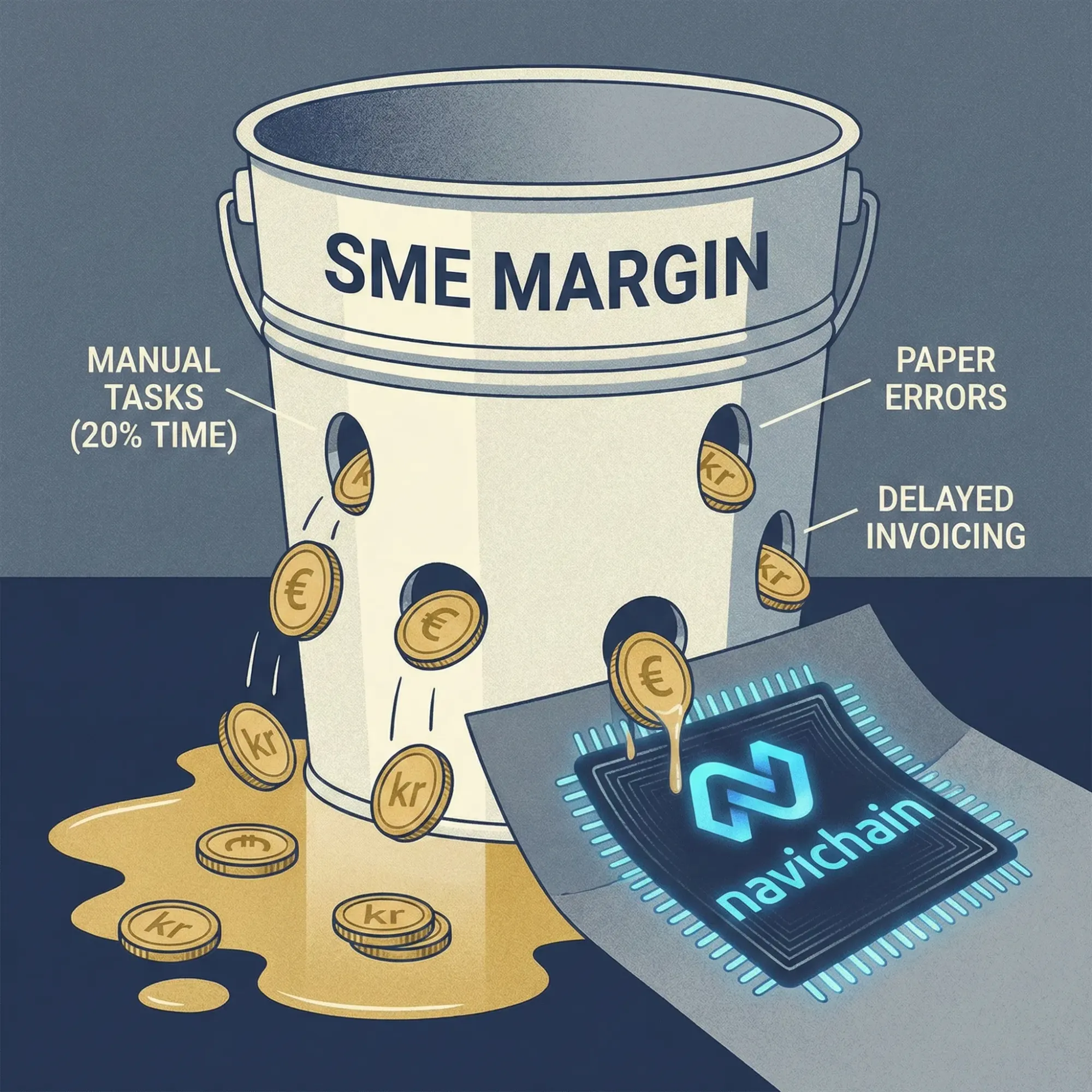
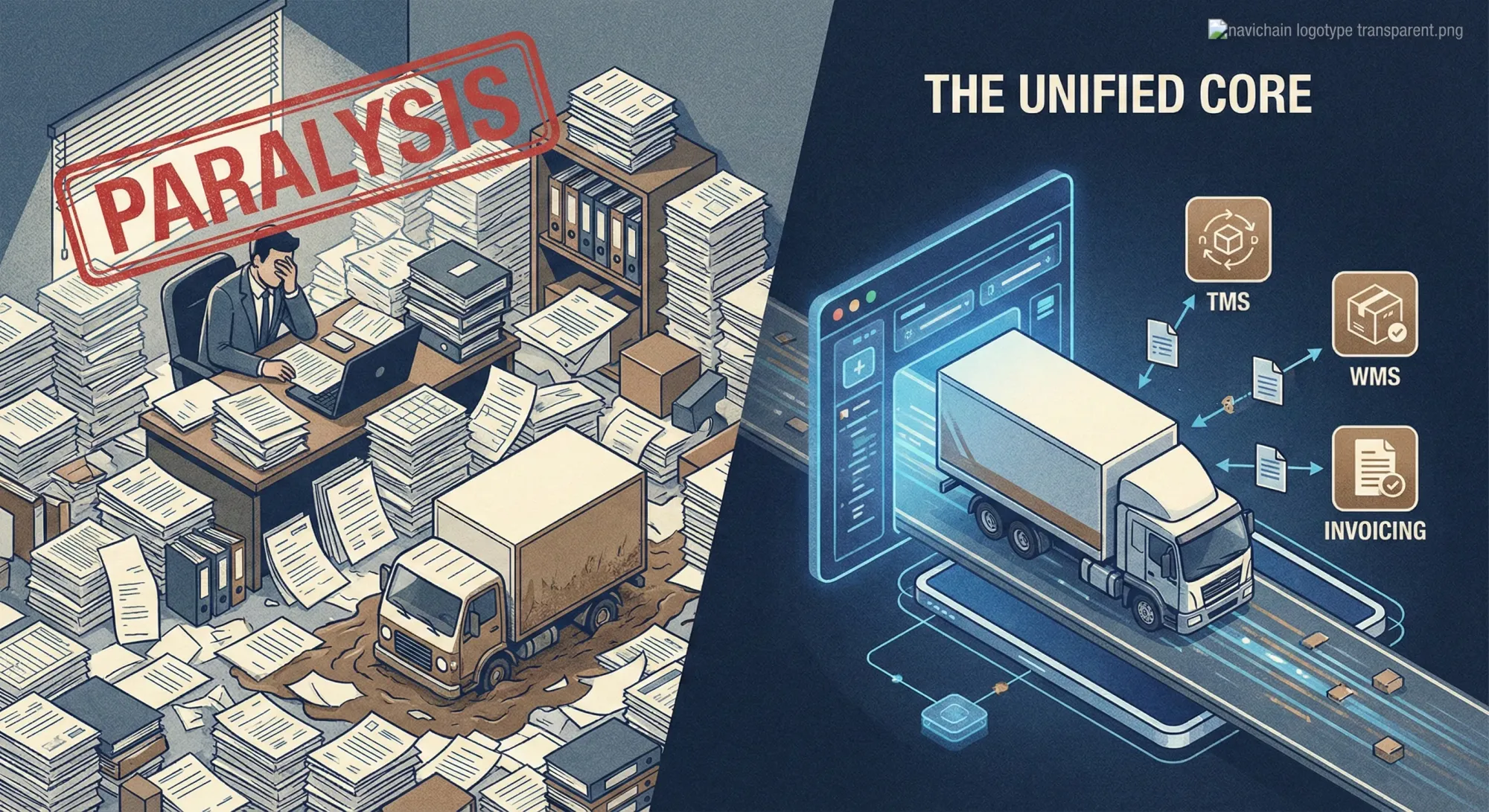
The chart illustrates how prioritizing the "core" of operations can break the cycle of digital tool failures, leading to a more unified and successful implementation.
To break operational paralysis, you must reverse the logic of implementation. Stop trying to digitalise the edge (like e-CMR) and stabilise and unify the core first. We propose a 3-step change management framework that builds momentum by delivering immediate, palpable relief.
Step 1: Unify the operational core
The 'core' of every haulage operation is the data flow from Order to Payment. This typically involves three silos: Transport Management (TMS), Warehouse Management (WMS), and Invoicing/Finance. The friction between these systems is the primary source of all paperwork and manual data entry. The strategic goal: Consolidate these functions into a single, unified operating system. When an order is created, it should flow seamlessly to transport management (TMS), to the pick list (WMS), to the driver's app, and, upon proof of delivery, immediately trigger a complete, accurate invoice in the same system. This single act of unification is the life raft. It immediately eliminates the triple entry of data. It pulverises the internal 'paper pushing' of sending delivery notes between departments. It creates a single source of truth and puts an end to the debates over 'which spreadsheet is correct?'. This frees up the very first bit of time and mental energy your team needs for the next step.
Step 2: Digitalise at the source
With a unified core, you can now attack the external paperwork. The goal is to capture data digitally once, at the source. Instead of a standalone e-CMR app, this means having your unified platform's driver app capture the digital proof of delivery (POD). The driver gets a signature, presses 'completed', and that data is immediately available to the finance team, the customer service representative, and the customer portal. Notice what hasn't been mentioned? e-CMR. You achieve 90% of the value of 'paperless' without the complexity of adopting a new, third-party standard. You solve your internal paper problem first. This builds momentum and demonstrates immediate value. Your team's workload decreases. Your invoicing cycle accelerates. Your data accuracy skyrockets. Change isn't a burden; it's a relief.
Step 3: Integrate peripheral equipment (such as e-cmr) last
Now, and only now, is your organisation ready for e-CMR. You have a stable, unified, and internally paperless core. Your team is no longer drowning. You have capacity. At this stage, integrating a formal e-CMR protocol is no longer a complex, standalone project. It's a simple, low-friction integration. It becomes a 'plugin' to your unified platform. The data it requires is already in your system. The data it generates flows directly into your existing workflow. Adoption is now easy because the 'change' is invisible. It's just a new, compliant document format generated by the system everyone already uses and trusts. You've successfully navigated change by making 'the new way' the path of least resistance.
From diagnosis to design: The blueprint for a resilient logistics operating system
This 'Core-First' framework isn't just a theory of change management; it's a design specification.
This 'Core-First' framework isn't just a theory of change management; it's a design specification. To implement this strategy, every platform you consider must be built on three core principles. These are the non-negotiable foundations of a resilient, efficient, and compliant SME logistics operation in Europe.
Principle 1: Unified operational fabric
Your operation must run on a single, integrated system that acts as a central nervous system. This means your TMS, WMS, Equipment Supervision, Billing and Order Management aren't separate software programs 'bolted together', but are natural components of the same platform. Data entered once – such as an order – must flow without friction or re-entry through traffic management, warehouse, transport, delivery and invoicing. This creates the 'single source of truth' that is the only permanent antidote to paperwork and operational silos.
Principle 2: Secure data architecture and data control
For European SMEs, data is your most valuable asset and your greatest responsibility. Real operational resilience requires complete control over your data environment. This is non-negotiable. Your platform must ensure that your data is stored and processed under the legal jurisdiction of your own region (e.g. within Sweden/EU) on secure, own infrastructure (Sovereign) or sovereign infrastructure. This is the only way to guarantee easy GDPR compliance and protect your business from the legal complexities and risks of international data transfers. Data control is the foundation of trust – for you and your customers.
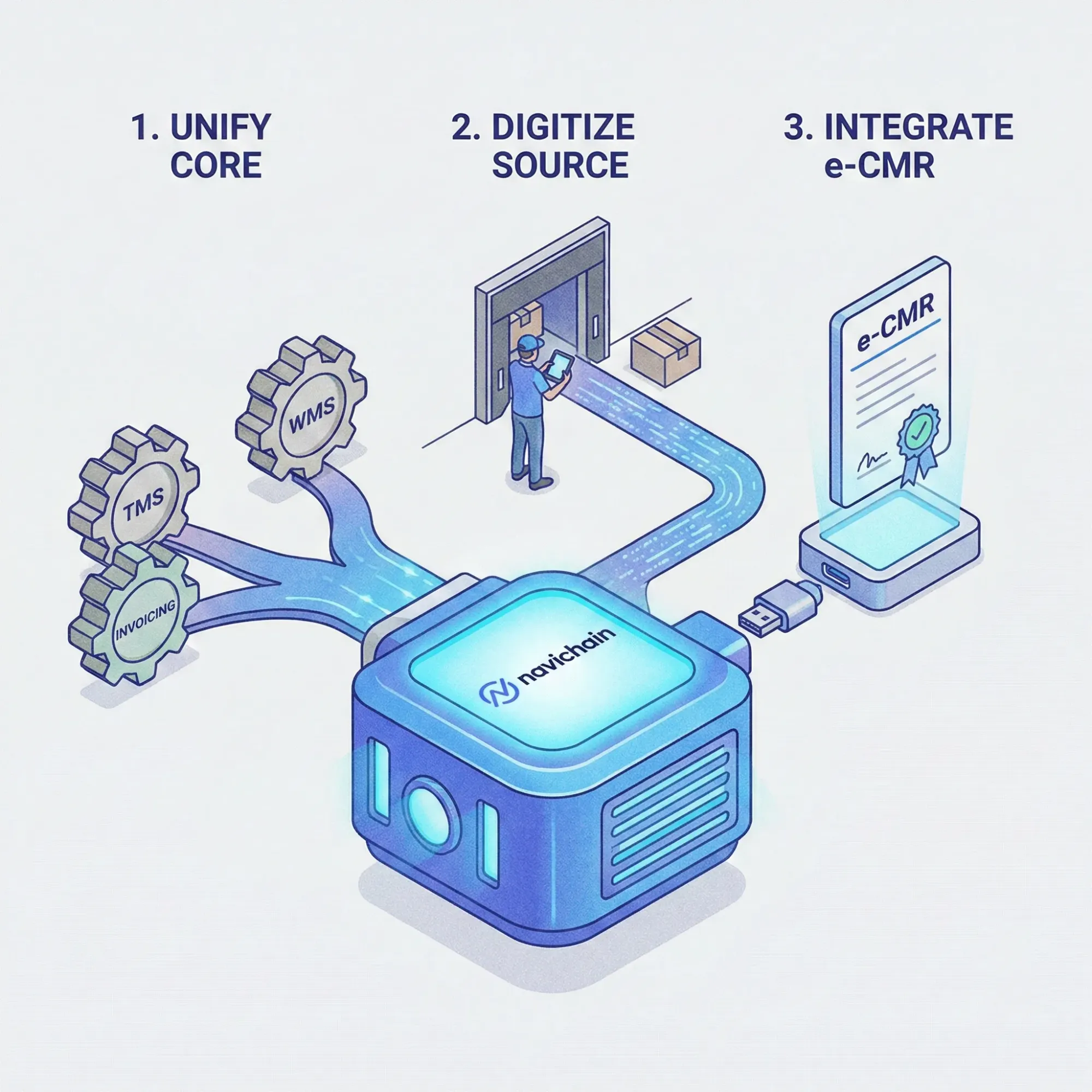
Schematic depicting the 'Core-First' framework, illustrating the interconnectedness of essential logistics functions within a unified platform.
Principle 3: Embedded analytical intelligence
Efficiency isn't a one-off measure; it's a continuous process. Once your data is unified (Principle 1) and secure (Principle 2), you must have the ability to analyse it. This requires an embedded intelligence or integrated AI layer that runs within your secure environment. This intelligence must be able to analyse your unified operational data – from fuel consumption and running times to pick times and invoicing cycles – to identify unique, actionable efficiencies. This isn't about 'big data' in the abstract sense; it's about getting concrete answers to crucial questions like 'What is the true profit/loss on my most important customer?'
References/sources
- International Road Transport Union (IRU). (2024). e-CMR: The Digital Future of Transport Documents. https://www.iru.org/what-we-do/facilitating-trade-and-transit/e-cmr
- European Commission. (2023). Regulation on electronic freight transport information (eFTI). https://transport.ec.europa.eu/transport-modes/road/efti_en
- Ti Insight. (2024). European Road Freight Market Report. (Provides data on margins and operating costs within the European logistics sector). https://ti-insight.com/
- Gartner. (2024). Change Management Models for Digital Transformation. (Discusses the human-centred barriers to technology adoption). https://www.gartner.com/
Enabling the blueprint: Navichain SaaS unified logistics platform
This white paper has outlined a strategic framework for change and a 3-principle blueprint for a resilient operating system. The navichain SaaS platform was designed from the ground up to be the engine that drives this blueprint for Scandinavian SMEs. We don't just sell software; we deliver a unified, secure, and intelligent operational fabric.
- Principle 1: Unified Operational Fabric: navichain isn't a collection of modules. It's a single, integrated logistics operating system. Your Transport Management (TMS), Warehouse Management (WMS), Equipment Supervision, Invoicing Management, and Order Management all function as one unit, from one database, with one login. This is the 'Core-First' principle in practice, eliminating data silos and paperwork at the source.
- Principle 2: Secure Data Architecture and Data Control: We embody this principle. The entire navichain SaaS platform is hosted on our own secure infrastructure (Sovereign) in Sweden. This is our key differentiator. It ensures maximum data security, control, and easy GDPR compliance. Your data never leaves Swedish/EU jurisdiction, giving you full operational control and freeing you from the complexities of international data transfers.
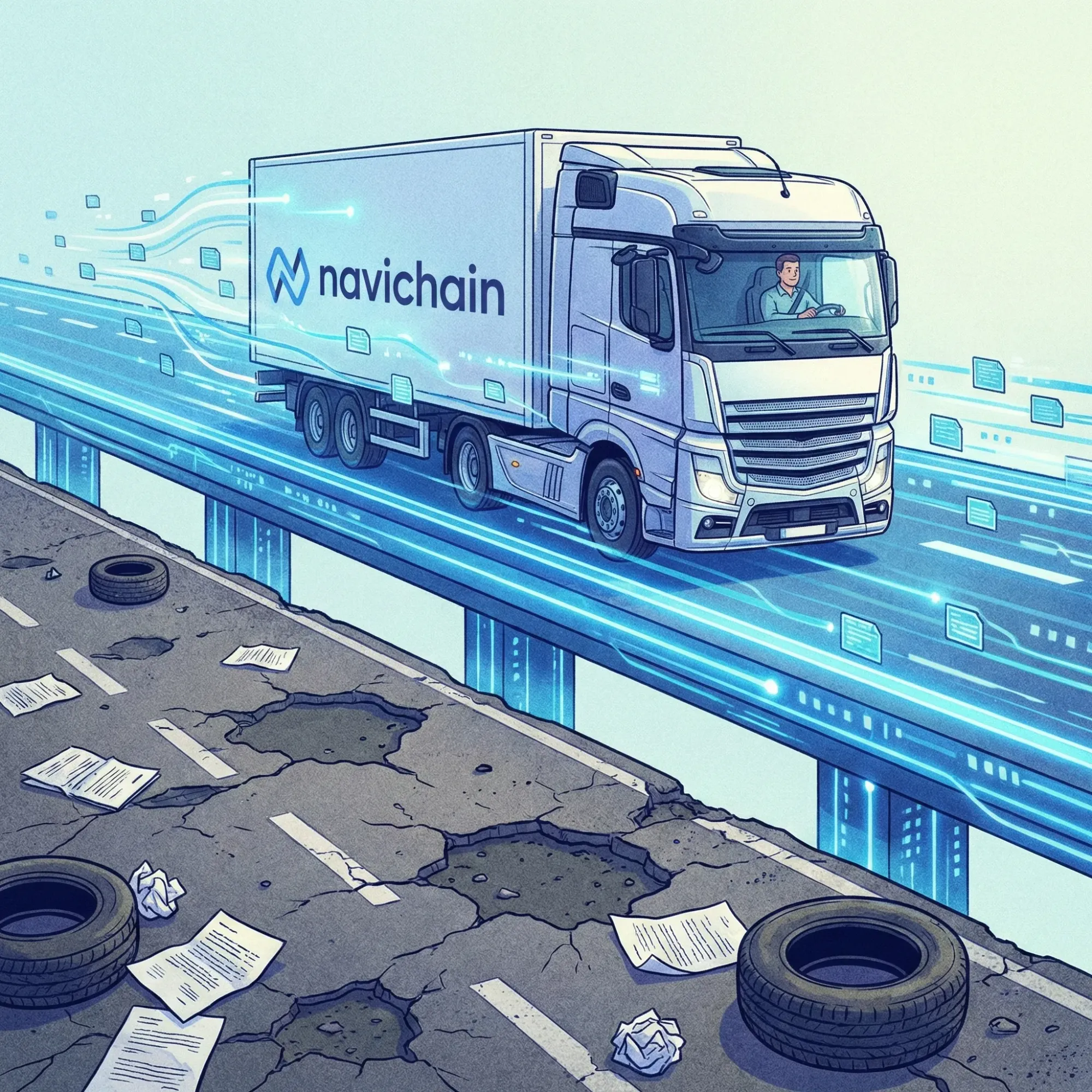
The navichain SaaS platform provides a unified interface for streamlined logistics operations, illustrating the 'Core-First' principle in action.
- Principle 3: Embedded Analytical Intelligence: Because your data is unified and secure on our platform, our integrated AI can start working. By running securely on our own Swedish infrastructure, this AI layer performs deep, secure data analysis on your unified operational data, unlocking unique efficiencies in routing, resource utilisation, and profitability that are impossible to see when your data is fragmented. Our mission is to democratise logistics technology. We are here to help Scandinavian SMEs break the cycle of operational paralysis, build a resilient foundation, and finally make digitalisation work.
navichain: Illustrating the unified logistics operating system with integrated TMS, WMS, equipment supervision, invoicing, and order management.
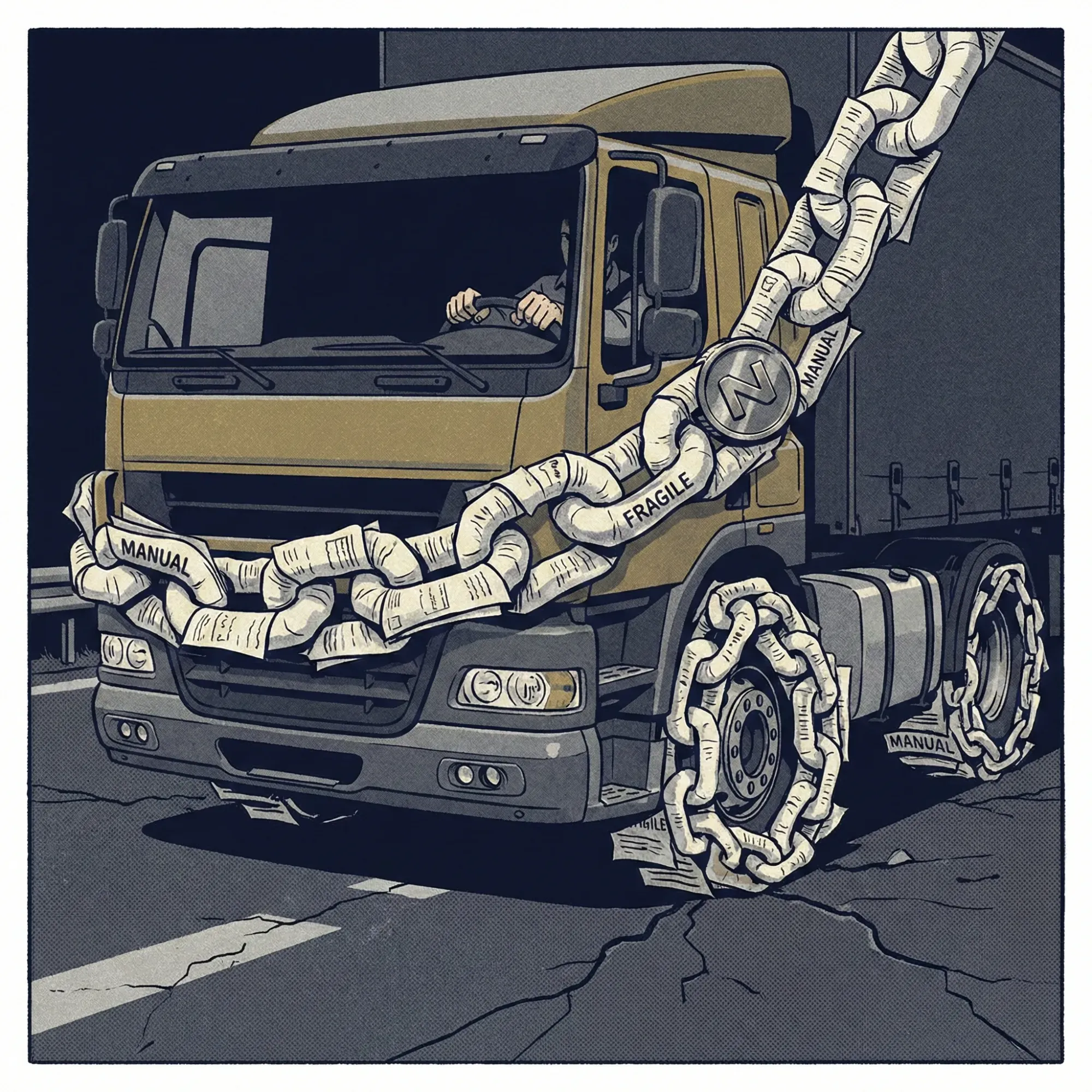
Navichain's unified platform connects TMS, WMS, equipment supervision, invoicing, and order management for seamless logistics operations.
Ready to optimise your supply chain?
navichain Insights Newsletter
Join the newsletter to receive the latest updates in your inbox.