The Cost of Hesitation: Why Digitalization Fear Costs More Than the Investment
Table of Contents
European haulage SMEs face a daunting choice: invest in digitalization or bleed out slowly from operational inefficiencies. But fear of budget overruns and complex implementations is trapping them in a paradox. This white paper unveils 'The Cost of Hesitation,' providing a strategic ROI framework for SMEs to unlock profitability through smart digitalization strategies.
The Cost of Hesitation: Why Digitalization Fear Costs More Than the Investment
European haulage and logistics SMEs are pressured by high operational costs and thin margins. Many see digitalization as a necessity but fear long, expensive implementation projects and uncertain license fees. Studies show that up to 30% of IT projects for SMEs exceed their budget, making this hesitation understandable. But this fear creates a dangerous paradox. The real cost isn't the investment; it's the daily financial 'bleed' from manual processes, data silos, and invoicing errors, which can erode up to 15% of margins. This white paper analyzes 'The Cost of Hesitation.' We present a strategic ROI framework for how SMEs can re-evaluate digitalization, not as a cost, but as the most critical investment for unlocking profitability. We show how to focus on Total Cost of Ownership (TCO) and rapid Time-to-Value instead of just the license price.
Introduction: The digitalization paradox for european haulage smes
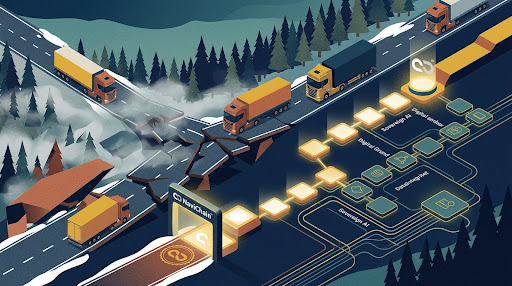
Fig 1: For Small to Medium-sized Enterprises (SMEs) in the European logistics sector, operational reality is a daily battle against the clock and the spreadsheet. For Small to Medium-sized Enterprises (SMEs) in the European logistics sector, operational reality is a daily battle against the clock and the spreadsheet. Fuel prices are volatile, competition from larger, international players is fierce, and customer demands for transparency and speed are increasing exponentially. Meanwhile, industry bodies like the IRU (International Road Transport Union) report a persistent driver shortage, pushing up wage costs. In this environment, digitalization no longer seems like a choice, but a survival strategy. Yet, many hesitate. The reason is a deep-seated and well-founded fear that echoes in boardrooms: "We can't afford a long, costly implementation project and an expensive software license." This fear is rational. Many have heard horror stories of IT projects that derailed, taking 18 months instead of six, and leaving the company with a system that is neither flexible nor fully integrated. They fear replacing a functioning (albeit inefficient) manual system with expensive digital chaos. But herein lies the paradox: The greatest financial risk for European hauliers is not the investment in new technology, but the hidden, daily capital cost of process fragmentation and the escalating operational costs that arise from inaction. This white paper is written for the pragmatic logistics manager and owner. We will not sell a technical dream. Instead, we will present a concrete Return on Investment (ROI) model to analyze the true cost of your current systems—and how to invest smartly to unlock profitability without getting trapped in costly implementation pitfalls.
Deconstructing the cost: Tco vs. license price
Fig 2: A typical SME haulier today might use 4-5 different, standalone systems: 1. When leaders evaluate new software, they often get stuck on a single number: the monthly license fee or the initial project cost. This is the first and perhaps biggest mistake in calculating true ROI. The traditional view of cost is obsolete. We must shift focus from purchase price to Total Cost of Ownership (TCO).
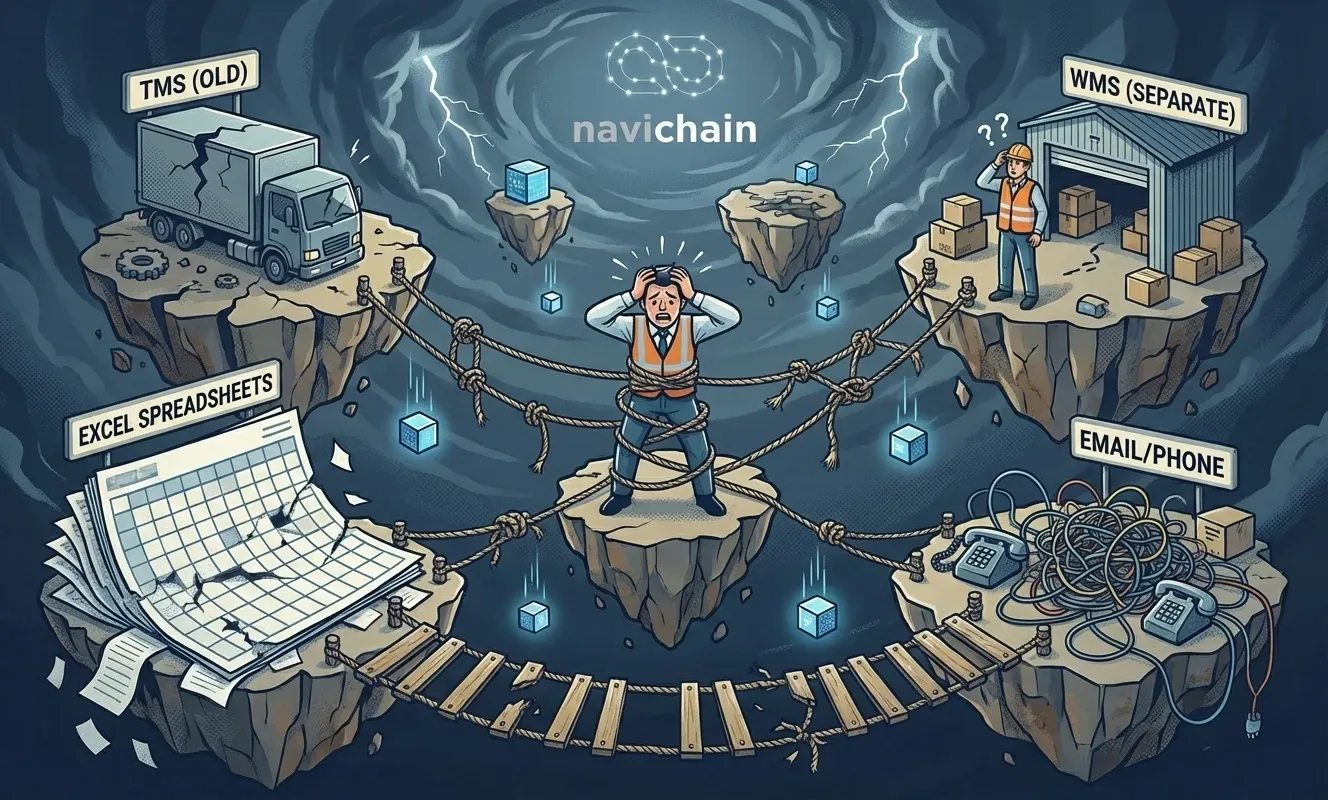
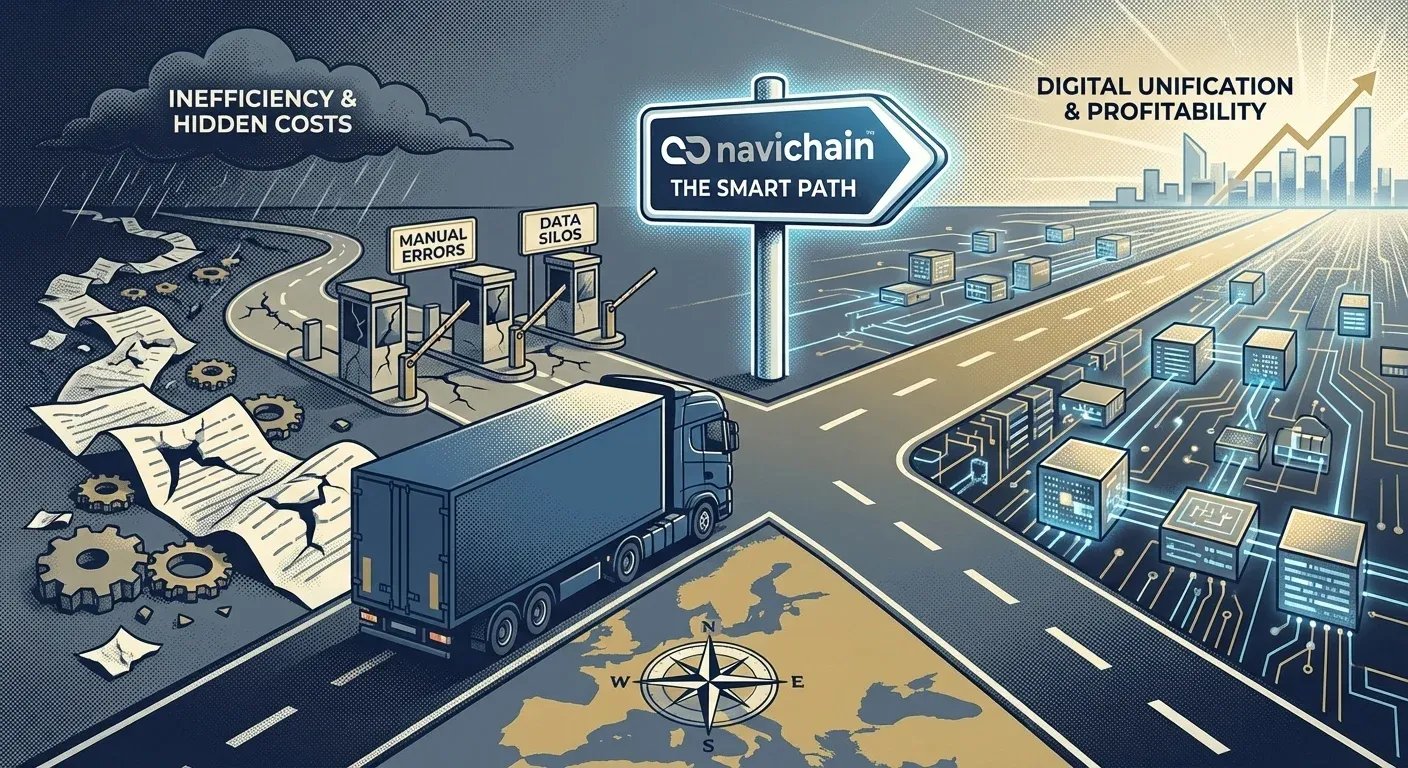
The image illustrates the fragmented software landscape common in many SME haulage companies, contributing to hidden operational costs and hindering true ROI.
The myth of the "long, expensive project"
Why do implementation projects become long and expensive? The answer is almost always integration. A typical SME haulier today might use 4-5 different, standalone systems: 1. A TMS (Transport Management System) for route planning. 2. A WMS (Warehouse Management System) for the warehouse (if applicable). 3. An accounting system for invoicing. 4. Excel spreadsheets or Google Sheets for price lists and quotes. 5. Separate vehicle tracking via GPS. When a new system is to be "implemented," it means building custom, fragile bridges between these data silos. That's where the time and money disappear. An EU report on SME digitalization found that unforeseen integration needs are the most common reason for IT projects exceeding their budget, by an average of 30%.
The real cost: The price of inefficiency
Now, let's flip the calculation. What does it cost to do nothing? What is your Cost of Inaction (COI)? This number doesn't appear on any invoice, but it drains your working capital every day. Let's quantify it: * Manual Data Entry: How many hours do dispatchers and administrators spend each week manually moving data from an order email to the TMS, and then from the TMS to the accounting system for invoicing? Example: 2 employees x 5 hours/week = 10 hours/week. 10 hours x €25/hour (salary + social costs) x 50 weeks = €12,500 per year in pure administrative overhead. * Invoicing Errors: When price lists in Excel don't match the delivered job in the TMS, errors occur. One study estimated that up to 5% of all logistics invoices contain errors, leading to credit notes, delayed payments, and poorer cash flow.
- Suboptimal Planning: Without a unified view of available vehicles, drivers, warehouse status, and incoming orders, it's impossible to optimize routes effectively. This directly leads to more kilometers driven than necessary, higher fuel costs, and more wear and tear. All told, industry analysts estimate that this operational friction—the hidden costs of data silos and manual processes—can erode up to 15-20% of the potential margin for an SME logistics company. Compare that figure to an "expensive" software license.
Capital lock-in: Capex vs. opex
Finally, the fear is about Capital Expenditure (CapEx). Traditional, on-premise systems required large investments in servers, installation, and consultant fees before you saw a single euro in value. This ties up capital that an SME needs to grow its core business (vehicles, staff, warehouses). Modern, cloud-based (SaaS - Software-as-a-Service) or self-hosted platforms shift this cost to a predictable Operational Expenditure (OpEx). This frees up capital and, most importantly, changes the game. Implementation is no longer about building infrastructure, but about configuring processes.
The path forward: A 3-step ROI framework for logistics smes
Fig 3: How can a logistics manager or owner navigate this and make a smart decision? How can a logistics manager or owner navigate this and make a smart decision? By replacing the fear of "cost" with a focus on "value." Here is a three-step framework.
Step 1: Prioritize time-to-value (ttv)
Forget "big bang" projects that promise to solve everything in 12 months. Ask instead: "How quickly can we solve our biggest problem?" A modern digitalization strategy is incremental. Perhaps your biggest problem is invoicing. A unified platform should be able to digitalize the flow from order to invoice in a few weeks, not months. This provides immediate ROI in the form of reduced administration and faster cash flow. Look for platforms that are unified from the ground up, not loosely coupled modules. When the TMS and invoicing are the same system, there is no integration project. Implementation becomes a matter of configuration and training, dramatically shortening TtV.
Step 2: Analyze total cost of ownership (TCO), not just license price
Demand a full TCO analysis. The "expensive" license from one vendor may be the cheapest solution when all factors are included. Your TCO calculation must include: * License Cost (OpEx) * Implementation & Configuration Cost (One-time) * Support & Maintenance Agreements * Hidden Costs: Need for internal IT resources to manage servers and updates.
- Integration Costs: What does it cost to connect the system to your accounting system or WMS (if they aren't part of the platform)?
A TCO analysis should account for more than just the initial license fee, considering hidden costs like integration and complexity.
- Complexity Cost: What does it cost to manage multiple vendors and systems? A unified platform with a single vendor and a fixed monthly cost provides predictability and almost always has a lower TCO than piecing together 3-4 "cheaper" specialized systems.
Step 3: Ensure data control and compliance (GDPR)
Fig 1: Where is your data stored?
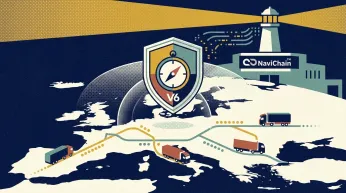
This is a critical, and often overlooked, part of the TCO analysis. Where is your data stored? Many large, international cloud providers store data in the US or outside the EU. This creates a legal and operational risk. Ensuring GDPR compliance and managing international data transfer rules (like the now-invalidated Privacy Shield) is complex and expensive. For a European haulier, data control is operational control. Choosing a platform where all data is stored and processed on secure infrastructure within the EU/EEA (e.g., Sweden) is not just a legal safeguard—it's a strategic advantage. It simplifies regulatory compliance (GDPR becomes straightforward), protects your business-critical data (customer lists, prices, routes), and builds trust with your clients. This "data sovereignty" must be a central part of your ROI calculation. The cost of a data breach or a GDPR fine is exponentially higher than any license fee.
From diagnosis to design: The blueprint for a resilient logistics operating system
Fig 2: Based on this ROI analysis, we can distill the principles for the ideal digital platform for an SME logistics company.
Based on this ROI analysis, we can distill the principles for the ideal digital platform for an SME logistics company. It's not a collection of features, but a design philosophy.
Principle 1 - unified operational fabric
Stop buying separate "modules." The platform of the future is a single, unified operating system where Transport Management (TMS), Warehouse Management (WMS), Order Management, Billing, and Asset Management are parts of the same core. Data is born once (at order entry) and then flows seamlessly through the entire process to the final invoice. This is not "integration"; it is a single source of truth. This eliminates the administrative burden, slashes implementation time, and forms the central nervous system of your operation.
Principle 2 - secure data architecture and control
For European SMEs, data control is non-negotiable. True operational resilience requires complete control over their data environment. This means data must be stored and processed under your own region's legal jurisdiction—for example, within the EU/Sweden. A platform hosted on its own secure or Self-Hosted infrastructure ensures straightforward GDPR compliance, minimizes exposure to international data complexities, and gives you full ownership and control over your most valuable asset: your operational information.
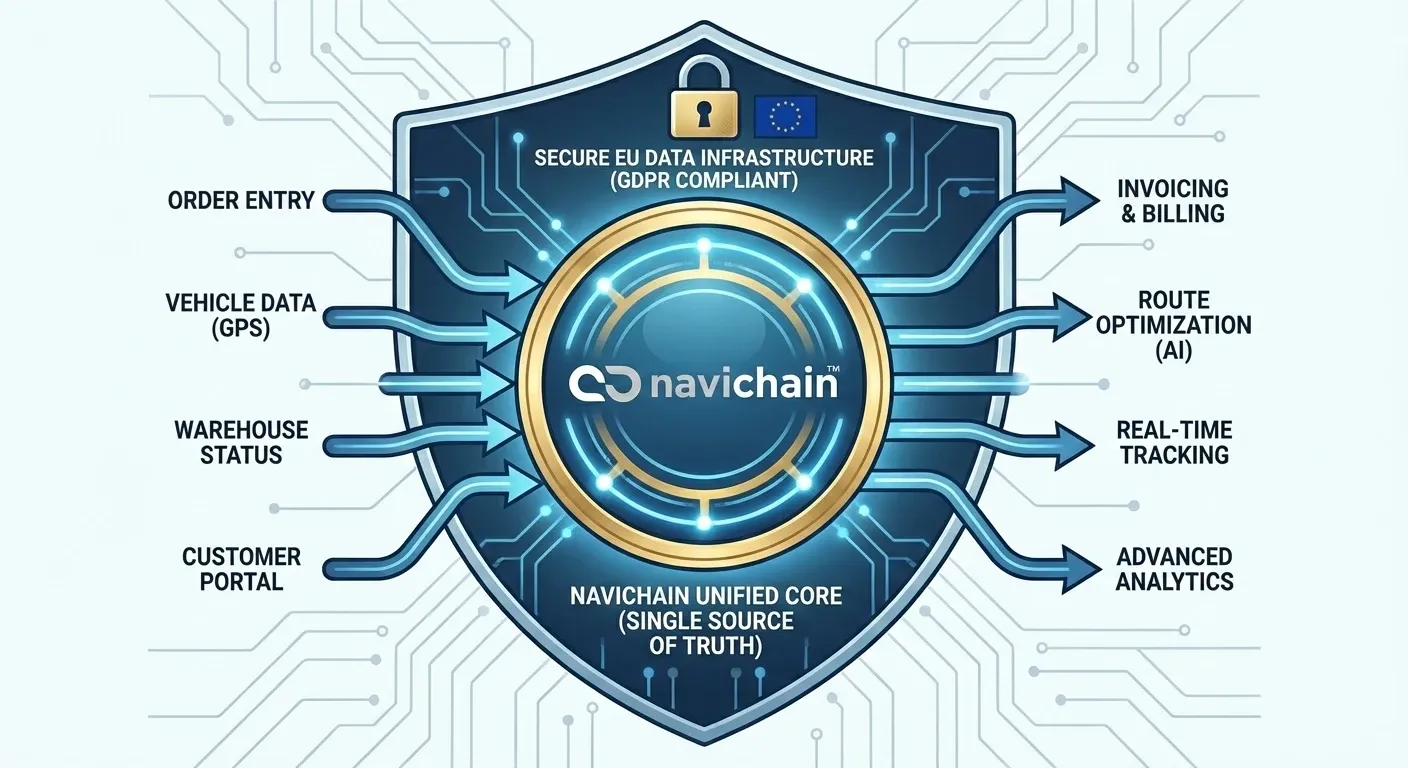
Schematic illustrating the flow of data within a unified digital logistics platform, highlighting the integration of key modules and the single source of truth.
Principle 3 - embedded analytic intelligence
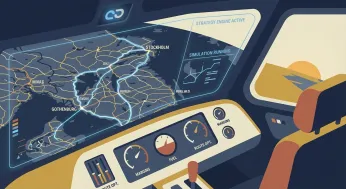
Once you have all your data in one unified system (Principle 1) and in a secure, controlled environment (Principle 2), the next great value emerges. The platform must have an embedded intelligence layer, or Integrated AI, that can analyze your unique, secure data. This isn't about generic AI models. It's about finding patterns in your routes, your invoices, and your customer behaviors to identify precise opportunities for efficiency, pricing optimization, and cost savings—all within the secure architecture.
Fig 3: Once you have all your data in one unified system (Principle 1) and in a secure, controlled environment (Principle 2), the next great value emerges.
References/sources
- IRU (International Road Transport Union): (2023). Global Driver Shortage Report 2023. https://www.iru.org/resources/iru-library/global-driver-shortage-report-2023
- European Commission: (2023). Digitalisation in SMEs. https://digital-strategy.ec.europa.eu/en/policies/digitalisation-smes
- Ti Insight: (2024). European Road Freight Transport 2024. https://www.ti-insight.com/
- Swedish Transport Association (Transportföretagen): (2024). Economic Reports: Transport Industry. https://www.transportforetagen.se/
- Swedish Authority for Privacy Protection (IMY): Guidance on data transfers to third countries. https://www.imy.se/en/
Fig 4: Based on this ROI analysis, we can distill the principles for the ideal digital platform for an SME logistics company.
Enabling the blueprint: The navichain SaaS unified logistics platform
Fig 4: The strategic blueprint described in this white paper—a platform that is unified, secure, and intelligent—is the exact model navichain SaaS is built on.
The strategic blueprint described in this white paper—a platform that is unified, secure, and intelligent—is the exact model navichain SaaS is built on. We understand that logistics SMEs cannot afford long, expensive implementations or data uncertainty. navichain SaaS is not a collection of modules. It is a single, unified logistics operating system. Our platform seamlessly integrates Transport Management (TMS), Warehouse Management (WMS), Order Management, Billing, and Asset Management. Data is entered once and flows through your entire operation, eliminating data silos and manual administration from day one. This is our key differentiator. The entire navichain platform is hosted on our own secure infrastructure (Self-Hosted) in Sweden. This is not just a feature; it's a promise. By keeping all your data strictly within Swedish/EU jurisdiction, we guarantee maximum data security, full control, and the most straightforward path to GDPR compliance. You are not exposed to the risks of international data transfers. Because your data is unified and secure, our integrated AI can operate directly on your operational data inside our secure Swedish infrastructure. This allows our clients to perform deep, secure data analysis to unlock unique efficiencies, optimize routes, and improve margins, all without their data ever leaving the protected environment. Our mission is to democratize logistics technology for SMEs. We offer a powerful, affordable, and above all secure platform that solves the real-world problems of TCO and implementation time, allowing you to focus on building a profitable and resilient business.
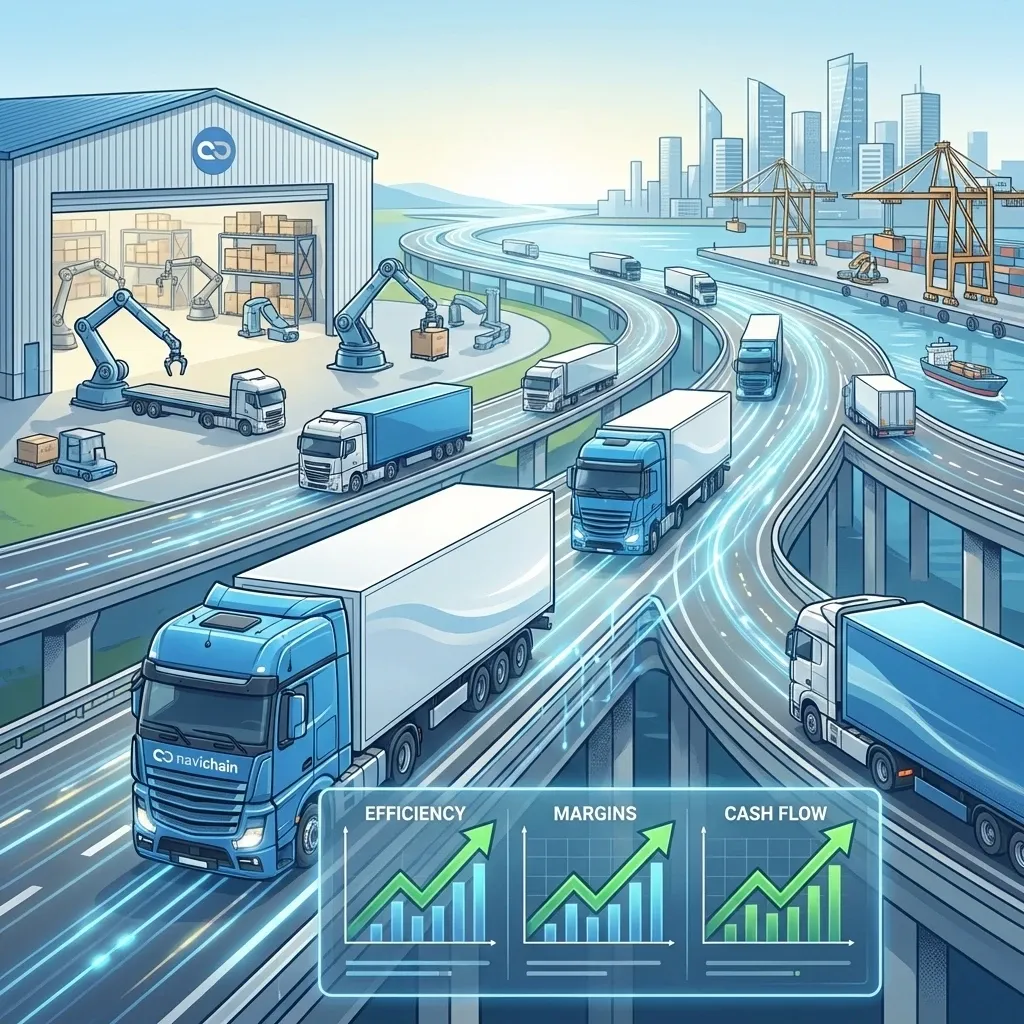
Hesitation in adopting a unified, secure, and intelligent logistics platform ultimately proves more costly than investing in one.
.jpeg)
navichain's self-hosted architecture ensures data security and GDPR compliance within Swedish/EU jurisdiction, enabling integrated AI for secure, in-depth data analysis.
Ready to optimise your supply chain?
navichain Insights Newsletter
Join the newsletter to receive the latest updates in your inbox.